Shovels, flowers, and bees in Biosphere Classroom Sånnarna
The consultation group for the Kristianstads Vattenrike Biosphere Reserve represents organisations, associations, officials, and politicians with interests in the area and can make recommendations and suggestions. The project will be agreed on an ongoing basis in the Consultation Group as well as in naturum's program council.
Description of the project
Through the Biosphere classroom project, we want to inspire to experience and explore life on the sandy lands. Through practical explorations with all your senses, we deepen our knowledge of important pollinators and the plants they depend on. We also meet other inhabitants of the sand, such as beetles, spiders, mushrooms, and rabbits. It is also about the tough challenge of living in dry and nutrient-poor sand, and about the special geology and climate of Sånnarna.
The biosphere classroom highlights how the sandy lands' diversity of species and habitats is dependent on human presence. And how the human society benefit from these values at the same time. Pollination is an important ecosystem service. Sånnarna offers many other benefits, such as outdoor life and peaceful experiences. This is the biospheric perspective. In Vattenriket, we always aim to benefiting both nature and man.
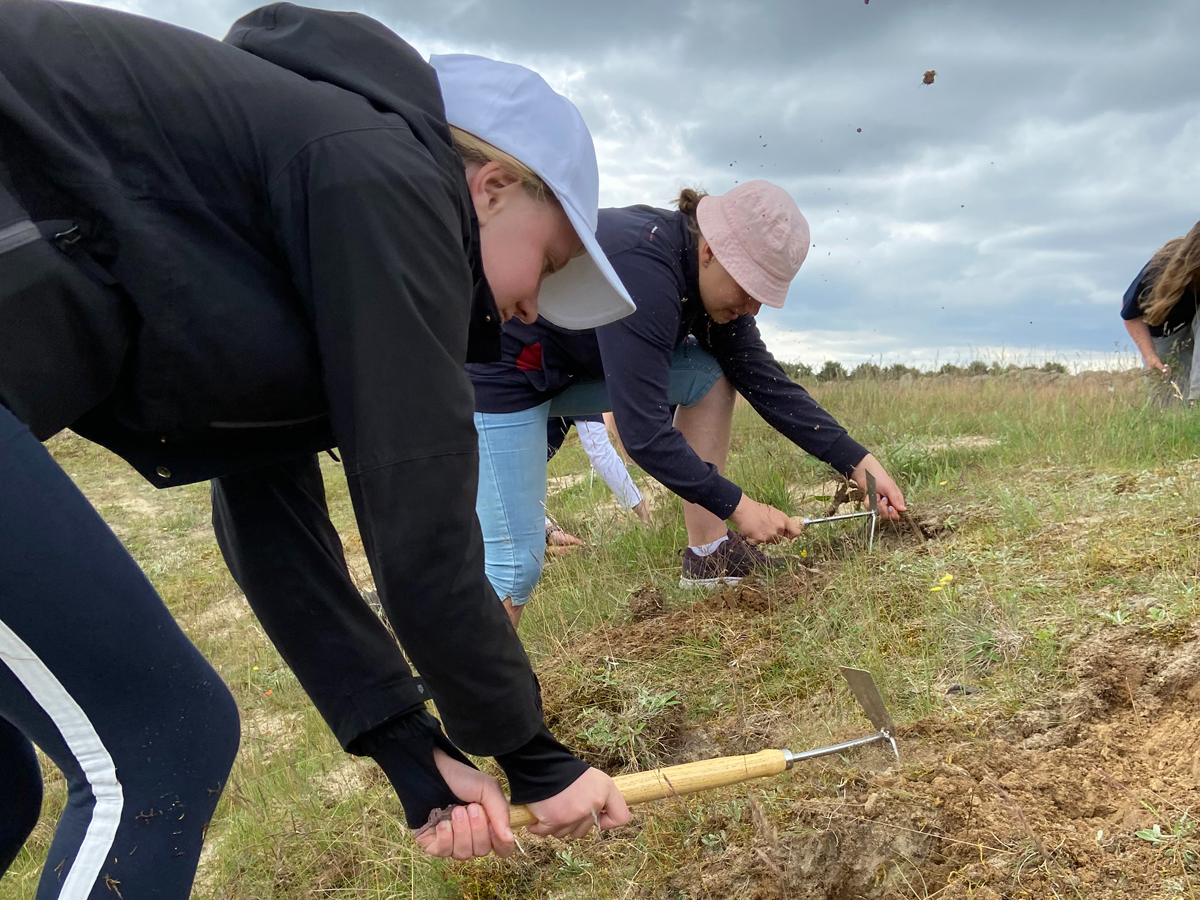
The sandy grazing and cultivation lands are very rich in species. But there are only fragments left of this unique many-thousand-year-old landscape on the Kristianstad plain. Herbs and bugs may need a little help. In collaboration with naturum Vattenriket, school classes can recreate important habitats with shovels and hoes. In the bare and sunlit sand, insects can warm themselves and build nests. New plants can sprout.
The project is not only knowledge-enhancing, but through the students' practical work habitats are also created for endangered plants and insects and the ecosystem services they contribute. At the same time, the students gain practical experience that creates a value base for future actions.
Results and effects
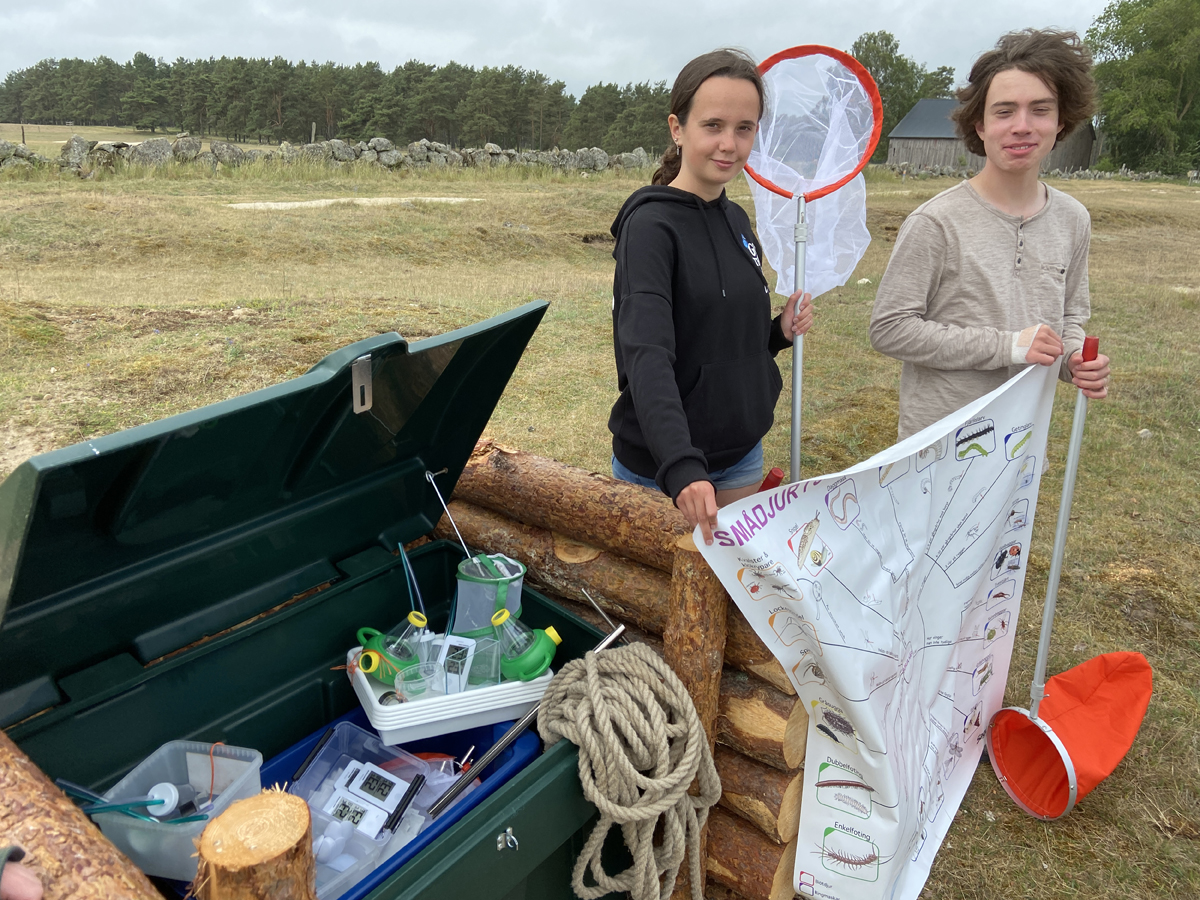
The biosphere classroom consists of a physical box and a teacher's guide. The field material in the box and the exercises in the guide have been developed and evaluated during the work with school classes.
During the project period, naturum Vattenriket has worked with 11 school classes and two biosphere camp groups at the classroom. In total, over 325 students, educators and leaders have explored and carried out practical nature conservation work at Sånnarna together with Vattenriket's educators and ecologists.
Each visitor has created at least 0.5 m2 of open sandbars. In total, more than the promised 150 m2 of open sandbars have been created. In some of these, plants have been planted, while other patches have been left for natural regeneration where bees and other insects can build nests.
The Biosphere classroom is now available for teachers to book and to use on their own with their students.
Focal points:
- Fostering a better understanding of the dry, sandy ecosystems of Vattenriket and sustainable practices. The Biosphere classroom provide opportunities for children, youth, and teachers to study the impacts of human activities on biodiversity (3)
- Practical nature conservation works that conserves and restores biodiversity in the sandy areas of Vattenriket (1)
- Encouraging children and youth to participate in active biodiversity conservation and sustainable development (4)