Eelgrass planting – Recreating the Vitality of the Baltic Sea
Description of the project
The Baltic Sea Project - Återskapa Östersjöns livskraft focused on restoring and increasing knowledge about the underwater ecosystems in three geographically selected areas: The High Coast World Heritage Site, the Stockholm Archipelago, and the Kristianstad Vattenrike Biosphere Reserve. These selected environments serve as spawning and nursery grounds for many marine species and as migration routes for fish to spawn there.
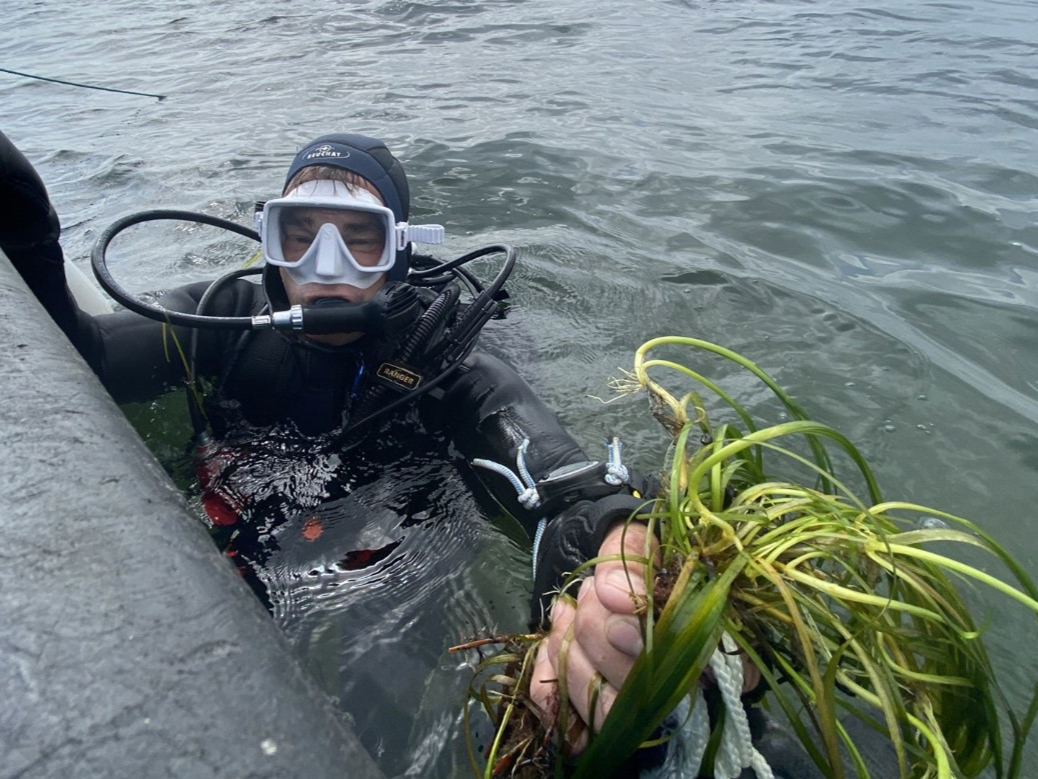
One part of the project has focused on marine conservation efforts in shallow coastal bays from northern to southern Sweden. In the Kristianstad Vattenrike Biosphere Reserve, this has been done by planting new eelgrass meadows in Hanöbukten (Hanöbay).
Eelgrass meadows are an important part of Hanöbuktens ecosystem as they serve as nurseries for many fish species. They provide shelter for both fish and small invertebrates. By transplanting plants from healthy eelgrass meadows to new areas or sites with low coverage, valuable underwater environments are created.
Eelgrass already exist in many locations in the Hanöbukten, and through the new planting carried out within the project, several areas have been connected into a larger ecological unit. The seagrass planting has thus contributed to strengthening the green infrastructure in the sea.
A total of 7,500 square meters, spread across three sites, have been planted within the project.
Results and effects
This action helps strengthen the coastal ecosystems in the affected areas. The short-term effects consist of the planted areas directly contributing to improved conditions for biodiversity in Hanöbukten. The long-term effects also involve enhanced ecological conditions for the species living in Hanöbukten, as the connectivity between the eelgrass meadows is improved. In this way, the conditions are strengthened even in the eelgrass areas that previously existed but are now connected by the new plantings. The eelgrass plantings also provide various indirect environmental benefits—such as reducing erosion and absorbing carbon dioxide, thereby contributing to mitigating climate issues.
Focal points:
- Planted eelgrass meadows directly contribute to improved conditions for biodiversity in Hanö Bay. This is achieved both by increasing the total area of eelgrass meadows and by enhancing the connectivity between existing meadows.
The eelgrass plantings also provide various indirect environmental benefits—such as reducing erosion and absorbing carbon dioxide, thereby contributing to mitigating climate issues.