Communal wetland of Issakka, Ilomantsi
Description of the project
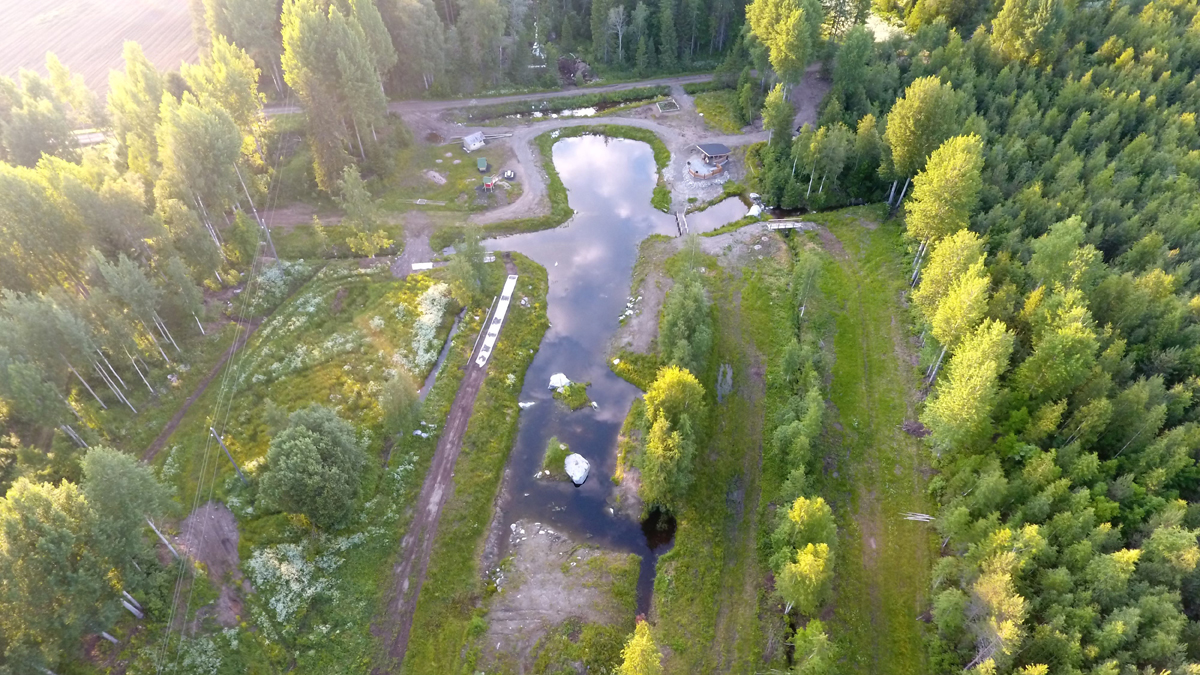
Issakka wetlands are a project of the local village association Mäkikylät ry. Mäkikylät ry consists of three neighboring villages: Issaka, Paavonvaara and Maukkula. The project consists of constructing several wetlands that are connected in the watershed of Ilomantsijärvi lake. In the surroundings recreational structures such as nature paths, communal garden, play areas for kids and place for campfire are also built for the whole community.
The project has created a collage of wetlands that improves water quality of the waters, creates new habitats for wildlife and creates communal place for the locals to use for recreation, environmental education and as site for events. It is an example for landowners on how their unproductive lands could be used for the improvement of biodiversity and water protection.
The wetlands are based on fallow fields that have been unused for years. The total area of the wetlands is about 1.25 hectares, and the forest area connected to them is protected. A lot of the work has mainly been conducted by voluntary workers, but the project has included, in addition to planning, various excavation works, excavating wetlands, transporting earth masses and landscaping work.
Results and effects
The construction of wetlands reduces diffuse pollution from the catchment area to water bodies and improves the water quality of Ilomantsijärvi lake. In a functioning wetland, natural processes clean the water and the time the water stays on its way to the water body is prolonged. The solid settles to the bottom of the wetland and the dissolved substances are retained in the vegetation and sediment of the wetland. At the same time, wetlands offer important nesting, eating and resting areas especially for birds.
As attention has also been paid to the recreational opportunities offered by the wetlands project it offers now good opportunities for camping while increasing interest in the area. The benefits from the whole are manifold, and in addition to the natural values, the project has increased the sense of community in the area.
Focal points:
- improves water quality, creates new habitats for wetland species and supports the protected areas connected to the area (1)
- focussed on recreational values as part of the process from the start. Locals have been informed of the construction throughout the process and everyone has been welcome to take part in the planning and actions. (4)
- The project showcases the process of building of communal wetlands and gives an example of what kind of environmental actions village associations and landowners could do. The process has been assembled in a thesis work that also measured the water quality before the project giving a comparison value for further measurements. (3)
- The project has been a concrete measurement in the implementation of regional water management action plan aims to secure the good state of the waters. The action plan is based on the Water Frame Directive. (5)