Exhibition: circular resources in Nordhordland
Description of the project
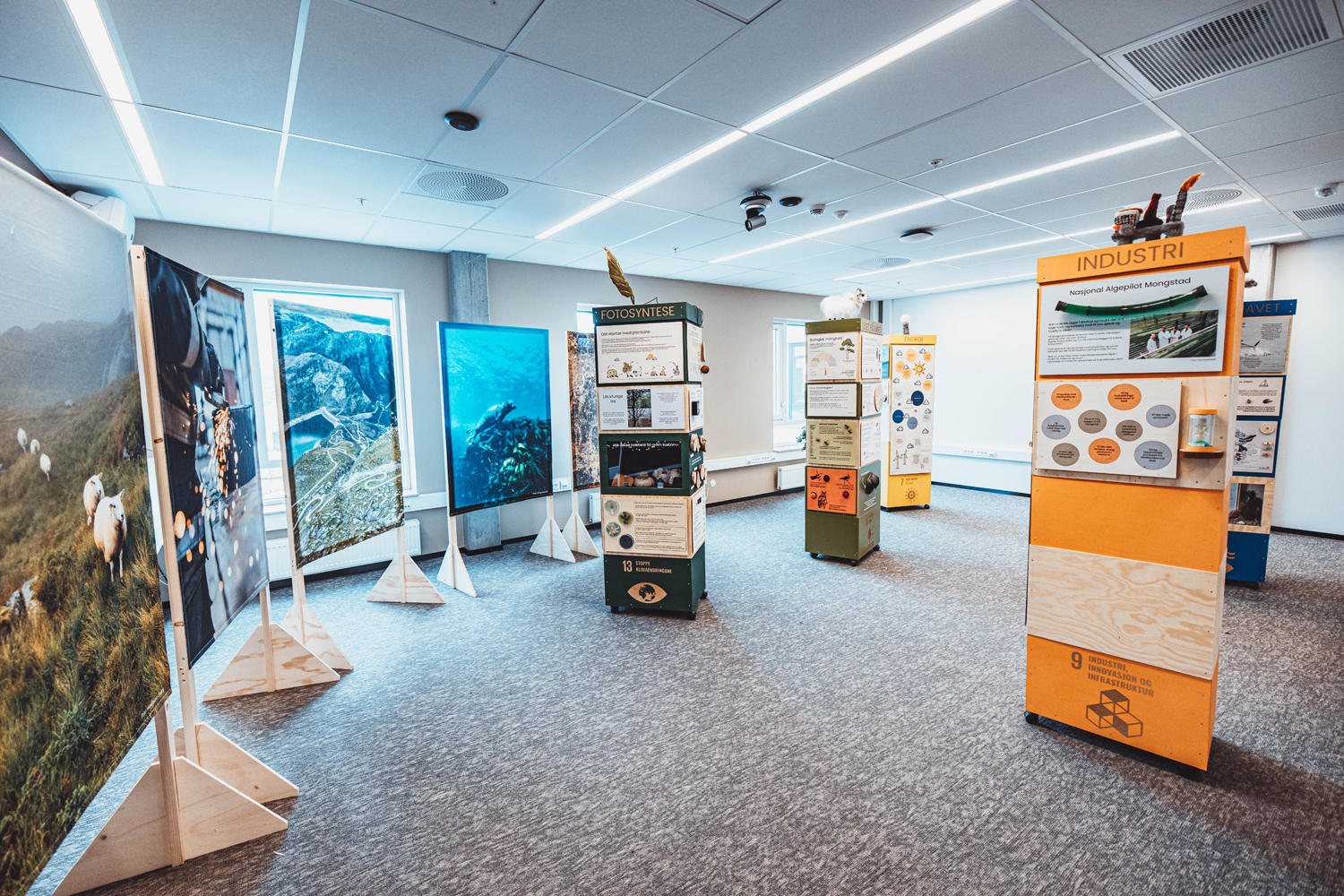
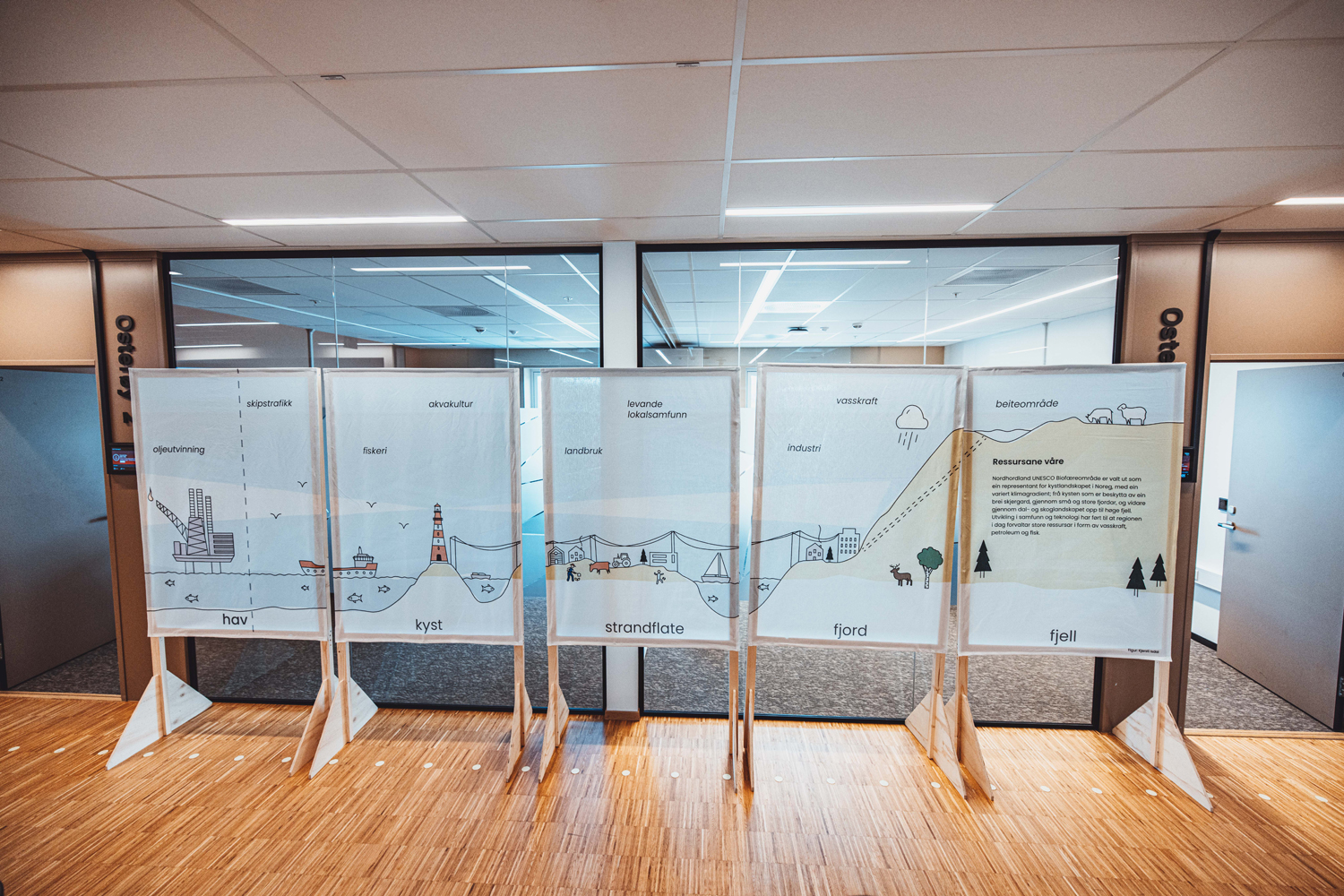
The exhibition showcases how resources in Nordhordland can circulate and is divided in 4 themes: Life on land, Life in the ocean, agriculture, and industry. This is connected to the SDGs in a regional context. It was developed together with the centre for coastal heathlands. The content is based on research, numbers, issues, and narratives anchored in the Biosphere Region and is made available in different formats such as short movies, games and “touch and feel” elements. The exhibition further collects information, which will contribute to future research. In addition to the exhibition educational material was developed, so that teachers and pupils can work more in depth within specific topics in the surroundings of their schools. In 2024 and 2025 the exhibition travels to the 8 different municipalities of the Biosphere Region. In this context, there will presentations with a focus on local sustainability issues as well as an introduction to the MAB programme. The local libraries are hosting the exhibition for a month each. The exhibition was developed and produced with local partners such as designers and illustrators, a printing company, and the regional business sector. A low resource footprint and the reuse of materials had a high priority during the production.
Results and effects
- Increased knowledge about the region and the SDGs
- School children have an educational programmed linked to the exhibition.
- Through events, we have increased engagement on various themes from the exhibition
Focal points:
- sharing research findings in an understandable way and thereby contribute to an improved understanding of sustainability amongst visitors.
- offering educational material that further supports these aims.
- presenting an exhibition with a responsible use of materials.