LIFE Orchids
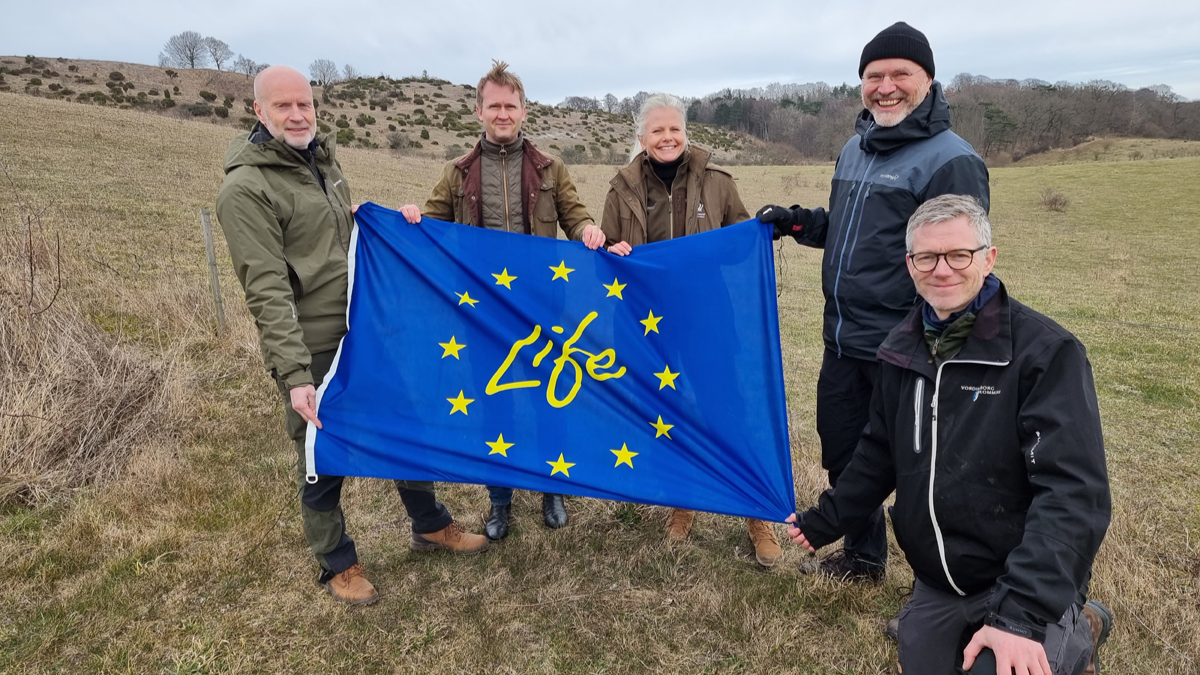
The project is financed by the EU's LIFE Program, Aage V. Jensens Naturfond, 15. Juni Fonden, Den Danske Naturfond and Vordingborg Municipality.
Description of the project
The project will develop, improve, and connect 230 hectares of grassland, create new habitats, and increase the population of the nationally threatened butterfly, Greater Large Blue.
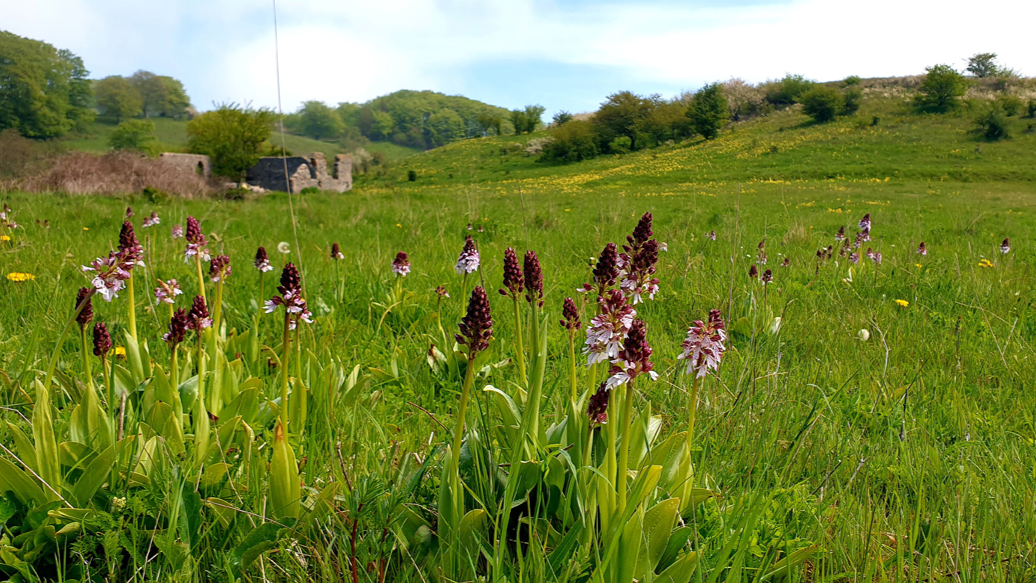
It will simultaneously increase and secure populations of 5 highly threatened orchids as well as improve and increase habitats for wild bees and other pollinators.
The arable land and plantation forest will be restructured into limestone grassland and light-open orchid and butterfly forests introducing large grazing paddocks with cattle, goats, and Exmoor horses.
On the dissemination side, the project will increase the knowledge of landowners and the public about nature restoration and the care of natural areas through various dissemination activities.
Results and effects
The result of the project is improved habitats for larger great blue and orchids as well as several other species.
Landowners and the public have been targeted through continual dissemination activities, such as a high-profile public exhibition on Biodiversity at GeoCenter Møns Klint, talks and excursions for tourists and school classes.