GöteneBostäder – Biosphere Outdoor Environment
Description of the project
GöteneBostäder which is a municipal housing company, wanted the design of the outdoor environment to reflect the values of the BR.
The collaboration has – in addition to the outdoor environment – also influenced the buildings as the developers have achieved extra sustainable values.
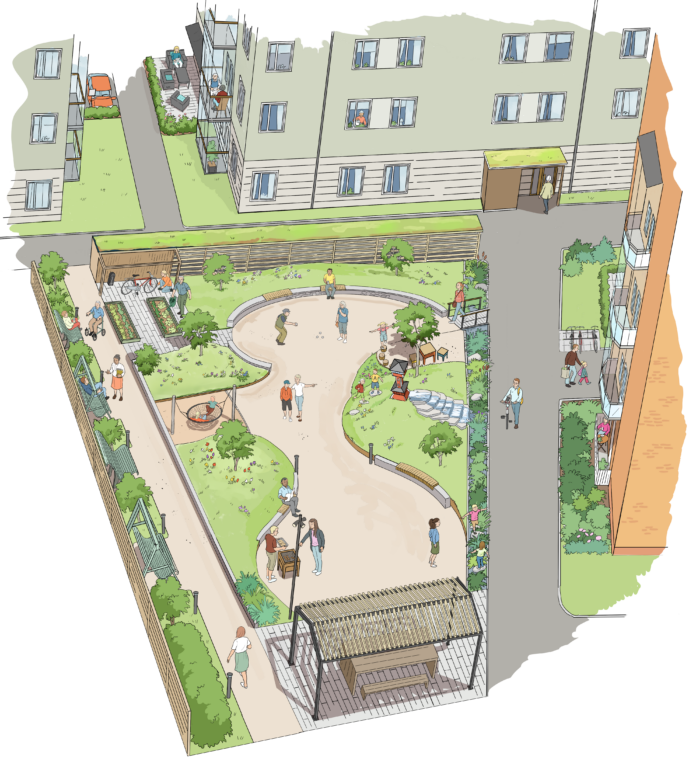
The outdoor environment contains a variety of biological diversity, ecosystem services and nature-based solutions, gathered on a small apartment building courtyard environment.
A web site shows the area's values in an educational way and an exhibition under the stars has been added to the location: Galleri Hemmavé. (The Gallery in the Quarter Back home).
Results and effects
The apartment building courtyard environment now contains a variety of plants with high biodiversity, several ecosystem services, and nature-based solutions.
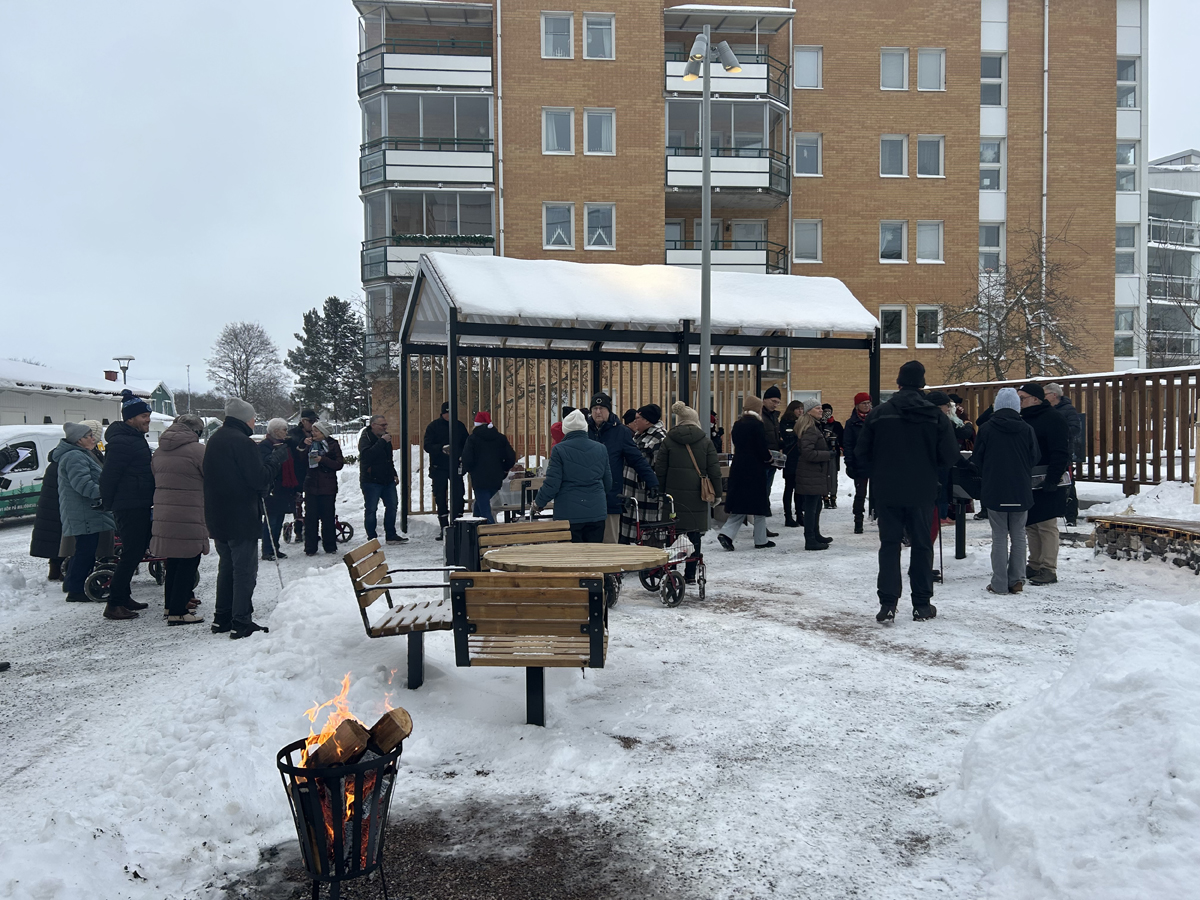
The tenants have also gotten an outdoor environment filled with social meeting places.
An outdoor exhibition displays art for both tenants, citizens of Götene and visitors. Art that shows sustainability in different ways.
Educational signs describe the BR and the different values added to the quart yard, and leads via QR codes to a website with an educational map and information about ecosystem services, the global goals as well as the BR.
Focal points:
- The courtyard serves as a platform for education, fostering a better understanding of ecosystems and sustainable practices for as well pre-schools, schools, tenants, citizens, and visitors. (3)
- The BR and the project involve local communities, encouraging their active participation in biodiversity conservation and sustainable development. (4)
- The project has involved local communities by creating ownership and engagement, as a step for the UNESCO BR to assist in creating local acceptance of necessary changes and responses to the implementation of the targets of the GBF. (5)
- The project has contributed to strengthening ecosystems, species, and genetic diversity. (1)
- The BR demonstrate sustainable practices in land use, a recreation area for human activities. They showcase how humans can live in harmony with nature while ensuring the sustainable use of resources. (2)
- The BR has briefly shared information about this project in a panel discussion at the Euro-MAB conference in Germany, June 2024. (6)