Innovative solutions to restore coastal meadows
Description of the project
The wetland area along Helge river in Kristianstads Vattenrike have been designated to be a RAMSAR site and represent Sweden's largest area of inland coastal meadows. It is a cultural landscape where many of the plants and animals of the old agricultural landscape still exist.
The area is known for its rich birdlife, and the wet meadows serve as vital resting and nesting sites for many waders and ducks. The nature values of these meadows are dependent upon annual flooding and management strategies in the form of mowing or grazing. In the absence of effective management, the area is prone to overgrowth of reed, grey willow and alder.
The restoration process is complicated by the presence of high soil moisture and poor bearing capacity. Furthermore, the nesting season for birds must be considered, and all work must therefore be carried out in late summer.
In its role as a testing ground for innovative ideas that support sustainable development in nature conservation, the biosphere reserve has tested several new methods and machines.
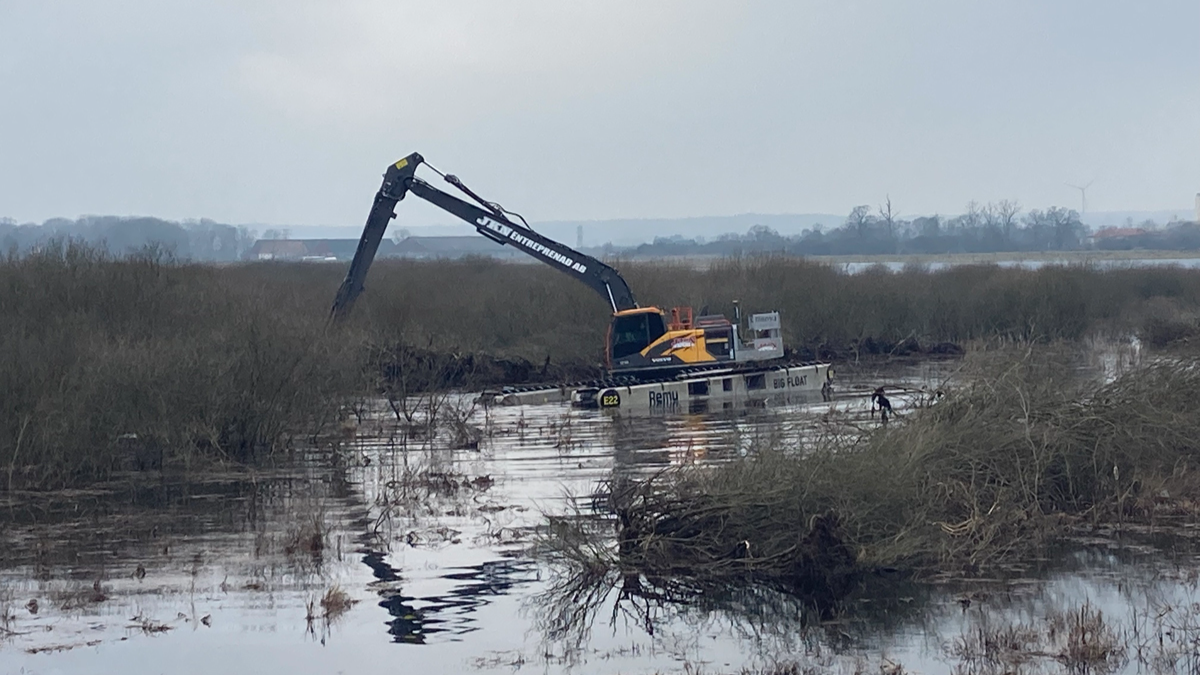
For instance, a floating excavator was used to remove grey willow from the seasonally flooded grassland. By pulling the bushes up by their roots, the amount of uprooting is greatly reduced.
In more inaccessible locations, a skidsteer loader equipped with a mulching head was used to cut compact areas of willow and alder.
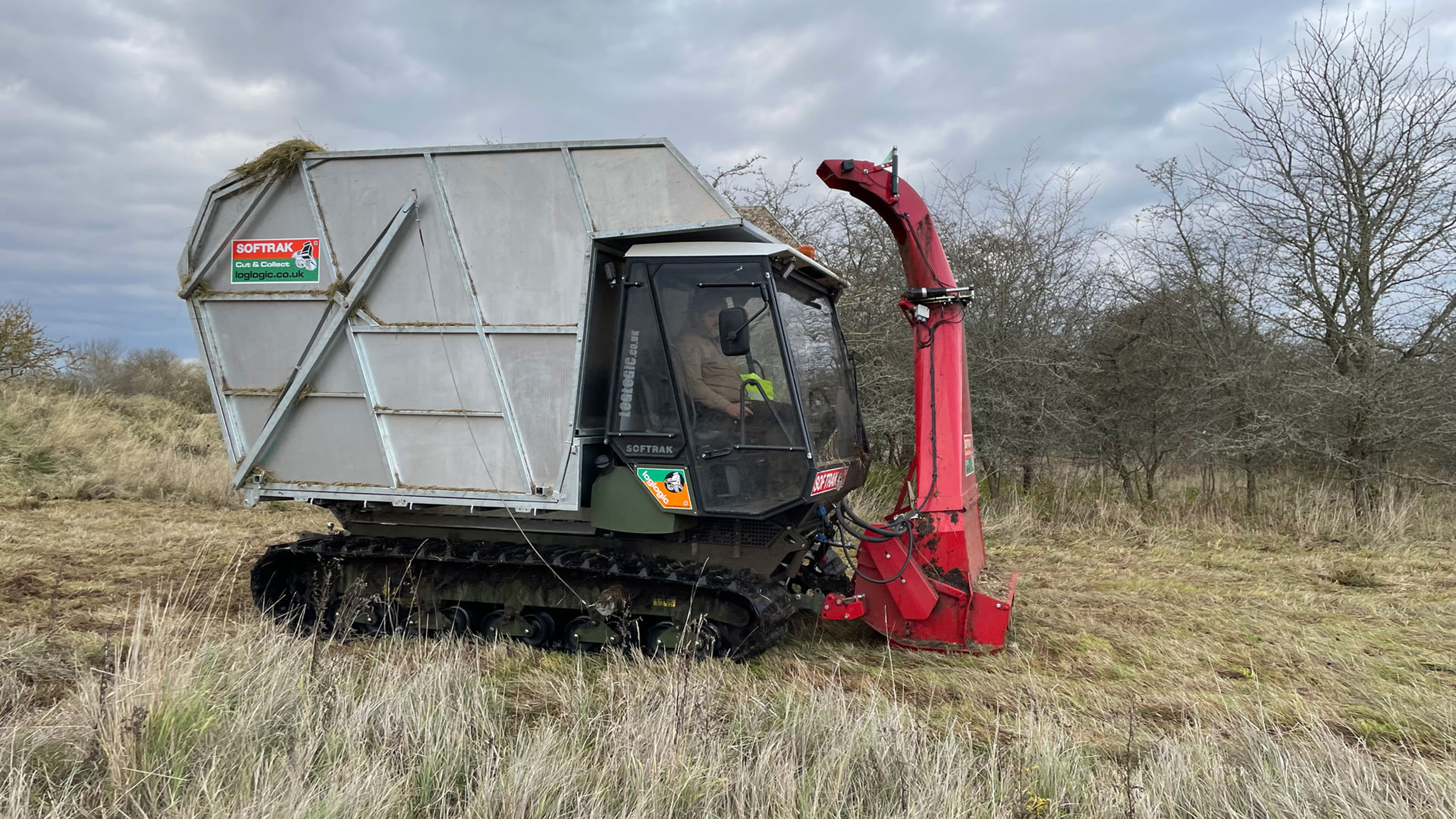
A small three-in-one machine on rubber tracks, which is capable of cutting, collecting and removing vegetation in a single pass, has been tested on abandoned hay meadows with positive results. Its low ground pressure and rubber tracks ensure minimal damage to flora and fauna in these sensitive areas.
Results and effects
A total of 21.5 hectares of wet meadows have been restored and are now managed using a combination of mowing and grazing. On the restored areas, favourable conditions have been created for endangered species such as the Fen ragwort (Jacobea paludosa) and the Black-tailed Godwit (Limosa limosa)
Finding new and cost-effective ways to restore and manage grasslands is essential to managing these areas for the long term. The actions have been evaluated for efficiency, impact on flora and future work required, and we now have a better understanding of which machines to use in which areas, and their advantages and disadvantages.
This knowledge will be passed on to conservation managers and farmers. A demonstration day will take place in October this year.
Focal points:
- Restoring areas and creating better conditions for species associated with coastal meadows, benefitting biodiversity (1)
- Managing the restored land through grazing and haymaking. The production of food from coastal meadows is an underutilised resource and crucial for maintaining biodiversity (2)
- The restored meadows will serve as a demosites, offering an opportunity to observe the results of various methods and machines (3)