Appendix C. Report from the workshop in Helsinki 2023
The Nordic stakeholder workshop
Long-term Conservation and Access to Nordic Crop Wild Relatives
23-24 October 2023, Helsinki, Finland
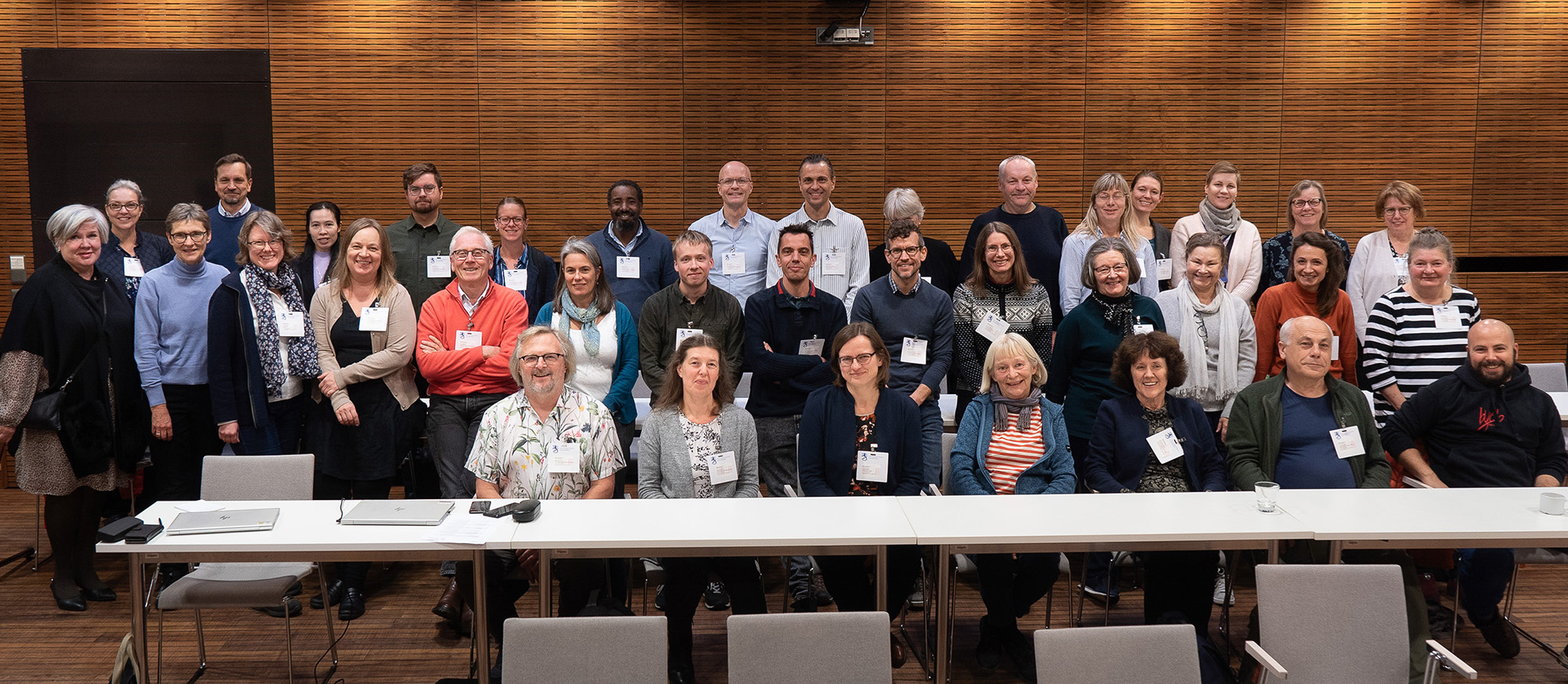
Background
The Nordic stakeholder workshop Long-term Conservation and Access to Nordic Crop Wild Relatives was the second to be held within the joint Nordic project: Conservation and sustainable use of genetic resources in the Nordic region, which is a part of the Nordic Council of Ministers’ Nature-based solutions programme 2021–2024. The first workshop, held in Oslo 3 November 2021, aimed at identifying themes to focus upon, and activities to be carried out, during the two years to follow. This time focus was mainly placed upon aspects of in situ conservation and access to genetic material in protected areas. Prior to the workshop a set of questions were sent out to the participants aiming at having informed group discussions that would assist in developing future Nordic policies with relevance for crop wild relatives. The questions were the following:
- Conservation of crop wild relatives (CWR) in their natural environments
- Discuss aspects of long-term robustness of different protected area (PA) categories
- MAWP (Most Appropriate Wild Population)
is an adopted concept to help prioritising. Discuss whether we should apply the concept in our region and, if yes, how would we proceed?
- Access to these genetic resources
The availability of genetic resources – in our case a CWR – very likely depends upon the category of PA where the taxon grows. Could you envisage the development of a simplified procedure that would facilitate access? Discuss pros and cons. - What future Nordic and Baltic cooperation activities do you envision could strengthen conservation and access of CWR in the Nordic-Baltic region?
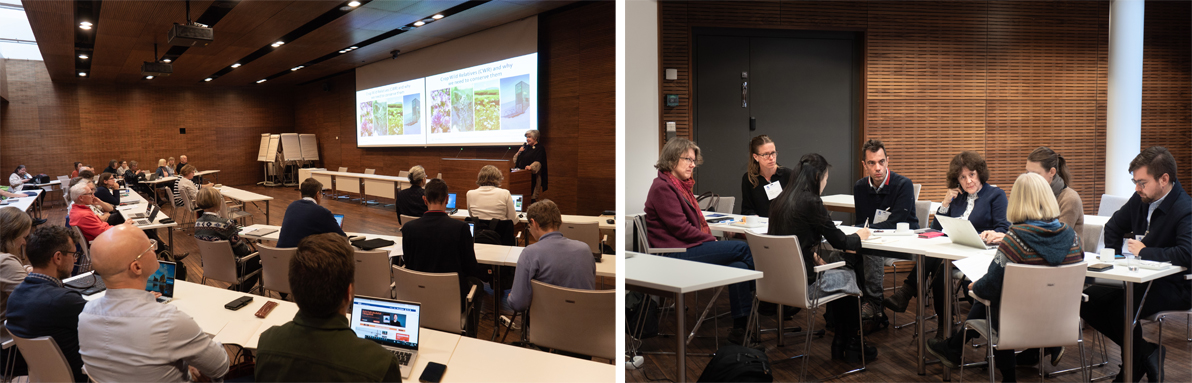
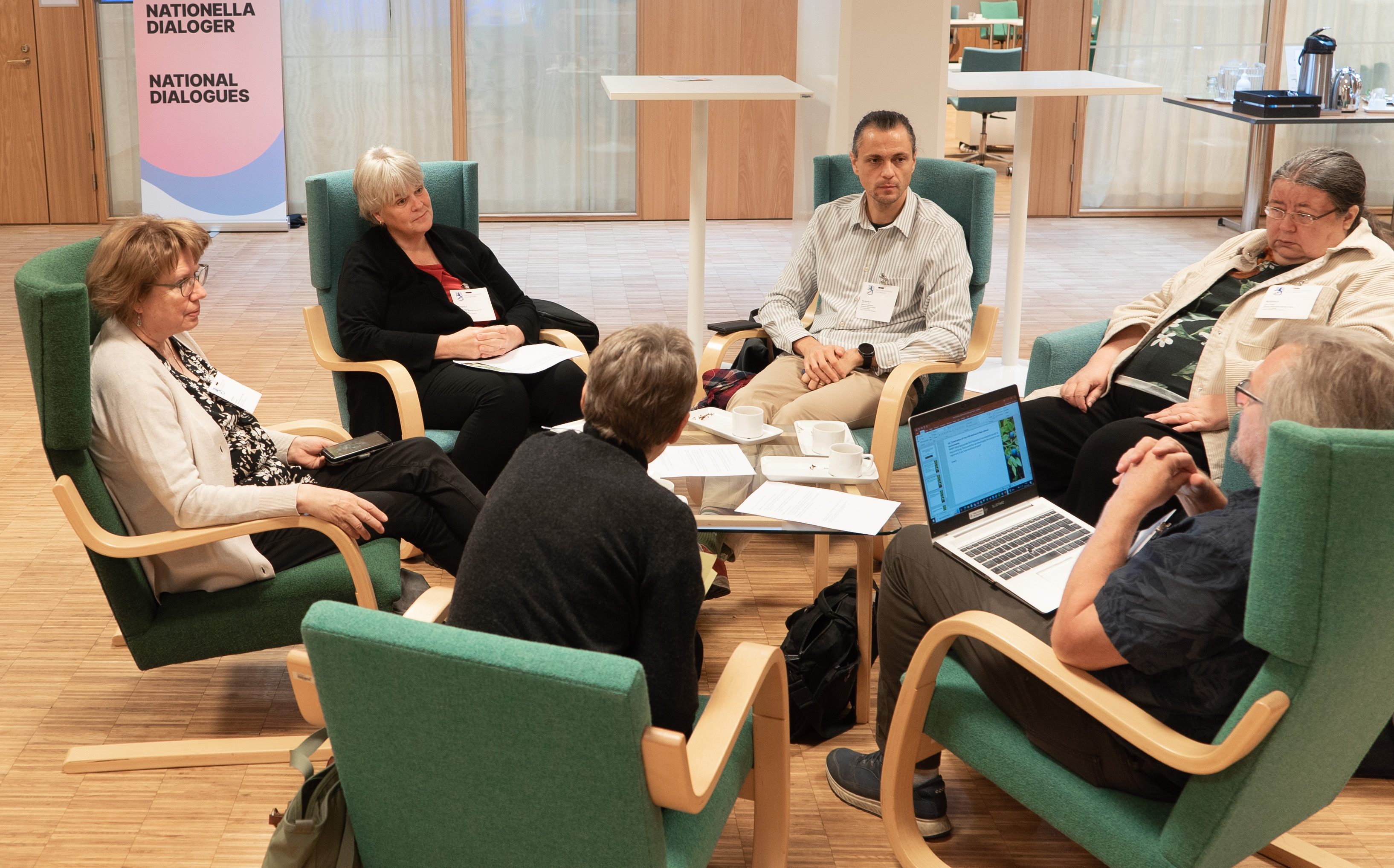
Participants were divided into four groups and left to delve into the questions for over an hour and a half. Reporting was made group-wise. In addition to the group reports, an individual input was provided by Maija Häggblom, The Government of Åland.
Results
The following report aims at merging and summarising the groups’ responses on the various questions.
There was no preference for any particular type of protected area (PA), as long as they are publicly owned and managed. While in fact all PAs were deemed suitable for CWR conservation, Natura2000 areas and biosphere reserves were identified as being desirable and flexible, respectively. In some regions, however, only a singly type of PA exists. It was also pointed out that privately owned land can play a role and that synergies between PA networks and private landowners should be explored.
The importance of carrying out regular inventories and monitoring was noted. CWRs need to be specifically mentioned in management plans, especially considering grasslands, as many of the taxa require minimum levels of management. This is particularly true since climate change is such a strong driver, and species will – and must – be able to migrate.
While both funding and knowledge of PA managers about CWRs are two essential aspects, it should also be kept in mind that different CWRs have different requirements and, therefore, different types of habitat and maintenance/use are needed.
Finally, long-term conservation of CWRs will require the engagement of both the research and the conservation communities. Communication will be essential to foster understanding of the need to safeguard these resources, and to raise awareness. In this regard, selected species could serve as flagships.
Today we know too little about the genetic diversity of our wild populations and we would need to increase our knowledge about the geographic structure of this diversity, aiming at identifying genetically unique populations. In this respect, the concept Most Appropriate Wild Population – MAWP – makes sense and could help us prioritize. However, being difficult to communicate to less informed groups (policy makers, the general audience) the term needs both a strict definition and to be used with a clear conservation target.
There are a number of aspects to take into account, including whether to identify MAWPs at the national or regional scale, to select CWR taxa based on established priority lists as well as considering that populations will continue to alter their genetic makeup and structure as well as location as a result of, e.g., on-going climate change.
The concept was seen as a valuable tool that could be used when planning conservations practices in PAs, but it was recommended to be used having the breeders’ needs in mind. A suggestion was also made to test the concept on a ‘trial first’ basis, not least to learn more and get hands-on experience of how to implement it. Based on the results of such a trial – which would probably be one of the first of its kind in Europe – further decisions could be taken concerning its use.

A preferable option, according to several groups, would be that access to wild genetic resources was facilitated through a gene bank. A Nordic approach could, in such a setup, either entail NordGen or national gene banks as the entry point for requests of CWR material (seeds), or both. This includes seeds of threatened species where a competent authority, possibly including a designated focal point, also needs to be involved. Access to living plants was not discussed in detail by any of the groups but might involve a domestic collection (gene bank) in collaboration with a designated authority. The principles of access to genetic material requires adhering to agreed regulatory frameworks and agreements meaning that material transfer agreements (MTA) will be needed. This, in turn, will require the assistance of competent persons to handle future requests. It should be noted that access legislation differs slightly between the Nordic countries; therefore, any future system aimed at handling access application will need to show some flexibility.
Outstanding issues that were not resolved during the discussions include access for commercial purposes and the question of whom would bear the costs for collecting the material.

It became very clear that the participants of the workshop wanted the joint Nordic collaboration to continue, and preferably also being widened to include colleagues from the Baltic countries. Common goals and challenges should be identified and be expressed in a future joint application for funding. Tentative donors such as the Nordic Council of Ministers, EU LIFE and Horizon Europe were mentioned.
The following is a list of topics that could lead up to a new joint application:
- Analysis of genetic diversity, incl. hotspot uniqueness, genetic and niche differentiation, geographic scales, and species-specific conservation
- Long-term monitoring of populations over time incl. extinction risks
- More focussed in situ inventories, assessments of potential overlaps with existing PAs, and development of standards
- More collaboration on ex situ collection and conservation of CWRs, incl. the development of standards and protocols
- Communication, using a wide palette of tools and approaches
- Development of a Nordic-Baltic in situ inventory/database
- Knowledge exchange and training
Annex 1. A compilation of all comments provided by the groups in their presentations.
National park, nature reserve, nature conservation area, biosphere reserve (UNESCO), World Heritage site (UNESCO), …
- Promote and extend nature reserves owned by the state
- Protection should not only be rooted locally only, but preferably nationally.
- To cover all the priority CWR species we need different types of habitat and different types of maintenance/use.
- Need to be specifically mentioned in a management plan, especially grasslands.
- Explore synergies between network of PAs and private landowners
- Almost all group 2 members are not working with Pas
- Different CWRs have different requirements
- Presence of different PAs categories is important
- Some CWRs for example need minimum level of management
- Natura2000 is the best category (CWR should be included in the management plan – a list of CWR present in the area)
- Identifying flagship species that shape the environment
- Forest genetic reserves
- There is only one kind of PA in Åland – putting specially the list of CWRs
- Plant inventories and regular monitoring
- National forest inventory in Finland since 1920s – these types of information are important
- this depends on the country, need to be flexible
- e.g. in Spain Biosphere reserve network has been easiest to work with
- All sites are suitable if PAs are aware of CWR and have sufficient funding to carry out conservation work
- Best sites could be ones that are not dependent on national funding
- Need to establish links between CWR research and conservation communities – get the message out there
- Need to think how CWR community can support the PA managers?
- Answer: It depends, legislation differ and regulations – what is possible or not depending on the country.
- All types protected areas could be suitable
- The climate change is an important driver together with landscape management
- A need of a chain of PAs to take care of future changes – to have the possible to move CWR to more suitable PAs
- Genetic “reserves” do not need to be Pas, but how to preserve long-term?
- Biosphere reserve is a possibility that can be flexible enough for CWR “protection”
- In Åland, there is, at least so far, only one kind of protected areas, the nature reserves. Then it is the conservations decision that gives the forms of conservation and possible methods for management. I suppose, it is quite of a suitable approach to achieve sufficiently adapted protection and management, together with updated management plans.
- In many cases in general, even “strict protection” can allow some kind of management. It is mostly a question about what else than CWR is to be protected in the area. If there are some goals for the protecting of the PA that do not work well together with managing and protecting the CWR you wanted to protect there, then the PA is not so good as an area for conservation of CWR. But even this can differ between different CWRs.
- Application of MAWP can help us to prioritize but is demanding in terms of knowledge.
- Concept can be difficult to communicate (many acronyms already) and need to be used with a clear conservation target.
- Can be useful to conserve particularly interesting populations, e.g. locally adapted across a geographical gradient.
- Could be a nice complemental conservation practice to CWR management in PAs.
- Need to take into consideration that populations can move, they can change (less genetic diversity).
- Genetic information on the background population is lacking in most genetic reserves
- The need of conserving genetically peculiar populations
- The need to work on geographic structuring in genetic diversity and identifying genetically unique populations (for prioritization)
- Obtaining such data throughout the distribution area
- Population level information is important
- May not be fit to range restricted species? Incorporating such population, if not yet considered.
- There is a need to identify populations, MAWP is something we could aim for, need to be pragmatic
- Should MAWPs be selected nationally or regionally? (complementary populations within a country or region)
- If using the MAWP criteria, should exclude invasive or potentially invasive taxa (of those established over 10 generations)
- Answer: Local adaption important when improve populations and when need of species for improve pollination
- Need a lot information and education of political and agency people
- Priority list important both national and Nordic, European….
- What is LAWP? Least AWP
- A strict definition needed to make MAWP relevant
- Evaluated/priority according to breeders need
- Genetic diversity very important in defining and prioritising MAWP
- I guess it could be a good tool in the toolbox. Unless, more monitoring needs to be done before approaching full benefits of it.
- I guess we should learn more about the concept to begin, maybe do some tests with the concept. Then we need to discuss the scale of areas for prioritising: land, certain kinds of areas, Nordic contest…
- Person/centre acts as a coordinator and conduct the administrative work (clearance, SMTA, etc.) on behalf of the PA.
- Access is facilitated through an ex situ collection.
- If material is not available in a gene bank it can be requested through an appointed person at national level.
- Regional gene banks are responsible to make collections with research permits and make the data available publicly
- Tracing and managing data sharing – material transfer agreements
- (The use of SMTA)
- SMTA requires reporting to FAO as well
- Making sure that regulated access to these resources is possible
- How about access for commercial purposes?
- It should be ok – since that is the main purpose of conserving them
- But they should share data and benefit
- Access to both in-situ and ex-situ data
- Availability could be arranged through gene banks/seed banks
- Botanic gardens play a role in seed collecting
- Should the users fund the collecting trips if seeds are not already available?
- Answer: In most PAs is easy to get permission for seed collection, but differ some between the Nordic countries
- The need of monitoring – how to include in existing monitoring schemes?
- Each country should have responsibility for their work (collection)
- Citizen Science could be useful if it has a relevant backbone
- In this question I do only consider Åland, because of the own legislation for the autonomous area. In the nature Conservation Act there is the possibility for exception for research that could be used for access to genetic resources. It only demands an application for a permit in that case to get access. In the permit there can/would be terms for using the resources.
- Pros: The progress is quite easy, and the cost is not high (so far? That can change). In case of research, it is not hard to motivate if small amounts and no negative impact for the species, area.
- Cons: can create too much pressure/interest in long-term. Demands special competence of them working with permits and management methods
- Build on already established activities/networks
- Identify common goals in the various countries
- Examples could be:
- Species-specific conservation
- Development of a Nordic-Baltic in situ inventory
- Seed collection (for back-up storage)
- Communication activities, including exhibition, workshops, interest from media etc.
- Development of tools, protocols and standards (e.g. of inventorying, network-establishment).
- Genetic work throughout the whole distribution area
- Coupling genetic and niche differentiation throughout the distribution area
- Identifying diversity and uniqueness hotspots both under current and future climates
- Assessing whether these hotspots overlap with the already existing PAs
- Cooperation on ex-situ conservation – collaborating on gene banks
- The need of monitoring over long-term – by permeant institutes
- One line of cooperation is communication
- The need of discussing future protection plan
- Especially with focus on vulnerable species and populations (reintroduction, assisted migration, an attempt to bring them back)
- Communication activities
- Sharing knowledge
- Training
- CWR protocols in gene banks
- Genetic diversity analysis
- In situ – sharing experience and knowledge
- Capacity building call (H2020)
- Nordic Council of Ministers funding
- A cooperation project like this is important for exchanging
- Nordic-Baltic cooperation could easily get financing than pure Nordic cooperation
- Life-project could be a real possibility
- Continuity in interaction, possibility to share information about species and where they are located, genetic similarities/differences between the different countries in this region.
- A nearer look on if there were some locations with stronger populations of the same species (I mean identical even in question of genotype) that had disappeared/has a risk to disappear in some area of the region, that would be possible to use for experiments for bringing back some species.
- Join discussion on management plans and needs for CWR conservation in the whole region.
Annex 2. Agenda and participant list
Welcome and introduction (Chair: Hjörtur Þorbjörnsson, Reykjavík Botanic Garden) | ||
13:30 | Opening of the workshop & welcome addresses | Kirsi Heinonen, Ministry of Agriculture and Forestry Elina Kiviharju, Natural Resources institute Finland (Luke) |
13:40 | Crop Wild Relatives (CWR) and why we need to conserve them | Anna Palmé, NordGen |
In situ conservation (Chair: Hjörtur Þorbjörnsson, Reykjavík Botanic Garden) | ||
13:50 | Finnish conservation areas and their management | Kaija Eisto, Metsähallitus, Parks & Wildlife Finland |
14:05 | In situ conservation in Nåtö Nature Reserve | Maija Häggblom, the Provincial Government of Åland |
14:20 | Experiences from establishing genetic reserves in Spain | Ada Stella Molina Pertíñez, Rey Juan Carlos University |
14:35 | Management recommendations for CWR in Faerder National Park | Linn Borgen Nilsen, Norwegian Genetic Resource Centre, NIBIO |
14:50 | Discussion and Q&A | Chair, all |
15:00 | Coffee break | |
Use of CWR (Chair: Birgitte Lund, Danish Agricultural Agency) | ||
15:20 | Use of Nordic CWR in plant breeding of field crops. | Merja Veteläinen, Boreal Plant Breeding |
15:35 | Use of CWR in berry/fruit breeding | Saila Karhu, Natural Resources institute Finland (Luke) |
15:50 | Caraway project | Marjo Keskitalo, Natural Resources institute Finland (Luke) |
16:05 | Discussion and Q&A | Chair, all |
The Nordic Crop Wild Relative project (Chair: Birgitte Lund, Danish Agricultural Agency) | ||
16:15 | Project introduction | Anna Palmé, NordGen |
16:25 | Effect of climate change on Nordic crop wild relatives | Heli Fitzgerald, Finnish Museum of Natural History, LUOMUS, University of Helsinki |
16:40 | Inventory of CWR in protected areas in the Nordic countries – lessons learned | Mora Aronsson, Swedish Species Information Centre, SLU |
16:55 | Genetic diversity within Nordic CWR | Bernardo de Haro Reyes, Linköping University and NordGen |
17:10 | Discussion and Q&A | Chair, all |
17:25 – 17:30 | Closing the meeting | Chair and Anna Palmé |
European and international cooperation on CWR (Chair: Anna Palmé) | ||
9:00 | The PRO GRACE project | Joana Brehm, University of Birmingham |
9:15 | A new European project on CWR: COUSIN | Sylvain Aubry, Federal Office for Agriculture, Switzerland |
9:30 | Utilizing Digital Twins for Crop Wild Relatives: Advancing Food Security and Conservation Efforts | Desalegn Chala, Natural History Museum, University of Oslo |
9:45 | Discussion and Q&A | Chair, all |
Discussion workshop on conservation of, and access to, crop wild relatives in the Nordic region and beyond. | ||
10:00 | Introduction to the discussions | Jens Weibull, Swedish Board of Agriculture |
10:10 | Group discussions with Coffee break | All |
12:00 | Reporting from the groups and discussions | Jens Weibull, all |
12:50 - 13:00 | Closing words | Elina Kiviharju and Anna Palmé |
Full name | Organisation |
Ada Molina | Rey Juan Carlos University |
Agnese Gailite | Latvian State Forest Research Institute "Silava" |
Anna Palmé | NordGen |
Aphinya Wongpia | DOA genebank, Thailand |
Bernardo de Haro Reyes | NordGen/ Linköping University |
Birgitte Lund | Danish Agricultural Agency / Landbrugsstyrelsen |
Carrie Andrew | Natural History Museum, University of Oslo |
Desalegn Chala | University of Oslo, Natural History Museum |
Elina Kiviharju | Natural Resources Institute Finland (Luke) |
Elisabet Wallsten | Länsstyrelsen Blekinge (County Administrative Board) |
Hákon Ásgeirsson | Environment Agency of Iceland |
Heli Fitzgerald | Finnish Museum of Natural History, Luomus, University of Helsinki |
Hjörtur Þorbjörnsson | Reykjavík Botanic Garden |
Janus Thulesen Dahl | SustainScapes, Aarhus University, Department of Biology |
Jenny Hagenblad | Linköping University |
Jens Weibull | Statens Jordbruksverk/Swedish Board of Agriculture |
Joana Magos Brehm | Instituto Nacional de Investigação Agrária e Veterinária, I.P. and University of Birmingham |
Johanna Nykyri | Ministry of agriculture, focal point GR Finland (Board of genetic resources) |
Jonatan Jacobson | NordGen |
Juozas Labokas | Nature Research Centre, Vilnius, Lithuania |
Kaija Eisto | Metsähallitus PWF |
Katileena Lohtander-Buckbee | Finnish Environment Institute |
Kirsi Heinonen | Ministry of Agriculture and Forestry |
Kristina Bjureke | Natural History Museum, University of Oslo |
Külli Annamaa | Centre of Estonian Rural Research and Knowledge (METK) |
Laima Cesoniene | Vytautas Magnus University |
Linn Borgen Nilsen | Norwegian Genetic Resources Centre, NIBIO |
Magnus Göransson | Consultant, Reykjavik Botanic Garden |
Maija Häggblom | Ålands landskapsregering |
Marjo Keskitalo | Natural Resources Institute Finland (Luke) |
Marja Ruohonen-Lehto | Syke (Board of genetic resources) |
Marko Hyvärinen | Botany and Mycology Unit, Finnish Museum of Natural History |
Merja Veteläinen | Boreal Plant Breeding Ltd. |
Mora Aronsson | SLU Artdatabanken (Swedish Species Information Centre) |
Petri Ahlroth | Ministry of Environment, Finland |
Rene Aavola | Centre of Estonian Rural Research and Knowledge (METK) |
Saila Karhu | Natural Resources Institute Finland (Luke) |
Snorri Sigurdsson | Icelandic Institute of Natural History |
Solvita Rūsiņa | University of Latvia |
Sylvain Aubry | Swiss Federal Office for Agriculture |
Tiina Tonteri | Natural Resources Institute Finland (Luke) |