8. Spin-offs from the project
8.1 Identifying management needs of CWR-species in Færder National Park
In 2022, the Norwegian Genetic Resources Centre received funding from the Norwegian Agricultural Agency (Landbruksdirektoratet) for a project to further assess CWR-species at two of the islands in Færder National Park, including threats and current management needs. This was a direct follow-up of the Nordic project and the extensive inventory of CWR-species conducted in Færder NP. The field work was conducted in 2022 and 2023, and a detailed report was presented to the National Park management and local authority in mid-2024 (Figure 18). The results of the project confirmed the rich diversity of CWR-species in Færder NP and provided a detailed mapping of populations of selected species on two islands in the park. It evaluated the current management practices that have been implemented in the area so far and found that most of them also favour populations of CWR-species. The project identified the need to expand the current management practices, both within existing areas to new areas where selected CWR-species are under threat. It was recommended to develop a comprehensive management plan for the area, which considers conservation of vegetation types and species diversity, including rare species, red-listed species and CWR species. The findings have been published in a report (Pedersen and Nilsen 2024, in Norwegian).
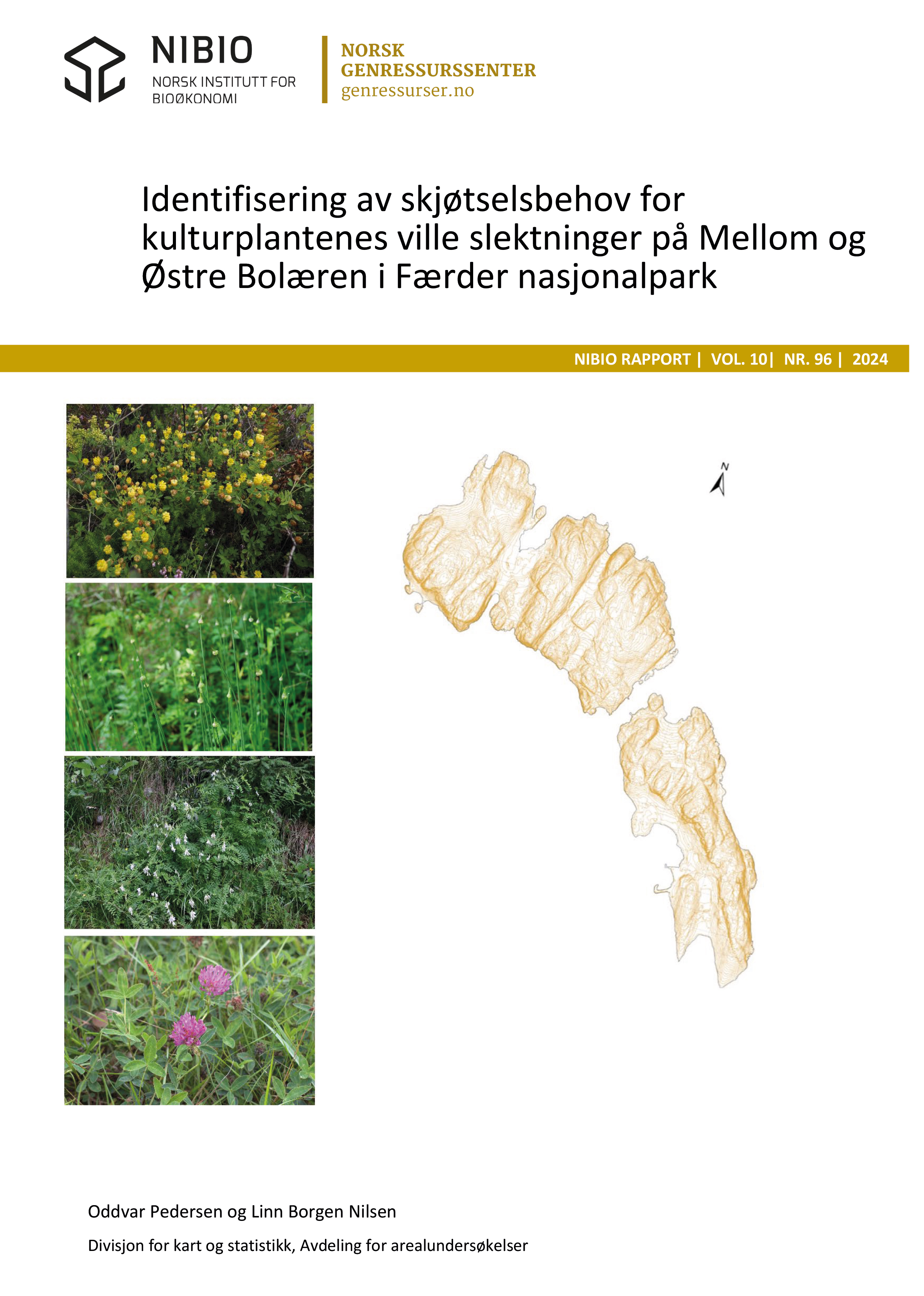
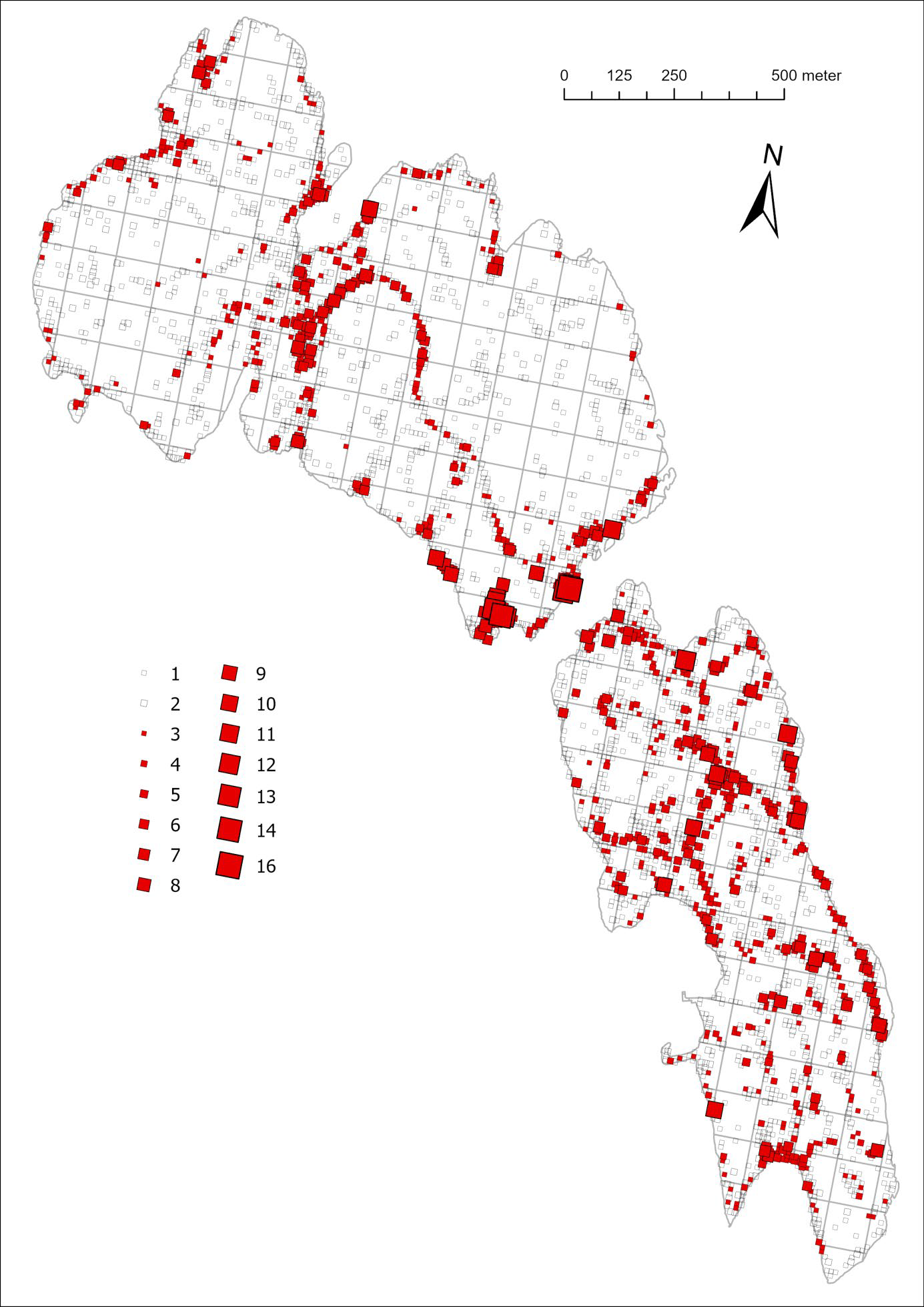
Figure 18. Published report from the spin-off project in Færder NP (left) and map and CWR-taxa on the island of Bolærne in 10x10m squares (right).
8.2 CWR pilot project in Reykjavík
In 2021, Reykjavík Botanic Garden received funding for a CWR pilot project making inventories and management recommendations for CWR populations in green and coastal areas of Reykjavík municipality. The project was one of eight pilot projects in the program for Nature-based solutions funded by the Nordic Council of Ministers. The project was based on an idea that sprung from the Nordic CWR project where inventories were performed in protected areas in nature. In the pilot study, inventories were performed in close vicinity to the city of Reykjavík, with the aim of studying habitats with CWR species in a more urban environment.
8.3 National CWR project in Finland
A national project, “CWR conservation strategy for Finland” 2017–2020, was funded by the Ministry of Agriculture and Forestry, and participants included Luke, the Finnish Museum of Natural History Luomus, and Metsähallitus Parks and Wildlife Finland. The aim was to plan a national implementation of CWR conservation in Finland. An informal network was established to form a discussion forum and to guide the national CWR conservation planning. The Finnish CWR priority list (Fitzgerald 2013) was updated (Fitzgerald & Kiviharju 2018), CWR in situ hotspots were identified by complementarity analysis and an inventory of CWR in semi-natural habitats of Nuuksio National Park was carried out. Based on these analyses, potential genetic reserve areas were suggested.
The results showed that a majority of the priority CWR are found in protected areas, and the current management measures are generally profitable for several CWR species. However, not all CWR occur in protected areas, and their conservation requires further planning as well as active management and monitoring of all priority species. Potential costs of CWR conservation were roughly estimated for the future implementation purpose of project recommendations. The main findings of the Finnish CWR project were published in 2023 (Fitzgerald et al. 2023), and detailed information can also be found in the project report (Fitzgerald et al. 2020, in Finnish).