7. Preliminary conclusions and proposals for further work
Critical minerals are necessary for human life and our modern society. The minerals are also the foundation in the ongoing transformation of the economy based on fossil carbon to an economy based on metals. Independent access to these minerals through mining, recycling and global partnerships are necessary to keep Europe safe and secure. CRMA introduces important but challenging recycling goals for CRM. Increased recycling of CRMs is possible, but many barriers currently limit further development of value chains for secondary CRMs. This report summarises potential measures that may be instrumental for hitting the recycling targets presented by CRMA. Some measures are more or less locked in as requirements in CRMA. This includes setting up programs for mapping CRM waste streams with CRM recycling potential and implementing routines for statistical description of CRM-material streams.
Although some assumptions have been made in this report about waste streams that should be considered for CRM-recycling, a systematic mapping of waste streams with recoverable levels of CRM must be performed before any final assessment can be done about the potential for CRM-recycling from Nordic waste streams.
When a comprehensive description of the CRM-recycling potential is available, the next step will be to set up a system for collection and pretreatment of relevant waste streams so they can be efficiently used as feedstock for a recycling operation. To ensure cost efficiency, collection of CRM-waste should if possible be integrated with existing waste collection schemes to ensure rational and cost-effective collection operations. Many waste streams need pretreatment before they can be recycled. Most often this involves sorting that separate CRM-materials from other materials in the waste stream that do not contain recoverable CRMs. A barrier to efficient sorting of many waste streams is lack of available technology for advanced automatic sorting operations. Nordic countries should consider R&D-projects that can provide better technological solutions in this sector.
EPR-schemes that handle waste streams with recoverable CRMs can ensure better recycling of many CRMs than what happens today, and the framework conditions for these EPR-schemes should be updated accordingly. These EPR-schemes include WEEE, scrapped vehicles and tyres. New EPR-schemes should also be considered for discarded products and materials with recoverable CRMs that form waste streams that fall outside of existing EPR-mandates.
Both technological and economic barriers limit recycling options for CRMs. For many CRMs no recycling technology is currently available. It is therefore of crucial importance that increased efforts are put into the development of new and improved recycling technologies for many CRMs. Many recycling processes for metallic CRMs only recycle a limited number of metals which often leads to significant loss of niche CRMs in both slag and as pollutants in secondary products. Efforts should be made to improve the efficiency of these processes and to increase the number of CRMs that are recovered.
The cost efficiency of the value chains for secondary CRMs must also be addressed, and it is hard to imagine necessary profitability without better economic support systems for Nordic industries that are comparable to the operational conditions in for similar industries in China.
The Nordic Countries could benefit from a common approach to improved recycling of CRMs, as the Nordic countries are rich in mineral resources and are already active in extraction and processing of critical raw materials. This expertise and technology base can be further developed in cooperation with research institutions and entrepreneurs.
This report shows that there are huge volumes of critical raw materials that are lost as waste every year. For many of these raw materials recovery routes exists. For some CRMs the 25% recovery will be very difficult to reach, but for others – much higher recovery rates can be achieved.
In the waste fractions we have described in this report, there are almost 1 million ton of CRM
Excluding several millions of tons of the bulk materials silicon, magnesium, aluminium and titanium.
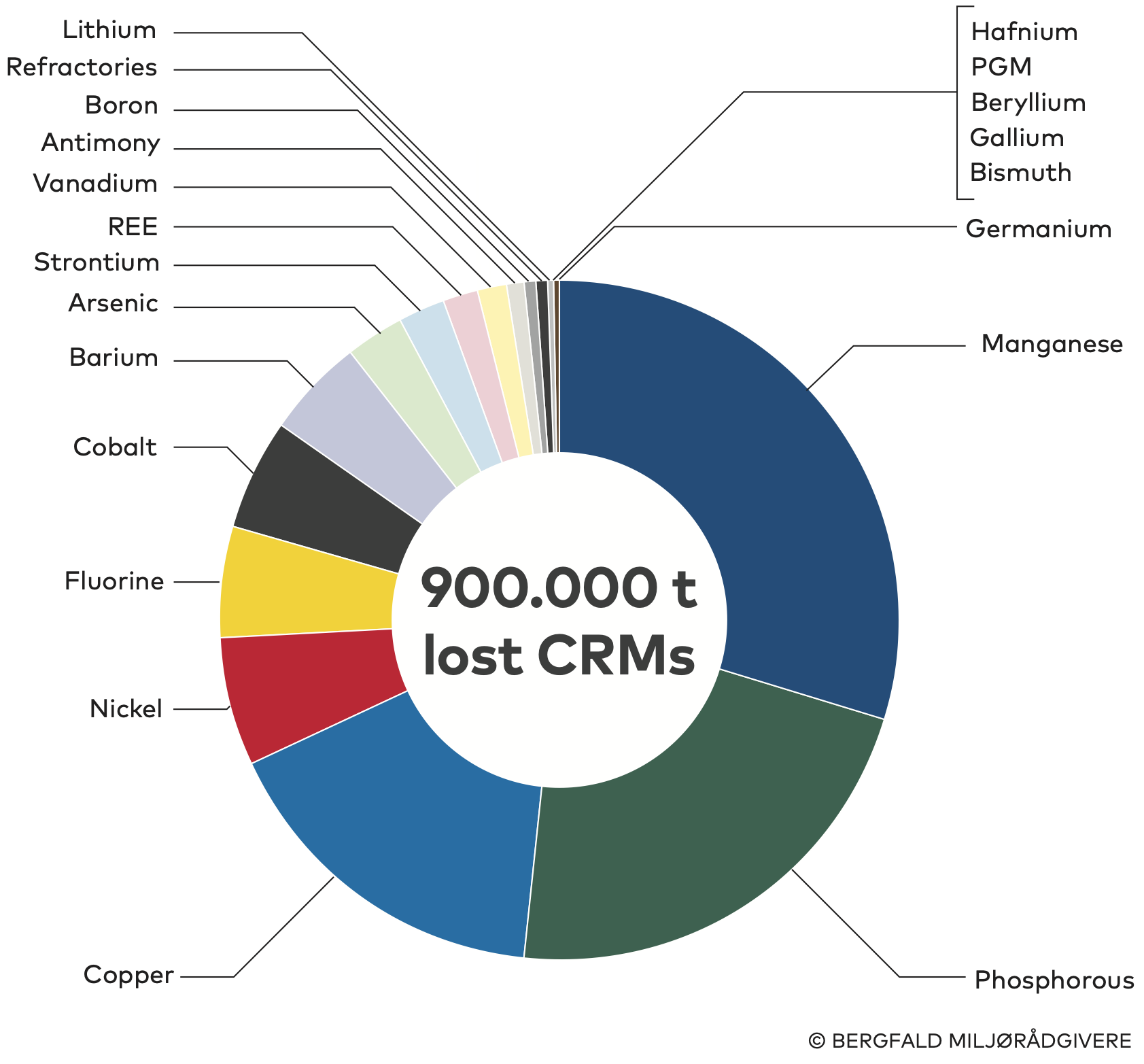
Figure 7.1 New industries can be built, and waste landfills avoided as CRMA requirement are implemented.
Source and illustration: Bergfald Miljørådgivere.
Source and illustration: Bergfald Miljørådgivere.
It seems obvious that these waste streams can provide a lot of benefits for the Nordic societies if recovered and used for new products and materials. Benefits such as increased circularity, reduced landfilling, stable and sustainable workplaces and secure access to raw materials for the downstream processing industries.
As already described, increased recovery of CRMs will require removal of barriers and introduction of incentives. These barriers can be immature technology, regulatory restrictions, purity requirements, industrial standards, financial incapacity, lack of interest, small and dissipated amounts, immature markets, open and unprotected markets etc. Almost every barrier described in this report can be interpreted as an economic obstacle and can therefore be reduced or eliminated through better financing solutions.
Recycling of CRMs are part of the fundamental shift from a linear to a circular economy and should be considered as one of the most important parts of this change. The conversion of our industrial infrastructure to support closed technical loops for important raw materials will require large changes in the waste legislation, the end-of-waste-criteria as well as how materials are recycled to avoid downcycling and locking in CRMs in structures that cannot be recycled.
Markets for many of the CRMs are small in terms of volume and money, even if they are of strategic importance to society. The market is therefore limited, and not all countries will have recycling plants. Those that are established, will need initial financial aid and a protective legal framework.
7.1 Suggestions for further work
CRMs have different sources, follow different value chains and end up in different waste streams. As such, there are no magic set of incentives or regulations that will easily solve all issues for all CRMs. However, there are still some issues of broad interest that deserves a closer look:
- The low hanging fruits. There are some waste categories which easily and rather inexpensively could be recovered with a minimum of regulatory and financial support. Examples could be the P/REE-flotation-sludges in Sweden, REE in phosphogypsum in Finland, electronics from scrapped cars, metal content of shredder fines etc. These are large volumes of waste with high CRM-content without good reasons for already being in production. A few niche fractions such as gallium-containing sludges and dust from zinc and aluminium refining is also too rich to ignore. A goal for work in 2024 should be to find what bottlenecks there are for recovery from these fractions, if any – and how to quickly remove the bottlenecks.
- The dominance of gold. WEEE contain all the CRMs in addition to several other elements of importance and value. Currently, WEEE is recycled based on overall weight and value. It could be argued that the most important contribution provided by the Critical Raw Materials Act is the specific recycling requirement for each of the CRM elements. For WEEE components, such as PCBs, this will probably not be sufficient to secure recovery. As the value of gold will dominate over the value of CRMs, the PCBs will go directly to gold recovery in industries where most of the CRMs are lost. To counter that, a work package should be defined to develop a mandate of 25% extraction/preprocessing of PCBs before gold smelting.
- How to protect the critical. It is assumed in the industry policies of the Nordic countries that all production plants should be operating on market economy terms. However, our current situation has shown that European CRM-industry needs equivalent protection mechanisms to what is given in other countries to survive. Indeed, any and all CRM recycling plants will be small and vulnerable to market manipulation and will need either direct support or market protection to survive. Without such support or protection, it might be difficult for the Nordic countries to attract private and industrial investors. Indeed, a closer study should be made to see how Japan, USA and other market economies organized legislation to develop and protect their CRM industries.
- From toxic to critical. Many waste fractions contain both toxic and hazardous elements and critical raw materials. Indeed, there will be significant conflict between legislation designed to avoid dissipation and release of toxic elements and the new legislation designed to increase recovery of critical elements. There is a need for a closer look into how these conflicts can be avoided or mitigated, and how recovery mandates can be developed and implemented without risking increased problems with hazardous wastes.
- The concrete problem. Increasingly, industrial waste and slag are used to produce concrete and concrete precursors. There are good reasons why this is so, from both a resource and energy/climate perspective. However, when slag and waste are included in the concrete, it will never be possible to recover again. Hence, new guides or policies need to be developed to sort out when it is better to use slags for concrete and when it needs to be processed to recover CRMs.
- The dissipation issue. Most major metals end up as alloys when in use. Alloyed metals are tailormade for its application, but that creates a problem when mixed metals are recycled. In both steel and aluminium, there are problems with levels of contaminants increasing, efficiently both creating a barrier for increased circularity as well as a permanent loss of certain minor CRM elements. A work package should be defined to see if current recycling practice with smashing of spent equipment in hammer mills is suitable for a circular economy or if more advanced remanufacturing is needed.