3. Waste types with CRM recycling potential
Recycling of CRMs require available waste materials that may serve as feedstock for the recycling process. Waste materials are generated and can be collected at many stages in a product life. During extraction of minerals which is the first step in production of most raw materials, tailings are formed when relevant minerals are separated from residual materials that have no further use. Depending on the efficiency of the separation process, varying levels of minerals of economic value will follow the tailings from which it may be extracted in a later process. During later refining processes where the raw material extracted from the ore is upgraded for different types of use, additional waste streams are created that may contain recoverable levels of CRMs. In later stages, components containing CRM are assembled or mixed into a final product that may then be used separately or as part of larger integrated system. Each step on this pathway may serve as a collection point for waste streams that may be used as feedstock for CRM-recycling. This situation is illustrated in figure 3.1.
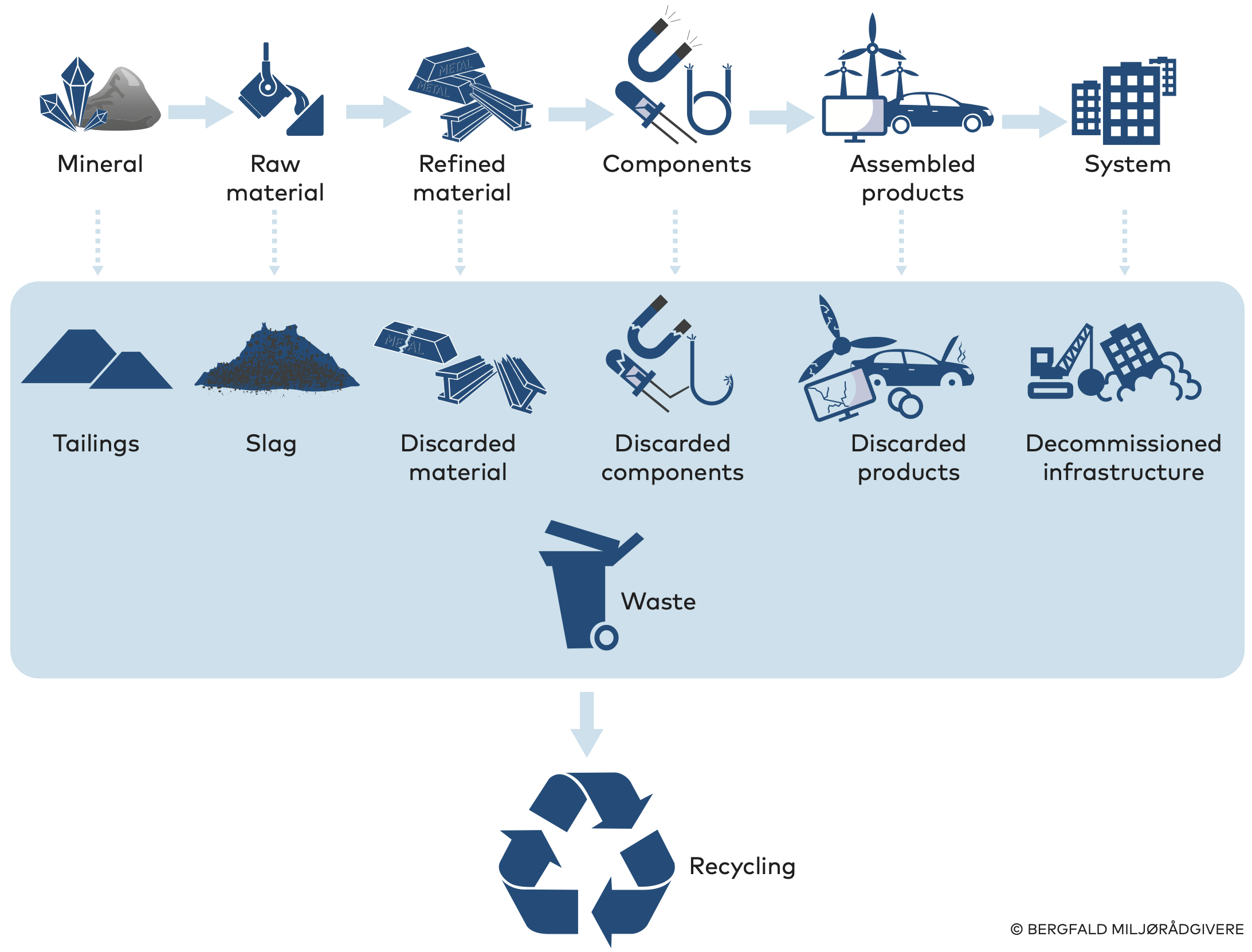
Figure 3.1 Stages in a product life from which waste streams for CRM-recycling may be collected.
Illustration Bergfald Miljørådgivere.
Illustration Bergfald Miljørådgivere.
3.1 Waste streams containing CRMs
Based on the description in chapter 2, waste streams that can be expected to contain CRMs may be identified. In EU waste statistics are collected on a national level for around 30 waste categories. Table 3.1 summarizes waste streams that can be expected to contain significant amounts of recyclable CRMs, and details relevant components of these waste streams. A detailed description of Nordic waste streams can be found in the Appendices.
Table 3.1 EU waste categories with national statistics for EU
Guidance on classification of waste according to EWC-Stat categories Supplement to the Manual for the Implementation of the Regulation (EC) No 2150/2002 on Waste Statistics Version 2, Eurostat
EU waste category | Waste code includes | Waste streams with CRM |
Industrial waste | ||
Acid, alkaline or saline wastes | Spent inorganic acids and salts from industial processes that includes bleach and fixer solutions, etching solutions, developer solution, water based degreasing liquids, lime mud, flux and saline wastes from hydrometallurgical processes and hot galvanising | Spent phosphorous- and fluoridic acid, CRM-oxides and -halogenides, CRM-containing sludge and wastewater from metalurgical processes |
Chemical wastes | Catalysts, medicines, paint, dyestuff, pigments, varnish, inks and adhesives, sludges, unused explosives and waste ammunition, used chemicals and pressurised gases, tars and bitumen, carbon anodes, fuels and emulsions, dust and slag from metallurgic industry, sludge and filter cakes | Spent catalysts, pigments, waste ammunition, spent metal coatings, discarded teflon coatings and gore tex fibres, syntetic fertilizer residues, wood preservation (arsenic), dust and slag from metallurgic industry (Al, Cu, Mn, Ni), sludge and filter cakes |
Industrial effluent sludges | Sludges and solid residues from industrial wastewater treatment and industrial cleaning processes, wastes from soil and groundwater remediation, drilling mud | Sludge from CRM-polluted waste water treatment, waste from metal coatings, discarded drilling fluids (baryte) |
Combustion wastes | Wastes from flue gas cleaning, sludges, filter dust and cakes, fly ashes, slags, drosses, skimmings from copper and aluminium and steel industry, boiler dusts and ashes from thermal processes | CRM enriched waste from flue gas cleaning, sludges, filter dust and cakes, fly ashes, slags, drosses, skimmings from copper and aluminium and steel industry, boiler dusts and ashes from thermal processes |
Spent solvents | Organic compounds, halogenated hydrocarbons, organic washing liquids, mother liquors, fluorinated refrigerants from chemical industries including extraction and cleaning processes, mechanical engineering and surface treatment | Fluorinated solvents, pharmaceutical solvents, solvents from metalurgical processes and metal coating |
Used oils | Engine, gear, hydraulic and lubricating oils, oils for insulation and heat transmission, emulsions from metal surface shaping and residues from tank cleaning | Spent lubricating oils containing CRM additives (graphite, litium, phosphorus, fluorinated hydrocarbons) |
Biological waste | ||
Animal and mixed food waste | Animal waste food incl. Sludges (phosphate) | Animal waste food incl. Sludges (phosphate) |
Animal faeces, urine and manure | Slurry and manure including spoiled straw (phosphate) | Slurry and manure including spoiled straw (phosphate) |
Vegetal wastes | Vegetal food waste including sludges from washing and cleaning | Vegetal food waste including sludges from washing and cleaning |
Common sludges | Waste water treatment sludges from municipal sewerage water and organic sludges from food preparation and processing (Phosphate) | Waste water treatment sludges from municipal sewerage water and organic sludges from food preparation and processing (Phosphate) |
Health care and biological wastes | Bodyparts and organs, contaminated plastic and textiles, diapers, sharps, spent supplies and residual matter | Fluorinated plastics, diagnostic fluids (Gd), dicarded metal body implantates (Ti) |
Metallic waste | ||
Metal wastes, ferrous | Scrap metal and alloys, end-of-life-vehicles (iron and steel alloys), metal dust and shavings, metallic construction and demolition waste, shredding residue, bottom ash metal | Scrap metal and alloys, end-of-life-vehicles (iron and steel alloys), construction and demolition waste, shredding residue, bottom ash metal |
Metal wastes, mixed ferrous and non-ferrous | Scrap metal and alloys, end-of-life-vehicles, construction and demolition waste, shredding residue, bottom ash metal, metal dust and shavings, metal packaging | Scrap metal and alloys, end-of-life-vehicles (copper, aluminium and other CRM-alloys), construction and demolition waste, shredding residue, bottom ash metal, metal packaging. |
Metal wastes, non-ferrous | No ferrous scrap metal like aluminium, copper, zinc, lead, tin and alloys. Cables, galvanized metal, end of life vehicles, construction and demolition waste, shredding residues. | Metallic packaging, mixed scrap metal and alloys, construction and demolition waste (Al, Cu and CRM-alloys) |
Non-metallic sorted materials | ||
Glass wastes | Waste glass packaging, glass waste from production of glass and glass products, and from sorting and recycling processes, glass powder | CRM-containing glass |
Plastic wastes | End-of-life-plastic from vehicles, WEE, packaging and other products | End-of-life-plastic from vehicles, WEE and other products containing CRM-based flame retardants, filler or pigments |
Rubber wastes | End-of-life-tyres | CRM containing rubber components and metal fiber |
Textile wastes | Textile and leather waste, waste from fiber preparation and textile manufacturing, footwear | Discarded textiles containing flame retardants (antimon and phosporous), pigments and goretex -textiles |
Wood wastes | Wooden packaging, saw dust, shavings and cuttings, waste bark, wooden construction materials | Wood waste containing historic wood preservation (arsenic and copper) |
WEEE and vehicles | ||
Discarded equipment (except discarded vehicles and batteries and accumulators waste) (W08 except W081, W0841) | WEEE, household equipment, IT-equipment, electric tools, electric components removed from end of life vehicles | WEEE, household equipment |
Discarded vehicles | End-of-life-vehicles | Alloys and other CRM-containing materials from end-of-life-vehicles |
Batteries and accumulators wastes | All kinds of batteries and accumulators (Manganese, aluminium, nickel, cadmium, mercury, lead, litium and graphite) | Batteries and accumulators containing manganese, aluminium, nickel, litium and graphite. |
Mixed waste | ||
Household and similar wastes | Mixed municipal waste, kitchen waste, household equipment, undifferentiated goods | CRM containing household waste |
Mixed and undifferentiated materials | Mixed and composite packaging, Welding waste, metal waste contaminated with dangerous substances | CRM-containing mixed waste |
Mineral waste | ||
Mineral waste from construction and demolition | Concrete, bricks, and gypsum waste, tiles and ceramics, insulation materials | CRM containing bricks, and gypsum waste, tiles and ceramics |
Other mineral wastes (W122+W123+W125) | Mineral wastes from mining and quarrying, blasting material (P?) and grinding bodies (Tungsten), casting cores and moulds, linings and refractories from all thermal processes. Waste from production of cement, ceramics and glass | CRM-enriched tailings form mining operations, linings and refractories from all thermal processes. CRM-enriched waste from production of cement, ceramics and glass |
Waste from waste treatment | ||
Mineral wastes from waste treatment and stabilised wastes | Bottom ash, slag, fly ash and waste from flue gas treatment from waste incineration | Bottom ash, slag, fly ash and waste from flue gas treatment from waste incineration |
Sludges and liquid wastes from waste treatment | Bio-residue from biogass production | Bio-residue from biogass production |
Sorting residues | Sorting residues from mechanical sorting processes for waste, like screening, fluff-light fraction, non composted fraction of biodegradable waste | CRM enriched sorting residues from mechanical sorting processes for waste |
Soils | Soil incl excavated soil from contaminated sites | Arsenic contaminatied soil |
Industrial waste
Industrial waste includes acids, alkaline or saline wastes, other chemical waste, sludges, solvents and oils, slags, scales, dusts, spent process equipment etc. Acids may be phosphorus acid or hydrofluoric acid or contain dissolved CRM-metals or phosphate or fluoride. Alkaline or saline waste may contain CRM-oxides or halogenides.
Other chemical wastes include spent catalysts, pigments, spent metal coatings, synthetic fertilizer residues, wood preservation, dust and slag from metallurgic industry, sludge and filter cakes, waste silicones and waste from ammunition and explosives.
Spent catalysts may contain PGM-metals, graphite, nickel metal, CRM-metal oxides like cobalt, germanium, REE and vanadium.
Pigments may contain salts of titanium, cobalt and copper. Spent metal coatings may contain nickel, copper or fluor (Teflon). Synthetic fertilizer residues may contain phosphate and older spent wood preservation may contain arsenic and copper.
Dust and slag from metallurgic industry are a waste stream of special interest because it often consists of large volumes of homogenous (or at least predictable) chemical composition that are relatively easy to separate and collect. Compared to other waste streams metallurgic dust and slag often contain high levels of aluminium, cobalt, copper, fluorine, gallium, rare earth elements, manganese, magnesium, nickel and phosphorus. Sludge and filter cakes from industrial processes may also contain recoverable levels of many CRMs depending on which process they come from.
Selected waste streams from aluminium production may contain increased levels of fluor and gallium, while selected waste streams from steel production may contain increased levels of manganese, vanadium, nickel and copper. Waste from electric-arc furnace processes (EAF) in copper, nickel and zinc production are also often enriched with CRMs. The same goes for spent industrial extraction fluids.
Waste ammunition may contain copper, antimony and bismuth.
Biological waste
All biological waste contain phosphate that can be recycled. Important biological waste streams are animal and vegetal food waste and waste from growing and processing food products, including animal faeces, urine and manure. Sludge also often contains high levels of organic matter with recoverable phosphate. Some biological waste, especially from the health care sector may represent infection risks that limit recycling options.
Metallic waste
Metallic waste is often collected in sorted fractions due to their high value and cost-effective recycling options. The dominating metal waste fraction is ferrous metal that include steel and iron scrap. The most important non-ferrous metals include aluminium, magnesium and copper. Important sources of metal waste are household and industrial waste, deconstruction and demolition projects and scrapped vehicles. Metallic scrap contains CRMs both as the main chemical component (aluminium, magnesium, copper and titanium) and as minor alloy components (antimony, beryllium, tin, bismuth, copper, gallium, germanium, hafnium, rare earth elements, lithium, manganese, nickel, scandium, tantalum, tungsten and vanadium).
Non-metallic sorted materials
Some non-metallic materials are also often collected as sorted waste streams and include glass, plastic, rubber, textile and wood waste. Few of these waste streams are expected to contain materials with recoverable levels of CRMs. Most glass are made of silicon oxide and may also contain CRM-based pigments and other additives. Plastic may contain CRM-based pigments, fillers or flame retardants. The dominant fraction of rubber waste is discarded tyres made with neodymium catalysts and often contain CRM-additives and alloyed steel fibres. Some textiles are made from fluor based materials (Gore tex) or may contain CRM-based flame retardants (phosphorous or antimony).
WEEE and vehicles
One of the most important waste streams for recycling of CRMs is electric and electronic equipment waste (WEEE). WEEE include both household applications and industrial equipment. CRMs can be found in components like magnets, batteries and printed circuit boards, and as additive in alloys, glass and ceramics.
Discarded vehicles are another waste stream with high potential for CRM-recycling and contain many WEEE-components in addition to valuable alloys used as construction materials. Electric vehicles contain more CRMs in the battery and engine compared to fossil fuel-based cars. Fossil fuel-based cars often contain PGM as catalysts in the exhaust system.
Mixed waste
Mixed waste arises from both households and industry and is often consisting of a myriad of waste materials that is difficult to separate. Extraction of CRMs from the ash after incineration may therefore be an alternative recycling strategy if pre-incineration sorting is not possible.
Mineral waste
Mineral waste includes inorganic waste from both mining operations and from construction and demolition projects. One important mineral waste stream that contain huge amounts of CRM, albeit often in low concentrations is tailings from processing of mineral ores. Mineral waste from construction and demolition projects includes concrete, gypsum and ceramic materials.
Waste from waste treatment
Waste treatment generates several distinct waste streams that include combustion waste, mineral wastes from waste treatment and stabilised wastes, sludges and liquid wastes from waste treatment and residues from sorting processes. Combustion waste include bottom ash and fly ash from waste incineration that are generated in large volumes that can easily be collected for further treatment, and contain all CRMs, albeit normally in low concentrations.
3.1.1 Nordic waste streams
Table 3.2 shows reported amounts of Nordic waste. Waste data for years after 2020 was not available at the time of writing of this report. Because the waste statistic for 2020 is affected by abnormal activity levels and living conditions during the Covid epidemy, similar waste data is also provided for 2018 and 2016. Similar overview of waste streams for each Nordic country is provided in Appendix 2.
Nordic waste streams | |||
EU waste category | 2016 | 2018 | 2020 |
Industrial waste | |||
Acid, alkaline or saline wastes | 707.206 | 714.959 | 801.640 |
Chemical wastes | 1.467.837 | 1.392.970 | 1.694.405 |
Industrial effluent sludges | 563.867 | 616.813 | 620.702 |
Combustion wastes | 4.877.443 | 4.598.078 | 3.863.324 |
Spent solvents | 93.786 | 105.702 | 132.313 |
Used oils | 307.681 | 276.431 | 366.816 |
Biological waste | |||
Animal and mixed food waste | 1.996.928 | 2.342.130 | 2.345.674 |
Animal faeces, urine and manure | 863.862 | 1.198.259 | 1.286.565 |
Vegetal wastes | 2.362.257 | 2.396.042 | 2.614.528 |
Common sludges | 1.317.030 | 1.457.889 | 1.356.990 |
Health care and biological wastes | 15.617 | 15.828 | 16.909 |
Metallic waste | |||
Metal wastes, ferrous | 2.896.222 | 3.875.930 | 2.904.817 |
Metal wastes, mixed ferrous and non-ferrous | 2.278.049 | 2.108.505 | 1.725.505 |
Metal wastes, non-ferrous | 518.098 | 710.612 | 799.373 |
Non-metallic sorted materials | |||
Glass wastes | 689.800 | 767.912 | 747.076 |
Plastic wastes | 770.114 | 908.112 | 877.271 |
Rubber wastes | 208.109 | 222.176 | 195.367 |
Textile wastes | 44.778 | 58.187 | 38.672 |
Wood wastes | 8.092.148 | 7.823.389 | 6.594.906 |
WEEE and vehicles | |||
Discarded equipment (except discarded vehicles and batteries and accumulators waste) (W08 except W081, W0841) | 631.546 | 529.910 | 631.041 |
Discarded vehicles | 947.862 | 1.025.075 | 967.165 |
Batteries and accumulators wastes | 99.980 | 70.946 | 94.727 |
Mixed waste | |||
Household and similar wastes | 7.259.130 | 7.442.637 | 7.487.945 |
Mixed and undifferentiated materials | 4.149.760 | 3.735.809 | 3.184.800 |
Mineral waste | |||
Mineral waste from construction and demolition | 10.597.259 | 11.290.808 | 11.639.791 |
Other mineral wastes (W122+W123+W125) | 201.823.989 | 196.187.278 | 206.161.659 |
Waste from waste treatment | |||
Mineral wastes from waste treatment and stabilised wastes | 3.139.678 | 3.447.011 | 3.349.061 |
Sludges and liquid wastes from waste treatment | 175.318 | 274.399 | 335.157 |
Sorting residues | 4.501.799 | 4.429.086 | 3.599.040 |
Soils | 29.661.398 | 40.261.187 | 31.439.538 |
Total | 293.058.551 | 300.284.070 | 297.872.777 |
Table 3.2 Nordic waste streams, Source: Eurostat
As can be seen from table 3.2, around three million tonnes of Nordic waste that may contain CRMs is generated each year. Only a small part of this waste consists of materials with recoverable amounts of CRMs, and it will be an important task for future value chains for secondary CRM production to identify and separate these waste materials from other waste materials. In the following paragraphs waste streams with direct recycling potential is described.
3.1.2 Nordic waste streams with direct recycling potential
The theoretical CRM recycling potential for a selected group of Nordic waste streams have been estimated based on available data. These waste streams include:
- Printed circuit boards
- Other WEEE
- Batteries
- Bottom ash from incineration of municipal waste
- Fly ash from incineration of municipal waste
- Ash from incineration of bio waste
- Shredder residue
- Tyre waste
- Tailings
- EAF slag
- EAF dust
- Ferro Alloy industry
- Nickel industry
- Copper industry
- Zinc industry
- Aluminium industry
- Silicon industry
- Other industries
- Alum Shale
Based on available data the theoretical recovery potential for individual CRMs from these waste streams were calculated. This recovery potential is summarised in figure 3.2.
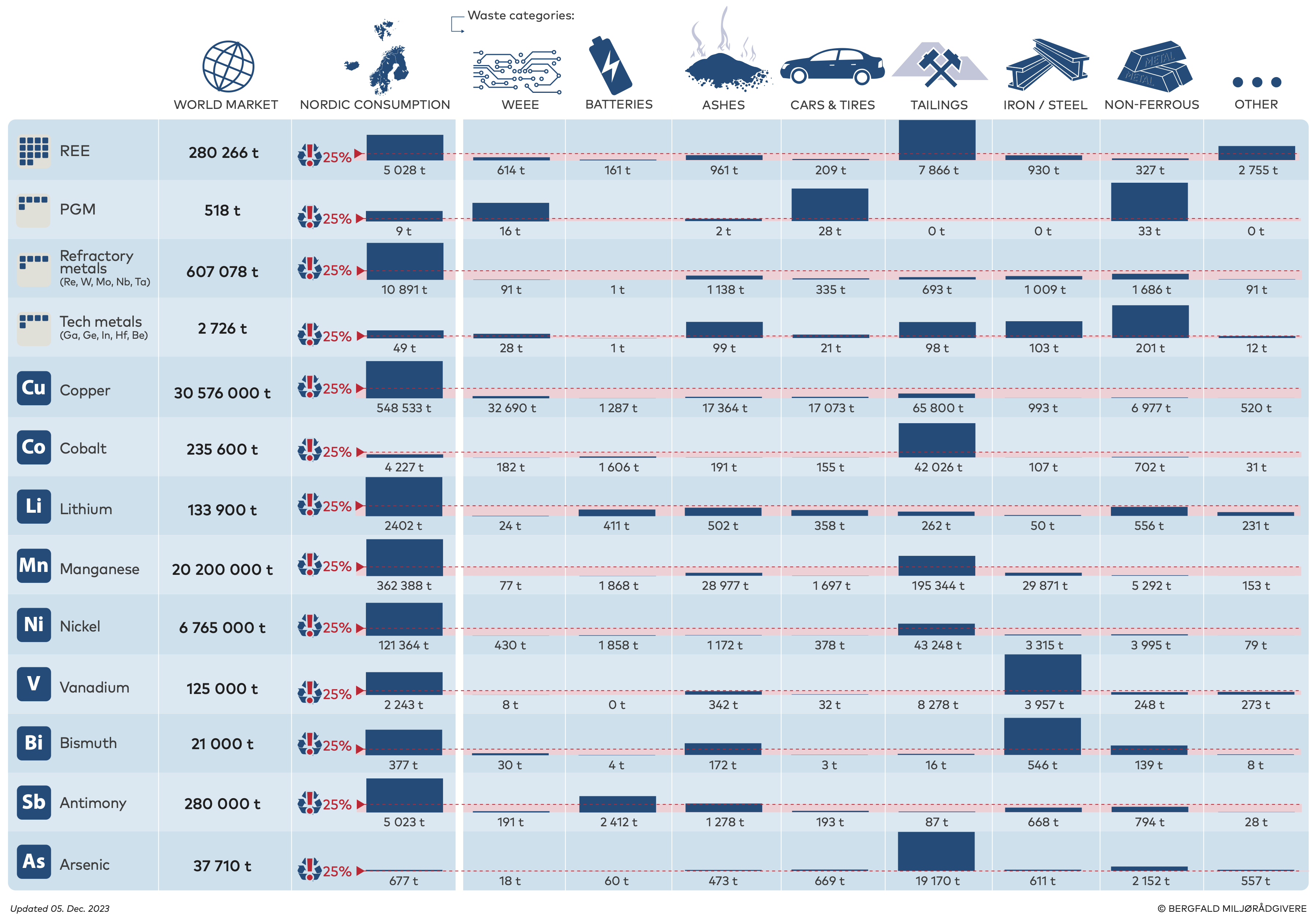
Figure 3.2 Estimated amounts of theoretically recoverable CRMs from selected Nordic waste streams.
Illustration Bergfald Miljørådgivere.
Figure 3.2 represents an attempt at quantifying CRM-recycling potential from Nordic waste streams and should be considered a rough estimation due to an uncertain and incomplete data base. To minimize the row number some CRMs have been grouped together. To limit the number of columns, some waste streams have been added together. For reference the size of the world market for each CRM or CRM-group have been included, and the Nordic share is shown as a bar from which the CRMA 25% recycling target is drawn through the following columns as a red dotted line. The theoretical recovery potential for respective CRMs or CRM-groups from each waste stream can be read as the height of the bar relative to the red dotted line. The theoretical recovery potential represents a 100% recovery rate. This is not realistic for almost all recycling processes. A more realistic recovery potential from each waste streams will be significantly lower than indicated in figure 3.2. To calculate a realistic recovery potential however require knowledge of which recycling process that are chosen, and which efficiency this recycling process will operate at. This will be unknown until a decision on how a waste stream will be recycled is made. For many waste streams, like incineration ashes and some tailings, the CRM concentration will also be so low that recycling will be challenging.
Added together the theoretical CRM-recovery potential for all CRMs from all waste streams in figure 3.2 amounts to about 900 000 tons. Figure 3.3 shows the relative share of individual CRMs.
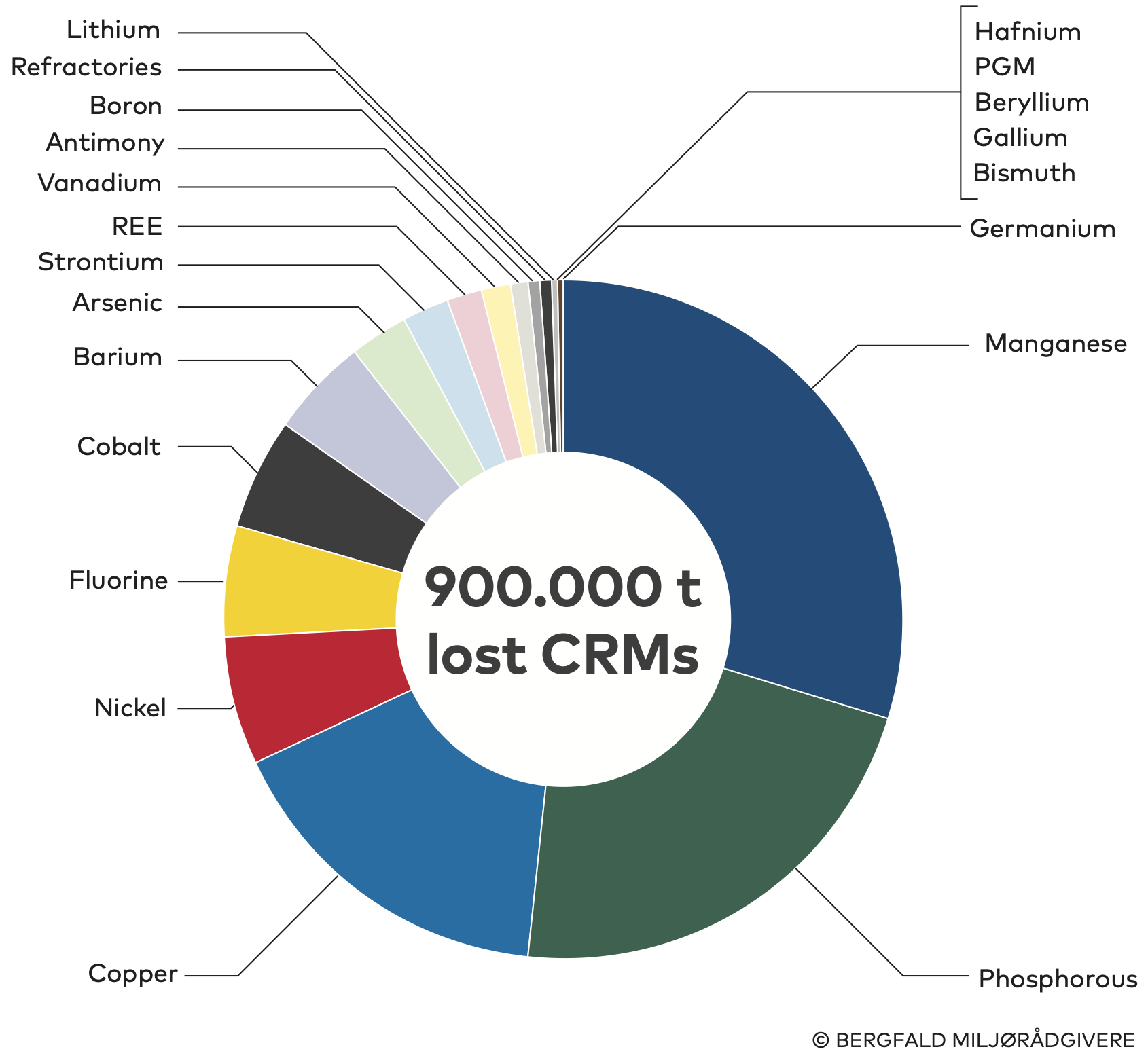
Figure 3.3 Relative share of recyclable CRMs from Nordic waste streams.
Source and illustration: Bergfald Miljørådgivere
Source and illustration: Bergfald Miljørådgivere
The theoretical CRM recovery potential is a function of the size of the waste stream and the corresponding concentration of individual CRMs in the waste stream. This means that a waste stream can contain significant amounts of CRMs although the concentration of these CRMs is low, if the waste volume is large enough. In the same way waste streams with high concentrations of CRMs may be of little importance if the total waste volume is negligible. As an illustration of this situation figure 3.4 shows the theoretical recovery potential of a selection of CRMs from waste streams described in 3.2. The size of the individual waste stream is illustrated by the heap that represent it, and CRM-concentrations are illustrated by the height of the bars that represent them.
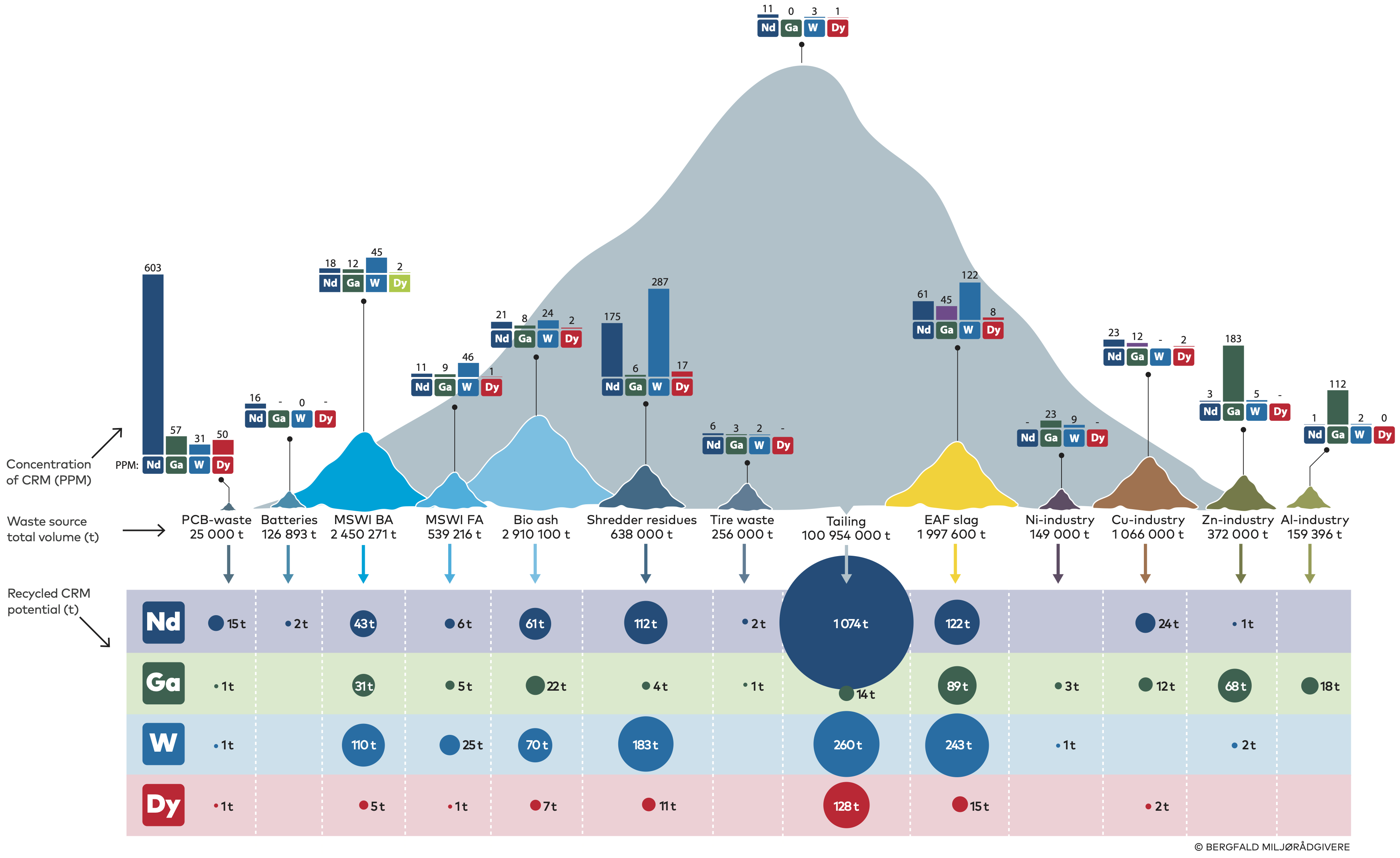
Figure 3.4 Waste streams with CRMs vary in tons and grades.
Illustration Bergfald Miljørådgivere.