1. Introduction
1.1 Scope of work
A modern society needs access to all critical raw materials (CRM) that are necessary for maintaining and developing its industries, infrastructure and welfare system. CRMs are especially important for many ongoing technology shifts like the Green Deal of EU and digitalization processes. Europe has been facing increasing challenges in meeting its need for these materials, which are defined by their high economic importance and significant supply risk. Currently, EU relies heavily on imported supplies of these essential resources.
The implementation of the Critical Raw Materials Act (CRMA) of EU aims to reduce this vulnerability by establishing a framework to ensure the Union's access to a secure and sustainable supply of critical raw materials. One important measure in the Act is to increase the selective collection of waste streams that contain CRMs at levels that may be recycled, as stated in Chapter 5. This chapter states that member states and other countries bound by the EEA Agreement is required to adopt and implement national programmes containing measures designed to increase the collection of waste with high critical raw materials recovery potential and ensure their introduction into the appropriate recycling system within three years after the agreement has entered into force. A formal approval of the act in its current form means that within 2030 EU shall have reached a CRM-specific recycling capacity of 25% of its annual consumption of strategic raw materials. This is a demanding task, and a successful implementation will require a good understanding of existing opportunities and barriers.
Through the project, Recycling of Critical Raw Materials in the Nordics, the Nordic region has taken a common approach to how these issues should best understood and addressed. This report answers a call from the Nordic Working Group on Circular Economy (NCE) of the Nordic Council of Ministers for a description of potential actions the Nordic region can take to increase collection for recycling of waste that is rich in critical raw materials (CRMs), in line with the Critical Raw Materials Act, as well as measures to ensure these resources are sorted and recycled within the Nordic region.
An important issue for this project is to identify and describe advantages specific to the Nordic countries when it comes to recycling of CRMs based on available waste streams, industry and technology, together with skills and competence in the Nordic work force that may result in projects that can help the Nordic region lead the way when it comes to increased CRM-recycling.
This report describes obstacles linked to policies, business models, technologies and other factors, along with opportunities and recommendations for decision-makers. An overview of areas for further study will be provided based on identified obstacles and opportunities.
1.1.1 Methodology
This report is written based on publicly available information that are referenced throughout the document. The report quantifies Nordic overall waste streams at a national level that may contain CRMs and singles out selected sub streams of waste that are expected to contain recoverable levels of CRMs. The amounts of CRMs that can be theoretically recovered is estimated. Nordic overall main waste streams are quantified based on data from Eurostat and described based on Eurostat guidelines.
Eurostat. 2010. Guidance on classification of waste according to EWC-Stat categories
Quantification of waste streams with recoverable CRMs
Based on a review of available documentation on Nordic waste streams a selection of waste sub-streams that is expected to contain recoverable levels of CRMs have been quantified. The theoretical recovery potential of individual CRMs from each sub stream of waste have been calculated based on the size
Overall tonnage of each waste stream has been based on best available and newest available sources. For some of the waste streams, such as mining waste and certain industrial byproduct, volumes might change a lot from year to year. In these cases, we have estimated an average year based on several years of data.
The theoretical recovery potential assumes a 100% recovery rate which is unrealistic for almost all existing recycling processes but provides a comparable estimation of the upper limit for future recycling processes.
Waste streams that are considered to contain recoverable levels of CRMs include post-consumer waste from specific EPR sectors such as printed circuit boards from WEEE, batteries and waste tires together with residues from current recycling infrastructure, such as shredder fluff and the ashes from waste incineration. Ashes from combustion of biomass have also been included, as the chemical composition is quite similar to ashes from waste incineration. From the minerals sector, tailings from operating mines, and dusts and slags from mineral processing and smelter industries has been included. Annually landfilled alum shale is also included. Additional information about these waste streams and associated database can be found in Appendix 3 of this report.
Only waste streams from ongoing industrial operations are included in this report. Legacy issues like landfilled waste, old tailings disposals etc from centuries of earlier production are not part of the calculation of the Nordic CRM-recycling potential in this report. Many smaller enterprises and niche productions are also excluded, due to time constraints of this project. These issues may be examined at a later stage.
Inclusion of waste data from autonomous regions, territories and special law areas of the Nordics
Based on available information the following assumptions have been made about waste streams from the autonomous regions, territories, and special law areas of the Nordics.
Åland (Finland) seems to have no processing industry of relevance for CRM-recovery, and all WEEE and MSW is assumed to be disposed of in mainland Finland. Hence, the numbers are included in mainland Finland. Some of the archipelago has alum shale, but no data on deliveries to landfills have been found. The bioash from Åland is assumed to have same elemental composition as Finland.
It is assumed that all waste from Christiansø (Denmark) is delivered to waste treatment in Denmark or Sweden and therefore included in waste accounts from these countries.
Greenland (Denmark) is included with figures for MSWI and WEEE numbers. Mining wastes are low, as only one small mineral mine is active, the many earlier mines have all closed and are hence not included.
Faeroy Islands (Denmark) is included with figures for MSWI and WEEE numbers.
Svalbard, Bjørnøya and Jan Mayen (Norway) has no processing industry and send all waste to mainland Norway (Tromsø). Current Norwegian operating coal mine is set to close, and the coal fired CHP station has been converted to diesel. Russian settlement at Svalbard do not have any significant processing industry.
Calculation of Nordic CRM market volumes
The size of the global CRM-markets is calculated based on updated USGS global primary production figures if available. As there are no reliable public statistics regarding recycling grades for metals and elements, secondary production has been estimated by the authors. The sum of primary production and secondary production adds up to the total market volume.
Critical Raw Materials enters the Nordic countries from own production, imported raw materials and semi-finished products and end products – such as computers, cars and phones.
CRMA is mandating specific recycling targets for CRMs as a percentage, but these targets have not yet been fixed as an actual tonnage presented to the market. To bridge this information, it is assumed that the Nordic countries consume an amount of the global CRM production equal to the Nordic GDP share of global GDP. For 2022, the Nordic GDP was 1,76% of global GDP. Hence it is assumed that the Nordic consumption of individual CRMs is 1,76% of the global consumption of the same CRM. Calculations of Nordic CRM recovery and recycling shares are based on this baseline.
1.2 What are critical raw materials (CRM) and why are they important?
All products consumed by a human society are constructed from a limited source of raw materials, many with unique chemical and physical properties that serve specific needs and applications. These raw materials are elements or chemical compounds that differs widely both regarding its natural abundance and economical importance. While iron and oxygen are examples of abundant raw materials that are easily accessible for extraction in large quantities, rhodium, palladium and platinum are examples of raw materials that are much scarcer and make up only a few parts per billion of the earth's crust.
An increasing number of technologies and services in a modern society depend on raw materials that are becoming more and more scarce.If the needs for these raw materials no longer can be met, industry that uses them may come to a halt, and important social functions that depend on them may be restricted or collapse. Shortage of raw materials will typically lead to further supply failures downstream in their value chains as a shortage of components or finished products. Examples of critical raw materials include phosphorus in the form of phosphate (necessary for all plant growth and food production), lithium (necessary for battery production), gallium (necessary for the production of LED light) and rare earth metals (necessary for electrical products and permanent magnets). Figure 1.1 summarizes chemical concepts used to describe raw materials. Raw materials are sometimes referred to as elements if they are pure substances that cannot be broken down into other chemical substances, or metals if they belong to this sub-group of chemical elements. Raw materials extracted from geological ores are often referred to as minerals, while all homogenous substances with a fixed chemical composition, including elements, can be referred to as chemical compounds, or alloys if the chemical compounds are purely metallic. All raw materials are chemical compounds, but chemical compounds without any applications are not considered raw materials as illustrated by Figure 1.1.
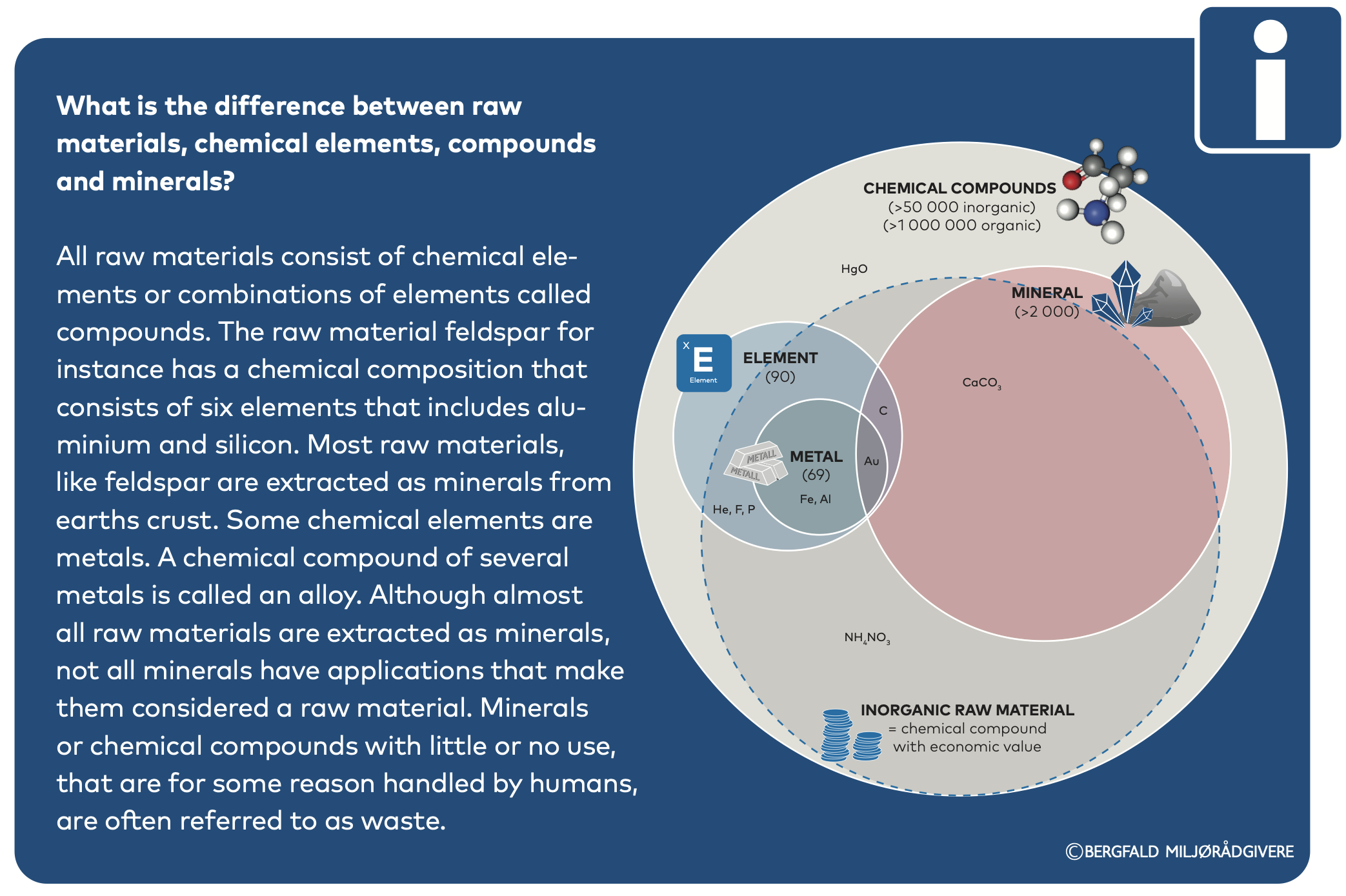
Figure 1.1 Chemical concepts used to describe raw materials.
Illustration Bergfald Miljørådgivere.
Illustration Bergfald Miljørådgivere.
Growing populations and economies increase the pressure on remaining geological reserves of elements with already limited availability. In addition, there are technological changes such as digital- and green transitions, which require further increased supply of many of the same raw materials. Taken together, these trends are expected to lead to higher levels of consumption of many critical raw materials in the order of 10–100 times in the coming years compared to the global consumption today. These trends are confirmed independently by several international expert groups that have analysed this situation in separate studies including OECD,
Global Material Resources Outlook to 2060: Economic Drivers and Environmental Consequences, OECD 2019
Global Resources Outlook 2019: Natural Resources for the Future We Want, United Nations Environment Programme International Resource Panel
The Role of Critical Minerals in Clean Energy Transitions, International Energy Agency (IEA) 2021
This situation would be challenging in the best of times and is aggravated by an increasing number of international and global crises that are disrupting already strained supply chains. The COVID-19 epidemy and the increasing number of military conflicts has already led to significant disruptions in European CRM-supply chains, for example of manganese. Escalations of these conflicts may cause further disruptions. On top of this comes the climate crisis that is already destabilizing national economies and governments due to rising temperatures, more extreme weather, and forest fires.
The combination of already strained supply lines for critical raw materials and an increasing number of crises and conflicts has understandably led to higher political attention towards supply risks for important raw materials, and many states and major powers, including the EU have developed strategies to reduce these supply risks. These strategies often include lists that specify which raw materials that are considered to be of especially high concern. How these raw materials are defined, and which raw materials that are included in these lists varies between different states. Figure 1.2 presents an overview of chemical elements and compounds that are listed as critical raw materials by different powers as of December 2023.
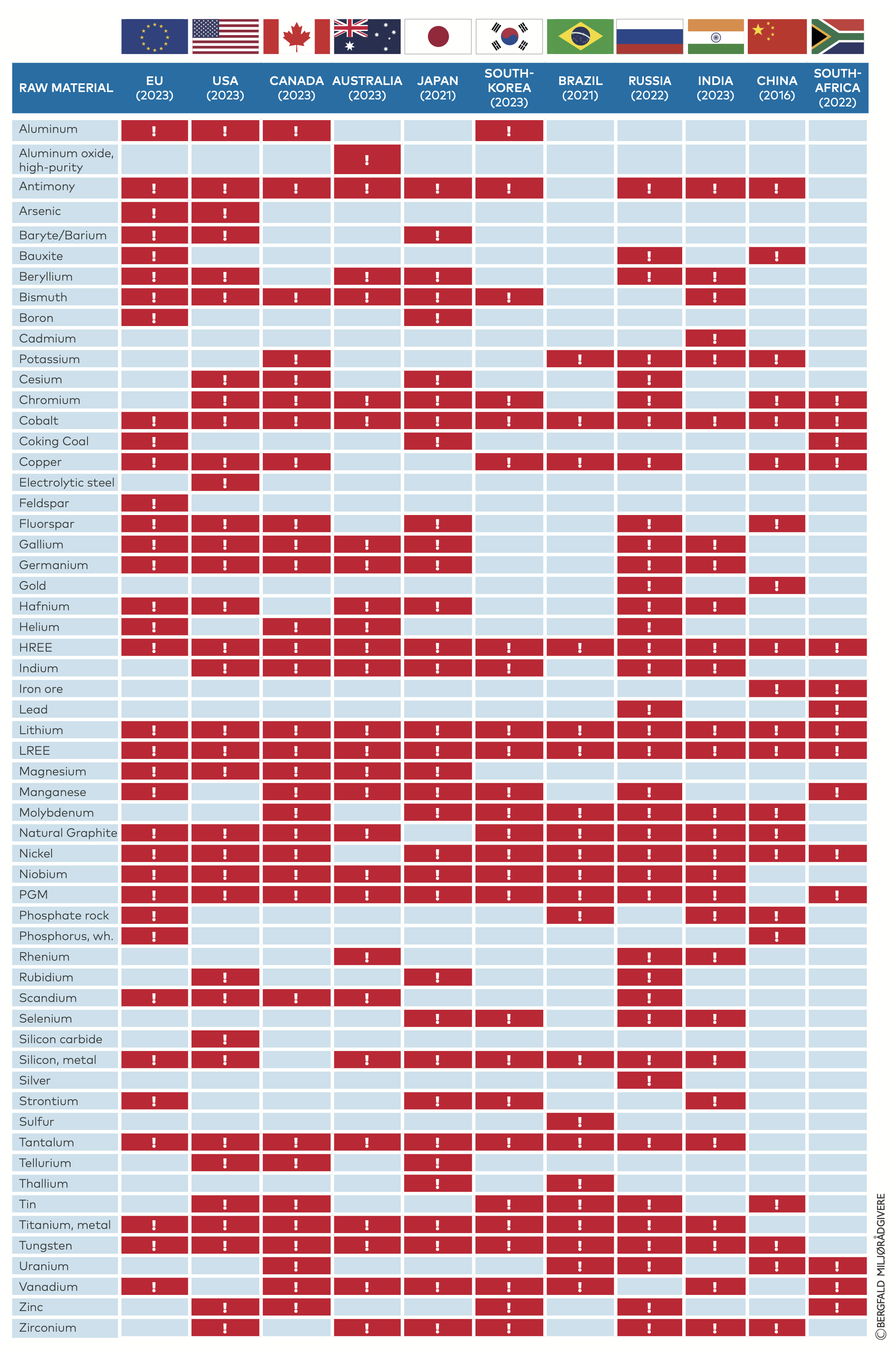
Figure 1.2 Chemical elements and compounds that are listed as critical raw materials by different powers as of December 2023.
Illustration Bergfald Miljørådgivere.
Illustration Bergfald Miljørådgivere.
Raw materials that are listed as critical are subject to special measures that are aiming to strengthen the value chains that supplies these raw materials. A description of EU policies regarding critical raw materials are given in section 1.5.
1.3 Markets and value chains for critical raw materials
Virtually all of the 90 chemical elements found in the Earth’s crust have applications as raw material in the production of various goods and services in a modern society, some more than others. Some elements are used as pure substances like carbon (graphite or coke) or helium, but most elements are used as part of a chemical compound that may be part of materials like alloys or ceramics. For several elements with a large global consumption, a worryingly small known remaining geological reserve exist. In addition, many elements are unevenly distributed on the Earth's surface. Some are only readily available for extraction in countries with unstable or protectionist governance regimes that may represent an additional significant supply risk. In addition, for many critical raw materials no recycling options exists yet, and all inherent CRM in discarded products are therefore currently lost as waste.
The global market for critical raw materials is huge both in terms of economic value and quantities that are traded. The total quantity of individual CRMs (as defined by EU) that are annually consumed on a global scale varies greatly however, as illustrated in figure 1.3.
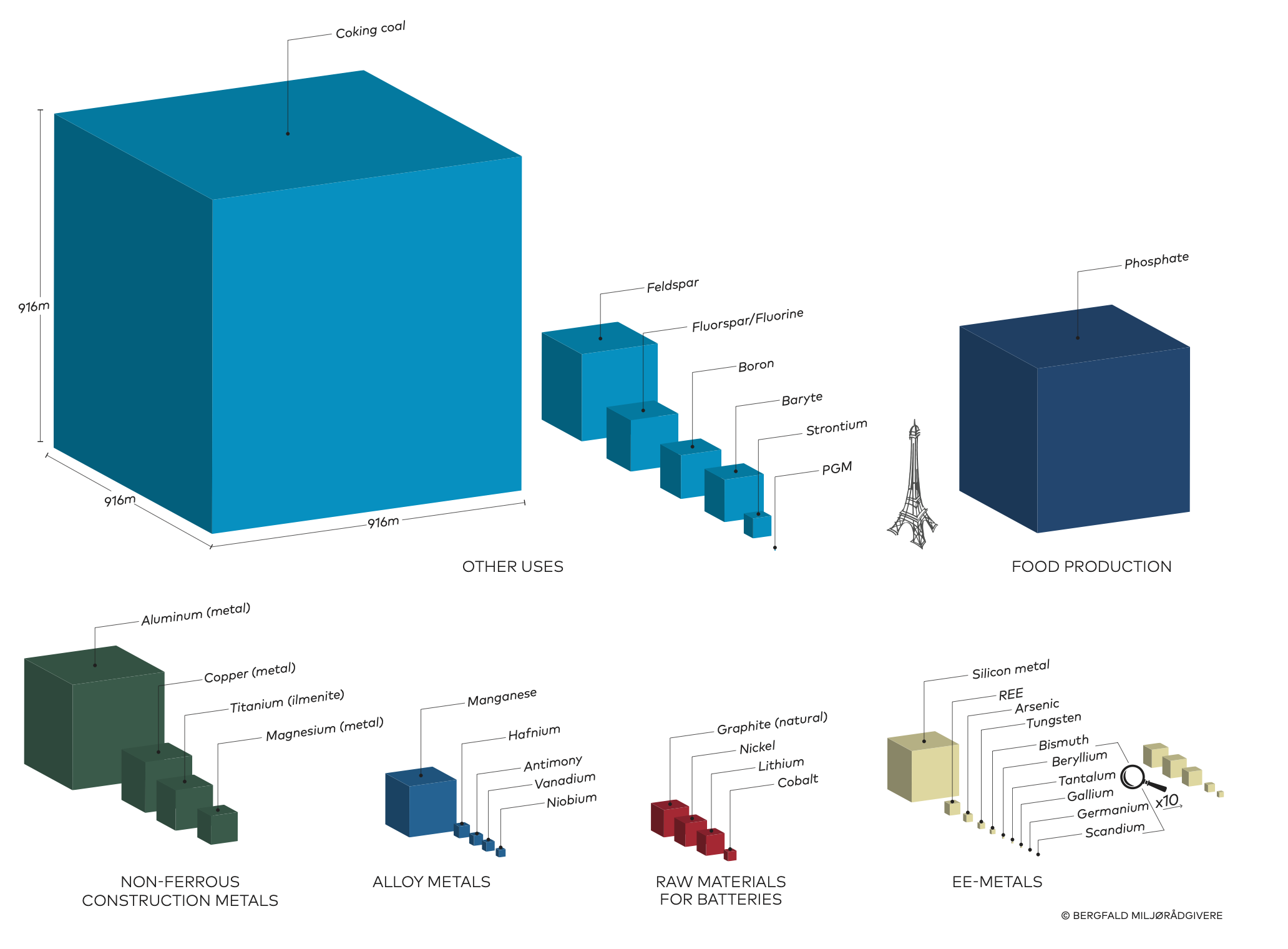
Figure 1.3 Total quantity of critical raw materials put on the global market every year. Helium is a gas and is not included in the illustration. The illustration is based on public available market data of production volumes for individual CRMs per 2023.
Illustration Bergfald Miljørådgivere.
Illustration Bergfald Miljørådgivere.
Many critical elements occur in the Earth's crust at very low levels or are for other reasons difficult to find in ores that lend itself to cost-effective extraction. This creates great pressure on extractable resources and leads to high vulnerability for future supply chains that rely on these elements as raw material, making it urgent to establish circular value chains that create closed technical loops where raw materials are recycled from one product life to the next. A closed technical loop for a CRM requires effective recycling processes. For many CRMs necessary technologies for this kind of recycling has yet to be developed. Examples of CRMs without available post-consumer recycling technologies as of 2023 include gallium, germanium, hafnium and niobium.
1.3.1 Value chains for primary CRMs
Almost all global consumption of CRMs is currently based on extraction from virgin mineral ores. CRMs from virgin ores are also called primary CRM. Value chains for primary CRMs include activities during exploration, extraction, beneficiation, refining and distribution. These value chains are complex and contain many stages that may create supply bottlenecks. A more secure supply of CRMs must therefore depend on diverse value chains having sufficient redundancy to compensate for unexpected halts or reduction in supply or process capacity in individual links. Additionally, it is important that the value chains are not disturbed in ways that hinder trade and distribution in a free market.
The value chains of CRMs are often complex and transnational where CRM-products may cross national borders several times during different steps of their processing before reaching end user quality. As a result, a single nation has limited capacity to regulate how these value chains operate.
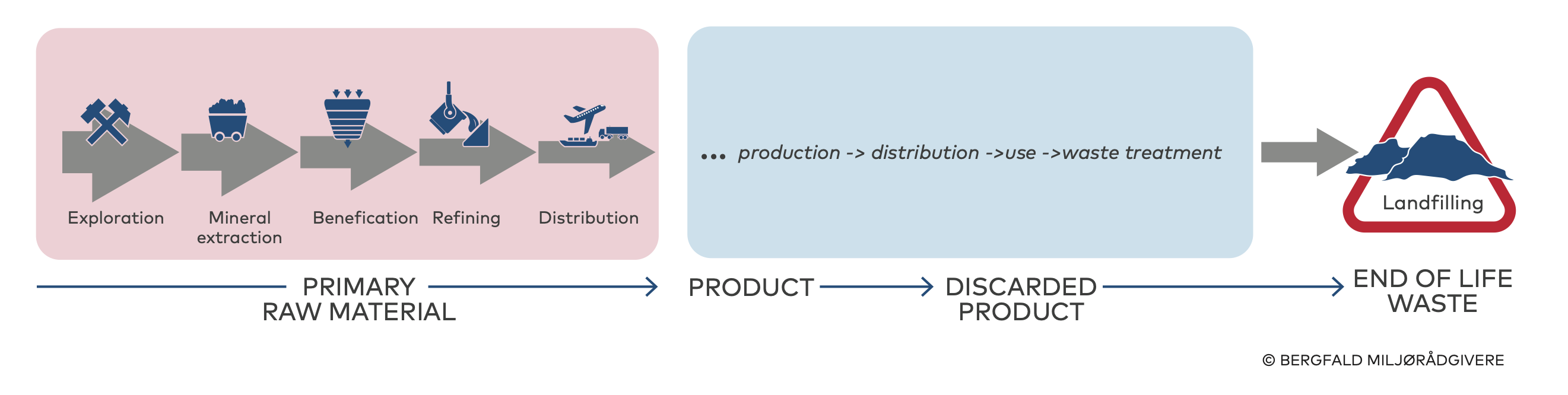
Figure 1.4 Simplified structure of the value chains for primary CRM-products with land filling as the most typical end of life treatment.
Illustration Bergfald Miljørådgivere.
Illustration Bergfald Miljørådgivere.
Because primary CRM value chains are based on virgin mineral ores, a national strategy to strengthen these value chains often include measures that aim at ensuring necessary access to central mineral deposits and industrial capacity that can process the ore resources into refined end-user quality raw material products.
A challenge often associated with primary production of some CRMs is that they are only produced as a by-product together with a main product. This results in increased supply risk since reduced production of the main product will also result in a proportional reduction in production of the by-products. For the same reason, it is also difficult to increase the extraction of the by-products if demand increases more for these than for the main product. Examples of critical elements and raw materials that are only produced as by-products include helium, indium, gallium, germanium, rhenium, selenium and tellurium.
Another challenge to primary production of CRMs is a declining societal acceptance of mineral extraction in the local communities surrounding the area where minerals are available, which makes it increasingly difficult to expand primary production of many critical raw materials. Extraction of CRM-minerals are often associated with pollution, noise and dust dispersion, and the mining operation may seize areas and water resources that create conflicts with other interests.
CRM-production is not evenly distributed over the world. The global production of individual CRMs is often dominated by one or a few nations as shown in figure 1.5.
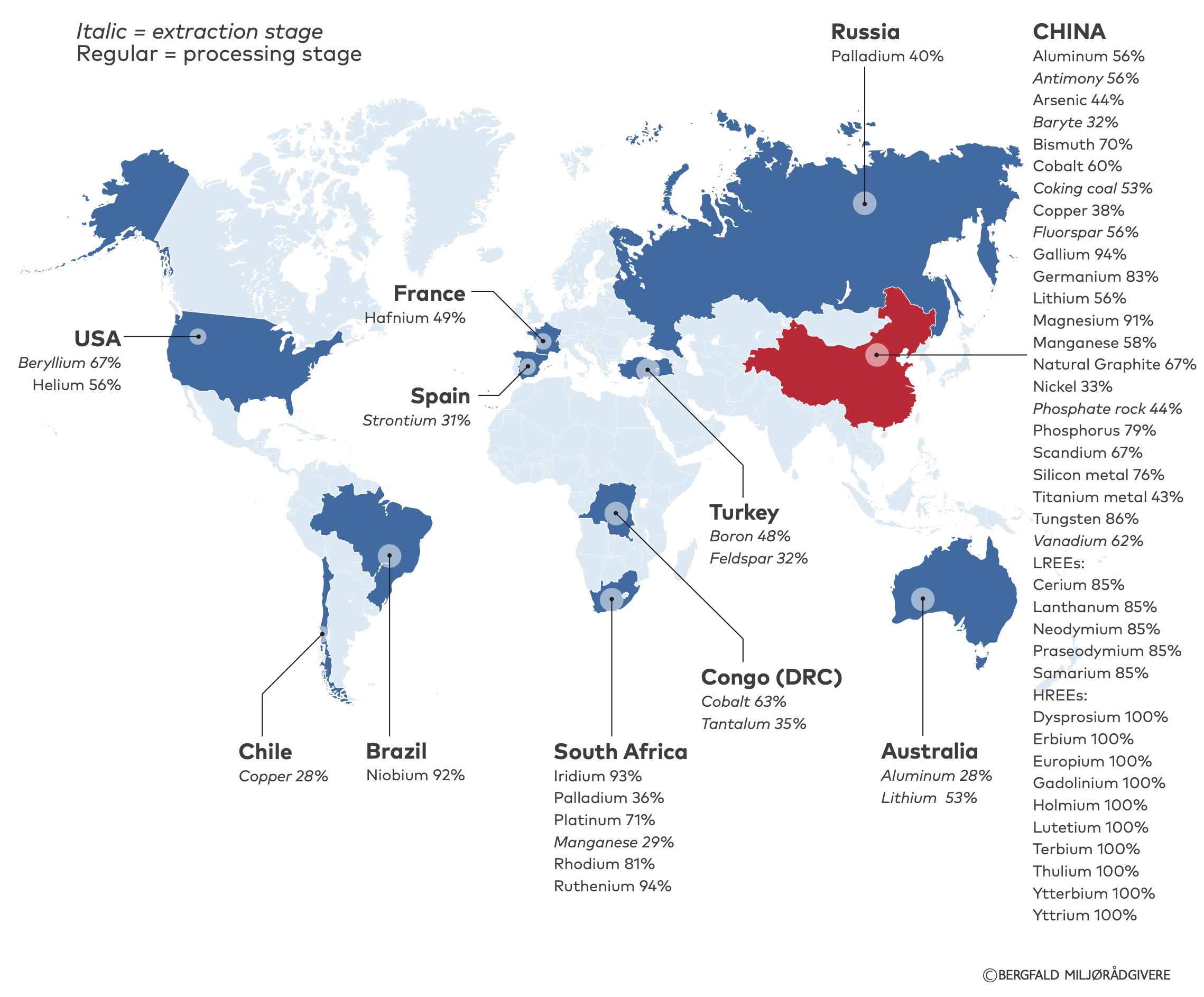
Figure 1.5 Main global suppliers of individual CRMs.
Source: European Commission, Study on the Critical Raw Materials for the EU 2023 – Final Report. Illustration Bergfald Miljørådgivere.
Source: European Commission, Study on the Critical Raw Materials for the EU 2023 – Final Report. Illustration Bergfald Miljørådgivere.
Figure 1.5 clearly shows China's dominant position as a supplier of critical raw materials and the corresponding low degree of self-sufficiency of Europe. Extraction and processing of many critical raw materials are concentrated in a small number of countries, where China has a unique position. This creates significant supply risks as a result of export restrictions that may be caused by changes in national framework conditions for CRM-producing industry or political instability in these countries. There are also examples of countries placing restrictions or bans on export of its own raw materials to strengthen the competitive situation for its own downstream industry. China has for example several times placed restrictions on its own CRM export, including rare earth elements which have created problems for European industry that are dependent on these metals.
The market for some critical raw materials includes important niche uses that only require small volumes that are also often associated with highly fluctuating market prices. Due to small consumption volumes only a limited number of production facilities are necessary to cover these needs worldwide. This situation leads to higher vulnerability in the supply chain caused for instance by disruptive events like fires or accidents that may knock out a significant share of the global production resulting in temporary scarcity.
CRMs that experience large price fluctuations, will also result in reduced economic predictability for downstream industry which depend on these materials as input in their manufacturing operations. The market history of gallium may illustrate this situation. Gallium is used in LED lights and has therefore extensive applications in many areas of use, but only in small quantities per product resulting in a global marked for gallium of only ca 550 tons per year.
1.3.2 Value chains for secondary CRMs
Secondary value chains can provide the same raw materials as primary sources based on recycling from discarded products and sorted waste streams.
Although there may be some difference in the end product quality as recycled CRMs may contain other pollutants than the equivalent primary CRM.
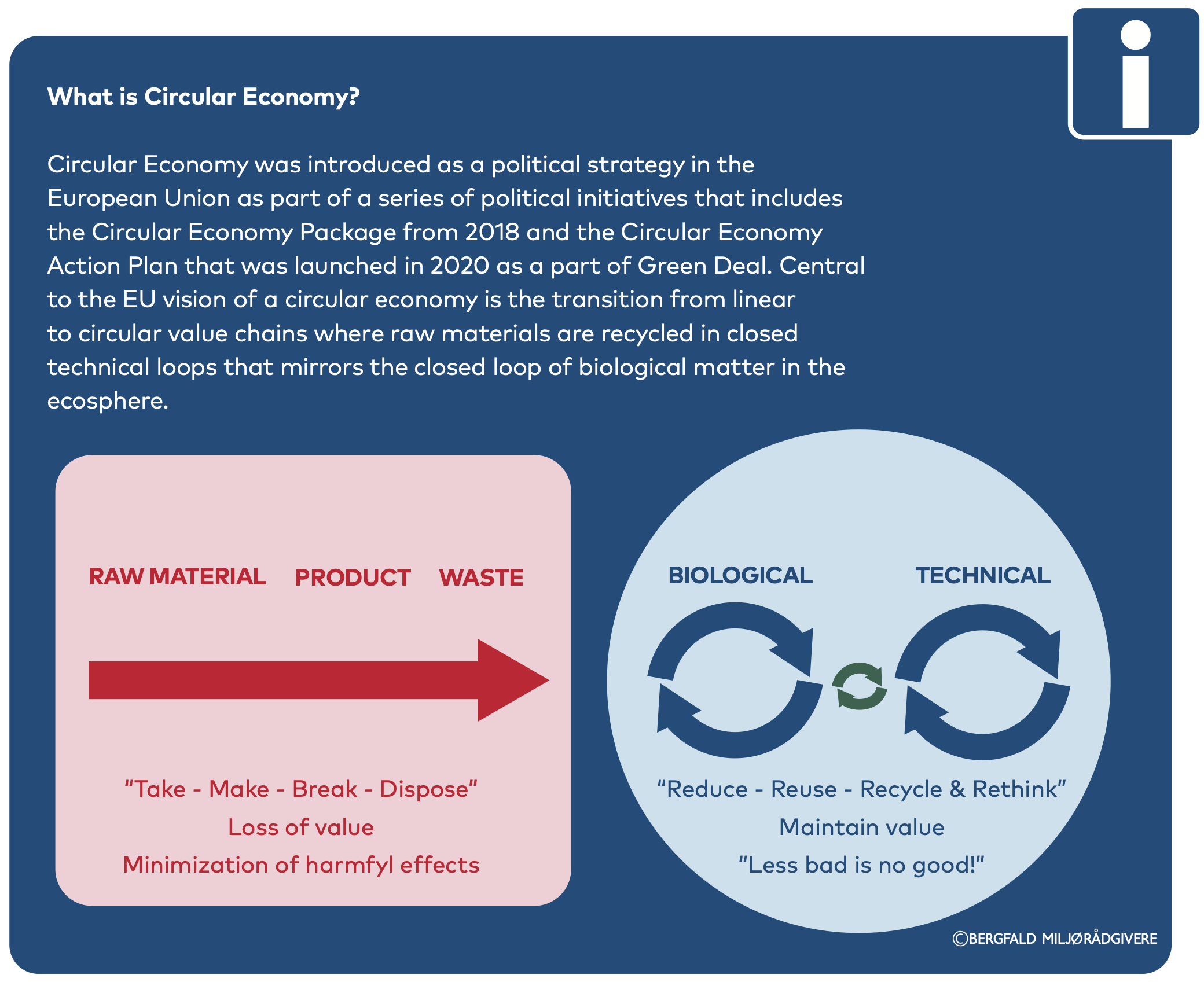
Figure 1.6 Comparison of linear and circular value chains.
Illustration Bergfald Miljørådgivere.
Illustration Bergfald Miljørådgivere.
Although the concept of circular economy is receiving increased attention, there are still many critical raw materials where the recycling rate is close to zero. For some CRMs this situation is a result of high recycling costs compared to the costs of primary production of the same products, for example for fluorspar and magnesium. But for other critical elements a mature and efficient recycling technology has yet to be developed, which is the reason no real recycling exists for gallium that is used in all led lighting, lithium used in batteries and rare metals which are used in electronics, electric cars and wind turbines, take place. Even for basic metals where well-established recycling solutions exist, such as for copper (55% recycling rate), aluminium (32% recycling rate), magnesium (13% recycling rate) and nickel (16% recycling rate), we are very far away from a closed technical loop where raw materials can be said to flow to new generations of products without significant material loss.
Study on the Critical Raw Materials for the EU 2023 Final Report, EU Commission
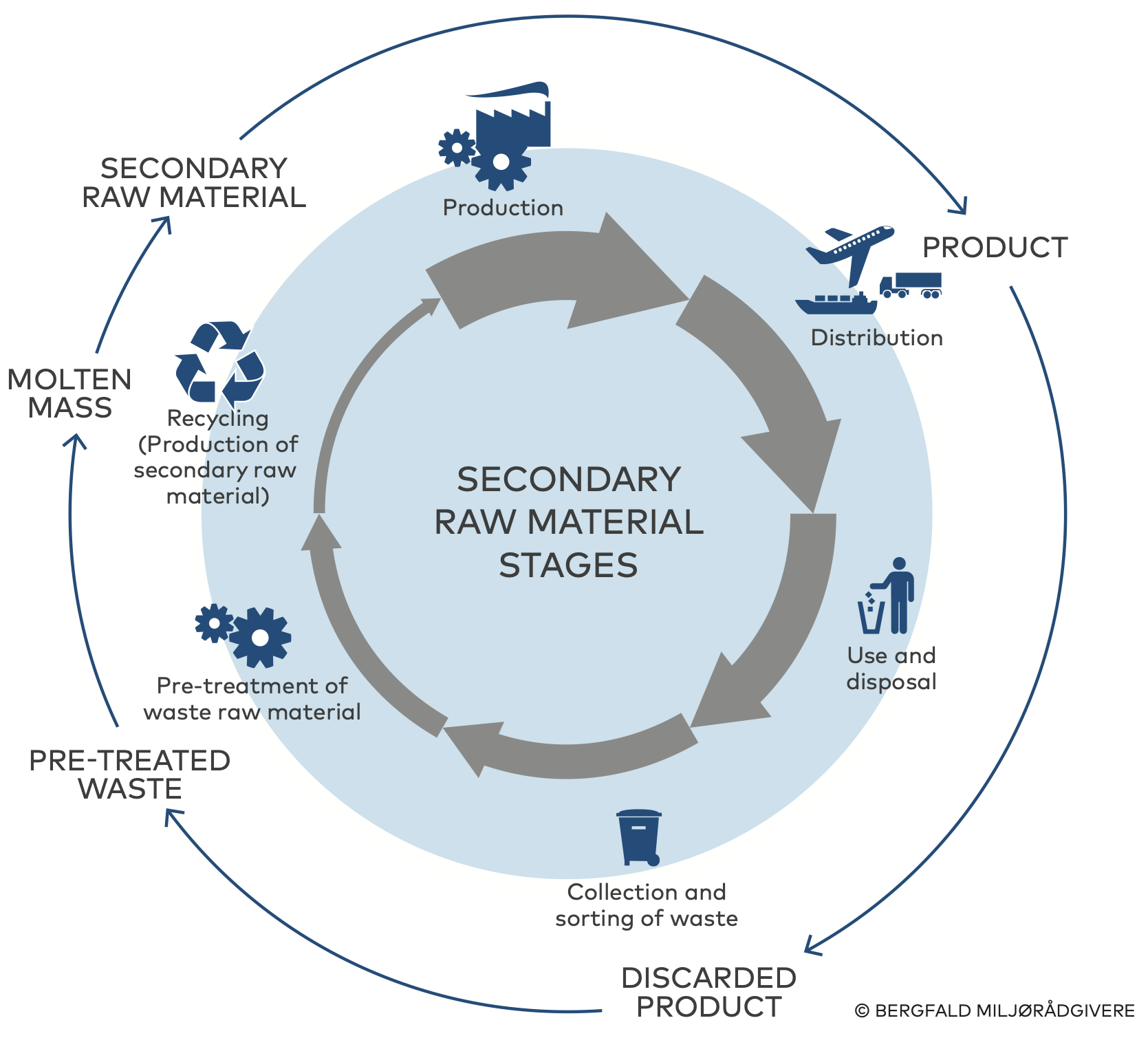
Figure 1.7 Simplified structure of the value chain for secondary CRM-products.
Illustration Bergfald Miljørådgivere.
Illustration Bergfald Miljørådgivere.
Figure 1.8 shows an integrated value chain for both primary and secondary raw materials. In a world with increasing overall consumption of raw materials and recycling rates less than 100%, some primary production will always be necessary.
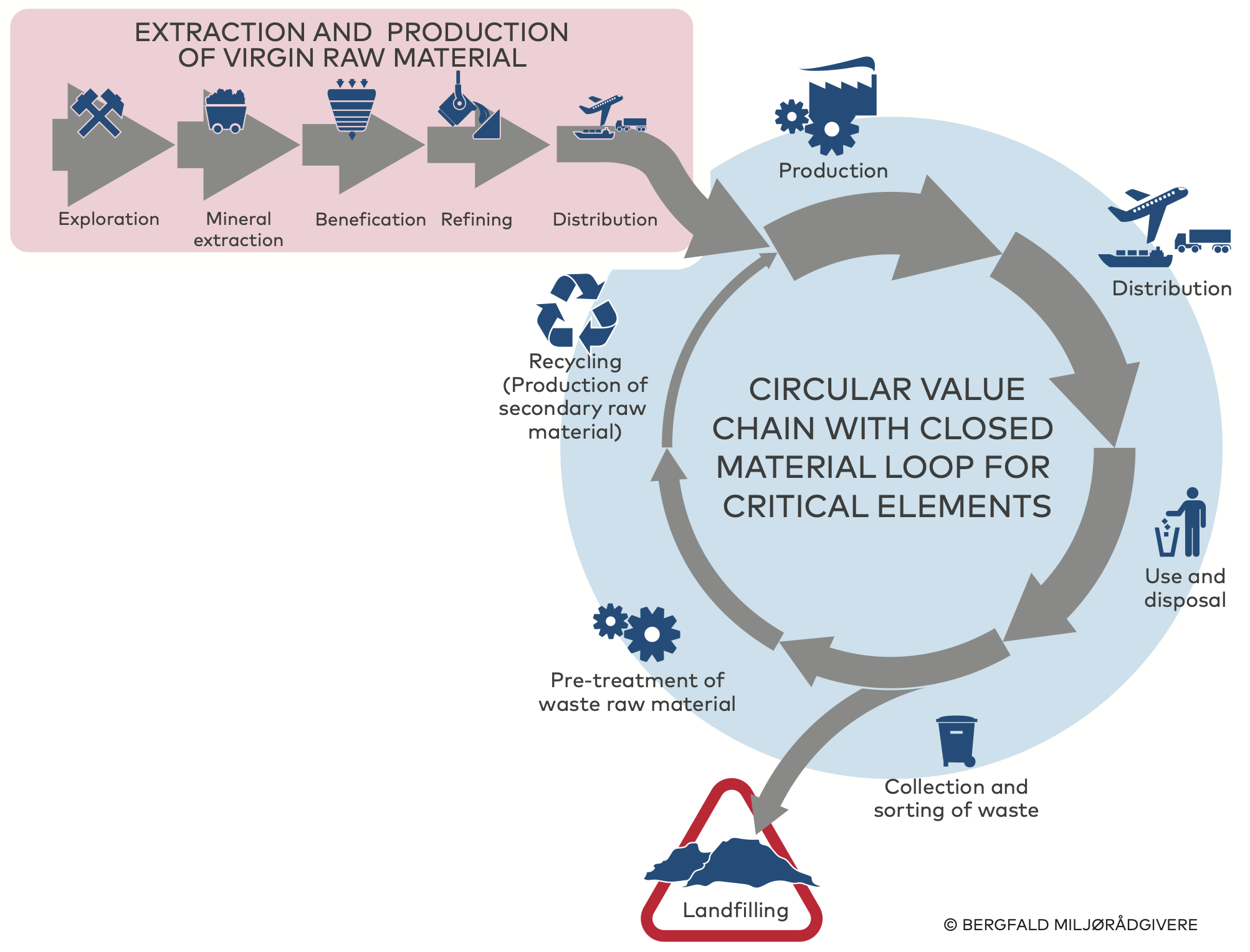
Figure 1.8 Integrated value chain for primary and secondary raw materials.
Illustration Bergfald Miljørådgivere.
1.4 European strategy for critical raw materials
European concerns over increasing CRM-supply risks and corresponding vulnerability for affected industries and services caused EU to launch its Raw Materials Initiative in 2008.
1.4.1 The European Union Critical Raw Materials Act (CRMA)
The European Union Critical Raw Materials Act (CRMA) contains 47 articles collected in ten chapters. Chapter 1 provides general provisions through Article 1 on subject matter and objectives which declares that the purpose of the CRMA is to “ensure the Union's access to a secure and sustainable supply of critical raw materials.” This will be achieved through strengthening the different stages of the strategic raw materials value chain and shall be achieved through set targets for increased Union capacity to extract the ores, minerals or concentrates and further Union processing capacity for end user quality raw materials, and Union recycling capacity for CRM from waste.
Chapter 2 describes the framework for defining and updating EUs lists of critical and strategic raw materials. EU introduced its first list of critical raw materials in 2011 and have updated this list every three years since. The raw materials that are listed as critical or strategic are shown in the following tables and given a short description in the appendixes.
Critical raw materials | |
Antimony | Light Rare Earth Elements (Gadolinium) |
Arsenic | Light Rare Earth Elements (Lanthanum) |
Bauxite/Alumina/Aluminium | Light Rare Earth Elements (Neodymium) |
Baryte | Light Rare Earth Elements (Praesodymium) |
Beryllium | Light Rare Earth Elements (Promethium) |
Bismuth | Light Rare Earth Elements (Samarium) |
Boron | Lithium |
Cobalt | Magnesium |
Coking coal | Manganese |
Copper | Nickel - battery grade |
Feldspar | Niobium |
Fluorspar | Phosphate rock |
Gallium | Phosphorous |
Germanium | Platinum Group Metals (Iridium) |
Graphite | Platinum Group Metals (Palladium) |
Hafnium | Platinum Group Metals (Palladium) |
Helium | Platinum Group Metals (Platinum) |
Heavy Rare Earth Elements (Dysprosium) | Platinum Group Metals (Rhodium) |
Heavy Rare Earth Elements (Erbium) | Platinum Group Metals (Ruthenium) |
Heavy Rare Earth Elements (Holmium) | Scandium |
Heavy Rare Earth Elements (Lutetium) | Silicon metall |
Heavy Rare Earth Elements (Terbium) | Strontium |
Heavy Rare Earth Elements (Thulium) | Tantalum |
Heavy Rare Earth Elements (Ytterbium) | Titanium metal |
Heavy Rare Earth Elements (Yttrium) | Tungsten |
Light Rare Earth Elements (Cerium) | Vanadium |
Table 1.1 Raw materials listed as critical in CRMA
Strategic raw materials | |
Bauxite/Alumina/Aluminium | PGM (Palladium) |
Bismuth | PGM (Palladium) |
Boron | PGM (Platinum) |
Cobolt | PGM (Rhodium) |
Copper | PGM (Ruthenium) |
Gallium | Rare Earth elements for magnets (Dysprosium) |
Germanium | Rare Earth elements for magnets (Cerium) |
Graphite - battery grade | Rare Earth elements for magnets (Gadolinium) |
Lithium | Rare Earth elements for magnets (Neodymium) |
Magnesium | Rare Earth elements for magnets (Praesodynium) |
Manganese | Rare Earth elements for magnets (Samarium) |
Nickel | Rare Earth elements for magnets (Terbium) |
PGM (Iridium) | Silicon metall |
Table 1.2 Raw materials listed as strategic in CRMA
Chapter 5 contains requirements regarding sustainability. Section 1 contains articles that provides provisions for developing circular markets for critical raw materials. Article 25 describes national measures for circularity and requires that all states bound by the regulation develop a program which includes measures designed to increase resource efficiency when consuming CRMs and to expand the reuse of CRM-containing products and components. This program may be integrated into a national waste management plan, and shall facilitate increased collection, sorting and processing of waste with high critical raw materials recovery potential and ensure their introduction into the appropriate recycling system. To support this development, national research and innovation programs shall include measures to increase the technological maturity of recycling technologies for CRMs, promote circular design and material efficiency and substitution alternatives for CRMs.
Article 25 also includes provisions on upskilling and reskilling of workforce in the CRM-value chain, application of the producer pays principle and extended producer responsibility, CRM-exports and EU-quality standards. Special attention is given to WEEE where CRM-containing components and CRM recovery rates must be quantified and reported on a format that will be provided by the EU Commission. The Commission will also provide additional provisions that describe which products, components and waste streams should at a minimum be considered as having a potential for recovering CRMs.
Article 26 requires certain mining operators to perform a preliminary economic assessment study regarding the potential recovery of critical raw materials from extractive waste. This study must at a minimum contain an estimation of the quantities and concentrations of critical raw materials contained in the extractive waste and in the extracted volume and an assessment of their technical and economic recoverability.
States bound by CRMA are required to establish a database of closed and abandoned extractive waste facilities located on their territory where the characteristics of the waste sites or geological conditions do not make the presence of potentially technically recoverable quantities of critical raw materials unlikely. This database shall contain information on the location, areal extent and waste volume and approximate quantities and concentrations of all raw materials contained in the extractive waste. The same states must also adopt and implement measures to promote the recovery of critical raw materials from extractive waste. Where available information could indicate the presence of potentially economically recoverable quantities of critical raw materials, the states must conduct representative geochemical sampling or a more detailed sampling with subsequent chemical and mineralogical characterisation involving core logging or equivalent techniques.
Article 27 and 28 gives provisions on the labelling of certain products that may contain permanent magnets and reporting scheme for the share of individual CRMs these magnets contain.
Article 29 and 30 in Section 2 describes requirements for declaration and certification of Environmental footprint, including rules for national certification schemes seeking recognition by the EU Commission. Section 3 contains regulations regarding free movement (Article 31) and conformity and market surveillance (Article 32) related to products incorporating permanent magnets and CRMs for which the environmental footprint must be declared.
1.5 Implications of CRMA for the Nordic countries
If the proposed CRM Act is accepted, it will have a profound impact and effects on many sectors both private and public, in the Nordics as well as for the rest of EU. The mineral sector together with the metallurgic, waste and recycling industries will all experience significant changes in their framework conditions as provisions to strengthen CRM value chains take effect. National polices will have to be updated and include a plan for how specific CRM-recycling targets shall be met, programs for strengthening relevant value chains and systems must be designed and set up, and a scheme for monitoring progress towards set goals must be implemented that include updated national statistics that include material streams of individual CRMs during different stages of their product life.
CRMA requires the Nordic countries bound by CRMA to prepare national polices on how to contribute to the EU CRMA goals for 2030 which includes:
- That the EU extracts at least 10% of the critical raw materials needed for its production.
- That the EU processes at least 40% of the critical raw materials needed for its production.
- That recycling covers at least 25% of the EU's need for critical raw materials needed for its production.
- That the EU does not cover more than 65% of its need for the various critical raw materials through imports from individual countries.
As part of this process national programs for exploration of CRM-mineral resources, updates in governmental operational permit practice and national statistics that cover extraction, processing and consumption of CRMs must be established.
1.5.1 Nordic regions expected to implement CRMA
Denmark, Sweden and Finland together with Åland are as member states in EU required to implement CRMA into national legislation. Although Norway and Iceland are not members of the EU, the CRMA is still expected to take national effect as a part of the EEC-agreement. The Faroe Islands are a self-governing nation within the Kingdom of Denmark. They are not part of the European Union or part of the EEC-agreement and is therefore not expected to have to follow CRMA.
1.5.2 Special Nordic conditions
Compared to other EU-member states with larger populations, the Nordic countries generate smaller amounts of waste materials. Low population density in northern regions of Finland, Sweden and Norway also leads to relatively small volumes of materials and waste being transported over long distances.
Nordic countries have well developed infrastructure for collection and sorting of basic waste streams that can form a foundation for collection of additional waste streams with CRM-recycling potential. Regardless of rational integration of new collection schemes into existing systems, collection and sorting of new waste streams will always entail additional costs and further development of waste infrastructure. There are also several metallurgical plants and recycling facilities that may facilitate increased CRM- recycling. Sweden and Finland have a well-developed mineral sector with both advanced technology and expertise in processing of mineral products. A more detailed description of Nordic waste collection systems is provided in Appendix 4 of this report.
Increased Nordic recycling of CRMs can provide benefits beyond the profitability of individual companies involved in new or expanded value chains for secondary CRM-production, and includes increased circularity, reduced landfilling, stable and sustainable workplaces and secure access to raw materials for the downstream processing industries.