The North Sea
Geir Ottersen, Institute of Marine Research, Norway and
Thorsten Blenckner, Stockholm Resilience Centre, Sweden
Thorsten Blenckner, Stockholm Resilience Centre, Sweden
The North Sea (NS) is a shallow semi-enclosed northeastern marginal sea of the Atlantic Ocean. The sea experiences strong tidal movements and storms, particularly during winter months, and its waters support diverse marine ecosystems, including various species of fish, sea birds, whales and seals (Fig. 4). The North Sea has significant oil and gas reserves, busy shipping lanes and historically rich fishing grounds. Consequently, marine life in the NS faces an extensive total burden from many other human impacts, including eutrophication, habitat damage and overfishing, in addition to climate change.
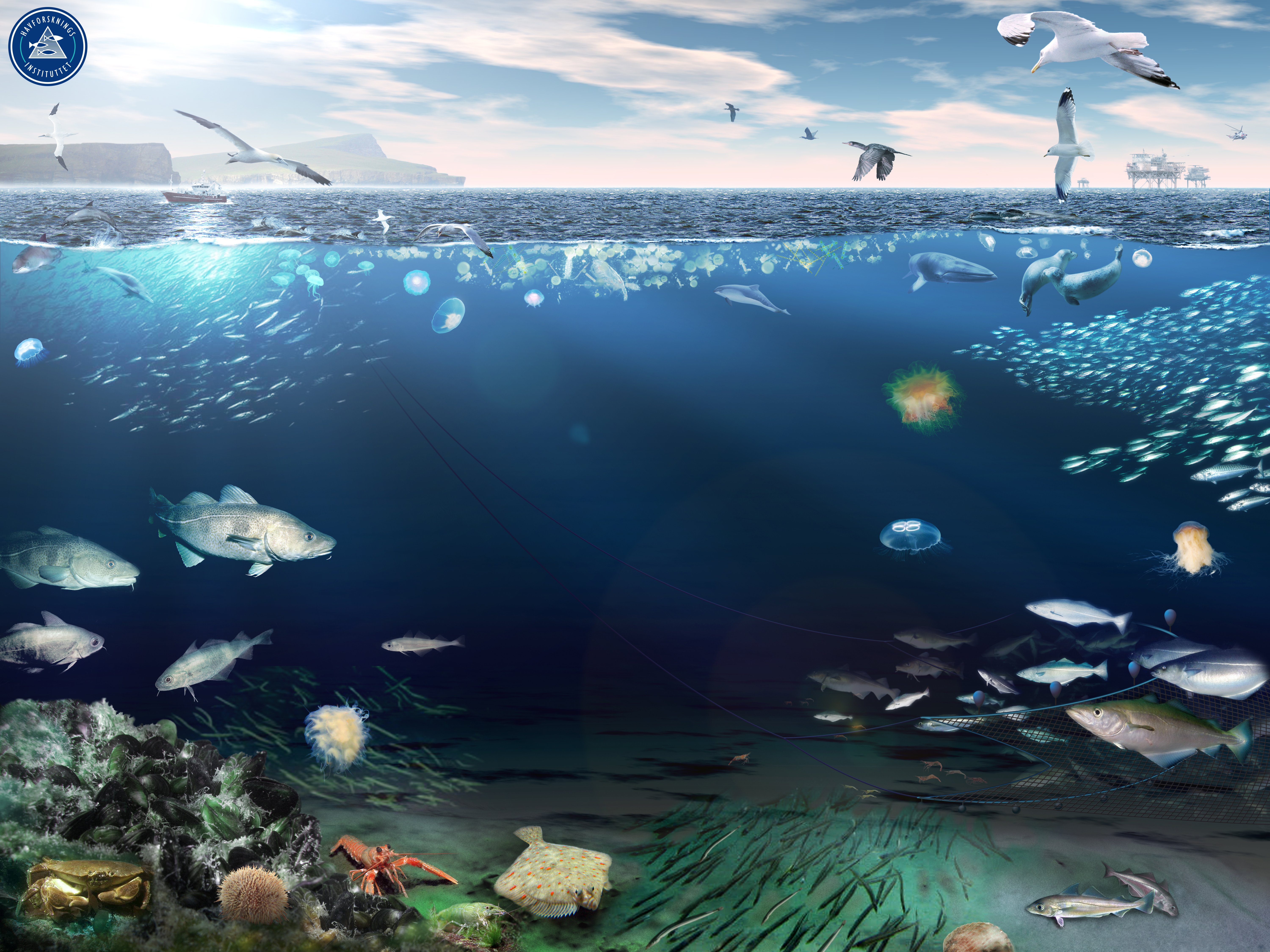
Figure 4. An artist’s view of the North Sea ecosystem. Credit: Institute of Marine Research.
Primary production
Projections of future climate show that North Sea primary production will decline (Laufkötter et al. 2015, Sandø et al. 2022, Ottersen et al. 2025). By end of century, overall community production is projected to decrease by up to 30% (Carozza et al. 2019, Kwiatkowski et al. 2019). If this is a good or bad thing is not obvious, there will be both benefits and downsides for the marine ecosystem. The main negative consequence is that this may significantly reduce the NS’ capacity to generate the fundamental food resources that sustain marine life. This aspect is somewhat elaborated on under Holistic, below.
On the other hand, reduced primary production could help mitigate the problems with eutrophication (excessive enrichment with particularly nitrogen and phosphorus) that currently prevail in parts of the NS (as in the Baltic). This could enhance water quality, including increasing oxygen levels and improve conditions for animals and plants, especially benthic organisms. Lower primary production would also likely decrease the occurrence and severity of harmful algal blooms.
In any case, the development of primary production and phytoplankton concentration depends on the changes in underlying biogeochemical processes and even uncertain knowledge of future development under climate change is of high importance. A thorough study on projected future hydrography and biogeochemistry in the NS (and the Baltic Sea) was recently conducted by SMHI within the NorScen project (Ottersen et al. 2025). They downscaled global earth system model climate projections to the North Sea and Baltic Sea with the ocean model NEMO-SCOBI (Ruvalcaba-Baroni et al. 2024). Downscaling was done for the historical period 1951–2014 and for 2015–2100 under the two scenarios SSP1-2.6 and SSP3-7.0. An important aspect is that in this study future nutrient loads from rivers were estimated and included (Ottersen et al. 2025). Projected values of temperature, salinity, and Dissolved Inorganic Nitrogen (DIN) and Phosphorus (DIP) concentration are presented there. Chlorophyll-a is (together with nutrients and temperature) a useful (although not perfect) indicator of primary production. The projected differences in surface chlorophyll-a concentration between the average historical conditions and for the period 2070–2099 within the two scenarios are shown in Fig. 5, while Fig. 6 shows the temporal development. Note the geographical differences. While the chlorophyll-a concentration tends to increase in the western parts of the NS, it declines in the eastern part, the Skagerrak and especially the Kattegat (Figs. 5 and 6). The results in Ottersen et al. (2025) confirm the importance of riverine nutrient loads for the NS (and Baltic Sea) biogeochemical variables dynamics and plankton production.
Two climate scenarios project different impacts. Under SSP1-2.6, conditions generally improve (from a reducing eutrophication point of view): diminished river nutrient loads lead to decreased primary production and better bottom oxygen conditions across most areas. Within SSP3-7.0 projected river runoff and primary production is higher. Still, also this scenario indicates some improvement to current conditions for primary production and eutrophication challenges. Thus, at least within the scenarios applied, the effects of a changing climate are smaller than effects of considered nutrient load changes, and water quality conditions in the North Sea are expected to improve (Ottersen et al. 2025).
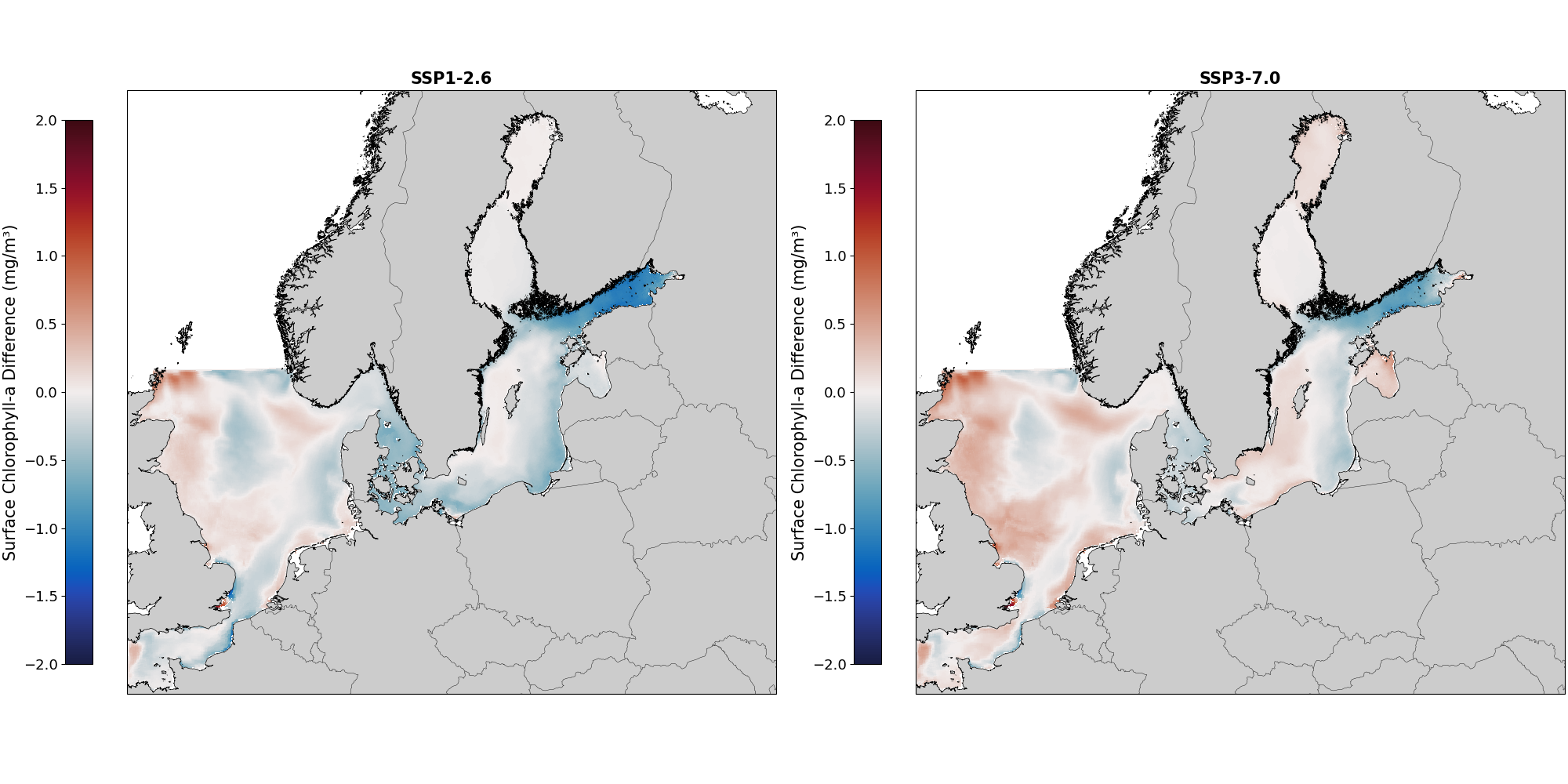
Figure 5. Surface chlorophyll-a concentration: differences between average current conditions (1985–2014) and future scenarios (2070–2099) SSP1-2.6 (left) and SSP3-7.0 (right). From Ottersen et al. 2025.
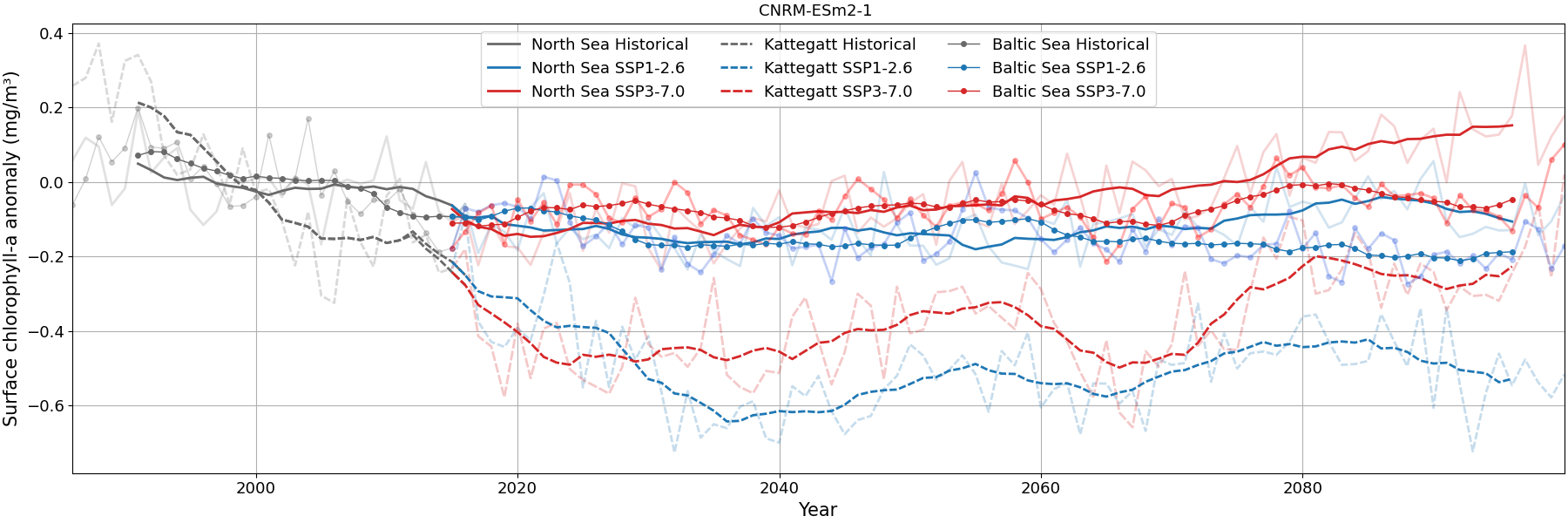
Figure 6. Surface chlorophyll-a concentration changes: Regionally averaged time series of the differences relative to the historical period 1985–2014 for the scenarios SSP1-2.6 (blue) and SSP3-7.0 (red) in the three regions North Sea (solid), Kattegat (dashed) and Baltic Sea (dotted). Transparent lines represent the annual mean, whereas the bold lines show a 10-year running mean. From Ottersen et al. (2025).
Secondary production
Climate change affects both biomass and species composition of zooplankton communities in the North seas. The size of zooplankton in the NS has generally decreased over time. A general decrease in the mean size of zooplankton has been observed, so has a shift towards smaller species. These changes are linked to environmental change, including temperature increases and decreases in nutrient and phytoplankton availability (Marques et al. 2024).
Climate-driven changes that took place in the 1980s have been described as a regime shift, affecting both temporal and spatial synchrony of plankton dynamics (Defriez et al. 2016). With the projected substantial climate change, the plankton community will likely be further affected. A thorough review was done by Brander et al. (2016), but that is now some years ago and no explicit projections were made in that assessment. The best described development so far is that with warmer waters the copepod species C finmarchicus is being outcompeted by the similar, but more heat-loving relative C helgolandicus, which has expanded its distribution from the south (Beaugrand et al. 2002).
Looking ahead, projections by Villarino et al. (2015) for the North Atlantic, including the western North Sea, found a northward shift in the gravity centre of C. helgolandicus of 17.8 km per decade from the present period (2001–2020) to the future (2080–2099), and correspondingly for C. finmarchicus 3.7 km per decade. They also projected changes in phenology for C. finmarchicus, an advance in the annual peaks of 12–13 d between present time and the end of the 21st century.
The thorough projection study by Sandø et al. (2024) also investigated the accumulated directional effect on C. finmarchicus in the North Sea. They took into consideration a range of different pressures and assessed the cumulative impact under the climate projections SSP1-2.6, SSP2-4.5 and SSP5-8.5. They found that, mainly due to negative effects of decreasing net primary production and rising temperatures, C. finmarchicus will decrease further in the NS. This is projected to be the case for all scenarios, but especially with strong warming (SSP5-8.5). C. finmarchicus (in addition to cod) is the species most negatively affected by such conditions (Sandø et al. 2024).
Benthic plants and animals
Climate change is significantly impacting bottom-dwelling species in the NS. The distribution and composition of these organisms is primarily governed by key environmental factors including sediment composition, depth, food availability, and water temperature. Additionally, currents play an important role since most benthic species have larvae that are transported by water masses.
As temperatures have increased in recent decades, many benthic invertebrate species have expanded their northern range boundaries in the NS, while deteriorating in the south. The effects of climate change on these organisms in the NS appear to stem from three main factors: changes in temperature, nutrients, and hydrodynamics, which significantly impact their food supply and reproduction patterns. Projections through 2099 under a medium climate scenario suggest continued northward movement of benthic species, but more than 60% of 75 studied species are expected to experience habitat loss. The benthic species of the southern NS, where the strongest temperature increase is projected, are particularly at risk. Here the distributional changes are expected to affect the functioning of the ecosystem, since key species showed northward shifts and there are high rates of habitat loss (Weinert et al. 2016). This highlights the significant challenges these organisms and communities face in adapting to changing environmental conditions.
In a related study Weinert et al. (2022) simulated spatial changes in southern North Sea species intensity of bioturbation (alterations of soils and sediments by organisms through burrowing, shifting particles and more) for the years 2050 and 2099 based on one species distribution model per species driven by bottom temperature and salinity changes. They found that while the total bioturbation remained relatively constant in the southern NS, the bioturbation potential for four out of seven species was projected to increase, mainly due to their concurrent northward range expansion (Weinert et al. 2022). This shows that climate change may alter the environment by acting through animals, not just the other way round.
A drift simulation model study found that warmer climate has enhanced opportunities for Pacific oyster larvae to successfully develop and drift from Danish and Swedish spawning areas and survive at landing sites along the Norwegian Skagerrak coast (Rinde et al. 2016). The observed 1.6 °C increase in sea surface temperature from 1990–2014 created suitable conditions for larval development and survival along the Norwegian Skagerrak coast since 2000. Since the study was conducted the number of Pacific oysters along the southern coast of Norway has exploded and future warming will likely increase this development further, although successful local population establishment may also be challenged by competition, predation and diseases (Rinde et al. 2016).
Fish
Several climate change related pressures are already affecting fish populations in the NS or are projected or at least expected to cause alterations in the future. As most other places, the North Sea is experiencing increasing sea temperatures. This affects fish both directly through physiology and indirectly, through distribution of prey, predators, and competitors. We summarise key challenges and responses in Table 3.
Climate change related challenges | Response pattern |
Reproduction | Warmer waters can impact the reproductive success. Higher temperatures will affect the development of eggs and larvae. This will potentially affect early life stage survival rates and recruitment of young into the population. For species preferring relatively cold water, like cod or herring, the impacts are expected to be negative. |
Prey availability | Abundance and availability of prey species will be affected and affect fish. Changes will occur in fish prey organisms such as zooplankton, crustaceans, molluscs, and smaller fish. This is expected to impact the fish food supply, affecting their growth and survival. Increased temperature will be the main pressure, but potentially also oxygen reduction and acidification. |
Migration Patterns | Many fish have developed specific migration patterns, typically related to season and spawning. Changing environmental conditions could affect fishes’ seasonal movements and spawning locations, potentially leading to mismatches between the timing of spawning and optimal environmental conditions for larval survival |
Increased Competition and Predation | As species distributions shift, established North Sea fish populations are expected to face increased competition for resources and predation from (more southerly) species entering the North Sea. |
Sea level rise | Rising sea levels can lead to coastal erosion and habitat loss for species that depend on coastal and intertidal zones |
Increased storm frequency and intensity | More frequent and intense storms can affect fish negatively both through direct damage and indirectly. Species with near-surface eggs and larvae may meet increased early life stage mortality by offspring being killed by waves. Also, increased storminess will damage habitats such as seagrass beds, which are important nursery grounds for many young fish. |
Table 3. Climate change related pressures on North Sea fish and expected responses.
NS fish are well studied, and their response in distribution to climate has been documented for at least 20 years. A much-cited article in the journal Science (Perry et al. 2005) was among the first to provide a solid analysis documenting that NS fish distributions had shifted in response to climate change. They found that nearly two-thirds of the species had changed mean latitude or depth, primarily northwards and/or into deeper water. Later studies confirmed a long-term distribution shift for NS sole and place (Engelhard et al 2011) and for cod to the northern and northeastern parts of the NS. While the former was attributed mainly to climate change, also differences in fishing pressure was important for the cod (Engelhard et al. 2014). It should be noted generally that detected distribution shifts may suggest that individual fish have moved, but just as often that recruitment or mortality rates have changed and differ between areas. There may also be genetically distinct population units with different life histories, for instance temperature preference, within the same management unit (stock). For instance, Heath et al (2014) found that two subpopulations of Atlantic cod cohabit the NS. These factors add to the complexity met when projecting population development under climate change.
Cold-temperate fish species in the NS, including cod, saithe, haddock, and Norway pout, are already living at their thermal tolerance limits. These gadoid populations face a troublesome future, with projections by Kjesbu et al. (2022) pointing to continued declines through 2050 under the moderate climate change scenario RCP5.5. The situation is strengthened by the NS’ current system, which with warming effectively creates an ecological trap. This circulation pattern (Sundby et al. 2017) carries young fish from northern spawning grounds into increasingly warm southern waters during summer and autumn, resulting in high mortality rates and poor recruitment (Kjesbu et al. 2023).
Sandø et al. (2024) confirmed the negative outlook for NS cod. They also examined accumulated directional effects on a range of species as a function of climate exposure and sensitivity attributes but expanded to include the three scenarios SSP1-2.6, SSP2-4.5. and SSP5-8.5. Based mainly upon trends in mean bottom temperature and abundance of the C. finmarchicus, important food for early life stages of NS cod, they expect a strong further decline under SSP2-4.5 and SSP5-8.5 (Sandø et al. 2024).
While cod and other species suffer from a warming NS, some will benefit. The European hake is a warm-temperate codfish species that already have established themselves in the NS and are expected to respond positively to further warming. This, and similar, changes will likely have significant impacts on the ecosystems. Hake is a voracious predator with a much larger trophic impact than cod. It is therefore likely that expanding hake populations will have a larger top-down trophic effect on the food web and potentially the biodiversity of the North Sea ecosystem (Cormon et al. 2016, European Marine Board 2024).
Seabirds
Climate change is expected to significantly impact seabirds in the NS, primarily through alterations in breeding success, food availability, and habitat conditions. For example, Searle et al (2022) show that climate-driven changes negatively affect the breeding success of five seabird species (Atlantic puffin, common guillemot, black-legged kittiwake, great black-backed gull, and razorbill) with four of these species projected to experience large declines in the future. Changes in climate variables can lead to reduced availability of key prey species, heat stress in chicks, and other negative effects on breeding success. For example, the Atlantic puffin is negatively affected by rising sea surface temperatures, while the black-legged kittiwake shows strong negative effects of temperature on land on breeding success. These climate-driven changes are expected to have detrimental effects on the breeding success of these species in the future. Only one species (northern gannet) is expected to see an increase in breeding success under future climate conditions due to a broader diet (feeding for example on sandeels, mackerel, herring, and other small fish species; Searle et al 2022). Additionally, breeding success is strongly correlated with the availability of key prey species, such as C. finmarchicus, which is declining especially in southern areas of the NS due to climate change (Frederiksen et al 2013).
Seabirds are experiencing indirect impacts from climate change through distribution shifts and abundance in prey availability, for example for C. finmarchicus and fish (sandeels) species. These changes are reducing the breeding success and growth rates of several seabird species. These changes in lower trophic levels disrupt the energy pathways to seabirds, affecting the seabirds’ survival and reproduction (see for example Church et al 2018).
Climate change is also likely to directly affect the habitat for seabird populations, for example through sea level rise and increased storminess. Rising sea levels may reduce the amount of breeding habitat available for shoreline nesting species such as terns. Strong storms can cause large-scale mortality of seabirds both in winter and summer, in particular for cliff breeding birds (Mitchell et al 2020). Due to altering conditions seabird species might also change their distribution, but their capacity to maintain population sizes depends on their ability to adapt to fast changing climate conditions (Burthe et al 2014).
Marine mammals
With “marine mammals” we here cover cetaceans and coastal seals, the former includes dolphins, porpoises, baleen- and toothed whales. The thorough NOSCCA assessment (Quante and Colijn 2016) classifies the main threats from climate change on marine mammals as direct and indirect. All organisms have tolerance limits, and exceeding these can negatively directly impact metabolism, growth, reproduction, or cause death. “Warm-blooded” animals like marine mammals must maintain a (more or less) constant body temperature, requiring extra energy when ambient temperatures change. Extreme weather or temperature changes can harm these species, leading to population decreases due to thermal stress. In addition to the direct physiological temperature effect, climate change is also expected to affect marine mammals indirectly by, e.g., altering prey availability or critical habitats like nesting beaches for seals (Howard et al. 2013; NOSCCA). Compared to some other animals, most seal and cetacean species are believed to have varied diets and are capable of switching from one prey to another in response to their availability. Further, at much lower latitudes than the NS there have been mass mortality events of both dolphins and baleen whales related to harmful algal blooms, which again may be linked to climate change (Evans and Waggitt 2020).
Fortunately, the marine mammal community in the NS is dominated by cetaceans and seals with a broad temperature tolerance. This should make them generally less vulnerable to climate change than marine mammals in, for instance, the Baltic Sea. This is supported by few observed effects of climate change on seals and cetaceans in the NS region. There has, however, been apparent range shifts, with some increase in observations of more southerly warm-water cetacean species and cold-water species becoming less common. Still, both seal and cetacean species may be prone to negative indirect effects potentially related to climate change driven temperature increase (Evans and Waggitt 2020). Also, in the future, seals that breed or haul-out in low lying coastal areas will likely be vulnerable to sea level rise and increased storm surges. For the NS region, this is an issue especially for seals in the south (Evans and Bjørge 2013, Evans and Waggit 2020). In their thorough evaluation of climate change effects on marine mammals, Evans and Bjørge (2013), admitting that their projections were on the border of speculation, point to some species that are expected to suffer from climate change and others that may benefit (Fig. 7). A species that may be negatively affected is the harbour porpoise, the clearly most abundant marine mammal in the NS, with an estimated population of somewhat below 100,000 individuals (Evans and Bjørge 2013).
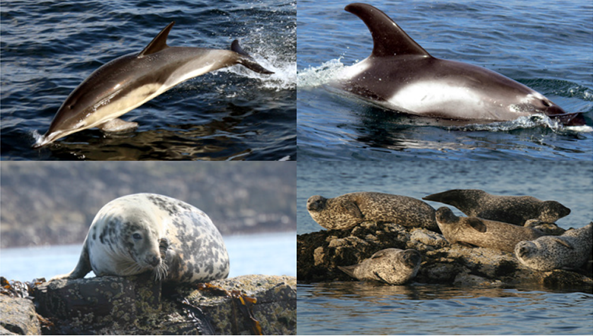
Figure 7. Potential winners (left) and losers (right). Top left: short-beaked common dolphin [Credit: P. Anderwald]; top right: white-beaked dolphin [Credit: K. Hepworth]; bottom left: Atlantic grey seal [Credit: P. Anderwald]; and bottom right: harbour seal [Credit: P.G.H. Evans]. From Evans and Bjørke (2013).
MCCIP, the UK Marine Climate Change Impacts Partnership, identified the following list of key challenges and emerging issues related to marine mammals. Although these are for UK waters, they should be highly relevant for the NS more generally:
- Establish long term monitoring of distribution and abundance change for cetacean species to assess impacts of climate change
- Distinguish climate effects from other drivers in recent observed changes in seal populations
- Quantify the synergistic effects of climate change and other human stressors on cetacean range shifts
- Understand how direct impacts on lower trophic levels affect top predators through improved links to upper trophic levels in ecosystem models
Holistic ecosystem effects
As described under Primary Production above, production at this lowest trophic level is projected to decrease in the NS with climate change. This is worrying, as primary production forms the foundation of the marine food web. Less primary production consequently means less food availability for zooplankton, which in turn affects fish populations and other marine organisms that depend on them. This could potentially impact both overall production and marine biodiversity. The reduction in primary production may particularly affect species that have evolved to thrive in the current productivity levels of the NS.
A recent thorough synthesis of climate change impacts on the Wadden Sea shows how complex ecosystem effects may be in this south-eastern part of the NS and more generally (Buschbaum et al. 2024). Climate change will act through different pressures and influence different parts of the food web. The more direct effects acting on one part of the ecosystem can propagate, causing overall consequences that are very hard to predict (Fig. 8).
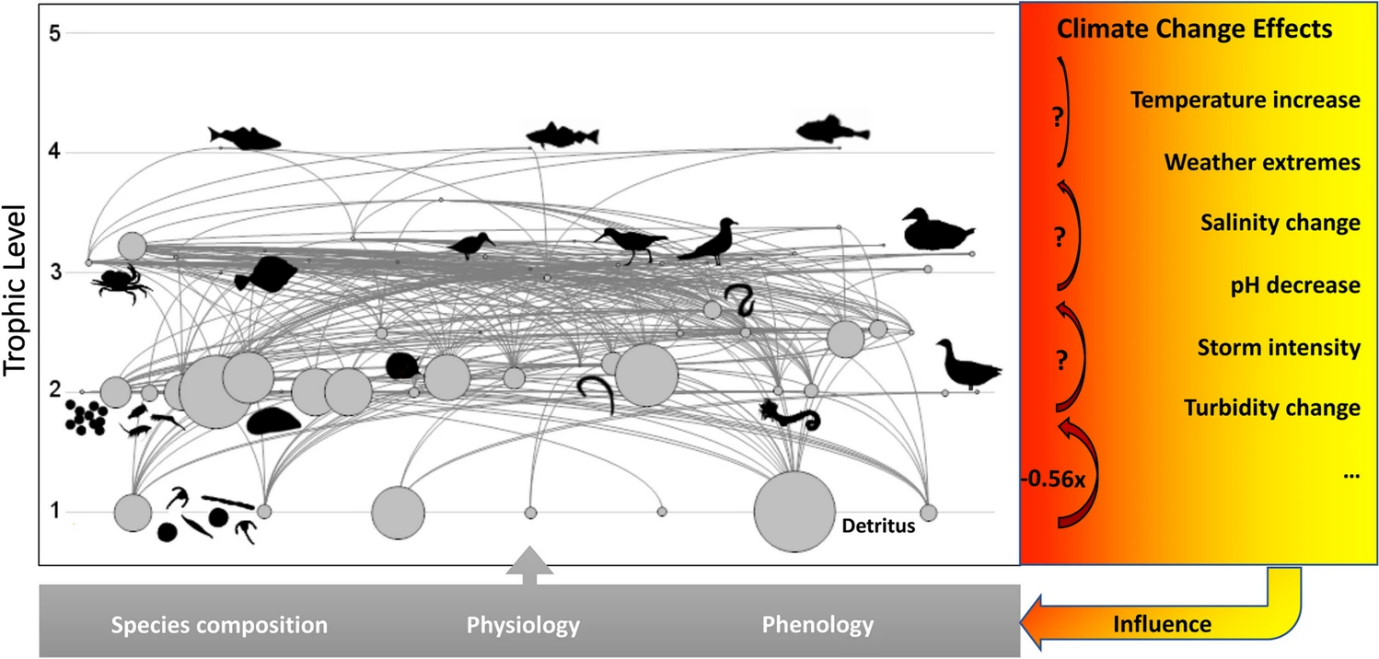
Figure 8. Schematic representation of climate change impact on the different trophic levels. Different climate change effects alter the species composition, physiology and phenology of organisms with unknown implication for the entire food web. Effects can potentially cascade from one trophic level to the preceding one. The illustration, from Buschbaum et al. (2024) is for the Wadden Sea food web, but the principle is general.
The most important physical changes considered in that assessment are increasing sea temperatures and sea level rise. Rising sea levels threaten to transform coastal ecosystems, potentially converting tidal zones into lagoon-like environments as critical thresholds are exceeded. This transformation endangers vital habitats including mudflats, salt marshes, and seagrass meadows through coastal erosion and altered sediment patterns. Meanwhile, ocean warming is restructuring marine communities at multiple levels: disrupting plankton cycles, shifting benthic species composition from cold- to warm-adapted organisms, and unravelling established predator-prey relationships. These changes are further complicated by the emerging threat of parasites and pathogens, whose potential for causing mass mortalities remains poorly understood despite their ecological significance (Buschbaum et al. 2024).
Another example of effects of climate variability and change cascading through the NS food web is the well-described case of zooplankton and gadoid fish. C. finmarchicus is an important link between the production of phytoplankton and several fish stocks (Aksnes and Blindheim, 1996). As we reported under Secondary production, rising temperatures have caused this copepod to be gradually replaced by its southern relative, Calanus helgolandicus (Beaugrand et al. 2002). While these species appear similar, this shift has significant ecological consequences. C. helgolandicus produces less nutritious larvae and spawns at different times than its northern counterpart, creating a temporal mismatch with the feeding needs of young cod larvae. This disruption of the established predator-prey relationship, known as the match-mismatch hypothesis (Cushing 1990, Durant et al. 2007), has contributed significantly to the decline of NS cod populations, alongside pressure from commercial fishing. The case illustrates how climate warming can impact marine ecosystems by disrupting the synchronization between species' life cycles. Also the more general trend mentioned towards smaller zooplankton individuals and species is problematic, as smaller zooplankton typically contain less energy, making them less nutritious for the fish, seabirds, and other animals that depend on them.
Seabirds are typically high in the food chain and depend upon production at lower trophic levels. Brander et al. (2016) summarised several studies demonstrating statistical connections between seabirds and plankton and fish prey. However, most often the actual pathways climate signals follow through the food web to impact seabird life-history traits remain elusive (Brander et al. 2016).