6. PACKAGING
Packaging is an essential part of daily life, serving functions like product protection and reducing food waste. However, its widespread use, especially of single-use plastic packaging, has severe environmental impacts. This includes the pollution of ecosystems, for example, creating serious problems for marine environments (European Environment Agency, 2021). Today, single-use items like cups and food boxes are among the most common plastic pollutants found in nature (Oceana, 2021). The rise of disposable packaging is driven by lifestyle changes, such as the demand for convenience meals, takeaways and the growth of e-commerce and home deliveries. This trend is expected to continue, increasing packaging consumption and exacerbating its environmental problems.
In response to the growing demand, use, and waste of packaging, the EU revised the Packaging Waste Directive (94/62/EC) in 2018, obliging all Member States to introduce Extended Producer Responsibility (EPR) schemes for packaging by 2024 (Directive (EU) 2018/852). A more recent proposal from the EC aims to harmonise EPR requirements across EU member states to make them more effective. Further measures to combat plastic waste include banning certain single-use items in the EU (European Commission, 2022b).
With pressure from EU regulations and an increased focus on the negative environmental impacts of single-use packaging, PSS and Reusable Packaging Systems (RPS) (Long et al., 2020) can be considered solutions for closing the loop on packaging, thereby effectively contributing to reduced emissions from production and waste reduction. In some cases, RPS has been used for several decades, such as the Euro pallet or the well-established deposit return systems for bottles in many European countries, including the Nordics (Sensoneo, 2024). These successful examples illustrate that changing consumer behaviour is possible if financial incentives are provided. Additionally, the standardisation of products, along with the development of infrastructure and collaboration among market actors for return, collection, and redistribution, has been crucial to their success (Christoph et al., 2023).
In this project, we explored novel PSS solutions for packaging, covering a range of products and markets. Public attention often focuses on innovative ways to reduce plastic waste from consumer goods since this problem is highly visible. However, it is equally important to develop alternative models for the reuse of packaging in the B2B sector, where substantial opportunities for waste reduction exist, as shown in the example of Euro-pallets. Unlike other product groups, packaging typically lacks user interest in retaining ownership, presenting unique challenges for PSS providers. Packaging is often seen as disposable without value since it is frequently provided at little to no cost to the consumer, such as single-use takeaway packaging or parcel packaging. euro
In the B2B sector, such as the pilot case of Looping’s reusable transport packaging, the business model is straightforwardly B2B. The success of such systems depends on creating a business case appealing to logistics PSS providers, who are the direct users of these solutions. In the other cases, like the two pilots of Re-Zips’ reusable packaging for parcels and Kleen Hub’s reusable cups and food containers for takeaways, the business relationships remain primarily B2B, as these PSS providers collaborate with online retailers, takeaway vendors, and other businesses. However, these products are ultimately used by end consumers. Therefore, these solutions must not only be attractive to businesses participating in the reuse system but also to end consumers, requiring a double value proposition. Furthermore, this requires active engagement in communicating the benefits from the participating partners to their customers.
6.1 Plastic and single-use packaging
Plastic and single-use packaging are pervasive in modern consumer culture, particularly in the food and beverage industry, where convenience often takes precedence over sustainability. Single-use packaging, such as plastic cups, food containers, and cutlery, is designed to be disposed after use, leading to significant environmental challenges. Single-use cups are, for example, often a mix of fibre and plastic, making them difficult to recycle, with most ending up in general waste – or littered in the environment (EPECOM, 2019).
Efforts to address these issues include promoting more durable and multi-use reusable packaging solutions. Such systems are increasingly seen as a way to reduce the reliance on single-use packaging and minimise environmental impacts. By establishing reuse systems, reusable packaging can be circulated among consumers, significantly lowering waste generation and resource consumption. Packaging-as-a-service providers offer integrated solutions for managing reusable cups, including collection, inventory management, and re-circulation, aiming to make sustainable packaging convenient for end-users and participating take-away providers such as cafés and restaurants.
Reusable alternatives are most commonly seen in the context of coffee cups, and the Nordic countries are ranked amongst the highest in coffee consumption per person (Statista Research Department, 2024). However, the waste problem extends far beyond. In 2022 alone, around 843 million disposable cups and 681 million disposable food boxes were placed on the Swedish market, according to the Swedish Environment Agency (Håll Sverige Rent, 2024). The market potential for reusable solutions spans a wide range of takeaway packaging used in restaurants, cafés, shops, petrol stations, hotels, event venues, and offices. Despite this, the adoption of reusable packaging systems is lagging, and existing systems have not yet been scaled to a national level across any of the Nordic countries. Where providers do exist, they tend to operate on a smaller scale, often in niche markets, and have yet to achieve the scale necessary to significantly reduce single-use packaging.
In the Nordic region, Sweden currently leads the market for reusable packaging services. The dominant player, Panter, operates a digital return system for reusable containers across roughly 800 takeaway locations. Several start-ups have emerged in the Nordic circular packaging market, offering various solutions such as app-based systems for deposit and returns, reusable cups and food containers, and washing services. However, many of these companies face challenges in expanding their operations. Low consumer adoption and reduced profit margins during COVID-19 have hindered their ability to scale effectively. As a result, in June 2024, Kamupak, the Finnish market leader for reusable packaging solutions, and &Repeat, Sweden’s largest startup for circular packaging, announced their closure less than a year after merging in an effort to establish a dominant Nordic provider of circular packaging solutions (Santos, 2024).
In Denmark, Kleen Hub and New Loop are the main operators, providing services primarily to festivals, office buildings and a few cafés using branded cups in closed-loop systems. In January 2024, Aarhus launched a city-wide pilot project introducing a reusable cup system with return stations across the city and more than 60 participating cafés (Rotake by Tomra, 2023). While the ambition is to expand the system to include other packaging types, the long-term success of this project remains uncertain.
Norway lags behind in adopting reusable packaging systems, with only a few locations in Oslo participating in Europe’s biggest reuse system operated by the German company Vytal (Vytal, n.d.). Stavanger and other Norwegian cities are part of a municipality-driven project to reduce litter and explore experiences from other European cities to minimise single-use cup consumption (Pedersen, 2024).
Iceland currently lacks reusable cup systems. Travel blogs advise visitors to bring their own reusable mugs, as most establishments only offer paper or plastic cups, even for dine-in customers (Local Guide, n.d.) .
Kleen Hub offers a reusable packaging system to help take-away providers reduce single-use plastic waste. Through Kleen Hub’s technology, participating restaurants and cafés can provide reusable cups linked to customers’ payment cards, eliminating the need for an app or deposit. Customers are only charged if they don’t return the cup to a participating partner. |
6.1.1 Drivers and Barriers
Regulatory drivers and barriers: Policy efforts do not (yet) translate into desired results
There is a growing emphasis on reducing waste from single-use plastics at European, national and local levels. The EU’s single-use plastic directive sets the framework for national legislation and municipal initiatives across the Nordics, such as pilot projects for reusable cup systems in Helsinki and Aarhus. The EU is actively working to significantly reduce packaging waste by 2040 (European Commission, 2024c) through measures such as banning certain single-use plastic items, reducing consumption via product labelling, setting national reduction targets, and implementing extended producer responsibility (EPR) programs.
Nordic countries are in the process of implementing the EU Directives with varying levels of ambitions in their efforts to curb plastic waste. While all Nordic countries have incorporated plastic waste reduction into their national strategies, only Finland and Sweden have set specific national targets. Finland aims to reduce the consumption of single-use plastic packaging for food and beverages below 2022 levels by 2026 (Ministry of the Environment – Finland, 2018). More ambitiously, Sweden seeks to cut the consumption of single-use cups and food containers by 50% by 2026 (compared to 2022). As of January 2024, Swedish legislation requires businesses that sell more than 150 takeaway items per day in single-use packaging to offer reusable alternatives. (The Swedish Environmental Protection Agency, n.d.).
Other European countries are taking similar steps. In 2023, Germany introduced comparable regulations, while the Netherlands opted for a mandatory fee on single-use plastic cups and food containers (RVO, n.d.). However, despite these policy initiatives, the adoption rate of reusable packaging solutions remains disappointingly low, even in countries with mandatory regulations for reusable takeaway packaging. Service providers in these markets initially experienced a surge in new business customers and investments following the introduction of the new legislation. However, this momentum has since slowed (WWF Deutschland, 2024). A recent study on the effects of the new regulation in Germany shows that the reuse share increased from 0.7% in 2022 to 1.6% in 2023 (WWF Deutschland, 2024). While this represents doubling the reuse rate, the overall percentage remains very low. One major barrier has been the lack of enforcement, which has led many businesses to scale back their efforts to provide reusable options due to minimal regulatory oversight. Simultaneously, the total amount of packaging waste has continued to rise, highlighting the ineffectiveness of current policy efforts in driving meaningful change (WWF Deutschland, 2024).
In Sweden, many companies are still hesitant to fully comply with the new regulations, waiting to see whether authorities will enforce them with sanctions. So far, fines have rarely, if ever, been issued. According to interviews with reuse providers, even many businesses that offer reusable packaging alternatives fail to actively promote these systems to their customers. The current regulation mandates that companies offer reusable alternatives. Still, it does not provide incentives for either businesses to encourage their use or consumers to choose them, especially since single-use packaging remains available at no additional cost.
Some experts argue that the policy is ineffective in its current form and call for stronger measures, such as introducing a mandatory fee on single-use takeaway packaging – similar to the approach taken with plastic bags (WWF Deutschland, 2024). Furthermore, the experiences from Sweden and Germany show that the lack of enforcement and controls hinders the successful implementation of the existing legislation. The current policy efforts in Sweden and Germany have led to a situation where companies subscribe to the regulation mainly to meet legal requirements. Some even use the subscription as a greenwashing tactic without meaningfully reducing their reliance on single-use packaging, according to some of reusable-packaging providers interviewed for this project. They expressed frustration over, that their business model is contributing to this inefficient use of resources under some circumstances.
Policy cannot only rely on the reuse providers and restaurants to provide the solution, if we are to have a chance of meeting the political goals on reducing single-use consumption– Anna Lindvall, Panter (reuse provider)
This regulatory challenge is closely tied to economic aspects, as the current infrastructure is designed for single-use items. Waste management systems are efficient, keeping streets clean and ensuring trash is processed without direct cost to the end consumer. To truly shift toward reusable systems, funding and focus would need to transition from waste management infrastructure to reuse infrastructure. Without this shift, the adoption of reusable packaging will remain limited.
Cultural drivers and barriers: Discrepancy between consumer values and action
Despite widespread awareness of environmental issues, there remains a significant gap between consumer values and actual behaviour when it comes to adopting reusable packaging systems. According to a user survey and interviews during the Kleen Hub pilot project, waste reduction is the primary motivation for consumers to use reusable packaging. Over 80% of respondents cited waste reduction as the main advantage, surpassing even financial incentives like receiving a 10% discount on their drink when choosing a reusable cup.
The Nordic countries have a strong foundation to build upon, particularly with the success of deposit-return systems for bottles, which have cultivated a cultural recognition of the value of reusable containers. (Pedersen, 2024). However, despite this cultural groundwork, many consumers try reusable cup systems only a few times before reverting to single-use packaging. This indicates that these systems struggle to create sustained behavioural change. A likely explanation for this drop-off is the perception that reusable systems are burdensome. In contrast, single-use packaging is associated with convenience, especially since the waste management process remains largely invisible to consumers. This aligns with findings from interviews with larger providers in Sweden and mirrors the experiences of reuse providers in Germany, where similar challenges with consumer retention have been observed.
Field research at Coffee Collective shows that nearly all users were introduced to the Kleen Hub system through staff or signs and posters at the participating café. Staff mostly tries to introduce the system in the mornings to regular customers and does not have the time for this on the weekends when the café gets very busy. This highlights the importance of frontline staff in actively promoting reusable alternatives and guiding customers through the process, such as answering questions about how to return the packaging – but also, that educating customers is additional work that requires extra time.
In Sweden, the new law mandating reusable options requires businesses to make these alternatives visible to customers, but this was not supported by a wider public campaign to raise awareness about the new regulations. While reuse providers like Panter supplied communication material to restaurants and cafés, they lacked the financial resources for wider promotional efforts, such as social media campaigns or public advertisement. As a result, many customers remain unaware of the regulation or are unsure where they can request reusable options since they are not visibly promoted in most locations.
Technical drivers and barriers: The lack of standardised systems
A major challenge in adopting reusable packaging systems is the lack of standardised solutions across the market. The fragmented landscape, dominated by small start-ups, creates difficulties for reuse system providers, participating businesses, and consumers. Customers often find it inconvenient to download multiple apps or sign up for systems that only function in a limited number of locations. Additionally, the absence of standardisation in cup sizes, washing systems, and tracking technology makes it harder for providers to scale their businesses effectively.
For participating companies, being part of a larger, standardised reuse network could increase the appeal of reusable options for their customers. However, many businesses hesitate to adopt standardised reusable cups that circulate between cafés and restaurants, as this limits their ability to include custom branding. This is one reason some establishments, like Coffee Collective, choose to offer their own reusable cups rather than join a broader network.
User interviews at a Copenhagen café revealed that the use of reusable cups is mostly limited to customers who live nearby or are on a walk, where they can conveniently return the cup after use. Otherwise, the perceived barriers to participation become too high. Most operating return systems have very few return points, making customers reluctant to commit to the process, even if they are supportive of environmentally friendly solutions in general.
I considered using it, but it’s too difficult for me to return it. I would 100% use it if I could return it close to my home– Coffee Collective customer
Furthermore, the inconvenience of carrying the cup after finishing a drink, especially if it lacks a leak-proof lid, adds to the reluctance. These practical challenges highlight the need for more accessible and standardised systems to make reusable packaging a convenient and attractive option for both consumers and businesses.
6.1.2 Environmental Potential
The primary environmental benefits of a reusable cup system are reducing the need for new production and minimising waste. However, reusable cups, typically made from higher-quality, resource-intensive materials, often require more resources and energy to manufacture than disposable options. For these cups to become environmentally preferable, they must be reused multiple times, factoring in the material, weight, reverse logistics of transport and washing, and the technology needed to operate the system.
LCA research from East Asia supports these findings, showing that rental systems for reusable cups generally outperform disposable alternatives across most environmental impact categories (Greenpeace, 2023). However, experiences from the Nordics and other European countries indicate that achieving widespread adoption of reusable systems remains a challenge, which limits their overall environmental impact.
In addition to the environmental benefits, pilot interviews and field studies reveal that reusable cup systems offer distinct operational advantages for businesses and customers. For participating cafés, restaurants, and other venues, these systems can streamline inventory management and reduce storage needs by distributing reusable items across network partners. The technology within the system also facilitates impact data collection useful for ESG reporting. From a consumer perspective, beyond environmental benefits, customers appreciate the enhanced taste and experience of using reusable cups over disposables, as found in field research at Coffee Collective. Additionally, choosing a reusable option can give customers a sense of contributing to a larger environmental cause, enriching their overall experience.
Life Cycle Assessment of a reusable cup system
As part of the pilot project, Kleen Hub’s reusable cup system underwent a Life Cycle Assessment (LCA) to evaluate its sustainability potential as a PSS. Several critical parameters were tested and analysed, including return rate, product technical lifespan, and the additional capital goods/technical equipment required to operate the system effectively. The key assumptions used in the LCA are outlined in Annex 2.
To evaluate the system, the functional unit (FU) was based on one year of servings of hot, to-go beverages at a café in Copenhagen, equating to 13,036 servings annually (or approximately 36 servings per day). According to data and assumptions provided by Kleen Hub, each reusable cup was estimated to have a technical lifespan of 200–300 uses and a return rate of 98%, equating to a loss rate of 2%. Using the formula for calculating the required number of products to fulfil the functional unit (RF = (FU/NU) + (FU/NU)*LR*(NU - 1)), the Kleen Hub reference flow was:
RF = (13,036/250) + (13,036/250) * (0.02) * (250-1) = 312 Kleen Hub cups
Since single-use cups cannot be reused, the total number needed to meet the functional unit (FU) is simply the total number of servings: 13,036 single-use cups.
The study results highlight key hotspots in the PSS model and provide insights into the sustainability potential of the Kleen Hub system compared to the single-use alternative. Figure 4 illustrates the stages included in the assessment, along with the percentage contributions to the reference flow’s overall emissions. The largest contributors to emissions are the production and incineration of cups lost in the system. Additionally, the operations phase – which involves a tablet used in cafés for cup rental and returns, energy consumption for running the tablet, and data storage – also significantly impacts emissions. Within this phase, the tablet alone accounts for most emissions, confirming the assumption that capital goods can substantially impact the system’s overall emissions.
Other capital goods, such as dishwashers and production equipment, were excluded from the assessment as they are not solely dedicated to operating the Kleen Hub system. Unlike in other LCAs for PSS, transportation contributes minimally to overall emissions. This is because transportation was only considered in the production and distribution phase, and it was assumed that cups would primarily be returned by bike or on foot. The decentralised washing approach within the Kleen Hub system further reduces transportation-related emissions.
This finding indicates that if washing and servicing of PSS products are centralised, or if distances for returns are reduced, the sustainability potential of PSS models could be even higher.
Figure 4: Overview of the percentage contribution to overall emissions from each lifecycle phase and process.
The effects of variations in return rate and technical lifespan were examined, as these are critical assumptions for the PSS. Analysis showed that changes in the return rate had the most significant impact on overall results, as even small changes in the return rate directly influence the number of products needing production. Additionally, higher loss rates increase the likelihood of cups being waste-managed by users. In this study, it was assumed that cups lost within the system would be incinerated. However, this assumption may oversimplify reality, as actual waste management by end users – such as home reuse, recycling, public trash disposal, or littering – has not been investigated.
Figure 5 illustrates the impact of key assumptions, showing that use rate (or technical lifespan) has a smaller effect on the results if the return rate remains consistently high (set at 98% in this study’s reference flow). In contrast, changes in the return rate itself have a substantial effect on overall environmental impact. For example, if the return rate decreases from 98% to 95%, total emissions double – even though the technical lifespan of each cup is still 250 uses, as established in the study’s reference flow. This finding underscores the return rate as a key factor when evaluating the environmental impact of packaging, as it determines the number of products needed to maintain the system's function and is central to most PSS business models.
In the Kleen Hub system, a lower return rate significantly affects the number of cups that must be produced and the number that end up managed as waste outside the system –assumed here to mean incineration. Consequently, maintaining a high return rate minimises production demands and associated emissions. Furthermore, waste management options are also impacted. In the Kleen Hub case, discarded cups are recycled by the producer. When cups are not returned, the user determines the waste management of the cups, making it difficult to control the plastic material’s final disposal.
Figure 5: Impact of different number of uses and return rate of reusable cups.
Focusing on the return rate, the break-even point of the two reference flows is investigated. This investigation is based on the assumptions and system boundaries from the reference flow of the Kleen Hub study, meaning that the technical number of uses is 250, including production, transportation, operation, washing and end-of-life. Figure 6 illustrates CO₂e emissions at various return rates compared to the single-use alternative. This comparison shows that lower return rates lead to significantly higher emissions. The break-even point –where reusable cups match the emissions of single-use cups – occurs when the return rate is between 60% and 70%.
Figure 6: Impact from different return rates when compared to single-use.
6.1.3 Conclusions
Our research confirms that reusable cup systems have strong environmental potential if they achieve high return and usage rates. However, the market conditions for reusable packaging service providers in the Nordics remain challenging. Even in Sweden, where specific policy measures have been introduced to facilitate the shift from single-use takeaway packaging to reusable alternatives, adoption has been slow.
Current policy efforts must be complemented by measures that make reusable systems economically viable as they struggle to compete with the low costs of single-use packaging. Consumer adoption is still lagging, and reuse systems are often limited to regular customers who have been properly introduced to the concept.
While customers generally recognise the importance of reducing plastic waste through reusable alternatives, significant barriers to behavioural change remain. To drive wider adoption, it is essential to expand the number of return points and reduce the fragmentation of reuse systems across regions or countries. Additionally, efforts from staff at participating venues to introduce and promote these systems are crucial. For businesses to engage in these efforts, reusable alternatives must be more attractive and cost-effective for B2B customers.
6.2 E-commerce
Across the Nordic countries, the e-commerce sector has grown significantly, making it one of the leading markets in Europe in terms of online purchases per capita (Ecommerce News, 2023). This trend highlights the need for more sustainable packaging and logistics solutions as e-commerce continues to expand. Nordic e-commerce businesses vary widely in size, organisation, and product offerings, influencing their selling and packaging practices. Some use large online marketplaces, while others integrate e-commerce with physical stores or operate purely online. Packaging processes also differ, with some companies using fulfilment centres while others manage packaging in-house. Although comprehensive data on e-commerce packaging in the Nordics is limited, estimates for Denmark suggest that the sector generates significant amounts of packaging waste, including cardboard, paper, and plastic (Petersen et al., 2023). These estimates are based on assumptions and available data, making precise calculations challenging. Additionally, the practice of over-packaging, such as unnecessary fillers or excessive material use, remains difficult to quantify (Petersen et al., 2023).
RE-ZIP (est. 2020, Denmark): RE-ZIP specialises in producing durable and reusable packaging for e-commerce. RE-ZIP rents out e-commerce packaging to web shops, where consumers can choose to have their goods delivered in RE-ZIP reusable boxes and bags. Customers receive their orders in RE-ZIP packaging and return these at the local mailbox or pick-up point. The packaging is sorted, cleaned and reused. |
Reusable packaging solutions and PSS business models have not been a major part of e-commerce, posing possible barriers to implementation. But, as the e-commerce sector grows, so does the need for and importance of reducing the impact of e-commerce packaging.
6.2.1 Drivers and barriers
Regulatory drivers and barriers
As with the remaining product categories for packaging, the revised Packaging Waste Directive (94/62/EC) and the Directive (EU) 2019/904 on the reduction of the impact of certain plastic products on the environment is expected to have a significant impact on the demand for reusable e-commerce packaging. However, according to RE ZIP, web shops do not wish to charge the consumers for packaging. Thus, they see a need for a tax on single-use packaging in e-commerce to create the necessary economic incentives. Furthermore, it is expected that regulation on mandatory ESG reporting such as the CSRD will make it easier for RE ZIP to document and report on the environmental benefit of their packaging solution.
Cultural drivers and barriers
Although there is a growing trend for consumers to consider the environmental impact of their choices, a significant challenge remains: customers are not accustomed to paying for packaging in e-commerce. Most consumers do not want to pay extra for sustainable solutions and consider it a responsibility of the companies to shift to more sustainable practices (Rashmi, 2023). This makes it difficult for RE-ZIP to persuade larger web shops to either cover additional costs related to packaging or pass these costs on to the consumer, by charging them extra for packaging. Since single-use continues to be available at very little cost, it is thus challenging to create an economically viable business model based on reusable packaging.
Moreover, the return rate is a significant aspect of the environmental impact associated with RE-ZIP's products, making it essential to ensure consumers return the packaging. However, this presents challenges since consumers must change their behaviour regarding returns and not simply dispose of the packaging as usual. Having to remember to return packaging can be perceived as a burden since it requires extra time and effort from customers.
Technical drivers and barriers
For its reusable packaging system, RE-ZIP needed to build a supporting infrastructure, develop apps, and create new products. This process posed several technical challenges, as nearly all packaging in the e-commerce sector currently relies on single-use products. A priority for RE-ZIP was to develop durable, high-quality products that could be reused many times. However, the first prototypes were so well-made that customers often kept them rather than returning them, as they found the bags appealing.
Additionally, the initial bags required at least 50 reuses to outperform single-use alternatives environmentally, due to the heavier materials used. In subsequent product development, RE-ZIP created a lighter product made primarily from cardboard and paper, with only a small amount of rubber. This adjustment reduced the environmental impact by lightening the materials while maintaining durability for multiple reuses.
6.2.2 Environmental potential
The environmental benefits and consequences of RE-ZIP products have been examined during the pilot. This study showed that RE-ZIP has the potential to significantly reduce CO2e emissions, waste amount, and water consumption compared to single-use packaging. The most critical assumptions and the goal of the assessment is available in annex 2.
The primary purpose of the RE-ZIP pilot was to develop a calculation tool based on LCA, making it possible for RE-ZIP to calculate its actual environmental footprint for the metrics of kg CO2e, m3 water, and kg waste. The functional unit was 1 m2 of packaging to contain and protect dry goods during transportation and storage for one delivery.
As RE-ZIP rents out two different types of e-commerce packaging with different sizes, two functional units have been used in the assessment:
- 1 m2 of hard case packaging to contain and protect dry goods during transportation and storage for one delivery
- 1 m2 of soft case packaging to contain and protect dry goods during transportation and storage for one delivery
A hypothetical scenario was created to examine RE-ZIP's overall environmental performance, calculating the impact of 300 RE-ZIP cardboard packages. By the reporting time, 200 initial packages had been returned and reused, while the remaining 100 packages had not been reclaimed. Diagram ## presents the results, showing that the RE-ZIP scenario emits 50% less CO2e than the single-use cardboard alternative if 2/3 of the 300 packaging are reclaimed.
Figure 7: Results from RE-ZIP’s overall environmental performance.
Figure 8: Emissions from different phases of the RE-ZIP system.
Investigating the hotspots of the RE-ZIP system, Figure 8 indicates that production and waste management account for 85% of emissions, and transportation accounts for 12% of the emissions in this specific scenario. This also illustrates the importance of reuse and transport distances, as reusing the products will eliminate the need to produce additional products and, therefore, the number of products discharged and transported.
Investigating the importance of the chosen g/m2 for the single-use reference, Figure 9 illustrates major deviations between the minimum, average and maximum weight scenarios for cardboard boxes. Looking at the uncertainty margin, the RE-ZIP scenario performs better regarding CO2e by looking at the average and maximum emissions, but not minimum emissions.
An assessment of the soft case packaging shows that this bag must be reused more times than the box to have a lower environmental impact than a single-use paper bag. Specifically, for one of the company’s largest bags, it needs to be reused over ten times to achieve lower CO₂e emissions than a paper bag. This is because the soft case is made from heavier, more durable materials, which increase initial emissions but allow for multiple reuses.
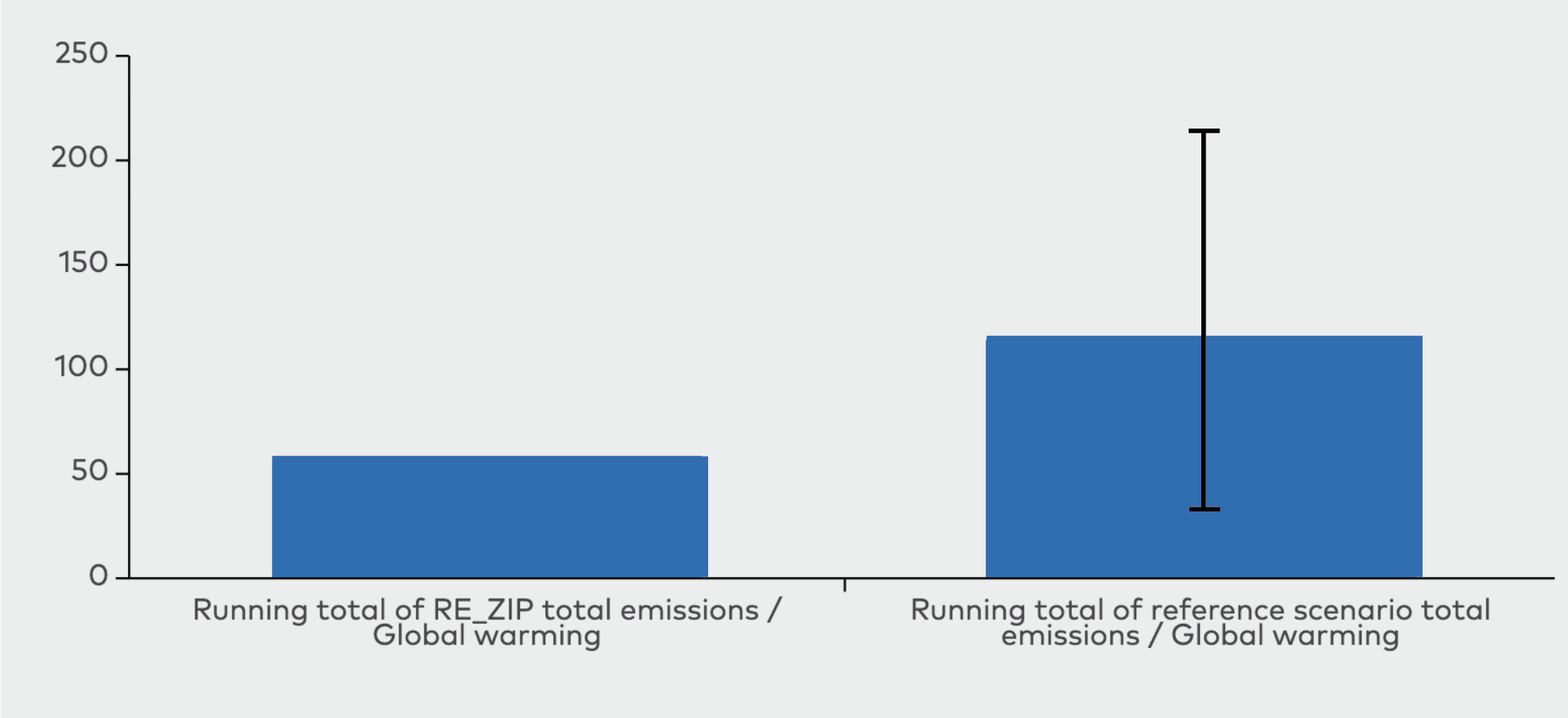
Figure 9: Comparison of RE-ZIP total emissions and Reference scenario total emissions.
Rebound effects
While reusable packaging can reduce environmental impacts and support sustainability in e-commerce, it also brings potential rebound effects. A primary concern is that both e-commerce retailers and consumers may use reusable packaging as a symbol of environmental responsibility without addressing deeper issues, such as overconsumption and high product returns. For instance, consumers may feel less guilt about frequent online shopping if the packaging is reusable, creating a false sense of eco-friendliness while consumption patterns remain unchanged. Likewise, retailers might promote reusable packaging as a sustainable solution yet overlook practices like excessive product returns, which significantly add to carbon footprints. This risk implies that reusable packaging could deflect attention from the more critical need for changes in consumption behaviour and overall reductions in consumption necessary for real environmental impact.
6.2.3 Conclusions
While reusable packaging solutions like RE-ZIP offer the potential for reducing the environmental impact of e-commerce packaging, their widespread adoption faces several challenges. The reluctance of consumers to bear additional costs means that the financial burden falls on e-commerce platforms, making these solutions economically less viable without regulatory support. Additionally, achieving the environmental benefits of reusable packaging depends on high return rates, which require significant behavioural shifts from consumers. Moreover, there is a risk that emphasising reusable packaging might overshadow the need for more fundamental changes in consumption habits, such as addressing overconsumption and reducing the high return rates of online purchases. For reusable packaging to contribute meaningfully to sustainability, it must be part of a broader strategy that includes both policy measures and a shift in consumer behaviour.
6.3 Freight packaging
Freight packaging plays a vital role in securing goods during transport, providing protection from shocks, compression and climate conditions. Freight packaging is made of various materials, including cardboard, wood, steel, and plastic, as different types of packaging are needed depending on the type of cargo (Codot Logistics, 2024). As consumption rates rise, so does the need for freight packaging, which leads to increased emissions and resource consumption from the production process. PSS solutions can offer better utilisation of the packaging used during transportation (Hansson, Henlock, et al., 2019), thus lowering production emissions and the need for resources. While the industry is primarily based on single-use products, highly durable types of freight packaging, such as pallets, crates, and boxes, are suitable for reuse. PSS models for these products are well-established (Egebæk et al., 2022), primarily targeting the B2B market. We have explored drivers and barriers to PSS implementation in freight packaging through our pilot company, Looping.
Looping is a company that specialises in producing durable and reusable freight packaging for construction modules, housing modules, and steel containers. Looping rents out module covers on a subscription basis, keeping the ownership of the covers while providing their customers with the service of covered modules. They clean, repair, remake and recycle the covers when needed. |
6.3.1 Drivers and barriers
Regulatory drivers and barriers
Looping is affected by product-specific regulation such as the revised Packaging Waste Directive (94/62/EC), which includes demands for reducing the use of all types of packaging, including freight packaging (also referred to as tertiary packaging) (DPA, n.d.), as well as sector-specific regulation related to the construction sector, where Looping’s client base is located. These regulations were generally spoken of as a driver to increased PSS adoption in the sector. For example, in response to EU regulations, several Nordic countries require sorting and recycling of construction and demolition waste (Dansk Industri, 2022). As a result, Looping’s clients look to waste reduction measures such as reusable packaging. Looping also looks to benefit from existing and future regulations that force companies to take accountability for their sustainability impact, such as the Green Claims Initiative (European Commission, 2023b) and Corporate Sustainability Reporting Directive (CSRD) (European Commission, 2022a). These regulations do not necessarily directly influence the implementation of PSS but indirectly force companies to find more sustainable solutions.
Meanwhile, regulative measures can also work against reusable packaging, e.g. regulation enforcing a certain percentage of recycled content in products (European Parliament, 2023). In this case, Looping expects single-use providers to meet those requirements easier, because of the lifetime of the product. Looping’s covers need to withstand different weather conditions over longer periods of time, which necessitates materials of a higher quality, which is difficult to combine with recycled content.
Cultural drivers and barriers
According to Looping, one of the most significant cultural barriers is the conservative mindset within the construction industry. Over the years, industry players have developed habits and perceptions that they are reluctant to change, such as moving from single-use to reusable freight packaging. Many stakeholders fear that adopting reusable packaging could increase costs and time requirements. This hesitation is further amplified by the fact that many of Looping’s clients already operate within the rental market and often rent out equipment themselves. While this familiarity with the rental model helps them understand the business side of Looping’s service, it also makes them wary of additional costs, as they recognise that Looping must profit from the service.
However, this familiarity with rental solutions can also be advantageous, as clients already understand the rental model well. Many of Looping’s clients have responded positively, highlighting potential savings in both cost and time. This indicates that broader adoption of PSS solutions in the industry may depend on early adopters setting a precedent.
Market maturity has been the toughest challenge for us. Construction industry is a slow mover. They won’t change until they are forced– PSS provider
An essential driver for Looping’s customers in adopting and retaining the product is the option to print their logo on the packaging. Industry stakeholders view this as a significant marketing advantage, identifying it as one of Looping’s key selling points. However, this feature presents a double-edged sword from a sustainability standpoint: while it encourages the shift from single-use to reusable freight packaging, it also complicates the reuse of covers with different clients. One customer expressed that, although they would not return to single-use materials, they would only use Looping’s product if logo customisation remained an option. Additionally, clients find it easy to incorporate reusable packaging into their branding as a sustainability initiative.
Lastly, Looping anticipates that perceptions of environmental responsibility will evolve with the entry of a new generation into the construction sector, though such generational shifts can be gradual and are often influenced by external factors, such as economic developments.
Technical and economic drivers and barriers
A major challenge for Looping is being a first mover in the rental market for reusable freight packaging, where material options are limited. Developing new materials is costly, while competitors have a strong market presence with Polyvinyl Chloride (PVC) as a technologically, functionally and culturally established solution.
Additionally, reusable packaging requires substantial upfront investment, with high risks associated with owning large inventories. Looping does not expect to make a profit for several years, meaning they must carefully balance their strategy between investing in new products and growing their customer base.
We are saving so much time and reducing so much waste so that no matter if we are using the covers 2 or 5 times, it saves money– PSS customer
A common consumer concern with subscription models is product loss, making tracking highly desirable. However, integrating tracking devices in covers faces obstacles such as high investment costs and GDPR requirements. Moreover, these devices require solutions for data collection and storage.
Regulatory requirements can help drive change by setting technical standards for packaging materials, increasing the willingness to pay for compliant products. EU directives, such as Green Claims, encourage consumers to reconsider materials, supporting Looping’s business model. Another advantage of reusable packaging is time efficiency; due to Looping’s design, customers require less time, staff, and resources to assemble freight covers. However, external crews unfamiliar with the covers may still need supervision, though interviews show they find Looping’s covers easier to use once trained.
The payment model also affects Looping’s business. According to interviews, clients on the pay-per-use model tend to monitor usage closely, which has led to improved planning on construction sites – a positive side effect. Meanwhile, clients on monthly subscriptions are generally more relaxed about tracking product use. Regardless of the payment model, clients benefit from streamlined billing, as Looping consolidates all expenses, eliminating hidden costs. Finally, the total cost of ownership for reusable packaging is lower than for single-use materials, which is a major driver for adopting PSS solutions in the sector.
6.3.2 Environmental potential
Looping looks to decrease the environmental impact of packaging by promoting reusable solutions as an alternative to single-use materials. The environmental potential of Looping’s product is largely connected to reduced production of packaging materials, which in turn, also leads to waste reduction at construction sites.
As a part of the Looping pilot, a GHG calculation tool was developed to investigate the whole life cycle of the system and compare this with a single-use alternative to investigate when and if renting and reusing freight packaging will reduce the impact of packaging in the freight industry.
The functional unit of the calculation to be used in the calculation tool is one m2 covered module for transportation or storage in Norway and Sweden for one year. This was aggregated for two years of use of packaging, corresponding to covering 16,000 modules for storage or transportation for two years in Sweden and Norway. The Looping reference flow was calculated based on the formula
RF=(FU/NU) + (FU/NU) * LR * (NU – 1)
The Looping scenario involved 4240 reusable covers used twice yearly, including maintenance, repair, discharging, and lost covers. This was calculated based on a 2% loss rate per year and two uses of the covers per year. Using the formula for calculating the reference flow:
16.000*((0,02) + 0,98*(1/20)) = 240 covers lost a year = total of 4240 covers
The compared reference single-use reference scenario:
16,000 times, covering the modules in single-use packaging.
The overall calculations show that after two years of use, Looping's reusable covers emit 47% less CO2e than the single-use alternative. This is because four times more single-use packaging is required than Looping covers, which are used twice a year.
But, when evaluated over one year, Looping's covers emit more than single-use packaging, even though the covers eliminate twice the use of single-use packaging. This is because the production of the covers generates more GHG emissions than the production of single-use packaging. Therefore, a crucial factor in this scenario is that the covers are used multiple times over several years. This is typical for PSS, as the products in some systems (especially reusable packaging) are made from stronger and heavier materials than single-use materials.
Figure 10: Difference in impact, when using Looping for two years (A) or one year (B).
A hotspot analysis of Looping's covers for one year of use also shows that the vast majority of emissions are caused by producing the covers. Emissions from transportation, servicing, and waste are minimal compared to the emissions associated with production. As shown in figure 11, the production of the covers accounts for almost all of the emissions. As previously mentioned, this is a known induced impact of PSS, as reusable products are produced of heavier materials that emit more CO2e than the single-use alternative. When looking at the hotspots in the remaining life cycle phases, another commonly induced impact of PSS is the transport emissions, having one of the largest impacts during the use phase.
Figure 11: Hotspot analysis of Looping.
Socioeconomic benefits
The reuse of freight packaging increases demand for manual labour through ongoing maintenance and repair, creating low-skilled job opportunities accessible to workers from diverse backgrounds. A PSS like Looping’s can thus employ individuals who may face barriers to employment. Client interviews also reveal that the assembly process for reusable freight packaging is safer than for single-use alternatives. Nails in single-use packaging, which have posed occupational safety risks on construction sites, are eliminated with Looping’s nail-free covers. Additionally, the installation process is safer, as it does not require ladders or cranes. Looping’s covers fit securely on modules, reducing risk during transportation.
Despite these benefits, Looping views the conservative mindset within the construction sector as a barrier to recognising the product’s socioeconomic advantages, which are often overlooked in traditional investment evaluations and criteria.
6.3.3 Conclusions
PSS models for reusable freight packaging, like Looping’s, offer significant environmental and economic benefits, particularly as regulations drive waste reduction at construction sites. Looping’s reusable packaging demonstrates a clear environmental advantage, with lifecycle assessments showing 47% lower CO₂e emissions after two years compared to single-use alternatives. This benefit is due to reduced material production and waste but relies on sustained, repeated use to offset the higher emissions from producing durable covers.
The conservative nature of the construction sector presents challenges, as companies accustomed to renting equipment may be wary of leasing packaging. However, this familiarity with rental models could become an asset, as these companies already understand the concept. Another hurdle is the market’s reliance on PVC, a material that is both established and often marketed as eco-friendly, making it difficult to introduce alternatives. Additionally, high initial investments are required, delaying profitability for several years.
Despite these barriers, reusable packaging has a strong business case due to its lower total cost of ownership, aligning with the construction industry’s financial goals. Looping’s model also brings socioeconomic benefits by creating maintenance jobs, enhancing workplace safety with nail-free, easy-to-assemble covers, and offering branding opportunities with customisable packaging. With time and committed use, Looping’s model can drive substantial environmental impact through long-term adoption of reusable solutions.