The strategy of last mile logistics
LMD is a very practical field, but it has also been analysed from a theoretical perspective. In this section we discuss the theory of dynamic capabilities, which is increasingly used to explain the strategic value of operations such as logistics. The strength of this approach is that logistics is seen in comprehension with the company as a whole and its strategy. With this holistic approach, the i-Smile project goes beyond the relatively narrow perspective of transport via light electric vehicles and logistics.
The theory works with three overall dynamic capabilities, namely ‘Sensing’, ‘Seizing’ and ‘Managing threats and transforming’. In addition, several so-called microfoundations of these capabilities have been identified. Microfoundations of ‘Sensing’ is about setting up systems to capture changes in technologies and markets and deciding how to shape new opportunities accordingly. ‘Seizing’ is about reconfiguring company structures to upscale the new opportunities (products or services), and ‘Managing threats and transforming the organization’ is about continuously aligning the company to the new opportunities that require intensive learning, knowledge management, and collaboration with external parties to protect the new products and services in new markets. Figure 9 illustrates the dynamic capabilities and their associated microfoundations in detail.
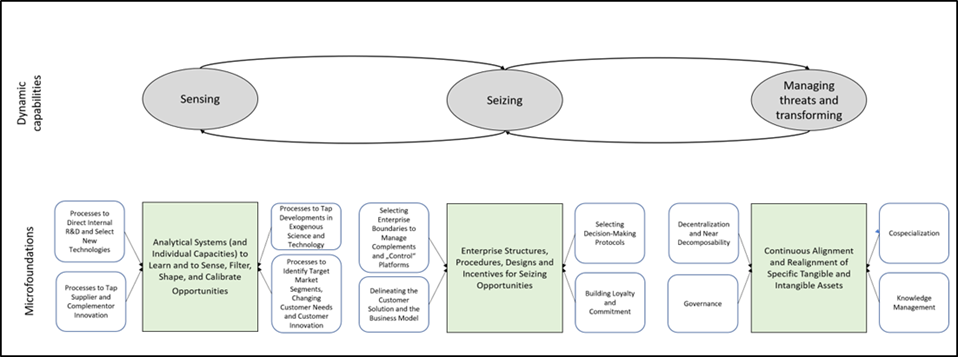
Figure 10 Dynamic Capabilities and corresponding microfoundations. Source: Bares (2023) based on Teece (2007).
Microfoundations for success of e-cargo bikes in DHL Express
The findings from the embedded case study show that ‘Sensing’ takes place at the corporate level as a strategizing entity. The study did not particularly focus on that capability as our sub-cases were in division is Denmark and Norway. However, we can say that even these divisions are deeply engaged in capturing information about sustainable urban logistics development; their engagement in the i-Smile-project shows this.
‘Seizing’ of e-cargo bikes solutions is currently not taking place on a larger scale, but it is on the other hand clear that the transformation enabling capabilities reside at the organizational level and should not be delimited to e-cargo bikes only. Alignment of incentives towards sustainability is important, as is building loyalty and commitment towards corporate strategy. Investment decisions and a decision-making protocol were shown to be central and the right such decisions were found to be an important microfoundation for success.
‘Managing threats and transforming’ was about governance and leadership. Cross-functional collaboration supporting internal integration and collaboration externally were further important microfoundations. External collaboration provided the opportunity for co-specialization that led to value co-creation in the form of a cargo box for the bikes. To make this possible, internal learning and knowledge management took place and were necessary.
Building microfoundations for dynamic capabilities of e-cargo bikes
Based on the analysis of microfoundations of Dynamic Capabilities in DHL Express DK and NO, we developed a process model of transformation of last mile deliveries towards e-cargo bikes. The model is depicted in Figure 9.
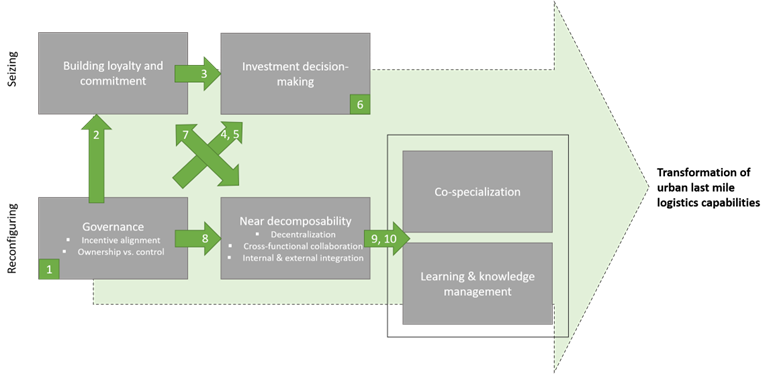
Figure 11 Microfoundations enabling transformation of last mile logistics towards e-cargo bikes.
The model is a process model following steps 1 to 10. Microfoundational elements are largely interdependent, but following the depicted process has the potential to lead to transformation of last mile logistics and deliveries to environmental sustainability. The analysis particularly points to the mixture of centralized and decentralized ownership of processes (governance) and emphasis on decentralization (near decomposability) as important for successful transformation as cities, f. ex. Copenhagen and Oslo, their geographies, policies, and stakeholders are different. The local divisions have special knowledge of their respective cities and therefore some empowerment of the local divisions is essential. However, if the logistics service provider is a conglomerate, alignment of incentives and control systems on a corporate level supports decision making on investments and the transformation process as such.
This process model is suited to serve as a recommendation to practice transforming urban transport and logistics towards sustainability. It outlines the necessary aspects (microfoundations) to consider when seeking to implement urban last mile deliveries and their interdependencies in proposing the path to making e-cargo bikes a dynamic capability.