Stakeholders in the sustainable last mile landscape
The i-Smile project has focused on gaining a better understanding of how last mile stakeholders, such as LSPs and retailers, operationalize their work with sustainability in their daily last mile operations. This section of the report clarifies the role different stakeholders (Figure 2) play in the pursuit of a more sustainable last mile delivery system.
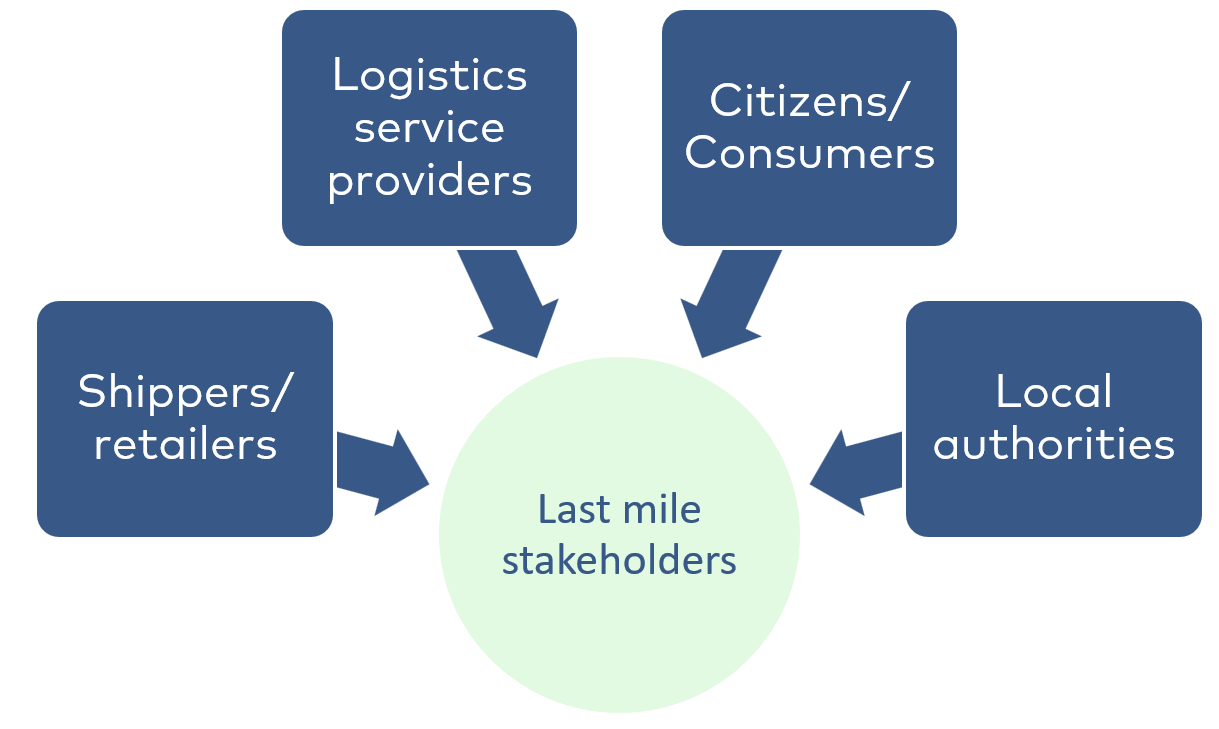
Figure 2 Principal stakeholders in the last mile landscape
Shippers/retailers
Results from both a case study, media analysis, as well as literature suggests there are key focus areas for retailers within last mile operations, including the role of customers, strategy, and daily operations.
For most retailers, their sustainability strategies do not outline specific measures for the last mile, and logistics is scarcely represented in sustainability strategies and reporting. Actions could involve widening the scope of sustainability to include not just environmental considerations for logistics and transport, but also social considerations. In general, the strategic nature of the last mile could warrant it getting more attention at a strategic sustainability level inside companies. From a strategic perspective, data sharing with partners such as LSPs or payment providers is also a critical aspect of gaining a better understanding of sustainability related aspects. However, it needs to be noted that the availability of electric or other more sustainable delivery options was also mentioned as hindering the development of sustainable LMD from the retailers’ perspective.
Retailers currently report rather scarcely on the sustainability of delivery options that are offered to customers at check-out. Many retailers report they feel pressure from customers on including sustainability measures, but few have acted on communicating their efforts. For retailers and LSPs, their main sustainability actions concern the environment, especially CO2 emissions. Customers mainly consider speed and the cost of delivery, but providing them with additional information about the social and environmental sustainability makes it more likely they choose a sustainable option. Retailers are aware they could influence the customer choice by the order in which they present the delivery options at checkout, as most customer are likely to choose the first/top option. This, in addition to information, could be used to influence the choice of a more sustainable delivery option.
In daily operations, companies do already work with sustainability for their last mile deliveries, but more actions could be added. Below is a list of suggestions based on the findings of the i-Smile project:
- Take an active role in promoting sustainable last mile delivery by presenting delivery options with sustainability information at check-out and prioritizing sustainable options
- Utilize the connection with the consumer
o Provide comprehensive information on products to avoid returns
o Offer a multitude of delivery options
o Provide information on the sustainability of deliveries (abiding the EU Green Claims directive)
o Acknowledge their role in influencing consumption
o Provide accessibility information for delivery options (in accordance with the European Accessibility directive which mandates specific and additional accessibility requirements for e-commerce services) - Utilize data and technology to solve sustainability problems: optimization and consolidation solutions utilizing machine learning or AI
- Increase the use of non-emission delivery vehicles, such as electric vehicles
- Prioritize sustainability in the form of land use and electricity when planning and executing fulfilment facilities
- Minimize the return flow utilizing data and technology
- Use of recycled packaging materials and/or returnable packaging
- Data sharing with LSPs
- Carbon compensation (should be used as an additional tool, not a single solution)
- Create frameworks for considering social sustainability including:
o Employees (welfare, health, and safety)
o Customers (availability, accessibility, health, safety)
o Citizens (impact of last mile on society and citizens, including parking, safety, noise, driving)
Logistics service providers (LSP)
LSPs play a crucial role in sustainable last-mile deliveries. LSPs need to maintain efficient and cost-effective services, whilst reducing their environmental effects and ensuring that social externalities are addressed.
Some of the main roles of LSPs in sustainable last-mile deliveries include:
- Route optimization: Logistics providers use for example routing and scheduling software to plan the most efficient delivery routes. This reduces fuel consumption, minimizes emissions, and lowers overall transportation costs.
- Vehicle selection: by selecting eco-friendly vehicles it is possible to reduce greenhouse gas emissions and address other externalities of last-mile deliveries.
- Alternative transportation modes: They explore and implement alternative transportation modes, such as LEFVs or ADVs for deliveries in urban areas to reduce congestion and emissions.
- Green packaging and materials: Logistics providers work with their clients to optimize packaging materials and reduce excess packaging, leading to less waste and more efficient use of cargo space in delivery vehicles.
- Collaboration and partnerships with local authorities, retailers, and other stakeholders to develop sustainable practices throughout the supply chain.
- Last-mile innovation: Investing in innovative technologies, such as autonomous delivery vehicles or drones, can help logistics providers further enhance sustainability.
- Driver training and eco-driving practices: Logistics companies train their drivers in eco-friendly driving techniques, which can lead to significant fuel savings and emissions reduction.
- Monitoring and reporting: They track and report on key sustainability metrics, such as emissions reductions and fuel consumption, to assess and improve their environmental performance continually.
LSPs delivering in cities have difficulties with obtaining both environmental sustainability, social sustainability, and economic sustainability at the same time. In these endeavours some have introduced e-cargo bikes for particularly environmental sustainability. Still, it may be difficult to obtain economic and social sustainability at the same time. As DHL is one such logistics service provider that has implemented e-cargo bikes in cities, we investigated the factors that could explain their success. If their success can be explained, it is easier for other companies to consequently do the same with improvement of the overall environment.
Deliveries using e-cargo bikes differ to a certain extent from traditional road transport deliveries due to energy source constraints of the vehicles, which are typically human powered. The age and physical health of bike couriers reduce the pool of eligible workers. The use of cargo bikes for last mile deliveries may lead to increased labour costs due to the physically demanding nature of the job, as well as higher health insurance and benefits costs. Additionally, weather conditions such as rain, snow, and extreme heat can also pose a challenge for cargo bike deliveries, as they can make the delivery process more difficult and potentially dangerous. Topography, such as hills and steep inclines, also impacts the feasibility of cargo bikes, as it requires more physical effort from the courier and may limit the amount of cargo being transported.
Customers/consumers/citizens
The omni-channel retail environment has presented consumers with a myriad of purchasing choices and consequently choices regarding the LMD of the items purchased. Our research indicates that consumers have adapted well to the increasing supply of services, but as the playing field is growing and changing quickly, there is a need for more flexibility and innovation from the supply side.
Consumers’ attitudes towards decision making are partly based on convenience: the cost of delivery is one of the main aspects valued by consumers, surpassed only by speed. Consumers’ reluctance to waste time and/or money is exacerbated with online orders, where the success of the purchase is not clear until delivery, and the wait is perceived as longer than when making purchases in physical stores. The cost of shipping is a deciding factor for consumers as well.
Both the scientific literature as well as the empirical research had some contradictions regarding how consumers prefer to receive their orders. Some research indicates that consumers still choose home delivery, while others argue that pick-up points and parcel lockers are gaining popularity. In our study, what made a difference in this regard was the context of the consumers. Cities differ significantly in their urban infrastructures, policies, and cultures, which indicates that a one-size-fits-all solution is not viable. In a North American context for example, the use of a private vehicle is very common, whereas in the large cities in China, people do not use cars. In Copenhagen the choice of vehicle is a bicycle and in Helsinki public transport is the norm, particularly among young people. These preferences/choices need to be taken into consideration not just by shippers and LSPs, but also city governments in urban planning. Installing parcel lockers in busy transport hubs would give commuters an option of picking up their orders on the way home from work, for example.
Sustainability in urban logistics is a fertile ground for new innovations and technologies, and many companies have jumped on that bandwagon. Again, consumers are at the centre of this discussion in theory, but few researchers and companies know very much about the consumers’ preferences. Communication is understood as one of the main pathways to understanding the needs of both the consumer and the retailer/LSP. Open information is integral in terms of transparency and therefore sustainability, as clarity on the supply chain practices is at the core of sustainability. Participants in the focus groups echoed this sentiment as the lack of information regarding for example sustainable packaging options was missing from retailers’ and LSPs’ communications. Aspects such as what type of vehicle the order was delivered in were not something participants had actively considered but admitted that now that they knew more about the options, they would pay more attention. Some researchers include factors such as RL, design and packaging, scheduling, and logistical structures in their communication framework, and this ties in with the empirical study in this paper.
When it comes to novel technologies such as ADVs, hedonic motivations come to fruition. Consumers show significant enthusiasm for ADVs and other novel delivery technologies and the potential they have for e.g. reducing congested streets. Hedonic motivations refer to a sense of fun and enjoyment, which can be a significant indicator in consumer choices. Participants who had the opportunity to interact with ADVs through pilots conducted in Helsinki were decidedly positive about their experiences, largely due to the novelty of the technology as well as the enjoyment they got from the interaction.
The sustainability of LMDs is a multifaceted arena, where consumers are influenced to behave in certain ways by a myriad of conditions and motivations, but also bound by for example the facilitating conditions of their economic and time constraints. The context in which they operate in, i.e., the city where they live or the products they are ordering, impacts their decisions as well. Ordering a large appliance such as a washing machine requires different service levels and facilitating conditions (time, finances) than ordering a meal.
Local Authorities
This part of the i-Smile project investigates the impact of local authorities on the transition towards sustainability in urban last mile deliveries and logistics. By local authorities, we here primarily mean city municipalities. We interviewed civil servants directly involved in transport issues from Oslo and Bergen in Norway, Gothenburg in Sweden, Helsinki, and Espoo in Finland, and in Denmark the municipalities of Copenhagen, Aarhus and Lyngby-Taarbæk. In Denmark we also interviewed Copenhagen Electric, a part of the Capital Region in Denmark, as they have specific and deep knowledge of projects and initiatives in both the city of Copenhagen and its suburbs. In addition to the interviews, we further analysed public reports and other material published on websites. Information about the development in Denmark was also collected in the so-called Goods Network, organized by the Capital Region. They further contributed to the i-Smile workshop in the spring of 2023, where they presented their report about urban freight initiatives in the region.
Three of the cities are capitals of their respective countries, namely Oslo, Helsinki, and Copenhagen. Bergen is the second largest city in Norway with approx. 220.000 citizens, as is Aarhus in Denmark with approximately 360.000 citizens. Espoo, with approximately 260.000 inhabitants, is a suburb of Helsinki. Espoo has no specific city centre. Lyngby-Taarbæk, on the other hand, has a dense city centre and is likewise a suburb, but to Copenhagen. The number of inhabitants is approx. 56.000.
All cities emphasize their role in setting the framework conditions for businesses including transportation. As such, a direct impact on the development of sustainable last mile logistics seems to be limited. However, these framework conditions are quite powerful in supporting light electric vehicles or the opposite. Well localized parking spots and times, duration of parking, as well as speed limits in city centres are elements that municipalities are in control of, and specific framework conditions to benefit electric vehicles may have positive impact on the feasibility of light electric freight vehicles.
However, municipalities must comply to national regulations that again are impacted by EU regulation and/or UN agreements for the Norwegian cities. In respect to sustainability, all cities follow the recommendations of emission neutrality no later than 2030 and some even zero emissions by 2050. Oslo has an ambitious climate strategy setting the goal of being a ‘carbon negative’ city by 2030, thereby contributing to overall reduction of emissions. Bergen targets a 1.5% increase in temperature by 2030 as agreed in the UN Paris Agreement as Norway is not member of the EU.
All cities have published a climate strategy. Transport as such is a part of the strategies, but urban freight usually does not play a significant role in these strategies. Urban freight often disappears among many other and important policies of cities when it comes to climate discussions. One explanation of this could be that there is basically a dilemma between reducing urban goods freight in cities and the needs for supplies of citizens. Furthermore, urban goods freight is part of the private sector which municipalities in general do not have the right to interfere directly with. People transport and mobility that impacts most citizens in their daily life usually gets much more attention in public policy debates.
There is, however, one area where municipalities can have a direct impact on emissions in cities. This area is procurement by the municipalities themselves. Municipalities in Nordic countries manage day care, schools, nursing homes, etc., so sustainable last mile transport to these institutions will matter emission wise. Helsinki and Copenhagen are good examples of this, and Lyngby-Taarbæk is working on expanding their arrangement with a city logistics service provider driving electric vans. They also encourage private actors in the dense city centre to use this solution. The general problem in Denmark is that the law of public procurement dictates that all tasks must be sent to tender, and the cheapest option must be selected. As electric transport solutions are often more expensive than solutions based on fossil fuel, an additional cost must be accepted.
Regarding regulation, the cities generally chose setting of framework conditions to reduce emissions. However, there are some important differences between the countries in that respect. In Norway, Oslo facilitated companies in reserving space for local micro distribution hubs close to the harbour that is very close to the city centre if not a part of the city centre. DB Schenker and DHL Express are using these hubs.
Finland, on the other hand, is eager to support new technologies in distribution such as drones and automated delivery robots. The city of Helsinki accepts applications for new technologies and even calls for such new solutions at times. Espoo often participates in tests of such new technologies. In Sweden, Gothenburg has initiated tests of new technological mobility solutions and transport systems in the project Gothenburg Green City Zone. Finally, Copenhagen has implemented e-cargo bikes deliveries of medicine, tests, and blood samples to and from hospitals. These deliveries are managed by the Capital Region.
All municipalities collaborate with other departments in their own organization as well as with other government entities. As mentioned, urban freight transport is most often not a primary concern of the municipalities. Oslo is one exception due to their ambitious climate strategy. Their focus on urban freight is due to livability in the city centre. Helsinki is another exception due to their ‘City Logistics Action Program’ and general interest in promoting new technological solutions to sustainable distribution. Gothenburg is also focusing on urban freight, but in their test areas urban freight is seen as only one part of the larger mobility issue.
Despite the relatively low priority of urban freight solutions, Gothenburg, Helsinki, and Copenhagen have developed systematized meetings with central stakeholders – private and public – in urban freight in the so-called Goods Networks. The purpose of these meetings is to get feedback and input from stakeholders on policy development regarding urban freight and logistics. Importantly, collaboration between stakeholders of urban freight is not always easy due to conflicting goals. Bergen has, for example, postponed the idea of establishing a goods network somewhat due to less successful experiences with collaboration with the private sector. In Aarhus, that is a major port city in Denmark, the municipality is incorporating the private sector in a so-called climate alliance through a working group. Although positive to transformation to renewable fuels, the working group points to the many barriers to transformation. The provisional result of this initiative may have disappointed the municipality, but on the other hand they get very concrete information about the barriers as experienced and perceived by the private sector. The municipality will continue their collaboration with the working group so transformation to renewable energies is still on the table.
The cities often collaborate with other cities in regional, national, or even international networks, the latter in connection with EU projects. EU and national research projects are an important way to increase knowledge about urban freight and last mile logistics. Tests of new solutions and knowledge sharing are important to the cities.
Despite limited direct influence on last mile logistics, cities are important actors in shaping a sustainable future of last mile deliveries and logistics through framework conditions, collaboration with stakeholders, and participating in knowledge sharing and development in research and other types of networks.