Webinar attendance and audience composition
A total of 90 participants attended the webinar, representing a diverse mix of professional backgrounds, roles, and geographical regions. This attendance reflected strong engagement, with participants spending an average of approximately 2 hours and 20 minutes out of the total 3-hour duration actively watching the event, suggesting sustained interest in the content provided.
Audience roles and composition
The audience consisted of a variety of roles, broadly categorized to provide insights into the professional makeup of attendees. These categories highlight a balance of researchers, practitioners, and policymakers, aligning closely with the roles represented during registration (see Appendix I). Here is a breakdown of roles based on categorized frequency counts:
Audience role | Count |
Researcher | 23 |
Marine Specialist | 10 |
Manager | 9 |
Specialist | 9 |
Advisor | 8 |
Other | 6 |
Director | 5 |
Coordinator | 5 |
Consultant | 4 |
Student | 4 |
Officer | 4 |
Professor | 3 |
Table 1: Frequency of audience roles based on categorized grouping
Key observations
Researchers formed the largest group (23 participants, 25.6%), encompassing various research-focused roles dealing with marine conservation, ecology, geology, fisheries and restoration.
Marine specialists (10 participants, 11.1%) and managers (9 participants, 10%) were well-represented, highlighting a significant presence of professionals directly applying their expertise in marine conservation and overseeing the implementation of restoration projects in the field.
Roles grouped as specialist (9 participants, 10%) and advisor (8 participants, 8.9%) also showed notable representation, underscoring the event’s relevance to subject matter experts and policy professionals.
Smaller but significant contributions came from directors (5 participants, 5.6%) and coordinators (5 participants, 5.6%), reflecting leadership and operational roles.
A broad other category included roles such as "Business Developer" and "Artist," indicating the event also attracted participants beyond the primary target audience.
This diverse audience composition suggests the webinar successfully appealed to a wide range of stakeholders, from academic researchers to policy advisors and operational leaders.
Geographical representation
Participants hailed from 13 countries, predominantly from Northern and Western Europe. The distribution of participants by country is shown here:
Country | Count |
Finland | 36 |
Sweden | 13 |
Denmark | 13 |
Germany | 10 |
France | 3 |
Estonia | 3 |
Latvia | 2 |
UK | 2 |
Spain | 1 |
Poland | 1 |
Italy | 1 |
Norway | 1 |
Tunisia | 1 |
Netherlands | 1 |
Table 2: Frequency of participants by country
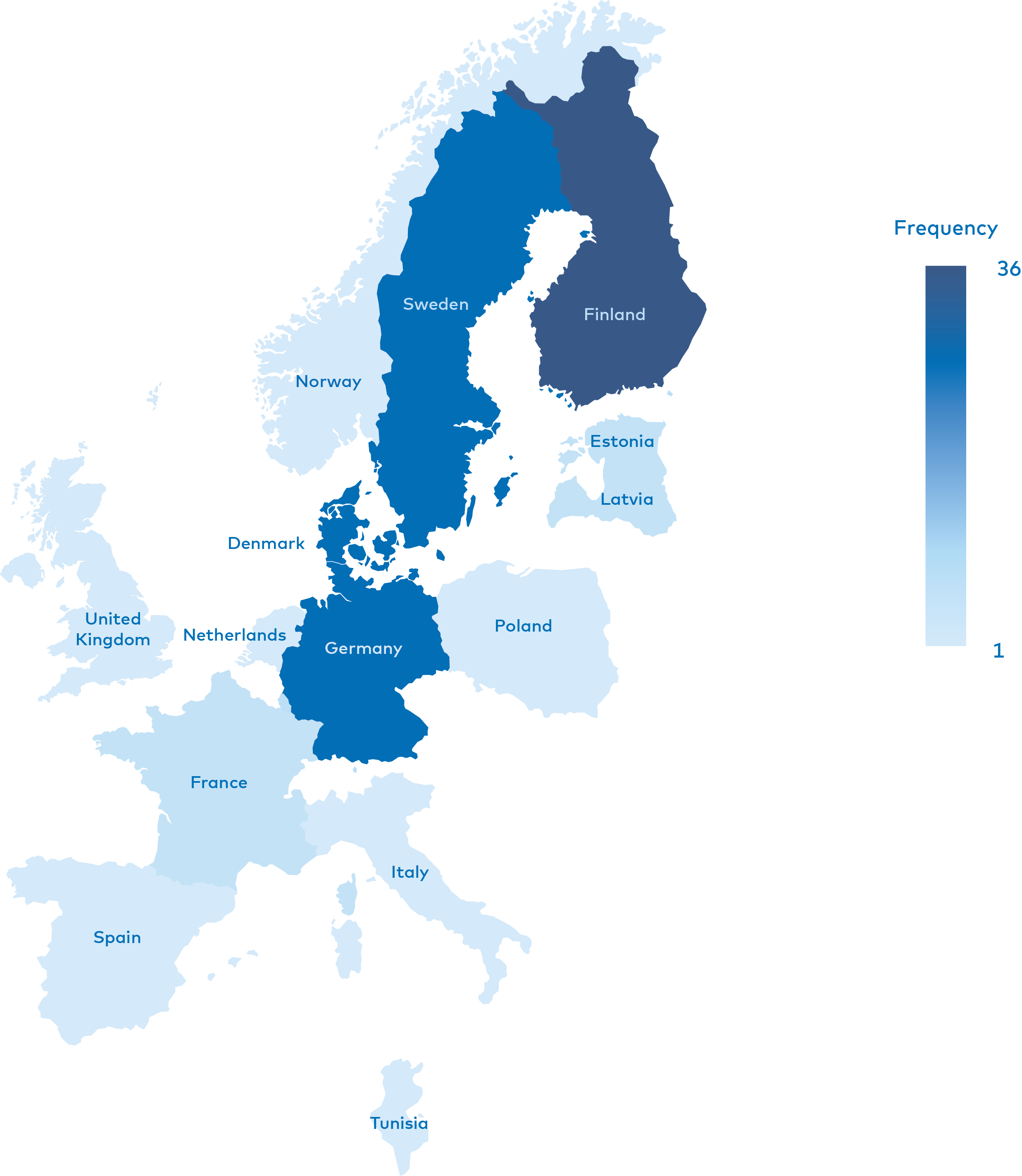
Figure 1: Map outlining frequency of geographic location of webinar participants.
Key observations
The largest group of participants came from Finland (36 participants, 40%), reflecting the country’s strong interest in the webinar’s theme and also that it was the host country of the event.
Significant representation from Sweden (13 participants, 14.4%) and Denmark (13 participants, 14.4%) points to robust regional engagement within many of the Nordic countries.
Germany (10 participants, 11.1%) accounted for the highest representation outside the Nordic countries, showcasing that cost-effectiveness of marine restoration is a topic that piques broader European interest.
Smaller numbers of participants from countries such as France and Estonia (3 each) and others highlight that the webinar had a wider reach beyond the primary Nordic audience.
The geographical diversity of attendees, dominated by Nordic and Western European countries, underscores the relevance of the webinar’s content to these regions while hinting at potential for broader international outreach.
The attendance profile demonstrates its appeal across a wide range of professional roles and countries. The strong representation from researchers and marine specialists suggests the content resonated well with audiences deeply involved in scientific and conservation efforts. Meanwhile, participation from diverse countries, especially the Nordic region, highlights the event’s relevance to these communities. However, there was little participation from Norway and none from Iceland, and for future events more time should be invested in reaching out to those audiences too.