Setting the scene
The webinar began with welcome speeches from Rüdiger Strempel, Executive Secretary of the Baltic Marine Environment Protection Commission (HELCOM), and Lotta Eklund, Coordinator for the Nordic Council of Ministers’ Working Group for Environment and Economy (NME). These speeches set the tone for the event, emphasizing the shared challenges and opportunities in advancing marine restoration across the Baltic Sea and throughout the Nordic region.
Building momentum for restoration
Rüdiger Strempel
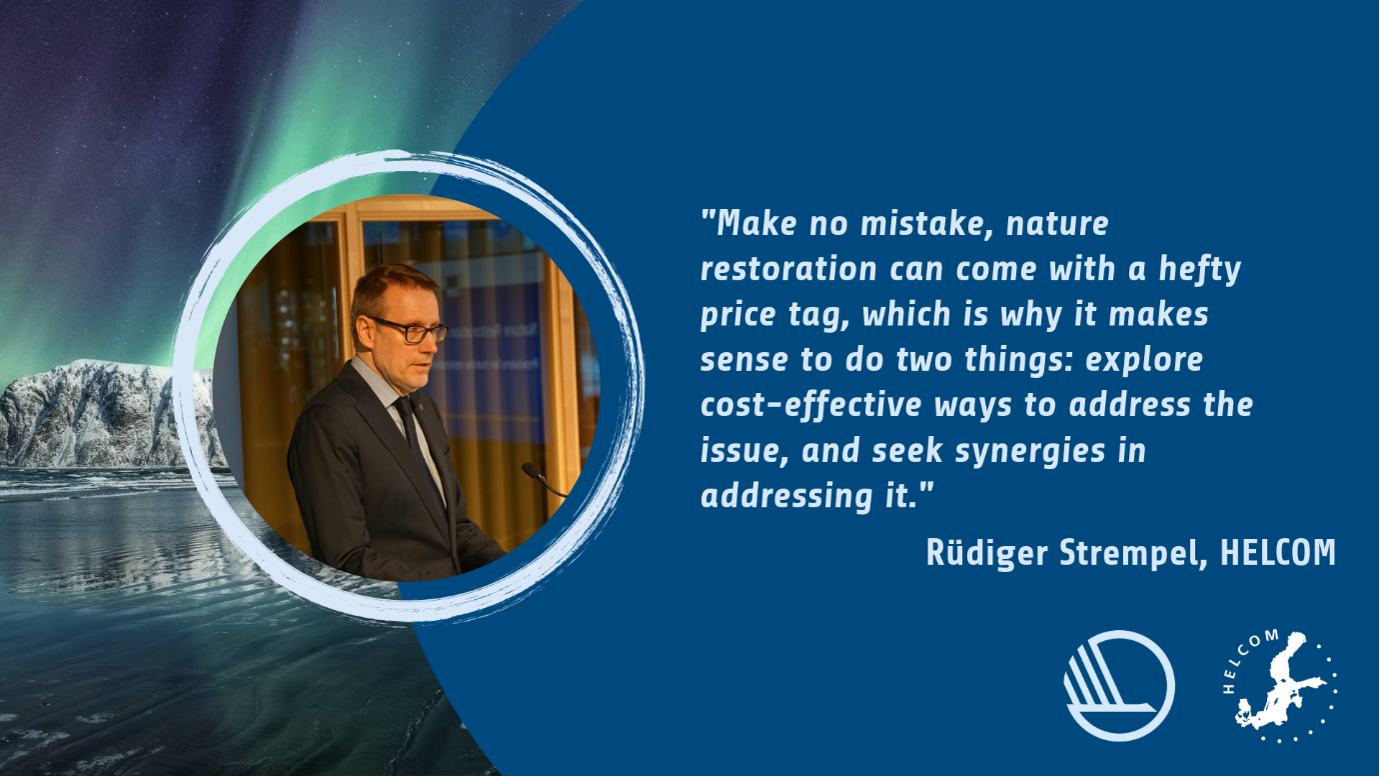
Rüdiger Strempel highlighted the growing global and regional focus on ecosystem restoration, citing milestones like the UN Ocean Decade and the EU Nature Restoration Regulation. He framed nature restoration as a vital response to the interconnected crises of climate change, biodiversity loss, and pollution.
Strempel acknowledged the scale of the task, particularly for marine ecosystems, emphasizing the need for pragmatic, cost-effective strategies. He underscored the value of regional collaboration, noting the overlap in environmental challenges and commitments among Nordic and Baltic Sea countries.
Strempel expressed gratitude for the partnership between HELCOM and the Nordic Council of Ministers, emphasizing that their shared values and successful history of cooperation position them well to tackle these issues.
Putting costs into focus
Lotta Eklund
Lotta Eklund welcomed participants with a focus on the socio-economic dimensions of marine restoration. Representing the Nordic Council of Ministers’ Working Group for Environment and Economy (NME), she acknowledged that while the group excels in economic instruments and policies, it benefits from collaboration with HELCOM on the marine-specific aspects of restoration.
Eklund emphasized that socio-economic analysis is essential for developing effective policies and guiding decision-making in marine restoration efforts. She explained that understanding the costs and benefits of different measures is critical for comparing their effectiveness and determining which actions should be prioritized. Without this analysis, it becomes challenging to align restoration efforts with the ambitious targets set by the EU for biodiversity and ecosystem recovery.
She described the webinar as a valuable platform for sharing ideas and expertise, addressing the pressing need to restore degraded marine ecosystems. By focusing on strategies that maximize environmental benefits while keeping costs manageable, the event aimed to provide practical insights and inspire impactful solutions tailored to the Nordic region’s unique challenges.
