Active restoration of marine habitats in Denmark
Federica Montesanto
Federica Montesanto from Aarhus University presented a detailed overview of active marine restoration projects in Denmark, focusing on various habitats that are targeted for restoration and key methodologies that are employed. She emphasized the importance of stakeholder engagement, cost-effectiveness, and long-term monitoring in these initiatives.
Key habitats requiring restoration
Denmark faces significant challenges in marine habitat degradation, primarily due to land reclamation, pollution, and overfishing. The habitats requiring the most urgent restoration efforts include:
Fjords and shallow habitats: Approximately 400 square kilometers have been lost due to land reclamation.
Boulder reefs: Once abundant, these reefs have been extensively damaged through fishing practices and construction activities.
Biogenic reefs: These habitats have been heavily impacted by fishing and other anthropogenic activities.
Eelgrass beds: These crucial habitats are severely threatened by eutrophication, pollution, and physical damage.
Case study: Blue Reef Project
One of the first major EU LIFE marine projects funded in Denmark was the Blue Reef Project, which began in 2017 and ran until 2022. This project focused on restoring a degraded Natura 2000 reef site located on Læsø Island in northern Denmark. The restoration involved placing 500,000 tonnes of boulders in the area to restore biodiversity and ecosystem function.
Key findings from this project include a significant increase in biodiversity over a six-year period, with biodiversity levels increasing by approximately 4–5 times compared to baseline data. Post-monitoring was identified as a critical component of the project, highlighting the importance of long-term data collection to assess the success and cost-effectiveness of restoration efforts. Additionally, the largest portion of the project budget was allocated to post-monitoring, which underscored the importance of ongoing evaluation.
Figure 7: Costs of activities under the Blue Reef project
Seascape restoration: a holistic approach
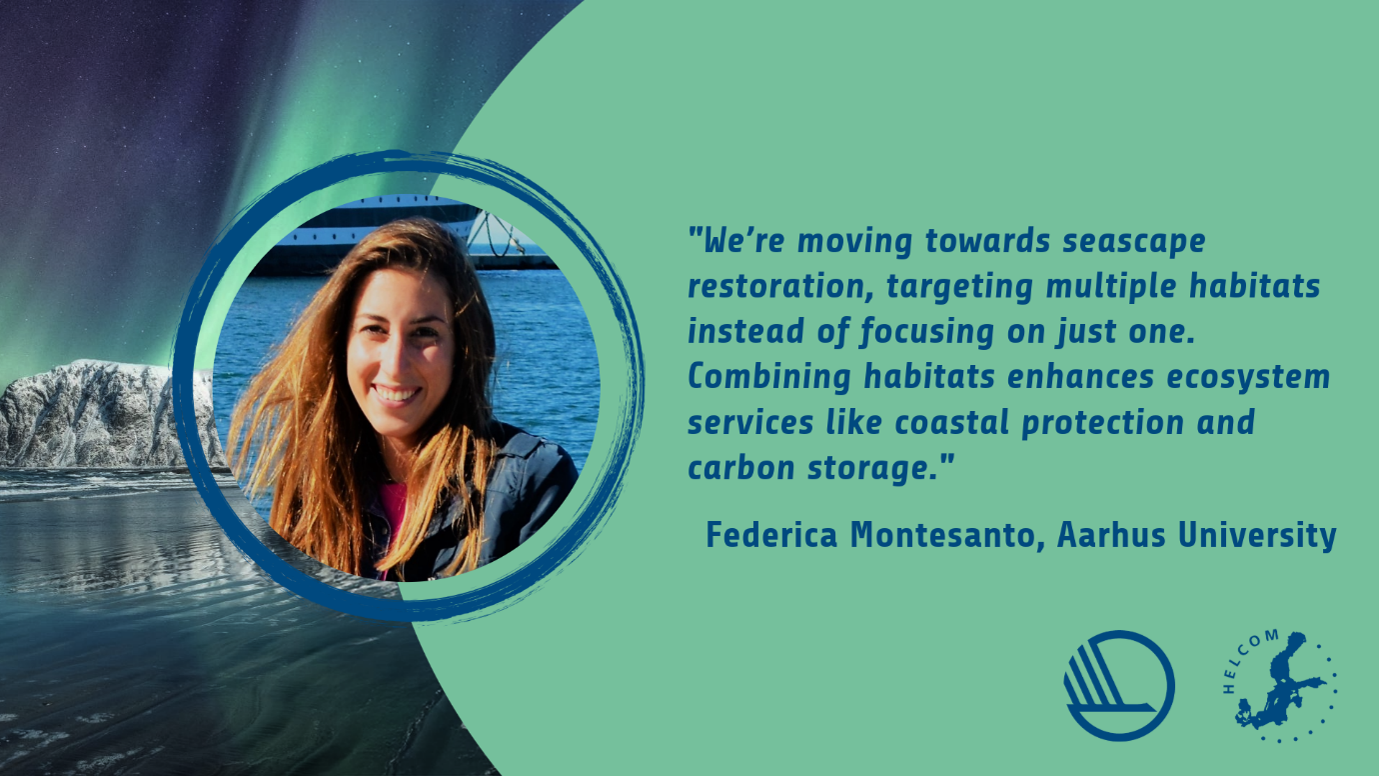
Montesanto emphasized a shift toward seascape restoration in Denmark, a method that combines multiple habitat types into broader restoration projects. This approach contrasts with earlier efforts that focused on single habitat restoration, moving towards projects that restore entire ecosystems. For example, projects are increasingly focused on combining:
Eelgrass beds, which provide critical ecosystem services like coastal protection and carbon sequestration;
Boulder reefs, which support marine life by providing nursery habitats and fishery spillover; and
Biogenic reefs, which contribute to biodiversity and marine food webs.
The Sandvejs Fjord project, which combines these three habitats, is one example of seascape restoration that is still ongoing and involves intensive monitoring and a significant investment of resources.
Passive restoration and stressor removal
In addition to active restoration, passive restoration methods, such as the removal of green algae (which negatively affects eelgrass growth), are integral to the overall success of restoration efforts. These actions help reduce anthropogenic pressure on the ecosystems and enhance the effectiveness of active restoration measures. The inclusion of passive restoration techniques in cost-effectiveness analyses is essential for understanding the full impact of restoration projects.
Tools and guidelines for restoration
To support the growing field of marine restoration, Denmark has developed several tools and guidelines:
Guidelines for restoration projects are provided by the Danish Coastal Authority to guide municipalities and stakeholders in implementing restoration projects.
GIS tools to select the most suitable areas for restoration based on factors such as physical stability, historical presence of target habitats, and environmental conditions.
A decision wheel has been developed to help practitioners decide when to implement active versus passive restoration techniques based on site-specific conditions.
Furthermore, a stakeholder questionnaire is being used to assess perceptions of restoration success, which helps improve future planning and decision-making.
Monitoring and scaling up
Montesanto highlighted the importance of both short-term and long-term monitoring. Short-term monitoring often shows immediate biodiversity gains, especially in projects like boulder reef restoration. However, long-term monitoring is necessary to track the restoration of food webs and ecosystem functions, which require more extensive data collection and expertise.
As the number of restoration projects increases, there is also a growing demand to scale up these efforts. To do so, clear monitoring guidelines and well-defined indicators for restoration success are essential. Understanding the cost-effectiveness of these projects is also crucial to ensure the efficient allocation of funds.
The Marine Natural Fund
Denmark has demonstrated a commitment to marine habitat restoration through multiple projects funded by the EU, the Danish Ministry of Environment, and various foundations. The Marine Natural Fund, set to begin in 2024, will further support these efforts over the next six years. By combining active and passive restoration, using advanced tools for site selection, and focusing on long-term monitoring, Denmark aims to ensure the success and sustainability of its marine restoration projects.