3.0 The EV Battery Value Chain
Depending on approach and perspective, the activities undertaken within the EV battery value chain can be grouped, divided and described in a range of ways. Considering the objectives of this study – to explore technologies that could contribute to the understanding of best available techniques for the EV battery value chain – here, the value chain has been divided into six primary stages. In most instances, these stages feature multiple sub-stages, each requiring specific technologies. The structure of the EV battery value chain is illustrated in Figure 3‑1. Here, white boxes with dark green outlines indicate stages of the value chain that are not considered within the scope of this study. In contrast, green cells with no border highlight the value chain stages that are within scope and thus have been discussed in the later stages of this report.
3.1 Out of Scope Value Chain Stages
The stages of the EV battery value chain that are not included within the scope of this study are:
- Mining of metal ores. The EV battery value chain begins with the extraction of metal ores such as lithium, cobalt and nickel from the earth’s crust. This process is commonly associated with numerous environmental and social issues.
- Refining of raw materials. Through methods such as precipitation, solvent extraction and ion exchange, raw materials are purified and crystalised into metal sulphate crystals. Recent innovation around mining and refining has introduced a technique called direct lithium extraction (DLE), which allows lithium to be mined and refined in tandem, thus reducing processing time and (reportedly) decreasing overall emissions.Cleantech Group (2023) Direct Lithium Extraction: New Technologies to Disrupt Traditional Refining and Mining. Retrieved from: https://www.cleantech.com/direct-lithium-extraction/
- Precursor material production. Precursor cathode active materials (pCAM) are precipitated. pCAM is a mixed metal hydroxide of nickel, cobalt and other chemical elements.
- CAM production. The cathode active material (CAM) production process requires multiple chemical transformations to produce a mixture of active materials (metal oxides) with high purity. The more uniform the chemical composition of the CAM, the better the battery performance.PALL (2021) Cathode Active Materials in Electric Vehicle (EV) Battery production. Retrieved from: https://www.pall.com/content/dam/pall/industrial-manufacturing/literature-library/non-gated/cathode-active-material-ev-case-study.pdf
- EV manufacture. Once assembled into packs, the batteries are distributed to original equipment manufacturers (OEMs) for use in EV designs.
- Use. The use phase sees EV battery packs experiencing charge and discharge cycles. Previous estimates assumed lithium-ion batteries to have between 1,000 to 1,500 cycles.
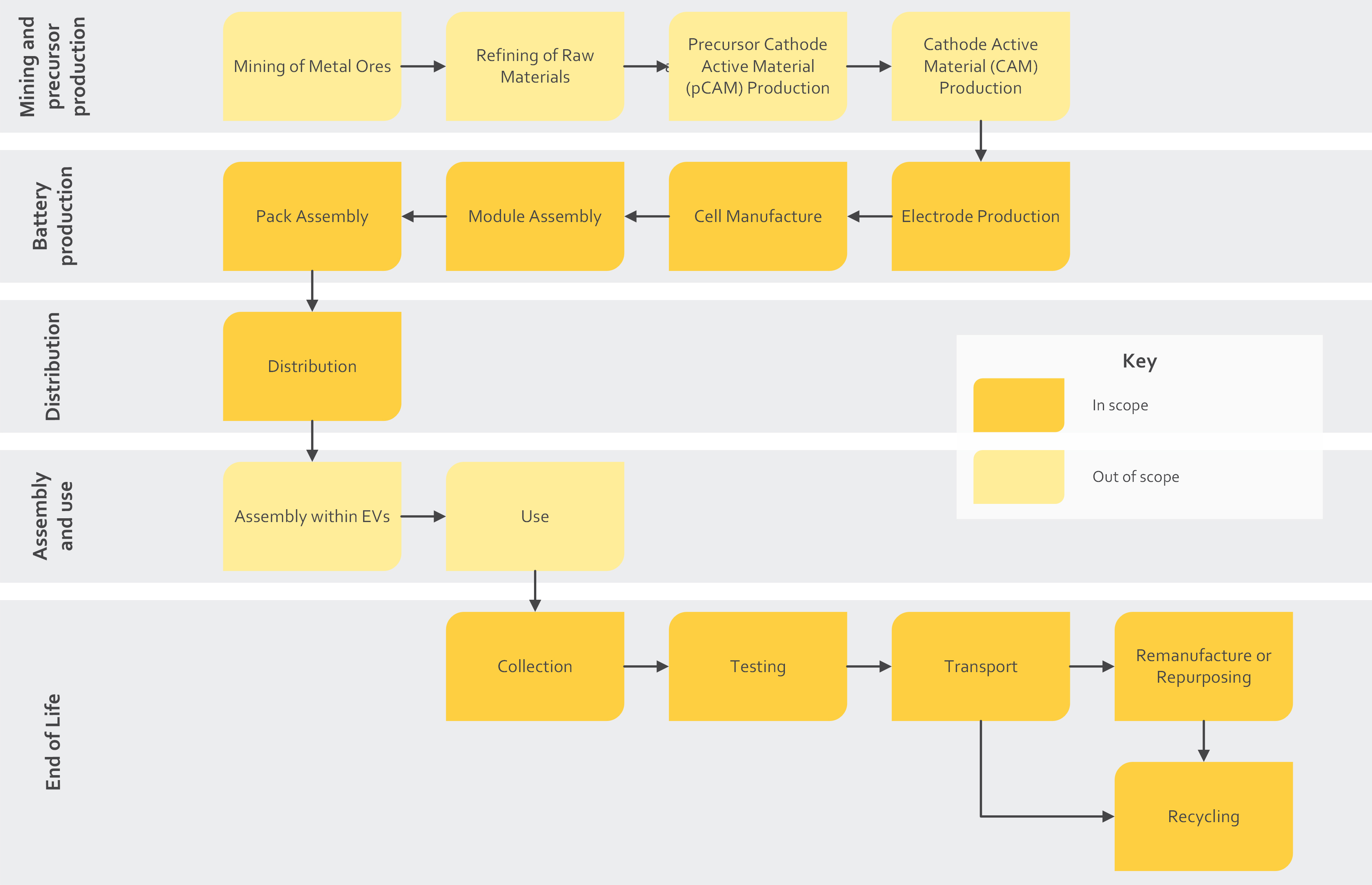
Figure 3‑1: Overview of the electric vehicle battery value chain
3.2 In-Scope Value Chain Stages
In the following section, the in-scope stages of the battery value chain are explored. While Figure 3‑1 breaks the manufacturing phase into relevant sub-stages, these have been combined into “manufacture” throughout this section and the rest of the report. Therefore, the six stages that the EV battery value chain has been divided into for this study are:
- Manufacture – including electrode production, cell manufacture, module assembly and pack assembly.
- Distribution.
- Collection and transport.
- Testing.
- Remanufacturing and repurposing.
- Recycling
The value chain has been grouped in this manner to allow consideration of the similarities and differences in performance between comparable technologies. In Sections 4.0 to 9.0, key technologies of interest to this study have been described against each value chain stage.
3.2.1 Manufacture
In simple terms, EV battery manufacture includes:
- The production of the anode, cathode, separator, etc.
- The assembly of these components into a battery cell.
- The linking of battery cells into battery modules (alongside additional components such as battery management systems and protective casings).
- The joining of multiple battery modules into a battery pack.
Most variation in battery manufacture is due to differences in battery chemistry and the requirements therein. However, there are also some innovative processes (e.g., dry electrode processing) that are being introduced and are applicable to multiple chemistries.
3.2.2 Distribution
Distribution refers to the point at which batteries are transferred from battery production facilities to automotive manufacturers. Considering the highly volatile nature of batteries used in EV applications, distribution is heavily regulated, and producers are required to adhere to mandatory safety measures. While no specific distribution technologies have been referenced throughout this study, it has been included as a value chain stage due to the environmental risks that are posed by distribution.
3.2.3 Collection and Transport
Collection and transport follow the use phase (which is out of the scope of this study). Considering the safety risks associated with transporting large volumes of batteries (e.g., risks of fire), EV battery packs are ideally discharged on collection. Discharge must be completed by certified personnel approved to handle high voltage electricity. Batteries must then be classified as transport-safe before being contained within appropriate transport packaging. The use of correct packaging (i.e., including non-conductive materials such as fire-resistant vermiculite) can drastically reduce the risk of fire.
Reneos (2022) Safe transport: end-of-life EV batteries in the right packaging. Retrieved from: https://www.reneos.eu/case/safe-transport-end-of-life-ev-batteries-in-the-right-packaging#:~:text=To%20avoid%20any%20hazardous%20situations,with%20a%20non%2Dconductive%20liner.
Regulation and safety requirements around collection and transportation are specific to commercially available batteries (e.g., lead batteries, lithium-ion batteries). It is anticipated that existing requirements will evolve as new chemistries and battery designs are introduced. As with distribution, no specific technologies for collection and transportation have been included within this research. However, it has been included as a value chain stage due to the significance of the associated human and environmental risks.
3.2.4 Screening/Testing
Once collected, tests are carried out on end-of-life EV batteries to determine their suitability for remanufacture, repurposing or recycling. These tests establish the state-of-health (SOH) and remaining useful life (RUL) of the batteries and include physical, electrochemical and spectroscopic examinations. Ideally, these tests are conducted without having to disassemble the battery modules and/or packs (as this minimises both cost and risks).
3.2.5 Remanufacturing and Repurposing
Depending on the outcome of the SOH and RUL testing, an EV battery may be identified for remanufacture or repurposing. The chosen route is predominantly dependent on remaining capacity and the reason for any reduction in capacity:
- If a battery’s capacity is reduced due to damaged cells only, it may be possible to replace these specific cells and reuse the battery in the same application (i.e., as an EV battery).
- If the battery has retained between approximately 70% and 80% of its initial capacity, it may be suitable for incorporation into transport applications with lower energy demands or for use in other applications where high energy densities are less critical (e.g., energy storage systems).
- If the battery capacity has reduced significantly (and if this is not due to cell damage), it is likely that the most suitable route is recycling to reclaim the lithium and other scarce materials.
3.2.6 Recycling
If not deemed suitable for reuse through remanufacture or repurposing, end-of-life EV batteries remain an important secondary source for several precious and scarce metals. Considering the range of battery chemistries in existence, even within just lithium-ion batteries, recycling can be complex and inefficient. However, this is a vital step for promoting greater circularity within the EV battery value chain.
3.3 Stakeholders
While this report’s primary focus is on the Nordics, it must be noted that the value chain for EV batteries is international. As discussed in Section 3.1 and 3.2 (and illustrated in Figure 3‑1), the EV battery value chain features numerous actors. Although some of these have been recognised as out of scope for this project, they have been featured in the following section to provide a more complete overview of EV battery activity in the Nordics.
Throughout the Nordics, local, regional and national authorities regulate activities within mobility, industry, energy and environment. Government funded investments such as Enova, MISTRA and NFR are also key enablers in the EV battery value chain.
3.3.1 Extractive Mining, Processing, and Refining
While not within the scope of this report, it should be noted that extractive mining for minerals relevant for battery production already occurs in the Nordics.
Tuomela, P. et al. (2021). Strategic roadmap for the development of Finnish battery mineral resources. Geological Survey of Finland, Open File Research Report 31/2021, 1. Retrieved from: https://www.researchgate.net/publication/354067442_Strategic_roadmap_for_the_development_of_Finnish_battery_mineral_resources
REE Minerals (2023). We develop Europe’s largest deposit of light rare earth elements to support the green transition. Retrieved from: https://www.reeminerals.no/
LKAB (2023). Europe’s largest deposit of rare earth metals is located in the Kiruna area. Retrieved from: https://lkab.com/en/press/europes-largest-deposit-of-rare-earth-metals-is-located-in-the-kiruna-area/
Currently, most processing and refining of raw materials into cathode and anode active materials primarily happen outside of the Nordics. However, some actors are working on establishing activities in the region. For example, companies such as Elkem, ReSiTec and Aleees all have active programmes in Norway.
3.3.2 Electrode Manufacture and Battery Manufacture
Electrode manufacturers (such as Talga and Altris) and battery manufacturers (for example, Northvolt, Valmet, Elinor, Beyonder, Morrow and Freyr) have all established factories for electrode production as well as cell and module assembly in the Nordic countries. While some battery manufacturers are forming partnerships with car manufacturers (for example, Scania and Volvo) to place the batteries in EVs, most of the car assembly occurs outside the region. Indeed, Volvo plans to produce electrical cars using batteries from Northvolt at Torslanda before 2030.
Northvolt (2022). Volvo Cars and Northvolt accelerate shift to electrification with new 3,000-job battery plant in Gothenburg, Sweden. Retrieved from: https://northvolt.com/articles/northvolt-volvo-gigafactory/
The electrode and battery manufacturers are closely collaborating with research institutions such as VTT, RISE, SINTEF, IFE and DTI, as well as universities across the Nordic region, on developing new battery technology from electrode materials to recycling processing. Industry collaboration platforms (such as Battery Norway and eFlowHub) and other industry clusters (such as the above-mentioned Volvo and Northvolt and, at a smaller scale, Morrow, ReSiTec, Elkem and Vianode) are cooperating in the development of manufacture and process designs.
Car importers (Tesla, NIO, Møller Mobility Group and a variety of others) put EV cars on the market and are often involved in servicing the cars throughout the lifetime of the battery and the vehicle, which among other things might include changing of batteries due to malfunction or production issues.
3.3.3 Collection, Transportation, and Testing
When EV batteries no longer serve their original purpose, they are collected and assessed for reuse or recycling. Producer responsibility organisations (PROs) for both cars and batteries, such as Batteriretur, Autoretur and Suomen Autokierrätys, are important stakeholders in the collection of used batteries. The Norwegian PRO for car batteries, Batteriretur, is operating within the Nordic region and is working in close relation with the battery recycler Hydrovolt, situated next door to their plant in Fredrikstad.
The logistics of collection and handling of EV batteries is handled by different waste and recycling companies, ranging from large recyclers, operating on many different waste fractions, to local car repair shops and car dismantlers. Car dismantler organisations are organised in national interest groups such as Svensk Bilåtervinning and Norsk Biloppsamlerforening.
3.3.4 Remanufacturing, Repurposing, and Recycling.
The market for reuse of used EV batteries comprises reuse companies such as Evyon and Ecostor, providing energy storage solutions for large industrial applications, as well as a number of smaller actors that resell for private usage. Stena-owned Batteryloop is actively selling large energy storage packages (in the MWh range), while wind turbine producer Vestas has stopped developing storage capacity for its customers’ wind turbine parks.
EV batteries that are to be recycled are handled by battery recyclers such as Fortum, Hydrovolt, Stena Recycling and Li-Cycle, which have established or are establishing mechanical recycling activities producing black mass for further processing, as well as developing processes for chemical recycling of the critical materials. While some hydrometallurgical
Fortum (2023). Fortum Battery Recycling opens Europe’s largest closed-loop hydrometallurgical battery recycling facility in Finland. Retrieved from: https://www.fortum.com/media/2023/04/fortum-battery-recycling-opens-europes-largest-closed-loop-hydrometallurgical-battery-recycling-facility-finland
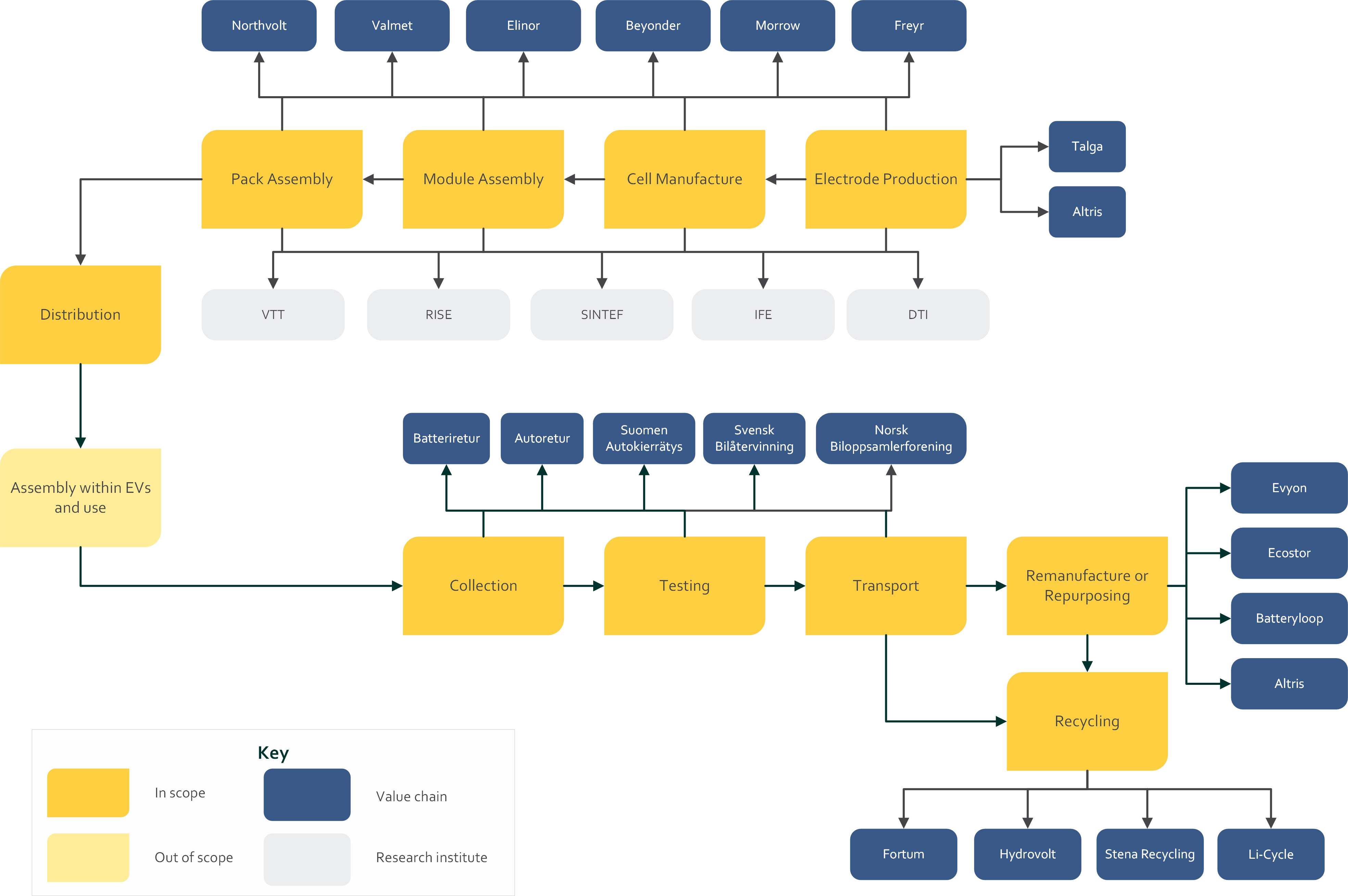
Figure 3‑2: Overview of key Nordic stakeholders operating within the battery value chain