Summary (English)
The Nordic Council of Ministers’ Working Group for Climate and Air (NKL) has commissioned a project in which the main objective is to map, identify and further develop potential solutions and sources for financial support to developing countries that are particularly vulnerable to climate change induced loss and damage (L&D). This objective was achieved through a series of outcomes. This study on loss and damage financing solutions and sources is a key outcome from this project, which, together with a public webinar in which the findings of the report was presented and discussed with experts and stakeholders, are meant to inform the discussion on sources of finance for L&D.
In short, this study’s focus is on how to enhance and improve existing solutions and sources and innovate and create new sources of finance that can be used for financing L&D actions, with focus on both the funding arrangements and the fund for L&D.
The study will be presented at a side event on L&D financing solutions in the Nordic pavilion at COP28.
Please note that this study was funded by the Nordic Council of Ministers. However, the content does not necessarily reflect the Nordic Council of Ministers’ views, opinions, attitudes or recommendations.
Key take aways
The study/report is structured in four main chapters covering a wide range of potential sources and instruments for financing L&D:
CHAPTER 1: Carbon Markets, the Nature Credit Market, New Markets and Non-Market Mechanisms
This chapter includes new and innovative thinking on the possibilities for using cooperative approaches under the Paris Agreement (PA), the Voluntary Carbon Markets (VCM), the Nature Credit Market (NCM), as well as potential new and innovative markets or mechanisms for engaging private sector in funding L&D. The paper finds that the discourse on L&D is almost completely absent from the discussion under the PA article 6, the VCM and the NCM. The potential for enhancing sources of finance is clearly present, although it will require many of the actors within the L&D community to create new programs, markets or mechanisms. The key findings are the following:
- Share of Proceeds (SOP) is a levy on transactions of carbon reduction instruments going towards financing adaptation actions. It was introduced to de-couple some of the finance of mitigation projects and re-direct it towards adaptation in those States that were not benefiting from mitigation projects and programs. SOPs under Paris Agreement’s article 6.4 is limited to the Adaptation Fund (AF). The AF does not have a specific mandate to finance L&D. However, it finances activities that ‘avert and minimize’ L&D if it has a clear adaptation component. For AF to provide resources for ‘addressing’ L&D, including non-economic measures, rehabilitation and reconstruction and so on, it will be necessary to clarify and expand its mandate to include L&D activities more comprehensively. In addition, Parties should consider how to create ‘additional’ finance for L&D through increasing the SOP. However, the potential of increasing the rate of SOP beyond the current 5% and direct it to the L&D fund is limited. This is because the level of SOPs for adaptation is already set relatively high under the Paris Agreement (more than double than under the Clean Development Mechanism), and because it is likely to be challenging to ‘re-open’ these topics in the negotiations. Finally, an additional SOP levy for a L&D fund could limit the viability of mitigation projects under article 6.4. Thus, if an additional SOP is to be introduced it should not lead to fewer mitigation projects being developed.
- The Voluntary Carbon Market (VCM) has evolved to finance sustainable development benefits related to the Sustainable Development Goals (SDGs) that are independent from mitigation activities. These stand-alone SDG benefits have the potential of financing activities that avert, minimize and address L&D as long as there is an SDG rationale to support them. There are pilot projects under Verra, one of the largest providers of these benefits, which could be utilized to channel new sources of finance for projects to avert, minimize and address L&D. The VCM is unlikely to be useful for direct funding for the L&D fund, however.
- The Nature Credit Market (NCM) is a nascent market creating credits for positive biodiversity benefits. Private sector is encouraged to purchase these credits as their core activities are closely linked to natural resources. However, for L&D the Nature Credit Market is limited to financing of positive benefits reducing biodiversity loss.

- There are several ways to enhance finance from private sector for L&D:
- One option is to create a new market for adaptation, resilience and L&D, in the similar veins as the Nature Credit Market (NCM). The increased focus on the need for a more comprehensive response to climate change which includes supporting L&D efforts of developing countries that are particularly vulnerable could be used as a rationale for encouraging financial contributions from companies and other private sector actors. L&D credits could be established that reflect positive benefits from averting, minimizing and addressing L&D, potentially also including benefits of enhancing adaptative capacity, increasing resilience and reducing vulnerability. In establishing this market, it would be necessary to involve both public and private sector actors as well as other actors working with L&D projects to create voluntary guidelines for how to engage in this market. It could also be helpful to have a system of reporting in place which can enable these actors to clearly define their contributions (or ‘claims’) in their annual reports on climate risk.
- Another option is to establish a private sector L&D finance mechanism as part of a L&D fund, or serving a L&D fund as a satellite mechanism with its own board. The board(s) could be tasked with developing a framework stipulating the criteria for how private sector finance could be undertaken and what type of information these actors could use to report on their contributions in their annual reports. It is likely that private sector actors would need a seat in the board with voting rights for this option to be viable. This could be an option for enhanced sources to be considered at COP28, including the necessary arrangements to be put in place for this to be possible.
CHAPTER 2: Taxation & Levies
The role of the climate negotiations under the COP/CMA is not to prescribe national or regional taxes. However, it can use its position to welcome any proceeds from these taxation and levy measures towards the GCF and/or an L&D fund, and to encourage steps towards meeting the Paris Agreement’s temperature goal through putting a price on carbon (which is what these taxation systems essentially do). This could be considered in with a view to expand sources of funding for loss and damage. More specifically, the Report finds that:
- Although progress on GHG emission reductions in the IMO has been slow, a revised strategy on reduction of GHG emissions from international shipping was agreed in 2023 with an ambitious workplan to finalise the ‘basket of measures’ already in spring 2024. Several options are on the table, with varying potential for revenues for IMO. There seems to be a political agreement that the revenues will be used for investments in emission reduction innovation in the maritime sector, including on-land technology and infrastructure linked to this. Going forward, regardless of the chosen measures, IMO should be encouraged to earmark some of the proceeds to the GCF and/or the L&D fund.
- Despite the ICAO’s CORSIA market, emission reduction in the aviation sector is slow. The ICAO guidelines on international aviation fuel has hindered actors in using taxes and levies for these fuels, with the exception of domestic flights. Initiatives to establish a levy on international aviation fuels has been initiated by the Scandinavian countries. It could be envisioned that a group of progressive countries come together and agree on a levy on international aviation fuels between these countries bilaterally. This could be encouraged by the Transitional Committee in its recommendations for the COP/CMA.
- Concurrently, there are some countries that have been establishing an air passenger duty (also known as departure tax). There is the example of France, who has added an additional levy, called the solidarity levy, to the air passenger duty, using parts of the finance from that for international development, including the UNITAID. As international aviation is currently taxed relatively lightly compared to other high-emitting industries and sectors, introducing these progressive air passenger levies could be a welcome addition to the government budgets, and could potentially be earmarked to the L&D fund, at a percentage decided by each country themselves. For the poorest and most vulnerable countries, including the least developed countries (LDCs), these potential levies could go to a national L&D fund instead of an international L&D fund.
- Taxation of the use of oil and gas for everyday consumers with limited means is difficult to introduce in a regressive way and could lead to backlash and lack of government support for green measures (i.e. the protests by the ‘Yellow Wests’ in France). The attention on taxation of production came to the fore due to the excess revenues due to the Russian invasion of Ukraine. Taxation of fossil fuel production and receipt across sea is not new. However, taxation of fossil fuel, linked to windfall profits, over a time-limited period and earmarked for climate purposes, including financing L&D actions, is a potential new source of income. A windfall tax on oil and gas production has been introduced in several European countries as well as the UK, but the revenues has not been allocated for international climate finance. However, if fossil fuel producing countries come together and agree on a percentage of this levy for international climate finance purposes, it has the potential of setting new examples in the search for new and innovative sources of finance for L&D activities.
- Introducing small levies for other industries, such as the financial industry, has the potential of raising quite substantial amounts of finance, some of which could be earmarked for climate purposes, including for a L&D fund.
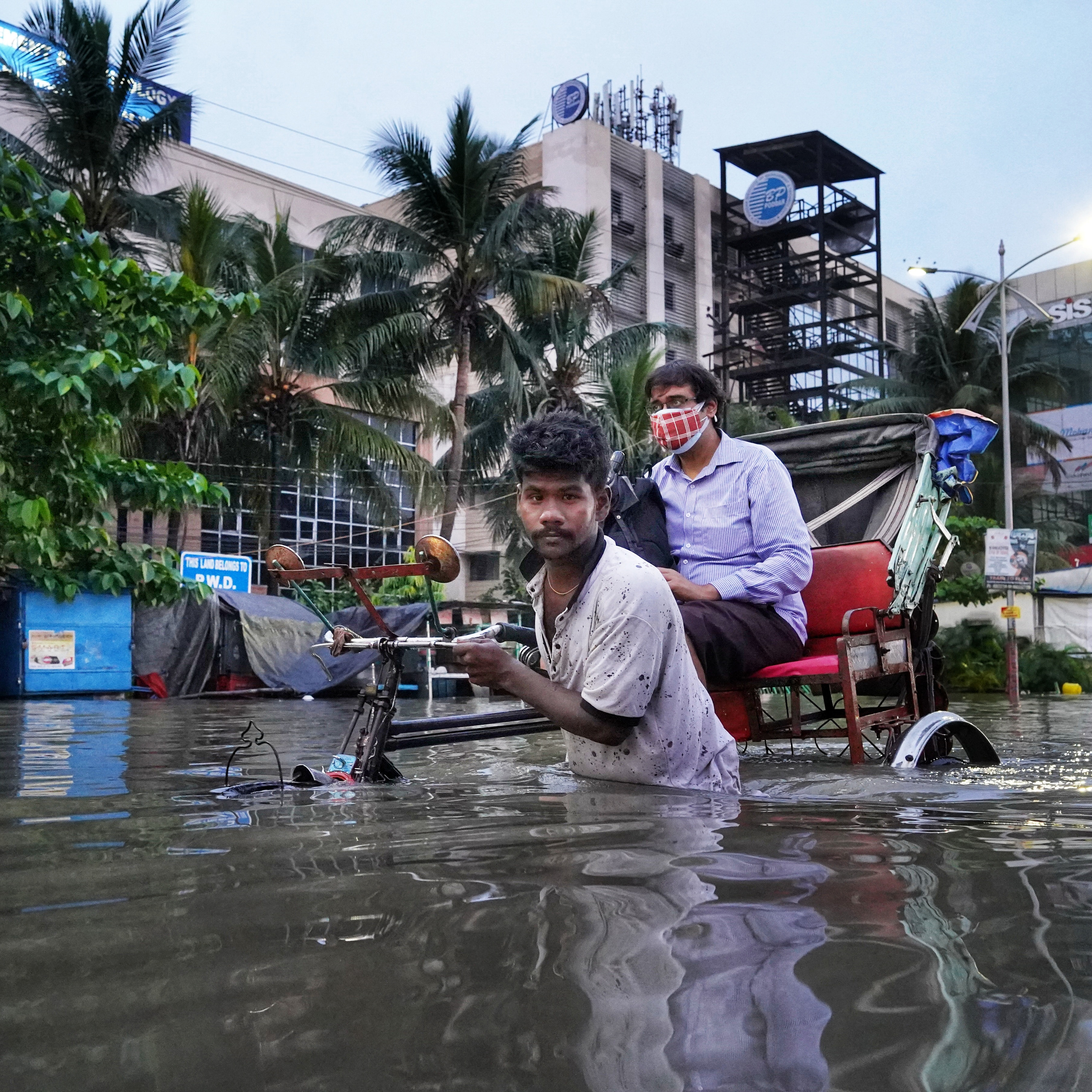
CHAPTER 3: Cat Bonds, Debt-Swaps, Guarantees, Private Sector Risk Pooling, Frontloading and Philanthropy
This chapter identifies seven potential sources of private finance for developing countries vulnerable to climate change induced loss and damage (L&D). Three of the key findings are the following:
- Catastrophe bonds, or cat bonds, have significant potential as a source of private finance towards L&D, i.e., an L&D Cat Bond. However, to realize this potential the design of the bonds will need to be adapted as follows: a) an expanded range of trigger events covered within a single product and, if possible, inclusion of slow onset events; b) the provision of subsidies which can cover the higher structuring costs and interest rates that these bonds attract, and; c) the provision of guarantees in favour of countries with low sovereign credit risk ratings in order to attract investors to these bonds.
- In climate finance, debt for nature swaps have become an increasingly popular alternative to provide debt relief to highly indebted countries while also encouraging these countries to earmark a portion of the forgiven debt proceeds towards environmental conservation. A debt for L&D swap would require limited adjustments to the existing template used for debt for nature swaps. The most significant adjustment would be to agree with the borrowing country on a set of L&D criteria for the deployment of the funds towards L&D uses. This capital may be deployed from a national L&D trust fund, similar to the conservation trust funds that are typically set up in debt for nature swaps.
- Donors and the public sector often offer guarantees to support investments that can generate social and environmental outcomes. This includes climate finance, where guarantees can support investments with positive climate mitigation and adaptation outcomes but have comparatively weak risk-return profiles. L&D guarantees that can catalyze private sector finance need to provide explicit coverage and support in the event of defaults or loss in value due to extreme and slow onset L&D events, as compared with the indirect blanket coverage that guarantees currently offer. This may include: a) concessionary support to mitigate a higher proportion of portfolio losses due to L&D than due to other shocks; b) subsidized guarantee utilization fees for L&D guaranties as compared with ‘standard’ guarantee products; and c) offering direct support for post-L&D actions that may help investees and their communities and landscapes recover more quickly from L&D.
CHAPTER 4: Insurance
This chapter points out that several options exist to further the agenda on insurance addressing L&D. With that, it becomes clear that insurance is indeed ‘one colour in the rainbow’ of solutions that will be required to address L&D. Insurance as a tool for the new funding arrangements and the fund for L&D should not be underestimated. Under follows three of the key findings of the report:
- Establishing an effective insurance system necessitates a well-structured legal and regulatory framework. Government intervention in insurance markets typically occurs in response to market failures, often following major disasters. These interventions can take various forms, such as public sector insurance schemes, public-private partnerships, and regulatory measures to stimulate demand.
- Regional risk pools, such as CCRIF-SPC in the Caribbean, ARC in Africa, and PCRIC in the Pacific, play a crucial role in helping countries effectively manage and mitigate losses from disasters. These pools, owned by member countries, offer parametric insurance coverage for short-term liquidity after disasters and leverage risk pooling to provide more affordable risk transfer options. They not only provide rapid funding for disaster responses but also offer advisory services, access to international markets, and integration with social protection systems.
- There are also new frontiers for insurance in responding to L&D. Insurance, traditionally associated with acute loss events, should also be explored for addressing slow-onset climate risks and non-economic L&D situations. Innovative insurance solutions are emerging to tackle these challenges:
- Anticipatory Insurance: Anticipatory insurance, driven by advanced forecasting, aims to provide early payouts for preventive actions. It can help reduce the need for risk transfer and enhance preparedness for climate-related events.
- Parametric Insurance for Debt-Servicing: Parametric insurance can cover debt-servicing obligations for climate-vulnerable countries, reducing the financial burden on governments after disasters. It can also be bundled with disaster liquidity coverage.
- Insurance for Natural Capital and Ecosystems: Insurance products are being developed to cover natural capital and ecosystems, helping address both slow-onset processes and non-economic L&D. For example, reef insurance supports coral reef recovery after hurricanes.
- Insurance for Emerging Risks: Insurance can provide coverage for emerging risks resulting from shifts in livelihoods or business models, promoting resilience in evolving economic landscapes.
- Long-Term Insurance Solutions: Efforts are underway to link insurance to long-term resilience strategies, offering insurance contracts beyond the traditional yearly renewals. These solutions could encourage investment in resilient infrastructure.
- Life Insurance Model for Slow-Onset Events: Insurance for slow-onset events could focus on timing risks rather than the event itself. It could provide payouts when pre-agreed thresholds are surpassed within specified timeframes.
Please note that information on the public webinar can be found in Annex II.

Conclusions & way forward
This study is meant as a starting point for further discussion on innovative finance solutions for L&D. Some areas of further research could include assessing the technical potential of a new market for L&D, including a new mechanism for private sector finance of L&D connected with the L&D fund. This could include the possibility and potential of creating guidelines for private sector finance in L&D. Another potential area for further research could be to assess how COP28 (and potentially COP29) could ensure that it promotes a call for broadening the scope and application of a diverse range of sources. Main findings and potential for further research will be presented and further discussed at the COP. Further, the potential of introducing both air ticket levies and international aviation fuel tax could benefit from Nordic coordination and cooperation given the sensitive political environment connected with diverting from ICAO’s guidelines on international aviation fuel.