Chapter 2: Taxation & Levies
Key take aways
Although progress on GHG emission reductions in the IMO has been slow, a revised strategy on reduction of GHG emissions from international shipping was agreed in 2023 with an ambitious workplan to finalise the ‘basket of measures’ already in spring 2024. Several options are on the table, with varying potential for revenues for IMO. There seem to be a political agreement that the revenues will be used for investments in emission reduction innovation in the maritime sector, including on-land technology and infrastructure linked to this. Going forward, regardless of the chosen measures, IMO should be encouraged to earmark some of the proceeds to the GCF and/or the L&D fund.
Despite the ICAO’s CORSIA market, emission reduction in the aviation sector is slow. The ICAO guidelines on international aviation fuel has hindered actors in using taxes and levies, with the exception of domestic flights. Initiatives to establish a levy on international aviation fuels has been initiated by the Scandinavian countries, and could be encouraged by the COP/CMA. Concurrently, there are some countries that have been establishing an air passenger duty (also known as departure tax). There is the example of France, who has added an additional levy, called the solidarity levy, to the air passenger duty, using parts of the finance from that for international development, including the UNITAID. As international aviation is currently taxed relatively lightly compared to other high-emitting industries and sectors, Parties could proceed with progressive air ticket levies that could be used for domestic and/or international financing of L&D, including for a L&D fund.
Taxation of fossil fuel production and receipt across sea is not new. However, taxation of fossil fuel for climate purposes, linked to windfall profits, over a time-limited period and earmarked for climate purposes, including financing L&D actions, is a potential new source of income. The issue is one closely connected with national sovereignty. Looking at it from the Norwegian perspective (which is a producer of oil and gas), it is unlikely to raise large amounts. But again, if more fossil fuel producing countries come together, it has the potential of setting new examples in the search for new and innovative sources of finance for L&D.
Introducing small levies for other industries, such as the financial industry, has the potential of raising quite substantial amounts of finance, some of which could be earmarked for climate purposes, including for the L&D fund.
The role of the UNFCCC/PA is not to prescribe national or regional taxes. However, the UNFCCC/PA can use its position to welcome any proceeds from these taxation and levy measures towards the GCF and/or the L&D fund, and to encourage steps towards meeting the Paris Agreement’s temperature goal through putting a price on carbon (which is what these taxation systems essentially does).
IMO and the International Shipping Sector
Context
Emissions from international shipping are steadily increasing, projected to increase with 90–130% compared with 2008 emissions by 2050.
IMO (2020). Fourth Greenhouse Gas Study 2020. Available at: https://www.imo.org/en/OurWork/Environment/Pages/Fourth-IMO-Greenhouse-Gas-Study-2020.aspx
In the early days, the focus was more on the prevention of pollution and oil spills than reducing GHG emissions from ships. The question of marine pollution from ships was a topic at the UN Conference on the Human Environment in Stockholm in 1972.
UN (1972). Report of the UN Conference on the Human Environment. Available at: https://wwwcdn.imo.org/localresources/en/KnowledgeCentre/ConferencesMeetings/Documents/A%20CONF.48%2014%20Rev.1.pdf
The sixth technical annex entered into force in 2005 and centers around the prevention of air pollution from ships relevant for ozone depleting substances.
For more information on MARPOL and its annexes, please see: https://www.imo.org/en/About/Conventions/Pages/International-Convention-for-the-Prevention-of-Pollution-from-Ships-(MARPOL).aspx
In the run up to COP15 in Copenhagen, it was expected that the new ‘post-2012’ treaty would consider how emissions from international civil aviation and maritime transport should be regulated internationally.
IMO (2009). MEPC 59/24, p. 40. Available at: https://www.mpa.gov.sg/docs/mpalibraries/mpa-documents-files/shipping-division/mepc-reports/mepc59-24-final-report.pdf
Copenhagen Accord. Available at: https://unfccc.int/resource/docs/2009/cop15/eng/l07.pdf
Paris Agreement, article 2.1(a).
The focus on GHG emission reductions has been a theme in the IMO for some time, although progress has been slow. In 2003, the IMO Assembly adopted a resolution urging its Marine Environment Protection Committee (MEPC) to identify and develop the mechanism(s) needed to achieve the limitation of GHG emissions in international shipping, and to establish a roadmap.
IMO. Resolution A.963(23). Available at: https://wwwcdn.imo.org/localresources/en/KnowledgeCentre/IndexofIMOResolutions/AssemblyDocuments/A.963(23).pdf
MEPC 59/24, para 4.129. Available at: https://www.mpa.gov.sg/docs/mpalibraries/mpa-documents-files/shipping-division/mepc-reports/mepc59-24-final-report.pdf
IMO (2011). Note by the IMO to the first meeting of the Transitional Committee for the design of the GCF – Marked-Based Measures for International Shipping. Available at: https://unfccc.int/files/meetings/awg/application/pdf/imo_all_250511.pdf
The use of revenues from international maritime transportation (and aviation) was also highlighted in the report by the Secretary General Ban Ki-moon’s high level advisory group on climate finance in 2010.
The expert group was co-chaired by Mr. Meles Zenawi, the Prime Minister of Ethiopia and the Norwegian Prime Minister, Jens Stoltenberg, and included prominent experts such as Ms. Christine Lagarde and Mr Nicholas Stern, among others.
UN SG (5 November 2010). Report of the Secretary General’s High-Level Advisory Group on Climate Change Financing, p. 23. Available at: https://www.cbd.int/financial/interdevinno/un-climate-report.pdf
UN SG (5 November 2010). Report of the Secretary General’s High-Level Advisory Group on Climate Change Financing, p. 23. Available at: https://www.cbd.int/financial/interdevinno/un-climate-report.pdf
UN SG (5 November 2010). Report of the Secretary General’s High-Level Advisory Group on Climate Change Financing, p. 23. Available at: https://www.cbd.int/financial/interdevinno/un-climate-report.pdf
UN SG (5 November 2010). Report of the Secretary General’s High-Level Advisory Group on Climate Change Financing, p. 23. Available at: https://www.cbd.int/financial/interdevinno/un-climate-report.pdf
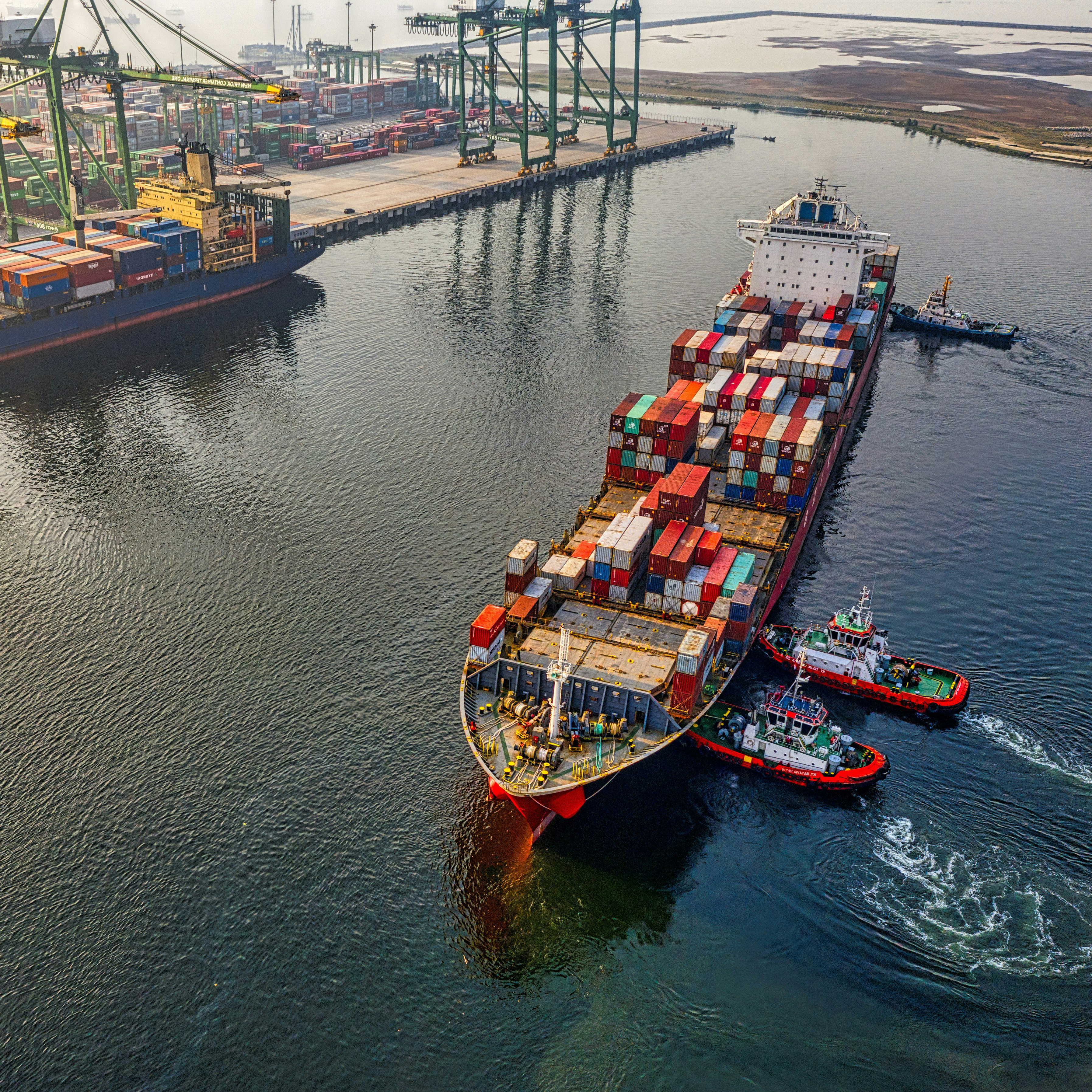
The 2023 IMO GHG Strategy
The initial IMO strategy, adopted in 2018, affirms that GHG emissions from international shipping should peak as soon as possible and fall by at least 50% by 2050 relative to 2008 levels with continuing efforts to phase them out entirely.
MEPC 72.
International Council on Clean Transportation (ICCT) (April 2018). The International Maritime Organization’s Initial Greenhous Gas Strategy, page 5. Available at: https://theicct.org/wp-content/uploads/2021/06/IMO_GHG_StrategyFInalPolicyUpdate042318.pdf
In 2023, the IMO adopted a revised strategy on reduction of GHG emissions from international shipping.
IMO (July 2023). Annex 1 – Resolution MEPC.377(80) 2023 IMO strategy on Reduction of GHG Emissions from Ships (IMO 2023 Strategy). Available at: https://wwwcdn.imo.org/localresources/en/OurWork/Environment/Documents/annex/2023%20IMO%20Strategy%20on%20Reduction%20of%20GHG%20Emissions%20from%20Ships.pdf
IMO (July 2023). Annex 1 – Resolution MEPC.377(80) 2023 IMO strategy on Reduction of GHG Emissions from Ships (IMO 2023 Strategy), para 3.4. Available at: https://wwwcdn.imo.org/localresources/en/OurWork/Environment/Documents/annex/2023%20IMO%20Strategy%20on%20Reduction%20of%20GHG%20Emissions%20from%20Ships.pdf
In achieving these reduction targets, a ‘basket of measures’ should be developed that include both a technical element for a goal based marine fuel standard regulating phased out reduction of the marine fuel’s GHG intensity and an economic element based on a maritime GHG emissions pricing mechanism.
IMO (July 2023). Annex 1 – Resolution MEPC.377(80) 2023 IMO strategy on Reduction of GHG Emissions from Ships (IMO 2023 Strategy), para 4.5.1 and 2. Available at: https://wwwcdn.imo.org/localresources/en/OurWork/Environment/Documents/annex/2023%20IMO%20Strategy%20on%20Reduction%20of%20GHG%20Emissions%20from%20Ships.pdf
It is also worth noting that the revised strategy underlines the that the above measures ‘should effectively promote the energy transition of shipping and provide the world fleet with a needed incentive while contributing to a level playing field and a just and equitable transition’.
IMO (July 2023). Annex 1 – Resolution MEPC.377(80) 2023 IMO strategy on Reduction of GHG Emissions from Ships (IMO 2023 Strategy), para 4.5. Available at: https://wwwcdn.imo.org/localresources/en/OurWork/Environment/Documents/annex/2023%20IMO%20Strategy%20on%20Reduction%20of%20GHG%20Emissions%20from%20Ships.pdf
Going forward, the MEPC will undertake a comprehensive impact assessment of the different mid-term measures proposed from the end of summer 2023 until finalization of report in autumn 2024. This assessment will pay particular attention to the needs of SIDS and LDCs considering their vulnerabilities due to geographic remoteness, transport dependency and costs, socio-economic progress and development and disproportionately negative impacts, amongst others.
IMO (July 2023). Annex 1 – Resolution MEPC.377(80) 2023 IMO strategy on Reduction of GHG Emissions from Ships (IMO 2023 Strategy), para 4.12. Available at: https://wwwcdn.imo.org/localresources/en/OurWork/Environment/Documents/annex/2023%20IMO%20Strategy%20on%20Reduction%20of%20GHG%20Emissions%20from%20Ships.pdf
Concurrently, the basket of measures for the ‘mid-term’ period 2023–2030 will be finalized spring 2024 and approved a year later. The measures will be adopted in autumn 2025 and will enter into force 16 months later (in 2027).
IMO (July 2023). Annex 1 – Resolution MEPC.377(80) 2023 IMO strategy on Reduction of GHG Emissions from Ships (IMO 2023 Strategy), para 6.2. Available at: https://wwwcdn.imo.org/localresources/en/OurWork/Environment/Documents/annex/2023%20IMO%20Strategy%20on%20Reduction%20of%20GHG%20Emissions%20from%20Ships.pdf
The Options for the Basket of Measures & Potential Finance Flows
The position papers by the Parties and NPS to the IMO for the technical and economic elements reveal that there is currently no clarity on the preferred options. There are submissions from Japan, China, the EU, Norway and the International Chamber of Shipping (ICS) currently on the table.
The EU proposes to establish a levy, with an explicit price on CO2e in combination with a GHG fuel standard.
EU’s proposal (12 May 2023). ISWG-GHG 15/3/2, p. 2.
EU’s proposal (12 May 2023). ISWG-GHG 15/3/2, p. 2.
EU’s proposal (12 May 2023). ISWG-GHG 15/3/2, p. 3.
In quite similar veins is the proposal from China, although it introduces a market element instead of having the IMO distribute the revenues. In short, the proposal introduces an International Maritime Sustainable Fuels and Fund (IMSFF) mechanism which will set a benchmark for GHG intensity of fuels/energy used on board ships.
China’s proposal (12 May 2023). ISWG-GHG 15/3/4, p. 3.
China’s proposal (12 May 2023). ISWG-GHG 15/3/4, pp. 6-7. Please note that the MEPC has established a voluntary multi-donor trust fund (GHG TC-Trust Fund) to provide financial support for technical cooperation and capacity development activities to implement the initial IMO strategy on reduction of GHG from ships.
Of interest for this paper is also Norway’s proposal for an emission cap-and-trade system in combination with a GHG fuel standard.
Norway’s proposal (12 October 2022). ISWG-GHG 13/4/2, p. 5.
Norway’s proposal (12 October 2022). ISWG-GHG 13/4/2, p. 5.
Going forward, the potential revenues from the economic measure to be agreed under IMO could lead to quite substantial revenues (if a cap-and-trade system is agreed), or much more limited revenues (if a levy with a market mechanism is agreed). If the revenues are large, it is likely to go to already established climate funds, such as the GCF. However, even when funds are limited, a portion of the revenues could go to the GCF (as in the EU proposal). There is also the possibility that no revenues at all go to the GCF or any of the established climate funds under the UNFCCC (as seems to be the case with the China proposal). There is no mention of the L&D fund in the current proposals.
Potential for Financing L&D
In short, early on, there was an acknowledgement that existing or new funding mechanisms under the UNFCCC could benefit from revenues from the IMO’s MBMs. The revenues were envisioned to be used to address the needs of climate action more generally, and not merely mitigation activities. Now, the political understanding of the use of the sources from these new measures seems to be focused solely on the need for re-investment in green technology and mitigation solutions on land and at sea. The potential use of the sources for climate action more widely seems to no longer be the preferred option.
However, at the same time, the revised strategy for 2023 will assess the impacts of the mid-term measures on States, with particular attention to the LDCs and SIDS. It was also agreed that these measures should contribute to a level playing field and a just and equitable transition. As such, it could be argued that addressing L&D in the most vulnerable developing countries will be an important element of ensuring a just and equitable transition. And revenues from the economic measure going to the L&D Fund could contribute to this cause.
Practically, it could be envisioned that for the revenues under the Chinese proposal, a percent (for example 10%) could be for the L&D fund. This is double of what is envisioned for the administration of SSF, the small fund under the IMO, and is therefore a relatively limited contribution to the L&D fund. Alternatively, it could be envisioned that a share of the funds deriving from auctioning of units under the cap-and-trade system is distributed to the L&D fund. In that case, the potential contribution could be more substantial.
In a thought experiment where the shipping industry need 20% reduction of GHG emissions to comply with the strategy by 2030, with the 2008 year as the baseline (i.e., 1,076 million tons GHGs), and an example price of USD 100/ton GHGs, this could potentially generate around USD 21 billion. If 10% of this is directed to the L&D fund, it means that it could receive 2 billion annually from this mechanism.
There are pros and cons with promoting revenue streams to the L&D fund from the IMO mechanisms. First, the negotiations are under time pressure to deliver, and Parties seem to be politically united around the idea of using the revenues for investing in the maritime (and land) sector to assist with the transformation needed towards its net-zero ambition. Secondly, including potential revenues for the L&D fund in the IMO negotiations could lead to some Parties having difficulties with bringing the solution back home, as L&D is a sensitive political issue. On the other hand, the decision to operationalize the L&D fund under the UNFCCC and the Paris Agreement negotiations have shown a willingness to ensure finance for L&D. The need for new and innovative finance for the funding arrangements and the fund has been agreed, and one way to ensure stable and predictable revenues for L&D activities could be to utilize the finance mechanism under the IMO. Further, if only a percentage of the total revenues and not the total revenues are suggested for the L&D fund, this could make it more likely to be positively received by the IMO parties. Another option is that the funding is channeled to the GCF, which could then distribute it to potential resilience and L&D activities. Finally, the need to ensure a fair and equitable transition under the IMO strengthens the argument that some of the revenues could go to the GCF which finances the climate transition in developing countries, and/or to the L&D fund.
The relatively short window for the development of mid-term measures leaves limited opportunity for the Parties to the UNFCCC and the Paris Agreement to influence this process. As such, the next COP28 is potentially the only real window of opportunity to give signals to the development of these measures and to encourage the potential finance flows to be directed towards the L&D fund, or any of the other climate funds.
ICAO and the Aviation Industry
Context
In 2022, the aviation industry accounted for 2% of global CO2 emissions, reaching almost 800 Mt CO2, still 20% below pre-covid-19 levels.
IEA (2023). Tracking Clean Energy Progress 2023 – Assessing critical energy technologies for global clean energy transitions, Tracking Aviation. Available at: https://www.iea.org/energy-system/transport/aviation
ICAO (2022). Long term global aspirational goal (LTAG) for international aviation. Available at: https://www.icao.int/environmental-protection/Pages/LTAG.aspx
In addition, ICAO member countries agreed on a new baseline for the global market-based Carbon Offsetting and Reduction Scheme for International Aviation (CORSIA), at 85% of the 2019 emissions level of international aviation from 2024–2035.
ICAO (2023). Covid-19 impacts and 2022 CORSIA periodic review. Available at: https://www.icao.int/environmental-protection/CORSIA/Pages/CORSIA-and-Covid-19.aspx
IEA (2023). Tracking Clean Energy Progress 2023 – Assessing critical energy technologies for global clean energy transitions, Tracking Aviation. Available at: https://www.iea.org/energy-system/transport/aviation
The aviation industry is currently not taxing its fuel. From a polluter pays principle perspective, this seems counter intuitive. Below, we will discuss the options of introducing an air passenger levy and a taxation on aviation fuel as potential sources of finance for L&D, with particular focus on the L&D fund.
Air Passenger Duty & Potential for Financing L&D
The discourse under the UNFCCC regarding an international air passenger levy is not new. The proposal for an ‘International Air Passenger Adaptation Levy (IAPAL)’ was first proposed by the LDCs within the framework of the Bali Action Plan in 2008.
UNFCCC AWC-LCA (2009). Proposal by the LDCs within the framework of the Bali Action Plan. Available at: https://unfccc.int/resource/docs/2009/awglca6/eng/misc04p01.pdf Please also see Müller, B. (n.d.). Innovative Sources for Multilateral Climate Finance. Oxford Climate Policy. Available at: https://oxfordclimatepolicy.org/innovative-sources-multilateral-climate-finance
CAPS (2020). Aligning Air Travel with SDGs. Available at: https://capsprogramme.org/
CAPS (2020). Aligning Air Travel with SDGs. Available at: https://capsprogramme.org/
Müller, B. et al (2023). International Climate Solidarity Levies – a Manifesto on an Innovative Funding Source for the new Loss and Damage Response Fund. Available at: http://blog.oxfordclimatepolicy.org/international-climate-solidarity-levies/ [Please note that countries such as Kenya, France, the Maldives and the UK have expressed interest in joining this alliance.]
The air passenger duty was introduced in the UK in 1994. It was first envisioned a tax on aircraft fuel, however, it was found too complicated due to international agreements, and instead an air passenger duty was introduced. The air passenger duty is a levy collected by airlines on passengers who depart from UK airports. It has been revised and updated, with the most recent rules applicable from 1 April 2023.
UK Government (2023). Guidance – Rates for Air Passenger Duty. Available at: https://www.gov.uk/guidance/rates-and-allowances-for-air-passenger-duty
UK Government (2018). Exemptions from Air Passenger Duty. Available at: https://www.gov.uk/guidance/exemptions-from-air-passenger-duty
An air passenger duty, referred to as a ‘departure tax’, has also been implemented in Germany since 2011. It is a levy on the carriage of passengers on board an aircraft departing from a German airport.
FCC Aviation. German Aviation Tax. Available at: https://www.fccaviation.com/regulation/germany/aviation-tax
German Departure Tax Law (2021). (In German). Available at: https://www.buzer.de/s1.htm?g=LuftVStAbsenkV+2021&f=1
The French has also implemented air passenger duty, the French civil aviation tax, much in the same veins as the UK and Germany.
FCC Aviation. French Civil Aviation Tax. Available at: https://www.fccaviation.com/regulation/france/civil-aviation-tax
FCC Aviation. French Solidarity Tax. Available at: https://www.fccaviation.com/regulation/france/solidarity-tax
FCC Aviation. French Eco Tax. Available at: https://www.fccaviation.com/regulation/france/eco-tax
UNITAID (2013). French levy on airline tickets raises more than one billion euros for world’s poor since 2006. Available at: https://unitaid.org/news-blog/french-levy-on-airline-tickets-raises-more-than-one-billion-euros-for-worlds-poor-since-2006/#en
The French were not alone in implementing an air passenger levy earmarked for development, as it was a result of the Paris International conference on the finance of development in 2005, which was signed by 30 countries and implemented in 9 countries.
Chancel, L. et al. (2015). Carbon and inequality: from Kyoto to Paris – Trends in the global inequality of carbon emissions (1998-2013) & prospects for an equitable adaptation fund, p. 38. Paris School of Economics. Available at: https://www.ledevoir.com/documents/pdf/chancelpiketty2015.pdf
Chancel, L. et al. (2015). Carbon and inequality: from Kyoto to Paris – Trends in the global inequality of carbon emissions (1998-2013) & prospects for an equitable adaptation fund, p. 38. Paris School of Economics. Available at: https://www.ledevoir.com/documents/pdf/chancelpiketty2015.pdf
The potential of a departure tax is difficult to estimate. However, if this type of levy is applied globally, it was estimated by IMF in 2006 to have the potential of raising revenues of USD 10 billion annually if a charge of USD 6 was applied.
IMF (2006). Indirect Taxes on International Aviation. Available at: https://www.imf.org/en/Publications/WP/Issues/2016/12/31/Indirect-Taxes-on-International-Aviation-18941
Apart from the French solidarity levy, for the above national air passenger duties it is unclear whether the revenues are earmarked for governmental climate initiatives. To ensure stable and dependable funding for the L&D fund, the revenues from the passenger levies could be used for the L&D fund. For example, a precent (ranging from 1–100, decided by the countries themselves) could potentially be earmarked for the GCF and/or the L&D fund, or any of the other funding arrangements financing L&D activities, taking inspiration from the French solidarity levy.

A FREQUENT FLYER LEVY
In addition to, or instead of an air passenger levy, is the potential of introducing a frequent flyer levy (FFL). This progressive taxation can be introduced as a ratchet-up mechanism which makes the levy for flights increasingly costly according to the number of flights one person takes.
ICCT (2022) Aviation Climate Finance Using a Global Frequent Flying Levy. Available at: https://theicct.org/publication/global-aviation-frequent-flying-levy-sep22/
ICCT (2022) Aviation Climate Finance Using a Global Frequent Flying Levy. Available at: https://theicct.org/publication/global-aviation-frequent-flying-levy-sep22/
ICCT (2022) Aviation Climate Finance Using a Global Frequent Flying Levy. Available at: https://theicct.org/publication/global-aviation-frequent-flying-levy-sep22/
US Department of Transport (2022). Current Aviation Excise Tax Structure and Rates. Available at: https://www.faa.gov/budget/aatf/current-aviation-excise-tax-structure-and-rates
US Federal Aviation Administration. Aviation Fuel Tax Action Plans and Status. Available at: https://www.faa.gov/airports/airport_compliance/aviation_fuel_tax
A Tax/Levy on Aviation Fuel & the Potential for L&D Finance
A levy on domestic fuel has been introduced in Norway. As shown in the case study, there are ongoing considerations for also taxing fuel for international aviation. However, whether this could be successfully implemented will to some extent depend on the response by other countries. The move towards utilizing taxation/levies for fossil fuel for international aviation could be strengthened by the other Nordic countries affirming this practice. The Scandinavian countries could include the wider Nordic countries such as Iceland and Finland in their discussions and move forward together in setting new climate standards in their third-party agreements. If the Nordic bloc moves together, it creates a strong signal for the rest of the global community and for ICAO to potentially revise its guiding documents. The sources of funding deriving from these new taxation measures could be used to ramp up investment and support innovation in technology in the aviation sector nationally, but also globally. As such, a percent (ranging from 1–100, decided by the countries themselves) of the finance deriving from these measures could be earmarked for the GCF and/or the L&D fund, or any of the other funding arrangements financing L&D activities.
Further research will be necessary to undertake in order to understand the scale of the revenues, and the potential for funds going to the L&D fund. However, if a levy on aviation fuel becomes the new norm, and if it becomes regular practice to earmark some of that for the L&D fund, it has the potential of providing a regular source of income for the L&D fund. The exact potential is difficult to estimate, however, an IMF assessment from 2006 estimated that a fuel tax of USD 0.2 (i.e. 10% of the fuel price at the time) per gallon worldwide (which was around 52 billion gallons) would raise about USD 10 billion if imposed worldwide.
IMF (2006). Indirect Taxes on International Aviation. Available at: https://www.imf.org/en/Publications/WP/Issues/2016/12/31/Indirect-Taxes-on-International-Aviation-18941
We have estimated the number of gallons worldwide to be approximately 86 billion in 2023, and that the price fluctuates somewhere between USD 2.43-3 per gallon, based on information retrieved from IATA. Note that 1 barrel is 42 gallons, as the fuel price is often presented in USD/barrel. IATA (2023) Jet Fuel Price Monitor. Available at: https://www.iata.org/en/publications/economics/fuel-monitor/ and IATA (2023). Industry Statistics – Fact Sheet. Available at: iata.org/en/iata-repository/pressroom/fact-sheets/industry-statistics/
Fortune Business Insights (2022). Aviation Fuel Market Size, Share & COVID-19 Impacts Analysis, By Fuel Type, By End User and Regional Forecasts, 2022-2029. Available at: https://www.fortunebusinessinsights.com/industry-reports/aviation-fuel-market-100427
Additionally, a levy on private jet fuel could be introduced at a level that is higher than for commercial flights to reflect the carbon emissions per individual these flights have and the value of this use of the shared carbon budget. The EU is currently discussing this measure for intra-EU air travel.
It should also be noted that for poor countries and countries with high climate vulnerabilities in special need of finance for L&D, such as the LDCs and SIDS, and other developing countries that fall into in this category, the revenues from the fuel tax could be earmarked for their own national L&D activities.
Large parts of the domestic flights in Norway are subject to tax on domestic fuel.
Norway. Regjeringen (2021). Luftfart og klima. (in Norwegian) Available at: https://www.regjeringen.no/no/tema/transport-og-kommunikasjon/luftfart/tiltak-for-a-redusere-klimagassutslipp/id2076453/
Norway is one of the few countries in the world with this type of tax.
Norway. Regjeringen (2021). Luftfart og klima. (in Norwegian) Available at: https://www.regjeringen.no/no/tema/transport-og-kommunikasjon/luftfart/tiltak-for-a-redusere-klimagassutslipp/id2076453/
Norway (2016). ICAO State action Plan on CO2 emissions reduction activities Norway. Available at: https://www.icao.int/environmental-protection/Lists/ActionPlan/Attachments/64/Norway_StateActionPlan_5Aug16.pdf
Non-domestic flights within the European Economic Area (EEA) are subject to the EU ETS (i.e., the EU’s carbon credit market), and the aviation industry is required to purchase carbon credits, called allowances.
Norway (2023). Strategy on Aviation, p. 87. Available at: https://www.regjeringen.no/contentassets/e1519da991e3439787a8c82add1004db/no/pdfs/stm202220230010000dddpdfs.pdf
TØI (2023). Luftfartsstrategiens klimatiltak: Hvordan påvirkes billettpriser, passasjertal og CO2 utslipp, p. 2. (in Norwegian). Available at: https://www.toi.no/publikasjoner/luftfartsstrategiens-klimatiltak-hvordan-pavirkes-billettpriser-passasjertall-og-co2-utslipp-article38140-8.html
However, for international flights between Norway and countries outside of the EEA, there is no carbon credit tax or requirements to offset through a CO2 market. Norway, as a small country has aligned its air policies with the other Scandinavian countries, Denmark and Sweden, which all utilizes one standard agreement for entering into bilateral flight agreements for international flights with third party countries. This standard agreement has a clause that exempts tax on fuel for international flights.
Going forward, the Norwegian government could work together with the Scandinavian countries on revising the standard agreement so that taxes and levies are no longer exempt. The second step would then be to enter into international flight agreements with third party countries in which potential tax/levy on fuel for international flights is not exempt. This could prove difficult as exempting tax on fuel is currently not aligned with the guidelines from ICAO.
ICAO (2000). Doc 8632 ICAO’s Policies on Taxation in the Field of International Air Transport. Third edition. Available at: https://www.icao.int/publications/Documents/8632_3ed_en.pdf
One key reason for avoiding taxes and levies is because these could have adverse economic and competitive impact in international air transport operations. Another issue with introducing tax/levy on fuel is the issue of ‘tankering’, where carriers fill their aircraft to total capacity when landing outside the country to avoid paying taxes, and which could increase emissions. Different national taxation schemes could also increase the complexity the commercial operators face when making fueling decisions. In the end, the potential adverse effects must be weighed against the benefits of introducing the measure. The Norwegian government views the tax/levy on fuel as one of the most important tools to reduce emissions from aviation, as it increases the price for fossil fuel, which again can lead to efficiencies/reductions in flight traffic, reduced emission per flight, investments in energy efficiency and/or new and better technology.
ICAO (2000). Doc 8632 ICAO’s Policies on Taxation in the Field of International Air Transport. Third edition. Available at: https://www.icao.int/publications/Documents/8632_3ed_en.pdf and Norway (2023). Strategy on Aviation, op. cit., p. 85. Available at: https://www.regjeringen.no/contentassets/e1519da991e3439787a8c82add1004db/no/pdfs/stm202220230010000dddpdfs.pdf
The Netherlands implemented tax on commercial jet fuel for domestic flights from 2005 to 2011. Due to complications in implementation and low revenue, however, it discontinued this practice in 2012. Nonetheless, it continued to tax aviation kerosene for pleasure and non-commercial business aviation.
Ryan, M., A. (2023). Is Aviation Fuel Taxed? If Not, Why Not? Available at: https://simpleflying.com/aviation-fuel-taxation-guide/
The Fossil Fuel Industry
Levy on extraction, receipt or windfall surplus
Several NGOs have put forward a proposal for a ‘Climate Damages Tax’ (CDT) to finance L&D.
Stamp Out Poverty et al. (2018). The Climate Damages Tax – A Guide to What It Is And How it Works. Available at: https://www.stampoutpoverty.org/live2019/wp-content/uploads/2019/06/CDT_guide_web23.pdf
Stamp Out Poverty et al. (2018). The Climate Damages Tax – A Guide to What It Is And How it Works. Available at: https://www.stampoutpoverty.org/live2019/wp-content/uploads/2019/06/CDT_guide_web23.pdf
Stamp Out Poverty et al. (2018). The Climate Damages Tax – A Guide to What It Is And How it Works. Available at: https://www.stampoutpoverty.org/live2019/wp-content/uploads/2019/06/CDT_guide_web23.pdf
It is also worth noting the potential of establishing a compensation fund based on the precedent of the two Oil Pollution Compensation Funds (IOPC Funds). These funds were established in the late 1960s and early 1970s to cover damages from persistent oil spills by tankers at sea. It was established to resolve the jurisdictional complexities that had become apparent in the wake of major oil tanker incidents.
Balkin, R., and Yoshida, A. (2019). The 1971 IOPC Fund - The Road to Dissolution of an Intergovernmental Organization. Tulane Maritime Law Journal vol 44 no. 1, p. 1.
Balkin, R., and Yoshida, A. (2019). The 1971 IOPC Fund - The Road to Dissolution of an Intergovernmental Organization. Tulane Maritime Law Journal vol 44 no. 1, p. 13.
As a general rule, the carbon markets, such as the EU ETS, is geared towards adhering to the ‘polluters pay’ principle, and not on the actual extraction or action of receipt. However, if the focus is not on ‘damages’, but rather ‘solidarity’, the potential for introducing new levies on production or receipt of fossil fuel that can be used for climate action is possibly greater.
One option, therefore, is that based on the recent windfalls on the fossil fuel sector due to the invasion of Ukraine by Russia, there is an argument for introducing a short-timed windfall tax based on the surplus these companies have gained. As we shall see below, this has been introduced by the EU with regards to its fossil fuel industry. The revenues from this levy is a matter of national (and regional) policies, but could (in whole or part) be earmarked for investments in adaptation, resilience and L&D action both nationally and globally.
Regional solutions
a) EUs solidarity levy for fossil fuel sector
The Russian invasion of Ukraine created an energy emergency for the EU, with soaring energy prices. In response, in autumn 2022, EU Member states agreed to set a mandatory temporary solidarity contribution on the profits of businesses active in the crude petroleum, natural gas, coal, and refinery sectors.
European Council (2022). Council Agrees on Emergency Measures to Reduce Energy Prices. Available at: https://www.consilium.europa.eu/en/press/press-releases/2022/09/30/council-agrees-on-emergency-measures-to-reduce-energy-prices/
b) Carbon Border Adjustment Mechanism (CBAM)
The EU has introduced a Carbon Border Adjustment Mechanism to reduce the risk of ‘carbon leakage’. It introduces a CO2 price on carbon intensive goods that are entering the EU, to encourage cleaner industrial production in non-EU countries.
European Commission (2023). Carbon Border Adjustment Mechanism. Available at: https://taxation-customs.ec.europa.eu/carbon-border-adjustment-mechanism_en
Art 3 (23) CBAM Regulation.
European Parliament (2022). MEPs clear way for new sources of EU revenue. Available at: https://www.europarl.europa.eu/news/en/press-room/20221118IPR55703/meps-clear-way-for-new-sources-of-eu-revenue
However, the CBAM has been challenged by NGOs, several EU trading partners and others claiming that it can be seen as a protectionist measure and that it does little to address the climate challenges from an equitable point of view.
UPSC (2023). Carbon Border Adjustment Mechanism (CBAM): A Flawed Approach to Climate Finance. Available at: https://www.civilsdaily.com/news/cbam-climate-finance/
National responses
USA
In 2022, President Joe Biden and key political leaders from the US called for windfall taxes on excess profits in response to the sharply rising gas prices and record-breaking profits made by oil and gas companies as a result of the Russian invasion of Ukraine. The political argument was that some of the extraordinary profits due to the war should be funneled back to consumers struggling due to high gas prices.
See for example the proposal for a bill by Senator Sheldon. Available at: https://www.whitehouse.senate.gov/imo/media/doc/Big%20Oil%20Windfall%20Profits%20Tax%20Summary%20FINAL.pdf
Summary of proposal. Available at: https://www.whitehouse.senate.gov/imo/media/doc/Big%20Oil%20Windfall%20Profits%20Tax%20Summary%20FINAL.pdf
India and Middle Eastern Countries
Also as a response to the excess profit of the oil and gas industry, India imposed windfall taxes in July 2022 for crude oil producers and extended the levy on exports of gasoline, diesel and aviation turbine fuel. Despite a reversion of this tax in March, it was re-introduced starting 15 August this year.
Nadig, S., (2023). India hikes windfall tax on petroleum crude starting 15 August. Offshore Technology. Available at: https://www.offshore-technology.com/news/india-hikes-windfal-tax-on-petroleum-crude/?cf-view
The focus on oil producing States in the Middle East has received increased attention given COP28 is being placed in Dubai, chaired by Sultan Al Jaber, the head of the Abu Dhabi National Oil Company. In a recent news article written by UK’s former Prime Minister Gordon Brown, an argument is made for introducing an annual USD 25 billion windfall levy on oil and gas profits made by the Gulf States and Norway (more on Norway below) that could be earmarked for international climate finance, including the L&D fund.
Gordon Brown. (2023). How do we raise trillions of dollars to fight the climate crisis? The answer is staring us in the face. The Guardian. Available at: https://www.theguardian.com/commentisfree/2023/sep/25/we-need-trillions-of-dollars-to-fight-the-climate-crisis-this-is-my-plan-to-raise-it
UK
In the UK, the government introduced a windfall tax on oil and gas profits as a response to the historic profits made by these companies. Called the ‘Energy Profits Levy’, it was introduced in May 2022, and in its first year, it raised GBP 2.6 billion. It established a 25% surcharge on the extraordinary profits made by extraction of oil and gas by these companies, as an addition to the existing 40% tax on profits, sunsetting end of 2025.
HM Treasury (2022). Policy Paper – Energy Profits Levy Factsheet – 26 May 2022. Available at: https://www.gov.uk/government/publications/cost-of-living-support/energy-profits-levy-factsheet-26-may-2022
HM Treasury (2023). News Story – New oil and gas tax changes set to protect energy security and British jobs. Available at: https://www.gov.uk/government/news/new-oil-and-gas-tax-changes-set-to-protect-energy-security-and-british-jobs
BBC (2023). What is the windfall tax on oil and gas companies and how much do they pay. Available at: https://www.bbc.com/news/business-60295177
BBC (2023). What is the windfall tax on oil and gas companies and how much do they pay. Available at: https://www.bbc.com/news/business-60295177
Norway
Introducing a new levy for fossil fuel production for the green transition has been proposed as a solution from the Norwegian ‘transitioning committee’ (NO: Klimaomstillingsutvalget) in 2020.
Raskere klimaomstilling, Redusert risiko (2020). Ny politikk for Norge i en verden som når Parismålene, p. 137 (in Norwegian). Available at: https://www.klimaomstillingsutvalget.no/wp-content/uploads/2020/09/Klimaomstillingsutvalgsrapport-2020.pdf
Raskere klimaomstilling, Redusert risiko (2020). Ny politikk for Norge i en verden som når Parismålene, p. 138 (in Norwegian). Available at: https://www.klimaomstillingsutvalget.no/wp-content/uploads/2020/09/Klimaomstillingsutvalgsrapport-2020.pdf
The windfall argument has also been highlighted recently in Norway. An expert committee established by the NGO Norwegian Church Aid published a report with the title ‘If not Norway, who?’, arguing for Norway taking a stronger leadership role in the fight against climate change.
Klimafinanseringsutvalget (2023). Hvis ikke Norge, hvem? (in Norwegian). Available at: https://www.kirkensnodhjelp.no/contentassets/7e3a4a5f7bf14cbea5ae29578e76a672/hvis-ikke-norge-hvem.pdf
Klimafinanseringsutvalget (2023). Hvis ikke Norge, hvem?, p.10 (in Norwegian). Available at: https://www.kirkensnodhjelp.no/contentassets/7e3a4a5f7bf14cbea5ae29578e76a672/hvis-ikke-norge-hvem.pdf
Financial Transaction Tax
The potential of utilising a financial transaction tax (FTT) to increase revenues for climate finance needs to be mentioned. The FTT is a transaction tax on buying and selling a stock, bond, or other financial contracts like options and derivatives.
Klein, A. (2020). What is a financial transaction tax? Brookings. Available at: https://www.brookings.edu/articles/what-is-a-financial-transaction-tax-2/
Klein, A. (2020). What is a financial transaction tax? Brookings. Available at: https://www.brookings.edu/articles/what-is-a-financial-transaction-tax-2/
Congressional Budget office (2018). Impose a Tax on Financial Transactions. Available at: https://www.cbo.gov/budget-options/54823
The Climate Damages Tax (2018). A guide to what it is and how it works. Stamp Out Poverty. Available at: https://www.stampoutpoverty.org/live2019/wp-content/uploads/2019/06/CDT_guide_web23.pdf
The FTT could also only be applicable to transactions on high-carbon assets.
2DII (2021). How Can Financial Sector Taxes Contribute to Climate Goals – a review of policy options, p. 6. https://2degrees-investing.org/wp-content/uploads/2021/03/Financial-Sector-Taxes-Paper.pdf
UN (2010). Report of the Secretary-General’s High-level Advisory Group on Climate Change Financing, p. 11. Available at: https://www.cbd.int/financial/interdevinno/un-climate-report.pdf
UN (2010). Report of the Secretary-General’s High-level Advisory Group on Climate Change Financing, p. 11. Available at: https://www.cbd.int/financial/interdevinno/un-climate-report.pdf
Tax on extreme wealth & high emitting activities
In recent years, a greater focus on inequalities within countries and the accumulation of personal wealth by a small minority has highlighted the potential for progressive wealth tax. From a climate perspective, the differences in income, wealth, lifestyles and consumption patterns are reflected in the fact that the top 1% of emitters globally had carbon footprints of over 50 tonnes of CO2 in 2021.
IEA (2023). The World’s top 1% of emitters produce over 1000 times more CO2 than the bottom 1%. Available at: https://www.iea.org/commentaries/the-world-s-top-1-of-emitters-produce-over-1000-times-more-co2-than-the-bottom-1
IEA (2023). The World’s top 1% of emitters produce over 1000 times more CO2 than the bottom 1%. Available at: https://www.iea.org/commentaries/the-world-s-top-1-of-emitters-produce-over-1000-times-more-co2-than-the-bottom-1
The linkage between wealth and carbon emissions is explored by the NGO Oxfam that argues the case of increasing taxes on the wealthiest, including through taxing windfall profits of corporations; a high tax on dividend payouts; inheritance tax; property taxes; and wealth tax.
Oxfam (2023). Survival of the Richest – How we must tax the super-rich now to fight inequality. Available at: https://oxfamilibrary.openrepository.com/bitstream/handle/10546/621477/bp-survival-of-the-richest-160123-en.pdf
Reuters (2022). Millionaires group calls for wealth tax at virtual Davos. Available at: https://www.reuters.com/business/millionaires-group-calls-wealth-tax-virtual-davos-2022-01-19/
The issue of taxing wealth will, in the end, be a matter for each national government to decide. However, it will be important to consider the findings of the World Bank that accumulation of wealth for the few does not lead to a trickling down effect benefiting the society including the poor, and that in order to achieve the goal of poverty eradication it will be necessary to redistribute wealth in favour of the poor.
World Bank (2019). How Much Does Reducing Inequality Matter for Global Poverty, p. 20. Available at: https://documents1.worldbank.org/curated/en/328651559243659214/pdf/How-Much-Does-Reducing-Inequality-Matter-for-Global-Poverty.pdf
A global wealth tax is highly unrealistic to be introduced, and would potentially have been practically difficult to implement given the large variety of taxation regimes across the globe. However, the increasing focus on a global wealth tax could bring the necessary light onto global trends such as the increasing divide between the ultra-rich and the rest of society. And give renewed interest at the national level to redistribute wealth.
This could be done by introduction of a small, gradual increase in wealth tax and ordinary income of the high earners, without weakening property rights, which is often a pre-requisite for prosperity and growth.
Nevertheless, the call for a global wealth tax has been put forward by Oxfam, who has calculated that a progressive wealth tax starting at 2% on the world’s millionaires, up to 5% for the world’s billionaires, would raise USD 1.7 trillion annually.
Oxfam (2023). Survival of the Richest – How we must tax the super-rich now to fight inequality, p. 41. Available at: https://oxfamilibrary.openrepository.com/bitstream/handle/10546/621477/bp-survival-of-the-richest-160123-en.pdf
Oxfam (2023). Survival of the Richest – How we must tax the super-rich now to fight inequality, p. 41. Available at: https://oxfamilibrary.openrepository.com/bitstream/handle/10546/621477/bp-survival-of-the-richest-160123-en.pdf
Also, the initiative Earth4All points out how ‘decade by decade, countries have become more unequal in most regions of the world. In many places the 10% riches take over 50% of national incomes. This is a recipe for deeply dysfunctional, polarised societies.’
The initiative Earth4All is a collective of economic thinkers, scientists, and advocates, convened by The Club of Rome, the Potsdam Institute for Climate Impact Research, the Stockholm Resilience Centre and the BI Norwegian Business School. More information on the initiative and its suggestions for ‘economic redesign’ can be found at: https://earth4all.life/a-major-upgrade/
World Inequality Lab (2023). Available at: https://inequalitylab.world/en/our-mission/
Another key initiative proposing a global wealth tax is the World Inequality Lab, which hosts the World Inequality Database.
World Inequality Lab (2023). Available at: https://inequalitylab.world/en/our-mission/
World Inequality Lab (2023). Climate Inequality Report 2023, p. 114. Available at: https://wid.world/wp-content/uploads/2023/01/CBV2023-ClimateInequalityReport-3.pdf
World Inequality Lab (2023). Climate Inequality Report 2023, p. 113. Available at: https://wid.world/wp-content/uploads/2023/01/CBV2023-ClimateInequalityReport-3.pdf
This example brings light onto the extreme levels of wealth concentration and underscores the importance of national wealth taxation.
In designing tax measures for the wealthy that could be used for climate purposes, it could be relevant to link these taxes to high emission lifestyle choices. These activities include using private airplanes, as discussed above under the potential fuel tax, but also the use of private yachts, luxury cars and cruise ship tourism.
This type of tax could extend to all emitting cars, with higher levels for vehicles of a certain size and standard. In short, by looking at the carbon footprint for different items and activities, States can get an idea of the ‘carbon costs’, and create a tax scheme that reflects that in order to affect behavioural change towards more climate friendly options. In introducing taxes on carbon consumption activities for all (i.e., not just the wealthy) needs to pay particular attention to the fairness and equity perspective so as not to increase the burden on the poor and marginalized.
One example of this type of progressive tax is the vehicle ownership tax, which has been implemented in the Netherlands. Here, the car tax rate is payable once you have a vehicle registered in your name, and then it is a monthly payment to the government.
MSP Consultancy. Motor vehicle tax in the Netherlands. Available at: https://psmconsultancy.nl/en/motor-vehicle-tax/
Owen, A., and Barrett, J. (2020). Reducing inequality resulting from UK low-carbon policy. Climate Policy. Available at: https://www.tandfonline.com/doi/full/10.1080/14693062.2020.1773754
Taxation linked to wealth and/or high emission lifestyle choices could increase national budgets and therefore boost the potential finance for L&D activities nationally. It would also be possible to earmark whole or parts of these taxes for the climate cause, including for L&D activities, within the country or globally towards the funding arrangements and/or fund for L&D.
From a wealth perspective, it is also worth noting the potential of philanthropic finance for climate change, including for L&D activities, in particular from the top wealthy individuals worldwide. For further information on the potential of philanthropic finance, please see chapter 3.
Conclusion
Although specific guidance to the international aviation and maritime sector falls outside of the UNFCCC’s and the Paris Agreement’s remit, Parties could nevertheless use its position in the global climate negotiations to encourage and welcome practices that could reduce global emissions from international aviation and shipping and potentially also increase revenues for L&D, potentially funneled through the GCF and/or the L&D fund. In particular, it could encourage ICAO to ensure that its guidelines are in line with the Paris Agreement, including on taxation and levy measures for aviation fuel.
The Transitional Committee could also highlight the importance of expanding the sources for financing L&D by highlighting the need to enhance national taxation systems and cooperate on regional and international levels. Although tax on fossil fuel extraction is unlikely to become an international matter, it is nevertheless one potential source of income that could be used for climate finance. The same goes for the TFF on financial transactions.
As a first step, the Transitional Committee could include taxation of these sectors as a potential new source of finance in the recommendations for COP28.