5. Marine aquaculture in the Nordics
Balancing challenges in capture-based fisheries requires harvesting fish sustainably, and we expect future growth in aquaculture to meet increasing global demand for seafood. In this chapter, we look at how aquaculture is positioned for resilience and future development, and how future global market demand will impact this export-driven industry.
5.1 Aquaculture in the Nordic countries
The aquaculture industry is of particular importance for Åland, the Faroe Islands, Iceland and Norway, where the industry is a solid contributor to each of their local economies. In 2022, aquaculture generated 1.53% of Norway’s mainland GDP (Statistics Norway, 2024). In recent years, the industry contributed around 8% of Faroese national GDP (ICES, 2023), and in Åland, 2% to 3% of GDP (ÅSUB, 2024). In Iceland, a government report on aquaculture concluded it could generate value amounting to as much as 6% of GDP by 2032 (Björnsson et al., 2023). In Denmark, Finland, and Sweden, aquaculture is currently less of an economic focus than in the aforementioned countries, while Greenland has no aquaculture industry of note.
Figure 5-1 shows the forecast for marine aquaculture production in Norway (DNV, 2025d), by far the biggest Nordic producer (see Figure 5-2). Production in Norway is likely to grow to around 2.4 million tonnes by 2050, up from 1.6 million tonnes today, much slower than the tripling in global finfish production that DNV forecasts by then (DNV, 2023). Most of the growth will come from new production systems, such as capacity-expansions in exposed or offshore locations, in land-based facilities, or in closed-containment systems near shore. Fish farming is dependent on suitable aquatic conditions and remaining ecosystem carrying capacity, limiting the potential for growth (see Section 5.3).
5.1.1 Atlantic salmon and rainbow trout
The Nordic region is a powerhouse in salmon aquaculture, producing more than half of the world’s salmonids. Salmonids contribute more than 98% of the region’s aquaculture production as of 2022, when measured both by value and weight. These large-scale operations have reshaped seafood supply chains across Europe. Norway is the main producer, but significant and increasing quantities are also farmed in the Faroe Islands and Iceland. What began as a small-scale industry has evolved into a major global enterprise, perhaps particularly after being popularized as a fish well suited for sushi (Norwegian Seafood Council, 2025b). Besides Norway, Denmark is the largest producer of rainbow trout (Oncorhynchus mykiss), followed by Finland, Åland, and Sweden. The relative importance of the sector is high in Åland, which by volume produces around the same amount from sea-based aquaculture as Finland, despite a considerably smaller population.
Figure 5-2 shows production of salmon and trout in whole weight for all Nordic countries for the period 2017–2023, with Norway on the secondary axis. Where Norway produces around 1.6 million tonnes, the other Nordic countries combined contribute less than 200,000 tonnes.
Figure 5-1 Forecast of marine finfish aquaculture production for Norway
Source DNV, 2025d
Figure 5-2 Production of salmonids in the Nordic countries, in whole weight
Source EUROSTAT (2025e); Luke (2025); Statistics Faroe Islands (2025d)
5.1.2 Other finfish species
Besides Atlantic salmon and rainbow trout, species such as Atlantic halibut (Hippoglossus hippoglossus), Atlantic cod, Arctic char (Salvelinus alpinus), and yellowtail kingfish (Seriola lalandi) are produced in small, but growing quantities. The life cycles and farming strategies of these species differ from Atlantic salmon, as reflected in their value chains. Some finfish species are ‘R-selected’, meaning they lay more eggs, and invest less energy and nutrition in each egg. They are usually less developed than Atlantic salmon at the time of hatching, resulting in a dependency on live feed, rather than dry feed pellets right after the egg-yolk stage. This increases the complexity of the production at the hatcheries. Fish species like Atlantic cod can also spawn in the pen if they mature prior to harvest, and the maturation process can be harder to spot than for Atlantic salmon, where changes in the jaws and skin colour are observed. Maturation is important for cod farmers to control, as it has ecological and regulatory consequences, as well as economic impacts for the farmer. Despite the biological hurdles, species like cod attract commercial interest as a potential aquaculture growth segment, due to the limited growth opportunities in the cod fisheries.
The salmon farming value chain
Broodstock: The salmon life cycle in aquaculture starts with collection and fertilization of eggs. The breeding and broodstock stages of the value chain have received increased attention due to the potential of genetic technologies, the development of advanced methods for selection, and the handling of both egg and sperm cells. Over time, the availability of salmon roe has become less seasonal, with supplies available year-round. Together with post-smolt strategies, this has contributed to increased stability in production output as reported stocking of fish in the sea is also less seasonal (Norwegian Directorate of Fisheries, 2025b). However, access to roe in Norway is challenged as biosecurity concerns and capacity limits hamper supply, while demand is increasing.
Freshwater phase: Following hatching at land-based facilities, the salmon are reared in freshwater through their early life stages until smoltified. Smoltification is a process that enables them to survive and live in saltwater. The smoltification process must be controlled to ensure the fish groups being put into the sea are robust and ready. Before sea transfer, all fish are vaccinated to protect against impactful diseases. The transfer of smolts or post-smolts to the sea-based facilities is achieved mainly by using wellboats. However, road transport is preferred in some areas in the Faroe Islands due to low access to wellboats and is made possible at farms close to roads.
Post-smolt describes smolt produced to sizes larger than traditional smolts. Post-smolts are reared in land-based facilities or closed containment systems in the sea. Use of post-smolts reduces production time in the open sea, improving utilization of production capacity and reducing the need for treatments. This strategy is impactful when fish farms are regulated on the basis of maximum allowable biomass – currently the case in Norway – and in areas with limited access to new capacity or in locations such as in the Faroe Islands. Increased use of post-smolts drives investment in land-based facilities.
Grow-out is mostly done in open-net pens, with a feeding barge supplying feed and power to the pens. Production in open nets provides the fish with fresh and oxygenated water, ideal for growth. This also exposes the fish to risk factors such as sea lice, disease pathogens, harmful algae, jellyfish, and uncontrolled changes in water parameters like oxygen and temperature. It also means that uneaten feed pellets, faeces and dissolved nutrients will be introduced to the environment. If the farm is equipped with sludge-collecting equipment, this can be reduced. Discharge of sea lice larvae, following sea lice infestations, and shedding of viruses or bacteria, are also concerns that farmers face in the open-net pens, as well as the risk of escaping fish (see Section 5.3). The production strategy is highly dependent on vessels such as wellboats, service vessels, feed transport vessels, ensilage vessels, and process boats.
Processing and distribution: At harvest, the fish is either transported to a slaughter facility and held in cages until slaughter, or is processed using a process boat which then transports the products to onshore facilities for further processing. In the Nordic countries, the refinement stage is often located outside the production country. The transportation mode varies depending on the country of origin and target destination, and both airfreight, trailers, and seafreight are used. In the Faroe Islands, the company Hiddenfjord has stopped airfreight, opting instead for seafreight in an initiative to reduce carbon emissions, a strategy supported by developments in freezing and thawing technologies making it possible to maintain the quality of frozen products. Under Norwegian regulations, ‘production-quality’ fish (e.g. fish with damage and wounds) can only be exported if the reason for the damage or wound has been remediated in Norway (Forskrift om kvalitet på fisk og fiskevarer, 2013). One vessel, the ‘Norwegian Gannet’, has a dispensation from this regulation and transports fish directly from Norwegian fish farms to Danish processing facilities.
5.1.3 Low-trophic species
Low-trophic aquaculture refers to production of species that extract nutrients from the seawater rather than relying on feed. Low-trophic aquaculture in the Nordic region is mainly bivalve production, at very small quantities compared to finfish. Norway and Sweden have produced around 2,000 tonnes of blue mussels annually for the last decade, while Denmark has increased its production to 9,000 tonnes in 2023 (FAO, 2025a). Blue mussel is currently Denmark’s largest aquaculture species by volume. In addition to its consumption value, mussel production is increasingly being considered as a nature-based solution for removal of excess nutrients from run-off in coastal waters affected by eutrophication.
In Europe, seaweed production is still in its early beginning but getting increased attention, as an activity with a variety of potential end-uses like food, methane-reducing feed additives, alternative proteins, biostimulants, bioplastics, fabrics, nutraceuticals, pharmaceuticals, and construction materials (World Bank, 2023). Additionally, seaweed farming can have positive effects such as carbon sequestration and nutrient sequestration (DNV, 2024b). In the Nordics, the industry is currently driven by many small start-up companies with relatively low profits. Norway still has the most seaweed companies in Europe (Araujo and Peteiro, 2021), and production reached 600 tonnes in 2023 (FAO, 2025a). The Faroe Islands has been producing around 100 tonnes on average in recent years, and Denmark has some production. Most seaweed produced is sugar kelp (Saccharina latissima) and winged kelp/dabberlocks (Alaria esculenta) for food and feed. There have been challenges in identifying end-uses for farmed seaweed in Europe. Many start-up companies initially focused broadly on the entire value chain of seaweed production to sales, but the industry trends towards specialization for specific value-chain elements – such as seedling production, farm design, harvesting, or product development.
5.2 The aquaculture sector is highly reliant on trade
Export of seafood from aquaculture is a large source of export revenue for Norway, the Faroe Islands, and Iceland, as the region produces much more than what is consumed within it. At the same time, finfish aquaculture, such as salmon production, is highly dependent on imports of feed ingredients from outside the Nordic region (Aas et al., 2022). Hence, both upstream and downstream, the salmon value chain is vulnerable to disruptions. In Norway, though fisheries still export bigger volumes, the export value of farmed salmon far exceeds that of wild-caught fish (Norwegian Seafood Council, 2025a).
Figure 5-3 shows that the main destination countries for Nordic aquaculture products are within the EU, with leading importers such as Poland, France, Denmark, and the Netherlands. In many cases, value-added (secondary) processing in the EU is favourable due to high costs and custom duties for value-added products processed in Norway (Olafsdottir et al., 2019). The value-added products are then distributed further within the EU. The other main destinations for exports are the US and East Asian countries like China, Japan, and Korea. In the case of Iceland, export of fertilized salmon roe for farming contributes significantly to the total export value of aquaculture products, with Norway, the UK, and the Faroe Islands as the main markets (Radarinn, 2025).
5.2.1 Trends in Nordic aquaculture exports
The aquaculture industry is highly skilled at marketing, going back to the 1980s when high-quality raw salmon was first introduced to Japanese sushi (Norwegian Seafood Council, 2025b). Since then, geopolitical events have led to sudden disruptions in established seafood supply chains. Following sanctions imposed on Russia after the 2014 annexation of Crimea, Russia introduced a ban on seafood imports from Norway and other Western countries. At the time, Russia was among the largest markets for Norwegian salmon outside the EU. Following the import ban, several European countries increased their imports of Norwegian seafood, while Turkish production of rainbow trout increased to fill the gap in the Russian market (Knudsen, 2025). With the worldwide reach of salmonid products and proven proficiency in adapting to changing market conditions, the industry is expected to be resilient to sudden and disruptive changes in the global market.
Interregional trade of aquaculture products is projected to increase towards 2050 (DNV, 2023), despite current geopolitical uncertainty. North America is currently the single most important export market for Atlantic salmon outside Europe for Nordic salmon producers. The demand for farmed finfish in the region is projected to gradually increase by 38% by 2050 from current levels and thereafter decrease somewhat in correlation with the expected population decline (DNV, 2023). New trade barriers (e.g. tariffs) and emphasis on growing the domestic aquaculture industry in the US based on offshore or land-based production could shift the outlook for exports to North America.
The Middle East and North Africa are forecast to become an increasingly important market for Atlantic salmon from the Nordics. The demand for Atlantic salmon varies greatly among countries, but an increase is predicted in several countries that will see a steep increase in both GDP per capita and population towards 2050. Current leading importers in the region are high-income countries like Israel, the United Arab Emirates, and Saudi Arabia (Statistics Norway, 2025b). From Europe as a whole, farmed finfish imports to the region are forecast to reach almost 700,000 tonnes in 2050 (DNV, 2023).
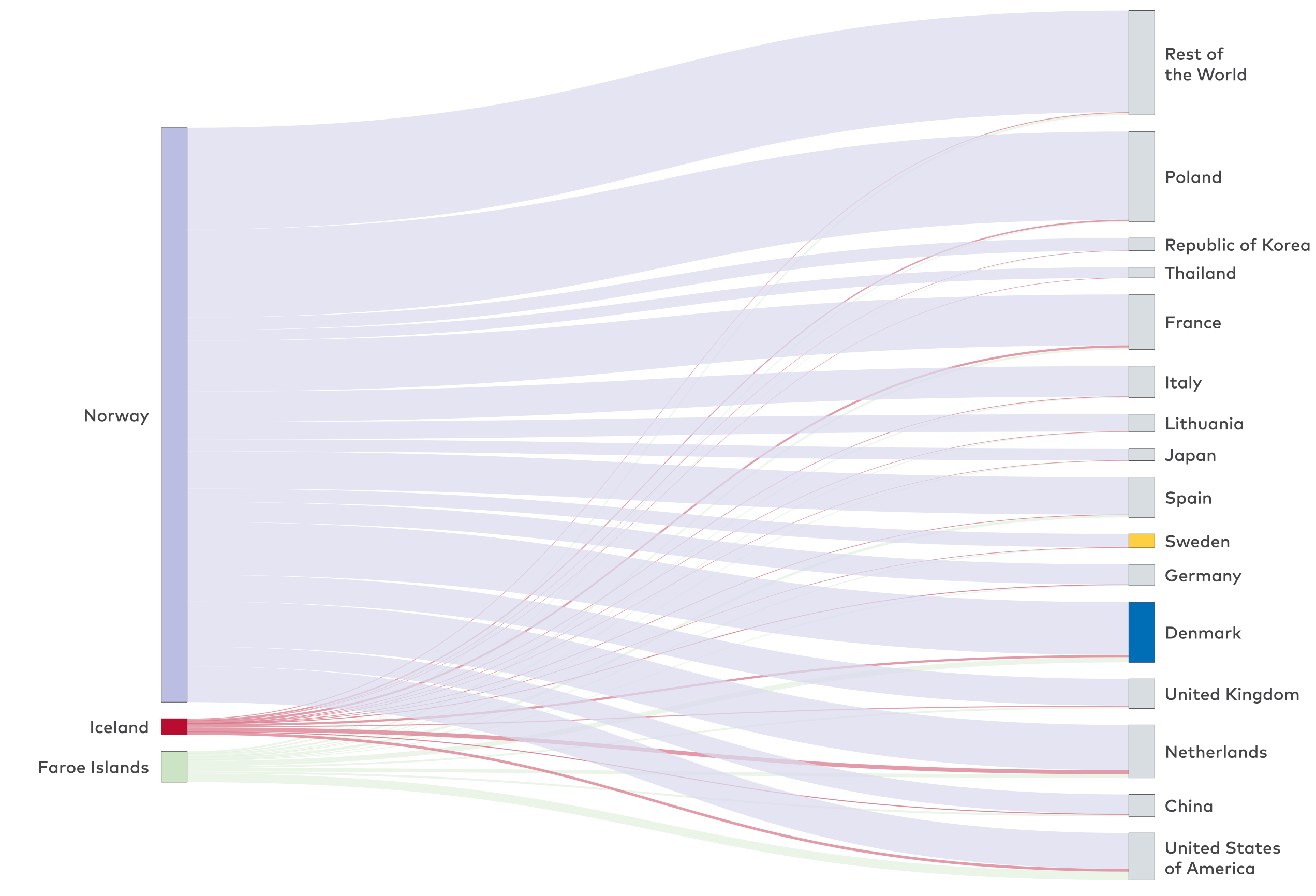
Figure 5-3 Most important export destinations (right) for salmonid aquaculture from the Nordic countries (left) in 2023, measured by weight
Source FAO, 2025b
5.2.2 Reducing the dependency on import of feed ingredients
Most of the species farmed in the Nordics are reliant on imported feed ingredients. Due to innovations in the fish feed industry, most ingredients originate from plants (wheat, soy, canola, legumes), in addition to fish meal and fish oil sourced from marine ingredients, and supplements such as vitamins (DNV, 2023). Feed is the most important contributor to carbon emissions from aquaculture due to feed production, manufacturing, and transport (DNV, 2023), and feed costs make up around half of the production costs for Atlantic salmon (Misund, 2022). The vast majority (92%) of around two million tonnes of feed ingredients used for Atlantic salmon farming in Norway in 2020 were imported (Aas et al., 2022), rendering the industry susceptible to disruptions and price changes in global fisheries and agricultural supply chains. Increase in feed prices contributed to the doubling of the production cost per kg, as reported by the Norwegian Directorate of Fisheries (2025b), between 2018 and 2023. The Nordic countries provide much of the marine ingredients from fisheries, supplemented by fisheries in South America (Peru and Chile), and Africa (Morrocco and Mauritania).
With rising geopolitical tensions, further regionalization of feed sourcing can be a strategy to reduce vulnerability to global supply disruptions (Krause et al., 2025). In line with this, to improve supply chain resilience and the environmental footprint of salmon production, the Norwegian government has launched a mission to encourage the development of new feed ingredients (Norwegian Government, 2024). However, large and steady volumes will be needed to replace the vast amount of such ingredients imported annually. By 2050, DNV (2023) forecasts a tripling of feed demand globally for marine aquaculture, driven by the growth in seafood demand and consequent production expansion. In mid-century, novel ingredients will have a 30% share in the feed ingredients used globally as production of algal oil, single-cell proteins and insect meal scales up (DNV, 2023). As production of these takes off, novel feed ingredient production costs are expected to reduce, making it affordable to reduce reliance on feed imports. Several novel ingredient types lend themselves well to circular business models (see Chapter 9). Examples include the use of insects or fungi that transform by-products from the food industry into high-value feed ingredients, for instance by the start-up Norwegian Mycelium (Garcia, 2025).
5.3 Opportunities and barriers
5.3.1 Growth opportunities for Nordic aquaculture
Improved management strategies to resolve fish health issues: The geographical distribution of aquaculture activity within Norway is suboptimal, with potential to improve biosecurity through changes in locality structure alone (Huserbråten et al., 2020). The Faroe Islands have less issues with mortality and sea lice. This is partly due to natural conditions and more coordinated farm management practices with a ‘one fjord, one farmer’ approach in which a single fjord can have only one commercial actor. Historically, the country has experienced significant impacts from Infectious Salmon Anemia (ISA), which led to the ‘one fjord, one farmer’ approach. This makes planning and implementing biosecurity measures and strategies easier than in Norway, where several actors operate in the same fjord system. The Faroe Islands were also early in utilizing post-smolt strategies that reduce the seawater phase. As Icelandic aquaculture grows, it can draw on learnings from Norway and the Faroe Islands.
Technological advances: Strategies and equipment are being developed to limit exposure to pathogens and reduce infestation success. Measures include sea lice traps, electrical fences, physical barriers, submerged pens, closed containment systems, breeding, and laser nodes. Novel pen technologies are also increasingly used in operation to mitigate these issues. Closed containment systems provide growth opportunities in sheltered areas, as this technology reduces environmental impact. However, maturation and investment incentives are needed to counter the added costs compared to open-net pens. The Norwegian government is planning to allow volume growth in areas where capacity has previously been reduced, if farmers opt for closed containment systems (Norwegian Government, 2025a). Submersible pens, which lower the fish to depths below most of the sea lice, have also been gaining traction. Lerøy Seafood, one of Norway’s largest salmon farmers, has already implemented submersible and semi-closed systems for more than 30% of its production (Lerøy Seafood Group, 2025).
Offshore aquaculture and co-location: Norway is now allocating area and design regulations to start offshore aquaculture in three areas (Norwegian Government, 2025b), potentially greatly increasing access to space for industry growth. Venturing into offshore fish farming involves uncertainties. For example, what would be a realistic timeframe to establish regulation? There are also concerns regarding investment costs, supply chains, spatial competition, and environmental impacts. Co-location with industries such as offshore wind is being investigated for aquaculture, including salmonids in submerged pens (Freja Offshore et al., 2025). As offshore wind is spatially extensive, co-location with aquaculture is an interesting test case for combined use of the sea (see Section 6.2). China already combines offshore wind and low-trophic aquaculture at scale in several provinces (DNV, 2024b). Europe hosts several research projects on co-locating low-trophic aquaculture and offshore wind, with several pilots such as the Danish Krieger’s Flak wind farm (Vattenfall, 2024). Co-locating seaweed and salmon farming has also been tested in Norway as a bioremediation measure termed ‘integrated multi-trophic aquaculture’ (SINTEF, 2023).
Land-based farms: These are starting up and scaling up production across the Nordics, especially in Iceland and Norway. Land-based facilities are a part of the supply chain in traditional salmonid aquaculture, related to life stages in freshwater. The technology has been developed to rear fish up to normal harvest sizes. Land-based farms require more energy and access to high quality water than traditional farms. The availability of geothermal energy and clean water give Iceland a natural advantage in land-based marine aquaculture. In Þorlákshöfn, an area called ‘Salmon Row’ is being developed, with five companies building farms, each aiming for an annual capacity of around 20,000 tonnes (Wilcox, 2022; Arellano, 2024). If successfully established, they will give a large boost to Iceland’s production volume, currently around 50,000 tonnes.
Innovative end-uses for seaweed: There are many potential end-uses for seaweed: food, methane-reducing feed additives, alternative proteins, biostimulants, bioplastics, fabrics, nutraceuticals, pharmaceuticals, and construction materials. The World Bank (2023) recently evaluated the viability of these applications, judging the most promising short-term uses to be biostimulants, animal feed, pet food and, potentially, methane-reducing additives. In the medium term, nutraceuticals, and possibly alternative proteins, are expected to become established applications (DNV, 2024b). In addition, ecosystem services from seaweed cultivation, such as carbon sequestration, nutrient sequestration and biodiversity gains can be monetized if crediting schemes are developed along with the required monitoring, reporting and verification approaches.
5.3.2 Barriers to aquaculture growth
Biological challenges like sea lice and diseases are shaping salmon farming and their associated costs are massive (Misund, 2022). These issues compromise the welfare of farmed fish and pose a serious threat to wild salmonid populations. Sea lice represent the single greatest challenge, as their prevalence directly limits the industry's potential for growth. Continued efforts are being made to mitigate spread of disease from one area to another, as some may be endemic in one area but non-existent in another. The industry frequently experiences periods of intense biological pressure, amplified by high production intensity. During such times, biosecurity concerns may be deprioritized, thus increasing vulnerability to disease outbreaks and operational disruptions. One example is wellboats travelling between areas that should remain biologically isolated. External issues like harmful algal blooms and jellyfish are also causes for concern, as effective mitigation measures are limited. Escaped salmon remain a major concern due to their genetic impacts on wild stocks. Additionally, benthic impacts from discharge of biological waste and use of anti-fouling compounds like tralopyril and copper raise environmental alarms.
Fish welfare is under pressure as from thermal and mechanical treatments used to combat sea lice infestations. Sea lice management is mandated by regulations and often comes at the expense of animal welfare. Fish mortality rates have seen an increasing trend over the past decade in Norway, reaching a peak of 17% in 2023 (Moldal et al., 2025), much higher than the stated governmental goal of a 5% maximum. This highlights the complex trade-offs in sustainable aquaculture management. Use of cleanerfish that eat sea lice as a mitigating measure is decreasing due to animal welfare concerns for the cleanerfish (Norwegian Directorate of Fisheries, 2025e). Freshwater and medicine-based treatment methods are also used to reduce the impact on the farmed fish.
Changes in the marine environment are an emerging concern. Sea lice development and infestation pressure are closely linked to sea temperatures, with warmer periods often triggering rapid increases in sea lice populations. With climate change and continued ocean warming, there is growing risk associated with both intensified sea lice outbreaks and more harmful algal and jellyfish outbreaks. Similarly, the strength and frequency of marine heatwaves are likely to increase (Grefsrud et al., 2025). This underscores the increasing importance of effective management strategies and innovative solutions to biological and non-biological challenges alike.
Regulatory instabilities and inefficiencies are at times seen as a barrier to growth. For example, Iceland has experienced incidents with outbreaks of sea lice and disease, highlighting the need to modernize regulation. Regulatory updates are currently ongoing in Iceland, inspired by Norwegian and Faroese regulations. The Norwegian regulatory system is also subject to change, following a broad political settlement regarding regulatory strategy. Along with the introduction of a ground rent tax, the uncertainties surrounding regulatory strategy have hampered and delayed new investments.
Identifying scalable market applications is a challenge for growth in seaweed production. Seaweed farming in Europe differs from other types of aquacultural practices, as the motivation behind production is not necessarily driven by product demand. In fact, it has so far been challenging to find market applications for seaweed farmed in Europe, despite its various potential uses. One of the main motivations behind establishing a seaweed cultivation industry is the potential to produce biomass with low environmental impact, which is reflected in several EU initiatives (DNV, 2024b).
5.4 Scenarios for the Nordic aquaculture sector
Nature First | Novel technologies are being widely adopted to reduce environmental impact from open-net finfish farming, based on regulatory requirements and consumer demand. Collection and circular use of sludge to reduce the nutrient load from the industry is scaled further. Technologies for closed systems will reduce the effects from pathogens, harmful algae and jellyfish, benefitting fish health and welfare as well as reducing production costs. Scaling the production of novel fish feed ingredients reduces the carbon footprint of the aquaculture industry, despite short-term increases in feed costs. Scaled production of seaweed and other types of low-trophic aquaculture, with end-uses that are beneficial for the environment. Examples include purpose-built seaweed initiatives developed for restoration, nutrient and carbon sequestration, and in seaweed production in combination with offshore wind or as part of integrated multi-trophic aquaculture systems with salmon. |
Constant Compromise | Aquaculture regulations continue as they are now, often failing to prevent and reduce environmental impact. This leads to consistent and relatively high pressure of pathogens and biological risk. Higher production costs and issues related to compromised animal welfare will increase gradually, but not sufficiently to offset increasing global demand for salmon produced in the Nordics. Harmful algal and jellyfish blooms will continue to affect the industry with increasing frequency and severity. Low-trophic aquaculture will increase in some regions, but slowly. Only the companies with long-term financial backing will be able to survive. |
Regional Rivalry | The salmon industry faces increasing issues with sourcing input materials such as feed, particularly from sustainable sources. Feed prices increase, and subsequently production costs too, potentially hurting demand. Production development is highly uncertain, due both to high costs and increasing trade barriers for Nordic aquaculture trade with regions beyond Europe. Little incentive to develop new land-based and offshore aquaculture systems in the Nordic region, but developments in these technologies continue in other regions to grow local supplies. Novel feed ingredients are developed, driven primarily by the need for improvements in sourcing rather than for their sustainability credentials. High costs of other feed ingredients offset the price of novel alternatives, making them relatively cheaper. Likewise, processing is also increasingly conducted in the Nordic region rather than in other countries. |
Growth First | Production of the most valuable finfish species is intensified, with strong profit-driven motives to reduce fish mortality and introduce new technologies. Total production increases, compromising local coastal environments. Intensification coupled with climate change increases the frequency in mass mortality events in some regions. Such crashes can lead to production being moved to new areas such as Iceland and Greenland, to land-based facilities, or further offshore. Meanwhile, global sourcing of feed continues with reduced focus on the sustainability of feed sources. Low-trophic species such as seaweed and mussels receive little consideration. |