3. Nordic ocean ecosystems
The marine environment of the Nordics spans several sea areas, or large marine ecosystems (LMEs), including the Canadian East Arctic (west Greenland), Canadian High Arctic (north Greenland), Greenland Sea, Barents Sea, Norwegian Sea, North Sea, Baltic Sea, Faroe Plateau, and Icelandic waters (Figure 3-1). In addition, the Arctic Ocean and broader North Atlantic are of close relevance to the Nordic economy. Together, these vast sea areas host a wide diversity of species and habitats that provide opportunities for marine activities and resource use. But the systems are also under stress from human pressures and climate change, which may limit the prospects for development of some marine sectors. Together, these aspects raise the need to include sustainability considerations in the future development of all marine sectors in the Nordic region. This chapter offers an overview of the marine ecosystems of the Nordics, with a focus on the ecosystem services, pressures, and trends as well as prospects of conservation.
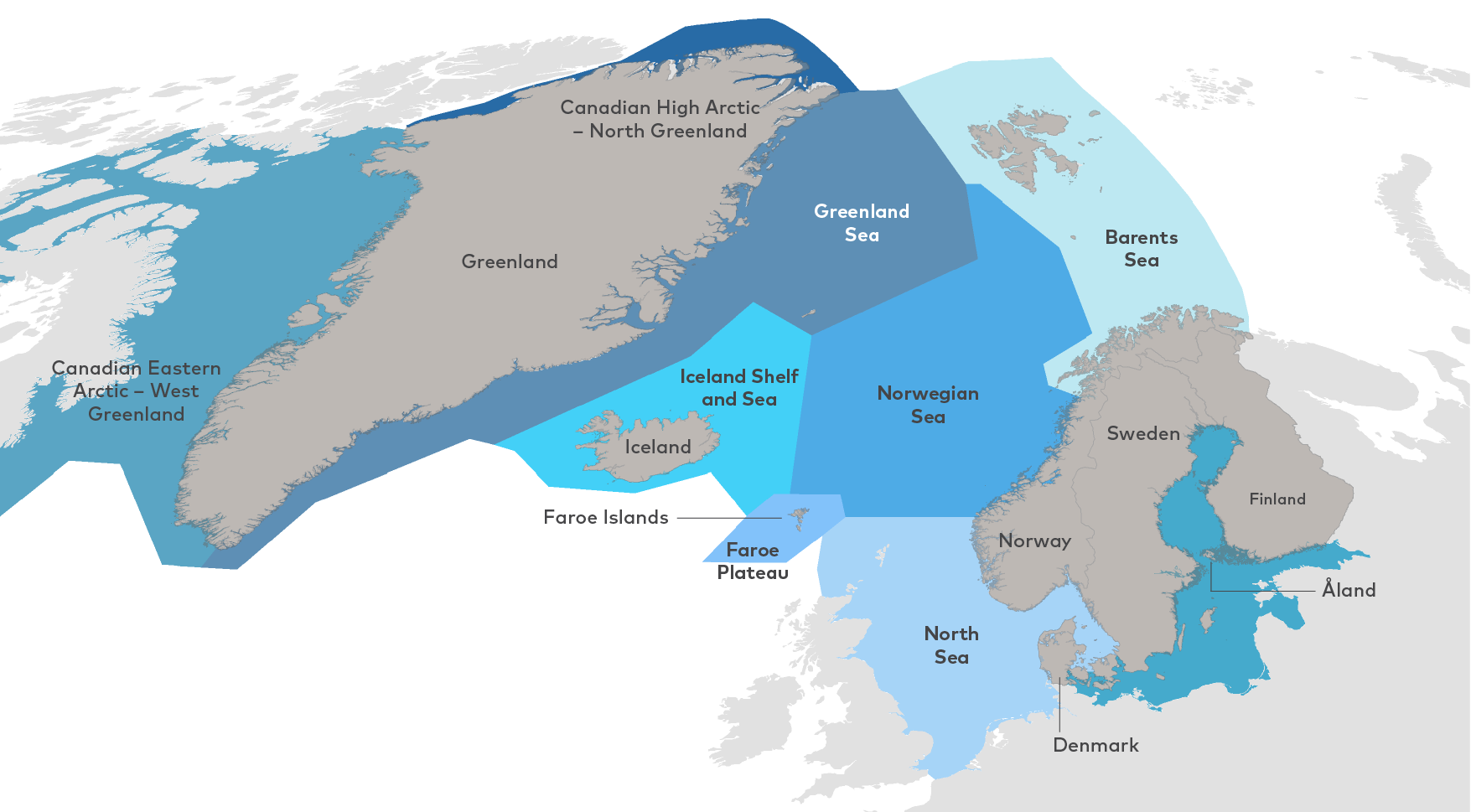
Figure 3-1 Large marine ecosystems of the Nordic region
3.1 Economic dependency on the marine ecosystem and its services
Several ocean sectors in the Nordics, like others worldwide, are strongly dependent on the marine environment and the services it provides. Marine ecosystem services can be grouped into provisioning (e.g. seafood), supporting (e.g. nutrient cycling, habitat provision), regulating (e.g. coastal protection, carbon sequestration), and cultural services (e.g. recreation, tourism) (Ahtiainen and Öhman, 2014). The interactions between marine sectors and these services are complex: some activities negatively affect marine species that underpin key services, while others depend directly on them. Figure 3-2 illustrates these dynamics across existing marine protected areas in the Baltic Sea, the North Sea, and the Northeast Atlantic, highlighting how both land-based and marine activities depend on marine species groups or affect these (Lusseau et al., 2025). Fisheries and tourism are the sectors that depend most clearly on the presence and health of certain species groups or natural habitats, as illustrated by the green links in the figure. Red links indicate the impacts from economic activities on species groups. Next, we review specific human-induced environmental pressures that drive ecosystem impacts in the Nordics.

Figure 3-2 Positive (green) and negative (red) interlinkages between key marine species and industrial and human activities at sea and on land in marine protected areas in the North Atlantic, the North Sea, and the Baltic Sea (Lusseau et al., 2025)
3.2 Environmental pressures
This section presents environmental pressures on Nordic sea areas, roughly in order of their significance of impact according to the International Council for the Exploration of the Sea (ICES) ecosystem overviews (ICES, 2025a), which provide syntheses for broader North-Atlantic ecoregions.
3.2.1 Selective extraction of species
Selective extraction of species is predominantly driven by commercial fisheries in the form of targeted extraction and/or incidental bycatch (ICES, 2025a). Fishing a species has a variety of impacts on the marine ecosystem. It can lead to changes in biological communities and food web interactions, which could reduce biodiversity and influence other fisheries. Long term overfishing influences the sector itself by reducing yields, triggering fisheries collapse, and may lead to negative impacts on the broader ecosystem. As seen in some Nordic stocks, actions for sustainable fisheries management can remediate and mitigate negative effects and contribute to the future development of the fisheries sector. However, several stocks and food webs in Nordic sea areas remain vulnerable.
3.2.2 Physical seabed disturbance
Seabed disturbance consists of substrate abrasion, resuspension, removal, or smothering (ICES, 2025a). Bottom-contacting fishing gear like bottom trawls, bottom seines, dredges, and beam trawls is a major source of seabed disturbance. Other activities that contribute to this pressure include cable laying activities and physical seafloor installations in connection with the establishment of marine infrastructure, navigational and capital dredging to support navigation, and coastal development. Seabed disturbance contributes to habitat loss and reduced biodiversity, with indirect but significant impacts on ecosystem composition and dynamics. Physical seabed disturbance can be addressed through regulations, habitat restoration activities, and the general enforcement of marine policies (e.g. marine protected areas), and in some cases be mitigated via nature-inclusive designs.
3.2.3 Marine litter
Marine litter consists of manufactured materials that are discarded, disposed of or abandoned in the marine and coastal environment. It is introduced into marine ecosystems through local human activities such as fisheries, maritime transport, wastewater, military, and tourism, as well as litter transported from elsewhere by currents. Ghost gear represents a considerable challenge, as it can continue to trap and entangle fish, birds and marine mammals for years after being lost (Tschernij and Larsson, 2003). In the Nordics as well as globally, plastics are a key contributor to marine litter, this being the most persistent material (ICES, 2025a). Impacts include habitat disturbance, entanglement, and ingestion. The latter is of particular concern since plastics have been found in the guts of a variety of organisms, including zooplankton, fish, birds, and humans (Adamovsky et al., 2021; Savoca et al., 2021).
Despite negotiations, UN member countries were recently unsuccessful in establishing a Global Plastics Treaty (Stallard and Poynting, 2025). However, with a growing array of strategies, sustainable alternatives, and innovative technologies to help manage plastics from production to disposal, there are numerous opportunities for Nordic countries to invest in impactful solutions across the entire plastic value chain.
3.2.4 Contaminants
Contaminants (e.g. persistent organic pollutants, polycyclic aromatic hydrocarbons, and heavy metals) are introduced into marine ecosystems through a variety of activities, such as shipping, oil and gas extraction, and fisheries, as well as through wastewater discharges and deposition from land-based industries. Among the sea-based activities, shipping is a major source for the Baltic Sea and North Sea (ICES, 2024a-b), as are fisheries for the Faroe Plateau (ICES, 2023). In the Norwegian Sea, polycyclic aromatic hydrocarbons are linked to local petroleum activities while persistent organic pollutants are linked to activities outside of the ecoregion (ICES, 2022). Long-range transport of contaminants from outside the ecoregion is a significant concern for most Nordic marine ecosystems, but the reverse impact of the Nordics on other ecoregions can also be an issue. Effects on marine life can be both acute and chronic, leading to reduced productivity, developmental deformities, and impaired physiological function. On an ecosystem level, impacts on habitats and biota can be widespread, long-lasting, and cumulative. Collaboration among Nordic authorities in contaminants’ sectors has contributed to shaping European and global regulations, promoting safer and more sustainable chemical management (Nordic Council of Ministers, 2024), however there remains a great need to deepen our understanding of the occurrence and effects of both currently known and more recently introduced contaminants (OSPAR, 2023).
3.2.5 Underwater noise
Underwater noise emanates through impulsive noise and continuous noise. Impulsive noise is typically short-lasting and occurs with high intensity in connection to, for example, pile driving, seismic surveys, and military activities. Continuous noises have more stable sound profiles, originating from activities such as shipping, fishing, oil and gas extraction, and offshore wind energy generation. The North Sea basin is subject to some of the highest levels of impulsive noise in the region, due to extensive exploration activity where seismic surveys are a dominant source (OSPAR, 2023). Pile driving, such as for the installation of bottom-fixed offshore wind turbines, also contributes to impulsive noises. In the southern parts of the North Sea, along major shipping routes, low-frequency noise exceeds the natural level of 20 decibels more than half of the time (OSPAR, 2023).
Consequences of such noise pollution include stress, behavioural disturbances, and effects on the communication and foraging activities of animals, while high intensity noise even can lead physical injury. Cetaceans are especially vulnerable to both impulsive and continuous noise (OSPAR, 2023).
3.2.6 Introduction of non-indigenous species
The introduction of non-indigenous species is of concern for the North Sea, the Baltic Sea, and the Arctic Ocean. The annual discovery of non-indigenous species in the North Sea has steadily increased since the 1990s (ICES, 2024b). Non-indigenous species in the marine ecosystems are carried primarily through the maritime sector via ballast water and hull fouling. Observed ecological impacts includes outcompeting native species, changing chemical compositions of habitats, and fouling on aquaculture equipment and fishing gears. A clear example is the round goby (Neogobius melanostomus) in the Baltic Sea, which has been shown to negatively affect several native species (Thor et al., 2023).
Since 2017, the International Maritime Organization (IMO) has enforced legislation to reduce the spread of non-indigenous species through ballast water (DNV, 2021). The spreading of species through biofouling is still an issue. In Norway, new regulations are under consideration to require hull cleaning before entering Norwegian waters (Erlandsen, 2025). By setting requirements for proactive hull cleaning, the Nordics may develop early experience with these technologies, allowing future potential exports to other markets that may later adopt similar regulations. Uptake of novel technologies to reduce biofouling could also reduce ship resistance, and hence contribute to energy efficiency.
In some cases, non-indigenous species are being valorised as new fisheries resources. Two examples are the aforementioned round goby in the Baltic Sea and the king crab in the Barents Sea, which have been taken up as regulated fisheries resources in some countries.
3.2.7 Nutrient and organic enrichment
Eutrophication refers to the enrichment of marine environments through the excess presence of nitrogen, phosphorus, and silica compounds. Nutrient enrichment arises from multiple sources, including domestic waste, industrial activities, sewage, and agriculture (Andersen et al., 2017). Nutrients from aquaculture production is also an issue but regarded as fairly small relative to other aquaculture impacts, despite disturbances in some fjord systems (Grefsrud et al., 2025). Eutrophication occurs in several areas of the Nordic seas. Eutrophication disrupts ecosystems by intensifying algal blooms, increasing water turbidity, altering benthic communities, and reducing oxygen availability (Dorgham, 2013). Long-term oxygen depletion makes marine habitats unsuitable for fish and other marine organisms.
In the Baltic Sea, nutrient enrichment has had a big impact on the marine environment, although other factors also influence ecosystem change (Östman et al., 2016: Reckermann et al., 2022). Signs of eutrophication were first observed in the 1950s and a peak of nutrient loading in the 1970s and 1980s (Andersen et al., 2017). The main driver is wastewater and run-off from the Baltic Sea’s extensive catchment area, which supports a population of more than 82 million people (Svendsen et al., 2021). Substantial river inflow combined with long retention time for water within the basin contributes to this effect, which is amplified by the Baltic Sea hydrography (Andersen et al., 2017). The Baltic Sea water column is stratified, with layers of distinct salinity levels that limit vertical water exchange. Hence, eutrophication is a strong driver of oxygen deficiency in the deep water of the Baltic Sea, where an area equivalent to approximately 1.4 times the size of Denmark is now anoxic (Carstensen and Conley, 2019; Hansson and Viktorsson, 2024).
In comparison, fewer problems due to eutrophication have been identified in the North Sea. However, the Oslofjord is an example of an area with hydrographic similarities to the Baltic Sea, which is also threatened by eutrophication. Additionally, the southern North Sea receives nutrient rich discharges from major European rivers, making it a hotspot for nutrient enrichment (Skogen et al., 2014).
3.2.8 Climate change
Rising air temperatures across the Nordic region influence a range of physical factors, including water temperature, hydrodynamics, salinity, acidity, oxygen concentrations and ice cover. These shifts have far-reaching consequences for biological processes, shaping the structure and functioning of marine ecosystems. Changes in precipitation patterns can also affect the levels of run-off from land, and hence the amounts of organic matter and nutrients that are carried into the marine system (HELCOM, 2024).
In coastal areas, climate effects may be more tangible than in open seas, with impacts on habitats across the Nordic seas including rocky shores, soft-bottom habitats, and seagrass beds, consequently also affecting the associated algal and animal communities (Short and Neckles 1999; Singer et al., 2017). Coastal habitats play a crucial role in maintaining biodiversity, as they support a wide variety of species. They also serve as important spawning sites and nursery grounds for many species that migrate further offshore as adults (Seitz et al., 2014).
Species may also be directly affected by rising temperatures, with corresponding changes in distribution ranges, physiology, or population structure. One example is the commercially important cod (Gadus morhua) which is not expected to be favoured by climate change in Nordic waters, and which is already subject to overfishing and stock depletion, so that the sensitivity of populations may become even more severe (Kjesbu et al., 2022). Several fish stocks are observed to shift their distribution in response to changing conditions, including for instance North Sea mackerel (Scomber scombrus) (Jansen and Gislason, 2011), (see Chapter 4), with potential implications for fisheries and the regulation of fishing rights. Similar effects are also seen in other species groups, where the effects will vary among species and likely lead to shifts in local species abundances (Hiddink et al., 2015; Weinert et al., 2016).
Marine mammals in Nordic waters are also expected to be affected by climate change due to habitat alteration and food availability (Meier et al., 2004; Kovacs and Lydersen, 2008). A major factor influencing several species is the reduction of sea ice coverage, which serves both as a refuge and as a platform for reproduction. Rising temperatures are also expected to alter the distribution of prey species. Furthermore, warming waters may drive temperate species northward, potentially increasing competition with native species, as they move into new areas.
3.3 New nature policies shaping the future of Nordic marine ecosystems
In 2022, all the Nordic countries signed the Kunming-Montreal Global Biodiversity Framework (GBF), commonly called the Nature Agreement. It includes goals for nature conservation and restoration, calling for effectively conserving a minimum of 30% and restoring 30% of degraded nature areas on land and sea (Convention on Biological Diversity, 2022). The EU Nature Restoration Law in force since 2024 mandates the restoration of at least 20% of the EU’s degraded land and sea areas by 2030, and all ecosystems in need of restoration by 2050 (Regulation 2024/1991/EU).
3.3.1 Nature conservation
New global policies for nature conservation, driven by climate change and the need for ensuring sustainable marine resources, present an opportunity for the Nordic countries to adopt a holistic thinking to the preservation of vital marine ecosystems of the region. Collective approaches to the design and designation of a cohesive network of marine protected areas and zonation across the Nordic Seas can serve countries in developing national growth policies that are consistent with the overarching goals of the nature agreement.
The GBF calls for protection of at least 30% by 2030, of which 10% of the total should be strictly protected. Figure 3-3 shows the proportion of protected sea area based on the World Database on Protected Areas (WDPA), indicating that vast Nordic ocean areas still need to be protected to meet the goal of 30%. All countries are far from the target, but particularly Greenland and Norway have large ocean areas and current low rates of protection compared to Denmark, Finland, and Sweden. The smaller island countries Åland, the Faroes Islands, and Iceland currently protect close to none of their marine areas according to the WDPA, although Åland and Iceland have marine protected areas with status not reported to the WDPA.
As countries are developing conservation strategies, the implications for future coexistence with existing and new ocean industries remain unresolved. Understanding the combined effects from all human activities across sea basins remains a challenge, and Nordic collaborative research in this field will be imperative to guide holistic planning and integrated ocean management.

Figure 3-3 Degree of marine conservation in the Nordic countries by actual area and percentage of area, shown in relation to the 30% goal of the Kunming-Montreal Framework: note that Åland and Iceland has marine protected areas not reported to the WDPA and are not included
Source UNEP-WCMC and IUCN, 2025
3.3.2 Nature restoration
Vast areas of degraded marine coastal ecosystems in the Nordics call for large-scale restoration efforts to reach pledged restoration goals. This is both a major challenge and an opportunity. So far, restoration efforts have been fragmented, small-scale, and mainly performed by researchers or volunteers with varying success and monitoring of results over time. There is a clear need for innovation to identify the most efficient and scalable restoration techniques for the respective ecosystem types. Competence, logistics and resources from other ocean industries such as local fisheries may prove particularly valuable to establish large-scale marine restoration efforts.
Coastal ecosystems are particularly impacted by climate change and intensifying human activity. As these ecosystems generally are some of the most productive and biologically diverse, there is reason to include coastal habitats as the primary focus of restoration efforts. Several ocean habitats, including blue forest ecosystems such as kelp forests and seagrass beds, also contribute to ecosystem services that could bring co-benefits that mitigate environmental pressure, such as carbon sequestration and nutrient retention.
‘Forests’ of kelp and other brown algae are widespread coastal ecosystems across large parts in the Nordics, covering most of the rocky shores of Greenland, Iceland, Norway and the Faroe Islands (Frigstad et al., 2021). Rockweeds and seagrasses are more common in the brackish Baltic Sea. Soft substrates, which are particularly typical of Denmark, for example, are suitable for seagrass meadows. However, several seagrass meadows have declined sharply in the Nordic region over the past decades. For instance, de los Santos et al. (2019) estimated a historical loss of 67% of seagrass meadows in the Baltic Sea, the main reasons being water quality decline and disease. Losses are also seen in other habitats. For instance, Norway hosts the largest known kelp forests in Europe, currently covering 7,400 km2 (Frigstad et al., 2021), while an area of 5,000 km2 of what was previously kelp forest habitat is barren, lost to sea urchin grazing (Verbeek et al., 2021). For context, restoring 30% of the degraded Norwegian kelp forest by 2030 in line with the Kunming-Montreal Framework would mean restoring 1,500 km2 (an area equivalent to 140,000 football fields) over a five-year period.
Along with recovering lost ecosystem services and benefits, restoration efforts can also unlock novel value chains. The targeted restoration activities will in themselves require a range of support services, including materials, logistics, and operational expertise. Involving local communities in restoration efforts could help contribute to coastal livelihoods, counteracting for example effects of the ongoing decline in small-scale fishing vessels (see Chapter 4). Such win-win solutions not only support ecological recovery but also generate economic opportunities for local coastal communities. Under Ytan in Åland is a company looking to combine restoration and offshore wind with low-trophic aquaculture as a business model (OX2, 2023).
3.4 Scenarios of future marine ecosystems
Nature First | Goals for conservation, restoration, and nutrient pollution are largely met, including by implementation of national policies to support compliance with the Nature Agreement. This gradually improves the health of ecosystems and fish stocks. Climate-change effects are still acting on species distribution, but the worst effects are largely curbed due to strong international efforts on decarbonization. Fish stocks are conservatively managed and seek to improve ecosystem functionality, with good international collaboration. Offshore wind farms increasingly support conservation and restoration targets by incorporating nature-inclusive design and acting as sensor platforms supporting ocean observation. Shipping and tourism industries are managed with a focus on reducing impacts on nature (e.g. invasive species and noise). |
Constant Compromise | Pressures on the marine ecosystem continue along current trends. This leads to some improvements in international collaboration, but with large residual difficulties in other Nordic sea areas. The Baltic Sea faces slight recovery due to collaborative efforts to handle nutrient discharge from agricultural run-offs. Fisheries management follows trends similar to today, with a focus on managing stocks with little consideration for ecosystem functionality. Offshore wind farms create de facto marine reserves that could drive recovery and spillover of specific fish species to nearby areas. |
Regional Rivalry | International collaboration weakens, causing difficulties in meeting targets such as the Nature Agreement. Goals for conservation, restoration, and nutrient pollution are largely ignored if they require international cooperation. Local and national efforts are prioritized, but not if they come into conflict with interests such as national security or competitiveness. Cross-border impacts are increasingly ignored in environmental management. Higher nutrient loads persist in the Baltic Sea, due to reduced effectiveness of the HELCOM HELCOM – The Baltic Marine Environment Protection Commission – also known as the Helsinki Commission (HELCOM). |
Growth First | Strong focus on economic growth drives ecosystem impacts across Nordic sea areas. Climate change causes large-scale ecosystem shifts, with northward migration of many species contributing to altered predator-prey dynamics that disrupt sensitive Arctic ecosystems. In the Baltic Sea, eutrophication intensifies due to growth in agricultural production, and reduced efforts to address this. Elsewhere in Nordic ocean areas, fisheries management will not be enforced, and when threatened with collapse in specific stocks, new opportunities will be sought in lower-trophic species or in new areas such as the Arctic. |