Indigenous tourism in the European Arctic: Reclaiming pasts and strengthening futures
Summary and reflections from the European Indigenous Tourism Conference EITC 2025, Inari 20–22 May 2025
University of Lapland, Finland
Aalborg University, Denmark
UiT the Arctic University of Norway, Norway
Umeå University, Sweden
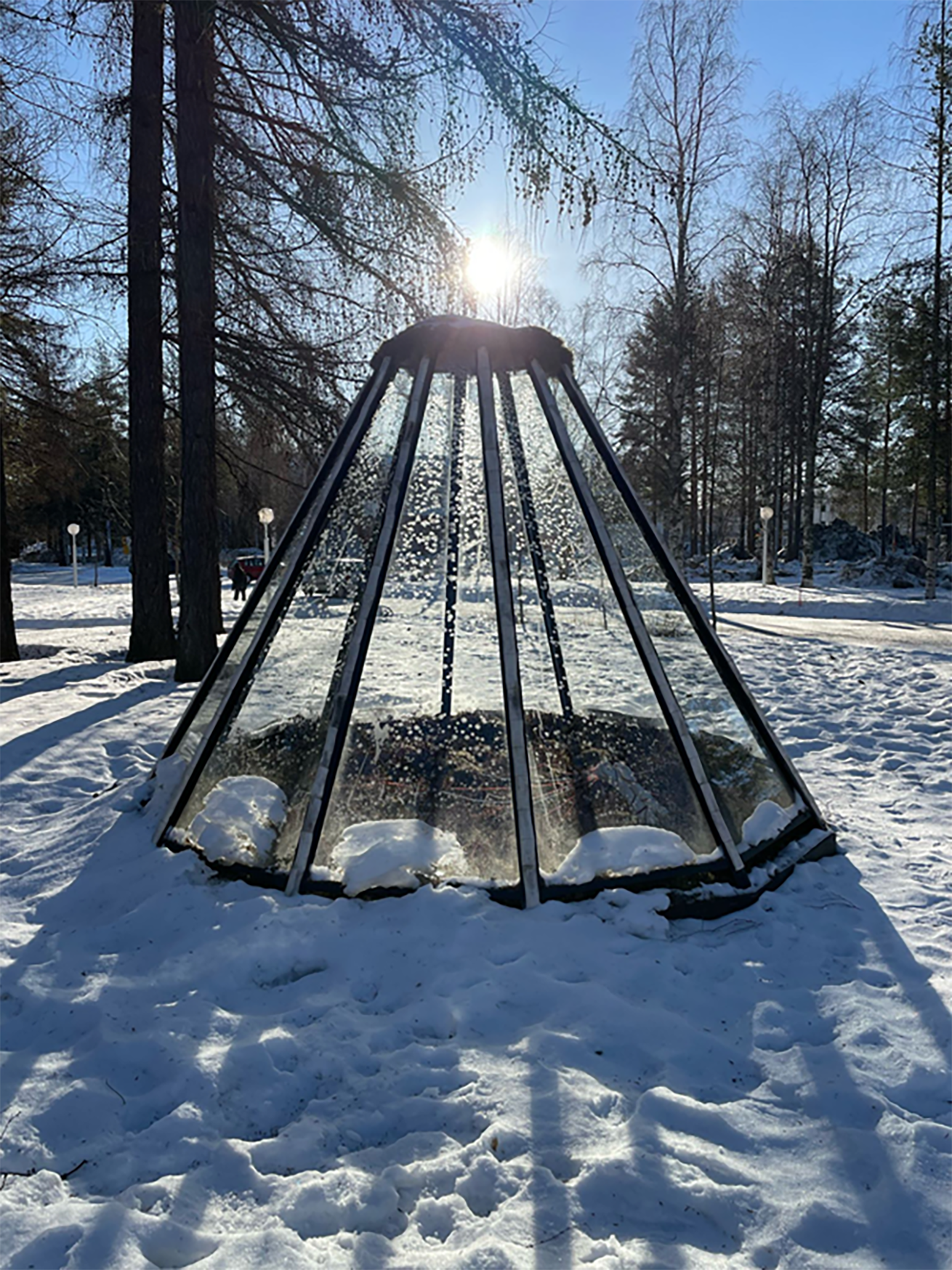
This environmental and spatial artwork named Guldalit, Čatnasit, Ciekkadit, that is ‘to listen, to be bound, to drive in’ is located on the University of Lapland campus in Rovaniemi, Finland. The photographs [in this report] show how the piece transforms with the seasons, co-existing with its surroundings. Inside the lávvu a layer of forest floor is placed, cut off from the land that sustains it. Deprived of its connection to the earth, it withers and dies – yet, at the same time, it lays the foundation for new forms of life, new plants rise inside the lávvu. The glass lávvu can both destroy and protect. It tells a story that parallels the relationship between museums and the Sámi People – how cultural heritage, when placed behind glass, is preserved but also prevented from engaging with the networks of relationships to which it belongs
as argued by Áile Aikio, Postdoctoral Researcher, University of Lapland, Finland in her keynote presentation Čiktit firpmiid, čuoldit hearvvaid. Rethinking Museums at the Indigenous Tourism Research Symposium of the European Indigenous Tourism Conference EITC 2025 in May 2025.