3 Telling our story
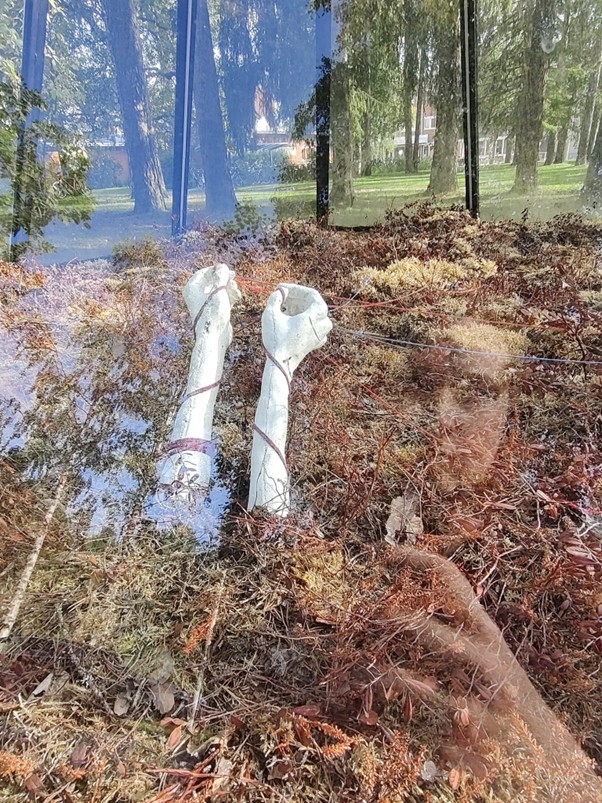
In her keynote, Áile Aikio touched upon the delicate balance between protecting and destroying cultural heritage by ‘showcasing’ it. Using museums as an example, she pointed to how Indigenous cultural heritage when ‘put behind glass’ was not only preserved, but also prevented from engaging with rich networks of relationships to which it belongs and is rooted. As explained by Aikio, museums have been and still often are colonial institutions:
Čiktit firpmiid, čuoldit hearvvaid. Rethinking museums:
Museums are not neutral, universal, or apolitical institutions. They are European creations, grounded in European – white, middle- and upper-class – values, worldviews, and ways of knowing. More than that, museums as we know them were made possible by colonialism. As Denning puts it: ‘Museums exist because colonization efforts allowed the plunder of natural and man-made artifacts.’ Ethnographic museums, in particular, played a key role in justifying and reinforcing colonial rule. They presented Indigenous peoples as the ‘exotic other’ – people frozen in time, passive, and incapable of progress. And hence, if Indigenous peoples were doomed to disappear anyway, taking their lands and resources was simply part of ‘progress’. At the same time, collectors aimed to collect the last traces of these supposedly vanishing cultures – to preserve them in museums for study. While collecting there was little or no concern for the Indigenous communities themselves. Our traditions, languages, and heritage were being erased from our daily lives, even as our objects – and the bodies of our ancestors – were collected into various collections, far from their lands and out of reach of their living relatives.(Áile Aikio, Postdoctoral Researcher, University of Lapland, Finland)
Similarly to museums, tourism can both protect and destroy. As Suvi West concluded at the end of the conference, when done correctly, tourism can protect Indigenous land, culture and future generations. It can, for example, be a way in which Indigenous peoples can continue their traditional livelihoods and live on their own land. Speakers emphasised throughout the conference that tourism can support the revitalisation of Indigenous cultures destroyed by colonialism and their transmission to the next generations. One central way in which to do so is by way of storytelling. Telling stories of co-existing in and with place, is fundamental to the ways in which most Indigenous tourism entrepreneurs work with tourism. Storytelling was in many ways an important topic at the conference, and it was highlighted that Indigenous people are not tourism products, but storytellers.
Many speakers underlined Indigenous tourism companies as disseminators of knowledge. By visiting Indigenous tourism companies, tourists learn about Indigenous peoples and nature and their attitudes towards both change. They bring new knowledge home with them and share it with their friends and relatives. In this way, the work done in Indigenous tourism companies is not “just tourism business” but has a deeper meaning that may often be ignored by those not involved in doing the work, even within the Indigenous community. As Suvi West concluded, Indigenous tourism entrepreneurs tell the truth that is needed before reconciliation. Related to this, Chief Frank Antoine reminded that the land, water and animals do not have a voice – Indigenous people are their voice, and they should teach other humans to respect the land, water and animals.
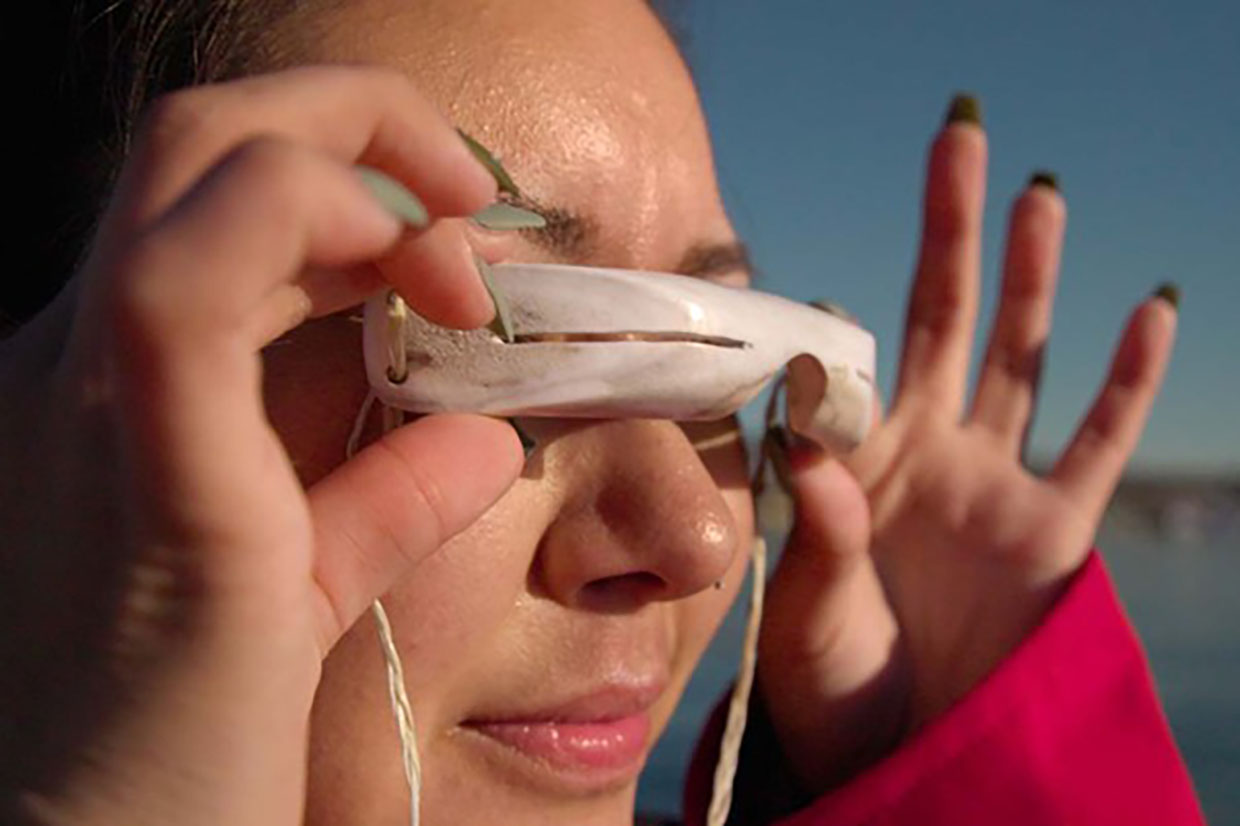
One recent example of how Indigenous ways of life can become embedded in tourism storytelling is the brand video Greenland Goggles 2.0. See Greenland through local eyes produced in house by Visit Greenland (Figure 11). The video uses the traditional Inuit snow goggles to tell stories about Inuit ingenuity, heritage and connection to place as part of the tourism experience and won bronze at the prestigious Lovies Awards in 2025 for its digital creativity and innovation.
There are however challenges with storytelling. While Suvi West argued in her keynote that ‘everything is storytelling’, she also pointed to the risk that stories told by a Sámi person may be interpreted as stories about all Sámi, while stories told by a person belonging to the majority population are not interpreted in the same way. A Sámi person may thus easily become responsible for the collective Sámi identity, while others have the freedom to only be responsible for themselves.
Suvi West elaborates on storytelling from an Indigenous perspective. A Sámi storyteller is not subject to the Western freedom the same way as a non-Sámi person is. A Sámi person, with long and deep connection to the land, heritage and communities, must, in contrast to the non-Sámi, seek permission from others, nature or from inner voices. Not all stories are free to use. Sacred places might deserve more than just being seen with a respectful gaze. Rather, respect could imply not to be told about, not to be visited. Despite a story or a place being a rational choice to make use of from a Western or capitalist perspective; it might still not receive true permission to be told. Suvi West argues that being a Sámi is not enough to be able to decide which stories are to be told. To be able to accomplish such a quest, the Sámi must also actively decolonise their minds. According to her, Indigenous tourism entrepreneurs should be in control of the stories told about them, which has often not been, and still is not always, the case. As Suvi West concluded, Indigenous tourism is a way to take the power and stories back to Indigenous people. Sébastien Desnoyers-Picard recollected this clearly also in his talk: ‘If you are not Indigenous, don’t tell our story. Let us tell it ourselves.’
A learning from the conference has been to use these insights to rethink conference formats along Indigenous ways of thinking, for instance by incorporating place-based storytelling formats into this. As some asked along the days, how to connect with, learn from and pay tribute to land while placed within a conference venue for three days? And how to tell often difficult, sensitive and complex stories in front of a microphone and hundreds of audiences? Not many feel comfortable, seen or heard within such frameworks.
Fortunately, small pockets of ‘resistance’ emerged throughout the days. An example was a spontaneous Qulleq (Inuit oil lamp) ceremony arranged in the hotel bar by Sofiánguak Kristiansen, owner of Sermeq Pottery in South Greenland, who in her work with clay has been a vehicle to reintroduce the Inuit oil lamp for cultural, spiritual and ceremonial purposes. During the gathering, she explained about past and emerging roles and meaning of the qulleq. She encouraged participants to join after turn in keeping the small flame lit and think of something or someone dear to their hearts. Many looked deeply moved as they sat down to quietly nurture the flame (Figure 12).
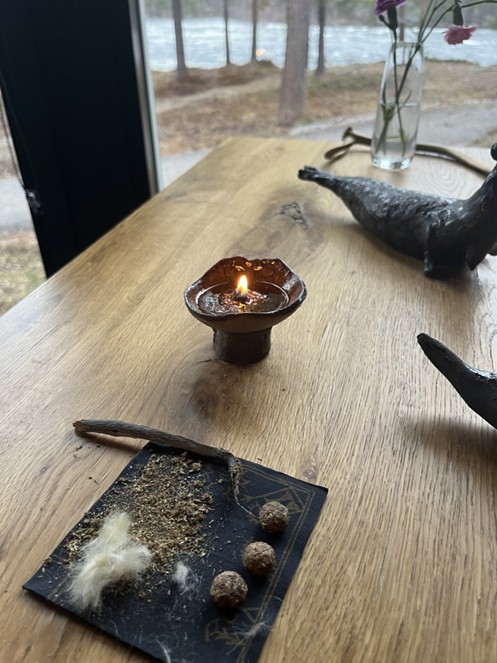
The qulleq ceremony encourages us to be more sensitive, reflexive and experimental in designing Indigenous sharing and learning formats and spaces with an attention to how storytelling can be brought forward, but also how more quiet voices can speak out and be heard.
- Storytelling conveys Indigenous culture and ways of life without ‘freezing’ them.
- Indigenous tourism entrepreneurs tell their own story.
- Indigenous tourism entrepreneurs should be in control of their own story.
- Storytelling is empowering but sharing stories is also a sensitive practice, that may require us to rethink the formats and frames around it to allow for everyone to find and raise their voice.
One of the papers presented at the Indigenous Tourism Research Symposium of the conference discussed stereotypes and how to counter them with storytelling:
When Indigenous culture experiences spur negative communication in social media: reasons for stereotypes and implications for Sámi tourism
Indigenous tourism has potential for value impacts far beyond the economy. However, there are challenges related to stereotypes shown in marketing and as harassment on social media. Our study explores the main reasons and consequences of stereotypical perceptions on social media related to Sámi cultural experiences. The case studied is the opening ceremony of the European Capital of Culture event, Bodø 2024. The main data analysed are social media comments, newspaper articles and a few interviews. The opening in the harbour involved about 20,000 visitors in addition to being shown on national and international TV. The show included different cultural performances, including two sequences with Sámi experiences. The latter triggered strong reactions such as “There was a bit too much joik,” or “We stand on Norwegian soil – not Sámi.” Many comments reflect stereotyping and denial of territorial belonging, creating conflicts and misunderstanding. One central reason is limited knowledge about the regional and local Sámi history. How can Sámi tourism prevent stereotypical expectations from visitors? Five practical implications are recommended to address these challenges: 1) inform and prepare visitors and marketing organizations, 2) highlight Sámi diversity, 3) use storytelling and guidance during, 4) create dialogue during, and 5) support Sámi-led tourism.” Research done by Amnesty International Norge (2023) documents that 25% of posts on Sámi in social media are negative or harassments.Rune Opdahl, Assistant Professor, Dorthe Eide, Professor, and Anastasiya Henk, Associate Professor, Nord University Business School, Norway
Another experience from exposing Sami culture at a European Capital of Cultural event is to be found ten years earlier in Umeå, Sweden. The ECoC, Umeå 2014, included substantial Sami content, also asked for from the ECoC selection panel, and visible through a year-long programme that was thematically based on the eight seasons of the Sami calendar. But as in the case of Bodø 2024, the comment feed on the Umeå 2014 website revealed similar doubts regarding the representation of Umeå as a Sami place (Appelblad, 2020).