2 Indigenous tourism and place
In this section, we draw together insights from the conference that touch on the deep connection between culture, identity and place and how, as a consequence, Indigenous tourism is always to be understood and practiced as profoundly place and culture-based. This was emphasised by Chief Frank Antoine. In his talk, he voiced that “Indigenous tourism is not a sector, it is not a product. It’s a place.” As he explained and richly exemplified, Indigenous tourism is first and foremost a medium to tell and share stories of land, of relations to land and to the people and everything else inhabiting land. Tourism in this view is not an aim or a goal, economic or other, but purely one way, next to others, in which Indigenous culture, experiences and ways of life can unfold and continue.
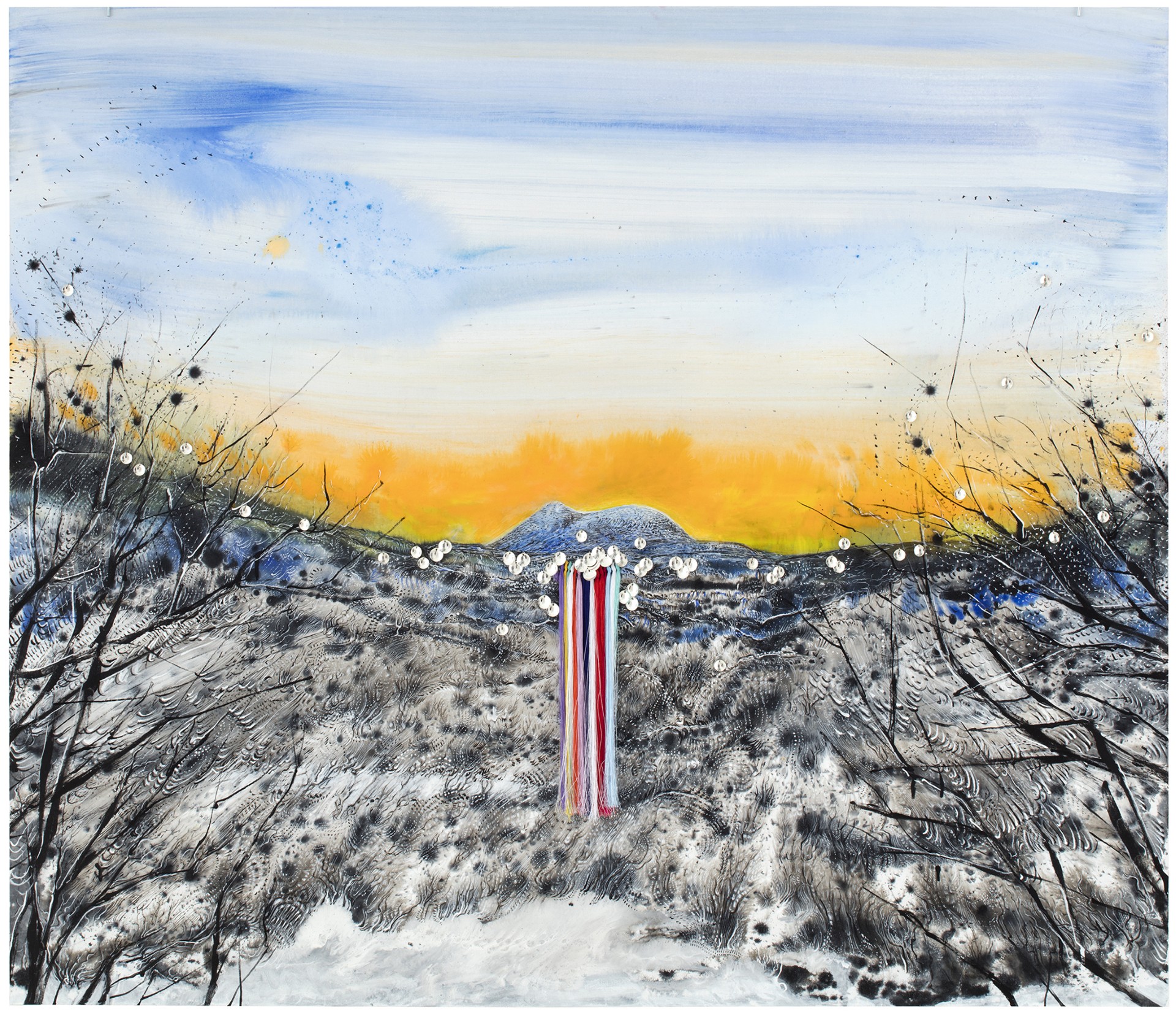
The importance of place, space and the homelands are evident among Indigenous peoples throughout the world. In Sápmi, the connection to the land is central to most Sámi artists, and Sámi art produced today. In the album ORDA – This Is my Land, the Sámi artist Sofia Jannok joiks the Sámi homeland entanglement with a sense of pride and of freedom. The visual artist Outi Pieski often incorporates traditional Sámi crafts, such as duodji (handicrafts), and materials like reindeer antlers, wool, and textiles. Pieski’s work is deeply rooted in her heritage, in the decolonial practice of giving space to traditional objects and knowledge, as well as reflecting the landscapes and knowledge traditions of the Sámi people. In the title of the painting The Sacred Mountain of Rástegáisá as a Legal Person II (Figure 4), Pieski uses the 2008 Ecuadorian constitution, along with similar legal regulations from countries like New Zealand, which recognize certain rivers and mountains as holders of legal rights. For Pieski, this aligns with Indigenous perspective where land is seen as living rather than property.
In a similar way, the Kalaallit concept of Sila signifies both physical, abstract and cosmological forces around concepts typically understood as separate in Western ontology, such as weather, a force of life and nature, life, wisdom. In an industry known for separating and commodifying tourism as products labelled as either ‘cultural’, nature-based or sustainable, Indigenous tourism challenges, dismisses and transgresses existing categories and the separation of country, land, nature, culture and practices in labelling and performing tourism.
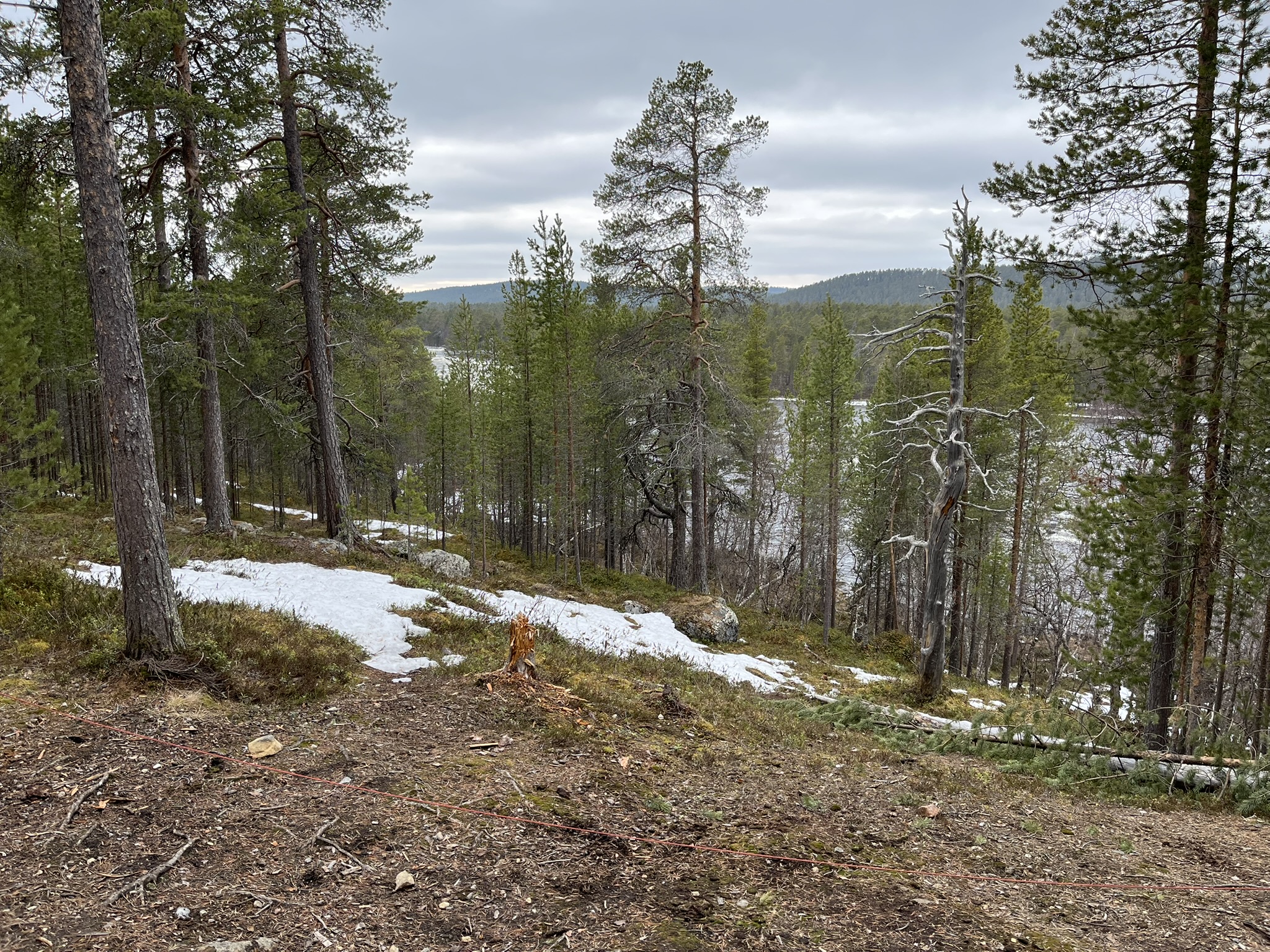
The role and integration of place in thinking and acting was prominent in presentations by many presenters such as John Barrett, Sébastien Desnoyers-Picard and Chief Frank Antoine, who all initiated their presentations by thanking and paying respect to places and their peoples – those of one’s own and of the land visited, in this case Inari. Paying tribute to the land also includes acknowledging those who have already passed-away, thus connecting the present time and place to ancestry.
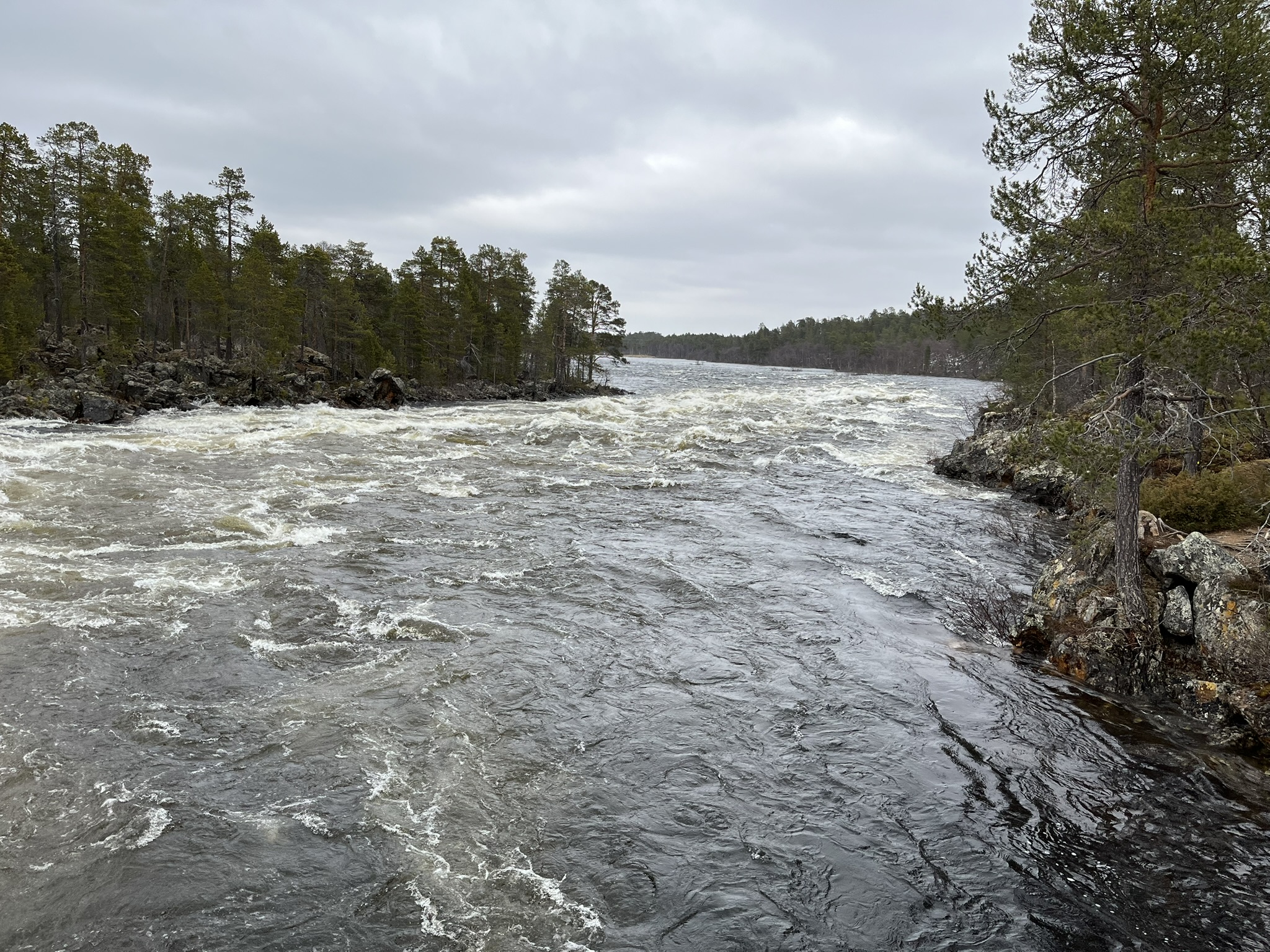
Chief Frank Antoine paid tribute to the land at Inari by offering tobacco to the Juutua River (Figures 5 and 6) on his arrival as a sign of respect. He also celebrated encounters with a reindeer he saw in the surroundings and commented on the fact that “you have more land than people.” In his talk, he highlighted the importance of healing and how the lifeblood of culture is the land and the water. He explained the origin of the name of his tourism company Moccasin Trails by referring to how he and his colleague literally followed in the footsteps of their ancestors. Indigenous tourism thus offers a way to reconnect to heritage sites, while giving visitors the possibility of joining the process of reconciliation.
John Barrett extends the power of Indigenous tourism to cultural restoration while reclaiming land and continuing the engagement with place. The last 30 years in New Zealand have been a period of strong cultural revival for the Māori, not least through tourism. Similar to elsewhere, Indigenous tourism companies in New Zealand are most often small family-businesses involving several generations. While the Māori are still disadvantaged in regard to aspects such as health and education in comparison to the white settler population, tourism has offered the possibility to maintain and transmit culture to the next generations, live on ancestral land and continuously reconnect to and with important places. As John recalls: “Know where you come from, why you are here and whom you serve.” His example demonstrates the transformative potential that tourism can have in Indigenous communities and families.
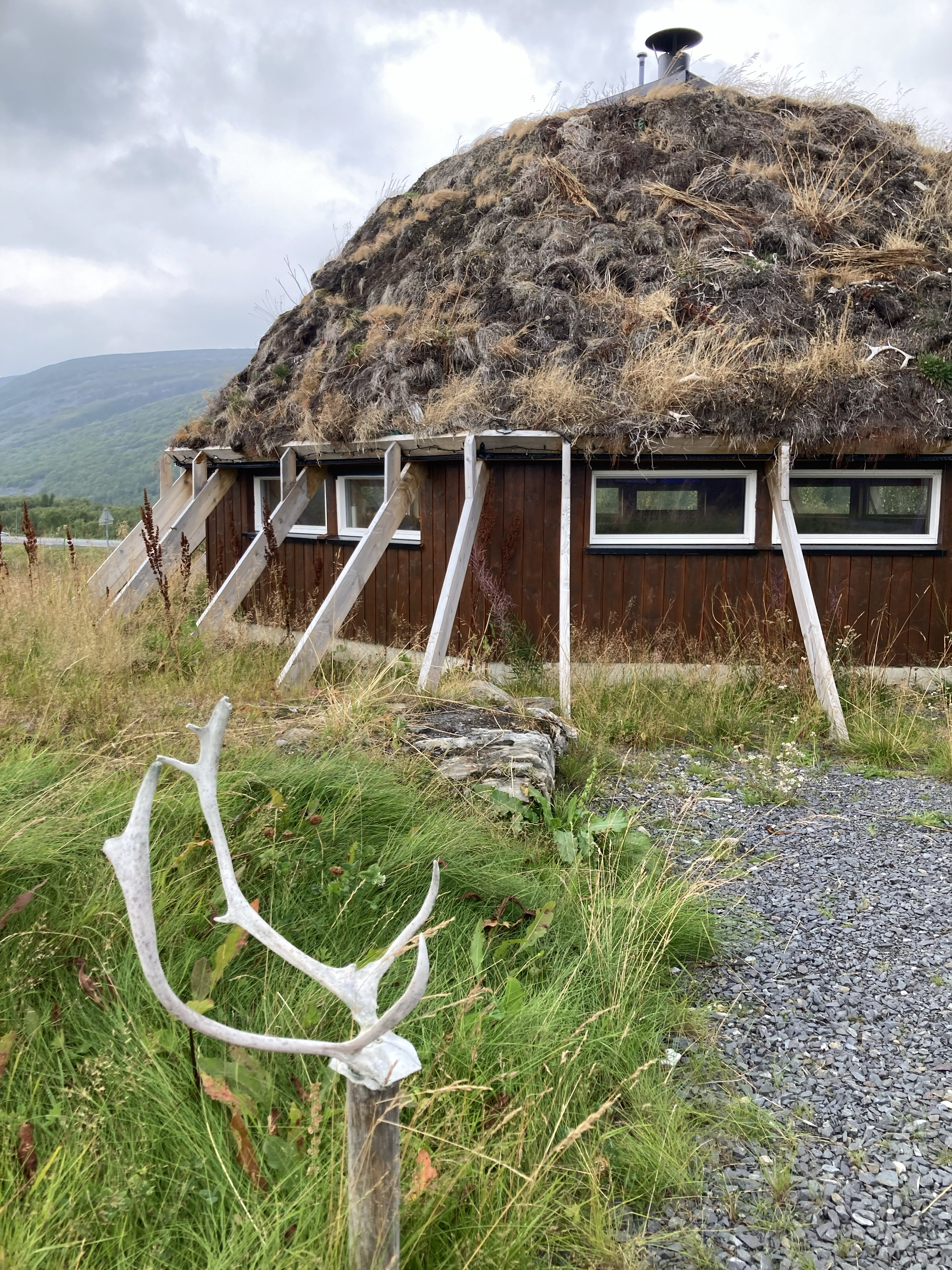
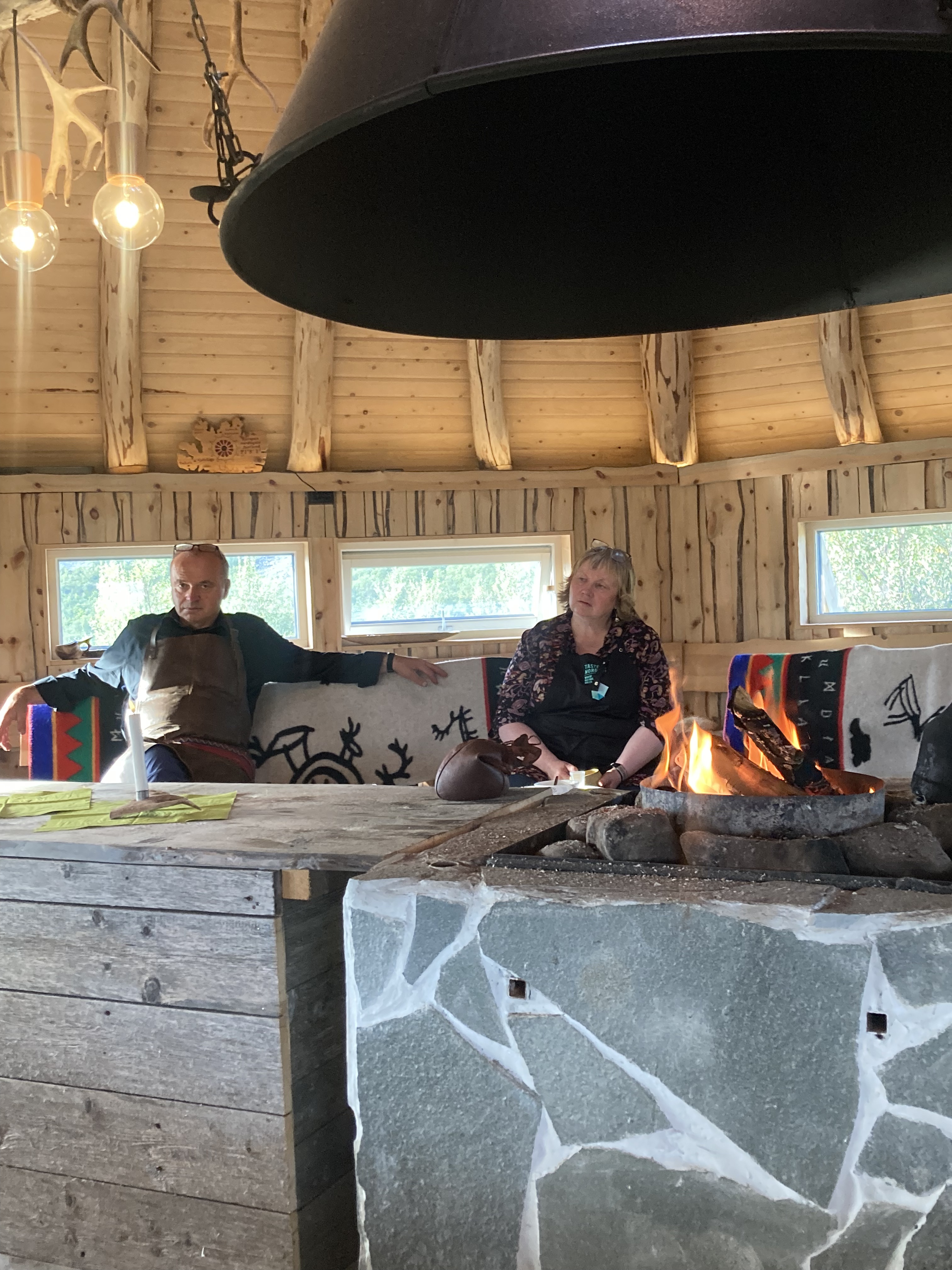
This was also very clear in the talk given by Ellinor Guttorm Utsi from Davvi Siida (Figure 7 and 8). Davvi Siida means “the land in the north where people and reindeer are together” and on the website of the tourism company, the connection is spelled out very clearly: ‘Nature is our culture’. In her talk on land and place, Ellinor spoke of the emerging threats coming with the green transition. In her view, the establishment of windmills and related infrastructure becomes a “green colonialism” (Fjellheim, 2023), since it exploits large parts of their traditional lands and threatens their livelihood. This is in Ellinor’s view not a green development, on the contrary it brings a “black and white” landscape, in sharp contrast to what she and her family value and cherish, namely the reindeer including what Ellinor recognise to be the most beautiful sound to be heard, the clattering hooves on the ground, the sounds from moving reindeer.
Her talk reminds us of how the largest biodiversity in the world is to be found on Indigenous lands and that confronting global climate and biodiversity challenges must happen in accordance with, and by learning from, Indigenous ways of living rather than through further marginalisation and injustice.
In tourism, a growing awareness is dawning on the need to foster more regenerative ways of developing places into destinations. Put simply, the mantra is to rethink tourism not as an industry or as an (economic) goal in itself but rather to see it as a tool to foster and serve more flourishing places. What characterizes regenerative tourism is thus its ability to provide nourishment for place, culture, communities and all living species in a destination. Indigenous tourism was regenerative long before the concept appeared in academic tourism research, and it could be that the broader tourist industry can learn from Indigenous tourist providers.
Looking at this way of thinking about tourism, it is striking that the practices, insights and visions from Indigenous tourism formulated during the conference are just that: regenerative. When developed in ways that pay tribute to and draw on Indigenous culture, tourism offers a way to heal, in the words of Chief Antoine. It offers new, and some would argue decolonising ways to reconnect to place, identity, heritage, past and present generations. This positions tourism not merely as an economic tool, but also – and more importantly – as a means for thriving. It is at that moment that tourism becomes a place.
- Indigenous tourism is intrinsically place- or land based.
- Indigenous tourism companies are built to last through generations and built to care for the land, animals and people and can be a tool for healing and cultural empowerment
- Indigenous tourism has the power to culturally regenerate relations to land and heritage
- Indigenous lands remain threatened by extractive development. Indigenous tourism can serve to protect both Indigenous ways of knowing and the Indigenous landscape by using it for more sustainable purposes.
It was an honour to be asked to present at this conference. As a Māori, operating in the international tourism sector – I was comforted and also alarmed at the similarities/commonalities of issues confronting the Sámi tourism sector, and the Arctic tourism sector, and the Māori/NZ tourism. The issues of surging visitor volumes, alongside often inadequate numbers control and infrastructure development is an urgent concern along with the effects of climate change. The seeming lack of cultural consideration and protections by decision makers is also a great concern.On the other hand, similar to the Māori experience, there is the opportunity for the Sámi to stay and grow the cultural connection to the land and place, through tourism that can and should be managed on their terms. Connection to land and nature can be a great support for language and cultural revival by enabling successive generations of people to live and learn on and from the land.The other significant observation was the strong value in being able to come together [at the conference] in one place, as an Indigenous tourism community, and share the concerns and issues that impact the whole sector, the region and people. Through my involvement with the WINTA, I can say that this impact can be extremely valuable and can be demonstrated in other Indigenous communities around the world.”John Barrett, Chairman, Kapiti Island Nature Tours, New Zealand