

Chapter 2: Scenario and Methodology
The Scenario
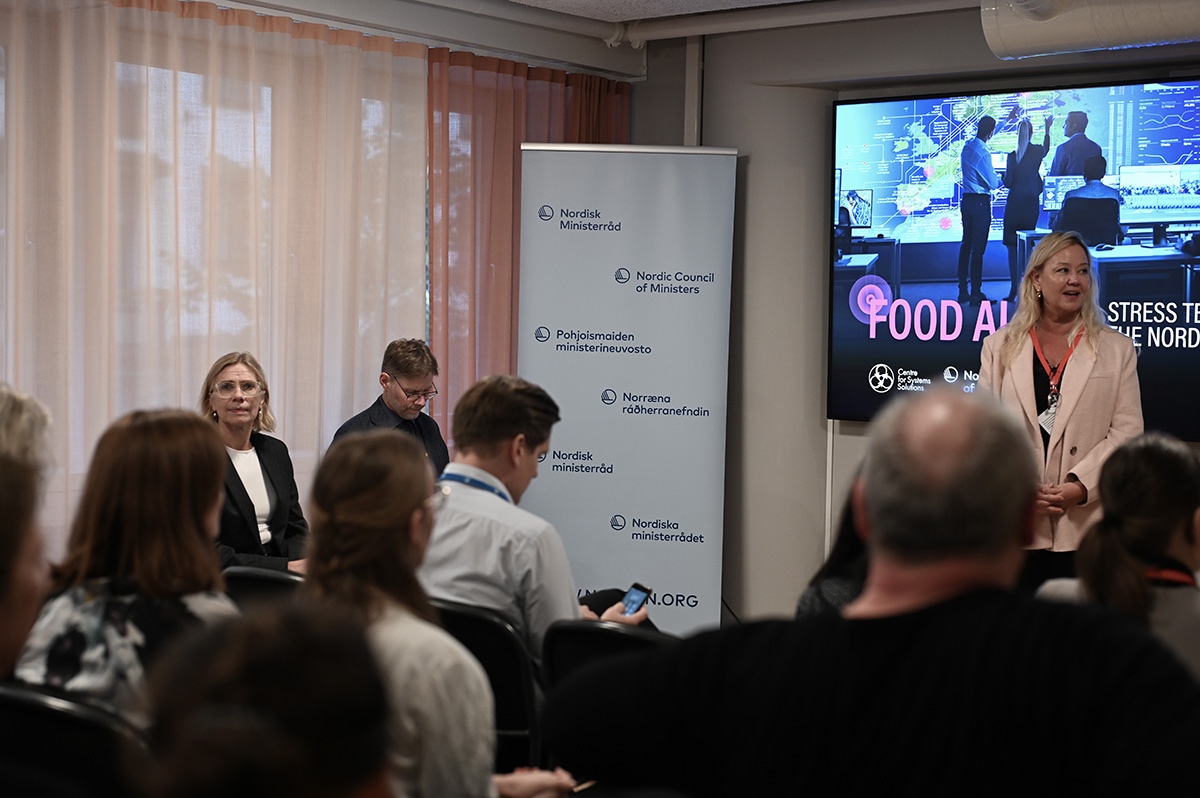
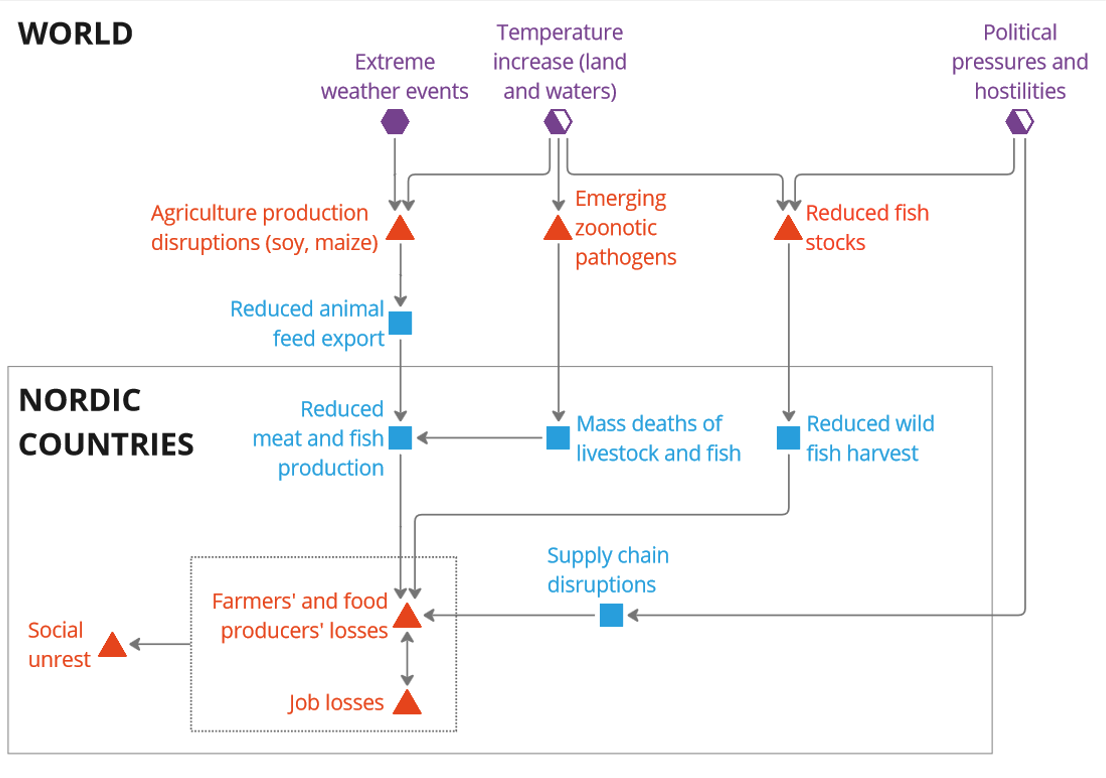
The carefully-researched scenario of the Nordic Food Alert workshop was prepared with the help of a technical working group comprised of the project organizers and around a dozen government officials from all Nordic countries, selected for their governmental experience and technical expertise on various sectors relevant to the workshop. The overall stress-testing scenario focused on an 18-month period in the immediate future, featuring multiple significant food system shocks including: 1.) a major hit to the Danish pork industry (10% of the entire EU pork supply) due to a major zoonotic pandemic linked to contaminated soybeans from Brazil; 2.) collapse of farmed fish stocks in the region from bacterial outbreaks linked to warming waters and climate change; and, 3.), intentional overfishing by Russia in the Barents Sea of juvenile fish-stocks, leading to a major decline in Nordic supplies. These shocks, combined with other emergencies generated by the intentional sabotage by organized hackers (presumed to be Russian) of key Nordic systems and infrastructure, as well as intentional environmental disasters affecting food supplies. Workshop participants, working as members of a fictional crisis task-force, were given three different updates through the course of the exercise, each providing updates at six-month intervals. Those updates, communicated via custom-designed videos, contained the following information:
Part 1
In February 2025, South America experiences a significant decrease in soy and maize production due to prolonged drought, heightened temperatures, and excessive rainfall during the harvest season. At the same time, China's demand for soybeans rapidly increases, and the continuous war in Ukraine disrupts grain and oilseed production. By mid-2025, the global agricultural situation worsens, as persistent changes in the jet stream Rossby waves bring on extreme weather events to agricultural regions like Hungary, Romania, Canada, and the U.S., and lead to simultaneous crop failures.
As the year progresses, drought hits North Africa, and political instability in Morocco disrupts phosphate production, triggering a global phosphorus crisis. Phosphates are critical for producing animal feed, especially in the Nordic countries, where this disruption threatens food supply chains. Russia uses this opportunity to circumvent sanctions and supply phosphates to Europe via Finland, which increases tensions between Russia and the Nordic region, leading to hybrid warfare activities and increased Russian fishing in the Barents Sea.
By early 2026, South American soy harvests hit historic lows, causing a further decline in animal feed exports. Concerns rise about fungal infections affecting soy crops, and feed prices soar due to general market instability. The Nordic region faces growing fears of food shortages as these cascading crises overwhelm global food production and distribution systems.
Part 2
The second part commences in the spring of 2026, showcasing the effort of officials across the Nordic countries to manage both the causes and results of plummeting fish catches. Norway suffers from reduced fish stocks largely due to overfishing by Russia in the Barents Sea. Greenland, Iceland, and the Faroe Islands experience similar reductions due to unusually warm waters, changing fish migration patterns, and massive algal blooms. Iceland faces conflicts with the EU over fishing quotas, while threatened by Russia with a total fish export ban.
As prolonged drought and heat waves hit the Arctic Circle in the summer, in Greenland, permafrost thaw leads to failures in harbor infrastructure, halting food production and fish exports. Meanwhile, Sweden and Finland are facing wildfires that worsen the security of food supply in the Far North.
In autumn, a bacterial infection (Aeromonas spp.) spreads through Norwegian fish stocks. Fish farming outputs fall drastically, worsened by increased fish feed prices and persistent algal blooms, and financial losses mount for fish producers. The crisis expands to food safety concerns, with fears of infection spreading to humans. Meanwhile, Denmark faces a pork production crisis as livestock farmers go bankrupt due to the import of fungally contaminated soy, causing mass animal deaths and feed and food recalls. As slaughterhouses close and layoffs spread, conspiracy theories circulate online, blaming the crises on government manipulation, fueling distrust and fear.
Part 3
The third narrative unfolds in November and December 2026. Denmark and Norway are hit by destructive hacker attacks that wipe out progress made on solving the fish and pig health crises. In Denmark, acts of sabotage halt operations at waste-to-heat power plants, further complicating pig carcass disposal. Meanwhile, a Russian shadow oil tanker spills oil, disrupting sea trade routes in the Baltic, worsening food supply issues across Denmark, Sweden, and Finland. A wave of disruptive attacks threatens Nordic critical transport and warehouse infrastructure – and opportunistic price gouging by major market players leads to soaring prices. Finland faces specific challenges with food imports to Åland, as small farmers protest against unfair grocery supply agreements. The combination of food shortages, sabotage, and price hikes leads to an erosion of trust in the political establishment, while social media extremism and populism rise. Social unrest spreads, with mass protests and violent attacks on minorities, although some activists call for hope and cooperation amidst the chaos.
The Methodology
The methodology developed by the project team builds on the general understanding of the ‘stress-testing’ concept, but adapts it to the food system security, and incorporates the social learning process,
Reed, M. S., Evely, A. C., Cundill, G., Fazey, I., Glass, J., Laing, A., Newig, J., Parrish, B., Prell, C., Raymond, C., & Stringer, L. C. (2010). What is Social Learning? Ecology and Society, 15(4). https://www.jstor.org/stable/26268235
Mochizuki, J., Magnuszewski, P., Pajak, M., Krolikowska, K., Jarzabek, L., & Kulakowska, M. (2021). Simulation games as a catalyst for social learning: The case of the water-food-energy nexus game. Global Environmental Change, 66,102204.https://www.sciencedirect.com/science/article/abs/pii/S0959378020307871?via%3Dihub – an experiential process where participants co-create desired future pathways.
The Nordic Food Alert stress testing methodology is presented in Figure 1. It uses the conceptual framework for cross-border impacts of climate change
Carter, T. R., Benzie, M., Campiglio, E., Carlsen, H., Fronzek, S., Hildén, M., Reyer, C. P., & West, C. (2021). A conceptual framework for cross-border impacts of climate change. Global Environmental Change, 69, 102307. https://link.springer.com/article/10.1007/s13753-015-0037-6 (see Annex X for a detailed description). The unit of analysis that is undergoing a stress test was the Nordic food system, including its connections with the external food markets. This methodological choice increases the level of complexity (as compared to stress testing of a single policy) that needs to be tackled - such a holistic treatment is necessary to unfold potential serious risks at a system level that could be missed by more fragmented approaches.
Policy Simulations as a critical component of stress testing
Creating and applying a Nordic Food Alert crisis scenario provides a conceptualisation of how a succession of crisis events may play out driven by a wide range of hazards affecting food systems (both globally and regionally). This inherent complexity requires a broad stakeholder engagement in an interactive format (two-way knowledge transfer). This has been achieved by designing and applying the Nordic Food Alert Policy Simulation, that served as an exploratory and learning environment, driven by an evidence-based crisis scenario, for pinpointing vulnerabilities and existing exposures within the Nordic food market landscape.
Policy Simulations, also known as policy exercises, are processes in which participants collaborate to immerse themselves in complex scenarios that mirror real-world issues, requiring policy decisions.
Peterson, G.D., Cumming, G.S. and Carpenter, S.R., 2003. Scenario planning: a tool for conservation in an uncertain world. Conservation biology, 17(2), pp.358-366. https://conbio.onlinelibrary.wiley.com/doi/abs/10.1046/j.1523-1739.2003.01491.x
A Policy Simulation uses an extended narrative layer to confront participants with a fictional yet plausible future crisis scenario, presented through a carefully crafted series of events. The storyline is presented using a series of professionally made videos, fictional news stories, social media posts, and other materials, such as maps or infographics. While it unfolds, participants work to respond to the constantly changing situation.
Drawing upon existing scientific data and expert consultations,
Adam, D. (2020). “Design fiction” skirts reality to provoke discussion and debate. Proceedings of the National Academy of Sciences, 117(24), 13179–13181. https://doi.org/10.1073/pnas.2008206117
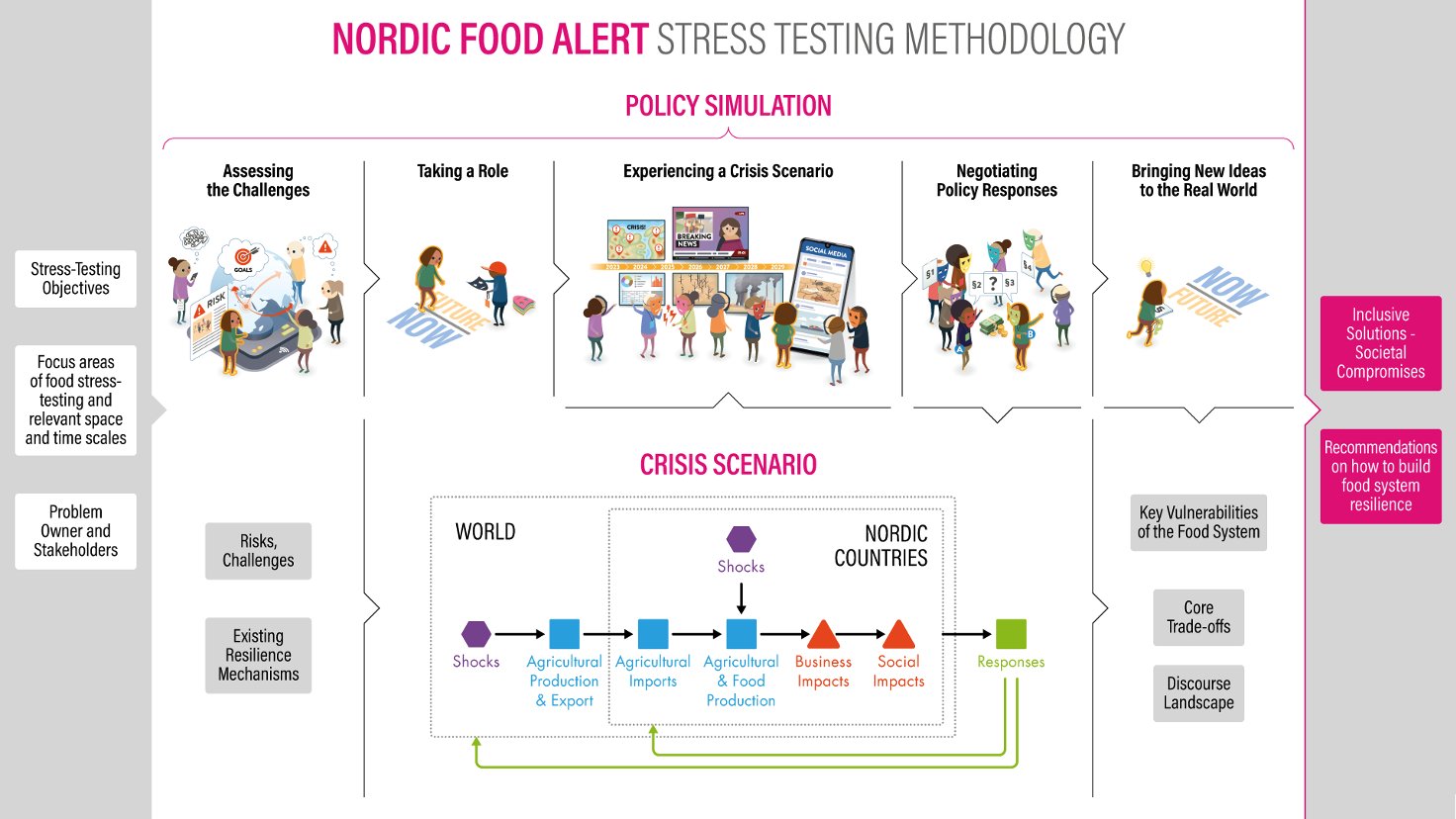
Figure 1. The methodology for the stress testing of the Nordic countries food system.
Policy Simulation process steps:
- Participants enter the simulation performance room with their newly acquired roles, goals, and backstories. Within their roles, participants experience real-world-like pressures (via lobbying messages), but they are free to experiment and follow their own expertise and beliefs.
- Participants experience a challenging crisis that can be played out at the local, regional, national, or global scales.
- Immersed in their roles, participants engage in dialogue about different ways of apprehending the problems. They discuss solutions such as new policies, changes in governance, or specific projects and investment decisions. They create pathways towards different futures – some of them more desirable than others.
- After intensive negotiations and experiencing the perspectives of other stakeholders, participants drop their roles and leave the performance room with diverse new insights and ideas. In the debriefing, the assumptions used for the simulation are revealed, and experiences are shared between participants. The learning and insights from the simulation experience can be applied to improve the real-world situation by proposing new policy propositions and governance improvements.
Policy Simulations share the following characteristics:
Duke, R.D. and Geurts, J., 2004. Policy games for strategic management. Rozenberg Publishers.
Problem statement
Participants encounter a complex real-world problem, demanding collaboration, inventive solutions, and the use of diverse data.
Different perspectives
The simulation offers a narrative-driven depiction of the issue, linking stakeholders with varied backgrounds, values, tasks, and goals. This allows them to explore the problem from multiple perspectives inherent in the simulation roles.
Communication
Through sharing viewpoints, suggestions, and negotiations, participants foster open dialogue and facilitate communication across differing perspectives.
Complexity
During discussions, participants uncover the key interconnections, and interdependencies within the complex system and propose policy responses to the problem.
Creativity
Participants discover their creative potential as abstract ideas become tangible, opening new pathways into the unknown.
Commitment to action
After reconciling differences, participants commit to implementing their jointly developed strategy, using their expertise to tackle real-life challenges.
Nordic Food Alert Crisis Scenario Background
To shape a narrative tailored to a stress-testing exercise focused on Nordic food systems, choices had to be made along two key dimensions. The first was determining the nature and scope of the initial disruptive triggers. It was essential to thoroughly examine the origins of each scenario event, as their effects extend beyond their geographic origins – while maintaining a Nordic perspective. Although the initial climate triggers are global in span, they are quickly reframed within a detailed Nordic context.
The second important factor was selecting the vulnerability areas where the impacts would be felt most acutely. The Karlstad Declaration
Nordic Council of Ministers for Fisheries, Aquaculture, Agriculture, Food and Forestry (MR-FJLS). (2024). The Karlstad Declaration – Nordic co-operation for preparedness and robustness related to food supply and forestry. Norden.org. https://www.norden.org/en/deklaration/karlstad-declaration-nordic-co-operation-preparedness-and-robustness-related-food has served as early guidance in this process, in terms of both trigger selection and determining which parts of the system would be affected. Key fields underlined by the ‘Technical Working Group’ included critical goods transportation and storage methods, protection of cultivated and arable land, sustainability in Nordic commercial fishing & aquaculture, and food safety in veterinary medicine & public health. These areas remain exposed to natural crises and disasters, biological threats (such as antibiotic resistance or newly emerging toxinogens), and security threats – including geopolitical, cyber, and logistical challenges. The stress-testing scenario presents a chain reaction of cascading impacts along those lines that affect food producers, retailers, buyers, and consumers alike.
Figure 2 illustrates the simplified concept of the developed crisis scenario, and Annex 1 provides a comprehensive overview with a detailed description of its regional components.
Policy Simulation Workshop elements
Video Narratives for Policy Simulation
The predominant narrative medium in policy simulations is videos, often stylized as news programs, documentaries, commercials, political advertisements, phone calls, recordings of expert discussions, and so on. Additionally, videos are complemented by other narrative forms such as newspaper headlines, screenshots from news websites, infographics, headlines of scientific articles, and social media snapshots. These videos and other narrative content, including news and social media entries, are intricately linked to the Crisis Diagram, illustrating the relationships between different elements of the system that the simulation aims to represent. By weaving them together, designers aimed to ensure that the co-creation efforts of the crisis diagram were not lost in the process, while simultaneously striving to create a compelling and immersive narrative that accurately reflected the complexities of the food security landscape.
Policy Simulation Roles
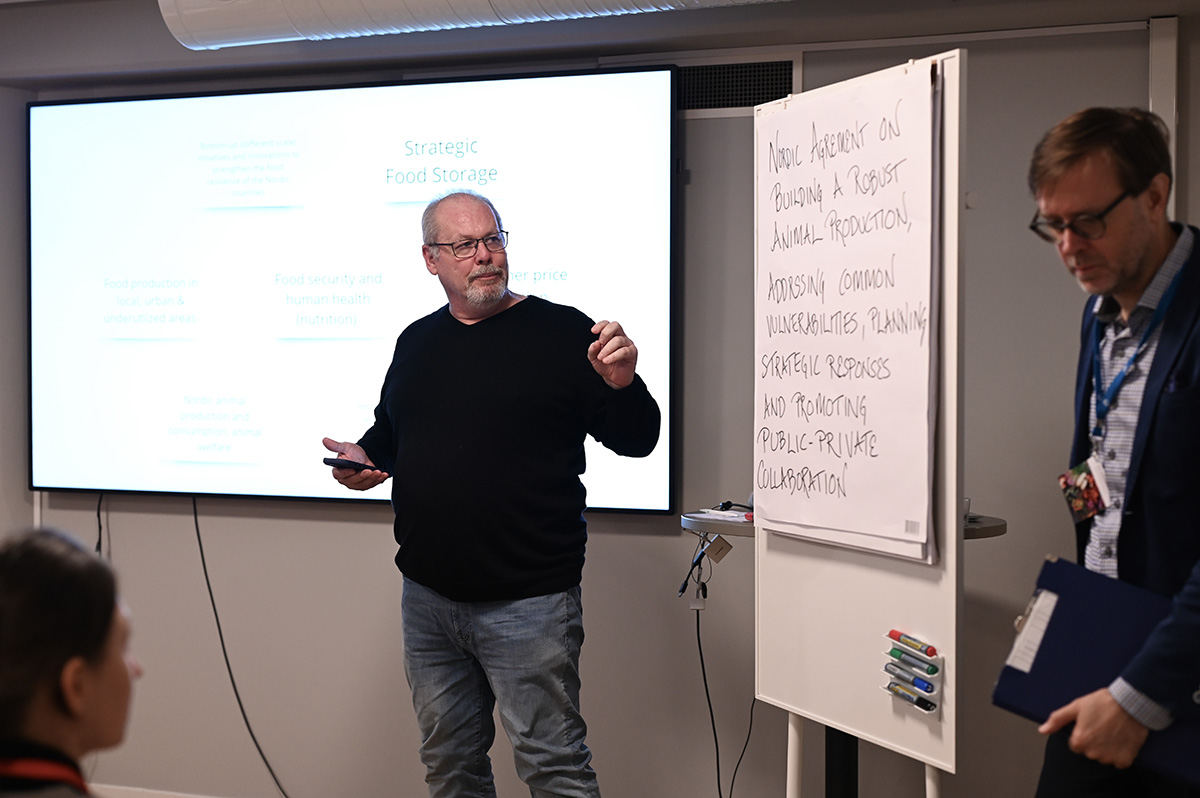
To fully engage participants in the Nordic Food Alert policy simulation, they were assigned a variety of roles based on various worldviews and perspectives in the field of food regulation, production, trade, and consumption. The formulation of roles was informed by a thorough literature review and consultation with experts. Subsequently, the design team identified the most prevalent ideologies and used them as the basis for developing specific roles. These ideologies encompassed a diverse range of perspectives, underlining ideas such as Social Solidarity, Eco-modernist Development, Economic Rationalism, Agro-centrism, or Conservative Neo-realism. Examples of roles given to participants include governmental institutions, companies, public and private organizations, e.g. Swedish National Food Agency, Department for Industry and the Environment (Åland), Nordic Business Council, Pork Producers Federation, Farmed Animal Welfare Alliance, or Nordic Sustainability Hub.
Run of show
The Policy Simulation workshop presents the crisis scenario in the video narrative form to the participants enacting various roles in order to respond to the imposed challenge. Their first response often recreates the typical real-world problems of short-term focus, decision silos, confirmation bias, underestimating uncertainty, narrow discourse range included, etc. Experiencing these pitfalls opens participants to a more systemic and participatory approach to developing solution options in the post-simulation session that is used as a platform for a discussion about contingency plans to mitigate present and future risks.
The workshop participants were grouped together to produce ideas for ways out of the crisis scenario in three focus areas. The first field, Crisis Responses, looks at short-term measures to alleviate acute food shortages. The second, Agriculture and Food Production, explores possibilities of gearing the Nordic food sector towards a more sustainable and less crisis-prone production. This is about preparing for a crisis in the long run. The last category, Trade and Finance, investigates how food value and supply chains could be distributed and financed inside and outside the Nordic region to guarantee the highest possible degree of food security.
Discussions within the working groups were additionally sparked and oriented with an initial set of fictional policy suggestions and demands, created based on the suggestions from the Technical Working Group and designer desk research, and showcasing the interests and wishes of various lobbying groups. Simulation participants were asked to vote on the initial propositions, but later they could also jointly develop their policy recommendations.
During the course of the workshop, the participating experts and practitioners from food security-related fields produced 8 recommendations in the three focus areas, each of which was agreed via an app-based voting procedure. These policy ideas reflected the outcomes of the discussions and compromises among the workshop participants made under time pressure. They are therefore neither exhaustive nor do they represent a coherent plan of action. They should not be seen as a definite or ideal set of recommendations but rather as the result of the Nordic Food Alert crisis simulation.