Annex 2: Stress-testing Methodology
The Food Alert Crisis Scenario
Cross-border impacts of climate change methodology
The conceptual framework for understanding cross-border impacts of climate change focuses on understanding how a climate impact originating in one location can extend across borders, posing risks to distant, and apparently unrelated regions. It distinguishes an initial impact triggered by climate events within specific regions, followed by downstream consequences propagating through an impact transmission system, with adaptation responses spread through a response transmission system. Understanding cross-border impacts and responses necessitates recognition of various climate triggers, impact categories, transmission scales, and dynamics. It also requires understanding response targets and dynamics, as well as the socio-economic and environmental context, including factors beyond climate change. The methodology serves as a tool for identifying relevant causal relationships and understanding adaptation strategies and their broader implications within resilience planning. Additionally, it aids in assessing probable risks, identifying new avenues for mitigation and adaptation, and strengthening food resilience within the chosen (macro)region.
In Figure X we provide a visual representation of the cross-border impacts of climate change,
Carter, T.R. et al. (2021).
The Nordic Food Alert crisis scenario conceptual diagram
The Crisis Scenario diagram represents a sequence of climate change-induced interconnected triggers, impacts and events as they might unfold, considering the interdependencies within the world and the Nordic food system. Drawing from the framework detailed above, the diagram portrays a plausible scenario combining global events with specifically Nordic events and impacts, embedded in social and policymaking realities. Collaborative efforts with the Technical Working Group experts ensured that the created diagram was comprehensive and realistic, encompassing a wide range of risks and possible futures for the Nordic countries. Each of the events and its hypotheses within the crisis scenario has been meticulously crafted, based on past events, drawing from available data, news sources, current affairs, and expert insights. Despite their hypothetical nature, these events are rooted in existing evidence found in the scientific literature. The evidence used to craft these scenarios has been referenced in brackets, allowing for further investigation and a deeper understanding of the nature of shocks applied in the scenarios.
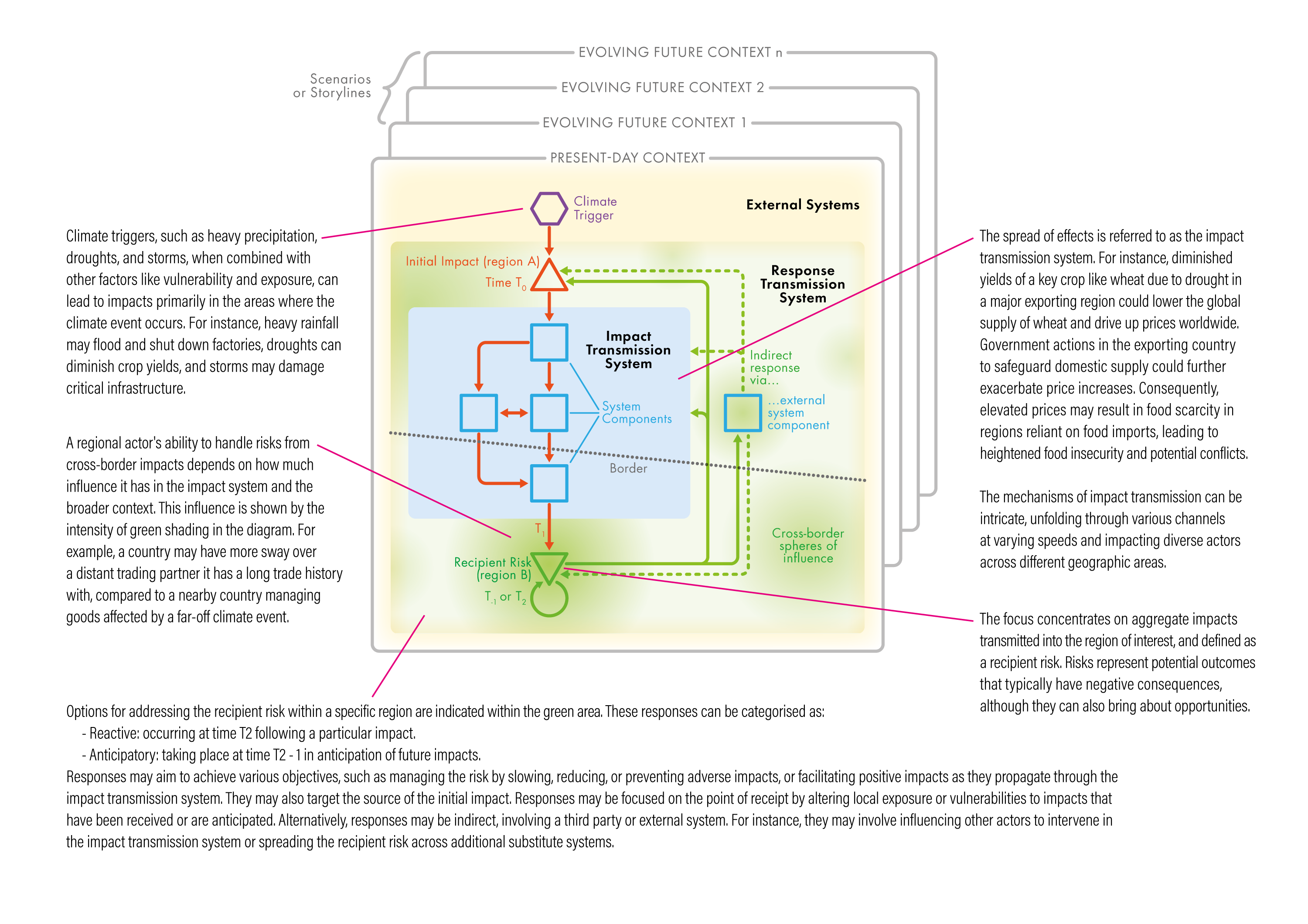
Figure 1: A conceptual representation of the cross-border impacts of climate change developed by Carter et.al., (2021) with components’ description.
As previously noted, the scenario initiates with climate triggers, yet the negative impacts are amplified by political tensions, supply chain dynamics, and societal behaviors. Even though most of the climate triggers originate outside of the Nordic territories, the highly interconnected and interdependent food network causes a ripple effect throughout the entire supply chain system.
In general, areas of pressure include (a) the monopolized nature of production and export of phosphates, crucial to global agricultural outputs as well as in animal feed production.
Lee, S. A., Lopez, D. A., & Stein, H. H. (2023, February 1). — Invited Review — Mineral composition and phosphorus digestibility in feed phosphates fed to pigs and poultry. Animal Bioscience. Asian Australasian Association of Animal Production Societies. https://doi.org/10.5713/ab.22.0322
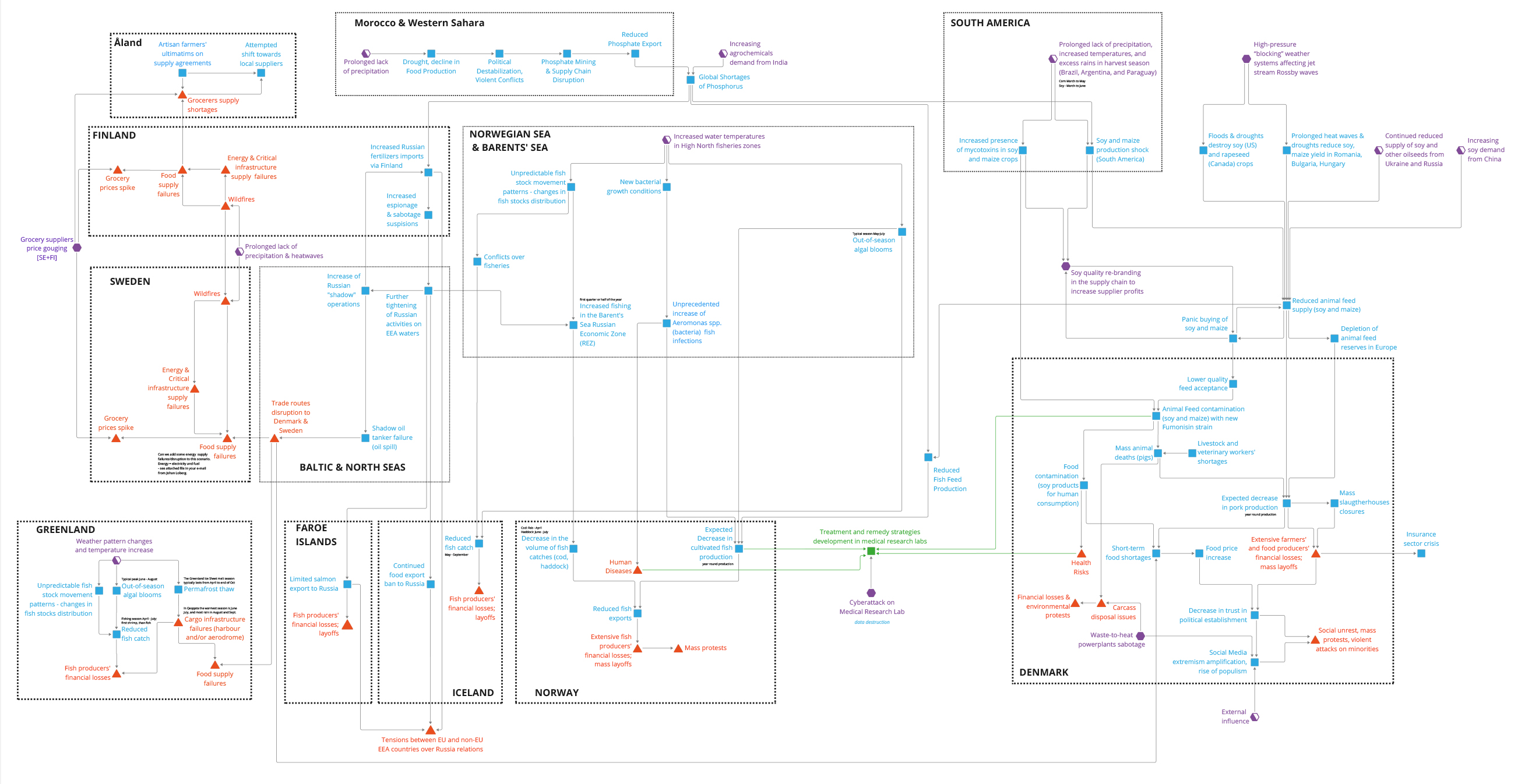
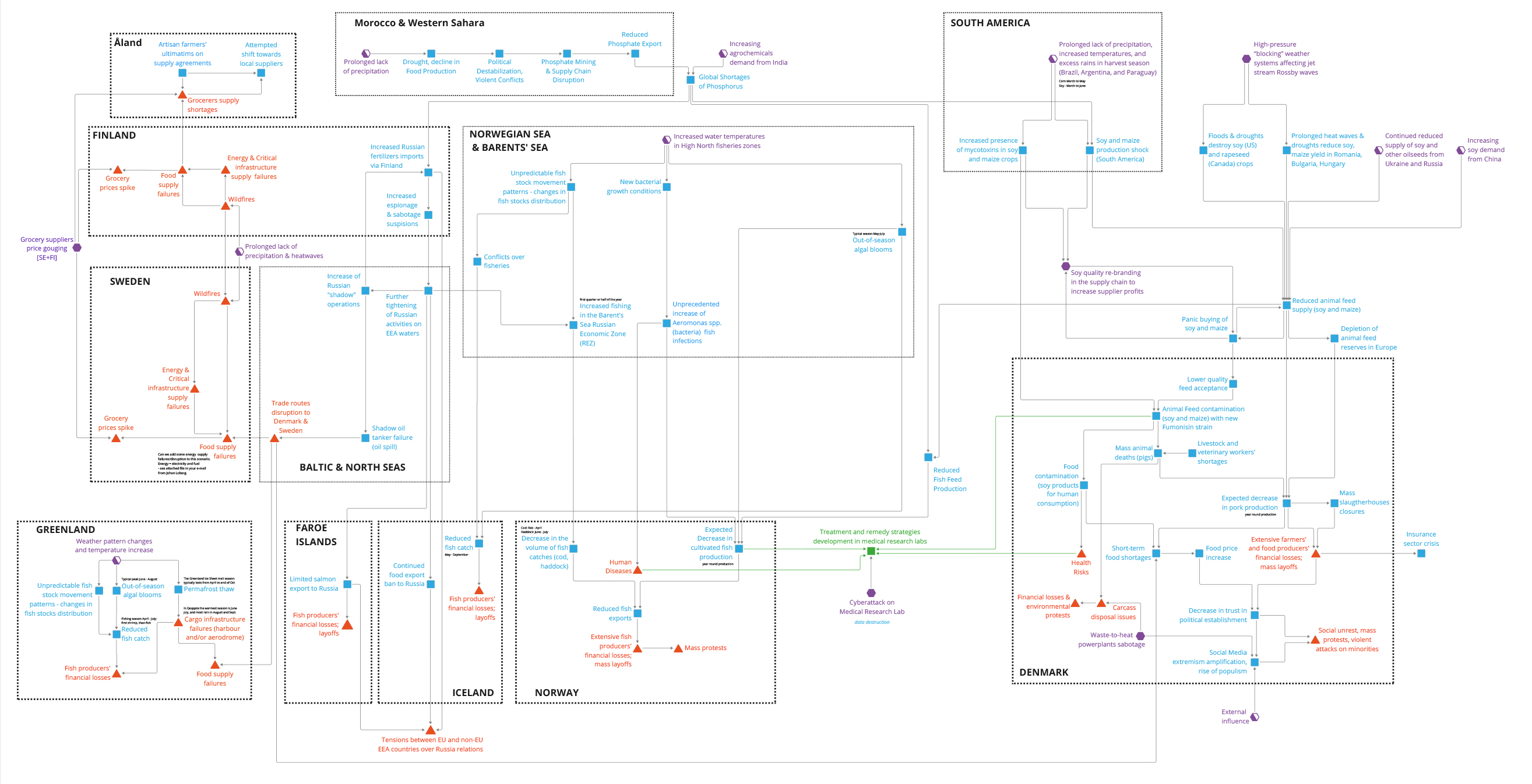
Figure 2 Food Alert Crisis Scenario for the Nordic countries, based on cross-border impacts of climate change
Apart from direct impacts on food systems due to the decline in the Nordic feed imports (soy, maize), coupled with reduced production and exports (wild and farmed fish, pork), disruptions in the food supply chain lead to major political, economic, health, and societal repercussions.
Political
- pressure for government intervention to rescue several big players,
- global food traders’ hoarding for speculation.
Economic
- risk of global financial crisis,
- rising inequalities, and the standard of living decline,
- extensive farmers’ and food producers' financial losses.
Social
- disruption of social cohesion,
- social unrest, mass protests, violent attacks on minorities,
- social media, extremism amplification,
- rise of populism,
- decrease in trust in the political establishment.
Health
- forced changes in consumer food choices,
- health risks
Nordic Food Alert – Diagram Components
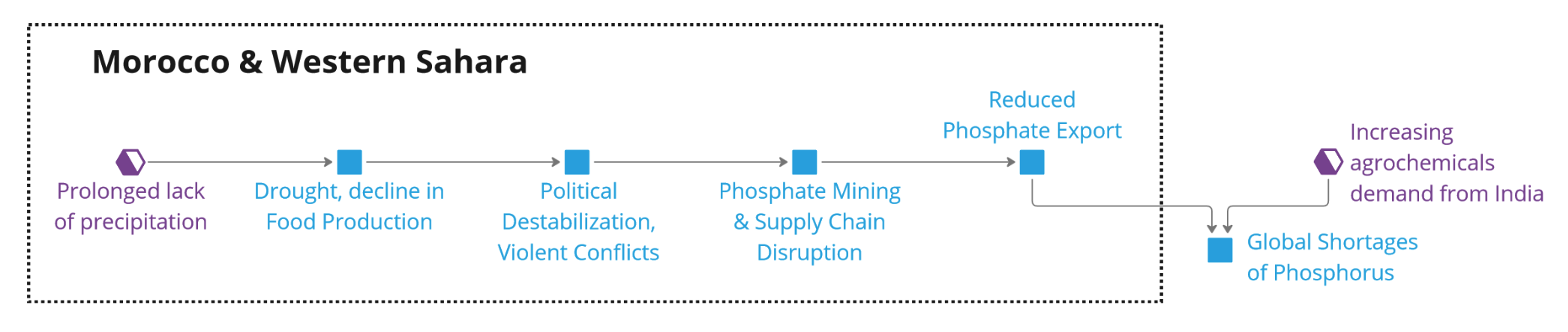
(a) Phosphate crisis
A severe drought in North Africa and Sahel is triggered by a prolonged lack of precipitation. The drought – and resulting decline in food production – significantly contribute to an increase in local and regional conflicts, exacerbating political instability in the North African and Sahelian countries. One example of the hypothetical conflicts partially caused by the drought is the clash between Morocco and the Western Sahara Independence Movement.
Dworkin, A. (2022). North African Standoff: How the Western Sahara Conflict is Fuelling New Tensions Between Morocco and Algeria. European Council on Foreign Relations. https://ecfr.eu/publication/north-african-standoff-how-the-western-sahara-conflict-is-fuelling-new-tensions-between-morocco-and-algeria/
Tanchum, M. (2022). Morocco’s New Challenges as a Gatekeeper of the World’s Food Supply: The Geopolitics, Economics, and Sustainability of OCP’s Global Fertilizer Exports. Middle East Institute. https://www.mei.edu/publications/moroccos-new-challenges-gatekeeper-worlds-food-supply-geopolitics-economics-and
(b) (c) Wild fish catch reduction – Farmed fish and emerging biohazards
The Nordic aquaculture industry, like other sectors affected in this crisis scenario, faces significant challenges due to disruptions in the soy products market, which is essential for fish feed production. Similarly, any disruption in phosphate acquisition impacts the availability of fish feed, further straining aquaculture operations.
In the Norwegian Sea, Barents Sea, and North Atlantic, rising water temperatures in northern fisheries zones are leading to unpredictable fish stock movements and shifts in stock distribution, creating adverse fishing conditions for all coastal communities.
Stenevik E. K., Sundby S. (2007). Impacts of climate change on commercial fish stocks in Norwegian waters. Marine Policy, vol. 31/1, 19-31. https://doi.org/10.1016/j.marpol.2006.05.001.
Ono K., Katara I., Eliasen S. K., et al. (2024). Effect of environmental drivers on the spatiotemporal distribution of mackerel at age in the Nordic Seas during 2010−20. ICES Journal of Marine Science, vol. 81/7, 1282–1294. https://doi.org/10.1093/icesjms/fsae087
Ottersen, G., et al. (2023). Observed and expected future impacts of climate change on marine environment and ecosystems in the Nordic region. Havforskningsinstituttet. https://hdl.handle.net/11250/3057234
Violand, A. (2023). A Bloom in a Changing Barents Sea. NASA Earth Observatory. https://earthobservatory.nasa.gov/images/151667/a-bloom-in-a-changing-barents-sea
Karlson, B., et al. (2021). Harmful algal blooms and their effects in coastal seas of Northern Europe, Harmful Algae, vol.102, 101989. https://doi.org/10.1016/j.hal.2021.101989
The Fish Site. (2024). Fresh insights into Aeromonas hydrophila in aquaculture.https://thefishsite.com/articles/fresh-insights-into-aeromonas-hydrophila-in-aquaculture
Heightened geopolitical tensions with Russia related to the ongoing Russo-Ukrainian war threaten established fishing and trade agreements with Nordic countries.
Østhagen, A. (2020). Fish, Not Oil, at the Heart of (Future) Arctic Resource Conflicts. The Arctic Yearbook. 43-59. https://arcticyearbook.com/images/yearbook/2020/Scholarly-Papers/3_Osthagen.pdf
High North News. (2022). Faroe Island's Fishery Cooperation With Russia Up For Discussion.https://www.highnorthnews.com/en/faroe-islands-fishery-cooperation-russia-discussion
Medetsky, A., Tanas, O. (2015). Russia Deals Blow to Fish Trade, Adds Iceland to Import Ban. Bloomberg. https://www.bloomberg.com/news/articles/2015-08-13/russia-deals-blow-to-fish-trade-as-iceland-added-to-import-ban
Ćirić, J. (2022). Russia-Ukraine Conflict Means Losses for Icelandic Fishing Industry. Iceland Review. https://www.icelandreview.com/news/economy/russia-ukraine-conflict-means-losses-for-icelandic-fishing-industry/
Rutkowski, L. (2015) The Faroe Islands don't play by EU rules. The Murmur. Archived at:https://web.archive.org/web/20151208074117/http://murmur.dk/articles/the-faroe-islands-dont-play-by-eu-rules.383.html
Levengood, Z. (2021). Arctic Politics and the EU-Norway Fishing Dispute. The Arctic Institute.https://www.thearcticinstitute.org/arctic-politics-eu-norway-fishing-dispute/
In retaliation over attempts to control Russian activity in EEA waters,
Edvardsen, A. (2022). Finnmark Chief of Police: "I Share the Concern About the Civilian Footprint in the North. The High North News.https://www.highnorthnews.com/en/finnmark-chief-police-i-share-concern-about-civilian-footprint-north
Bye, H. G. (2023). Russia Fishes Less and Less Cod in the Norwegian Zone in the Barents Sea. The High North News. https://www.highnorthnews.com/en/russia-fishes-less-and-less-cod-norwegian-zone-barents-sea
McBride, O. (2024). Norway to Tighten Regulations for Russian Fishing Vessels. The Fishing Daily.
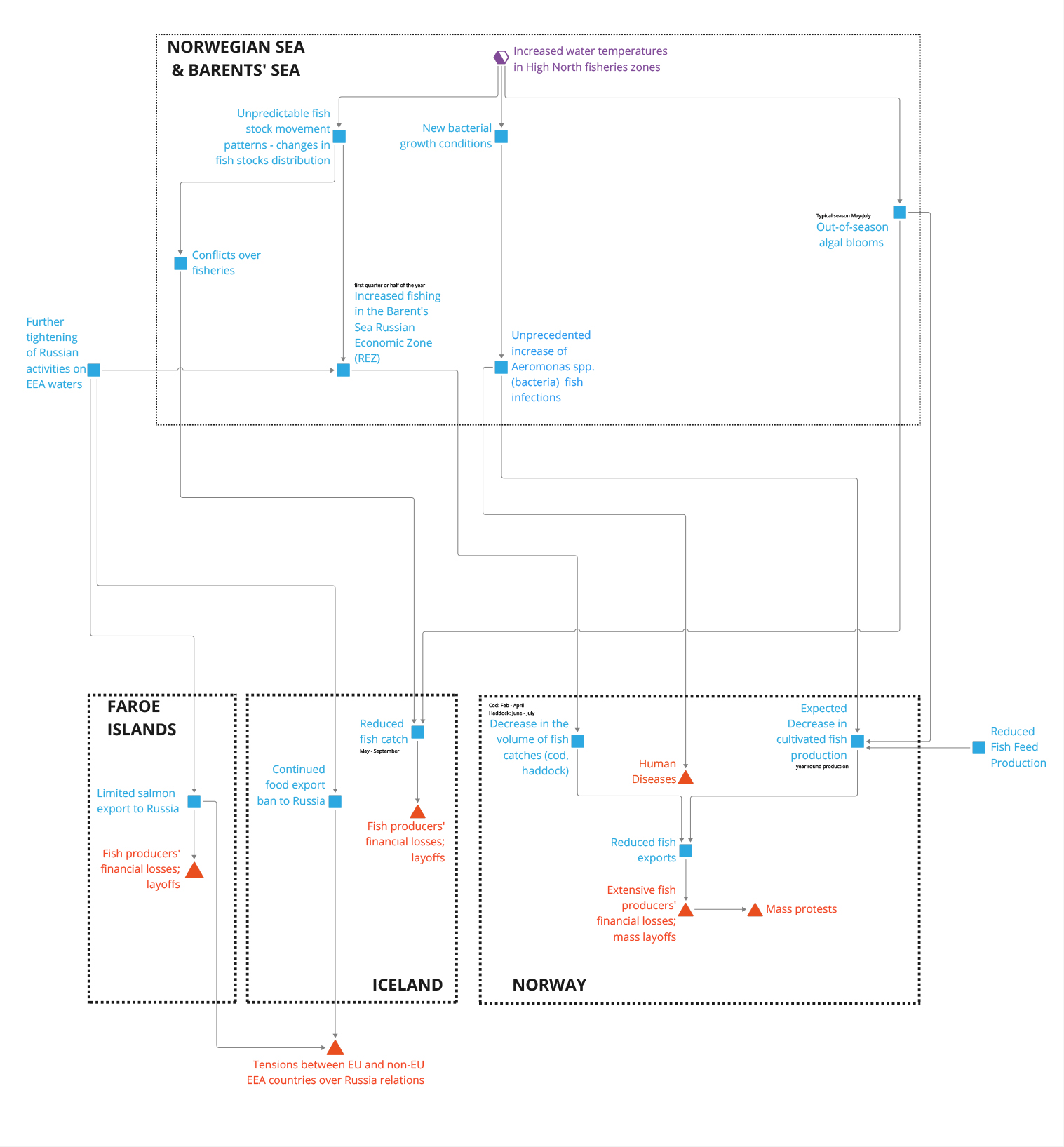
Figure 4 Fish Crisis Diagram Component
The combined pressures of reduced fish catches, lower aquaculture output, and diminished fish exports are likely to result in severe financial losses for major fish producers. These economic impacts could lead to mass layoffs across the sector, sparking social discontent and potentially fueling widespread protests among affected communities.
(d) Critical infrastructure on land and sea
Arctic fires, fueled by climate change, are growing longer, more intense, and more frequent. Rising temperatures dry out landscapes, increasing fire risks. In some areas, lightning-caused fires could rise by up to 65% per 1°C of warming.
McCarty, J. L., et al. (2021). Reviews and syntheses: Arctic fire regimes and emissions in the 21st century. Biogeosciences, 18(18), 5053–5083.https://doi.org/10.5194/bg-18-5053-2021
Sandanger, T., Heimstad, E., (2017). Food and health security in the Norwegian–Finnish–Russian border region. Framsenteret. https://framsenteret.no/arkivet/food-and-health-security-in-the-norwegianfinnishrussian-border-region-5982316-146437/
Molthe, R. (2023). Raid against grocery suppliers in Sweden and Finland. NHH Food Research Project. https://www.nhh.no/en/research-centres/food/food-news/2023/raid-against-grocery-suppliers-in-sweden-and-finland/
Critical infrastructure in the High North also faces threats from thawing permafrost, which compromises land stability. This risk is especially severe in southern Greenland, where population density and economic activity are concentrated.
Cela, M., & Hansson, P. (2020). Geopolitics and Neglected Arctic Spaces: Three Northern Perspectives on Balancing External Interests. Center for Strategic and International Studies (CSIS). http://www.jstor.org/stable/resrep26993
Andersen U. (2015). Grønland vil udvide og nybygge fem lufthavne. Ingeniøren. https://ing.dk/artikel/groenland-vil-udvide-og-nybygge-fem-lufthavne
Marcer, M., et al. 2024. Modelling present and future rock wall permafrost distribution in the Sisimiut mountain area, West Greenland. The Cryosphere, 18, 1753–1771, https://doi.org/10.5194/tc-18-1753-2024
Another intertwined challenge involves supply chains that rely on remote coordination, making them susceptible to increasingly sophisticated cyber threats.
Cassotta, S., & Pettersson, M. (2019). Climate Change, Environmental Threats and Cyber-Threats to Critical Infrastructures in Multi-Regulatory Sustainable Global Approach with Sweden as an Example. Beijing Law Review, 10(03), 616–642. https://doi.org/10.4236/blr.2019.103035
Eriksson, C., Fischer, K., & Ulfbecker, E. (2020). Technovisions for Food Security as Sweden Restores Its Civil Defence. Science, Technology and Society, 25(1), 106–123. https://doi.org/10.1177/0971721819889924
Tidy, J. (2021). Swedish Coop supermarkets shut due to US ransomware cyber-attack. BBC News. https://www.bbc.com/news/technology-57707530
Martin, A. (2024) Sweden's liquor shelves to run empty this week due to ransomware attack. The Record. https://therecord.media/sweden-ransomware-liquor-shortage-skanlog-systembolaget
Aalto‐Setälä, V., Kinnunen, J., & Koistinen, K. (2004). Reasons for high food prices in small market areas: The case of the Åland Islands. Agribusiness, 20(1), 17–29. https://doi.org/10.1002/agr.10083
Rytkönen, P. I., Oghazi, P., & Mostaghel, R. (2023). Food entrepreneurship and self-employment in an island context. British Food Journal, 125(13), 237–252. https://doi.org/10.1108/BFJ-06-2022-0537
These vulnerabilities highlight several man-made factors impacting the security and continuity of food supply chains and infrastructure, including international relations and geopolitical tensions. Within the scenario, current trends are logically developed. Namely, relations between Nordic countries and Russia continue to decline, while Russian activities in Nordic waters have intensified.
Schaller, C. (2024). Russia’s Mapping of Critical Infrastructure in the North and Baltic Seas – International Law as an Impediment to Countering the Threat of Strategic Sabotage?. Nordic Journal of International Law, 93(2), 202-236. https://doi.org/10.1163/15718107-bja10083
Reuters. (2024). Denmark seeks to stop shadow tanker fleet carrying Russian oil.
Wintour, P. (2024). ‘Russia doesn’t care’: Sweden sounds alarm over unsafe oil fleet. The Guardian. https://www.theguardian.com/world/2024/apr/18/swedish-foreign-minister-tobias-billstrom-unsafe-russian-oil-fleet-baltic-sea-environmental-catastrophe
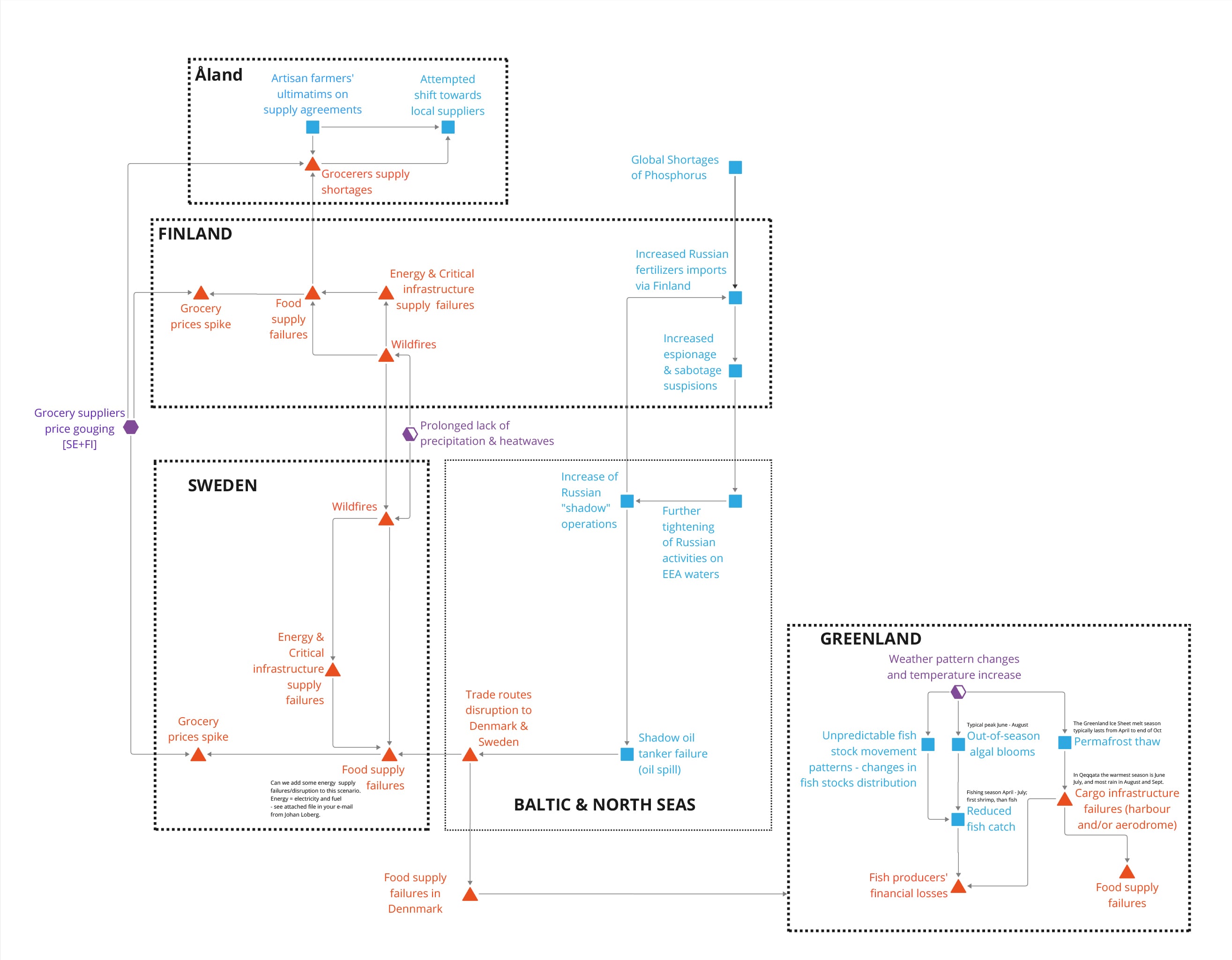
Figure 5 Critical Infrastructure Crisis Diagram Component
(e) Soy Mycotoxin Crisis – From North and South America to Denmark
A prolonged absence of precipitation, rising temperatures, and excessive rainfall during the harvest season in Brazil, Argentina, and Paraguay lead to a significant shock in soy and maize production.
Baethgen, W. E. (1997). Vulnerability of the agricultural sector of Latin America to climate change. Climate Research, 9(1–2), 1–7. https://www.jstor.org/stable/24864605
Lupo, A. R. (2021). Atmospheric blocking events: A review. Annals of the New York Academy of Sciences, 1504(1), 5–24. https://doi.org/10.1111/nyas.14557
These compound events result in the wide disruption of soy and maize exports from North & South America leading to panic buying of soy and maize. Following the panic buying trend, China and India increase their soy demand.
Gandhi, V. P., & Zhou, Z. (2014). Food demand and the food security challenge with rapid economic growth in the emerging economies of India and China. Food Research International, 63, 108–124. https://doi.org/10.1016/j.foodres.2014.03.015
Gheibdoust, H., Gilaninia, S., & Taleghani, M. (2023). The impact of the Ukraine war on the global food supply chain security: A literature review. International Journal of Logistics Economics and Globalisation, 10(2), 186–208. https://doi.org/10.1504/IJLEG.2023.10056759
Vorotnikov V., (2022). Fraud scandal hits Polish feed industry. All About Feed. https://www.allaboutfeed.net/animal-feed/feed-additives/fraud-scandal-hits-polish-feed-industry/
Coyne, A. (2024). ‘Greenwashing’: Danish Crown misled consumers, court rules. Just Food. https://www.just-food.com/news/danish-crown-misled-consumers-court-rules-in-greenwashing-case/
However, prolonged droughts and increased temperatures increase the development and toxicity of fungal infections in soy and maize, including Fumonisin.
Casu, A., Camardo Leggieri, M., Toscano, P., & Battilani, P. (2024). Changing climate, shifting mycotoxins: A comprehensive review of climate change impact on mycotoxin contamination. Comprehensive Reviews in Food Science and Food Safety, 23, e13323. https://doi.org/10.1111/1541-4337.13323
Bosselmann, A. S., & Dolmer, S. E. N. (2023). Monitorering af ansvarlige og afskovningsfrie landbrugsråvarer i Danmark 2022: Status på implementering af handlingsplan mod afskovning. Institut for Fødevare- og Ressourceøkonomi, Københavns Universitet. IFRO Udredning Nr. 2023/04
Apart from exacerbated food shortages and increased prices, farmers and food producers face extensive financial losses and layoffs, resulting in consolidation and intensification pressure. Another crisis dimension is connected with outside socio-political and ideological pressures, in the form of hybrid warfare attempts, critical infrastructure sabotages and social media extremism.
Olszewski, P. (2022). Terroryzm we współczesnej Danii. Studia i Analizy Nauk o Polityce, (2), 15–28; 29. https://doi.org/10.31743/sanp.14601
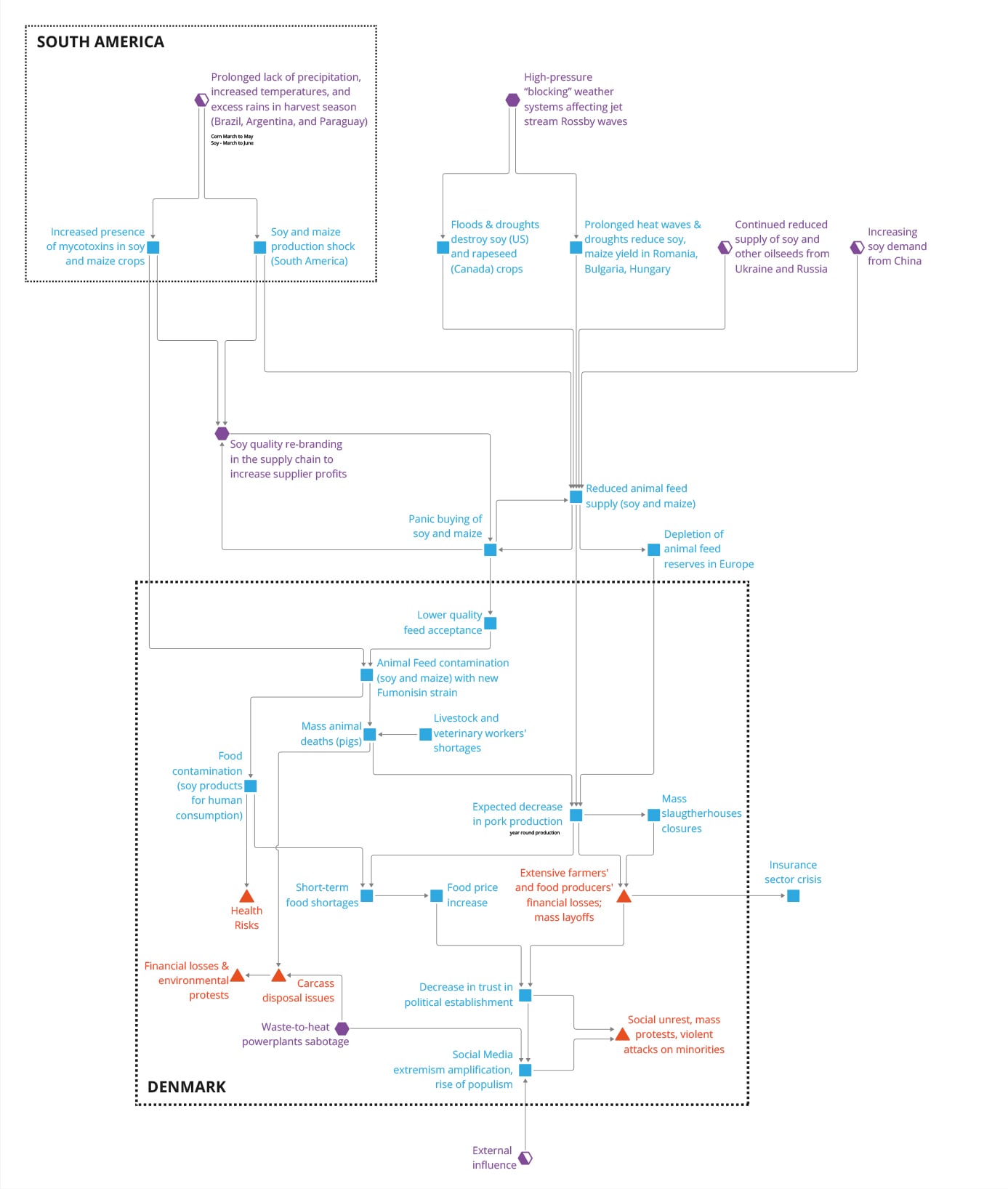
Figure 6 Soy Mycotoxin Crisis Diagram Component