Annex 3: Policy cards for the 15 measures analysed in-depth
Concrete ecological requirements for public procurement
 | ||
|---|---|---|
Description | In order for the state of Berlin to focus on procurement that promotes and requires environmentally compatible services and products on a binding basis, the Administrative Regulation on Procurement and the Environment came into force on 1 January 2013 (last updated at the beginning of 2019). This applies to all public procurement agencies in Berlin. With performance sheets, concrete ecological requirement criteria are made binding for the procurement of various products, construction, and services. Calculation tools for calculating lifecycle costs are also included. In terms of waste prevention, the procurement of beverages in disposable packaging, disposable table-ware and cutlery in canteens and refectories and at large events, as well as products whose cardboard transport packaging does not contain at least 70 per cent recycled material, is not permitted. In the case of products for IT equipment, among other things, the availability of spare parts and the possibility of repairing items or expanding their performance with replaceable components and expansion interfaces must be guaranteed even several years after production has ceased. | 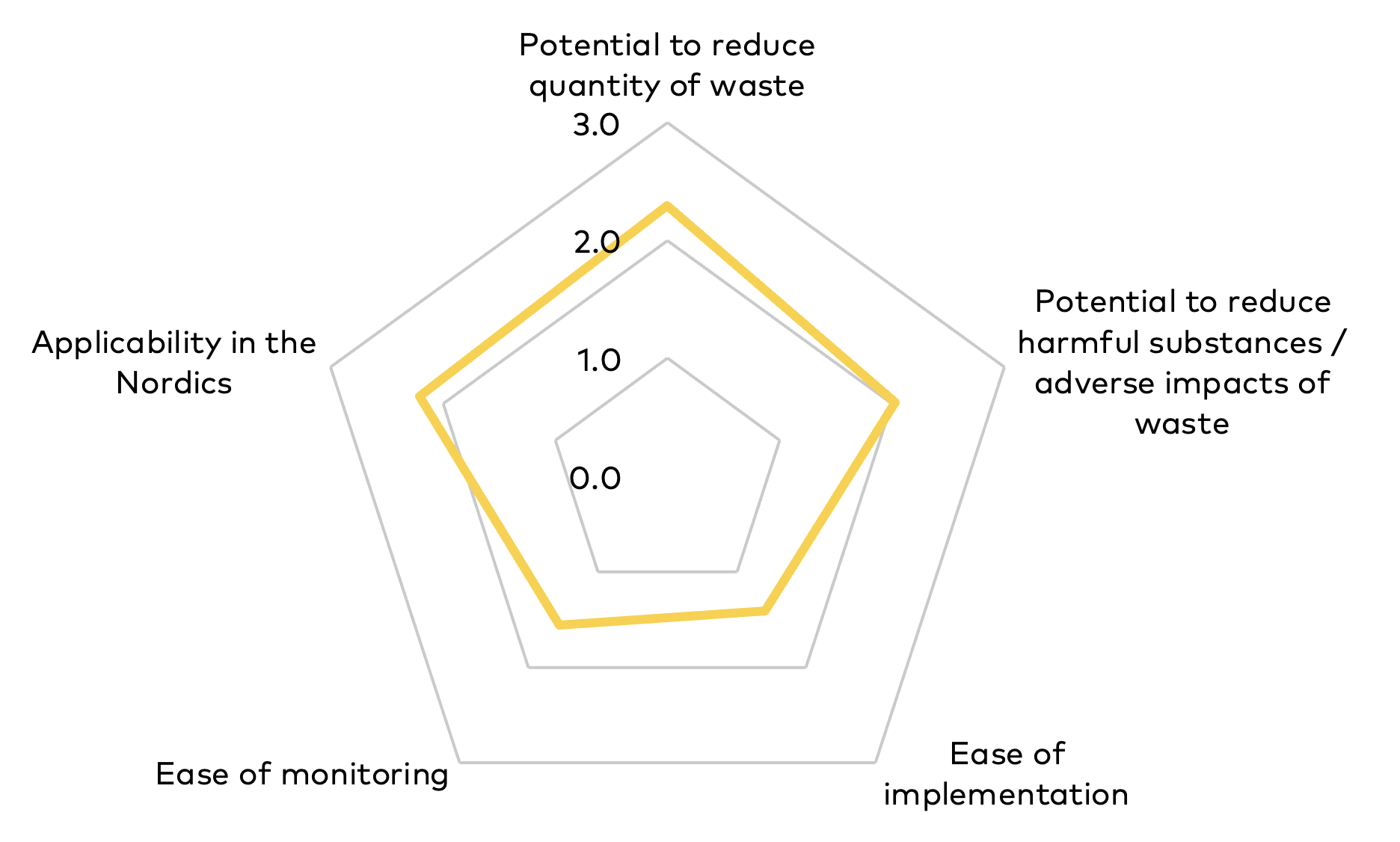 |
Waste fraction(s) | Any | |
Responsible party | Public authorities | |
Notes about effectiveness and feasibility | There was general agreement that public procurement has a lot of potential, but there was a suggestion that the requirements should be based on factors like Life Cycle Assessment (LCA) to avoid greenwashing. Some respondents believe that for public procurement to be effective in addressing environmental concerns, clear and prioritised criteria are essential, especially when climate, environment, and nature may conflict. The responses also highlighted the importance of environmental factors having values that can outweigh immediate monetary considerations in public procurement. This suggests a shared belief that environmental considerations should hold significant weight but may differ in how much weight they should carry compared to monetary concerns. | |
References | European Environment Agency. (2023) . Waste prevention country profile – Germany. Available at: https://www.eea.europa.eu/themes/waste/waste-prevention/countries | |
Reduced VAT on repairing services
   | ||
|---|---|---|
Description | IVAT on repair services for bicycles, shoes, leather products, clothes and textiles was lowered to 12% from the general level of 25% in 2017. In 2022 it was further lowered to 6%. On 1 April 2023, the VAT level was changed back to 12%. | 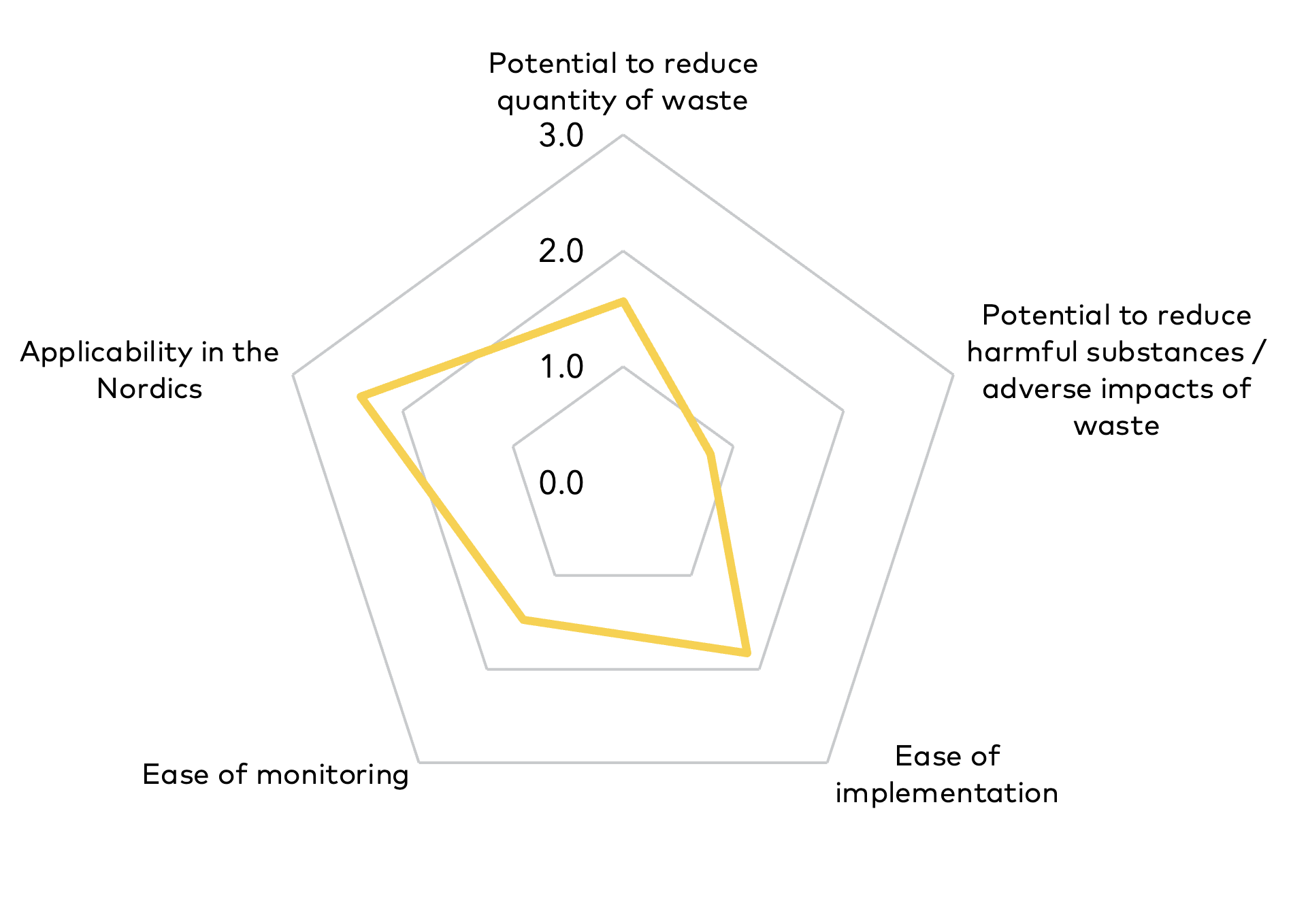 |
Waste fraction(s) | Clothes, textiles | |
Responsible party | Public authorities | |
Notes about effectiveness and feasibility | Some respondents believed that a greater reduction in VAT is necessary to provide a more significant incentive for repair activities. Concerns were raised about ensuring that the reduction in VAT translates to lower service prices, as there is a fear that companies might maintain the same prices and benefit from the tax reduction. For example, in Finland, there is a political consensus on the need for this measure, but its implementation is seen as challenging due to the potential for companies not passing on the savings to consumers. The potential impact on waste reduction was acknowledged, but its magnitude remains uncertain. The issue of it being cheaper to buy new items rather than repair is highlighted, and there are questions about how to legally define and implement the measure. | |
References | Naturvårdsverket. (2018). Att göra mer med mindre. Nationell Avfallsplan och avfallsförebyggande program 2018-2023. https://www.naturvardsverket.se/publikationer/6900/att-gora-mer-med-mindre/ | |
Weight-based pay-as-you-throw (PAYT) pricing
   | ||
|---|---|---|
Description | Weight-based PAYT is a waste management system where the cost of waste disposal is determined by the weight of the waste generated by individual households or businesses. This encourages waste reduction and recycling because individuals or organisations have a financial incentive to minimise the amount of waste they generate. It is an alternative to fixed-fee waste col-lection systems or volume-based waste fees. The system usually involves the use of specially designed waste containers or bins that weigh the waste being disposed of. Alternatively, waste bins can be weighed when collected. The weight of the waste is recorded, and the corresponding fee or charge is applied based on a predetermined rate per unit of weight. | 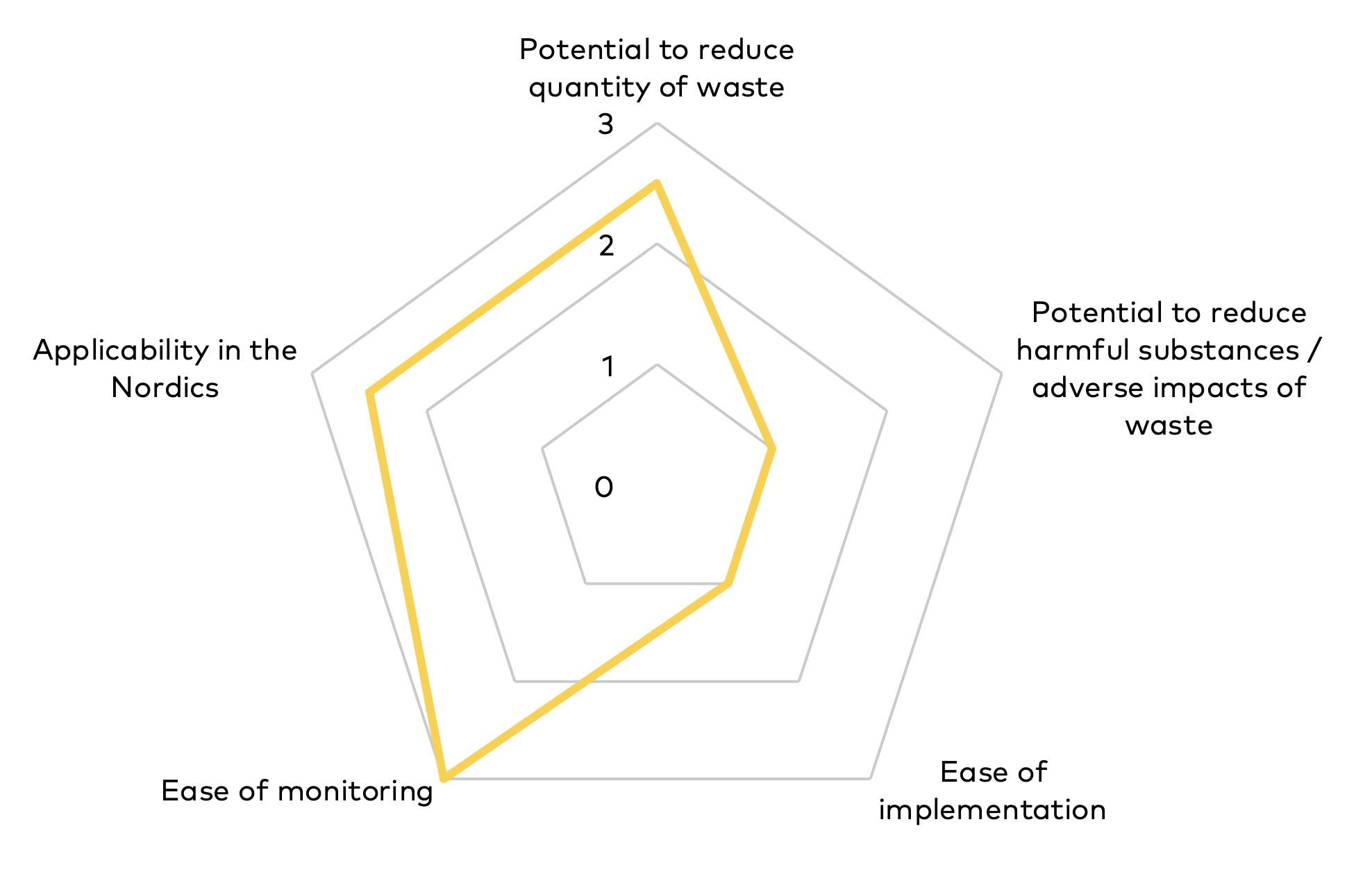 |
Waste fraction(s) | Any | |
Responsible parties | Public authorities, waste management companies | |
Notes about effectiveness and feasibility | There was a consensus that PAYT can be effective in waste management and promoting recycling but also recognition of the challenges, costs, and potential limitations associated with its implementation. Any PAYT scheme must be supported by a well-developed collection infrastructure, information for participants, and an appropriate transparent pricing policy. Transitioning to weight-based PAYT may require significant changes in collection equipment and incur high costs. Additionally, implementation of weight-based PAYT schemes requires careful consideration of the operational environment, e.g. who is responsible for the waste collection and what the regulations are affecting the implementation. Weight is not the only parameter relevant for implementing the polluter pays principle because the quality of collected waste is also equally relevant. | |
References | Ukkonen, A., & Sahimaa, O. (2021). Weight-based pay-as-you-throw pricing model: Encouraging sorting in households through waste fees. Waste Management, 135, 372-380. Salmenperä, H., Dahlbo, H., Turunen, S. et al. (2019). Punnitukseen perustuva kotitalouksien jätemaksujärjestelmä: Toteuttajan tietopaketti. Available at: http://urn.fi/URN:ISBN:978-952-361-000-2 | |
Subsidies for waste prevention and reuse
   | ||
|---|---|---|
Description | Flanders has taken several steps to prevent the production of waste for instance, by giving support to businesses by providing subsidies for reuse. OVAM (the Public Waste Agency of Flanders) also provides investment subsidies to municipalities and inter-municipal associations for waste prevention, separation, and treatment (e.g. to build drop-off centres and compost plants or implement pay-as-you-throw systems). | 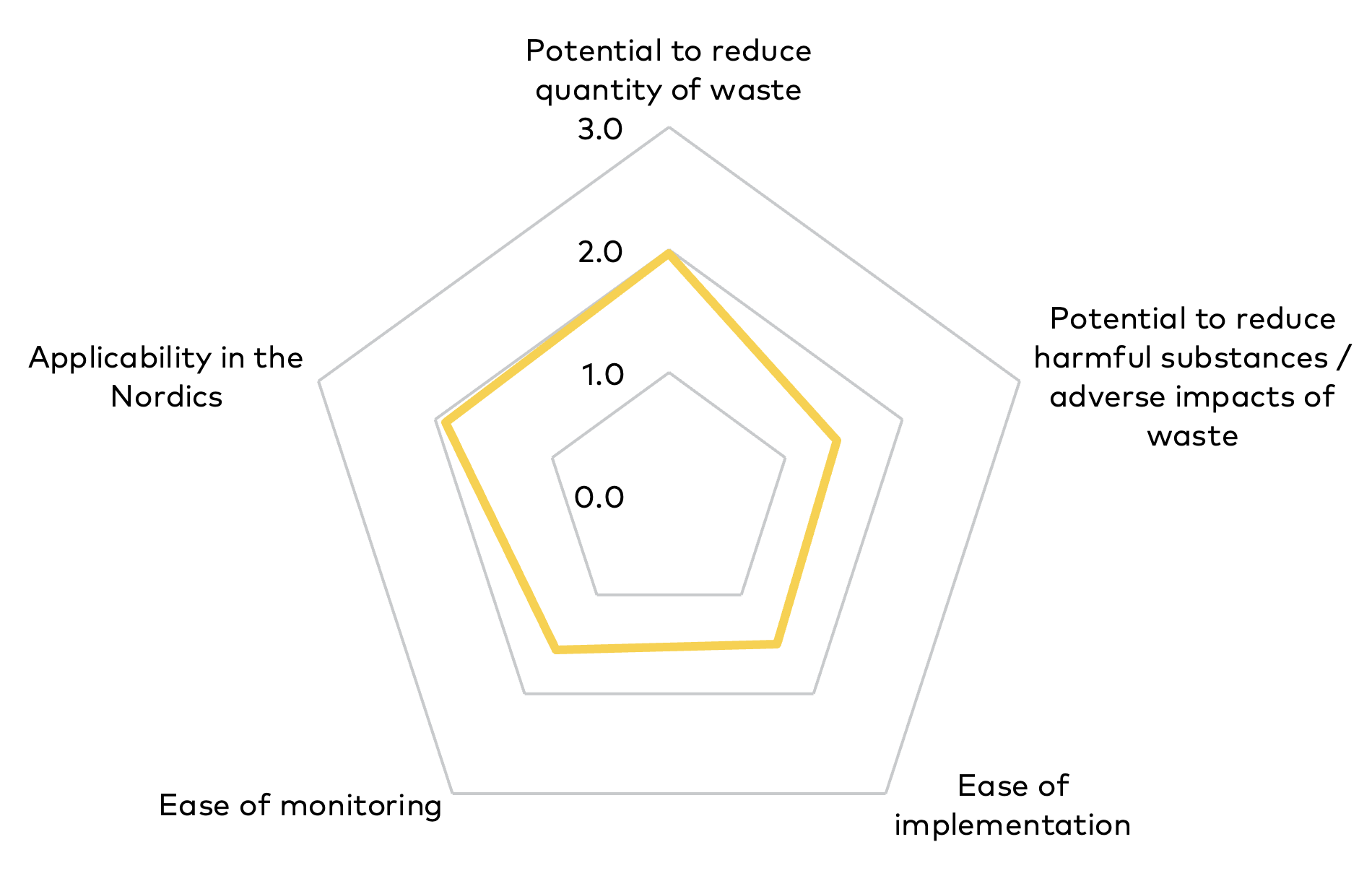 |
Waste fraction(s) | All | |
Responsible party | Government | |
Notes about effectiveness and feasibility | Some respondents found the concept interesting and believed it would be well-suited for Nordic countries. One respondent emphasized that the success of such an instrument depends on the balance between costs and bonuses. This measure has potential to have a real impact but it also requires new funding, extra work and resources. | |
References | European Environment Agency. 2023. Waste prevention country profile - Belgium. | |
Material efficiency commitments
 | ||
|---|---|---|
Description | The food and packaging industries and the food retail sector made the first Material Efficiency Commitment 2019–2021 in Finland, encompassing nearly the whole value chain. The general objective of the commitment is to improve the profitability and reduce the environmental impacts of food production, packaging, and distribution. The food retail sector has set more detailed targets, and their aim is to reduce food waste by 13% and raise the recycling rate from 74% up to 78% during the commitment period. A further goal is to reduce food waste by 50% by 2030, for example, in addition to reducing the amount of plastic in the containers and increasing reuse of packaging. | 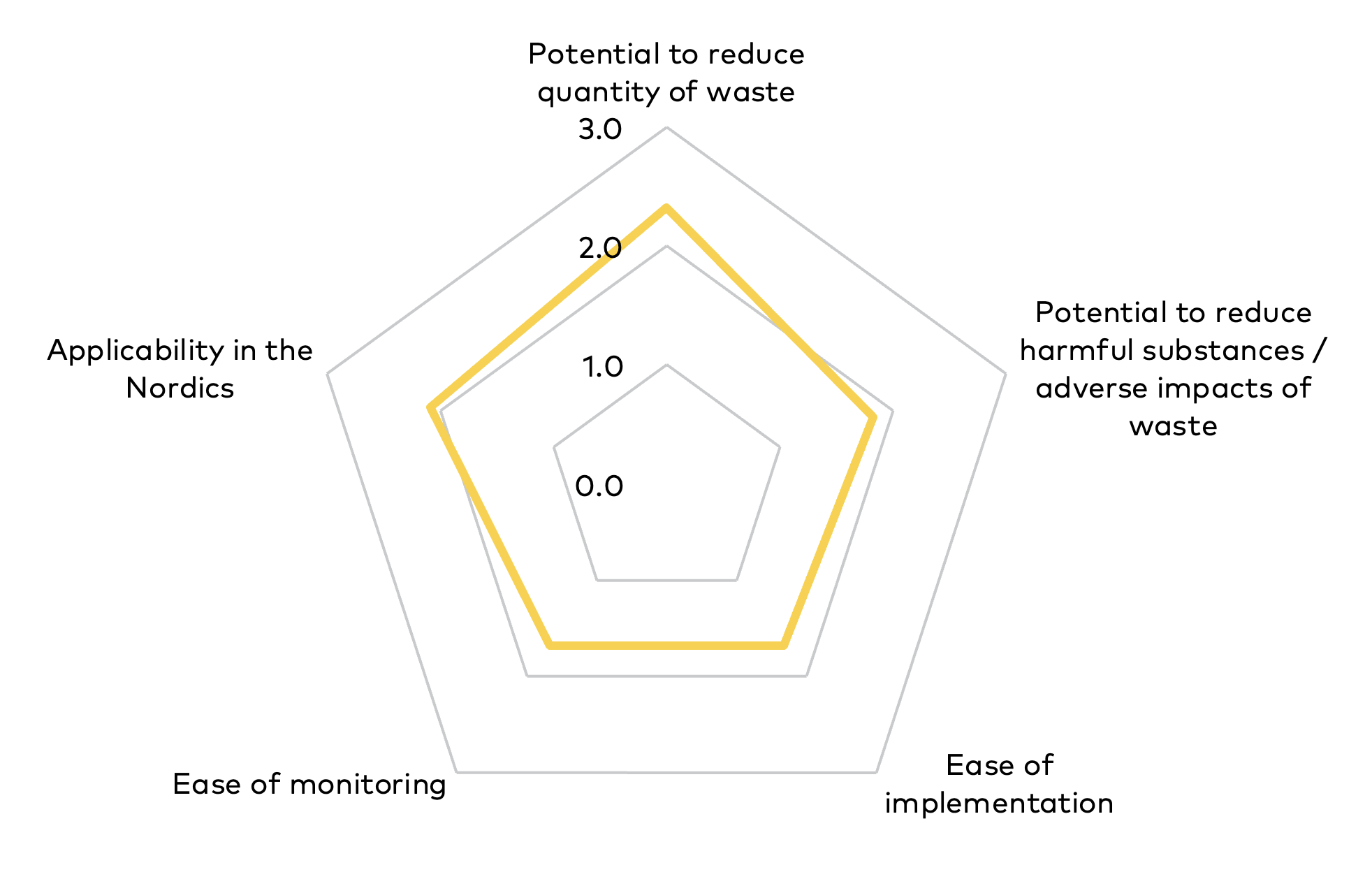 |
Waste fraction(s) | The food chain, i.e. food waste and packaging, which are environmentally heavy | |
Responsible parties | Government, businesses | |
Notes about effectiveness and feasibility | The experts mentioned that it is easy to make a voluntary material efficiency commitment, but it is more challenging to actually reach goals and have an impact. The challenge is to ensure that the commitments made by parties are ambitious enough. Reporting might also be difficult. | |
Reuse stations (Miljøstasjoner)
 | ||
|---|---|---|
Description | Reuse stations for used items that are not damaged. It is free to pick up items from these stations. | 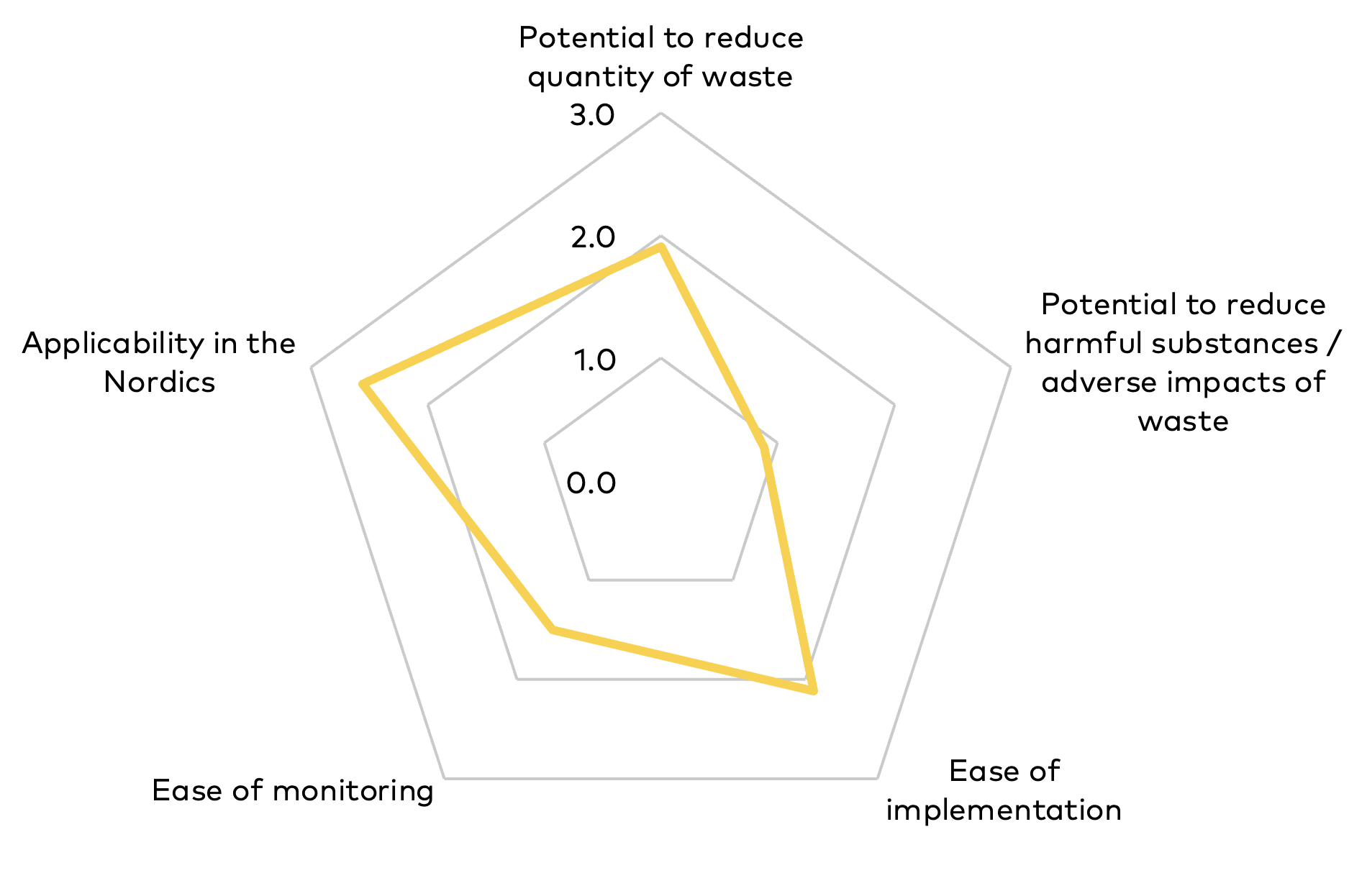 |
Waste fraction(s) | Mostly furniture, electronic products, and textiles | |
Responsible parties | Municipal authorities, citizens | |
Notes about effectiveness and feasibility | According to the Norwegian example, the same operating model can be copied to several municipalities. Most Norwegian municipalities have this solution already. Some respondents expressed significant concerns about who is responsible for the safety of reusable products Respondents highlighted the importance of easily accessible locations for these stations, with a preference for placement in city centres and suburbs. They also emphasise the need for cleanliness, attractiveness, and polite staff at these locations. Some experts express scepticism about the ability of reuse stations to make a significant difference. They suggest that promoting circular business models might be more effective in promoting sustainability. | |
References | BIR. (2023). Hent gratis i brukthallen! Available at: https://bir.no/bli-kvitt-boss/vaare-brukthaller/ | |
Second-hand platforms for private persons and companies
  | ||
|---|---|---|
Description | Finn.no is the largest second-hand platform in Norway for both private persons and companies. It is exceptionally broad in scope, including everything from properties to various commodities. There are similar platforms (with narrower scoper) in other Nordic countries (such as Tori.fi in Finland). | 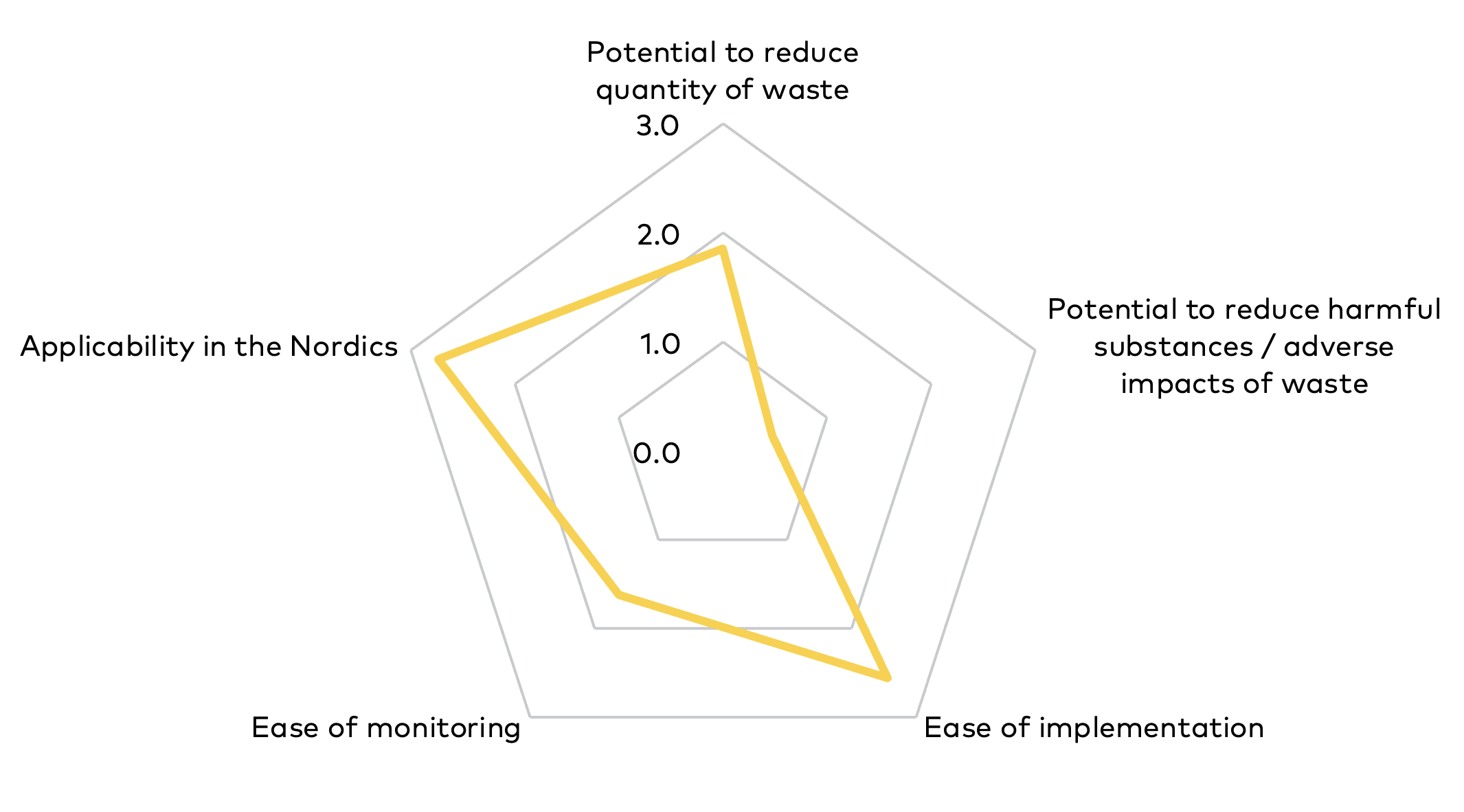 |
Waste fraction(s) | All | |
Waste prevention instrument | Business platform connecting people’s needs and unused resources | |
Responsible party | Businesses | |
Notes about effectiveness and feasibility | Many respondents acknowledge that second-hand platforms can help increase the demand for reusable products and prolong their lifespan. However, there is a consensus that these platforms do not always reduce waste or change individuals' behaviour significantly. It was noted that selling/buying items on second-hand markets may involve a risk of a rebound effect, where new purchases are "morally licensed”. It is also a bit unclear how to expand the potential of the platforms as there are already various forms of second-hand platforms, from Facebook groups to private businesses. | |
Too Good To Go app
 | ||
|---|---|---|
Description | In Norway, food waste is reduced from restaurants, cafes, hotels etc., by selling surplus foods and drinks through the Too Good To Go app. There are similar examples from other Nordic countries (e.g. ResQ in Finland). | 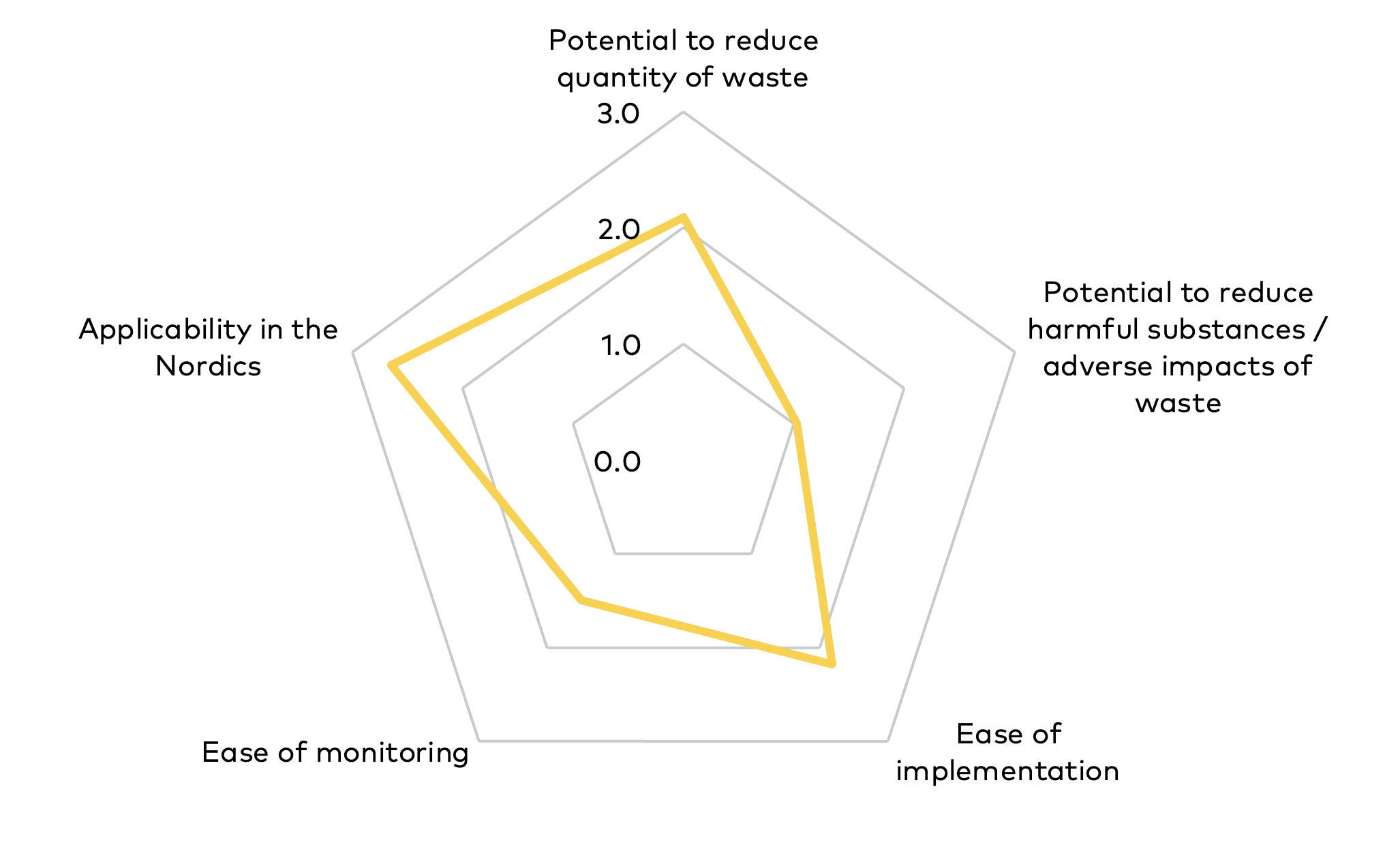 |
Waste fraction(s) | Food waste | |
Responsible party | Businesses | |
Notes about effectiveness and feasibility | The initiative was generally seen as a positive step towards reducing food waste and financial losses for businesses but there were concerns about its ability to address the underlying causes of food waste and the potential for consumer waste due to uncertainty about the items received. Some experts felt that the effectiveness of these kind of initiatives can vary depending on the provider, and there are challenges in measuring the true impact on waste reduction. | |
References | ||
Voluntary waste reduction commitments
   | ||
|---|---|---|
Description | Avfall Sverige – the Swedish waste management association has challenged municipalities to a voluntary commitment to reduce the amount of food and incineration waste by 25% by 2025, compared with 2015. By 2022, 91 municipalities had accepted the commitment. | 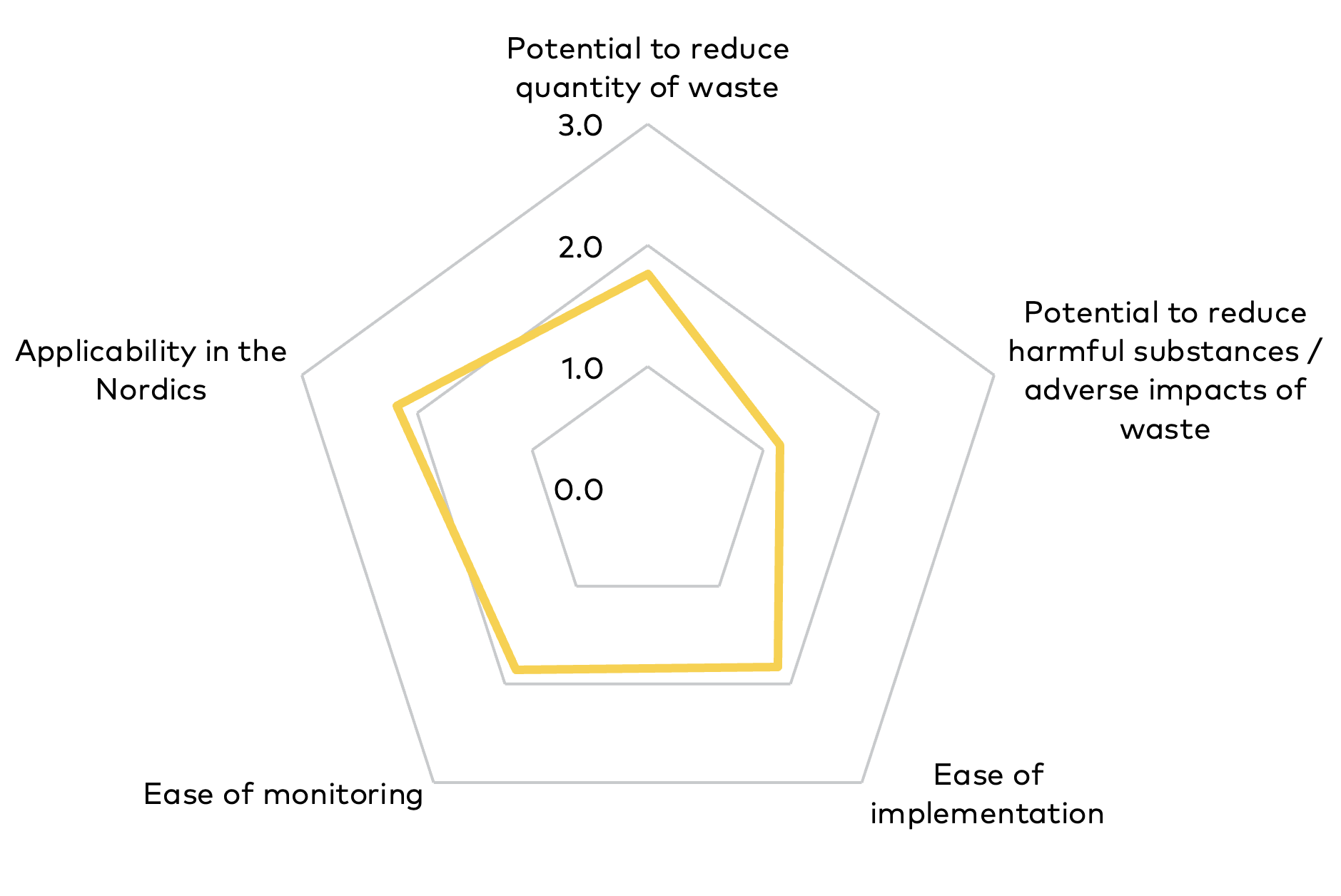 |
Waste fraction(s) | Biodegradable kitchen and canteen waste Mixed municipal waste | |
Responsible party | Municipality | |
Notes about effectiveness and feasibility | There were differing opinions regarding the effectiveness of voluntary commitments in waste management. While some view them as positive and see potential in expanding their scope, others are sceptical and stress the importance of concrete responsibilities and regulations in achieving waste management goals. The potential impact of voluntary commitments is difficult to assess at a broader national or Nordic level. Scaling is easy but needs of course work from each municipality. | |
References | Avfall Sverige. (2022). En bit på väg mot 25/25-måle. Available at: https://www.avfallsverige.se/aktuellt/nyheter/en-bit-pa-vag-mot-25-25-malet/ | |
Waste prevention – food
 | ||
|---|---|---|
Description | In the Nordics, there are several non-profit, voluntary consumer movement that fights food waste, among other things by ensuring that local supermarkets can hand over food products that are about to pass their expiry date. The food is collected up and can be collected free of charge by people who need it. | 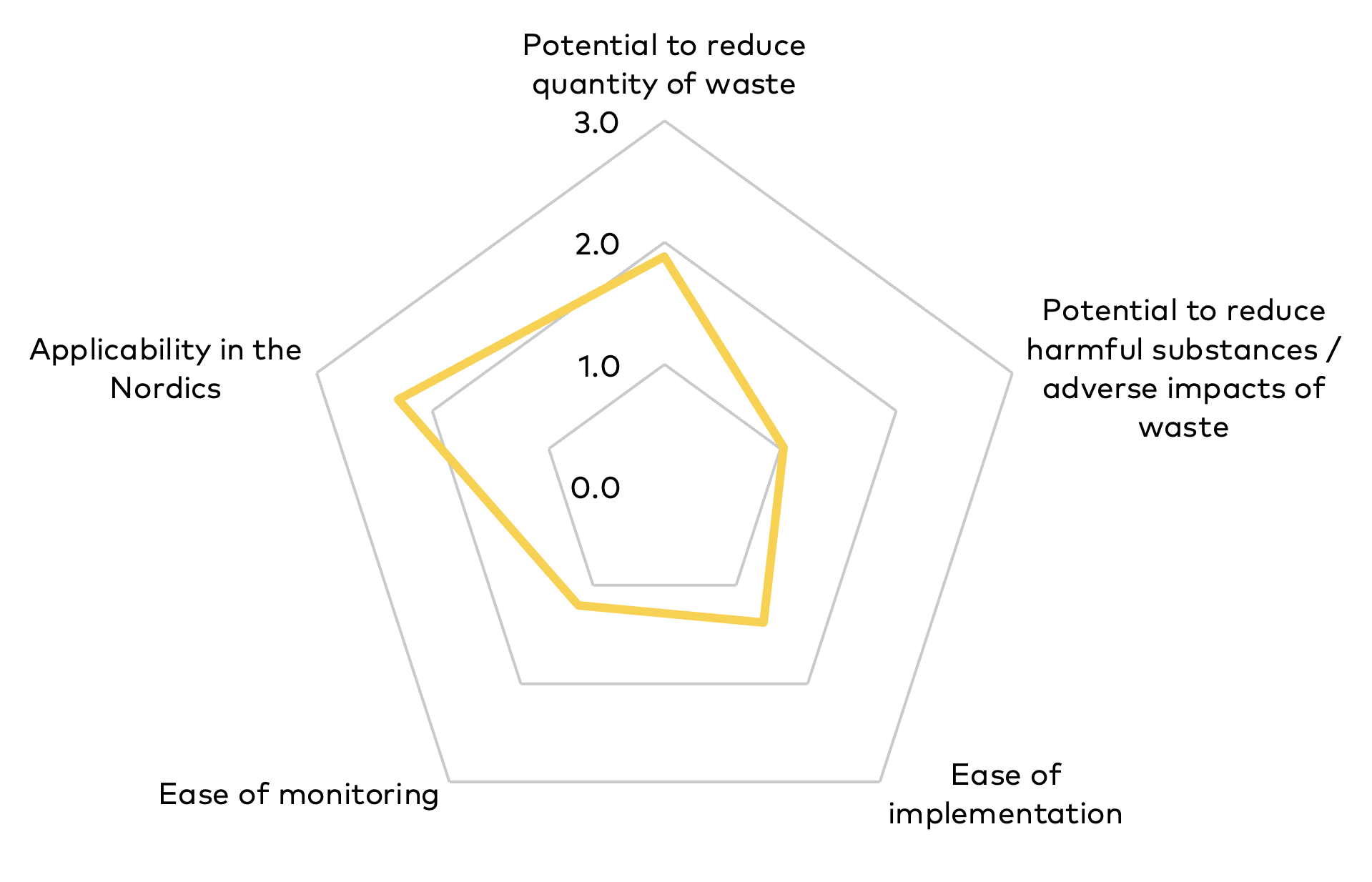 |
Waste fraction(s) | Food waste | |
Responsible party | NGO | |
Notes about effectiveness and feasibility | The survey responses revealed a range of opinions, with some emphasising the importance of addressing the root causes of food waste and others highlighting the value of practical solutions and successful citizen movements. Actions against food waste were seen as important as food waste typically causes a lot of environmental impacts. Different NGOs are already working on the topic in different countries. Food safety must be always guaranteed. While consumers movements were seen as a valuable method for handling surplus food, they do not necessarily tackle the underlying issue of overproduction and overstocking, thereby underscoring the importance of addressing the fundamental causes of food waste rather than merely concentrating on its management. | |
Waste prevention in Gothenburg
 | ||
|---|---|---|
Description | Gothenburg Municipality has in its waste management plan set a target of reducing the amount of waste from its own institutions by 40% per employee. The municipality has developed extensive guidance, checklists, and routines for its different institutions, such as schools, offices, care institutes, etc. All tools and materials are free to use by other municipalities. | 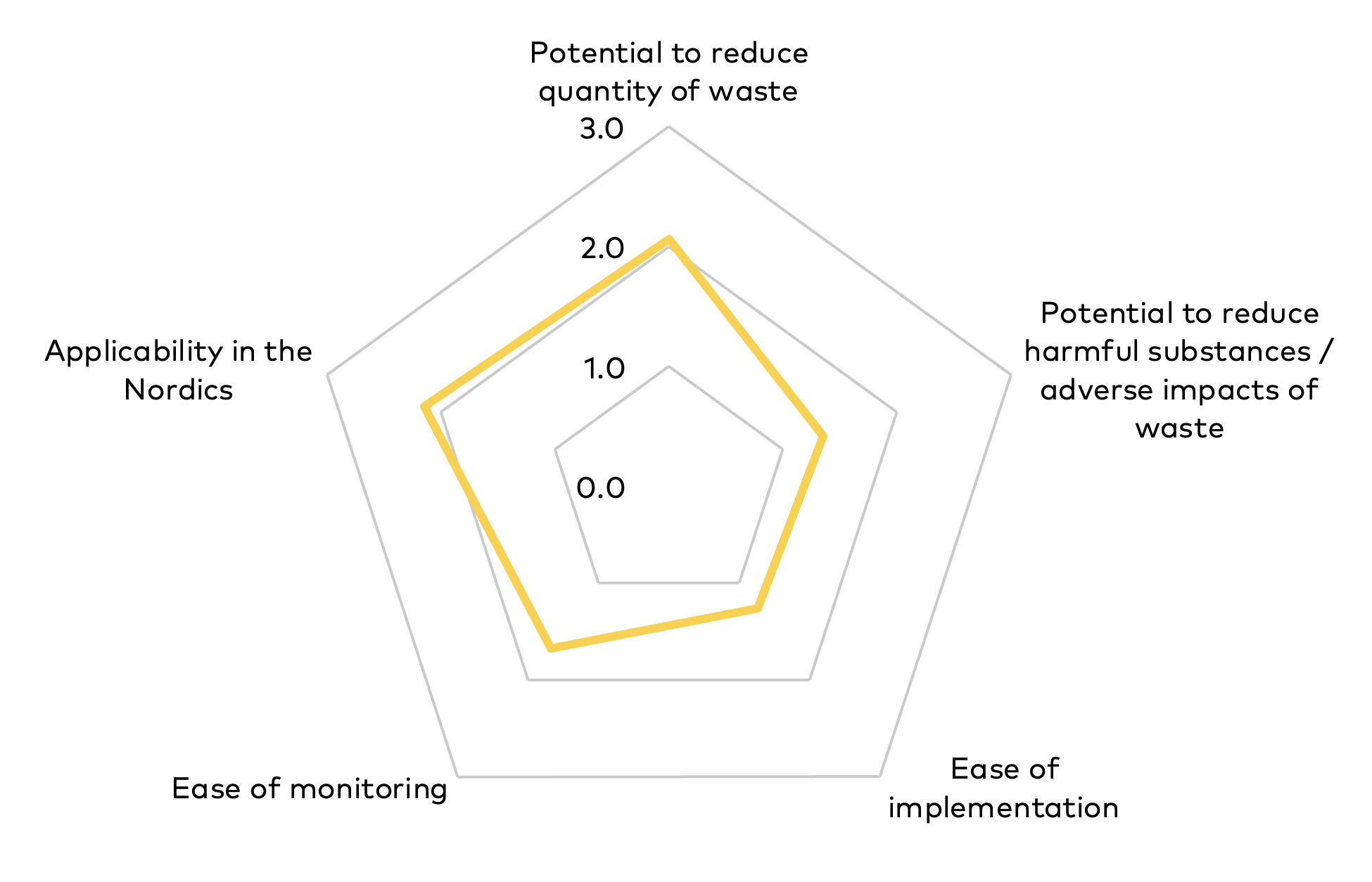 |
Waste fraction(s) | All | |
Responsible party | Municipalities | |
Notes about effectiveness and feasibility | The survey responses revealed varying opinions on the effectiveness and challenges of waste prevention targets in municipal contexts. In summary, the differing opinions revolved around the effectiveness and practicality of waste prevention targets, with some supporting ambitious goals and others emphasising the need for flexibility and considerations of the specific sector or municipality. Additionally, concerns about administrative burdens and funding constraints were also highlighted. The effectiveness may be low if there are no real consequences for inaction. | |
‘Best before but not bad after’ stamps
 | ||
|---|---|---|
Description | A stamp on food and drink items in grocery stores, to help the consumer to understand that some foods and drinks still can be safely consumed after the expiration date. | 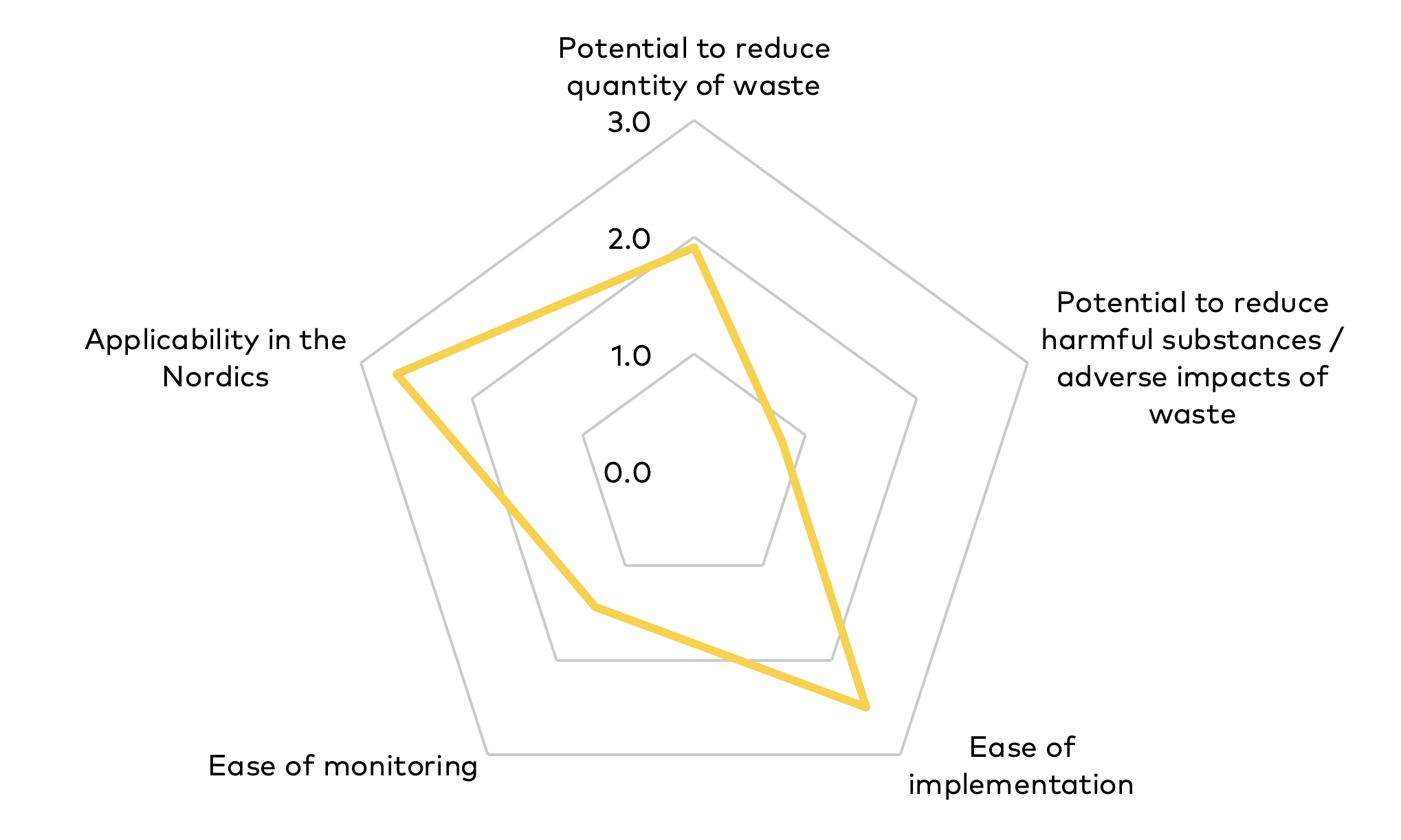 |
Waste fraction(s) | Food waste | |
Responsible party | Retail sector | |
Notes about effectiveness and feasibility | Most the food waste originates from the households. If the label were to prevent throwing food away, the potential is high, but monitoring is difficult. No apparent regulatory barriers identified. This measure was evaluated to be kind of nudging that has proved effect. | |
References | Spis opp maten. (2023). Best før, men ikke dårlig etter!. Available at: https://www.spisoppmaten.no/single-post/2018/01/09/best-f%C3%B8r-men-ikke-d%C3%A5rlig-etter | |
Nordic Swan Ecolabel
   | ||
|---|---|---|
Description | The Nordic Swan Ecolabel contains criteria that enforce a reduction in environmental impacts and hazardous substance content. | 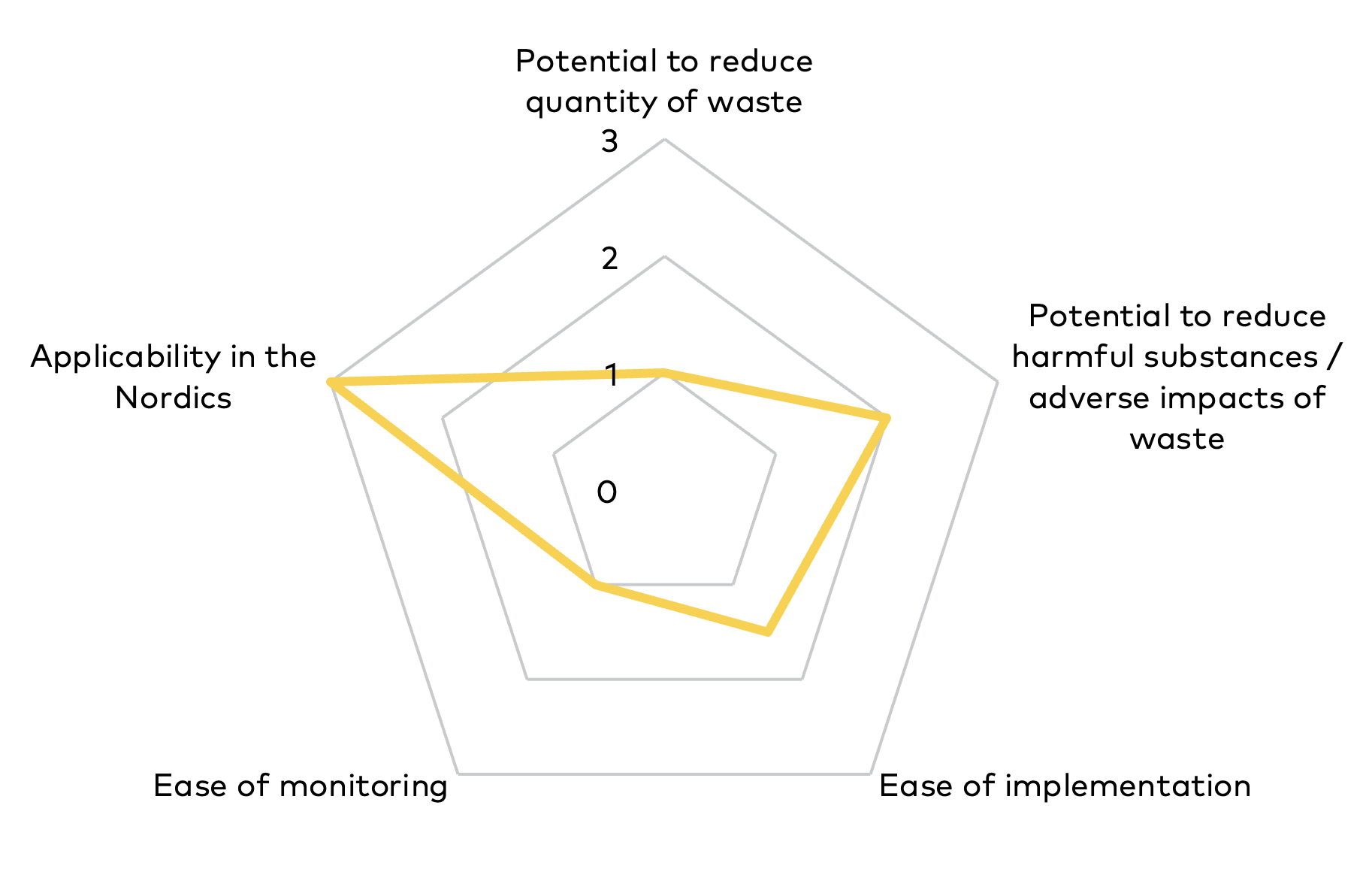 |
Waste fraction(s) | Several | |
Responsible party | Governments | |
Notes about effectiveness and feasibility | Survey respondents felt that the effect of ecolabels depends on the consumers' willingness to buy certified products. Product groups might also be too narrow for impact. | |
Waste treatment tax
   | ||
|---|---|---|
Description | A tax on landfilling (2000–present) and incineration (2006–2010 and 2020–2022) of waste. The taxes have been introduced partly with the motive of promoting recycling and reuse of waste. The incineration tax was discontinued as of 2023. | 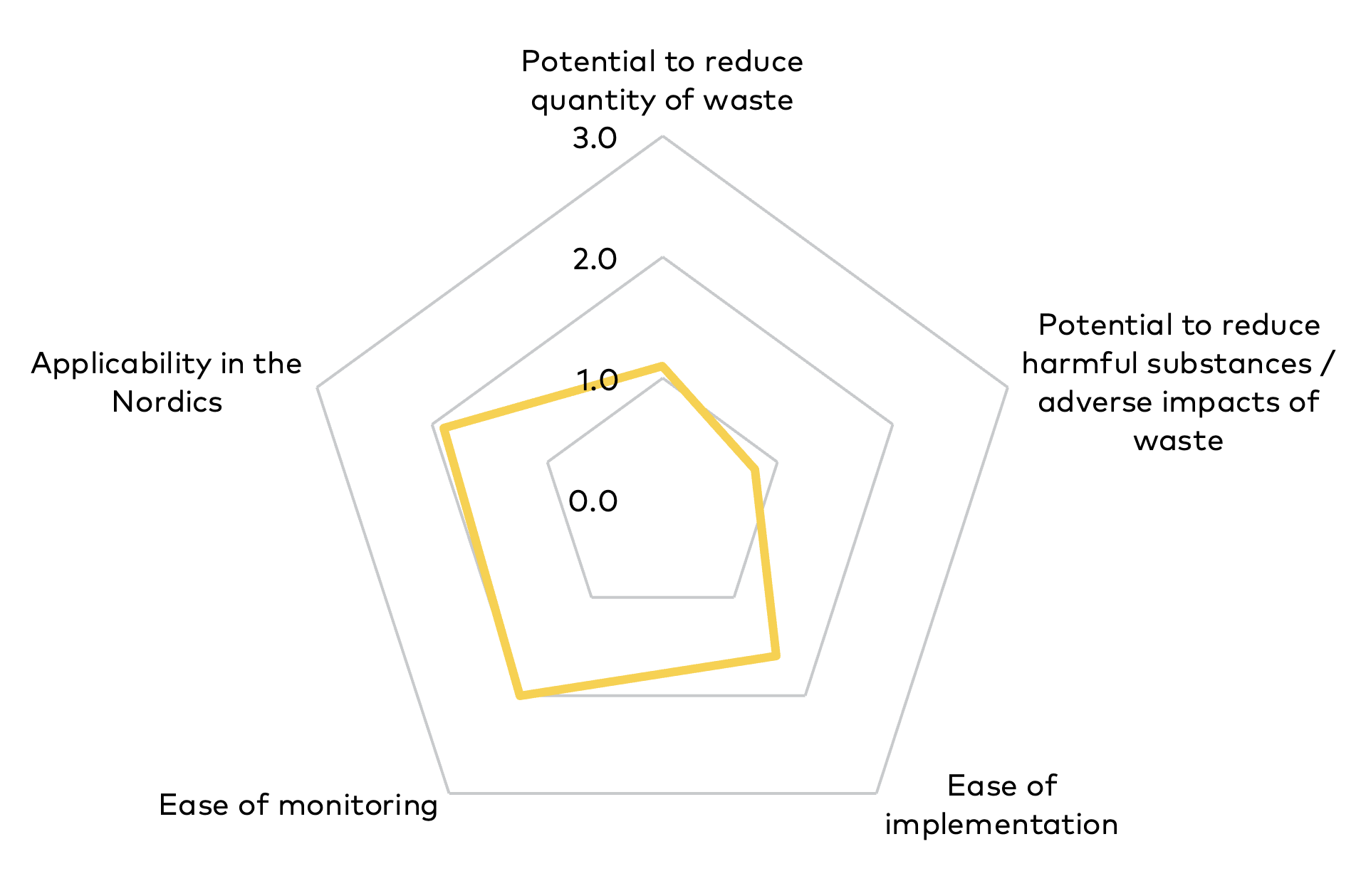 |
Waste fraction(s) | All | |
Responsible party | Government | |
Notes about effectiveness and feasibility | Respondents' opinions vary, with concerns about adverse effects such as increased challenges in recycling and burdens on municipalities. Some argue it challenges waste incineration dependency, while others doubt its impact on waste reduction. There are concerns about waste export if taxes rise, conflicting with EU waste movement goals. Suggestions include targeting producers of non-recyclable products and exploring a middle ground for countries reliant on waste incineration for heat. The Swedish experience is cited as evidence of the tax's limited impact on waste. | |
References | ||
Scottish carbon metric
   | ||
|---|---|---|
Description | A weighted tool applied to municipal waste, which produces a carbon-weighted result for municipal tonnage. The objective is to steer policy and implementation towards waste streams with the highest carbon content. So, it is not primarily to do with waste reduction by weight, but rather weight reduction by climate effect. It was introduced in 2010 and initially made mandatory alongside EU recycling targets for municipalities to meet. However, the mandatory nature was withdrawn amidst complaints from municipalities that insufficient consultation had been undertaken. It is now voluntary, but all annual waste reports feature a ‘carbon metric’ version. The initial effect it had was significant. Overnight, municipalities strove to move collections to waste streams with the highest carbon content. However, these were not always compatible with existing infrastructure and services were geared towards weight-based reporting. The tool is available for anyone to use and is based on LCA data that is updated annually. https://www.zerowastescotland.org.uk/resources/what-carbon-metric | 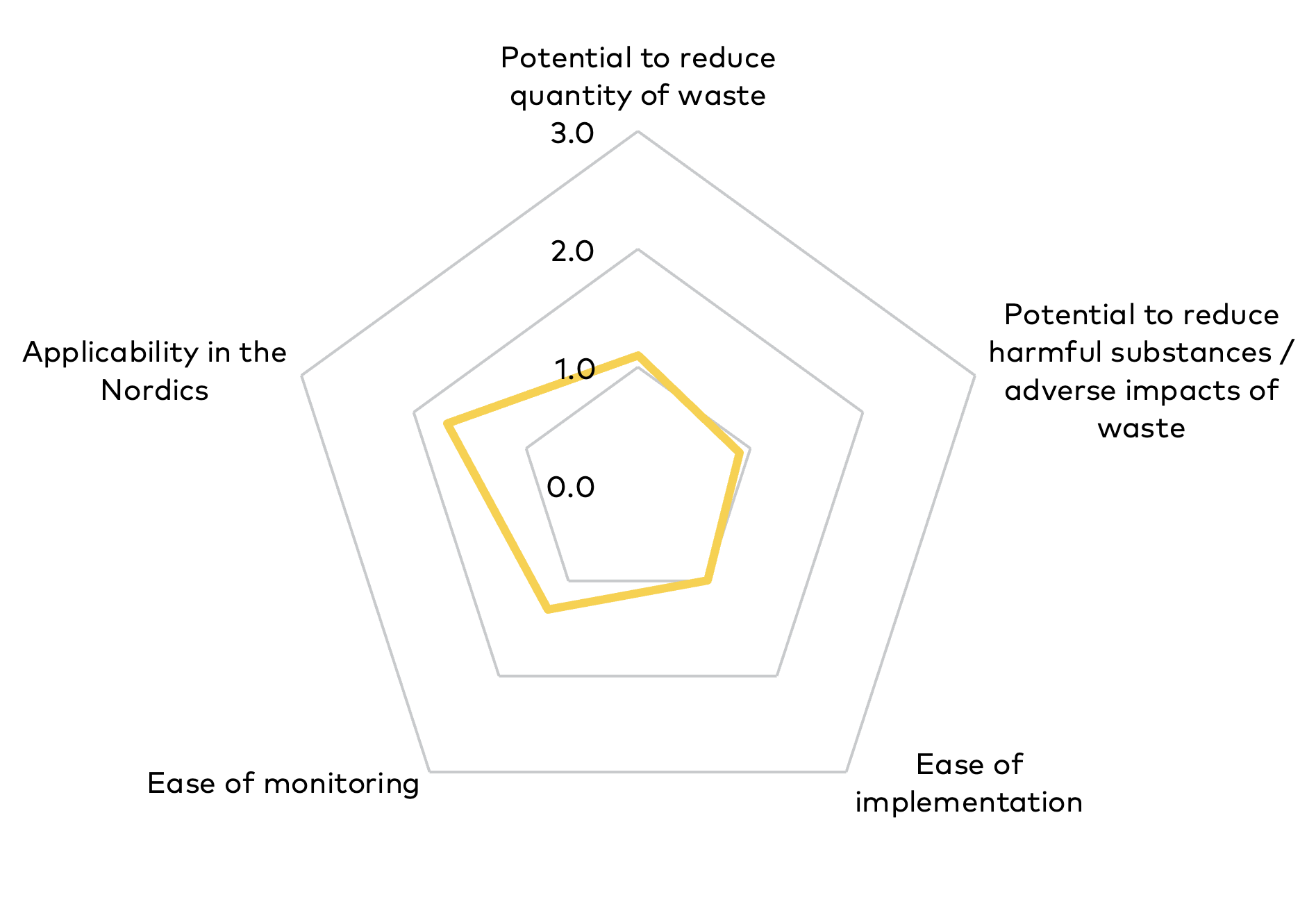 |
Waste fraction(s) | All | |
Responsible parties | Government, municipalities | |
Notes about effectiveness and feasibility | Respondents expressed doubt about a waste optimisation tool's effectiveness, especially regarding substances beyond CO2. There is skepticism about its impact without a focus on waste minimisation. The respondents emphasise the need for a holistic view on material footprints instead of solely focusing on CO2. | |
References | ||