5. Economic steering instruments for effective waste prevention
5.1 Vision for waste prevention in some critical value chains
The value chains of textiles, consumer electronics and plastic packaging are essential value chains in municipal waste prevention. In all three value chains, the potential to reduce environmental impacts and risks or the hazardous substance content is high, the recycling markets need further improvement and the potential to prolong the lifespan of products is high. However, the value chain dynamics differ from one another and therefore different waste prevention and reuse strategies are necessary. For example, plastic packages are often short-lived products by nature and promoting the circular economy can often mean promoting recycling processes rather than reuse, although different kinds of reusable packaging are gradually becoming more common. In the case of consumer electronics, the promotion of waste prevention and reuse can be hampered by factors such as programmed degradation, the difficulty of repair and the accumulation of unused products in households. The textiles sector, on the other hand, is largely defined by the dynamics of fast fashion and the challenges it poses, such as low-quality products, products that quickly end up as waste, and marketing strategies convincing consumers to constantly buy new products. These differences are visible in the circular economy visions (partly based on the Ellen MacArthur Foundation (2018)) for the three sectors, leading to variations in the high-level policy targets for the implementation of a systemic circular economy in each sector.
5.1.1 Textiles
The vision for a circular-economy-based value chain for textiles can be described as a transformation of the entire value chain from material production and design to manufacturing, retail, use and end-of-life, so that the aim throughout the whole system is to minimise waste and maximise product lifespans through closed-loop cycles, emphasising efficient and long-term product use, reuse, repair, and refurbishment (Figure 7).
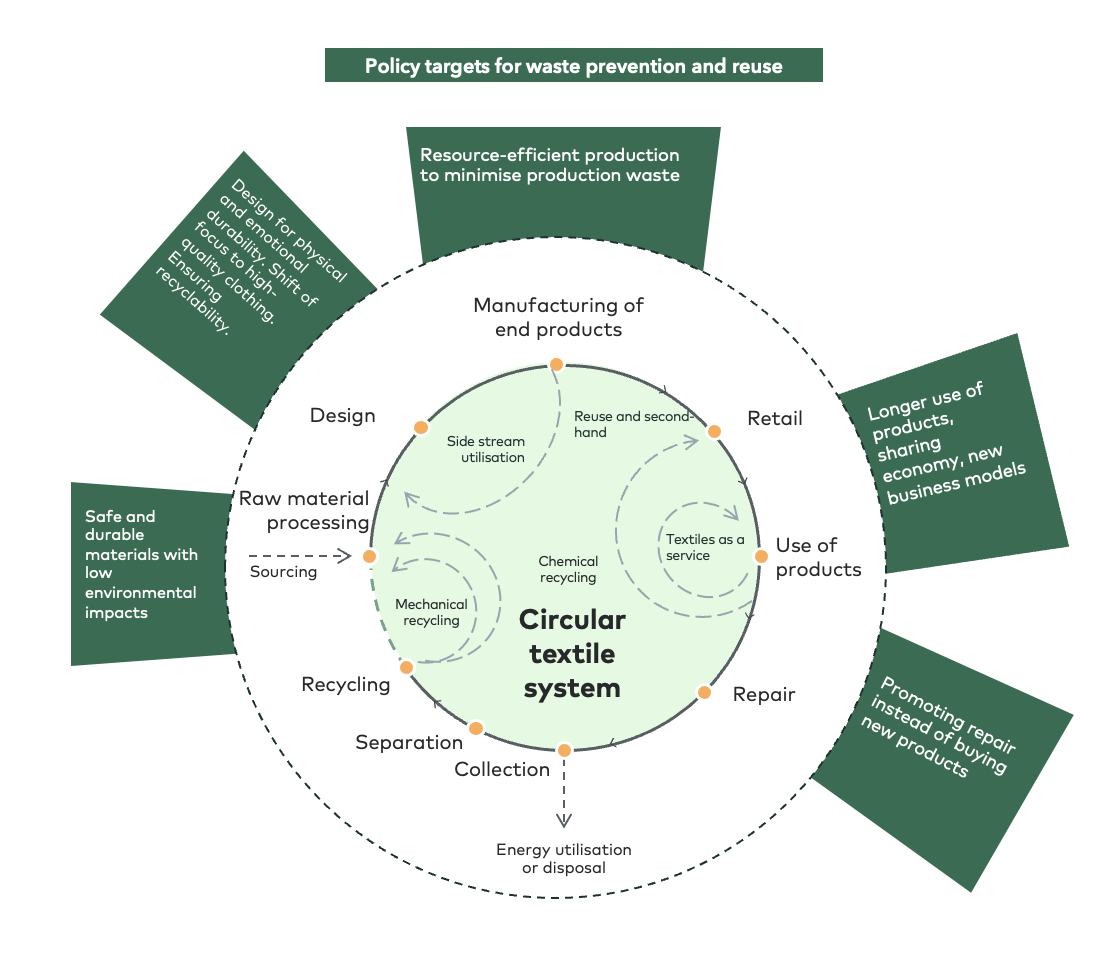
Figure 7. Policy targets for waste prevention and reuse in the textile value chain.
For textiles, implementation of the R-strategies would mean:
Refuse: Choosing not to produce or buy low quality textile products with a short material lifespan and low emotional durability.
Rethink: Changing the way textiles are designed, perceived, and used. Implementing circularity-oriented business models, e.g. clothing rental, textiles as a service, second-hand and new fibre innovations.
Reduce: Aiming to minimise the input (e.g. water, energy, raw materials) in textiles. Reducing the use of hazardous substances in the manufacturing process as well as the use of fabrics with high environmental impacts and mixed fabrics with poor recyclability.
Reuse: Encouraging the prolonged use of textiles in their original form by a different user once the original owner no longer needs them. This can be facilitated through second-hand stores, online platforms (peer-to-peer, business-to-consumer), donation programmes, swap events and brands’ own reselling programmes, among other approaches.
Repair and refurbish: Promoting and facilitating the repair, cleaning, and restoring of damaged or worn-out textiles to enhance their appearance and extend their lifespan. This can include mending tears, re-dyeing fabrics, or updating designs.
5.1.2 Consumer electronics
The vision for a circular-economy-based consumer electronics value chain can be described as a transformation of the entire value chain from material production and design to manufacturing, retail, use and end-of-life. The system aims to minimise waste and maximise product lifespans through closed-loop cycles. Eventually, devices end up in the hands of specialists, who will professionally refurbish products, reuse, or remanufacture the valuable components inside, and separate and recycle the various materials (Figure 8).
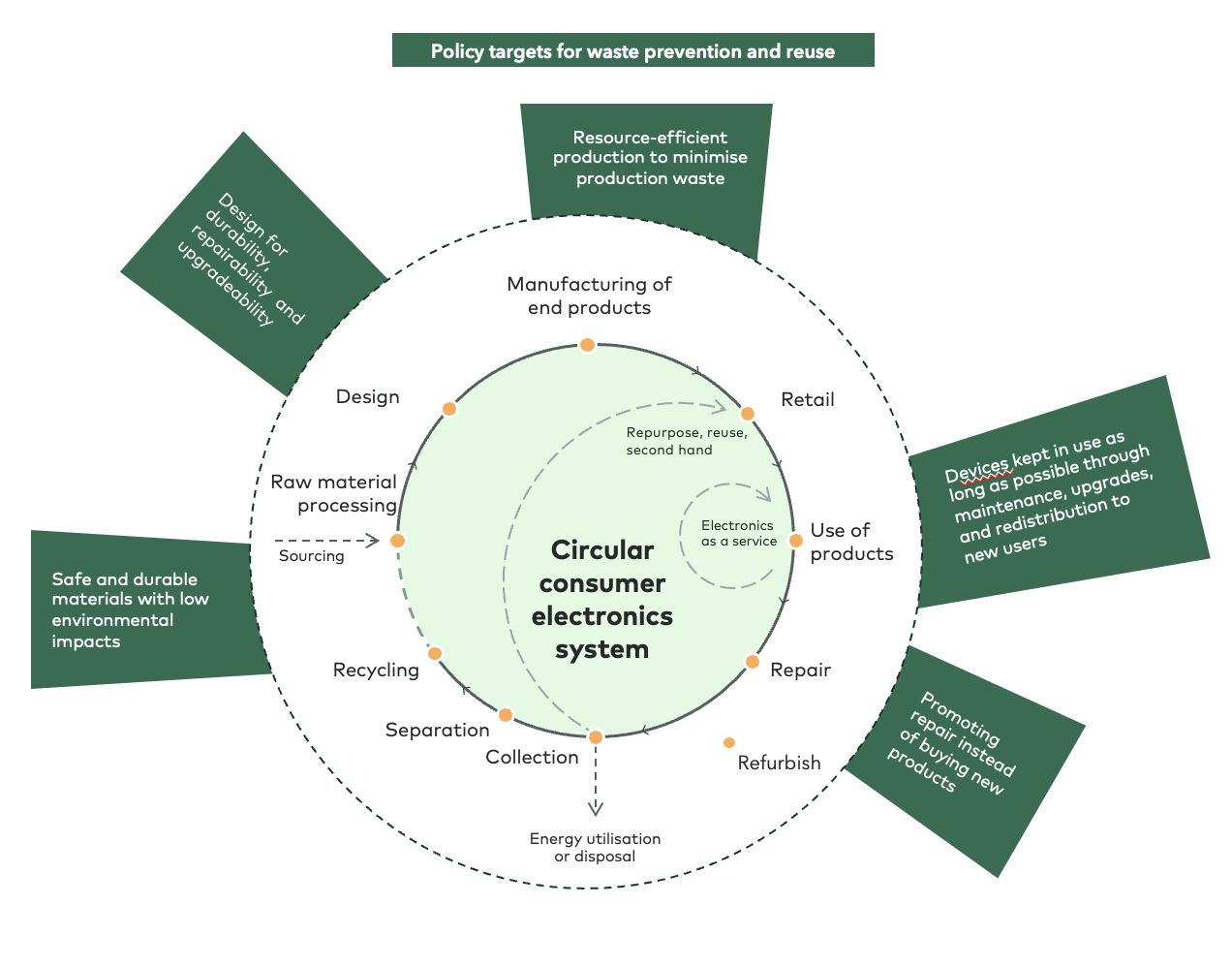
Figure 8. Policy targets for waste prevention and reuse in the consumer electronics’ value chain.
For consumer electronics, implementation of the R-strategies would mean:
Refuse: Choosing not to produce or buy low quality consumer electronics with a short lifespan and low emotional durability.
Rethink: Changing the way electronics are designed, perceived, and used. Designing products that have high physical and emotional durability, repairability, upgradability and ease of disassembly. Utilising modularity to enhance versatility and longevity in electronics.
Reduce: Aiming to minimise the input (e.g. water, energy, raw materials) in electronics. Reducing the use of hazardous substances (e.g. heavy metals, flame retardants, plastic softeners) in the manufacturing process as well as the use of virgin materials with high environmental impacts.
Reuse: Encouraging the prolonged use of electronics in their original form by a different user once the original owner no longer needs them. In the case of electronics, this can be facilitated through means such as online platforms (peer-to-peer, business-to-consumer), as well as through municipal or private reuse centres and donations.
Repair and refurbish: Adopting a new set of right-to-repair rules designed to encourage people to repair broken devices, rather than replace them. This requires products to be designed for repair as well as support for repairers of all kinds (such as electronics repair shops and repair cafés). Business models focusing on refurbishment of used electronics, such laptops and mobile phones, should also be advanced.
5.1.3 Plastic packaging
The vision for a circular-economy-based plastic packaging value chain can be described as a sustainable, circular plastics system encompassing the entire value chain from polymer production and product design to manufacturing, retail, use, and end-of-life management. The aim is to reduce reliance on virgin plastic resources, minimise environmental impacts, and enhance material recovery through efficient recycling processes, reuse, and innovative upcycling. The system emphasises product design for circularity, extended product lifespans, and high-quality recycling to close the loop on plastic use (Figure 9).
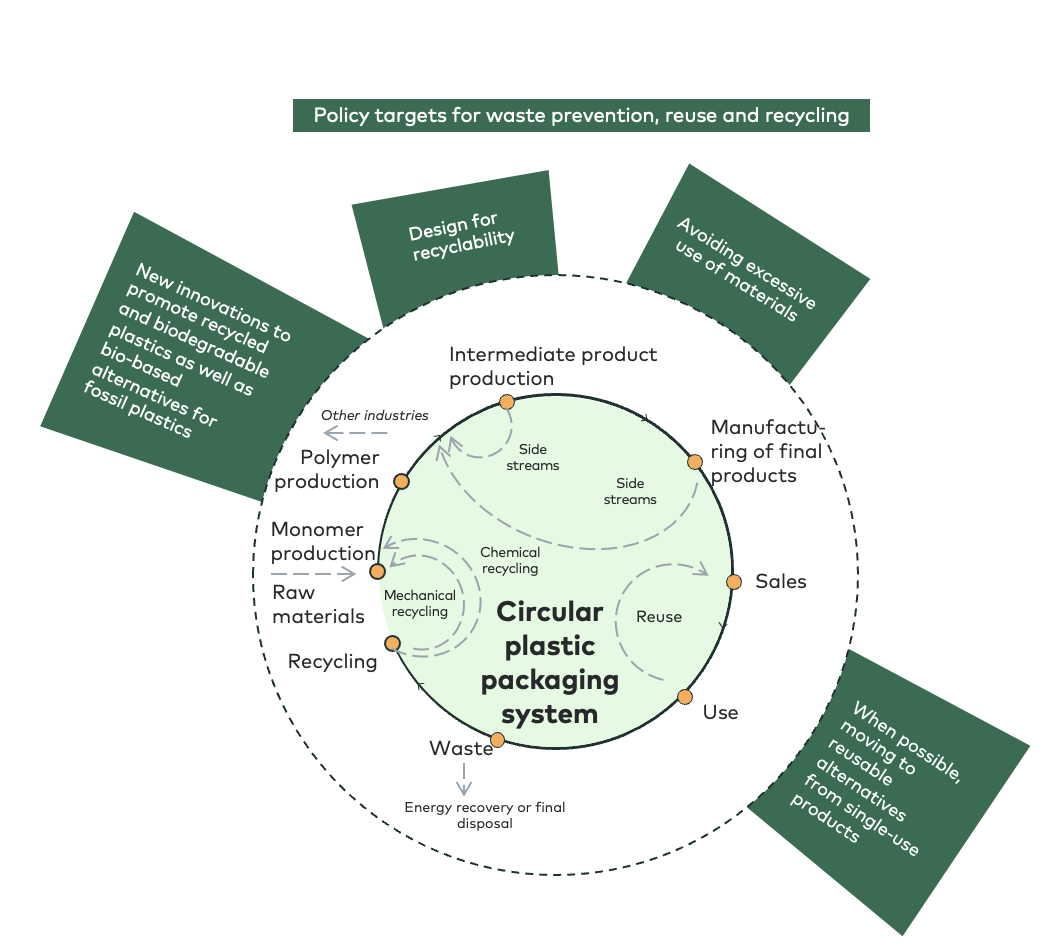
Figure 9. Policy targets for waste prevention and reuse in the plastic packaging value chain.
For plastic packaging, the R-strategies include the following aspects:
Refuse: Opting not to produce or purchase single-use plastic items and, when applicable, favouring alternatives that are non-fossil based and/or biodegradable.
Rethink: Transforming the design of plastic products to increase their durability and multifunctionality, as well as promoting products that can be easily integrated into circular business models, such as product-as-a-service systems (e.g. reusable packaging solutions).
Reduce: Aiming to minimise the input (e.g. water, energy, raw materials) in plastics production. Reducing the volume of virgin plastics used in products by incorporating recycled plastics and designing for minimal material use without compromising on product integrity. Also, reducing harmful additives that complicate recycling processes.
Reuse: When possible, moving to reusable alternatives from single-use plastic packaging products.
Repair and refurbish: While less common for plastic packaging, the concept can apply to durable plastic items such as storage containers, where cracks or damage can be repaired rather than the item being replaced. Refurbishment for plastics could also include reinforcing weakened structures or aesthetic enhancements to extend the lifespan.
5.2 Economic steering instruments preventing textile waste – a case study
Scope of the case study
Textiles constitute a relatively substantial proportion of household waste and, both in terms of waste volume and reduction of harmful impacts of waste, the textile sector has a crucial role to play in the circular economy. Textiles therefore provide a good object for an in-depth case study on how economic instruments can accelerate change. Furthermore, a recent report of the Swedish national committee for exploring economic instruments for a circular economy (SOU 2024) points out textiles as a suitable value chain for more economic steering, and the French eco-modulated fee as an example worthy of consideration when EPR schemes for textiles are negotiated with the EU.
This case study aims to show what kind of system impact could be created through the combination of several economic instruments. As the R strategies elaborated on in section 5.1 show, it is important to look at both producer and consumer perspectives, and at different points in the value chain, to target overproduction and overconsumption. The case study focuses on three economic instruments with the potential to influence consumer behaviour and reduce municipal waste: targeted fees on fast fashion products, VAT reductions for second-hand sales and repair services, and R&D funding to support new circular business models. These instruments aim to promote sustainable consumption and circular economy practices.
In addition to the above, resource taxes and import taxes were identified as economic tools with a potentially significant impact on waste prevention. Resource taxes have been dealt with in a recent study (Eriksson et al., 2023), where it was found that they require globally convergent rules to be effective and should preferably be analysed within broader geographical boundaries than the Nordic region. This does not mean that the global work of the Nordic countries is seen as less important, on the contrary, the textile sector could benefit from similar frameworks to those of the global plastic agreement, where the Nordic countries are active negotiators.
The forthcoming EPR system for textiles was also identified as a significant tool. Under the proposed amendment to the WFD, the Member States must have their EPR system established within 18 months of the entry into the force of the directive, i.e. 2025 onwards (European Parliament, 2024; Compliance & Risks, 2024). France is the only Member State that has had an EPR system for textiles in place for a long time – since 2007. The Netherlands implemented an EPR system for textiles in 2023. EPR as such is not dealt with here as an economic instrument, but the development of economic instruments for waste prevention in the textile sector should preferably be linked to the EPR so that the measures strengthen its effectiveness and go beyond responsibility for collecting textiles for recycling.
Although this case study focuses on economic instruments, it is good to note that there are a range of other measures that also have the potential to change textile value chains. These include but are not limited to sharing economy activities by municipalities, reuse stations, commitments by the textile and fashion industry, and collaborative initiatives encouraging communities to engage in repair activities. These kinds of non-economic measures are presented in Chapter 4.
5.2.1 Targeted fees for fast fashion products
Description of the instrument
France's proposed legislative initiative No 2129, passed in March 2024 by the French National Assembly, presents targeted fees for fast fashion products. The initiative can be seen as a form of environmental tax/fee aimed at mitigating the negative impacts associated with the fast fashion industry (Assemblée Nationale, 2024). In spring 2024, French lawmakers unanimously approved the bill, greenlighting it for the Senate to consider – either to approve it, or to tweak it and send back to the lower house – before it can become law (AP News, 2024).
The initiative introduces two key measures to mitigate negative impacts of fast fashion:
Advertising ban and duty to inform: The bill bans advertising for fast fashion, including on social media, from January 2025, with penalties for breaches. Fast fashion businesses must also display messages, next to the price, encouraging moderate consumption as well as repair, reutilisation, and recycling and raising awareness about the environmental impacts.
Companies affected by these actions are defined through the number of new products introduced to the market. At the time of writing (October 2024), it is unclear what the concrete thresholds will be, but during the debates, the threshold of 5,000 new references a day was suggested (Grau, 2024). Thus, it seems that the legislative proposal is intended to target large fast fashion platforms such as Shein and Temu in particular.
Environmental penalty and bonus system: Another of the key features of the proposal is a financial penalty and bonus system. France has long had an EPR system for textiles (see Table 4 for the definition of EPR), and the new penalty system can be seen as an adjustment for the existing EPR system (Grau, 2024). Companies falling short of established sustainability benchmarks face a gradual levy that starts at €5 per item in 2025, increasing to €7 by 2026 and €10 by 2030 (AP News, 2024; ESG Investor, 2024). Eco-friendly companies may receive bonuses and a portion of the penalties will also be used to finance collection and recycling infrastructure in non-EU countries. The sustainability benchmarks for the products will be based on the French Product Environmental Footprint (PEF) system, which is currently being finalised (Grau, 2024) The French PEF is a method used to assess the environmental impact of products throughout their entire lifecycle. It evaluates various environmental indicators, such as greenhouse gas emissions and water usage. The French PEF system has faced some criticism. Kassatly and Townsend (2024) indicate that the system partially overlooks the usage phase of textiles, specifically the number of uses, as it calculates this based solely on garment type. Additionally, the lack of consideration for social sustainability in PEF scores has also raised concerns.
Motivation for adopting this instrument
The fast fashion sector is notorious for its detrimental effects, including massive textile waste, water pollution, and poor labour conditions (Niinimäki et al., 2020). The approach aligns with global efforts to promote sustainable consumption and has the potential to reshape consumer behaviour. It encourages consumers to rethink their purchasing habits, leading them to invest in higher-quality, sustainable alternatives (France24, 2024). This economic instrument aims specifically at directly targeting overconsumption and overproduction, which are key sustainability problems in the textile sector. The fees would demonstrate through political guidance that fast fashion is not considered to be sound. Starting with a low fee of €5 and increasing gradually to €10 in 2030 will give businesses time to adapt.
Examples of how this kind of instrument has been applied before
In 2015, England implemented a mandatory five pence (€0.06) charge for each single-use plastic bag provided by large stores. The impact evaluation demonstrated that all demographic groups – including various age, gender, and income categories – significantly reduced their usage of plastic bags within just one month of the charge's introduction (Thomas et al., 2019). Additionally, support for the bag charge grew among all key demographic groups. Increased support for the plastic bag charge in turn predicted greater support for other charges to reduce plastic waste, suggesting a ‘policy spillover’ effect. The plastic bag tax was also introduced in Sweden in 2020 as a way to achieve the EU's goal of reduced use of plastic carrier bags. The EU's goal is to get down to a consumption of no more than 40 carrier bags per person per year. Since the tax was introduced in Sweden, the consumption of carrier bags has decreased, from 83 per person in 2017 to 17 in 2022, according to figures from the Swedish Environmental Protection Agency (2023). As the targets have been met, the plastic bag tax was not extended from 1 November 2024 onwards (Sustainable Plastics, 2022).
Success stories from other areas, like tobacco, alcohol, and sugar taxes, provide evidence that health-related or environmental taxes and fees can reduce unwanted consumption (Jungsberg et al., 2024). A 10 per cent tax on waste from sugar-sweetened beverages was associated with an average decrease in demand of 5 to 10 per cent (Afshin et al., 2017; Green et al., 2013). According to some researchers, modest tax rates might not cause major shifts in consumption but can still result in substantial tax revenues. These funds could then be allocated to supporting alternative health and nutrition programmes (Capacci et al., 2012). These precedents suggest that applying similar mechanisms in the fast fashion industry could yield positive results.
The biggest challenges of adopting this instrument in the Nordic context
Firstly, defining what constitutes fast fashion can be complex, as it varies widely between companies and products. This ambiguity may complicate the application of fees, as companies could potentially exploit loopholes by altering their branding or marketing strategies without genuinely improving sustainability.
The transnational nature of the fashion supply chain makes it difficult to monitor and regulate practices effectively. Moreover, there is concern that low-income consumers may be disproportionately affected by increased prices resulting from such taxes, raising ethical questions about fairness and accessibility in fashion (France24, 2024).
There is also the risk that companies might relocate their production to countries with less stringent regulations to evade financial responsibilities, undermining the intended environmental benefits.
Expected short- and long-term impacts of this instrument
In the short term, consumers may experience an increase in prices for fast fashion items, leading them to reconsider their purchasing habits. Initial resistance may arise as consumers adjust to the new economic landscape; however, there is potential for a gradual acceptance of the idea that sustainable products come at a higher price due to their ethical production processes (CNN, 2024).
In the long term, the hope is that such measures will foster a cultural shift toward sustainable fashion practices. As brands strive to improve their sustainability metrics to avoid financial penalties, innovation may flourish within the industry. Companies might invest in sustainable materials, ethical labour practices, and circular fashion models, ultimately leading to a more responsible fashion ecosystem. This transformation could result in reduced environmental degradation, enhanced social equity, and a growing awareness among consumers about the true costs of their purchases (DLA Piper, 2024).
Additionally, the revenue generated from these targeted fees could be redirected toward supporting sustainable fashion initiatives, including education and awareness campaigns about the impacts of fast fashion. This reinvestment could further catalyse positive changes in consumer behaviour and industry practices.
Key takeaways or conclusions regarding this instrument's potential in the Nordic countries
While there are unresolved questions regarding the definition of fast fashion and the implementation and scoping of this instrument, its potential to drive systemic change is seen high, as it aims to target its steering mechanism directly at limiting overconsumption and thus at the root causes of sustainability problems in the fashion sector. The successful implementation of environmental or health-related taxes and fees, for example for plastic bags and tobacco, provides an encouraging example that consumption can be steered in the right direction through economic incentives. Aspects of social justification will need to be considered when using fees as a steering instrument.
5.2.2 VAT reduction on second-hand products and repair services
Description of the instrument
A VAT reduction on repair services refers to a decrease in the rate of VAT applied to certain types of repair or maintenance services. VAT is a consumption tax imposed on goods and services, and governments may lower VAT rates on specific services to support more sustainable consumption and employment in the repair sector.
VAT differentiation between new and second-hand textile products can be used to promote sustainable consumption by incentivising the purchase of second-hand goods. This differentiation is achieved by applying lower VAT rates (or exemptions) to second-hand textiles than to new products. The aim is to reduce the environmental impact by encouraging the reuse of existing textiles and lowering the demand for resource-intensive production processes used in manufacturing new textiles.
VAT reductions are a part of environmental taxes, which are defined by the European Environmental Bureau (EEB, 2022) as “taxes that go beyond the objective of internalising external costs, focusing on reducing the extraction, production and consumption of resources, retaining material values, and providing incentives for designing out waste and pollution”. In the case of private sales of second-hand textiles, VAT may not be required, but in general sales of used items, VAT usually needs to be paid by firms (NiinMua, 2020; Vero, 2023). In the trade of second-hand clothing and some other items, such as used electronics, the so-called hidden VAT increases the consumer price of the product (Kaupan Liitto, 2023). Some exceptions may appear where margin schemes are used, such as charity sales in Finland. For example, if the textiles are sold by a registered charity and the proceeds are used for charitable activities, these sales may be exempt from VAT (Vero, 2023).
VAT reductions in practice aim to provide incentives to guide people towards more sustainable consumption behaviour via price signals. Reducing the VAT on repair services and second-hand products aims to boost the availability and accessibility of repair services and encourage people to choose second-hand or repair services over purchasing new products (EEB, 2022). VAT can be lowered for repair services or second-hand products to differentiate them from new items and influence consumers’ purchasing behaviour.
Motivation for adopting this instrument
VAT reductions could simplify the regulatory framework for operators offering second-hand products or repair services (Regeringskansliet, 2024) and therefore encourage consumers towards more sustainable consumption, promote taking better care of items and reuse of textiles, and prolonging the lifecycle of textiles.
In general, people in Europe would be willing to use repair services instead of purchasing new items, but rarely do so as repair services are too expensive for them to access (RREUSE, 2017). While taxes on use of natural resources are relatively low, labour is heavily taxed in Europe and a VAT reduction on repair services could address the need to fix items instead of replacing them with new purchases and result in a limitation in the use of natural resources (Dalhammar et al., 2020).
Examples of how this kind of instrument has been applied before
VAT reductions on repairs of bicycles, shoes, leather goods, clothing and household linen were applied in Sweden from 2017 to 2023. The VAT rate was first decreased from 25 per cent to 12 per cent in 2017, and further decreased from 12 per cent to 6 per cent. In 2023, the committee proposed increasing VAT back to 12 percent, due to a desire for uniformity in the VAT system – a revenue source for the Swedish state – and the competitive neutrality of the markets. The committee also saw the effectiveness of this instrument as relatively minor and considered the economic situation overall to be challenging, which lent itself to the increase in VAT. The Swedish Government also stated that VAT is essentially designed as a fiscal tax, and using VAT reductions as an economic policy instrument oversteps the primary purpose of VAT (Sveriges Riksdag, 2022).
A qualitative analysis was also conducted in Sweden to find out the effects of the VAT reduction. According to Eunomia’s and EEB’s interviews (EEB, 2022), a minority of the interviewees noticed an increase in use of their repair services since the implementation of the VAT reduction. Furthermore, it was hard to determine whether the possible increase in the use of repair services was due to VAT measures or other factors, such as the high purchase price of new, similar products.
In Belgium, there have previously been trials of VAT reductions for certain types of second-hand shops, where VAT was lowered to 6 per cent instead of the usual 21 per cent. (Miljøministeriet, 2014). The examples were relatively limited, and no measurements of waste prevention effects could be found. Based on the theoretical discussions on VAT, there were suggestion of reducing VAT “on products with an extended warranty, products that can be shown to be less waste-intensive than similar products and on services that can be shown to be a more environmentally friendly alternative to purchasing a similar product” and differentiated VAT could be applied in particular to repair services for white goods (e.g. refrigerators, freezers and washing machines).
The biggest challenges of adopting this instrument in the Nordic context
According to an earlier comprehensive study in Denmark (Miljøministeriet, 2014) economic instruments that seek to promote repair services, such as VAT differentiation, affect mainly the relatively small industry of repair services and the effectiveness of these instruments seems to remain mostly symbolic. The effects of VAT differentiation on actual demand among customers remain uncertain. Furthermore, examples are relatively limited, and measurements of any waste prevention effects are largely non-existent. Although this study is somewhat older, the situation seems to have remained by and large the same until recently.
VAT reductions may not have such significant effects on products with relatively low prices, such as textiles, as the role of VAT and any reduction in its level in price formation remains small. Compared to more expensive products, such as consumer electronics, the VAT reduction on second-hand items and/or repair services could more strongly guide consumer behaviour towards sustainable consumption, as the economic advantage is larger. Regarding consumer behaviour, there is a dilemma as to whether buying second-hand really reduces the amount of textiles purchased. This dilemma calls for a more systemic change in our consumption habits. According to Finnish studies (Kaupan Liitto, 2023; Baltic2Hand, 2023), even if people purchase second-hand items instead of consuming new items, many tend to purchase items they don’t need or use.
This instrument would be fairly easy to apply in Nordic countries, as the VAT system is governed by the EU Directive on the common system of value added tax (Directive/112/EC) and several EU Member States, including Finland and Sweden, have already made efforts to reduce VAT on repair services and second-hand products (RREUSE, 2017). The case example from Sweden made VAT reductions and increases seem quite flexible and relatively easy to implement, as the VAT rates were modified according to the wishes of the government at the time and several times during the years 2017–2023.
Despite the relatively easy implementation of VAT reductions and increases, the Swedish example highlighted the understanding of the primary purpose of taxation and economic impacts of taxes for the Member States, which may conflict with implementing different tax reductions, especially in economically challenging times.
Expected short- and long-term impacts of this instrument
The lack of thorough impact assessments studying the effects of VAT reductions at national level makes it difficult to draw conclusions on their effectiveness. As stated by the Norwegian government and the expert committee, there is not enough research available on how economic instruments such as environmental taxes and VAT reductions might affect or develop the circular economy. The committee strongly emphasised the importance of up-to-date research and studies in the field (Eriksson et al., 2023). Such impact assessments need to be carried out for each Nordic country separately, before being aggregated at Nordic level, as they are based on national statistics and the specifics of each country.
Additionally, referring to Sweden’s example and decision making, the evaluation of VAT reductions’ long-term effects needs to give careful consideration to the impacts on revenues from taxation for Member States and the overall market dynamics (Eriksson et al., 2023). It can be concluded that there is potential to increase overall demand for second-hand items and repair services by reducing VAT. According to an older Dutch study (referred to in Miljøministeriet, 2014), a maximum of a 10% increase in the second-hand and repair market can be expected, and in the textile sector, the impact is potentially smaller than this. When interpreting these results, one should, however, note that consumer awareness regarding sustainability and the circular economy have developed significantly in the past 10 years.
Key takeaways or conclusions regarding this instrument's potential in the Nordic countries
A VAT reduction on second-hand products and repair services as an economic instrument is not seen to be impactful enough as such without systemic change and a focus on behavioural aspects of consumption, too. The overall influence of VAT in the price formulation of relatively cheap products like textiles remains marginal and does not directly address problems related to overproduction. Still, VAT reductions could have a symbolic effect and send an important message to consumers, directing them towards more sustainable consumption of textiles, and should not therefore be forgotten when assembling the toolkit of economic instruments promoting waste prevention and reuse. On the other hand, the recent report by the Swedish national committee looking into potential economic instruments promoting the circular economy (SOU 2024) points out that, for example, repair vouchers will have exactly the same impact, and be easier to both implement and monitor.
5.2.3 R&D funding for developing new circular business models
Description of the instrument
Over the past ten years, the Nordic countries have made significant systematic efforts to target public innovation funding towards the development of circular business models. While many of these efforts are targeted at ensuring an efficient collection and circulation system for textiles (e.g. the Nordic SATIN project). This case study focused on new circular business models for the textile sector, such as sharing platforms, product-as-a-service models, and different solutions for product life extension (like second-hand sales). These kinds of business models are supported through means such as innovation programmes in the Nordic countries.
- Product-as-a-service models for the textile sector include, for example, renting work clothing and consumer clothing. For work clothing, there are functional market-based solutions in place (e.g. Lindström in Finland). On the consumer markets, companies have faced a greater struggle with surviving. The Norwegian quality-clothing rental company Vibrent (originally called Fjong) went bankrupt in February 2024, and the Finnish equivalent Vaatepuu closed down its outlets in autumn 2024 until further notice and is concentrating on developing its business models (Vaatepuu, 2024).
- Product life extension is supported by means such as the second-hand trade, with a few online businesses functioning in the markets. In Finland, a frequently cited success story is Emmy Clothing Company. Some bigger companies have implemented their own take-back-and-reuse models, one example being the Finnish children’s clothing company Reima, which launched its Reima Rescue app in 2021 for consumers wishing to resell their used Reima items. As an additional incentive, the company offered bonuses to consumers who used the app.
Motivation for adopting this instrument
The rationale of targeting public R&D funds at the development, testing and piloting of new circular business models is to accelerate market-based activity where value creation is detached from the use of (virgin) resources. Based on evaluations of such RDI programmes, the main benefits for companies can be summarised as falling into the following categories.
Risk reduction. Public RDI funds help to reduce and share financial risks for companies pursuing innovative business models, like product-as-a-service models (e.g. clothing rental) or ‘take back and reuse’ models (e.g. market-driven platforms for second-hand sales). It also enables smaller companies that would not have the resources for innovation and technology development, and different kinds of digital service providers, to participate in developing business models in ecosystems with more established companies.
Boosting market creation and business model innovation. Public R&D funding helps boost business model innovation and promote business models that encourage reuse and reducing textile waste, including driving a shift in consumer habits toward sustainability. From the consumer perspective, to be attractive, such models need to be affordable, easy, and accessible to use, meet a real need and preferably offer some additional benefits to normal linear purchasing models.
Support from existing structures. The instrument is, in general, considered easy to implement. There are established systems and national and regional development programmes that support businesses’ R&D activities, making the implementation and monitoring relatively easy.
Examples of how this kind of instrument has been applied before
Different support instruments for innovation and business development are used in all of the Nordic countries.
- Business Finland’s Bio and Circular Finland programme (2021–2023) followed by the mission area ‘Circular transition for zero waste’ aimed at developing competitive circular economy solutions and ecosystems with market potential, one of the focus areas being textiles (Business Finland, 2024). One of the key developments funded by Business Finland within the Telaketju/Telavalue textile innovation ecosystem in Finland has been the exploration of innovative models such as ‘clothing-as-a-Service’ for work clothing needed by municipal institutions (Telaketju, 2024) and ‘take-back-and-resell’ initiatives aimed at companies operating in the consumer market (Launonen, 2023).
- Sweden’s strategic innovation programme RE:SOURCE (established in 2016) finances projects within the sustainable materials field, the aims being to decrease material use, prolong lifecycles and promote reuse and waste prevention. The governmental programme is funded by VINNOVA, the Swedish Energy Agency and Formas, and led by the Swedish research institutes RISE. Recent projects include a study on households’ wardrobes and the potential to decrease wardrobe size and promote reuse (RE:SOURCE, n.d.).
- As one of its focus areas, Innovation Norway funds projects aiming at new business models for longer lifecycles and reuse of products, components and materials. (Innovation Norway, 2024)
Evaluations of innovation programmes show that some funded companies have been able to develop functional business models. The effectiveness of this economic instrument relies on both the skills of the supporting organisation providing the investment, how good the investors are at assessing the potential of the businesses, and other market aspects, as it is classified as risk funding.
The biggest challenges of adopting this instrument in the Nordic context
The biggest drawback with this kind of public support for developing new circular business models for the markets is the uncertainty of results and impacts, i.e. the instrument does not have any direct impacts on waste prevention, and any possible results occur only in the longer run and are dependent on many other factors within the markets. One of the key challenges for new circular businesses is the market maturity of new business models. Even good ideas might not survive scaling after the initial phase without further support, limiting their long-term impact. This is not, as such, a challenge of the scheme itself, but more one of the markets for these kinds of business models, and the time it takes to impact consumer behaviour.
Limited impact on new clothing production. While promoting reuse, this instrument does not directly tackle the core issue of overproduction and overconsumption of textiles. The supported business models may not significantly reduce the overall production of new clothing, which is a primary source of textile waste. As clothing is a commodity that is usually not limited to just a few items per household, there is a risk that more affordable ways of purchasing clothes will just add to the number of purchases. At best, these kinds of schemes probably work with clearly focused customer groups (e.g. parents of rapidly growing children, or professional institutions who need specific professional gear). With increasing awareness of sustainable lifestyles, there should, however, be more potential in the future for consumer-oriented clothing-as-a-service businesses.
Expected short- and long-term impacts of this instrument
One of the major drawbacks is the lack of evidence that new sharing or product-as-a-service models will have significant impacts on resource use and the environment, as they might actually accelerate consumption and come with significant logistical needs. However, as research done by the RE:SOURCE ecosystem in Sweden (Mellquist, 2023) shows, there is a rising desire among consumers in Sweden to downsize the volume of their wardrobes. With more alternatives on the market to traditional ‘purchase-use-discard’ linear thinking, the impacts could be expected to grow over time. Evidence shows that alternatives need to be sufficiently accessible and easy to use, even if their use, to a large extent, is value-driven, rather than driven by economic factors. With the current access to affordable fast fashion products, it is not expected that clothing rental or other alternatives to buying clothes will become widely popular in the short term, for example. A significant shift in consumer values, perception of ownership, and consequently consumer behaviour is needed.
Key takeaways or conclusions regarding this instrument's potential in the Nordic countries
While R&D funding for circular business models is an essential part of a supportive policy mix, changing the existing structures of the textile system needs other instruments. R&D funding does not directly address the core issue of overproduction and overconsumption in the textile sector, and the supported business models will probably not, at least in the short term, reduce new clothing production and waste generation to a significant extent. Such public innovation incentives are, however, still an important part of creating enabling environments for businesses’ transition to a circular economy.
5.2.4. Summary of key findings of the case study
Table 5 summarises the key results of the case study.
Table 5. Key results of the case study on economic instruments for waste prevention in the textiles sector.
Economic steering instrument | Targeted fees for fast fashion | VAT reduction for second-hand trade and repair services | R&D funding for developing new circular business models |
Implementing the economic policies: why, who and how? | |||
Why should this be implemented? | To reduce the production, import and sale of unsustainable textile items. This economic instrument would directly target overconsumption and overproduction. The fees would demonstrate through political guidance that fast fashion is not considered to be sound. | To encourage prolonging the use phase of textile items and make purchasing second-hand products more attractive. | To accelerate market-based activity where value creation is detached from the use of (virgin) resources. |
Who can implement this? | The government and the administrative sector of finance departments in collaboration with the environmental department in charge of EPR. | The government and the administrative sector of finance departments. | The government and public innovation and business funding agencies, possibly together with private investors. |
Who will benefit? | Companies whose products receive high ratings in the ranking system gain a competitive advantage and even direct financial bonuses compared to those that are ranked lower, who will have to pay eco-fees for their products. | Consumers can benefit from more affordable repair services, leading to lower costs for maintaining textiles instead of buying new items. Second-hand and repair businesses may see increased demand. | Companies engaged in developing circular business will benefit from opportunities for new innovations, increased competitiveness, and risk reduction. |
Obstacles for implementation | Defining what constitutes ‘fast fashion’ can be complex. This ambiguity may complicate the application of fees. Free riders (actors who do not register as part of the system) might also be a problem. Moreover, there is concern that low-income consumers may be disproportionately affected. | There are no major obstacles, but previous research suggests that VAT differentiation may have a limited impact on waste prevention. It remains uncertain whether, or to what extent second-hand purchases actually replace new purchases. | The biggest drawback is the uncertainty of results and impacts, i.e. the instrument does not provide any direct impacts on waste prevention, and any results occur only in the longer run. Even good business ideas might not survive scaling after the initial phase, limiting their long-term impact. |
How can it be done? | The first step is to gather insights from the French example and consider how similar fees could be implemented locally in the Nordic countries as part of EPR for textiles. | This instrument could be relatively easily applied in Nordic countries. Several EU countries, including Sweden, have already reduced VAT on repair services or second-hand products. | There are already established national and regional development programmes, as well as public innovation and business funding agencies that support businesses’ R&D activities. Requires targeting of funds towards these topics. |
Implementing the economic policies: effectiveness and applicability | |||
Applicability | Medium (requires a set of criteria similar to those already in use in France) | High (has been tested, and all Nordic countries work with differentiated VAT schemes) | High (instruments are already in use in all Nordic countries and can be improved) |
Impacts on volumes of waste | Medium | Low | Low |
Environmental impacts | Medium | Low | Low |
Impacts on harmful substances | Medium–High | Low | Low |
Summary of potential for waste prevention | The tool has the highest direct potential for impact of the instruments analysed, although no calculations of actual impacts were found. The tool combines EPR with negative economic incentives for producers who do not comply and information steering (marketing bans) for the market, showing that economic tools have higher potential when combined with other steering tools. | No evidence of a direct impact on waste. The price difference is not expected to affect consumer choices. The tool is, however, considered important by businesses involved in models that would be affected by the change. For this reason, it would make sense to consider it as part of a larger policy package of incentives supporting the shift from linear to circular economic logic. | No evidence of a direct impact on waste but is considered an important tool for accelerating the transition from linear to circular economy. With more viable circular business models, it is expected that impacts on waste should occur over time. |
To summarise the lessons learnt from the case study, economic instruments targeting overproduction and overconsumption are needed in particular in value chains, where the global environmental impacts of unsustainable production and consumption patterns are considerable. The case study on textiles shows the challenges in finding effective economic steering instruments suitable for open, democratic, and market-based Nordic economies. At the same time, it clearly underlines the need for economic instruments. In addition to decreasing negative environmental impacts in particular, economic tools give strong messages on the direction society wishes to take.
Bans and fees have the highest potential for pure economic effects. Of the proposed measures, increasing the cost of new products was identified as having the most potential for limiting resource exploitation and reducing waste. The structure of fees allows for almost unlimited price increases, as seen with the implementation of landfill taxes, while measures such as VAT changes hold more symbolic significance without making huge economic impacts. Strong bans and fees entail other potential risks, though, and need to also be considered from a social justice point of view.
Economic instruments should be measured against their long-term potential to change market and cultural barriers that sustain linear economies. When products become significantly more expensive, consumption tends to decrease. However, lessons from other sectors (such as the tobacco industry) demonstrate that even considerable price increases will not necessarily change consumer habits in the short term. The potential for incentivising longer-term changes in consumer attitudes needs to be considered when assessing the potential of economic instruments. Instruments that incentivise reuse, repairs, and rental services (be it through VAT reductions or vouchers, for example) can help to steer attitudes and behaviour in a more sustainable direction.
The economic incentives for the technology and skills development needed for circular transformation should not be overlooked. Preventing waste generation and promoting reuse requires a transformation that challenges the skills development of individuals and organisations: technical, conceptual, and interpersonal skills are needed to replace the operating models of the linear economy. R&D funds, while providing unclear indications on direct short-term impacts on the markets, are an important building block in creating the skills needed.
Economic instruments are rarely significant enough, when analysed in isolation, but do earn their place in an effective policy mix. One of the key findings of the case study is that policy makers need to decide on a ‘toolbox’ with a sufficient number of different measures, rather than just relying on one specific measure to bring about significant change. This does not mean that the instruments are not important enough to implement. Building on cumulative impacts and policy tools combining regulation, economic incentives, and information steering will bring about systemic change. The most significant progress toward the circular economy is achieved by aligning EPR with regulation and economic steering, as well as informational guidance, to create an enabling and favourable environment for the circular economy. While financing the circular economy is a key aspect of the policy mix for the circular economy, measuring the impact of promoting these new business models on waste prevention and the sustainable use of resources can be complex as impacts will usually be realised only in the longer term.