1. Introduction
1.1 Background
Our current, linear economy exceeds many planetary boundaries, threatens biodiversity and is diminishing natural resources. Currently, the European Union generates more than 2 billion tonnes of waste every year (European Parliament, 2023). As populations grows, the demand for natural resources and products increases globally, while in the meantime we need to decouple economies from the use of virgin natural resources and shift to circular economies instead, in order to maintain functional ecosystem services and create a more sustainable future (Sitra, n.d. and Government of the Netherlands, n.d.).
The aim of the circular economy is to promote the sustainable use of resources by designing out waste and pollution, keeping products and materials in use, and regenerating natural systems. The transition from the linear to the circular economy is seen to reduce the environmental impact of economic activities and create a more sustainable and resilient future. This can be achieved through strategies such as reducing the use of virgin materials, prolonging the lifespan of materials and products, sharing, and ensuring materials retain their value at the end of their lifespan.
Waste prevention and the promotion of reuse are key components of the circular economy. The R framework is often used to structure the various strategies of the circular economy. Figure 1 presents the six levels of the R framework for promoting waste prevention and reuse: refuse, rethink, reduce, reuse, repair and refurbish.
Circular economy strategy | Explanation |
|---|---|
Refuse | Making a product redundant by cancelling its function, or by substituting it with a radically different product |
Rethink | Intensifying product use (e.g. via product sharing or multifunctional products) |
Reduce | More efficient use and/or manufacturing of products by using less in the way of natural resources, materials and hazardous substances |
Reuse | Reuse of discarded yet still usable products, for the same purpose, by a different user |
Repair | Repair and maintenance of defective products so they can be used for their original function |
Refurbish | Refurbishing and/or modernising an older product, so that the improved version can be used for the product’s original function |
Figure 1. Circular economy strategies (based on UNEP, n.d.).
The rationale of waste prevention lies in the production of various goods for human use with smaller amounts of virgin raw materials. By preventing excess production and wasteful consumption habits, fewer natural resources are extracted, processed, and utilised in the economy. The waste hierarchy (Figure 2) is a framework that ranks product and waste-related practices based on their environmental impact. The European Union defines the waste hierarchy as “a priority order in waste prevention and management legislation and policy,” which aims to both minimise the adverse impacts of waste generation and waste management, as well as improve resource efficiency (European Union, n.d.). The waste hierarchy consists of five layers, which illustrate the most preferred option at the top and disposal as the very last option at the bottom. Waste prevention occupies the peak position.
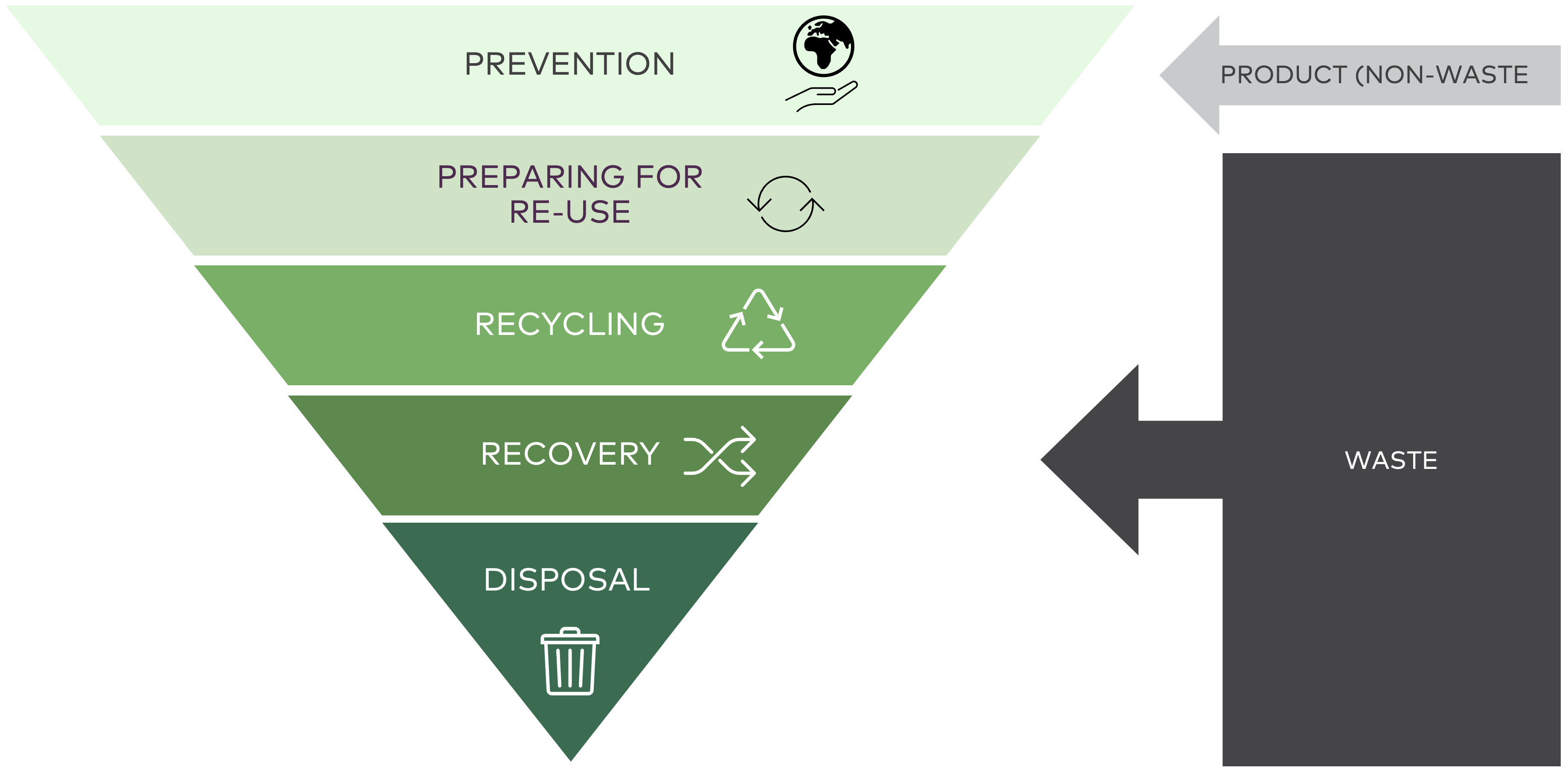
Figure 2. Waste hierarchy (based on figure from European Union, n.d.).
In the Nordic region, as well as widely in the EU, waste management relies on the principles of the waste hierarchy, but policies and practices are still often focused primarily on recycling. The challenge lies in how we can integrate waste prevention and reuse practices into the economy before waste is created. At the waste management stage, there is relatively little that can be done in terms of waste prevention.
Despite high per-capita municipal waste levels in the Nordic countries, efforts to control waste generation are still only just getting underway. Targeting policy measures at earlier stages of a product’s lifecycle is complicated by the fact that measuring impacts is often challenging, given waste avoided does not appear in statistics, and the total amount of municipal waste provides only a limited view of the status of various waste prevention actions, as there are many variables that influence the total amount of municipal waste. To promote waste prevention and reuse, Nordic decision-makers need additional information and justified policy recommendations on how to manage and reduce the amount of municipal waste and thus transform our linear economy into one that relies less on virgin natural resources.
1.2 Objectives of the study
This study aimed at identifying realistic and effective measures to strengthen waste prevention and the promotion of reuse in the Nordic region, with a focus on municipal waste. More precisely, the project aimed to: (1) map existing measures to reduce municipal waste from households, businesses, and institutions, (2) identify effective policy measures and steering instruments, with a specific focus on economic steering instruments, and (3) develop policy recommendations for the implementation of good practices for waste prevention and reuse in the Nordics.
The project was conducted in three parts:
Part 1 of the project consisted of a study on potential effective measures to prevent production of municipal waste by households, as well as in businesses and institutions. According to the Terms of Reference for the project, these could include, but should not be limited to: voluntary measures, fiscal measures, regulatory measures, and others. In this part, best practices in waste prevention and reuse in the Nordics, selected European Union Member States and the United Kingdom were studied. In Part 1, insight was sought on the questions:
- What effective means have been used to prevent waste production in the Nordics, the United Kingdom and the EU?
- What kind of steering instruments have been used and how useful would those be in the Nordics?
- What are the best practices in waste prevention, based on their impacts and relevancy for the Nordic countries?
Part 2 of the project aimed to execute a targeted investigation of certain economic steering instruments for waste prevention and reuse, and identify strengths, drawbacks, and challenges in implementation. At the inception of Part 2, the Nordic Council of Ministers’ Circular Economy Working Group opted to have the study focus specifically on economic steering instruments and a few critical material flows in the Nordics, which would later be concretised into a case study on the implementation of selected economic steering instruments in the textiles and clothing value chain.
Part 3 of the project focused on communicating and reporting the recommendations for policies and steering instruments. The present TemaNord report summarises the findings of the project. In addition to this, selected findings were presented in a policy brief and in presentations for wider audiences.
1.3 Content of this report
This report contains the following parts: Chapter 1 is an introduction to waste prevention and familiarises the reader with the background and the aim and objectives of this study. Chapter 2 presents our approach to the issue at hand, including definitions and scope, as well as methods used. Chapter 3 presents waste prevention and reuse policies in the European Union and each of the Nordic countries. Chapter 4 presents an overview of effective measures for waste prevention and reuse that were identified in the first part of the project. Chapter 5 presents the findings of the in-depth analysis of the role of economic steering instruments, as well as the case study on textiles. Chapter 6 presents the summary and conclusion of the work and Chapter 7 summarises some policy recommendations for the Nordic governments and the Nordic Council of Ministers. The report includes executive summaries in English and Swedish.