Chapter 4: Value chains and open communities
Vágur and Tvøroyri in the Faroes
Gestur Hovgaard, Firouz Gaini & Ragnheiður Bogadóttir
4.1 IntroductionThis introduction is based on our findings in Bogadóttir et al. (2022).
This introduction is based on our findings in Bogadóttir et al. (2022).
Over the last two decades, there have been fundamental changes in value chains in Tvøroyri and Vágur, two coastal towns on the outer Faroese island of Suðuroy. Until the end of the 20th century, the economic foundation was the locally owned fish filleting factories and their production of mainly fresh and frozen codfish from a local fishing fleet. Though, in the early 1990s, the Faroes suffered a severe economic crisis, and outlying towns like Tvøroyri and Vágur were hit hard. As seen in many other fishery-dependent communities in the Nordic Atlantic, there was a relocation of, and a significant reduction in, local demersal fisheries. This was followed by a rise in capital- and resource-intensive industries such as aquaculture and pelagic fisheries, and in other sectors such as tourism. These new or intensified value chains fostered occupational diversity in the local labour market, contributing to the last decade’s relative stabilisation of the population size.
From a conventional economic perspective, the occupational reorganisation over the last 20 years has succeeded beyond expectation. From a socio-ecological resilience perspective, however, this is not without consequences. The new industrial imperative is largely for highly exploitative industries that seize significant parts of the local resources, fjords, mountains, rivers, and land. Besides the ecological consequences, another outcome may be the pressure these industries put on local subsistence economies and leisure activities. Still another consequence is that the ownership, and thus the control and determination of local production, has been largely de-localised. There have, therefore, been huge changes in value chains since the start of the 21st century, shifting from locally owned and labour-intensive to more diverse, capital- and resource-intensive value chains, and de-localised in terms of control, ownership and profits as well. We have also witnessed important examples of coping practices locally. These are enabled by developed infrastructure, entrepreneurial spirit, local identities and networks and active local governance structures. However, the diversification and transformation of the value chains and socio-spatial structures raises vital issues about future resilience: what might this entail when value chains and place-based values, that is local identities, networks and functions normally considered essential to local coping strategies are replaced by largely de-localised decisions, values, and ownership? This is what we explore in more details in this chapter.
The first part of this task relates to changes in demography, which has been made visible by the younger generation increasingly moving away, and by an increasing proportion of older people. A lack of industrial and service workers has made it necessary to attract people from the outside, including a significant proportion of international labour. This is especially the case in Tvøroyri. In August 2023 there were 1,776 inhabitants in Tvøroyri and 1,361 in Vágur (Hagstova Føroya, 2023). Between 2000 and 2021, Tvøroyri and Vágur lost 2% and 1% of their populations, respectively, significantly lower than other localities in this report, which had a decrease in population between 11% and almost 26% (Bærenholdt & Hovgaard, 2022, p. 18). One reason for this is that Tvøroyri and Vágur had already had a significant population decline during the crisis-ridden 1990s. Regardless, there has been a socio-demographic change and, therefore, changes in value creation that call for further attention, highlighting reasons for moving in or for staying. Some key aspects of these changes will also be addressed in this chapter.
During our fieldtrips, we recognised another shift in the housing stock. Although the exact number was not recorded, a considerable number of houses were considered empty. We soon realised that they were not empty in an absolute sense of the word, but were homes that the owners, typically living outside the community, were using only periodically, eventually renting them out. This fact and its obvious impacts on the local environment also call for special attention.
After a short description of our methods in the next section, we will examine the changes in the local socio-demographic structures, which have resulted in a community with people relating to the place (through everyday life, work, housing, etc.) in manifold ways. We then take a closer look at how local people value their place and discuss the relationship between value-chain changes and changes in socio-demographic structures. Finally, we discuss what the changes in value chains and place-based values mean for local sustainability and resilience.
4.2 Methods
A creative combination and synergy between different types of information and methods is a solid way to organise, set up and implement a project process based on explorative research (Andersen & Hovgaard, 2007). We used a mix of quantitative and qualitative approaches to carry out multiple collections of data in and about our case communities in the period 2020 to 2023. Over several rounds, we visited the communities, carried out interviews with key informants, gathered field observations of daily life, production, leisure activities, and visited key institutions.
Data was also collected through two web-based questionnaires, which both dealt with place-based conditions and sustainability on the island of Suðuroy. The first questionnaire was conducted in collaboration with the Tvøroyri and Vágur municipal administrations, and the link to the questionnaire was distributed through their municipal social networks. Since the respondents of the first survey were almost exclusively over 20 years old, the second survey focused on the younger generations, and was carried out among students from the upper secondary school on the island. This had good support from the principal and staff at the school, and we completed the questionnaire on-the-spot during a meeting with all students, which enabled a dialogue with the students based on the results of the questionnaire.
Our first fieldwork quickly revealed that the second home issue was perceived as a special challenge in these communities. Since no register data was available about second homes in the Faroe Islands, we made a map and a database ourselves using a combination of public websites, information from the municipalities of Vágur and Tvøroyri, and valuable help from local informants and a student assistant. This gave us a reliable overview of the extent of second homes in towns and villages on Suðuroy.
Thanks to Rasmus Biskopstø, Magnus Pauli West and the many people from Suðuroy who helped us in various ways with organising and data collection. Thanks to Durita Gestsdóttir for helping with data collection and data entry about the housing stock.
4.3 Socio-demographic diversification
The Faroes has a well-developed infrastructure. More than 90% of the country’s population is connected to each other by roads and tunnels, all within a driving distance of 1½ hours from the end points. Outside this central road network, there are seven smaller islands that have only ferry connection to the other islands plus helicopter connection three to four times a week. Suðuroy is the one larger island served only by ferry. There was significant investment in a subsea tunnel to the island of Sandoy, which opened in December 2023. This was the fourth subsea tunnel on the archipelago, and there are plans for a fifth tunnel connecting Suðuroy to Sandoy and thus the rest of the mainland. The Suðuroy tunnel would involve 23 underwater kilometres and be an even more expensive construction. For safety reasons, one option is to create two tunnels, with the small island of Skúvoy as an intermediate station (Landsverk, 2018). This tunnel, which may become a reality within 10 years, would mean that 99% of the Faroese population would be able to drive to each other in a short time. Until the tunnel becomes reality, however, there is still a good two-hour-long ferry trip as the main route to the Faroese ‘mainland’ – and only if the weather permits.
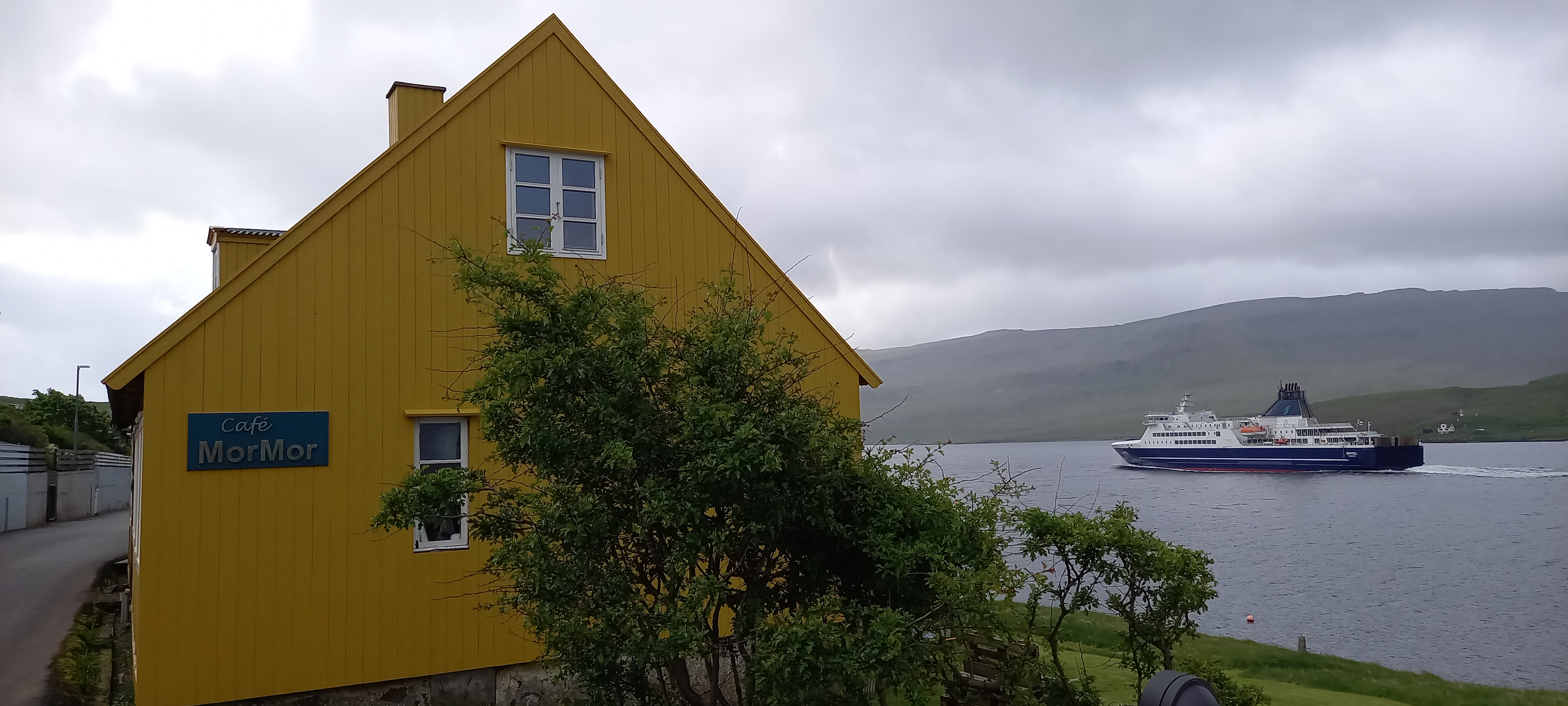
While the possibilities for a tunnel are explored, the ferry Smyril is the safe connection from Suðuroy to the mainland.
Photo: Firouz Gaini.
A road connection to the ‘mainland’ is considered vital for Suðuroy’s future and has become a political priority. It is a project that resonates with the wishes of the vast majority of the island’s residents who participated in our surveys and of almost everyone we have had the opportunity to talk to. As pointed out in the introduction, demographic changes are challenging in Vágur and Tvøroyri, and especially challenging in relation to the smaller settlements on Suðuroy, which form a kind of catchment area for the two larger towns. However, larger villages in the central road network may also experience the feeling of decline. This is a reminder that while up-to-date infrastructure globally is considered vital for progress and well-being, it is not enough on its own. An interesting example of this limitation is the village of Kollafjørður, less than half an hour’s drive from the capital Tórshavn. Population decline, especially among the younger cohorts, has created great frustration locally, and it is argued that the reason is the amalgamation of Kollafjørður and Tórshavn into one municipality in 2001 (Lützen, 2023).
Research has demonstrated that conventional ideas about local communities as fixed and continuous needs to be substituted with an understanding of local communities as relational, open, dynamic, transformative, and in which there are also opportunities (Bærenholdt, 2007; Cresswell, 2006; Massey, 2005). Though, there is still something that can be perceived as down-to-earth and continuous, and one can argue that precisely the ability to maintain continuity during change is important for a community’s ability to master transformative processes (Hovgaard, 2001). In the next section, we delve deeper into selected and relatively unnoticed changes in the local socio-demographic base.
4.3.1 Changes in demographyData in this and the next section is based on a special data run from Statistics Faroe Islands (Hagstova Føroya). Thanks to Kári Holm Johannesen for helping to provide this data.
Data in this and the next section is based on a special data run from Statistics Faroe Islands (Hagstova Føroya). Thanks to Kári Holm Johannesen for helping to provide this data.
In 1985, 738 children were born in the Faroe Islands. In 2020, these children turned 35. Well over a third (35.6%) were living in the same settlement in which they were born, and 46.1% lived in the same municipality. In the same year, 32 children were born in Tvøroyri and, in 2022, 11 of them still lived in the municipality (34.3%). Of the 20 children born in Vágur in 1985, seven (35%) were still living in the home municipality in 2022. We cannot say how many of these people had lived elsewhere during this time and then returned, but we do know it applies to some of them. These numbers are low compared to the average among Faroese municipalities, which can probably be explained by the relatively peripheral location of the towns and the fact that the Faroese crisis of the 1990s hit particularly hard in Suðuroy. The figures for subsequent cohorts also show a clear tendency for Tvøroyri and Vágur to be significantly lower in their ability to retain cohorts compared to the average among Faroese municipalities. In the youngest cohorts, however – those born in 2010 and later – there will probably be a change. For these cohorts, both municipalities are at least on a par with other municipalities in the Faroe Islands – Vágur especially has had success in retaining younger cohorts. Among those born in 2015, 85% still live in the municipality, compared to an average of 81% in the country. Among those born in 2020, 92% still live in the municipality, against an average of 88% in the country. Tvøroyri was somewhat lower than the average in 2015 but on a par with the average (88%) for the 2020 cohort. Combined, these numbers – although weak – may indicate a trend towards a relative consolidation in the settlement structure, including retaining families with children, especially in Vágur.
The figures show, not unexpectedly, that there is considerable mobility in the population. If we compare with Denmark, for example, we see that the proportion of 35-year-olds in Denmark who live in their childhood municipality has never reached above 40% since 2013, and that figure has been decreasing over time (Hansen, 2022). Although the calculations are not directly comparable, they suggest that the Faroes, including our two case communities, are not so different from outer districts (and suburban municipalities) in Denmark – that is that young people in their 20s are moving out, and quite a few of those who are moving in are 30 years old or above and may come from non-European countries, as we see in our cases. In Denmark, there are also signs that many rural municipalities and outlying districts are beginning to have a more stable population structure (Andersen & Nørgaard, 2018).
The figures also reveal that, contrary to the almost deterministic perception of a one-directional migration from rural peripheries to urban centres, there are significant nuances and dynamics. Many people choose to stay, return, or maintain a strong local affiliation from afar. A classic and central explanation for moving and settling is the economic, but this is part of a complex of individual, narrative, well-being and value judgements – and something that requires deeper insight if we are to better understand motives for staying or moving. We highlight some aspects in the following sections.
4.3.2 The employment structure
A picture of the recent development in the labour market in Tvøroyri and Vágur can be obtained by comparing the employment in the two towns in 2005 and 2022 respectively, as shown in Table 4.1.
Tvøroyri 2005 | Tvøroyri 2022 | Vágur 2005 | Vágur 2022 | |
Fishing | 13.4% | 3.4% | 12.3% | 5.3% |
Fishing industry | 14.4% | 18% | 10.9% | 4.6% |
Aquaculture | 0.0% | 0.9% | 0.4% | 8.6% |
Shipping | 3.5% | 6.3% | 3.2% | 5.1% |
Trade & construction | 19.7% | 18.7% | 16.2% | 17.9% |
Tourism related employment | 1.8% | 2.1% | 1.0% | 1.0% |
Public sector | 32.6% | 36.8% | 31.7% | 42.0% |
Other | 14.6% | 13.8% | 24.3% | 15.5% |
Table 4.1: The occupational structure in Tvøroyri and Vágur in 2005 and 2022.
The figures show that the development in the employment structure perfectly reflects the changes that have taken place in the business structure of the towns and their different directions of development. In both places we also see, not unexpectedly, the great importance that public institutions have for the employment and settlement pattern. It is important to remember, though, that even if people have a local registered address, their workplace is not necessarily local. Many residents from both towns work abroad, and at the same time, the island is an integrated labour market, and it is even possible for some people to work in towns in other islands, including the capital.

Suðuroy's internal road network ensures that the island is an integrated labour market. Here the main road towards the town of Vágur.
Photo: Anna Jacobsen.
If we compare the employment development in Tvøroyri and Vágur with figures for the Faroes, some facts stand out. In 2005, the number of people employed in fishing in Tvøroyri and Vágur was some points lower than the Faroese average – 12% to 13% compared to the Faroese average of 16%. In 2022, the figures are marginally below average (Tvøroyri) and marginally above average (Vágur) at 4.7%. The same applies to shipping, where the Faroese average is 5.9%. For the construction industry, Tvøroyri and Vágur are close to the national average (8.7%), but somewhat below average for the trade sector (11.7%). Concerning public administration, both Tvøroyri and Vágur were well below the Faroese average in 2022, even though there had been a slight increase, as shown in Table 4.1. In the area of health and social services, Tvøroyri was somewhat higher than the average in 2005, and Vágur somewhat below. Tvøroyri is home to the regional hospital so has always had a large proportion of its workforce within the health sector. The construction of a regional nursing home in Vágur in 2011 explains part of the local growth in the number of people employed in the health sector.
It is natural that dominant industrial sectors affect the business structure in the two towns. These sectors depend largely on unskilled labour, but the figures are, as mentioned, below the Faroese average. The labour market in Tvøroyri and Vágur can be said to be relatively diversified, also when we compare it to the rest of the Faroes. This can largely be attributed to a deconcentrated public sector. The national public transport company has its main administration in Tvøroyri, for example. On the island there is a hospital, nursing homes and a social service system, there are primary and secondary schools and a boarding school for youth aged 14-18 years, all part of public services. These professions are largely dominated by a female workforce, and they require by and large education. When it comes to professions, such as trade, finance, insurance and private service industries, these peripheral towns have, not unexpectedly, fewer positions than the average (and significantly lower than the capital). This is undoubtedly a consequence of being away from the fixed road connection on the mainland. When it comes to shipping, however, 6% of the employment on Suðuroy is in that sector, which is double the Faroese average of just below 3%. Another striking case is the tourism industry. A general growth in Faroese tourism is not reflected in the numbers of tourism-related employment, as already indicated above. This may support the narrative that we heard from time to time, that the industry is controlled by big players based in Tórshavn, who therefore also ‘skim the cream’. This may well be part of the explanation, but the picture is more complex, and we return to this in the section on second homes.
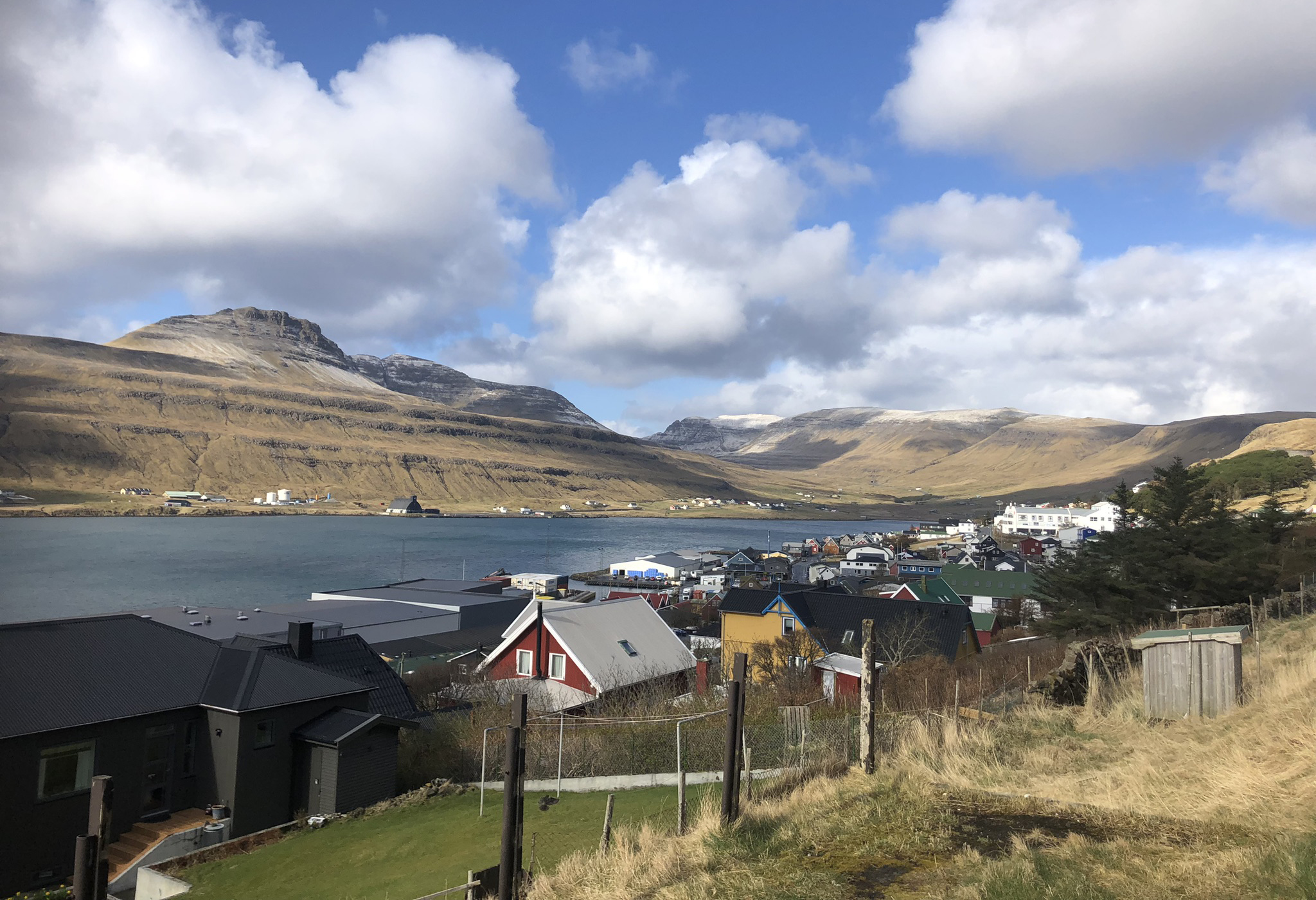
Image of Tvøroyri to the west, with the local hospital in the background (white building). The roof of the large fishing industrial complex near the city center is seen on the left.
Photo: Gestur Hovgaard.
4.3.3 Migration
The Faroes has been pushed to open up towards migration for two reasons: increased mobility in the population, reflected in the large proportion of Faroese working and studying abroad, and a growing labour shortage in the service, fishing and craft industries. In the last 20 years, migration – non-European migration in particular – has grown rapidly. In 2020, 1697 migrants moved to the Faroe Islands. In the year 2000, there were around 70 migrants from Africa, Thailand and the Philippines living in the Faroes (Ísfeld, 2019, p. 238). As of January 2023, the total of all immigrants – European and non-European – in the Faroes had risen to more than 2,600, or 4.9% of the total population (see also chapter 1). Figures for the past two years show that 86% of the migrants to the Faroes have citizenship other than Danish (Hagstova Føroya, 2023). This means that a growing number of migrants are not Faroese return migrants or Danish citizens, but people from countries in other parts of the world.
Political opposition against immigration, especially opposition to accepting refugees, has been quite strong (Bertholdsen, 2015). However, refugee policy is an area of Danish responsibility, and there has been no pressure from the Danish side to push the Faroese authorities to accept refugees. Before the Russian invasion of Ukraine in 2022, therefore, only a few refugees had arrived in the Faroes. When Russia invaded Ukraine, the politicians reacted promptly and agreed to grant residence to Ukrainian refugees, of whom there were 250 as of 2023 (Løgmálaráðið, 2023). These refugees are scattered around in the Faroes, and some of the families have found their way to the “peace” in Froðba, a small village in Tvøroyri municipality (Kringvarp Føroya, 2023). In previous periods of labour shortages, work-related migration was permitted and, with increased labour shortages, work-related immigration has grown significantly, made easier from late 2021 by a fast-track scheme (Útlendingastovan, n.d.). There is also, of course, the increased opportunity for social connection – to sustain close contact to relatives and friends at home while being a labour migrant in the Nordic Atlantic - that ever-increasing travelling mobility and technological/digital platforms have made possible. The significant growth in migration since the start of the 21st century witnessed in the Faroes is, therefore, a combination of marriage migration, work-related migration, refugee migration and lifestyle migration and has changed the social composition of the coastal village and smalltown landscape (Collantes et al., 2014; Hedberg & Haandrikman, 2014; Holm, 2023; Ísfeld, 2019).
One does not need to spend long time on Suðuro to notice that the villages in many ways resemble other Nordic fringe communities. People of many nationalities are visible in the streets. One of our key informants told us there were 23 nationalities in Vágur. In Tvøroyri, several migrants have found work in the fish factories, which mainly offer seasonal, hourly-paid work. Our information also shows, however, that migrants are of great importance outside the fishing industry as well. In general, most migrants find employment in construction work, in the service industry, and in the fishing industry where there is a labour shortage. Most migrants have to make do with lower-paid jobs, even when they have higher qualifications. A major obstacle to full participation in society is learning the Faroese (and also Danish) language (Holm et al., 2020; Ísfeld, 2019).
In the last 20 years, the towns of Tvøroyri and Vágur have become culturally diversified communities. The municipalities do not have the capacity to form an active integration policy, so integration is mainly a local-level task for day-to-day life and in the workplaces. In general, integration, or its lack, is not considered a problem. However, our information from Tvøroyri also indicates concerns about increased segregation.
4.3.4 Second homes
In the 21st century, the number of second homes in Nordic and European areas, coastal communities included, have increased significantly (Hall & Müller, 2004; Hall & Müller, 2018; chapter 1 of this report). This trend became apparent to us during our visits to Tvøroyri and Vágur not to mention other places on Suðuroy. Officials and residents commonly talk about “empty houses”, even if the houses are not empty all year round. The term reflects a perception that the house in question is not an authentic home, because no-one has a permanent address there. We also heard the term “mailbox locals”, a negatively charged expression for people who stay in their house for only minor periods. There were also stories about houses that locals did not get the opportunity to buy because they were bought up by people “from outside” the community. It was assumed that these houses went to people with high real estate value or salaries, from the capital Tórshavn, or possibly even from abroad. We were also given examples of people with an address somewhere on Suðuroy, but who lived most of the time in another municipality.
Second homes in the Faroes are normally one-family homes that were part of the old settlement structure of the villages, as there is no tradition of having cabins in the ‘wild’, as in Norway for instance. A division between areas of residential and summer houses is uncommon in local planning. A few places have in the last couple of years designated areas for second homes, but these are still close to existing villages.
From a planning perspective, the lack of reliable data about the use of the housing stock in the Faroes is a considerable problem. In 2018, a count in 25 of the 29 Faroese municipalities showed that 18% of the housing stock, app. 1,500 units, were empty houses. The three largest towns and one of the smallest municipalities were not part of the count, so these figures were not necessarily reliable. The figure for Suðuroy in all was approximately 25% empty houses, for Vágur 16% and for Tvøroyri 17% (Bertholdsen, 2018). Our calculation on Suðuroy revealed that 28% of the private housing stock in Vágur and 34% in Tvøroyri was made up of second homes. In the surrounding smaller municipalities, the figures were even higher, between 36% and 52%. The numbers from the two counts cannot be compared as they were built on different criteria. Our count, we believe, should be more accurate as it was based on a combination of the public registration of ownership, the permanent address of the owner(s), and whether the owner, if local, owned more than one house on the island. National authorities in the Faroes are working to develop a housing registration that will significantly improve knowledge of the use of the housing stock.
At municipal-level, the high proportion of second homes causes quite a few headaches. In the Faroes you can own a house in a different municipality than the one where your registered address is, while the hosting municipality has no legal authority to demand payment for services such as sewerage, water or waste disposal from second homes. A municipality with a high proportion of second homes can, therefore, have significant budgetary issues because of citizens who do not contribute to the municipal common fund. This is something that particularly affects peripheral municipalities. In line with the increase in the numbers of second homes and a general housing shortage, this issue has increasingly edged its way onto the political agenda (Kommunufelagið, 2022). There appears, though, to be no consensus, either in national politics or in the municipal political system, on how to regulate second home ownership and overcome the most serious negative consequences (Kringvarp Føroya, 2019, own interviews). At least one municipality – Sandur on the island of Sandoy – has tried to cover its expenses by sending an annual bill of DKK 1,500 to each second home owner in the municipality. This initiative then, according to the mayor, was welcomed by a good number of the second home owners (Kringvarp Føroya, 2019).

Second homes are mainly integrated within the existing settlement structure. Here a randomly chosen picture of the village Vágur to the east.
Photo: Anna Jacobsen
By far the prevailing reason for people to have second homes in Tvøroyri and Vágur is local or family connection. These are inherited or purchased houses, where the owner or the owner’s immediate family have had part of their upbringing locally. Our cases – and the Faroe Islands in general – fit the pattern seen in the other Nordic countries: that a strong identity is attached to the place where you grew up (Gaini, 2013). An increasing number of second homes are today used as rental properties, most of them as permanent rentals, but more and more as part-time rentals (a combination of the owner’s second home and Airbnb). We have also seen that some locals invest in one or more properties for either permanent rental or rental to tourists. This is reflected in the fact that about 10% of the second homes in both Tvøroyri and Vágur are owned by businesses. Our guestimate is that only 3% or less of the housing stock are properly empty houses, those where no-one stays, and which are more or less uninhabitable. Over the past 20 years, the housing market has increasingly become driven by a market logic and the general economic development in society. Housing prices have risen sharply since the 1990s, and especially since 2010, and this trend has spread to communities in the periphery of towns. For some people, housing has gone from being an expense to also providing income, whereas others have been priced out of the market and cannot afford to buy or build. In a peripheral place like Suðuroy, people from the outside with strong purchasing power may outbid local people who have considerably more difficulty getting a bank loan. This trend is reinforced by the fact that there is very limited cooperative or social housing in the Faroe Islands, and none in some areas.
4.4 Identity diversification
When asked how locals perceived the development of their community in recent years, a majority on Suðuroy replied that they were generally positive, including their perception of the island’s culture and its public sector services of health, education and childcare. On the other hand, when it came to local unity and cohesion and the opportunities in the labour market, respondents were less positive. Given the opportunity to choose which of the three major industries in the Faroes should be developed, respondents gave tourism the highest priority, followed by fisheries and then aquaculture. When asked to rate issues of great importance to local well-being, housing and mobility (public transport in particular) were rated very high. When asked about the biggest threats for the future, out-migration of youth and a lack of connection to the ‘mainland’ were the two main concerns.
The survey from the Suðuroy upper secondary school provided rich information about the younger generation’s perception of identity and their future on Suðuroy. All but seven of the 72 students in our survey grew up on Suðuroy, and generally wanted to settle in their home village or town after finishing school. This shows, not unexpectedly, a strong attachment to place among the youngsters. But why did they want to live in their hometown? Here the students gave a wide range of arguments in free text answers – for example: “Because it is here that I grew up, and I think it is the best place to live”, “Because it’s good to be here, feeling most comfortable here, Vágur is my home village!” and “The family is close by.” Others talked about a “safe place” that was “child-friendly” and a place that they would want their own children to grow up in. One student said he would need to move to the north (to the capital area) to find a job that matched his ambitions. He emphasised that he wanted to live in a small place close to the capital, rather than in the city of Tórshavn (roughly 18,000 inhabitants). A few students said they planned to move out of the country. Most of the students considered the housing situation to be a very important issue. Only eight students gave it a rating of less than 43 on the 1 to 100 scale. This reflects the relevance of the housing shortage, the lack of diversity of housing options and the general changes happening in the housing market.
It is impossible to take the journey to Suðuroy to talk to young people about mobility and future residence without mentioning the planned Suðuroy tunnel. 53 students said a Suðuroy tunnel would affect where they wanted to settle, and 24 answered that it would not. 69 of the 72 students wanted the tunnel to be constructed. Yet, when the students had an opportunity to qualify their answers, they also expressed ambivalent feelings about the tunnel. Many supported the idea of a tunnel link to the ‘mainland’ but were aware of possible negative consequences in the local community. We gave the students the opportunity to write freely about the possible advantages and disadvantages of the tunnel. The result was fascinating and demonstrated how essential the question of identity and belonging was to discussions about mobility and the ‘continentalisation’ of the Faroes. The dilemma is that people want to be better connected but also to sustain their unique local identities. Several students mentioned that the advantage of the tunnel would be to facilitate commuting – making it possible to live on Suðuroy and work in the capital area, and vice versa. One student said: “You can visit family and return home whenever you like.” , contrasting the flexibility a of 24-hour tunnel service to the waiting time and frequent delays and cancellations associated with ferry transport. Another student said: “I have many a time spent 14 hours away from home just for half-an-hour at the dentist…” The sense of being stuck and isolated, because of limited transport, was echoed in many of the comments from the students. They craved easier and faster connection to the rest of the country. One student believed the tunnel would make it easier and cheaper to live on Suðuroy. The tunnel clearly symbolises an opening to a more progressive and thriving community, economically and socially, according to the young people from the upper secondary school on Suðuroy.
Regarding possible disadvantages, some youngsters were worried about the high charges that might be imposed on travellers using the tunnel. The total cost of this enormous project was also something that some of the students considered to be a (national-level) problem that might affect the national economy. Others focused primarily on cultural identity issues and the special ‘islandness’ of Suðuroy. The island, a student said, was at risk of becoming a “holiday home island”. The island will change and not be as “peaceful”, another student noted. “Northerners will arrive, the language [dialect] will change, less safe” was a scenario that another student pictured. The role of Smyril, the ferry sailing between Tvøroyri and Tórshavn, was also discussed in several comments in the survey. The ferry trip is a natural part of everyday life of the people of Suðuroy. In an article about young people, Hayfield and Pristed Nielsen (2022, p. 208) argued that: “Belonging in the island is practiced on the ferry, and island life continues during the ferry journey”. While most people were positive about the idea of constructing the tunnel, many students had mixed feelings about the possible termination of the ferry route across the sea. One student said: “You lose the pleasant conversation that you get on board Smyril, with people that you usually don’t see.” Others said Smyril was “cosy”, the trip to Tórshavn was often “fun”, and the ferry created a strong sense of “togetherness”. Others talked about demographic predicaments. They believed that a tunnel would make more people move away from Suðuroy.
When it came to young people’s perspectives on their future careers, the survey showed other interesting perspectives. When asked what sectors they would prefer to work in (with opportunity of up to three choices from a prepared list of sectors, as well as free text), public sector jobs within health and care had by far the highest score (27), which underlines the vital importance of the public sector. Trade was the second most popular occupation with 18 students choosing this sector. Beyond these two areas, participants in the survey had very differentiated interests and preferences and chose a wide variety of careers on the given list. On their open ‘wish list’, students wrote baker, professional football player, lawyer, pilot, nurse, midwife, designer, IT worker and more.
Students were also asked which of three industries they thought should be developed in their area. As in the general survey, tourism was given priority by the students, followed by fisheries and then aquaculture. In the comments students made about their ratings, there were interesting variations in their perception of sustainable development. One student discussed tourism as an example of an industry that should be downgraded and substituted with alternative sustainable solutions:
Another student had a different, yet clear, message that fish farming was very rewarding, sustainable, and should be given the highest priority. The fishing industry, as well as the tourism industry, he said, should be developed to become more sustainable. Generally, the comments reflected a concern with sustainable production and a critical view of existing forms of production and their impact on the natural and social environment.
4.5 Value chains and open communities
In the previous sections, we have seen how the demographic and socio-economic composition of Vágur and Tvøroyri has changed along with changes in global as well as local value chains. The increase in immigration and the immense increase in second homes over the last 20 years exemplify this most prominently and have become new aspects of present and future community-building. Our data all points in the same direction – there is an ongoing diversification in ethnicity, professions, socio-demographic structures and local identities. The shift from locally owned, labour-intensive industries to diverse, capital-intensive industries in both Tvøroyri and Vágur is a key example of this transformation within value chains in the Faroes, a change that has led to increased de-localization with an impact on local subsistence economies and community control. Enforced by the interaction of global value chains, mobility and local identities, these are indicators of an emergence of – or shift towards – what we term ‘open communities’, as explained in chapter 1 of this report.
The open community is open in the sense of being a part of the globalising world and a destination for international migrant workers, non-local companies searching for new investment opportunities, as well as for tourists and other short-term visitors. It is also open in relation to the opportunities for incoming (second) homeowners with or without family roots in the community. The open community, therefore, is a community in need of dynamic local adaptation to the development in global value chains, but, as emphasized in the previous report (Hovgaard & Bærenholdt, 2022), we also need to rethink the ‘local community’ by “investigating local value chains, and analysing the ties and relations among local people” (Bærenholdt & Hovgaard, 2022, p. 16).
Here it is important to remember that the modern history of Suðuroy is a story of industrialisation and major growth in the late 19th and early 20th centuries, attracting people from all the corners of the Faroe Islands to search for promising working opportunities in Tvøroyri and Vágur, which were the economic powerhouses of the Faroes (Holm & Mortensen, 2002). The difference is that, today, migrants come from beyond the Faroese national borders, and the value chains are much more weakly anchored in the local community. The open community on Suðuroy is characterised by increasing individualisation (Beck & Beck-Gernsheim, 2001), an increasingly age-segregated social order, and increasingly de-localised, or de-territorialised, and hybrid identities. It is, nevertheless, important to be aware of nuances of the interplay between continuity and discontinuity in the local community. There are many families in Tvøroyri and Vágur with a strong sense of belonging to the place rooted through generations. These ‘stayers’ are not “passive observers of their own fates” because their lack of physical mobility does not reflect a lack of symbolic mobility and “imaginative horizon” (Stockdale & Haartsen, 2018; Pedersen & Zittoun, 2021). A man from Tvøroyri, who grew up in the 1930s, and who never left his childhood community for long periods, said:
In other words, there are many different groups of people living on Suðuroy with still more diversified place-based identities. The open community is, therefore, also a community with invisible links between different groups of citizens. Who are the immigrants? Who are the second home owners? Who are the ‘real’ locals? The local community is changing, and the spatial footprint of the value chains is influencing the demographic and housing situation in the community. The open community, with its changed local and global value chains, is a community in transition, with new groups of people and identities moving in and others moving out, who may or may not keep a place-based relationship to the community.
Suðuroy has a strong position in the mental map of the Faroese. It is considered the ‘Other’ within the Faroes because of its geographical remoteness, its lack of road connection to the capital, its culture and dialects, its beautiful scenery, and its curious history. It represents a special place with an exotic culture in dominant Faroese cultural narratives. Therefore, Suðuroy is the ‘other’ in the perspective of the northerners who have continentalised and centralised the geography of the Faroes with the shift from boat- to car-based mobility (Gaini, 2024). At the same time, people from Suðuroy belong to many different communities within the island – villages and towns – with different identities.
Relative remoteness and isolation, a small population and territory, hence close spatial proximity, as well as close connection to the sea, are essential for the identities of people living on Suðuroy. The spatial identity, connecting people to a place that defines a local community, is strongly influenced by the social, economic and demographic transformation on Suðuroy and beyond. Since the second half of the 20th century, many coastal communities in the Nordic countries and globally have been “struggling to sustain their viability and prosperity in the wake of economic restructuring processes, globalization, and new cultural, educational, and lifestyle values” (Kjørholt et al., 2022, p. 3). Depopulation and youth out-migration make it difficult to develop resilient local communities in the future (Gerrard, 2008), but many coastal communities have also witnessed waves of newcomers searching for the opportunities and everyday lives offered there (Kjørholt et al., 2022, p. 3). Older and retired people seek quieter lives. Even if the population is decreasing, diversification of working opportunities and of the skills and experiences of the population play a significant role for local opportunities, not least for career opportunities in the public sector. As outlined earlier, Suðuroy does not differ from this general trend. Coastal communities are places of transition, and even if the communities in Suðuroy are small with people strongly connected to each other, we could also see that established residents and new migrants had different positions in the community. Young people in Suðuroy have identities and networks that link them to each other, but some migrant groups feel less connected to the main social networks than others. In other words, our coastal communities form a landscape characterised by complex dynamics of identities and inclusion, exclusion, connection and disconnection (see also Kjørholt et al., 2022, p. 4).
4.6 Resilience challenges in Tvøroyri and Vágur
In this chapter, we have described how changes in value chains, demography, migration, second homes, and other dynamics have fundamentally changed the social landscapes of Tvøroyri and Vágur, and of Suðuroy in general. We have seen how local people, the younger generation in particular, values their place in the context of key socio-demographic issues. These changes, which all point towards increasing diversification and openness in socio-demographic and socio-economic structures, while robust in many aspects, also mean important challenges for the resilience of these communities. Developing new sustainable practices that better integrate these structural changes are essential to the long-term health of the local ecosystem, and crucial for the resilience of coastal towns. This is a critical planning challenge both locally and nationally, and a challenge for current municipal functions and structure. This is also something that many local actors are well aware of.
Diversification away from traditional fisheries to industries like aquaculture, pelagic fishing and tourism may have reduced local economic vulnerability, but the dependence on these extractive industries also highlights a gap in skills and planning for long-term economic and environmental sustainability. While the extractive industries have attracted newcomers and so helped to reduce the demographic gap (the relatively small numbers of children, young people and young adults), sustainable practices require an understanding that increased economic activity and resource consumption do not, by themselves, create population growth or a more balanced demographic pattern. Maintaining strong local identities and community spirit in the face of demographic and economic changes is vital. Learning the language via a course, information leaflets, or through jobs with a high degree of second-language colleagues, is not enough to create local belonging or full access to society (Holm, 2023; Skaptadóttir & Innes, 2017).
Furthermore, the prevalence of second homes will influence social and community resilience in unprecedented ways. For both non-permanent residents and for immigrant residents there is no easy way to have a voice in local development, and this is a relatively ignored phenomenon in local and national planning and policy. For example, can second home tourism represent a form of ‘small tourism’ that is easier to integrate in coastal communities than traditional forms of tourism (Bærenholdt et al., 2021; Larsson & Müller, 2019). Overall, these are issues that require greater planning attention.
The aging population and out-migration of young people pose another significant resilience challenge. Retention of the younger generation may be crucial for maintaining a dynamic and resilient workforce, but there is a gap between aspiration and reality. Our data reveal that young people aspire for a life that mirrors their urban or global counterparts, and they are mobile. However, we do also see a unique blend of traditional and new identities and skills, which can play a pivotal role for developing coastal contexts. Some young people dream of city-life, but they also aspire for a future in or close to their childhood community. To harness the potential of youth in rural development, policies need to focus on providing quality education, healthy environments and digital connectivity in rural areas. Moreover, creating avenues for high-quality (public) employment and entrepreneurship for the younger cohorts may be essential for building resilient communities. These challenges need to be addressed through strategic policy interventions and community-driven initiatives, including those that encourage more youth participation in local governance and decision-making.
This point reinforces the observation made in our previous report (Hovgaard & Bærenholdt, 2022) that public infrastructure and welfare services are of great importance for local diversification and, therefore, also for resilience. Added to this is the fact that the public sector offers many of the professions that women prefer. This is important to mention, because many village communities have experienced large female out-migration because of a lack of career opportunities beyond the traditional male-dominated work in fisheries and farming.
Finally, a subsea tunnel to Suðuroy could drastically improve accessibility, and boost economic activities and social vitality. However, a tunnel is only one possible prerequisite for resilient development, and a fixed connection will not reduce the need to develop new policy and planning tools to deal with the challenges of the open community.
References
Andersen, H. T. & Nørgaard, H. (2018). Bosætning og flyttemønstre i Danmark – En oversigt. Økonomi og Politik, 91(4), 7-19.
Andersen, J. & Hovgaard, G. (2007). Metodekombination med sociologisk fantasi. In L. Fuglsang, P. Hagedorn-Rasmussen & P. B. Olsen (eds.). Teknikker i samfundsvidenskaberne (pp. 103-121). Roskilde Universitetsforlag.
Beck, U. & Beck-Gernsheim, E. (2001). Individualization. Sage Publications.
Bertholdsen, Á. (2015, March 3). Siga kortanei at fáa flóttafólk til Føroyar. In.fo. Retrieved from https://www.in.fo/news-detail/siga-kortanei-til-at-faa-flottafolk-til-foeroyar.
Bertholdsen, Á. (2018, September 26). Fimta hvørt hús í Føroyum stendur tómt. Sosialurin, 8-9.
Bogadóttir, R., Gaini, F. & Hovgaard, G. (2022). Divergent development trajectories: Tvøroyri and Vágur in the Faroes. In G. Hovgaard & J. O. Bærenholdt (eds.). Value chains and resilient coastal communities in the Nordic Atlantic. TemaNord , 2022:555 (pp. 72-97). Nordic Council of Ministers. Retrieved from https://pub.norden.org/temanord2022-555/#118864.
Bærenholdt, J. O. (2007). Coping with distances: Producing North Atlantic societies. Berghahn Books.
Bærenholdt, J. O., Fuglsang, L. & Sundbo, J. (2021). A coalition for “small tourism” in a marginal place: Configuring a geo-social position. Journal of Rural Studies, 87, 169-180. https://doi.org/10.1016/j.jrurstud.2021.09.010.
Bærenholdt, J. O. & Hovgaard, G. (2022). Introduction. In G. Hovgaard & J. O. Bærenholdt (eds.). Value chains and resilient coastal communities in the Nordic Atlantic. TemaNord 2022:555 (pp. 9-23). Nordic Council of Ministers. Retrieved from https://pub.norden.org/temanord2022-555/#118864.
Collantes, F., Pinilla, V., Sáez, L. A. & Silvestre, J. (2014). Reducing depopulation in rural Spain: The impact of immigration. Population, Space and Place, 20(7), 606-621.
Cresswell, T. (2006). On the move: Mobility in the modern world. Routledge. Nordic Journal of Migration Research, 7(1), 20-27.
Gaini, F. (2013). Lessons of Islands. Place and identity in the Faroe Islands. Faroe University Press.
Gaini, F. (2024). Nordatlantens autopia. Tidsskriftet Antropologi, 88, 63-71.
Gerrard, S. (2008). Quota policy and local fishing: Gendered practices and perplexities. MAST, 6(2), 53-75.
Hagstova Føroya. (2023, September 11). Stívliga 54.700 fólk búðu í Føroyum. vøksturin er 1,2%. Retrieved from https://hagstova.fo/fo/tidindi/stivliga-54700-folk-budu-i-foroyum-1-august-voksturin-er-12.
Hall, C. M. & Müller, D. K. (Eds.) (2018). The Routledge handbook of second home tourism and mobilities. Routledge. https://doi.org/10.4324/9781315559056.
Hall, C. M. & Müller, D. K. (Eds.) (2004). Tourism, mobility and second homes: Between elite landscape and common ground. Channel View.
Hansen, A. M. (2022). Unge der bor i barndomskommunen. KL Analysenotat. Retrieved from https://www.kl.dk/analyser/analyser/demografi-og-befolkning/unge-der-bor-i-barndomskommunen.
Hayfield, E. A. & Pristed Nielsen, H. (2022). Belonging in an aquapelago: Island mobilities and emotions. Island Studies Journal, 17(2), 192-213.
Hedberg, C. & Haandrikman, K. (2014). Repopulation of the Swedish countryside: Globalisation by international migration. Journal of Rural Studies, 34, 128-138.
Holm, A. E. (2023). Migration, adult language learning and multilingualism. Critical sociolinguistics research with new speakers of Faroese. Routledge.
Holm, A. E., O’Rourke, B. & Danson, M. (2020). ‘Employers could use us, but they don’t’: Voices from blue‑collar workplaces in a northern periphery. Language Policy, 19(3), 389-416.
Holm, D. & Mortensen, B. (2002). Economic life on the periphery. A comparative study of economic development in two towns on Suðuroy. In R. Apostle, D. Holm, G. Hovgaard, Ó. W. Høgnesen & B. Mortensen. The Restructuration of the Faroese Economy: The Significance of the Inner Periphery. Samfundslitteratur Press.
Hovgaard, G. (2001). Globalization, embeddedness and local coping strategies – A comparative and qualitative study of local dynamics in contemporary social change. Roskilde University PhD thesis No. 29, Forlaget Samfundsøkonomi og planlægning.
Hovgaard, G. & Bærenholdt, J. O. (Eds.) (2022). Value chains and resilient coastal communities in the Nordic Atlantic. TemaNord, 2022: 555. Nordic Council of Ministers. Retrieved from https://pub.norden.org/temanord2022-555/#118864.
Ísfeld, R. P. (2019). Marriage migrants to the Faroe Islands. An analysis of the life–world of non-western women married to the Faroe Islands. PhD dissertation. University of the Faroe Islands & Aalborg University.
Kjørholt, A. T., Bessell, S., Devine, D., Gaini, F. & Spyrou, S. (2022). Exploring coastal societies and knowledge in transition across generations. In A. T. Kjørholt, S. Bessell, D. Devine, F. Gaini & S. Spyrou (eds.). Valuing the past, sustaining the future? Exploring coastal societies, childhood(s) and local knowledge in times of global transition (pp. 1-22). Mare Publication Series vol.27. Cham: SpringerLink.
Kommunufelagið (2022). Ársfrágreiðing 2022. Retrieved from https://www.kf.fo/Files/kommunufelagid/Skjol/KF/Adalfundur-2022.pdf.
Kringvarp Føroya. (2023, March 14). Flýddu til friðin í Froðba. Retrieved from https://kvf.fo/node/153960?sid=154080.
Kringvarp Føroya. (2019, February 13). Radarin. Retrieved from https://castbox.fm/episode/Fleiri-h%C3%BAs-standa-t%C3%B3m-%C3%AD-F%C3%B8royum-id288730-id141446233?country=dk.
Landsverk (2018). Suðuroyartunnilin. Retrieved from https://www.landsverk.fo/fo-fo/samfer%C3%B0sluaetlanin-2018-2030/stoerri-iloegur-komandi-arini/su%C3%B0uroyartunnilin.
Larsson, L. & Müller, D. K. (2019). Coping with second home tourism: Responses and strategies of private and public service providers in western Sweden. Current Issues in Tourism, 22(16), 1958-1974. https://doi.org/10.1080/13683500.2017.1411339.
Løgmálaráðið (2023, October 24). Uppihaldsloyvini hjá ukrainsku flóttafólkunum verða longd. Retrieved from https://www.lmr.fo/fo/kunning/tidindi/uppihaldsloyvini-hja-ukrainsku-flottafolkunum-verda-longd.
Lützen, J. (2023, August 30). Kollafjørður bløðir ungdóm av at vera saman við Havnini. Retrieved from https://nordlysid.fo/tidindi/79731/kollafjordur-blodir-ungdom-av-at-vera-saman-vid-havnini.
Massey, D. (2005). For Space. Sage Publications.
Pedersen, O. C. & Zittoun, T. (2022). ‘I have been born, raised and lived my whole life here’– perpetually on the move while remaining still. Integrative Psychological and Behavioral Science, 1-24.
Skaptadóttir, U. D. & Innes, P. (2017). Immigrant experiences of learning Icelandic and connecting with the speaking community. Nordic Journal of Migration Research, 7(1), 20-27.
Stockdale, A. & Haartsen, T. (2018). Editorial introduction: Putting rural stayers in the spotlight. Population, Space and Place, 24(4), e2124. https://doi.org/10.1002/psp.2124.
Útlendingastovan (n.d.). Fast track. Retrieved from https://www.utlendingastovan.fo/arbeidsloyvi/fast-track.