Chapter 2: Strategies towards resilience in Nordic coastal communities
Insights from Lurøy and Vega in Northern Norway
Julien Lebel & Maiken Bjørkan
2.1 Introduction
Coastal communities in Northern Norway have registered negative demographic trends in the past decades, which affects their structure as many people moved to bigger cities, both in Northern Norway (Mo i Rana, Bodø) and outside the region (Oslo). In this context, some observers are openly questioning the future of local communities and municipalities losing inhabitants (according to national statistics), while at the same time the topics of resilience and sustainability of vulnerable places are more frequently discussed.
On the coast of Helgeland, the municipalities of Lurøy and Vega are relevant cases to analyze ongoing economic and social transformations and at the same time to collect data on the perceptions of the inhabitants regarding their own community and its evolutions. The development of aquaculture and tourism has obviously led to new opportunities in terms of jobs and strengthened some local services. However, the activities deriving from these sectors are pressuring the natural environment, in addition to exacerbate the dependency of these local communities on external actors, whether they are consumers of exported seafood or (foreign) visitors spending their free time in the area (Lebel et al., 2022).
The value chains in both Lurøy and Vega display an adaptation to new contexts over the past decades, and they will for sure keep evolving in the future. The resilience of these municipalities depends on factors that underpin the ability of the local communities to tackle new challenges and to reconsider how local resources could be best used. A strong sense of belonging, a historical ability in combining different activities, and a flexible use of local resources (both on land and at sea) are important elements to implement adaptive strategies. Moreover, the potential of collective action, facilitated by the maintenance of municipal status in Lurøy and Vega, entails the potential of professional community leadership as these municipalities have both a full-time mayor. This results in planning strategies and the use of economic resources that focus on community development.
Ongoing developments should help to reflect about the meaning of being part of an “open community” – as both Lurøy and Vega can be described – and how this contributes to build up resilient places, whether it is by spending some free time in a second home, visiting the same place every year as a tourist, working remotely, or being a year-round inhabitant that adapted to local transformations in the past decades. The diversity of the inhabitants and visitors, connecting the island with the outside in different ways (export of local products, tourism, social ties with groups that are based in various locations), constitutes a central parameter in building up resilient “open communities”. This counterbalances the remoteness that characterizes these communities and instead could have favored another development path with limited diversity and restricted connections with other regions.
Based on fieldwork conducted in 2022 in Lurøy and Vega (semi-structured interviews with inhabitants in different settlements and visits of diverse areas in these municipalities), literature and documents analyses, but also statistics compilation, this chapter will first address the structure and the composition of the local communities by focusing on how different groups of people contribute to their resilience and the existing value chains, respectively. The impacts of the development of aquaculture and tourism will then be emphasized, with Vega as characterized by tourism, and Lurøy as an aquaculture municipality. Understanding the ongoing strategies led by key stakeholders is, finally, essential to analyse the evolutions in these communities. This will help to assess to which extent Nordic coastal communities could build up their resilience in the face of future challenges.
2.2 The open local community: outreaching but sharing a strong sense of belonging
Norway has a long and rugged coastline that is characterized by specific geographical conditions at a local scale. A myriad of communities has developed all along this coastline, whether on the shores of the mainland or on small islands, taking advantage of local resources on land and at sea. Rough climate and accessibility mainly or only depending on sea transport have facilitated the formation of this network of multiple communities. The concept of community has long been debated in academic literature, especially around the issue of place. Social relations do not necessarily take place at a common geographical location since people can have meaningful relations without living close to each other (Bradshaw, 2008). Yet, coastal communities in Northern Norway can, at first, be described with the traditional features that characterize a community according to social scientists: sharing a common geographical location, expressing belonging and participating in common tasks and problem-solving.
2.2.1 Population structure and composition
Even though statistics show negative demographic trends in the past decades,
Between 1950 and 2020, the number of inhabitants has been halved in Vega, while it has decreased by 35% in Lurøy. See statistics details in Lebel et al., 2022.
In both Lurøy and Vega, the following groups can be identified:
- People who stayed and often adapted to local transformations by shifting their activities
A large part of the population who never left the community is made of older generations. Many of them managed to adapt to different challenges and often had to shift their activities, for example from fisheries to tourism or aquaculture. They are strongly involved in the life of the local community and have a valuable knowledge of historical evolutions and local resources that are available. Their partner can, however, come from another place and have settled down in the community at a later point. Because of the continuous population decline that has been described as a negative trend for several decades, some of the people in this group tend to be more skeptical about the future of the community. - People having local ties and who decided to move back
Along with the evolutions of the job markets and a stronger interest for living close to nature in a quieter environment, many people decided to settle down in small coastal communities in the past years. However, their choice was mostly relying on a local job opportunity and good local services. It is interesting to note that many of these people have ties with the local community before moving there, especially family ties. Broader job opportunities might help to retain and increase the share of such new residents in the future. - People who decided to settle down after visiting the area
This category of people is pretty similar to the previous one, except that they do not have ties with the community before settling down. These people often discovered the area by visiting it and might have realised at a later point that they wished to continue their life there. The lack of job opportunities is however a strong barrier, but some people have created their own activities to get an income, especially in connection with a growing tourism sector. - Second home owners
Many people own a house that is not registered as their main place of residency in Lurøy and Vega. Yet, they spend most of their free time in the municipality and might even work remotely on some occasions if they have such opportunities. The increase in second homes is often perceived as a challenge for the housing market, especially in areas where there are very few possibilities to buy a house as a main residency. Yet, second home owners contribute to the local community by maintaining their house and using local services. They are often involved in local debates regarding the future development of the community and may have close ties with other residents. - Refugees
Norwegian municipalities receive refugees from different regions of the world. In small communities like Lurøy and Vega, this is an obvious driver for population increase and an opportunity to strengthen local diversity. These new residents are for example valuable in Vega to help taking care of the World Heritage area and keeping the community as lively as possible, especially when refugee families become users of local services (schools, healthcare services, supermarkets, etc.) and participate in community events and organisations on a year-round basis. - Seasonal or short/medium-term contract workers
The development of new activities in tourism and aquaculture has led to new workforce needs, especially on a seasonal basis. Even though such workers have short or medium-term work contracts, they become part of the local community by using local services and taking part in social events in the municipality. As Lurøy developed its infrastructures to improve the quality of life and to better meet the needs of the population, particularly on the island of Lovund, the municipality took a step further by trying to retain this workforce on a longer term, while encouraging them to settle down with their family. - Short-term visitors
Tourists have a significant impact on local communities where many services and infrastructures have been adapted to handle the flow of visitors. Even though Vega does not experience as major flows as in other places in Norway, like the Lofoten archipelago for example, visitors are still considered an important part of the local community. Due to the particularity of Vega, its rich nature in a protected environment and the existing opportunities for specific outdoors activities (like sport fishing), some visitors come back to the island over the years. They tend to develop their own habits and to stay at the same location. On the contrary to other regions where tourism can be perceived as a burden by local inhabitants, some interviewees highlight the importance of visitors to maintain a dynamic environment, an attractive cultural life and good local services. Since visitors tend to stay for a somewhat longer period, their contribution to the local community is apparently more obvious for the residents.
2.2.2 The relations to place and time in “open communities”
The diversity of the population can be seen as a strong driver of resilience for these municipalities that have for decades experienced emigration by younger people. Today, new residents/visitors with various backgrounds and reasons have settled down/spent time in Lurøy and Vega. Therefore, we can consider these localities as “open communities”, not only because of increased diversity, but also as they are characterized by strong connections with other regions.
Yet, this diversity can also constitute a challenge due to the varying interests and ambitions among different groups of people forming the community. Some of them plan to live there in the long run, while others have a rather short-term horizon, especially when having a temporary work contract. Besides these differences regarding their relation to the future, the amount of time spent in the community differs, especially between year-round residents, second home owners and short-term visitors. The community can, therefore, be mainly perceived as a recreative area, the main place of living, and/or a place offering economic opportunities on a medium-term basis.
Fieldwork however revealed a strong sense of place belonging, despite the existing challenges in coastal communities and the various types of relations existing between people and these municipalities. All interviewees mentioned that they would not move to another place, despite pointing out obvious obstacles that have implications in their daily life. Whether they are year-round residents, second home owners or regular visitors, everyone is often involved or shows interest in the current issues and shares concerns for the future, especially when it comes to demographic trends and ensuring the presence of local services in the long run. Interviewees also consider taking part directly in developing the local community, whether it is through their work or through activities in their free time. This involvement constitutes a useful asset to design new projects and develop solutions to the existing challenges in a creative way, which can in turn strengthen existing value chains and create new ones.
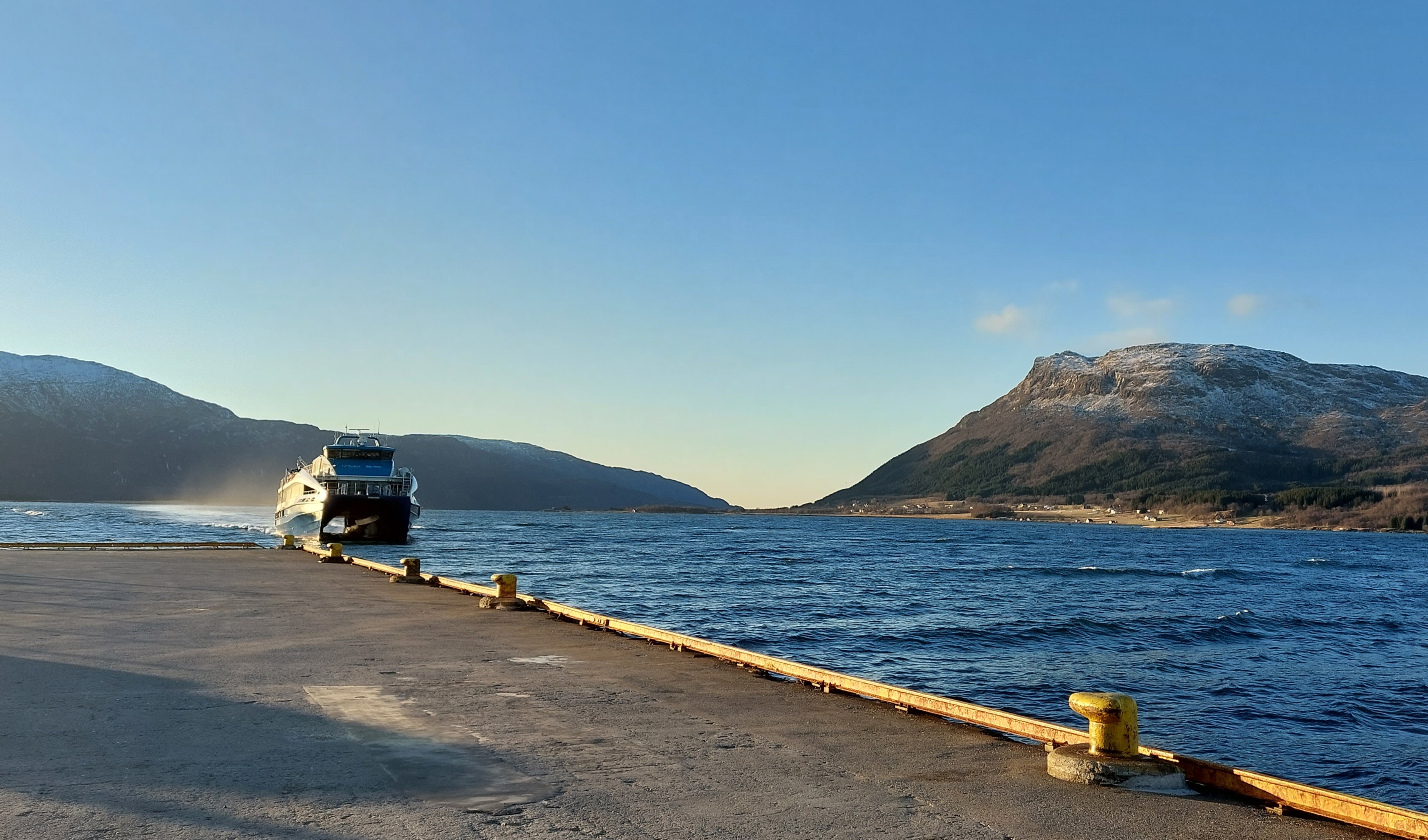
Transport is considered one of the main challenges by the inhabitants in both Lurøy and Vega. Speed boat services offer connections with the mainland, but they are dependent on weather conditions.
Photo: Julien Lebel.
Even though the fieldwork did not focus on the people who left the community, data from interviews tend to indicate that young people were mainly the ones who left the community for various reasons. These include opportunities to study at another location, lack of job opportunities in the community, challenges to find a house, and lack of attractive transport connections to other locations outside the municipality.
2.3 Aquaculture: impacts deriving from the growth of the “blue economy”
The “blue economy” encompasses both “ocean industries” (oil and gas, fisheries, aquaculture) and activities like tourism, offshore wind power and marine biotechnology (Norwegian Ministry of Trade, Industry and Fisheries, 2021a). The growth of these industries, and particularly aquaculture, has led to important transformations in many local communities, especially in Lurøy municipality. On the one hand, the aquaculture industry has its merits. It serves as a significant source of employment in rural areas, provides a sustainable protein source to meet the increasing global food demand, and acts as Norway's alternative to the petroleum economy, often referred to as "the next oil". It plays a crucial role in sustaining the country's welfare standards (Olafsen et al., 2012; Almås & Ratvik, 2017). On the other hand, the aquaculture industry is facing intense debates and public scrutiny due to vivid images and stories portraying how it harms the environment and restrict other activities, like fisheries. These discussions challenge the industry's credibility and social acceptance (Bjørkan & Rybråten, 2019).
2.3.1 The issues of sustainability and social acceptance
Norway is one of the main seafood producers in the world, especially as the country is the biggest producer and exporter of Atlantic salmon and rainbow trout, which explains the strong position of aquaculture in national strategies (Norwegian Ministry of Trade, Industry and Fisheries, 2021b). Even though aquaculture has developed on a large part of the Norwegian coastline, mainly from the county of Vestland to the county of Nordland, the production has increased the most in the Northern regions after 2010. This is mostly due to favorable geographical conditions to develop the industry in the sea and fjords of Nordland County. More than 100 companies currently have permits to run fish farms with Atlantic salmons and rainbow trouts. About 170,000 tons of salmon, but also trout and rainbow trout to a lesser extent, were produced on the coast of Helgeland and in the south of Bodø in 2020 (Norwegian Ministry of Trade, Industry and Fisheries, 2021b), corresponding to 10-15% of the whole aquaculture production in Norway.
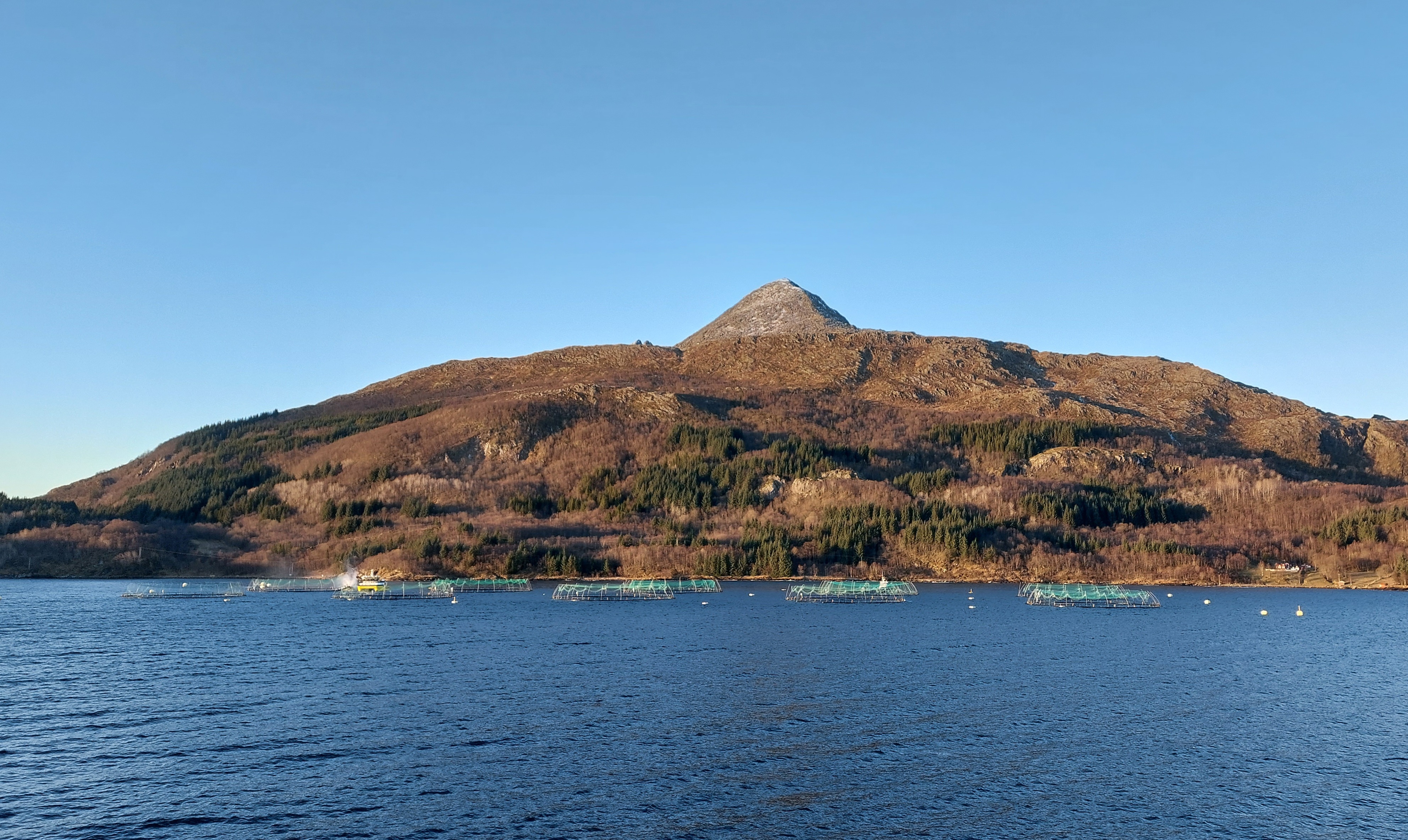
Aquaculture farms are common on the whole coast of Helgeland. They require an exclusive use of marine space.
Photo: Julien Lebel.
Implementing knowledge-based management is a fundamental principle across various sectors in Norway, as highlighted in government reports (St.meld. nr. 42, 2000-2001; St.meld. nr. 8, 2005-2006). It is regarded as a crucial factor in ensuring sustainability. In line with this, the government proposed a framework for “predictable and environmentally sustainable growth of the Norwegian salmon and trout aquaculture” in 2015 (Meld. St. 16, 2014-2015), known as the Growth system. The key instruments are the Traffic Light system (TLS) and the aquaculture fund.
The TLS entered operation in October 2017 and constitutes the current basis for regulating the growth of aquaculture through adjustment of the size to production permits. The TLS should ensure a knowledge-based and predictable framework for growth and this is achieved through the level of sea lice as its only performance indicator (Karlsen et al., 2016). Here, traffic lights are used to indicate areas where growth is acceptable, areas under observations and areas where reduction is necessary. To operationalize the TCL, the coast is divided into 13 aquaculture production areas. The 13 aquaculture production areas are managed based on collective penalties for exceeding the sea-lice limit at a given time for all the aquaculture companies in each area (Meld. St. 16, 2014-2015). The Helgeland region with Lurøy and Vega is located in production area 8 (Norwegian Government, 2022). Importantly, this is a green area and growth is allowed. The region is therefore a hotspot for aquaculture firms looking to expand. This creates optimism in the region but is also a source of conflict since people are split in their views on aquaculture, as it was reported by interviewees.
Another important social aspect of the Growth system is the aquaculture fund (havbruksfondet) (Norges offentlige utredninger 2019: 18, 2019). The means of the fund derive from taxes on production increases. Around 80% of the taxes collected are directed to the aquaculture fund, which is then allocated to the municipalities where increased production is planned. The purpose of this fund is to encourage coastal municipalities to create more space for the growth of aquaculture, as part of their responsibility for coastal zone management. One of the main challenges to growth has been the perception that coastal communities do not receive sufficient benefits from aquaculture (Sandersen & Kvalvik, 2015). The growth system aims to address this by compensating communities for their efforts in facilitating expansion and development in the aquaculture industry. It is expected that this approach will enhance the social acceptance of aquaculture activities. In 2023, 1,4 milliards NOK were redistributed to Norwegian municipalities and counties: Lurøy obtained 18,8 million and Vega received almost 3 million, which illustrates that this redistribution system mainly encourages and supports municipalities that have significantly developed an aquaculture sector. This system creates “winners and losers” and has generated heated debates in Vega where some are arguing that the UNESCO World Heritage Status is preventing the municipality to develop, compared to neighboring municipalities like Lurøy.
Research and development in the aquaculture sector typically concentrate on environmental and economic outcomes. However, the growing use of marine space, competition among industries, and the priorities of coastal communities have become increasingly important social issues (Billing, 2018).
While measures like the TLS focus on ensuring biological sustainability, the aquaculture fund is based on economic rationality, assuming that scientific knowledge production will directly guide decision-making. However, these assumptions fail to explain the motivations and sentiments influenced by socio-cultural factors (Kahan et al., 2012), which play a key role in establishing social legitimacy.
2.3.2 Coastal planning and conflicting interests
The development of new technologies along with the implementation of more sustainable practices and the use of alternative feedings for the fish are expected to boost the sustainability of the sector and reduce its environmental footprint. Yet, the growing number of fish farms is leading to tensions with other users of sea areas, mainly fishermen/women (Bjørkan & Eilertsen, 2020). Increasing tourism in coastal areas may also lead to contradictory interests in how to develop some areas, while an increasing number of second home owners are willing to preserve a quiet and natural environment around their properties. As observed during fieldwork, there are diverging opinions between and within the communities: some inhabitants have a negative perception of the extension of industrial activities like fish farms, while others consider it provides new job opportunities for the youth, which is positive for the future of the local community.
As Lurøy is a pioneer in the development of aquaculture in Norway and strongly benefits from the presence of local companies, the majority of the inhabitants is positive about the sector. Interviewees mentioned for example that the presence of aquaculture companies contributed to improving ferry services to/from certain islands (map 2.1). Such transport connections influence the population distribution as most of the year-round residents live on islands that have regular ferry services. However, the possible extension of fish farming activities in Vega is splitting the population. The conclusion of an independent report that advised against the presence of fish farms in the Heritage Area (Vega World Heritage Center, 2022) did not match with the expectations of the municipal council of Vega, that is willing to increase economic benefits from aquaculture, like the neighboring municipalities, through the Growth System as described above.
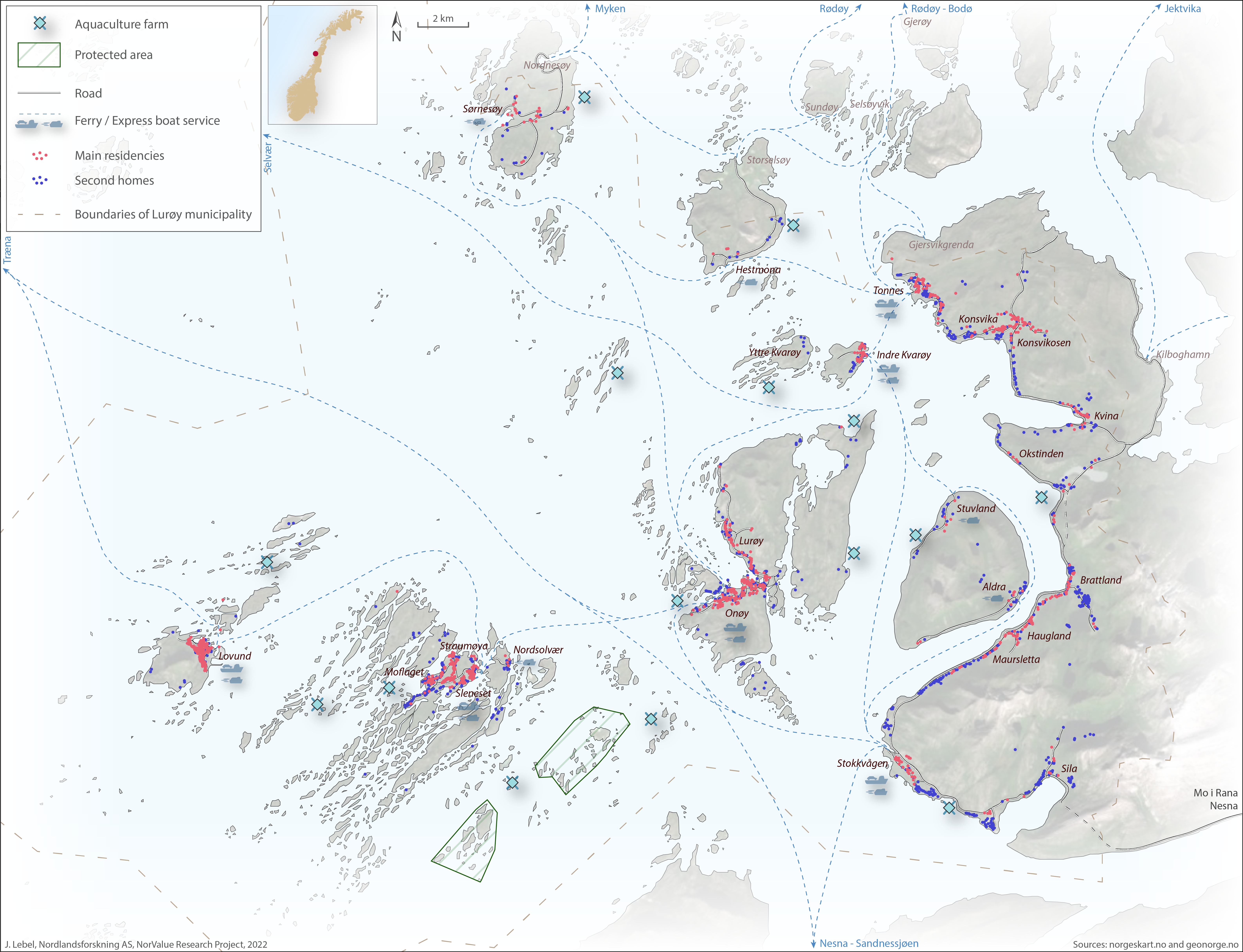
Map 2.1: Map of Lurøy.
Source: norgeskart.no and geonorge.no.
Local stakeholders, especially municipalities, have an important role to play in managing the growth of the aquaculture sector and its consequences. In 1992, only 22% of Norwegian municipalities had land-use plans for their coastal zones. By 2010, 87% of the municipalities had such plans. An early evaluation of municipal coastal zone planning showed that the aquaculture industry had gained more influence over time (Movik & Stokke, 2021). The study also revealed that considerations for fishing gained more influence in the plans the further north one went, as the coastal fishing industry is larger in Northern Norway.
As the aquaculture industry continues to grow, it faces significant spatial challenges. Factors like increased production, new technology, evolving production methods, and changing requirements from industry authorities are reshaping the areas where the industry can operate (Karlstad, 2022). To address these changes, comprehensive coastal zone plans need to be regularly updated. However, according to Stokke (2021), small coastal municipalities often lack the necessary professional expertise or resources to meet the demands of modern planning. Stokke (2021) argues that regional processes under the governance of county municipalities are necessary to effectively regulate the expanding aquaculture industry and strike a balance between aquaculture interests and other coastal zone concerns. This viewpoint faces resistance, particularly from municipalities that believe they have sufficient planning expertise.
From 2013 to 2019, an inter-municipal coastal planning collaboration was conducted among 13 municipalities in Helgeland, including Lurøy and Vega. This project used a "reverse planning methodology", which means that the municipalities planned large areas for multiple uses, including aquaculture, unless it was proven to be incompatible with other interests. This approach sparked controversy, as it allowed for aquaculture in areas where it was not initially considered incompatible with other activities (Sandersen, 2021).
Therefore, spatial planning strategies developed by the municipality of Lurøy focus on giving possibilities for aquaculture companies to develop their activities in the future, reflecting the common practice in many coastal municipalities to include large areas with “combined purpose” where the establishment of fish farms is possible (Holand & Thorsen, 2018). On the contrary to other activities at sea, like transport and fisheries, aquaculture requires an exclusive use of marine space, preventing other activities to take place at the same location. Some interviewees highlighted the need for dialogue and cooperation between the different components of the community to overcome issues linked to conflicting interests regarding spatial challenges. The local ownership of aquaculture companies in Lurøy is considered an asset as most of the stakeholders are part of the same community and are therefore willing to avoid potential conflicts and to look for satisfying solutions. A close dialogue with the fishermen/women is also praised by the municipality in order to avoid the development of aquaculture activities in areas that are of high interest for fishermen/women.
2.4 Tourism: A quest for management of growth
The increasing number of visitors in remote places in Norway brings both challenges and opportunities, while nature-based tourism has become popular in the whole country. Norway registered almost 36 million commercial overnight stays in 2019, and tourism gathered around 7% of all employment the same year (Innovasjon Norge, 2021). Therefore, different actors, such as national and local authorities, but also private companies focusing on tourism, are willing to encourage the growth of this sector that is perceived as a useful tool for economic development in local communities. With its World Heritage area since 2004, Vega has become a well-known tourist destination with both domestic and foreign visitors whose main goal is to experience pristine nature.
2.4.1 Nature experiences and the right to roam
With spectacular fjord landscapes and vast nature areas offering possibilities for different types of outdoors activities, Norway stands high when it comes to nature-based tourism. As transport infrastructures, especially airports, were developed outside the main cities located in the south, the northern regions have become more accessible too. Experiencing northern lights in Tromsø or exploring the Lofoten archipelago by bike are now renowned travel opportunities among both Norwegians and foreigners.
Tourism in Vega is particularly relying on nature experiences. The inclusion of the archipelago on the UNESCO World Heritage list was mainly motivated by concerns regarding environmental protection and culture preservation, but also strengthening local identity and developing tourism. A majority of the inhabitants support a sustainable form of tourism in connection with promoting the World Heritage area. However, many consider that this should not prevent development opportunities in the local community. Therefore, it has been highlighted that the main goals and strategies of including the archipelago on the World Heritage list should be clearly understood by the inhabitants and considered with other development opportunities (Kaltenborn et al., 2013).
Access to nature for everyone is guaranteed by law in the Nordic countries through “the right to roam” (Allemannsretten), with some variations from one country to another. In Norway, this right means that everyone is allowed to roam free on private and uncultivated land, and the few exceptions where visitors have to pay a fee constitute a source of controversies in the society, like the North Cape. As natural environment is the main attraction in rural areas, many visitors take advantage of this right, in addition to local residents. Experiencing nature in remote places offering impressive landscapes has become a tourist product that is often sold and organized by external private companies. Thus, the right to roam is nowadays a tourist attraction in itself (Bogason et al., 2021).
Although many visitors travel on guided tours through the whole archipelago, the majority stay overnight on the island of Vega, and to a lesser extent on Ylvingen (map 2.2). In connection with an increasing number of travellers, accommodation options have also expanded. The main island has currently one hotel, one motel and one camping, but cabins, cottages and other types of private accommodations are the most popular among the visitors. Moreover, tourists have the possibility to stay overnight on different parts of the main island, and townships on the shoreline concentrate most of the accommodations. Traditional cabins for fishermen/women (rorbuer) with basic comfort and amenities that were used for several decades have nowadays been converted to middle- to high-standard tourist accommodations with all the modern facilities. In the past two decades, new cabins dedicated to accommodating tourists have been built in a style copying the traditional architecture, as an attempt to preserve the atmosphere of a fishing village.
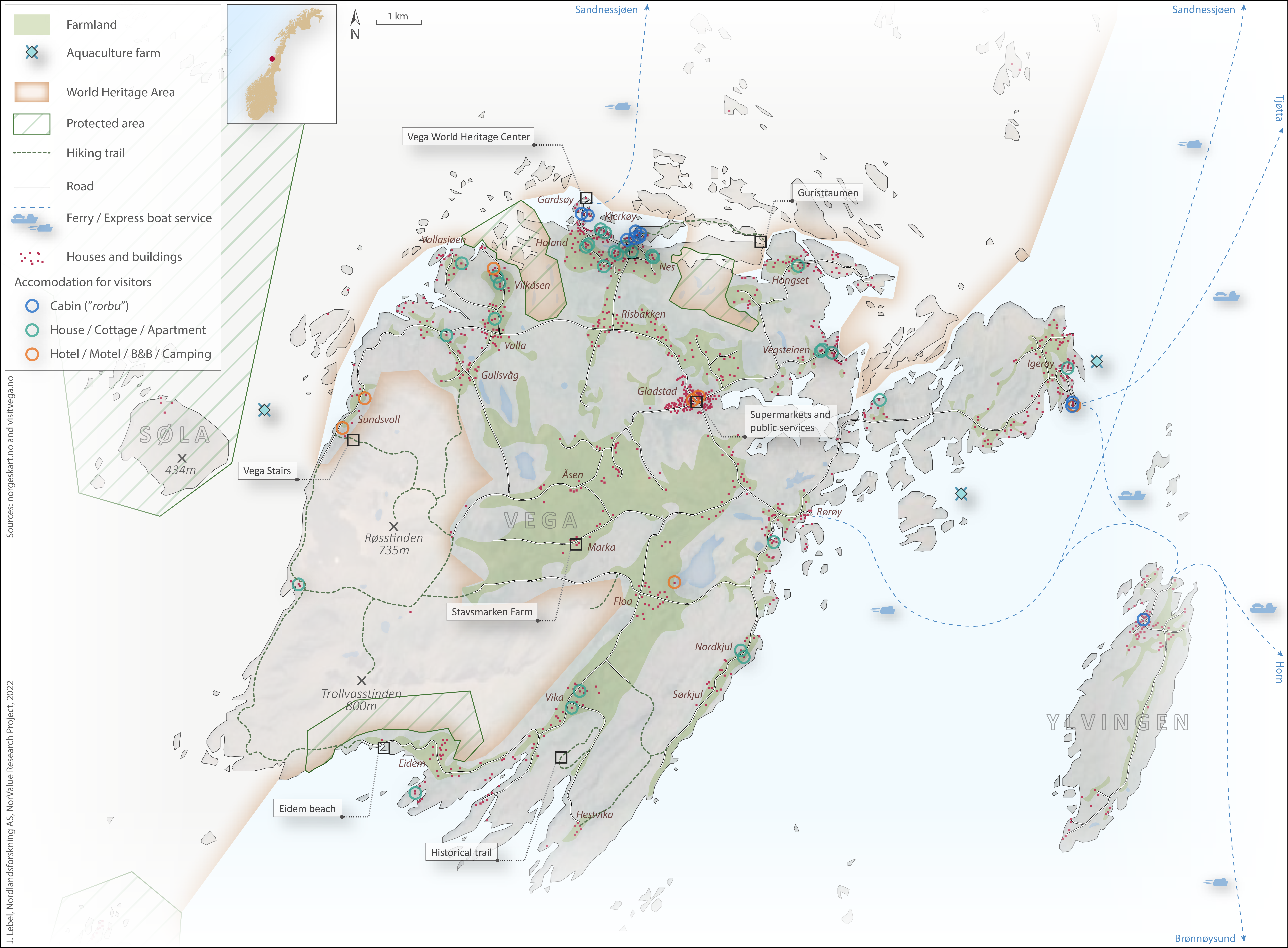
Map 2.2: Map of Vega island.
Source: norgeskart.no and visitvega.no.
While the Vega World Heritage Centre leads activities and offers exhibitions aiming at raising awareness about the local traditions and more broadly environmental protection, activities and touristic places on land are spread between different locations: the Eidem beach in the south, the easily accessible path to Guristraumen in the north, and the Vega Stairs on the western coast with possibilities to hike further to some mountain summits are few examples of the main attractions. Thanks to its pretty flat road network, exploring the island while cycling is also promoted among the visitors who often get the possibility to rent bikes. Protected areas on land are also emphasized as ideal places to discover local plant species, like wild orchids, and to observe the rich birdlife.
Such diverse activities at several locations, in addition to experiences at sea like sport fishing and kayaking, encourage the tourists to visit different areas, which avoids creating a very limited amount of highly touristic spots where all the visitors would gather. On the one hand, this helps to avoid overcrowding and high pressure on certain nature areas, while facilitating the social acceptance for tourism among inhabitants. On the other hand, if the number of visitors keep increasing, the whole island and its environment may suffer from direct pressure deriving from continuous flows of visitors. Yet, interviewees agree it is unlikely that Vega would land in such a situation in the near future, on the contrary to other famous natural areas in Northern Norway.
2.4.2 Dilemmas for the local communities
As nature-based tourism has become an attractive concept for many visitors, local communities in Northern Norway perceive this trend as an opportunity for their development, and nature is now considered an economically viable asset (Bogason et al., 2021). Interviewees in Vega emphasized the importance of visitors for local services: there are currently two supermarkets in Gladstad, the administrative center on the main island, and the inhabitants agree that this would not be possible if the year-round residents were the sole customers. Employment opportunities and broader cultural life, especially through the activities led by the World Heritage Center are also mentioned as important benefits that can directly be linked to tourism.
Yet, the right to roam combined with overcrowding have affected social tolerance for tourism in different areas in Norway. Critics that arose against the negative impacts of cruise ships that disembark thousands of visitors in small communities have reached national news channels. Moreover, the pressure on the environment deriving from a high number of visitors traveling to the same famous spots have also raised concerns among inhabitants, for example on the Lofoten archipelago (Bogason et al., 2021), as this leads to traffic issues on the road network and does not match with the picture of a quiet and peaceful nature.
This raises the question on how to balance (economic) interests linked to the development of the tourism sector on one side and both environmental protection and quality of life for the inhabitants on the other side. While the tourists can experience the nature for free, their presence can be assimilated as costs for the local communities (Bogason et al., 2021) when it comes to environmental and social parameters. To tackle these challenges, the concept of “regenerative tourism” has been presented as a relevant tool to manage tourism development in Nordland (Nordland Fylkeskommune, 2023). A central aspect to this concept is that both tourism actors and visitors should have positive effects on their direct environment, whether it is about economy, ecology, culture or society (Bellato et al., 2022).

Small fishing settlements on the coast of Vega have become attractive places with many tourist accommodations and second homes.
Photo: Julien Lebel.
Such environmental pressure deriving from tourism is reinforced by the seasonality of the sector: in Northern Norway, half of the overnight stays were registered during summer months in 2019 (Innovasjon Norge, 2021). There are, however, strong variations from one region to another, some being mainly visited for winter activities (skiing, chasing the northern lights), others for summer activities (hiking, biking, climbing). The negative consequences of the dependency on foreign visitors were also highlighted during the pandemic, as traveling to Norway as a foreign tourist was almost impossible for many. Interviewees emphasized the importance to not neglect the Norwegian visitors. After successful communication campaigns that were coordinated by tourist actors, Northern Norway became a popular destination among Norwegians during the past few years. Yet, interviewees highlighted that Norwegian tourists mainly take their holiday in July, while the flows of foreign visitors are more spread.
During the inclusion process of Vega on the World Heritage list, it has been emphasized that tourism should support the local economy but not lead to overcrowding. Therefore, the archipelago has primarily targeted high-value visitors so far (Kaltenborn et al., 2013). On contrary to some other destinations, the limited sea infrastructure and ferry services to reach Vega constitute a natural barrier. This can, however, be perceived as a contradiction to the spirit of the right to roam that implies a certain diversity of visitors. Avoiding mass tourism without becoming a highly selective destination whose rich nature is only accessible for the wealthiest tourists is currently a significant challenge for Vega.
2.5 Strategies to build resilient “open communities”
The different groups constituting the “open communities” of Lurøy and Vega do not always share the same interests. They have different perceptions regarding future developments and how to address current challenges. Energy, waste management, food production, transport, public services, job opportunities and housing are important focus areas. Even though local resources are obvious, the dependency on other regions remains high due to the current organisation of the value chains, the lack of local investments in some areas, and some missing infrastructures. Yet, among the residents there is a strong interest in living in these communities. The housing market, however, represents a challenge. There is crowding-out tendency created by the demand for second homes in rural Norway, where ordinary dwellings are converted into second homes. As the interest in remote coastal communities as recreational places to spend some free time has increased over the past years, it has become even more popular to own a second home in these municipalities.
2.5.1 Diverging local perceptions of the future of coastal communities
Beyond population decline, coastal communities in Northern Norway are facing challenges linked to climate changes and ecosystem degradation, aggravated by decisions on the use of land and marine areas. These issues are interlinked and affect local people’s perceptions and opportunities regarding economic activities, in particular tourism and aquaculture. The concept of sustainability, defined in the 1980s, has gained even more visibility after that the UN defined 17 sustainable development goals (SDGs), each including several targets, in 2015 in order to cope with growing social inequalities and pressure on the environment (United Nations, 2015). Sustainability is nowadays approached through three main pillars: economic, social and environmental. They are closely related to each other as progress in one of these pillars could affect the other ones, particularly in the form of trade-offs (Barbier & Burgess, 2017). This illustrates the difficulty to balance different interests when it comes to sustainability.
Many of the topics covered by the UN goals and targets echo with challenges and relevant themes that interviewees consider critical for the future of coastal communities in Northern Norway: energy, waste management, food production, transport, access to public services, access to nature, job opportunities and housings. While resilience mostly refers to the ability of tackling external shocks, sustainability focuses on guaranteeing a good quality of life, access to natural resources and attractive opportunities for future generations. Thus, we could consider that a resilient community would benefit from a sustainable management of local resources, and vice versa.
During fieldwork it was possible to notice that different perceptions and interests coexist in the local communities, especially when it comes to economic development and environmental protection. Previous research highlighted the importance to take into consideration local perceptions and interests when designing national strategies regarding sustainable development (Rybråten et al., 2018). There is often a mismatch between these two geographical scales when it comes to what a sustainable way of living should encompass and how local resources should be used. Developing strategies based on the strong sense of belonging within the community could constitute a successful approach, as people would act collectively to tackle issues and adapt to changes affecting the community if they consider that these strategies fit with the values and the visions existing locally (Amundsen, 2013). Yet, this proves to be challenging when it comes to the debate about the development of aquaculture in Vega as there are different views in the local community on what a “sustainable future” means.
2.5.2 Shifting focus from external to local resources and opportunities
As many coastal communities in Northern Norway, both Lurøy and Vega are characterized by a strong dependency on external stakeholders, which is visible in the current structure of value chains that require for example good transport connections, access to energy and available workforce. Energy is imported from the mainland instead of being produced locally (building hydropower is not a realistic option on certain islands due to their geography). Mobility needs are so far covered by vehicles using fossil energy, even though electrification has made progress in peripheral areas in Norway. Yet, some interviewees expressed doubt about the possibility to cover all the future power needs if all ferries, cars and local industries become fully dependent on electricity. Waste is transported and handled outside of many coastal communities. Farm and fish products are mainly exported to be consumed in other regions. Finally, external workforce is needed in many sectors, whether it is public services (schoolteachers, doctors, local administration staff), industries (fish farms) or other services (hotels, restaurants).
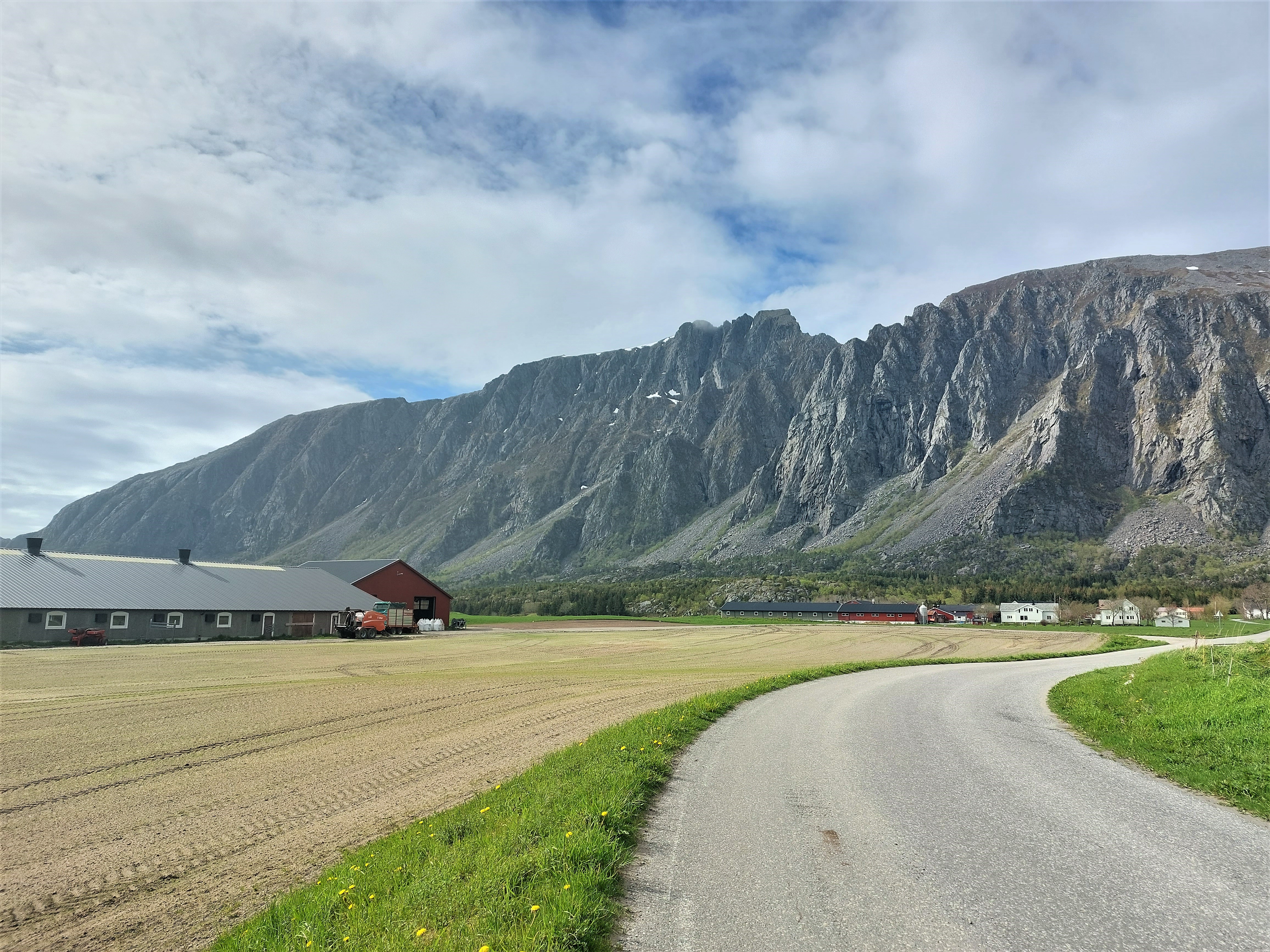
Agriculture is still an important activity in some areas on the coast of Helgeland, like on the island of Vega.
Photo: Julien Lebel.
However, some interviewees highlight the possibilities of using local resources in a better way, in order to strengthen the sustainability of their community, and thus reduce its vulnerability on external shocks that could affect both exportation and importation flows. Technology and innovation are widely promoted as the key to achieve sustainability and carry out the green transition. Yet, this cannot be the only driver in small communities where local particularities and barriers are often underrated. Rough weather conditions, sparse population and challenging topography constitute for example obvious obstacles to promote new means of transport, such as autonomous vehicles. In the case of energy production, small-scale projects could be developed, like wind power, hydropower or tidal power, depending on local conditions. This would contribute to moving energy plants closer to where people live, while community-scale projects with local ownership can benefit from a greater social acceptance (Johnsen Rygg et al., 2021). This requires, however, the emergence of new business models and support from national authorities.
The electrification of the car park in Norway has created new challenges in remote areas where charging stations are not necessarily present due to lacking resources for such investments and a limited number of potential users. In the meantime, road infrastructure and ferry services are not designed to handle a large number of cars during peak seasons (Olsen et al., 2021). Developing smart mobility solutions in coastal communities as Lurøy and Vega is much more than phasing in new technologies, as the topic of mobility is for example connected to the development of local industries, access to healthcare services for the inhabitants (often outside of the municipality) and land-use planning (Gjertsen et al., 2022). In the meantime, public subsidies are limited, and some interviewees consider that the situation could worsen in the coming years. Yet, new mobility forms could be promoted in a better way, like using bike in the case of Vega, but also taking advantage of the strong cohesion in the community to develop car-sharing between the inhabitants. In such examples, mobility can cover several aspects simultaneously: besides moving between two locations, users get opportunities to socialize when riding with a neighbor or being active outside when cycling (Guillén-Royo et al., 2023).
In the case of food production, coastal communities in Northern Norway have long traditions with exploiting land and sea resources to cover local needs. The industrialization in the farming and fishing sectors, along with the growth of aquaculture, has led to new business models focusing on the exportation of local products to other regions. In the meantime, the importation of cheaper food products through organized distribution channels constitutes an important barrier for community-based initiatives that would be designed for the local market (Ormstrup Vestergård et al., 2022). Yet, some farms in Vega managed to adjust their activities to sell products to tourists, while there is a growing interest to consume healthier and locally produced food. Self-sufficiency has become a topic in some Nordic coastal communities in order to reduce their carbon footprint and their dependency on importations.
2.5.3 Housing as a critical issue
Although there is a certain interest in living in coastal communities, the situation regarding housing in both Lurøy and Vega is a concern for many inhabitants. Informants highlighted the difficulty to find a place where to live for newcomers who want to settle down, while the share of second homes has increased. The issues existing in the housing market are closely related to challenges regarding employment. The lack of job opportunities is obviously a barrier to attract new residents, but the lack of available housings is also an issue when organisations want to hire new people. Many potential applicants do not apply to job offers due to the difficulty to find a place where to live that would meet their expectations. Coastal areas are considered the most attractive, while old houses located inside the main island of Vega or close to industrial activities are disregarded.
In the meantime, the interest in remote coastal communities as recreational places to spend some free time has increased, and it has become popular to own a second home or a cabin (hytte) in these municipalities. According to data from Statistics Norway, 26% of houses were used as second homes in 2017 in the whole country (Sheard, 2019). These second homes are often linked to family ties as people inherited them from their ascendants and decided to retain them. This trend has been described by some authors as part of “the Norwegian multi-dwelling lifestyle” (Xue et al., 2020). The effects of second home owners on local communities is often debated in academic literature. Some authors pointed out the negative impacts on the housing prices and possibly the labour market too (Sheard, 2019), while others underlined the added value of temporary residents who bring “social capital” to the local communities, and thus better social networks and new professional connections (Gallent, 2014).
Moreover, the environmental impacts of “the Norwegian multi-dwelling lifestyle” has been questioned, as newer cabins are being built with all the amenities that already exist in the main residences. The purpose of staying in these cabins is also mostly connected to sport activities that affect the local environment, like ski resorts. This appears in contradiction with the spirit of traditional cabins that are minimally equipped and mainly associated with spending time in a quiet and natural environment (Xue et al., 2020). Second homes in both Vega and Lurøy are rather matching with the traditional spirit. Yet, with the development of new activities in connection with tourism and their attractive environment getting more renowned, a shift is happening towards a more modern spirit as newer and bigger cabins are getting built.
The issues regarding the housing market are not new in small communities in Norway, and the government introduced a policy in 1974 that gives the possibility for the municipalities to enforce a residency requirement (boplikt), with some flexibility. According to this policy, the owner of a property must either use the house as its main residency, rent it out, or sell it (Sheard, 2019). More and more municipalities decided to implement this policy during the 1980s and the 1990s, a number that peaked at 75 in 2005. However, their number has decreased continuously after this year, as more people were questioning the efficiency of such a strategy.
In March 2023, 41 municipalities were still using the residency requirement policy, but their geographical distribution is unequal. In Northern Norway, the municipality of Vågan (on the Lofoten archipelago) is the only one that currently has this regulation in force. Vågan is a particular case, due to growing international tourism in Lofoten that has an impact on the housing market, while population has increased and the job market has diversified. The majority of the municipalities still using the residency requirement policy are located in Southern Norway, in rural areas that are easily accessible from the biggest cities. In such regions, the pressure is high on the local housing market as many people living in cities are interested in investing in a second home where they can spend their weekends and/or vacations without traveling too far away.
The situation is somewhat different in Lurøy and Vega as many second home owners have local roots in the community, which reinforces the social dimension of their presence. There are, however, strong variations in the perception of year-round residents from one municipality to another: Farstad (2011) underlines that some residents in certain municipalities perceive second home owners as a potential threat because they often pursue their own interests, have particular demands due to their perception of the area as a recreative place, and could get more power as their share in the whole population is increasing. Yet, in the case of Lurøy and Vega, second home owners are rather perceived positively in connection with the declining number of year-round residents and the importance to maintain local services that rely on a larger customer base.
Some interviewees highlighted that the inhabitants of Lurøy and Vega have different opinions regarding residency requirement. In the case of Lurøy, housing prices doubled after the municipality removed the policy as it was considered ineffective: many houses were still sold as second homes after all, the process took just more time due to the regulation giving priority for year-round residents. It is also pointed out that banks are more willing to grant loans to buyers as they consider positively the increasing value of houses in the municipality. Yet, it is agreed that the demand for second homes pushes the prices up, and this is a challenge for the younger generations who are first time buyers and do not necessarily have the equity required by banking institutions to obtain a loan.
In Lurøy, more than half of the inhabited buildings were second homes in 2020, an increase of almost 27% compared to 2010, according to Statistics Norway (figure 2.1). The share of second homes is somewhat lower in Vega (almost 40%) but their number increased by more than 50% in ten years (figure 2.2). Not surprisingly, most of the buildings are single houses, and many of them have annexes (garage, sauna, etc.), which mainly explains the large number of “other buildings” and the increasing trend in both figures. The municipalities are, however, willing to diversify the housing market, even though local investments are lacking in the case of Vega, which constitutes an obvious barrier. In the case of Lurøy, aquaculture companies undertook the construction of some smaller housing options in Lovund that are rented out to the workforce that is needed in this sector. The municipality took a similar step on different islands where municipal services exist, so that they could hire employees and give them the possibility to get a place where to live at the same location. Yet, the complex situation regarding housing remains an issue for the younger generations, encouraging them to leave the community, along with other reasons related to job and education opportunities in bigger cities.

Figure 2.1: Key numbers about housing in Lurøy.
Source: Data from Statistics Norway (ssb.no).
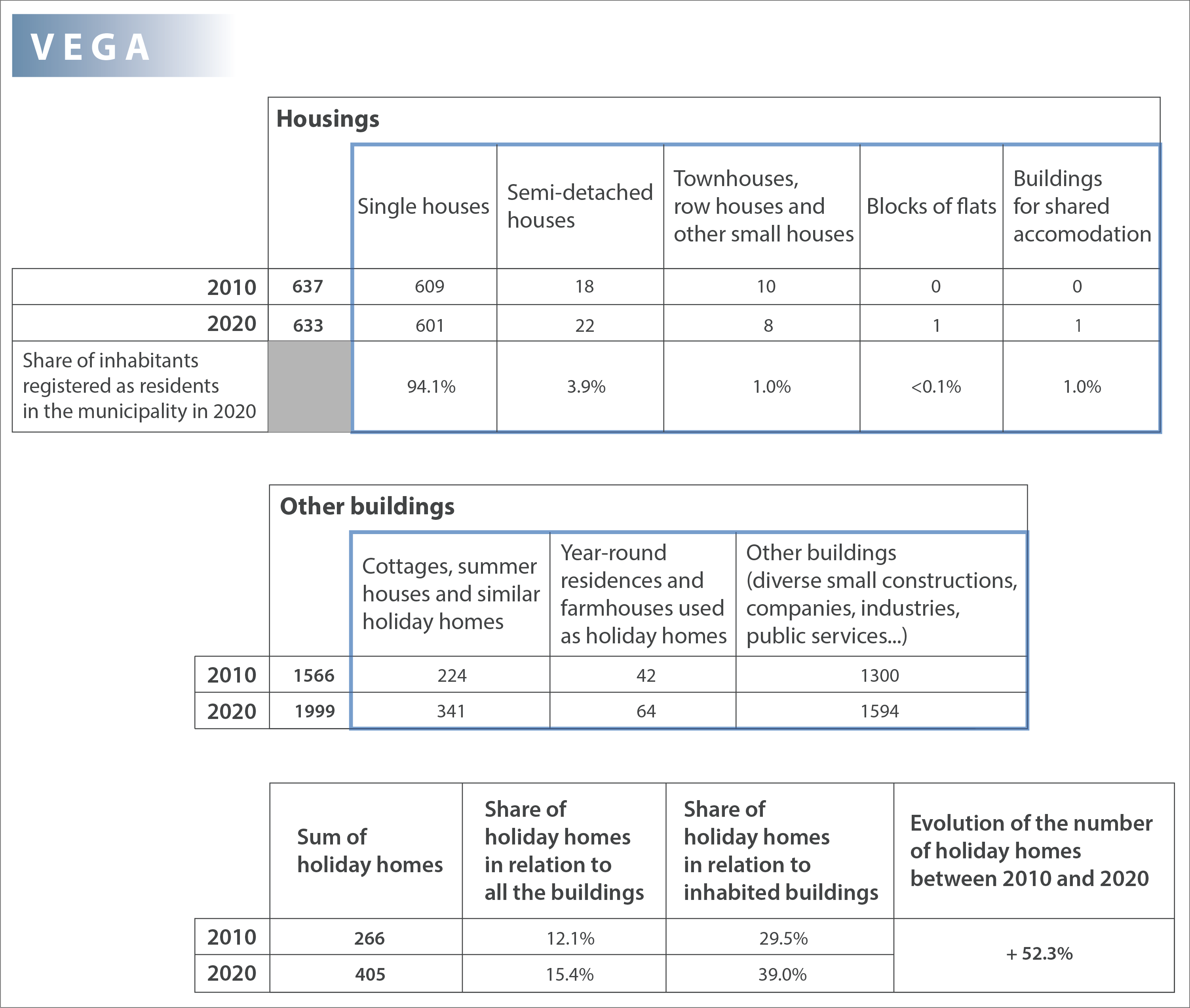
Figure 2.2: Key numbers about housing in Vega.
Source: Data from Statistics Norway (ssb.no).
Interviewees agree that there are numerous barriers to attract new residents, besides the issues regarding housing. Incomes are lower than in cities, education opportunities are limited, and it might be challenging for a partner to find a job too when a couple decides to settle down. However, as more companies and public organisations publish job offers with home office possibilities, this could help to stimulate the attractiveness of coastal communities in the coming years (Randall et al., 2022). Therefore, it is necessary for these municipalities to improve the situation on the housing market.
2.6 Conclusion
Both Lurøy and Vega are illustrative of the diversity that today characterizes coastal communities in Northern Norway. Inhabitants and regular visitors express a strong sense of belonging, which can be seen as an asset to overcome challenges. The development of an attractive and successful aquaculture sector in Lurøy and the inscription of Vega on the UNESCO World Heritage list have strengthened the particularity of these municipalities, highlighting the importance of local resources that benefit to the local communities. Many residents and second home owners often express a particular connection to the place because of local family roots and/or the specificities of the local environment, like the possibility to access nature easily, the landscapes, the atmosphere in the community. They often feel part of a local narrative, express opinions regarding local matters and consider contributing to the development of the community in a positive way. These are important aspects for the future of the communities as they are the reasons why the residents and the visitors experience a special attachment to the place and do not wish to move away or to pick another destination. Avoiding uniformization with other places and, on the contrary, strengthening local specificities, especially when it comes to tourist activities and local products, should be encouraged.
While the reliance on external actors and the closest cities is obvious, local resources are available to build up resilient communities and potentially develop new value chains, whether it comes to food and energy production, or sustainable mobility. Yet, existing barriers at the national level, competition with other communities due to limited opportunities for public subsidies, lack of local funding, and different understandings of what sustainability means are important challenges. Supporting local solutions instead of encouraging strategies that result in a greater reliance on external actors would contribute to strengthening resilience at a local scale and adapting the value chains to current challenges. Moreover, the concerns of the interviewees regarding population decline are mostly linked to the fact that national subsidies are based on local demographic statistics. Therefore, the current scheme means for many inhabitants that further population decline would lead to more limited economic resources and thus more difficulties to maintain local services.
Finally, the diversity of these coastal communities regarding the structure and the composition of the population constitutes their biggest asset to tackle future challenges. Beyond diverging interests that may arise between some groups, they all share the will to keep the community alive and preserve local services and economic activities to guarantee an attractive quality of life. The out-migration of young people seems counterbalanced by the in-migration of people with diverse backgrounds, which ensures, in the end, the diversity of the community. One can expect that this diversity may broaden further, as new groups of people could identify new opportunities to establish there in the future, if the housing market allows it. This will also depend on the ability of the communities to preserve their openness and integrate new types of residents and visitors.
References
Almås, K. A. & Ratvik, I. (2017). Sjøkart mot 2050. SINTEF. https://sintef.brage.unit.no/sintef-xmlui/bitstream/handle/11250/2456385/Sj%25C3%25B8kart%2b-%2b7.april%2b2017.pdf?sequence=1&isAllowed=y
Amundsen, H. (2013). Place attachment as a driver of adaptation in coastal communities in Northern Norway. Local Environment. The International Journal of Justice and Sustainability, 20(3), 257-276. https://doi.org/10.1080/13549839.2013.838751
Barbier, E. B. & Burgess, J. C. (2017). The Sustainable Development Goals and the systems approach to sustainability. Economics, 11(2017-28), 1-22. http://dx.doi.org/10.5018/economics-ejournal.ja.2017-28
Bellato, L., Frantzeskaki, N. & Nygaard, C. A. (2022). Regenerative tourism: a conceptual framework leveraging theory and practice. Tourism Geographies, 25(4), 1026-1046. https://doi.org/10.1080/14616688.2022.2044376
Billing, S.-L. (2018). Using public comments to gauge social licence to operate for finfish aquaculture: Lessons from Scotland. Ocean & Coastal Management, 165, 401-415. https://doi.org/10.1016/j.ocecoaman.2018.09.011
Bjørkan, M. & Eilertsen, S. M. (2020). Local perceptions of aquaculture: A case study on legitimacy from Northern Norway. Ocean and Coastal Management, 195(105276). https://doi.org/10.1016/j.ocecoaman.2020.105276
Bjørkan, M. & Rybråten, S. (2019). The potential impact of sea lice agents on coastal shrimp in Norway: risk perception among different stakeholders. Maritime Studies, 18(2), 73-187. https://doi.org/10.1007/s40152-019-00141-6
Bogason, Á., Karlsdóttir, A., Broegaard, R. B. & Jokinen, J. (2021). Planning for sustainable tourism in the Nordic rural regions - Cruise tourism, the right to roam and other examples of identified challenges in a place-specific context. Nordregio Report 2021:1. http://doi.org/10.6027/R2021:1.1403-2503
Bradshaw, T. K. (2008). The Post-Place Community: Contributions to the Debate about the Definition of Community. Journal of the Community Development Society, 39(1), 5-16. https://doi.org/10.1080/15575330809489738
Farstad, M. (2011). Rural residents’ opinions about second home owners’ pursuit of own interests in the host community. Norsk Geografisk Tidsskrift - Norwegian Journal of Geography, 65(3), 165-174. https://doi.org/10.1080/00291951.2011.598551
Gallent, N. (2014). The Social Value of Second Homes in Rural Communities. Housing, Theory and Society, 31(2), 174-191. https://doi.org/10.1080/14036096.2013.830986
Gjertsen, A., Bragtvedt, S. & Meland, S. (2022). Smart mobilitet i distriktene: erfaringer fra et læringsnettverk. NF Report 14/2022. https://nforsk.brage.unit.no/nforsk-xmlui/bitstream/handle/11250/3036208/NF-rapport%2B14_2022%2BSmart%2Bmobilitet%2Bi%2Bdistriktene%2B-%2Berfaringer%2Bfra%2Bet%2Bl%25C3%25A6ringsnettverk.pdf?sequence=1
Guillén-Royo, M., Temesgen, A. K. & Vangelsten, B. V. (2023). Towards Sustainable Transport Practices in a Coastal Community in Norway: Insights from Human Needs and Social Practice Approaches. In A. Hansen & K. Bo Nielsen (Eds.), Consumption, Sustainability and Everyday Life (p. 255-289). Springer. https://doi.org/10.1007/978-3-031-11069-6
Holand, I. S. & Thorsen, H. W. (2018). Hva vil vi bruke sjøen til? Om planlegging som verktøy i kystsonen. In B. Skorstad, E. Pettersen & G. Wollan (Eds.), Vårt lille land - Små samfunn, store utfordringer (pp.249-281). Orkana.
Innovasjon Norge (2021). National Tourism Strategy 2030. Innovasjon Norge. https://assets.simpleviewcms.com/simpleview/image/upload/v1/clients/norway/Nasjonal_Reiselivsstrategi_original_ny_en_cbbfb4a4-b34a-41d4-86cc-f66af936979d.pdf
Johnsen Rygg, B., Ryghaug, M. & Yttri, G. (2021). Is local always best? Social acceptance of small hydropower projects in Norway. International Journal of Sustainable Energy Planning and Management, 31, 161-174. http://doi.org/10.5278/ijsepm.6444
Kahan, D. M., Peters, E., Wittlin, M., Slovic, P., Larrimore Ouellette, L., Braman, D. & Mandel, G. (2012). The polarizing impact of science literacy and numeracy on perceived climate change risks. Nature climate change, 2, 732-735. https://doi.org/10.1038/nclimate1547
Kaltenborn, B. P., Thomassen, J., Wold, L. C., Linnell, J. D. C. & Skar, B. (2013). World Heritage status as a foundation for building local futures? A case study from Vega in Central Norway. Journal of Sustainable Tourism, 21(1), 99-116. https://doi.org/10.1080/09669582.2012.680465
Karlsen, Ø., Finstad, B., Ugedal, O. & Svåsand, T. (2016). Kunnskapsstatus som grunnlag for kapasitetsjustering innen produksjonsområder basert på lakselus som indikator. Rapport fra Havforskningen nr. 14-2016. Havforskningsinstituttet. https://kudos.dfo.no/documents/15368/files/15505.pdf
Karlstad, S. (2022). Havbruk – bærekraftig verdiskaping og sameksistens. Muligheter og utfordringer i produksjonsområdene. NORCE Norwegian Research Centre, report 22-2022. https://norceresearch.brage.unit.no/norceresearch-xmlui/bitstream/handle/11250/3044721/NORCE%2brapport%2b22-2022%252C%2bH%2526S.pdf?sequence=1
Lebel, J., Bjørkan, M. & Temesgen, A. K. (2022). Changing value chains and contexts in Lurøy and Vega. In G. Hovgaard & J. O. Bærenholdt (Eds.), Value Chains and Resilient Coastal Communities in the Nordic Atlantic (p. 24-46). Nordic Council of Ministers, TemaNord 2022:555. http://dx.doi.org/10.6027/temanord2022-555
Meld. St. 16 (2014-2015). Forutsigbar og miljømessig bærekraftig vekst i norsk lakse- og ørretoppdrett. Ministry of Trade, Industry and Fisheries. https://www.regjeringen.no/no/dokumenter/meld.-st.-16-2014-2015/id2401865/?ch=1
Movik, S. & Stokke, K. B. (2021). Asserting authority through mapping: the politics of rescaling coastal planning in western Norway. Landscape Research, 46(2), 197-210. https://doi.org/10.1080/01426397.2020.1778659
Nordland Fylkeskommune (2023). Strategi for reiseliv og opplevelser i Nordland 2023-2027. Nordland Fylkeskommune. https://www.nfk.no/_f/p1/ibec0b25d-a53d-47e7-abc4-06c9216ddf23/826174_1_a.pdf
Norges offentlige utredninger 2019: 18 (2019). Skattlegging av havbruksvirksomhet. https://www.regjeringen.no/contentassets/207ae51e0f6a44b6b65a2cec192105ed/no/pdfs/nou201920190018000dddpdfs.pdf
Norwegian Government (2022). Fargeleggingen i trafikklyssystemet i havbruk er klar. Press release from the Norwegian Government. https://www.regjeringen.no/no/aktuelt/fargelegging-i-trafikklyssystemet-i-havbruk/id2917698/
Norwegian Ministry of Trade, Industry and Fisheries (2021a). Blue Ocean, Green Future - The Government’s commitment to the ocean and ocean industries. Report from the Norwegian Ministry of Trade, Industry and Fisheries. https://www.regjeringen.no/contentassets/564afd76f1e34ccda982f785c33d21b9/en-gb/pdfs/regjeringens-havrapport-engelsk.pdf
Norwegian Ministry of Trade, Industry and Fisheries (2021b). Et hav av muligheter - Regjeringens havbruksstrategi. Strategy from the Norwegian Ministry of Trade, Industry and Fisheries. https://www.regjeringen.no/contentassets/e430ad7a314e4039a90829fcd84c012a/no/pdfs/et-hav-av-muligheter.pdf
Olafsen, T., Winther, U., Olsen, Y. & Skjermo, J. (2012). Verdiskaping basert på produktive hav i 2050. Rapport fra en arbeidsgruppe oppnevnt av Det Kongelige Norske Videnskabers Selskab (DKNVS) og Norges Tekniske Vitenskapsakademi (NTVA). SINTEF. https://www.regjeringen.no/link/c808a58ad8b145d6abf1eb5c98aeacb8.aspx?id=2322968
Olsen, J., Antonsen, K., Lebel, J., Wigger, K., Heemstra, H. H. & Nenasheva, M. (2021). Samordning av lokale og turistrelaterte transportbehov. NF rapport nr: 12/2021. https://www.nordlandsforskning.no/nb/publikasjoner/report/samordning-av-lokale-og-turistrelaterte-transportbehov
Ormstrup Vestergård, L., Wøien Meijer, M., Svennerud, M., Rustad, L. J., Leivsson, T. G., Cedergren, E., Bogason, Á., Refsgaard, K. & Froebrich, A. (2022). Selvforsyning af fødevarer i fem nordiske øsamfund - Bornholm, Færøerne, Grønland, Island og Åland. Nordic Council of Ministers, TemaNord 2022:528. http://dx.doi.org/10.6027/temanord2022-528
Randall, L., Ormstrup Vestergård, L., Rohrer, L., Huynh, D., Lidmo, J., Stjernberg, M., Weber, R., Sigurjonsdottir, H. R., Guðmundsdóttir, H. & Kivi, L. (2022). Remote work: Effects on Nordic people, places and planning 2021-2024. Nordregio Report 2022:3. http://doi.org/10.6027/R2022:3.1403-2503
Rybråten, S., Bjørkan, M., Hovelsrud, G. K. & Kaltenborn, B. P. (2018). Sustainable coasts? Perceptions of change and livelihood vulnerability in Nordland, Norway. Local Environment, 23(12), 1156-1171. https://doi.org/10.1080/13549839.2018.1533931
Sandersen, H. T. & Kvalvik, I. (2015). Access to aquaculture sites: A wicked problem in Norwegian aquaculture development. Maritime Studies, 14. http://doi.org/10.1186/s40152-015-0027-8
Sandersen, H. T. (2021). Interkommunal kystsoneplanlegging på Helgeland. Noen erfaringer med omvendt planmetodikk. Kart og Plan, 114(3-4), 274-290. https://doi.org/10.18261/issn.2535-6003-2021-03-04-10
Sheard, N. (2019). Vacation homes and regional economic development. Regional Studies, 53(12), 1696-1709. https://doi.org/10.1080/00343404.2019.1605440
St.meld. nr. 8 (2005-2006). Helhetlig forvaltning av det marine miljø i Barentshavet og havområdene utenfor Lofoten (Forvaltningsplan). Ministry of Climate and Environment. https://www.regjeringen.no/no/dokumenter/stmeld-nr-8-2005-2006-/id199809/?ch=1
St.meld. nr. 42 (2000-2001). Biologisk mangfold -sektoransvar og samordning. Ministry of Climate and Environment. https://www.regjeringen.no/no/dokumenter/stmeld-nr-42-2000-2001-/id194978/?ch=1
Stokke, K. B. (2021). Planlegging i sjø – behov for sterkere regional styring. In K. Broch Hauge & K. B. Stokke (Eds.), Integrert kystsoneforvaltning. Planfaglege, samfunnsvitskapelege og juridiske perspektiv (p. 340-354). Universitetsforlaget. https://doi.org/10.18261/9788215045078-2021-18
United Nations (2015). Transforming our world: the 2030 agenda for sustainable development. Resolution adopted by the General Assembly on 25 September 2015. https://undocs.org/en/A/RES/70/1
Vega World Heritage Center (2022). Tilleggsutredning anbefaler ikke oppdrett. Online article published on 23rd September 2022. https://www.verdensarvvega.no/no/aktuelt2/2022/9/23/tilleggsutredning-anbefaler-ikke-oppdrett
Xue, J., Næss, P., Stefansdottir, H., Steffansen, R. & Richardson, T. (2020). The hidden side of Norwegian cabin fairytale: climate implications of multi-dwelling lifestyle. Scandinavian Journal of Hospitality and Tourism, 20(5), 459-484. https://doi.org/10.1080/15022250.2020.1787862