↑ Photos: iStock
4. Key design elements and considerations
This chapter examines the fundamental building blocks that constitute the design of capacity mechanisms and flexibility support schemes. By examining these key design elements and considerations, it provides a comprehensive understanding of the various components that must be integrated to create an effective and efficient mechanism. This is laying the groundwork for the subsequent chapters, where solutions are evaluated and potential design alternatives are shortlisted for the Nordic market. Building on the market background provided in Chapter 2 and the design objectives outlined in Chapter 3 this chapter serves as a bridge to the detailed analysis and comparison of capacity mechanisms in the following chapters.
4.1 Summary
In the design and analysis of different market configurations, design alternatives are decomposed into smaller building blocks, enabling a systematic examination of each element both individually and in combination. This method provides a structured framework for comparing various design choices and evaluating their respective impacts.
This report distinguishes between first order and second order building blocks. First-order building blocks represent the core design parameters that define the fundamental functioning of the overall mechanism. In contrast, second-order building blocks are more flexible elements that can be adjusted or modified independently of the overarching market design.
4.2 First order building blocks
In total five first order building blocks are identified, as shown in Exhibit 4.1. These building blocks are elaborated in the following chapters and represents the most important, overarching design choices that need consideration when implementing a mechanism.
Determining and securing volume | On what basis is the overall volume requirement set, and who secures it? |
Market-wide vs targeted | Should the whole market or only a selection of the market receive support? |
Eligibility | Who can participate and how to rate their expected performance? |
Product obligations | What commitments will providers need to make? |
Recovery scheme | How is cost recovered and from whom? |
Source: AFRY.
Exhibit 4.1 – First order building blocks for designing a capacity or flexibility mechanism
The first order building blocks represent the key choices that must be considered when designing a capacity or flexibility mechanism
The first order building blocks represent the key choices that must be considered when designing a capacity or flexibility mechanism
There is a wide range of potential combinations of design building blocks, which can be categorised in several ways. A natural and fundamental distinction lies between market-wide and targeted mechanisms, two conceptually different approaches that are examined in detail in this report.
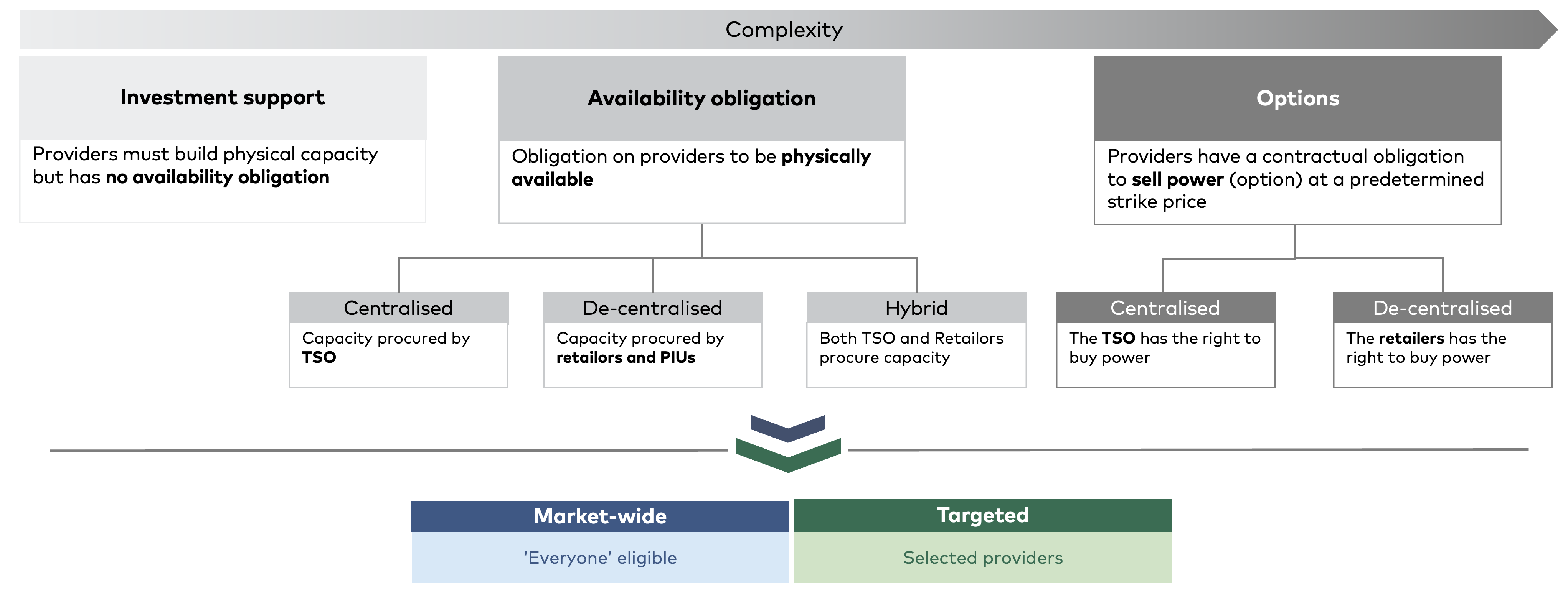
To add another perspective, these design choices can also be grouped into three overarching categories: Investment Support, Availability Obligations, and Options. Exhibit 4.2 and the accompanying text illustrate how different variants within these categories can be developed, broadly ordered from the simplest to the most complex:
Investment support: Under this model, the provider is required to build new capacity but is not obliged to offer this capacity into any specific market. The focus is solely on the upfront investment.
Availability obligation (or physical commitments): The provider must make capacity available to the market or the TSO. This obligation can be structured in different ways, depending on who procures the capacity:
- Centralised: Procured by the Transmission System Operator (TSO).
- Decentralised: Procured by retailers or large consumers.
- Hybrid: A mixed model where, for example, the TSO secures long-term commitments while retailers procure capacity in the short term
Options: These typically involve both a financial and a physical commitment through an option contract. The provider must compensate the buyer financially when the reference price exceeds a predefined strike price. Procurement of such options can occur:
- Centralised: The TSO holds the right to purchase electricity at the strike price.
- Decentralised: Retailers or large consumers hold this right, effectively using the option as insurance against high market prices.
The designs can then be categorised as either market-wide or targeted schemes. Following this, decisions must be made regarding the recovery scheme and eligibility criteria. Ultimately, all the first order building blocks are closely interconnected, and some combinations naturally follow from others decisions to form coherent and viable high-level design options.
Exhibit 4.2 – Overarching design alternatives for capacity or flexibility mechanisms
Direct investments support is the simplest mechanism, while a de-centralised option design would be the most complex – most designs could be either targeted or market-wide, with some exceptions
Direct investments support is the simplest mechanism, while a de-centralised option design would be the most complex – most designs could be either targeted or market-wide, with some exceptions
Note: Power Intensive Users (PIUs), i.e. large consumers of electricity.
Source: AFRY.
Source: AFRY.
All the first order building blocks are elaborated in the following sub-chapters.
4.2.1 Determining and securing volume
The overall volume required to be procured by the mechanism is determined based on a needs assessment, however, different approaches exist for securing it. There are two primary models: centralised and decentralised, or a combination of both:
- Fully centralised: In a fully centralised market, a central authority, such as the TSO, is responsible for organising the procurement process. The central authority is contracting with providers to ensure system reliability. Centralised models provide greater oversight and coordination.
- Fully decentralised: In contrast, fully decentralised markets place the responsibility on individual market participants, such as retailers and PIUs or flexibility providers. These entities negotiate contracts directly based on their own assessments of future needs. Decentralised models offer greater flexibility, allowing participants to leverage their in-house knowledge, which can foster innovation and more tailored solutions. In a decentralised market, market participants are typically incentivised to secure volumes as they otherwise risk the exposure to price spike.
- Hybrid: Alternatively, a centralised authority may determine the volume that each market participant needs to procure.
4.2.2 Market-wide vs targeted
Capacity and flexibility mechanisms provide financial incentives to providers, encouraging them to invest in and maintain the necessary resources. There are two primary types of mechanisms: market-wide and targeted. Each approach has its own advantages and is suited to different market conditions and policy objectives.
- Market-wide mechanisms are designed to ensure that all capacity required to maintain system reliability receives payment. This approach includes both existing and new capacity providers. It aims to provide a comprehensive solution to resource adequacy and to promote competition among a wide range of providers.
- Targeted mechanisms focus on specific types of capacity or particular segments of the market. These mechanisms are designed to address specific needs or gaps in the electricity supply, such as incentivising the development of renewable energy sources or ensuring the availability of peaking power plants. By concentrating on particular resources, targeted mechanisms can provide tailored solutions to specific challenges within the electricity market.
When support is provided only to a subset of market participants, it can depress market prices for all, resulting in financial losses for those not receiving support. In contrast, under a market-wide mechanism, all providers are compensated for the reduction in market prices, with the intention that they achieve the same return as they would in the absence of the capacity mechanism. For end consumers, this typically translates into lower wholesale electricity prices, but higher fixed charges, through taxes or grid fees paid to the TSO, to fund the mechanism. Targeted schemes generally require significantly lower overall payments, as they do not involve compensating the entire market. However, such schemes can result in financial losses for those excluded from support, particularly if the supported assets are not ringfenced from market participation. This may lead to a crowding-out effect, where unsupported providers are gradually driven out of the market due to reduced revenues.
4.2.3 Eligibility
A critical component of effective mechanisms is the establishment of clear and robust eligibility criteria. These criteria determine which resources can participate in the capacity or flexibility mechanism and are vital for several reasons.
Firstly, eligibility criteria are fundamental in ensuring resource adequacy. By setting stringent requirements, policymakers can guarantee that only reliable and capable resources are included. This is crucial for supporting the technology that is needed to solve the identified resource adequate need.
Secondly, eligibility criteria contribute to the cost-effectiveness of capacity mechanisms. By excluding, or derating (see below), “inefficient” resources, these criteria help to minimise costs by preventing unnecessary financial burdens on consumers and for maintaining the overall efficiency of the electricity market.
Thirdly, eligibility criteria play a crucial role in maintaining market integrity. By ensuring that only the needed capacity is rewarded, these criteria prevent undue distortion to the market where all market participants operate on a level playing field.
Derating factors adjust the nominal capacity of different resources to reflect their expected availability to solve the resource adequacy problem identified, and is an important concept in all capacity mechanisms. For example, 1 MW of wind power would not receive the same support as 1 MW of nuclear capacity due to differences in reliability and availability, or in other words, how firm the capacity is considered. These factors ensure that the mechanism accurately represents the true contribution of each resource to system reliability.
However, too strict eligibility criteria would risk excluding relevant providers. On one hand, when determining the eligibility criteria one must strive for technology-neutral and encourage innovation (in other words, taking into account potentially new technologies and/or evolution of existing technologies) and on the other hand making sure that the procured assets actually solve the problem identified. To support this balance, the concept of fixed and dynamic eligibility is introduced:
Fixed eligibility refers to the application of absolute minimum requirements that must be fulfilled in order to participate. This concept is well established in, for example, ancillary service markets, where technical minimum standards must be met as a condition for entry. The eligibility criteria can also be designed to target specific asset types, such as exclusively new, non-fossil assets, within a particular bidding zone or geographic location.
Dynamic eligibility entails that the assets must meet a lower minimum requirement, but the quality of the service impacts the selection process (i.e. which providers are successful in the procurement process). The minimum requirement could for example be new, non-fossil assets. In the next stage, based on the needs assessment, one defines performance standards and associated derating factors. Some examples are:
- A locational derating factor could be applied to facture in likely effectiveness of solving the problem. As a simplified example, if grid capacity between area (a) and area (b) is expected to be congested 85% of the time, then a provider located in area (b) would have limited ability to resolve an issue in area (a), and should therefore be assigned a derating factor of, for example, 15%. A reliability derating factor could be applied to reflect that certain technologies contribute less to system adequacy due to their lower reliability.
- A ramping speed derating factor could be used to promote fast response over technologies with a slower response.
- A response duration derating factor could promote providers that can continuously operate for a longer period without interruption, if this is necessary to solve the problem identified.
4.2.4 Product obligation
This building block examines the nature of the product being procured, focusing on the commitments required from providers. The key question is: what obligations must providers fulfil? While the product obligation can take different forms, it must ultimately ensure clear commitments to guarantee reliable service throughout the contract period and support the evolving needs of the energy system.
Investment support:
- No availability obligation: Contracted units receive an annual payment, throughout the contract period. The units are free to operate in the wholesale market. While there is no direct availability obligation, they are indirectly required to participate in the market under the REMIT regulation
Physical commitments, where the provider must provide physical capacity:
- Availability obligation: Providers receive capacity payment solely for availability, with no additional compensation for activation, as they earn revenues from participating in the wholesale energy market. They are required to ensure the awarded capacity is available when called upon but are otherwise free to operate in the market.
- Service-specific availability obligation: Providers receive capacity payment solely for availability but are required to participate in a specific market, such as the SDAC market or the aFRR/mFRR EAM. Awarded participants may generate further revenue through the participation in the respective market if their bids are activated.
- Ring-fenced: Providers receive capacity payment solely for availability but must ensure firm availability with a high expectation of reliability throughout the contract period. Capacity is ring-fenced from the market and awaits dispatch instructions from the TSO. Units does not typically earn revenues from participating in the wholesale energy market, but activations are compensated by a cost-based payment.
Financial commitment, where the provider must financially compensate the buyer:
- Reliability option: Providers receive capacity payment solely for availability, in form of issuing an option based on their physical capacity, and can offer the awarded capacity in the market. However, they must pay a ‘difference’ charge if the market price exceeds a predefined strike price to the buyer of the option.
4.2.5 Recovery scheme
The costs of the capacity or flexibility mechanism must be recovered from somewhere. There are several viable alternatives for determining who should bear these costs and how payments can be recovered.
Some cost recovery schemes may incentivise more efficient grid usage by charging higher fees to those who contribute most to peak load. This approach promotes fairness by aligning costs with usage, encouraging consumers to reduce their demand during peak periods and thus contributing to overall grid efficiency.
In contrast, the cost burden could be distributed more evenly across all users, ensuring broad societal participation in funding security of supply. This approach treats reliable energy supply as a public good, recognising that everyone benefits from a stable and secure electricity system.
The relevant variants are:
- Retailors and Power Intensive Users (PIUs): In a decentralised capacity mechanism, the responsibility of procurement and cost falls on the users of electricity directly. One could also require that the retailors charge a fixed fee to the end-user, similar to the Norwegian-Swedish electricity certificates system, to finance the capacity mechanism.
- TSO: Costs are socialised and borne by the TSO, who recovers them through regulated grid tariffs or via other means. This could either be done by;
- Targeting peak consumption (a kW-based surcharge), where different consumer segments are charged for the energy used during specific pre-defined high load periods. These periods can vary by season, day type, and time of day, reflecting when system demand and adequacy risks are highest; or
- Non-targeted (kWh-based surcharge), where cost is socialised across all network users.
- Taxpayer: The cost of the mechanism may also be funded directly from the state.
The above alternatives can also be combined with a clawback mechanism. A clawback mechanism is essentially a profit-sharing arrangement designed to ensure that if an asset becomes highly profitable, the benefits are shared with those funding the mechanism. When the provider's market revenues exceed a certain threshold, the clawback mechanism kicks in, allowing the capacity mechanism funders to reclaim a portion of the excess profits. This is typically done by comparing the provider's market revenues to an index that reflects normal market returns across various timeframes. The clawback mechanism should ensure that capacity providers remain motivated to perform efficiently, even after reaching the “profit threshold”. In practise this would entail that not 100% of the revenues beyond the threshold is recovered by the funders.
Ultimately, the choice of cost recovery scheme depends on policy objectives, regulatory frameworks, and the specific characteristics of the electricity market. Policymakers must balance the need for efficiency, fairness, and broad societal participation.
4.3 Second order building blocks
In total five second order building blocks are identified, as shown in Exhibit 4.3. These building blocks are elaborated below.
Contract type & duration | What is the contracted duration and potential coverage periods? |
Duration of need & MTU | How long consecutive periods must be covered and what is the shortest practical MTU? |
Procurement mechanism | What is the mechanism for buying and selling (trading) the services? How are prices set? |
Lead-time and frequency | For how long in advance must volume be secured and how often? |
Nature of penalty | What is the penalty for non-delivery? |
Exhibit 4.3 – Second order building blocks for capacity or flexibility mechanism design
The second order building blocks can be adapted to fit into a range of different capacity mechanism
The second order building blocks can be adapted to fit into a range of different capacity mechanism
Note: Market Time Unit (MTU).
Source: AFRY.
4.3.1 Contract type & duration
Duration: The duration of the contracts significantly impacts investment decisions for potential providers. Long term contracts, defined here as ten years or more, can lower the annual cost by spreading the capital expenditure over a longer period, making investments in new build assets more attractive. In contrast, short-term contracts, typically ranging from one to two years, offer improved forecast accuracy. This enables TSOs to better assess their evolving needs, incorporate emerging technologies, and adapt market design elements accordingly. Striking a balance between the financial stability afforded by long-term contracts and the adaptability of short-term arrangements is essential for maximising both investment viability and operational efficiency within a mechanism.
Shape: Energy and flexibility needs vary significantly during the season, weeks and days. A market should seek to minimise over-procurement. Offering shaped contracts could enable the TSO to procure volumes more accurately, if the profile of needs can be predicted. Shaped contracts can also be designed to fit different types of technologies, enabling a broader access to the market. This is illustrated in the following exhibit, showing that Sweden and France exercise shaped contracts, while a range of other countries, including Finland, apply commitments all year around.
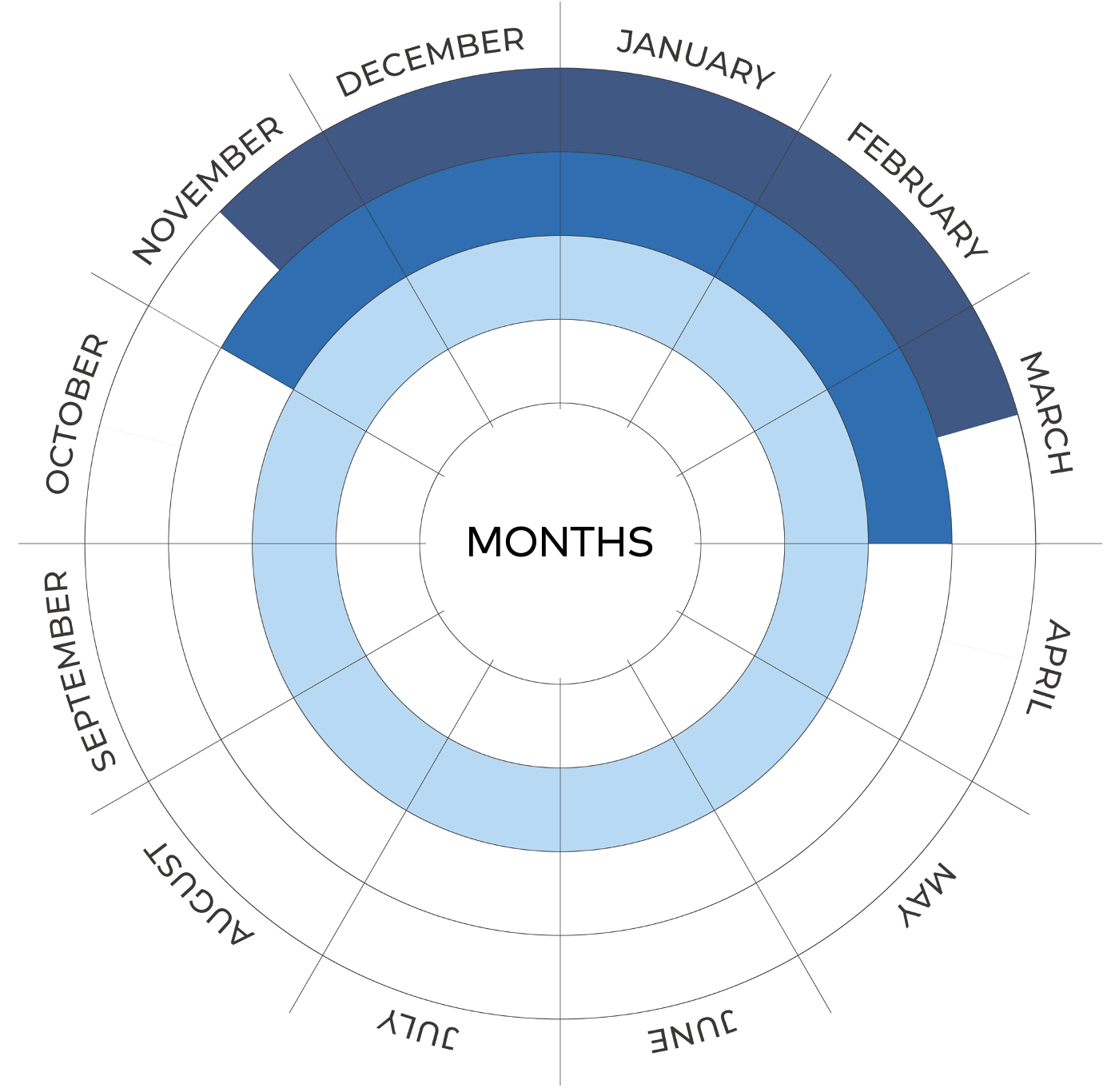
Exhibit 4.4 – Delivery periods for shaped and unshaped contracts
There are examples in Europe of both shaped and unshaped contracts, where Sweden (SE) and France (FR) offer shaped contracts.
■ Sweden
■ France
■ Belgium, Denmark, Finland, Ireland, Italy and Poland
There are examples in Europe of both shaped and unshaped contracts, where Sweden (SE) and France (FR) offer shaped contracts.
Source: ACER (2023). Security of EU electricity supply 2023. European Union Agency for the Cooperation of Energy Regulators, Figure 13, p. 61.
4.3.2 Duration of need and market time unit (MTU)
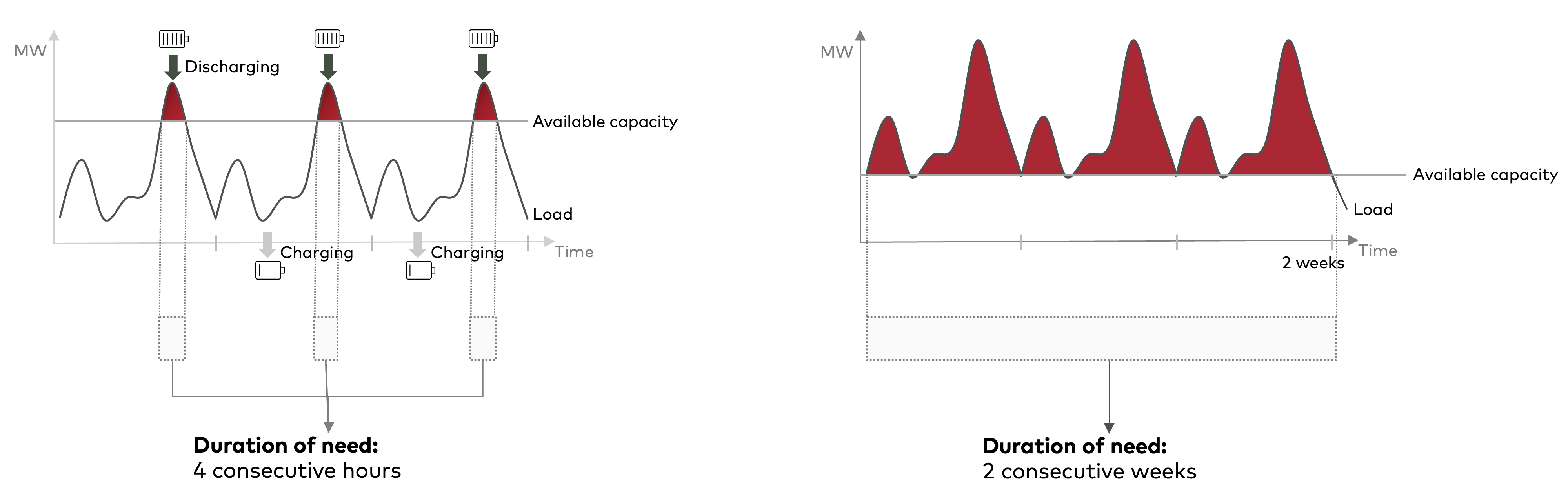
While contract duration sets the time of contract obligation, the duration of need describes the duration of consecutive hours expected to be needed during a scarcity event. The duration of need will be set based on the characteristics of problem in the price area and may vary from minutes to weeks. This is illustrated in the below graphs.
Exhibit 4.5 – Examples of ‘duration of need’
The consecutive duration of capacity shortages defines the required products and technologies to address the issue effectively
The consecutive duration of capacity shortages defines the required products and technologies to address the issue effectively
Source: AFRY.
For example, if the duration of need is four hours per day, BESS would manage to discharge over 4 hours and using the remaining 20 hours to charge. In contrast, if the duration is continuously over two weeks, conventional BESS does not have the opportunity to charge and would in this example not be able to contribute in any meaningful way.
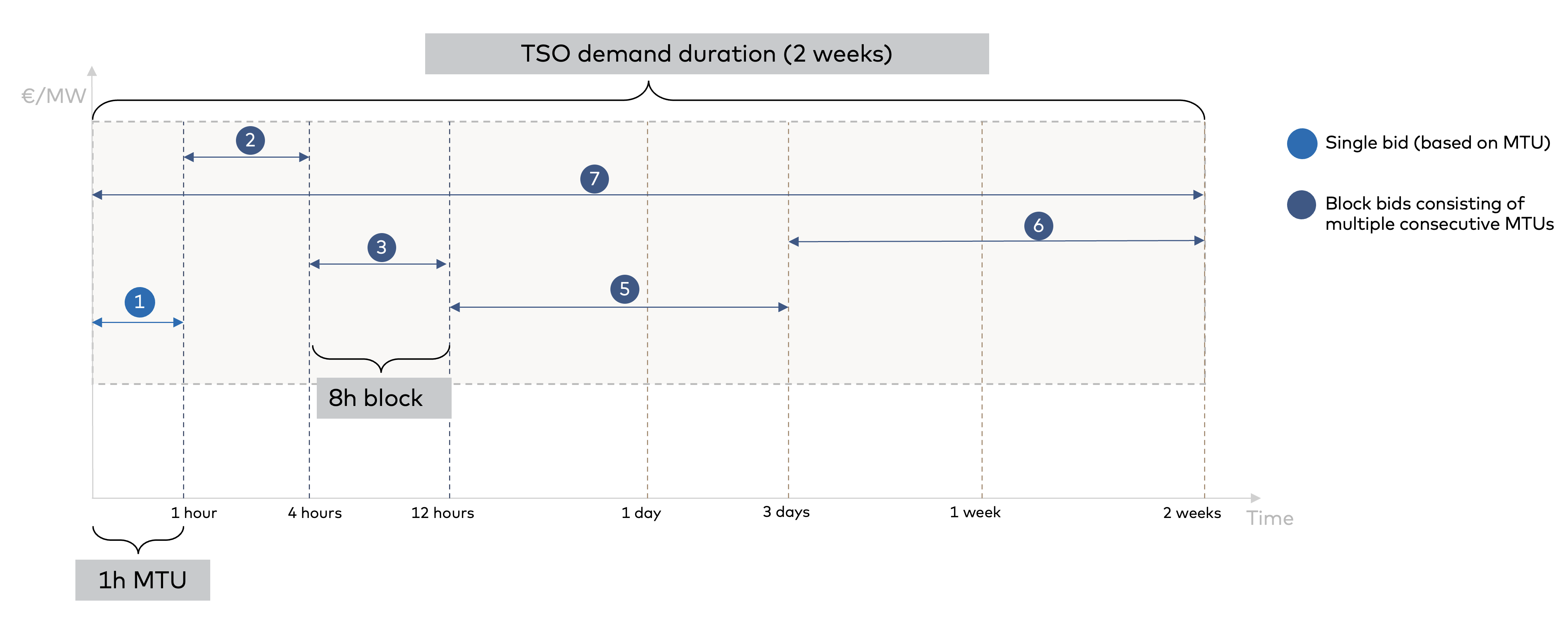
A prolonged scarcity period signals the need for more stable resources capable of delivering over extended durations. However, allowing market participants with shorter delivery periods to contribute could reduce costs. To facilitate this, the duration of need should be subdivided into smaller Market Time Units (MTUs) during the procurement process. Although total duration of need is four days, this does not necessarily mean that every provider must supply capacity continuously for the entire period.
This concept can be contextualised using the Single Day-Ahead Coupling (SDAC) market as an example. In SDAC, only a limited share of generators can provide electricity continuously (baseload), while the market is optimised by combining baseload resources with more flexible assets that help balance variable renewable energy sources (RES) and fluctuations in demand throughout the day.
A similar approach could be applied to a capacity or flexibility mechanism by incorporating SDAC-like order types, such as ‘single bids’ at MTU, block bids and various other flexible orders, into the procurement process, with an optimisation algorithm selecting the required capacity at the lowest total cost. Exhibit 4.6 illustrates different procurement alternatives: one option is to select bid (7), which can meet the full requirement alone, while another option is to combine bids (1) to (6) at a lower overall cost, despite block (2) being priced higher than block (7) in the given period.
Exhibit 4.6 – Different Market Time Unit (MTU) can lead to different results
A lower MTU allows for broader participation
A lower MTU allows for broader participation
Source: AFRY.
4.3.3 Procurement mechanism
Auctions and tenders are common methods used to procure the necessary capacity to ensure a reliable electricity supply. These processes involve competitive bidding, where capacity providers submit offers to supply capacity at specified prices. There are also some other variants available as illustrated in Exhibit 4.7.
Exhibit 4.7 – A range of procurement mechanisms are available
Different procurement mechanisms typically have a dedicated price mechanism
Different procurement mechanisms typically have a dedicated price mechanism
A competitive process where buyers and sellers submits bids & offers to the market based on marginal cost & willingness to pay. Prices are formed based on market equilibrium.
Commonly used in energy markets to allocate resources efficiently.
Price Mechanism: Typically pay-as-clear.
A tender process incentivise investment by inviting companies to compete for contracts. Companies submit bids to offer a service or complete a project, and the bids are evaluated based on factors like cost and suitability.
The winners receive contracts or financial support, giving them security for their investment.
Price Mechanism: Typically pay-as-bid'.
Price Mechanism: Typically pay-as-bid'.
Direct transactions between two parties without a central exchange.
Terms are privately negotiated, providing flexibility in contract conditions.
Common in energy markets where bespoke contract terms are important.
Price Mechanism: Typically pay-as-bid.
Ongoing market activity where contracts are bought and sold continuously over an extended period.
Participants can adjust positions over time, taking advantage of price fluctuations.
Price Mechanism: Typically pay-as-bid.
Source: AFRY.
Bilateral Over The Counter (OTC) and continuous trading is more relevant in a decentralised market with a range of buyers and suppliers, and relatively frequent transactions.
A price mechanism refers to the system by which prices are determined in a market. Buyers and sellers are settled based on the price, which might not be the same as their bidding price. In a pay-as-bid mechanism, each capacity provider is paid the price they bid, which can lead to cost control but may result in complex bidding strategies and reduced transparency. In contrast, a pay-as-cleared mechanism pays all successful providers the same market-clearing price, promoting transparency and efficient bidding, but potentially leading to higher overall costs and windfall profits for some providers.
Pay-as-clear may complicate the ability to select bids based on performance attributes, as these units may not be the marginal units. This could lead to transparency issues, where cheaper bids are excluded, and high-performing units sets a high clearing price. This could be solved by filtering out the ‘high-performing units’ separately from the marginal pricing calculation.
4.3.4 Lead-time and frequency
Lead-time is the period between procurement and contract start, i.e. when the asset must be ready to deliver services. A sufficient lead-time is crucial for driving long-term investments. It supports both long-term planning and efficient short-term dispatch by providing a clear timeline for when new capacity will be available. Adequate lead-time allows for the development and integration of new resources, ensuring that the market can respond effectively to future demand. Please see overview of lead-times for different technologies in Chapter 2.7.2.
The frequency of procurement determines how often the market is run. Frequent procurement (e.g., annually) can provide regular opportunities for new entrants and adjustments based on updated forecasts, enhancing market responsiveness. Infrequent procurement (e.g., ad-hoc when needed) may reduce administrative costs but can lead to less predictable investment signals.
Depending on the need identified, it is also possible to do a combination. One could for example secure some capacity with short lead-time (potentially also combined with a short contract period), to bridge the gap until the “long lead-time asset” comes online.
4.3.5 Nature of penalty
The nature of penalties describes the consequences of failing to meet obligations. Penalties are essential in any market mechanism or support scheme as they motivate providers to deliver as committed, maintaining system security. They ensure that consumers get the service they pay for by holding providers accountable for non-performance. Penalties should promote fairness and competitiveness in the market and prevent gaming and windfall gains, while at the same time not increasing the risk for potential providers beyond what they can accept. Penalties can range from financial penalties to more severe consequences, such as exclusion from future participation in the market. Several alternatives exist:
- Non-payment for non-availability: Capacity providers do not receive their contracted payments if they fail to meet their availability obligations.
- Administered penalty for non-availability: A predefined penalty is applied when a capacity provider fails to make their committed capacity available when required, regardless of whether there is a system-wide shortage.
- Administered penalty during shortage: A predefined penalty is triggered specifically during a system-wide capacity shortage if a provider fails to deliver their promised capacity during critical periods when the grid is under stress.
- Exposure to the difference between market price and option strike price: Capacity providers are exposed to the difference between the market price and the strike price of their option, in addition to an administered penalty, in the event of a shortage.