The Faroe Islands, Greenland and Åland: Unique perspectives in Nordic cooperation
The Faroe Islands, Greenland and Åland have contributed unique perspectives to Nordic gender equality work, and exchanges within the Nordic Region have also had a major impact on the development of the islands. In recent decades, the autonomous regions have experienced further devolution. At the same time, their influence in Nordic cooperation has increased, but the role they should play in this cooperation is disputed.
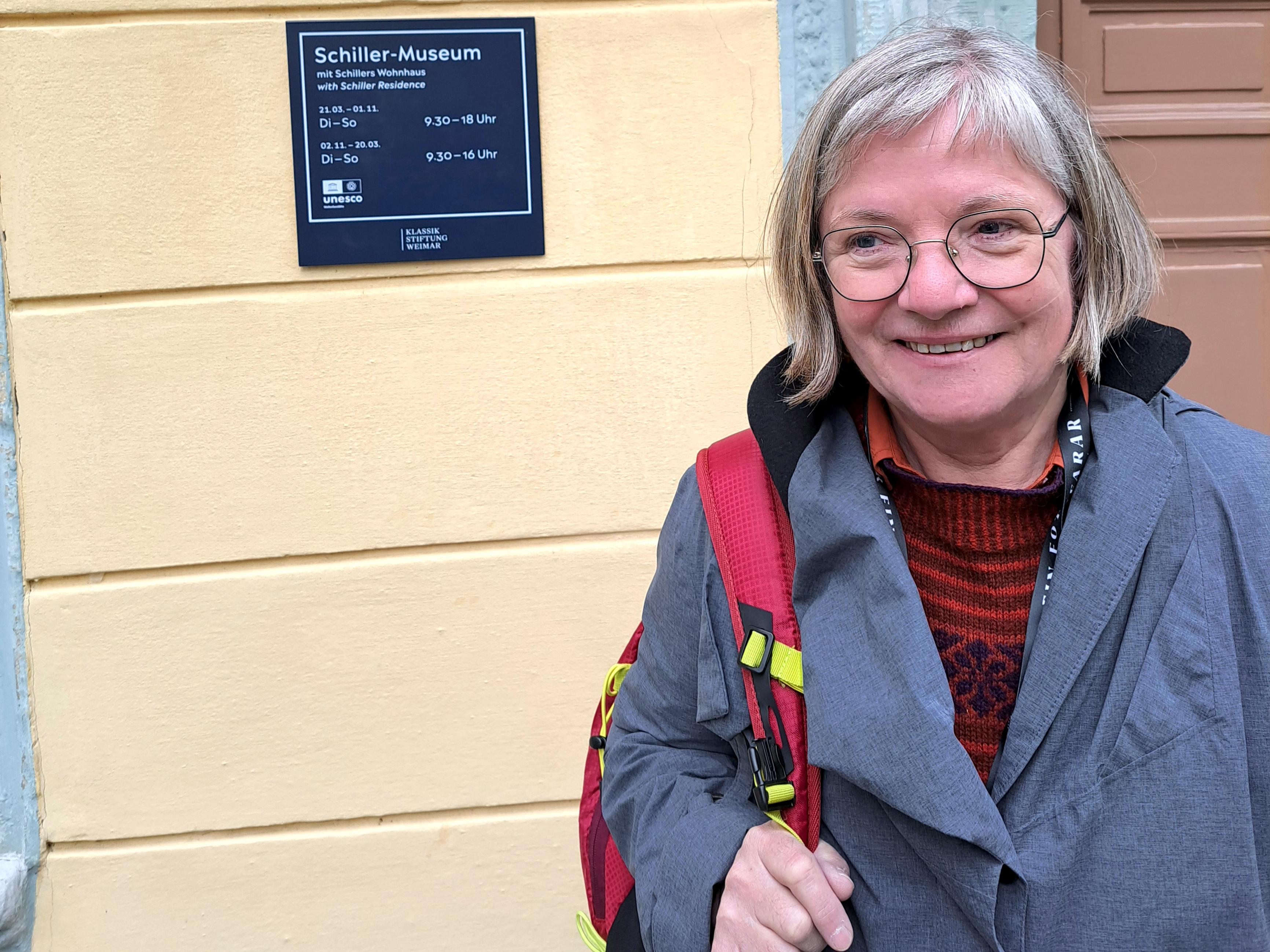
Beinta í Jákupsstovu, Professor emerita in political science at the University of Molde and adjunct professor at the University of the Faroe Islands.
In the summer of 1988, a ship carrying almost 200 politically active women left Tórshavn in the Faroe Islands. They were heading for Norway and the Nordic Forum conference, which the Faroe Islands attended with a large delegation. This period, in the late 1980s and early 1990s, marks an important shift for the Faroe Islands, as a time when women began to take up their role in politics in earnest.
“The Nordic Gender Equality Conference was used to mobilise,” says Beinta í Jákupsstovu, professor emerita of political science at Molde University College and adjunct professor at the University of the Faroe Islands.
She tells us about the ‘women’s district court sessions’ organised by the Faroese women’s movement in the early 1980s. It was a kind of role-playing game where women were given the chance to practise being politicians under safe conditions.
Many of the Faroese women who attended the Nordic Forum in 1988 stood in municipal elections around the Faroe Islands later that year. In several municipalities, separate lists of women were drawn up, and the proportion of women on municipal councils doubled from five per cent to 11.5 per cent.
Beinta í Jákupsstovu believes that Faroese women first entered politics at the municipal level in particular because many decisions that were important to women in their everyday lives were made within the municipalities.
“For example, access to childcare was decided there, which was a major issue for women, many of whom went from doing unpaid labour at home to being paid for their labour outside of the home in the 1970s and 1980s.”
Since the 1980s, the proportion of women in politics has continued to increase in the Faroe Islands, but progress has been slow and marked by setbacks. In 2019, for example, there was not a single woman in the Faroese Government. All seven representatives were men.
“This sparked a huge debate, with some labelling the government the ‘Taliban government’. Today’s government, formed after the 2022 elections, has as many women as men,” says Beinta í Jákupsstovu.
On two occasions, in 2006 and 2008, representatives from the Faroese authorities travelled to New York to explain to the UN why there is such a small proportion of women in their decision-making bodies.
“The issue has also been raised in the West Nordic Council, where the Faroe Islands, Greenland and Iceland are represented,” says Beinta í Jákupsstovu.
She believes that international pressure from the UN Commission on the Status of Women and the West Nordic Council has had an impact on the shift towards greater influence for women.
The Faroe Islands have participated in cooperation within the Nordic Council and the Nordic Council of Ministers since 1970, with Åland joining the same year. Greenland has also participated in this cooperation since 1984, but none of the three countries have full member status. They have the right to participate and express themselves at meetings but do not have the right to vote. The Sami Parliamentary Council also has observer status in Nordic cooperation, and discussions are currently being held on the role of the various regions in Nordic cooperation. The Faroe Islands and Greenland have asked to become full members.
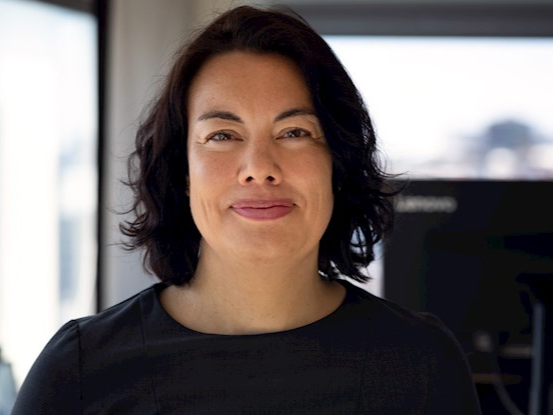
Naaja Nathanielsen, Greenland's Minister for Gender Equality
“It’s strange that we have to leave the room when the ‘big boys’ are talking,” says Greenland’s Minister for Gender Equality Naaja H Nathanielsen.
She says that cooperation in the Nordic Council and the Nordic Council of Ministers is uneasy, but she believes in Nordic cooperation, not least in the area of gender equality.
“I think it helps that we largely share the same ideological starting point. In the Nordic Region, you don’t have to explain why gender equality is important. You don’t need to defend gender equality work, which you may need to do in other contexts,” she says.
Naaja H Nathanielsen recognises that Greenland faces several challenges in the area of gender equality. As in the Faroe Islands, for example, women are still underrepresented in politics.
“Women in Greenland were not given the right to vote until 1948, which is remarkably late in a Nordic context. The first woman in parliament, Elisabeth Johansen, was not elected until 1959 and she was the only female representative until she left in 1975. Since then, more women have held positions of power, but we are nowhere near equal representation. Men dominate the government, parliament, municipalities, village councils and even corporate boardrooms.”
In 2011, Greenland legislated on gender quotas for boards in the public sector and in publicly owned companies. According to Naaja H Nathanielsen, there are now many women leaders in these positions. She was the one who initiated the law, which met with significant resistance.
“It is the most difficult law I have ever pushed through. There was a concern that women who were elected would be perceived as less competent than men, as though they had only been elected to ‘fill the women’s quota’, but the law was passed and nowadays it is hardly considered controversial.”
She recognises that much has happened in the area of gender equality in Greenland in recent decades and mentions, among other things, that the taboos surrounding domestic violence, sexual harassment and incest have been broken.
“These are still sensitive topics, but not like before. Nowadays, these are issues that we can talk about and work to do something about, and that wasn’t the case before,” she says.
Vivan Nikula, a gender equality expert in Åland, also highlights domestic violence as an area where important work has been done in recent decades.
“When the issue of violence against women and their children was raised, the general perception was that this phenomenon did not exist in Åland,” she says.
She led gender equality work in the Åland provincial government for over 20 years, from 1994. She was then employed part time as secretary of the gender equality delegation and later took on the role of head of the gender equality unit. She held the latter position until her retirement in 2020.
During her years in the administration, she led a wide range of gender equality initiatives, often in cooperation with other Nordic countries.
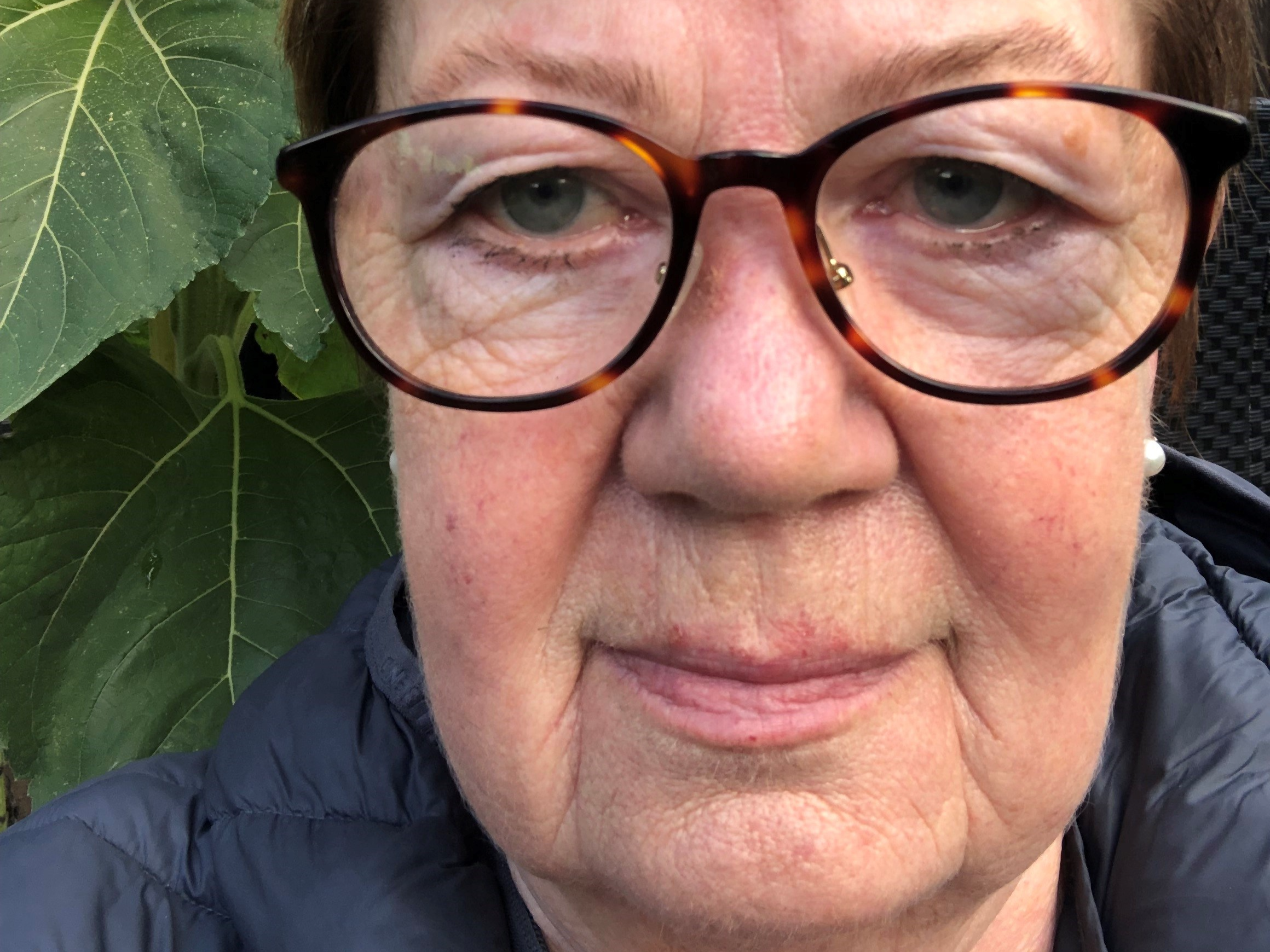
Vivan Nikula, Equality expert on Åland
One example is the work of ‘Alternativ til Vold’ (Alternative to Violence), an initiative that tackles domestic violence by focussing on the perpetrators. The initiative started in Norway and has spread to other parts of the Nordic region, including Åland.
While it has benefited from the experiences of the other Nordic countries in gender equality work, Vivan Nikula also believes that Åland, like Greenland and the Faroe Islands, has an important role to play in Nordic cooperation by contributing its unique perspectives. She notes that there are particular challenges in working towards gender equality in a society with few inhabitants, where many people know or at least know of each other.
“It can be difficult to break norms and expectations in a small community,” she says, noting that Ålandic women who have been committed to and driven change have sometimes had to pay a high price.
She notes that gender equality work is associated with particular challenges in a small community, but she also believes that smallness has advantages. Perhaps the work of change will be less cumbersome?
Nordic Forum
The 1988 Nordic Forum was held under the slogan ‘Women Shaping Tomorrow’ and brought together about 7,000 women in Oslo. The aim of the conference was to give Nordic women, both grassroots activists and politicians, the opportunity to develop ideas and strategies for creating a better society.
The conference was followed by another Nordic women’s conference in Turku in 1994. It had the slogan ‘Women’s Life and Work – Joy and Freedom’ and brought together over 15,000 participants, mainly from the Nordic and Baltic countries. In parallel with the broad conference, the Nordic ministers for gender equality organised a conference on Nordic cooperation on gender equality.
In 2014, another Nordic Forum was held, this time in Malmö and organised by the Nordic women’s movement. The Forum attracted 30,000 participants from more than 50 countries and lasted four days. The conference resulted in a final document with demands on gender equality and recommendations to the Nordic governments.
“Sometimes I think that Åland has acted a bit like a laboratory in Nordic cooperation, as a place where you can test ideas and quickly read the results and perhaps change methods and strategies. One advantage of being small is that you can implement things fairly quickly and see what the effects are.”
One thing Vivan Nikula has learnt over the years is the importance of statistics and facts in gender equality work.
“There are so many emotions linked to gender equality, which is why we need to approach the work with facts and knowledge,” she says.
Not least in work against domestic violence, she sees that studies showing what conditions in Åland are actually like have been hugely important. She mentions in particular the survey by Åland’s provincial government ‘Våld i nära relationer’ (Violence in close relationships), which in 2017 showed that almost a third of women in Åland have been subjected to violence by an intimate partner.
“Statistics like this are very important to show the facts, so that politicians have a knowledge base when making decisions.”
Naaja H Nathanielsen also believes that facts and statistics are of great importance in gender equality work, and she sees that this is something they need more of in Greenland.
Both Vivan Nikula and Naaja H Nathanielsen also emphasise that men have an important role to play in gender equality work. Vivan Nikula sees that gender equality issues have gained greater legitimacy in Åland thanks to the fact that there have been men with mandates to make decisions and make a difference who have fought for women’s rights.
“Over the years, many politicians in Åland have become involved in various aspects of gender equality, pushed the issue and kept the debate going,” she says.
A commitment to gender equality from men in positions of power is something Naaja H Nathanielsen would like to see more often in Greenland.
“We have an absence of men who speak up for change,” she says.
She sees that work for independence has put issues of influence and equality high on the political agenda in Greenland, but that gender equality issues have been somewhat overshadowed by the more dominant issue of autonomy in the territory. In the long term, she does not believe that the issues will be at odds with each other; on the contrary, she sees that discussions on decolonisation have the potential to provide greater impetus to gender equality work.
“Both the work for gender equality and the work for Greenlandic autonomy are about influence and having our rights realised.”
Beinta í Jákupsstovu is hopeful that gender equality work will continue to be strengthened in the Faroe Islands.
There is no doubt in her mind that Nordic cooperation has played a major role in promoting women’s rights in the Faroe Islands. One example is the large painting that adorns one wall of the Mettustova house, which is owned by the Tórshavn Women’s Association. It depicts a ship crossing the waves against a background of high mountains.
“It is the journey to the 1988 Nordic Forum.”