Lesbian activists took the lead in gender equality work
During the 2000s, several equality reforms in support of LGBTI rights have been implemented in the Nordic countries. In January 2020, Nordic co-operation on gender equality was extended to include equal rights, treatment and opportunities for LGBTI people, but of course the fight has been going on longer than that. Sören Laursen has been involved in LGBTI rights in Denmark for over 30 years. He tells us how the LGBTI movement has often made common cause with the women’s movement, although over the years there have also been conflicts.
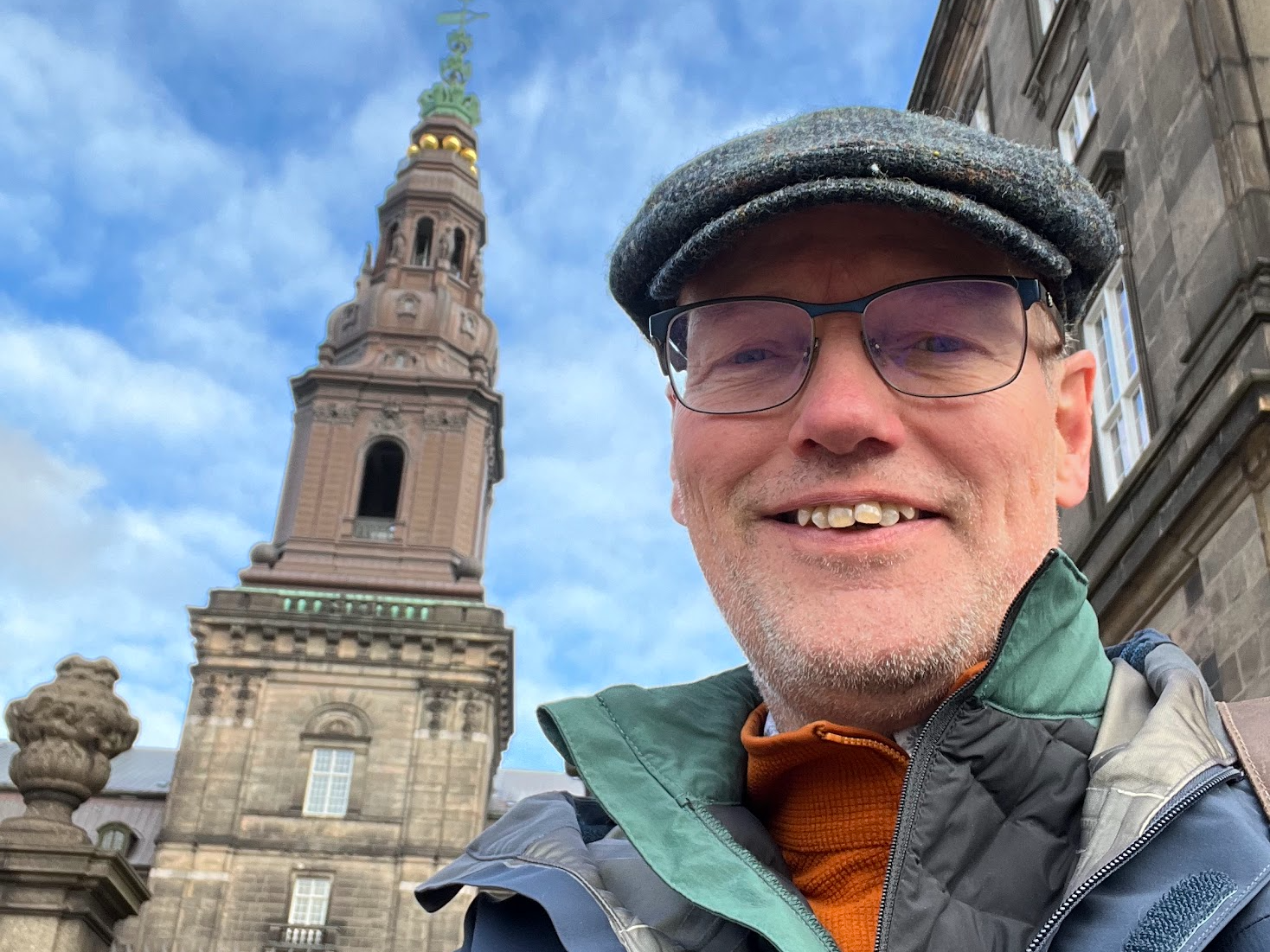
Sören Laursen, Co-founder and spokesperson, HBT committee, data architect, Nordic RCC
When activists from the second-wave feminist movement gathered in the 1970s to demonstrate for equal pay and expanded childcare, lesbian activists were often on the front line.
“Many of the leaders of the women’s movement were lesbians, and they have not received the recognition they deserve,” says Søren Laursen.
For two periods, 1994-1998 and 2014-2017, he was chairman of LGBT+ Denmark, the country’s largest LGBTI organisation.
Sören Laursen sees that gender equality and LGBTI issues have become more closely linked in the Nordic Region in recent decades. Over the years, the women’s movement and the LGBTI movement have often made common cause, and within the Nordic state apparatus, gender equality and LGBTI issues are often intertwined and institutionalised through the same political structures. At the same time, over the years there have also been conflicts between them.
For example, when the first lesbian groups in the Nordic countries were formed in the 1970s, many people felt that others in the women’s movement were not supportive. There was a perceived lack of solidarity, but looking back, Søren Laursen thinks it is clear that the LGBTI and women’s movements have been mutually beneficial over the years.
He believes that the occasional conflicts that have arisen have been rooted in the fear that one’s personal cause will be given less space. He experienced such a situation in the 1990s, for example, when discussions arose in several Nordic countries about how work on anti-discrimination and equal treatment should best be organised.
“At LGBT+ Denmark, we had finally pushed through our demand for a discrimination law that included sexual orientation. The next important issue for us was that we wanted an administrative complaints body to be established outside the courts to which victims of discrimination could turn. We wanted to see a common structure for all grounds of discrimination.”
“But that idea didn’t fly at all with equality organisations,” he says. “There was fierce resistance within equality organisations to setting up such a joint body that would work broadly to cover all the different grounds of discrimination. There was also strong opposition to the idea among politicians committed to gender equality.”
“I had many meetings with representatives from various gender equality organisations, but I couldn’t convince them to want to join forces. They already had their structures and organisations and were afraid that gender equality issues would be overshadowed in the broad anti-discrimination work that those of us in the LGBTI movement were advocating. In a way, I can understand their point, although I was a strong advocate of this broader perspective. Our individual circumstances in society are affected by who we are in a complex way, which is why I don’t think it’s appropriate to divide up equality work based on different grounds of discrimination. At the same time, in the LGBTI movement we would obviously have a lot to gain by joining forces with other equality organisations, which had much stronger voices,” he says.
Søren Laursen describes how the attitude of equality organisations towards the idea of broad anti-discrimination work slowly changed during the 2000s, as intersectional perspectives became more widely accepted.
The early 2000s saw a resumption of efforts to establish a complaints body for discrimination cases. Several civil society organisations, including representatives from the women’s movement, participated in the regular meetings.
Although it took a few years, a proposal was finally agreed, which was recognised as a basis for the establishment of the complaints body Ligebehandlingsnævnet (Board of Equal Treatment) in 2008.
Søren Laursen notes that work on gender equality and the rights of minority groups have been linked via the shared framework of anti-discrimination.
The process he describes, by which work on gender equality and the rights of minority groups became intertwined, is not unique to Denmark; the same development took place more or less in parallel in other Nordic countries. The hesitant attitude to the LGBTI movement’s proposals is also reflected among actors in gender equality work.
In Sweden, for example, disagreements arose over the organisation of authorities tasked with monitoring compliance with the Discrimination Act. For a period, there were four different authorities focusing on different grounds of discrimination: the Gender Equality Ombudsman (JämO), the Ombudsman against Ethnic Discrimination (DO), the Disability Ombudsman (HO) and the Ombudsman against Discrimination on Grounds of Sexual Orientation (HomO). There was a lengthy discussion on whether to merge the four ombudsmen into a single authority, a reorganisation that was carried out in 2009 despite opposition, when the new authority, the Equality Ombudsman (DO), was established.
In recent years, Søren Laursen sees a new division between the LGBTI movement and parts of the women’s movement when it comes to transgender issues. He believes that this is because parts of the women’s movement feel threatened by the progress that has been made on transgender rights, and perhaps the solution this time is to meet and talk. He believes that transphobia in parts of the women’s movement and other forums is serious, and he sees a public debate in which the rights of transgender people are being questioned from several different directions and where there are links to a global movement that is pushing a transphobic agenda.
“I feel that the discussion has become very skewed. Instead of talking about the living conditions of transgender people, the focus is often on symbolic issues such as transgender people in elite sport, and I think that’s unfortunate.”
The Nordic countries have been co-operating on LGBTI policy since 2020, and this work is taking place through the same structures that have accommodated Nordic co-operation on gender equality since 1974.
Søren Laursen believes the fact that the Nordic countries did not start co-operating on LGBTI policy until 2020 may be due to them having previously looked to the EU and finding international co-operation at that level.
“Danish NGOs became very EU orientated and were deeply involved in the creation of ILGA-Europe, for example. Previously, we had been involved in the Nordic Council on Homosexuality, for example, but that faded into the background completely from the late 1990s.”
He believes it is important that there is now a structure for co-operation on LGBTI policy in the Nordic Region.
“I think this co-operation is particularly needed right now because LGBTI rights are under significant pressure in large parts of Europe. This makes co-operation within the Nordic Region particularly important. The fact that the Nordic countries are embarking on this co-operation also signals that they want to continue to strengthen the rights of LGBTI people and are prepared to lead the way internationally.”
Nordic cooperation to strengthen LGBTI rights
The Nordic Council of Ministers stimulates Nordic cooperation on LGBTI issues through a Nordic fund. The fund is aimed at a broad target group and calls for proposals are open to various types of organisations such as NGOs, networks and authorities. Funded projects must contribute to the promotion of equal rights, treatment and opportunities for LGBTI people in the Nordic Region.