Sexuality policy unites and divides the Nordic Region
The right to make decisions about one’s own body and sexuality was central to the women’s movement of the 1970s. In the decades since, major changes have taken place in the Nordic countries, particularly with regard to abortion rights. It is 50 years since the Swedish Parliament passed the right to free abortion in the spring of 1974 (one year after Denmark), and the right to abortion has had a major impact, says Lena Lennerhed, Professor of the History of Ideas at Södertörn University.
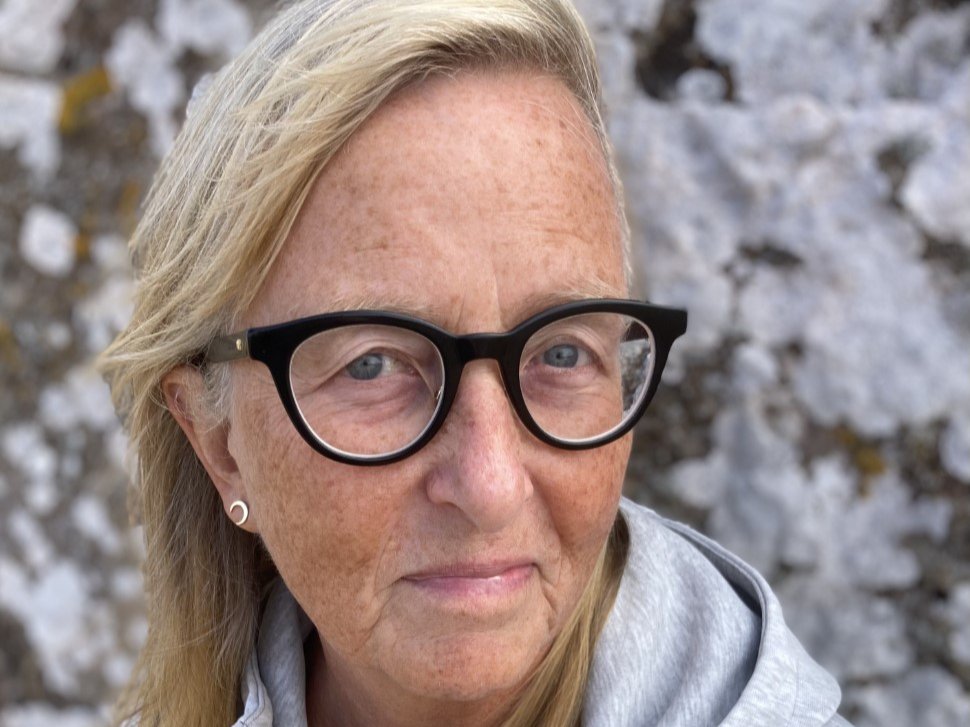
Lena Lennerhed, Professor of the history of ideas at Södertörn University
“As I see it, free abortion is about the right to make decisions over your own life. If something doesn’t go as planned, we can now get help, and we don’t have to be ashamed.”
Lena Lennerhed has been researching ideas and perceptions of sexuality and gender since the 1990s and has written two books on attitudes to abortion in Sweden. She says that the road to achieving the 1974 abortion legislation was a long one.
The demand for free abortion was raised as early as the early 1960s, when the Social Democrats and Liberals were at the forefront of the respective student organisations.
“There was a big debate surrounding abortion, but at the time the issue was seen as radical,” says Lena Lennerhed.
Under the rules as they existed then, anyone wishing to have an abortion had to apply to the ‘abortion office’, which investigated the individual case and proposed approval or rejection. The final decision was then taken by the National Board of Health and Welfare.
“There was fairly widespread support for this model, but the student organisations felt that only the woman herself could know what was best for her future and her life in a given case. They felt it was patronising to have to sit in front of the abortion clinic and justify their experiences. A child’s right to be wanted was also an important argument in favour of free abortion.”
The views represented by the student unions slowly gained ground in the 1960s and early 1970s, and the debate was strongly influenced by the testimonies of women who had travelled to Poland for care, where abortion was free.
Free abortion in almost all Nordic countries
All the Nordic countries provide free abortion except the Faroe Islands, which has one of the most restrictive abortion laws in Europe. In spring 2024, the government presented a proposal to introduce free abortion until week 12 but it was voted down in parliament. To change the current law, which dates back to 1956, more MPs needed to be in favour than against, but the result was a tie: 15 for and 15 against.
Denmark legislated for free abortion in 1973, Sweden in 1974, Norway in 1978, Iceland in 2019 and Finland in 2023. Greenland and Åland also have free abortion.
In Norway, abortion is free until week 12. Sweden has free abortion up to week 18 and Iceland up to week 22. Denmark decided in summer 2024 to raise the limit from week 12 to week 18. A corresponding change was also discussed in Norway.
“Many people thought it was wrong that Swedish women should have to travel abroad. At the same time, there was also criticism from those working in abortion care. Many in the healthcare sector believed that the system functioned poorly. They felt that it was difficult to establish good contact with patients and gain their trust.”
Lena Lennerhed explains that the Swedish women’s movement initially had a cautious attitude towards the student unions’ demands for free abortion.
She was 20 years old when the Parliament decided in 1974 in favour of free abortion up to 18 weeks, but she does not remember it as a major event.
“To be honest, I don’t remember it at all, which is a bit strange, but I think it’s because many of us who grew up in the 1960s had already started to take abortion for granted. Practice had also changed gradually, so it had become easier to get an abortion even before the law was passed.”
When comparing the historical development of abortion rights in the Nordic countries, Lena Lennerhed says it is important to bear in mind that legislation does not tell us everything about the conditions in a country. For example, Iceland and Finland, which legislated for free abortion late in the day – in 2019 and 2023 respectively – in practice had permissive attitudes for many years, which meant that most people who wanted to have an abortion were able to do so legally.
“At the same time, legislation on abortion is important because it sends a clear signal that it is the pregnant woman and no one else who should make the decision,” says Lena Lennerhed.
The abortion laws of the Nordic countries vary, as do the dates when they were introduced, but this need not have been the case. In the mid-1960s, there were proposals to introduce uniform Nordic abortion legislation, and the issue was discussed by the Nordic Council. The fact that the idea was not realised is explained in the Swedish government report Rätten till abort (The Right to Abortion) from 1971, which stated that “the timetables for the reform work in the different countries were not coordinated.” For example, Norway had recently reformed its abortion law, without introducing free abortion.
Although no uniform Nordic abortion law was introduced, the Nordic countries have largely moved in the same direction over the past 50 years. A fairly broad consensus has emerged, as have several other policy issues regarding sexual health and sexuality. For example, the rights of LGBTI people have gradually been strengthened in all the Nordic countries. However, there are also policy issues where the countries have chosen different paths, for example in the case of sex for payment, an area in which legislation differs. In 1999, Sweden introduced a law that criminalises the purchase of sex but does not make it illegal to sell sex. Similar laws have also been introduced in Norway and Iceland, while buying sex is legal in Denmark, Finland, Greenland, the Faroe Islands and Åland.
Lena Lennerhed recognises that issues of bodily self-determination and bodily integrity have been discussed in many different contexts in the Nordic countries over the past 50 years. She mentions domestic violence as an area where knowledge has increased and work has developed. Domestic violence has repeatedly been highlighted as a priority issue by the Nordic governments. Alongside this, as of the 1970s, a women’s shelter movement has emerged in civil society that provides support and protection to victims of violence.
Lena Lennerhed also recognises that over the past 50 years there have been crucial changes in the way rape and sexual violence are viewed. Rape laws in the Nordic countries have evolved over multiple stages, both in terms of what is considered rape and who is considered a victim. In Sweden, for example, the law became gender-neutral in 1984.
“It was an important change that recognised that not only women but also men can be raped – and that it is just as serious.”
One question that has been raised in recent years in the debates on rape legislation in the Nordic countries is over the introduction of consent legislation. This means that the starting point for judging an act as rape is whether there has been mutual consent. Iceland and Sweden both introduced consent laws in 2018, followed by Denmark in 2021 and Finland in 2022. In Norway, the issue is also on the agenda and in spring 2024 demonstrations were held in several parts of the country in favour of consent laws after three men were acquitted in a high-profile gang rape case.
Globally, Lena Lennerhed sees a trend of sexual and reproductive rights being curtailed in a number of countries.
Something she thinks we will be talking more about in the future in connection with bodily self-determination and bodily integrity is the development of reproductive technology and the new opportunities it offers. She mentions host motherhood, also known as surrogacy, as a highly topical issue where the Nordic governments can benefit from co-operation.
Whether or not surrogacy should be allowed is a matter of debate. There are strong voices within the women’s movement against it, but there are also groups that put forward feminist arguments in its favour. Opponents see surrogacy as a form of trafficking of women’s bodies. Those in favour emphasise that it should be up to each woman to make decisions about her own body. In the Nordic countries, it is not possible to have children through surrogacy via the health service. Surrogacy is unregulated, which means that while the procedure is not banned there are also no rules governing it, which can cause difficulties for families who have children using this method.
“I believe that we will have new legislation in this area. These children already exist and this is something politicians need to take into account,” says Lena Lennerhed.
She also notes that developments in reproductive technology may bring entirely new issues and rights to the table. For example, as prenatal diagnoses improve, she wonders whether there is a risk of increasing pressure on pregnant women who carry children with disabilities. Could there be situations in which society opposes children being born who are likely to require significant resources from the healthcare system?
“As it is now, it is up to the pregnant woman to decide if she wants to keep her baby, but what if society decides that the responsibility for any costs will be left to the parents themselves if they choose to have a child with a disability?”
In that case, Lena Lennerhed notes, we would end up in a situation where we are discussing not only the right to terminate a pregnancy but also the right to carry it to term.