From maternity insurance to shared parental leave
Generous parental insurance and the right to childcare are two of the gender equality reforms that have contributed to Nordic women being among the most active in the world in terms of labour market participation. In 1974, the same year that Nordic co-operation on gender equality policy began, Sweden became the first country in the world to introduce universal parental insurance, allowing not only mothers but also fathers to stay at home when their children are young. Anne Lise Ellingsæter, Professor Emeritus of Sociology at the University of Oslo, talks about the changes in family policy in the 1970s.
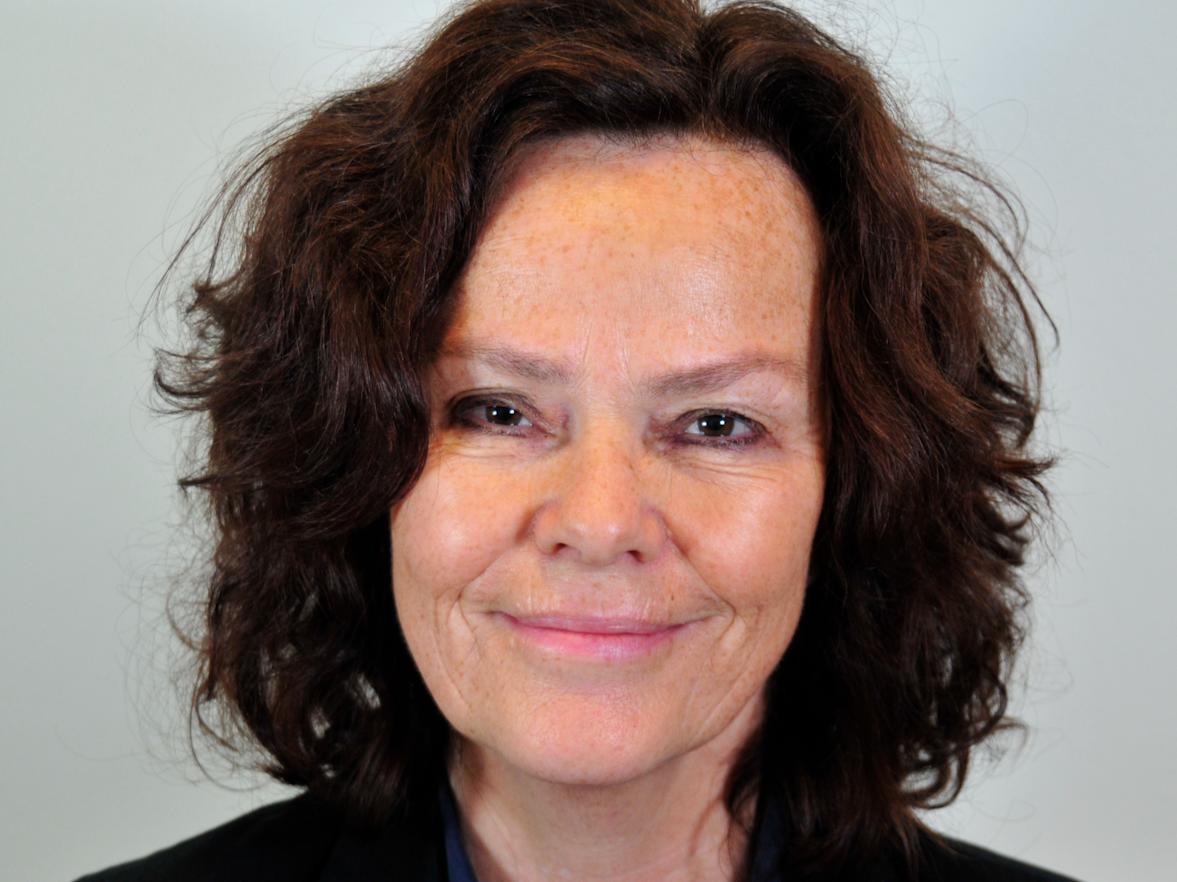
Anne Lise Ellingsæter, professor emeritus of sociology at the University of Oslo (Press image copyright, University of Oslo)
“The decision shows that the role of fathers is changing. Providing the opportunity for fathers to stay at home is an expression of a new way of looking at fathers,” says Anne Lise Ellingsæter.
She is currently working on the book Nordic Earner-Carer Politics: A Comparative and Historical Analysis, which tells the story of family policy in the Nordic countries over the past 50 years.
“It was in the 1970s that most of the seeds were sown for the model we have today, which is based on the idea that women and men should share the responsibility for earning a living and caring for children and the home,” says Anne Lise Ellingsæter.
She was a student when the Nordic countries began co-operating on gender equality issues in 1974, graduating soon after with a degree in sociology.
“In my thesis, I interviewed housewives who spoke of loneliness and boredom.”
It was not obvious that she would continue in academia as a researcher, but now, as of 2024, she has been researching family policy and gender equality for over 30 years.
In addition to the introduction of universal parental insurance, Anne Lise Ellingsæter believes that the decision to expand publicly funded childcare has had a major impact on women’s opportunities to work and pursue a career.
“The reforms in these two areas are at the heart of Nordic family policy,” she says.
Although mothers still take a larger share of parental leave than fathers, she says the change that has taken place over the past 50 years is profound. She notes that there is now a near consensus on many of the family policy issues that were the subject of heated debate in the 1970s.
“For example, there was concern that childcare could have a negative impact on children. Many argued that it could be harmful for children to be away from their parents, spending several hours a day at an institution. Such arguments persisted even after the 1970s, especially in Norway and Finland, but we rarely hear them today. There are no
Conflicts over family policy
There are several examples over the years where political conflicts have flared up around family policy.
In Norway, for example, there was disagreement between different political blocs over ‘fatherhood months’ that culminated after the 2013 election. In 2014, the newly elected centre-right government reduced the earmarked weeks from 14 to 10. However, in 2018, the number of weeks was increased again.
In Sweden, conflicts over family policy have been particularly visible in the controversy surrounding the childcare allowance, which can be claimed by parents who do not use childcare facilities. First introduced in 1994 by a centre-right government, it was abolished the same year by the Social Democrats, following a change of government. It was then reintroduced by a centre-right government in 2008, only to be abolished again in 2016. In Norway, childcare allowance has also become a bone of contention between political blocs, whereas in Finland, for example, it is less controversial. The main argument in favour of childcare allowance is that it gives parents greater freedom of choice. The main argument against it is that it has a lock-in effect for women.
parliamentary parties that represent such a position, on the contrary, the attitude is that preschool is a positive influence and beneficial for children’s development. I would say that support for public childcare is quite strong in all the Nordic countries.”
Compared to the rest of the world, women in the Nordic countries were early entrants to the labour market. “It is sometimes said that it was political reforms that steered women in the Nordic countries into the labour market, but this was not the case,” emphasises Anne Lise Ellingsæter. “On the contrary, the reforms came about as a result of pressure from the women’s movement, many of whom saw professional work as an opportunity for economic independence.”
“It was not that the state told women to enter the labour market, but that women wanted to work. The welfare model and family policies that we have here in the Nordic countries have emerged through interaction between social change and supporting political reforms.”
In the 1970s, Nordic family policy had a clear gender equality focus, but over the years, Anne Lise Ellingsæter recognises that this emphasis has partly changed.
She asserts, as an example, that nowadays we do not primarily think that fathers should take more responsibility at home so that women can work on the same terms as men, but because children need the presence and care of their parents.
Over the years, the debate on the role of fathers has shifted from men’s fitness to care for young children to the importance of fathers taking on this role.
The view of childcare has also increasingly focussed on the needs of children and taken on a clearer educational focus.
“It is no longer seen primarily as a place where children are looked after so that parents can work, but as an environment that contributes to children’s development.”
The change in the perception of the role of fathers, and the stronger emphasis on the importance of fathers as carers, is reflected in family policies through the introduction of so-called ‘father’s months’. To encourage more fathers to take responsibility at home, the Nordic countries have gradually earmarked an increasing amount of parental leave for each parent, albeit to different extents and at different rates.
Anne Lise Ellingsæter describes this as a gradual change in the view of men’s and women’s roles in working life and at home, but the development has not always been smooth and the issues have created conflicts. For example, proposals to introduce paternity leave have in many cases become a bone of contention between the political blocs, with social democrats, left-wing parties and to some extent liberals on one side and right-wing parties on the other.
“The battle has often been between the two core values of ‘gender equality’ and ‘freedom of choice’.”
Anne Lise Ellingsæter says that Sweden has often acted as a driving force in the development of Nordic family policy. Sweden has usually been the first to implement reforms, but there are occasions when other Nordic countries have taken the lead. Norway, for example, was the first to earmark part of parental leave for each parent in 1993.
Looking at the last two decades, it is Iceland in particular that stands out. Although it was the last Nordic country to earmark parental days, it introduced the most radical parental leave model in the Nordic countries from a gender equality perspective. Since 2021, each parent has been entitled to six months of parental leave, of which a maximum of six weeks can be transferred to the other parent.
“I think the introduction of shared parental leave in Iceland shows that there can be advantages in not being the first to introduce a reform. When you have good examples to point to, you can get public opinion on your side to implement major changes in one step,” says Anne Lise Ellingsæter.
She adds that there have also recently been extensive reforms in parental insurance to increase fathers’ rights in Finland and Denmark.
“This has helped to consolidate the common Nordic family policy profile.”
Since the 1970s, many new issues have emerged in family policy, such as LGBTI people’s opportunities to start a family and the right of single people to access assisted fertility. Anne Lise Ellingsæter feels that, as things stand, the Nordic countries are more closely aligned on family policy than ever before. She describes Nordic co-operation in the area of gender equality as ‘very strong’, and highlights how the countries have pushed each other over the years.
She believes there is reason to stop and look at the changes that have taken place over the past 50 years.
“It’s a completely different world. There has been huge societal change, of which family policy is an important part.”
One of the challenges facing the Nordic countries in the future is the falling birth rate, which is creating a demographic imbalance. An ever smaller group of young people will have to support and care for a relatively large group of older people. Anne Lise Ellingsæter believes that in the future we may see family policy initiatives aimed at increasing the birth rate.
She sees that improvements in childcare and parental insurance can make life easier for families and perhaps in some sense lead to slightly more children being born, but she is nevertheless sceptical about whether it is possible to control the number of births through policy.
“There are many reasons why we choose to have children or not. It is not so easy to control with individual political reforms.”
She goes on to say that it is necessary to ask whether the state should really have the explicit goal of trying to influence people to produce more children.
“Such a policy means that the state is reaching far into the private and personal sphere. It also implies an instrumental view of children and increased pressure on the reproductive role of women. If policy takes this direction, it would represent a reversal of Nordic family policy, which has centred on the welfare of families with children rather than population.”