03:
PAVING THE WAY FOR THE FUTURE OF FASHION
The Nordic region is home to innovative technologies, environmentally-conscious designers and ambitious political promises that have formed their reputation as leaders in the transition to a sustainable fashion industry. Are they living up to it?
Transforming Textile
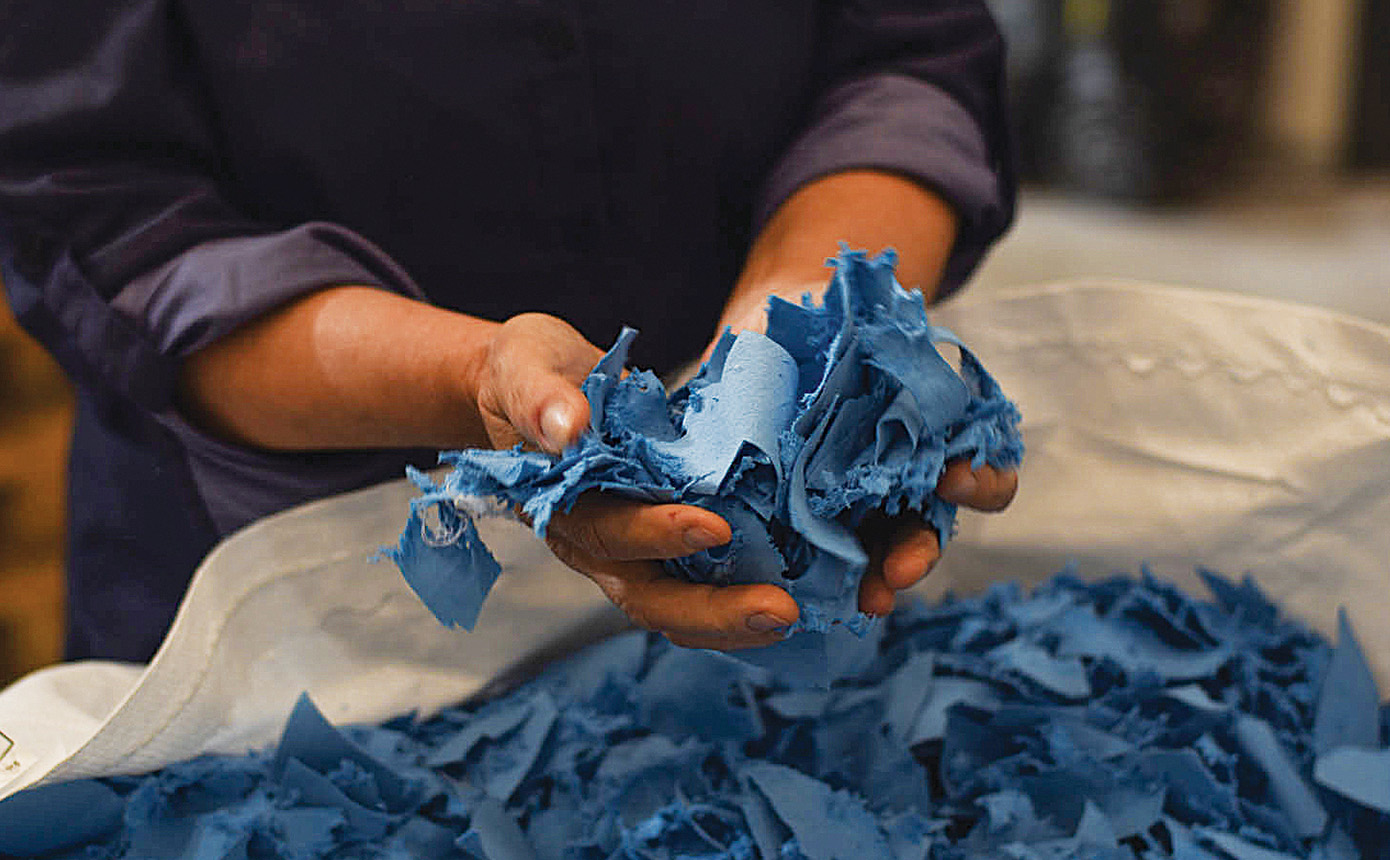
Heaps of old, tattered textiles go to Paimio – a rural town about an hour and half drive from the Finnish capital of Helsinki – for a second life. Although it’s been open for just a year, the 3,000 square-metre facility, surrounded by one of the country’s many forests, is stacked to the lofty ceiling with pastel-coloured bales of recovered fibres – the shards of cloth that remain after being chopped up in the recycling process. Each cube, weighing in at 200 kilograms, has a different destiny – none of which will be the landfill.
That’s the goal of Rester, the Finnish company hoping to recycle 6,000 tonnes of end-of-life textiles from businesses across the country each year. Rester is now the largest textile recycling plant in the Nordic region. Workwear, linens and towels are accepted, sorted and fed into the mechanical recycling process. Inside the plant, CEO Outi Luukko hands out ear plugs to soften the hammering of the machine line. Two workers toss textiles onto a conveyor belt, where they’re processed step-by-step: removing hardware like buttons and zippers, cutting them into patches and separating the fibres to turn it into raw material. “There used to be two collections a year when I was young, [and now there’s one] every few weeks,” Luukko says of the relentless churn of new styles and trends.
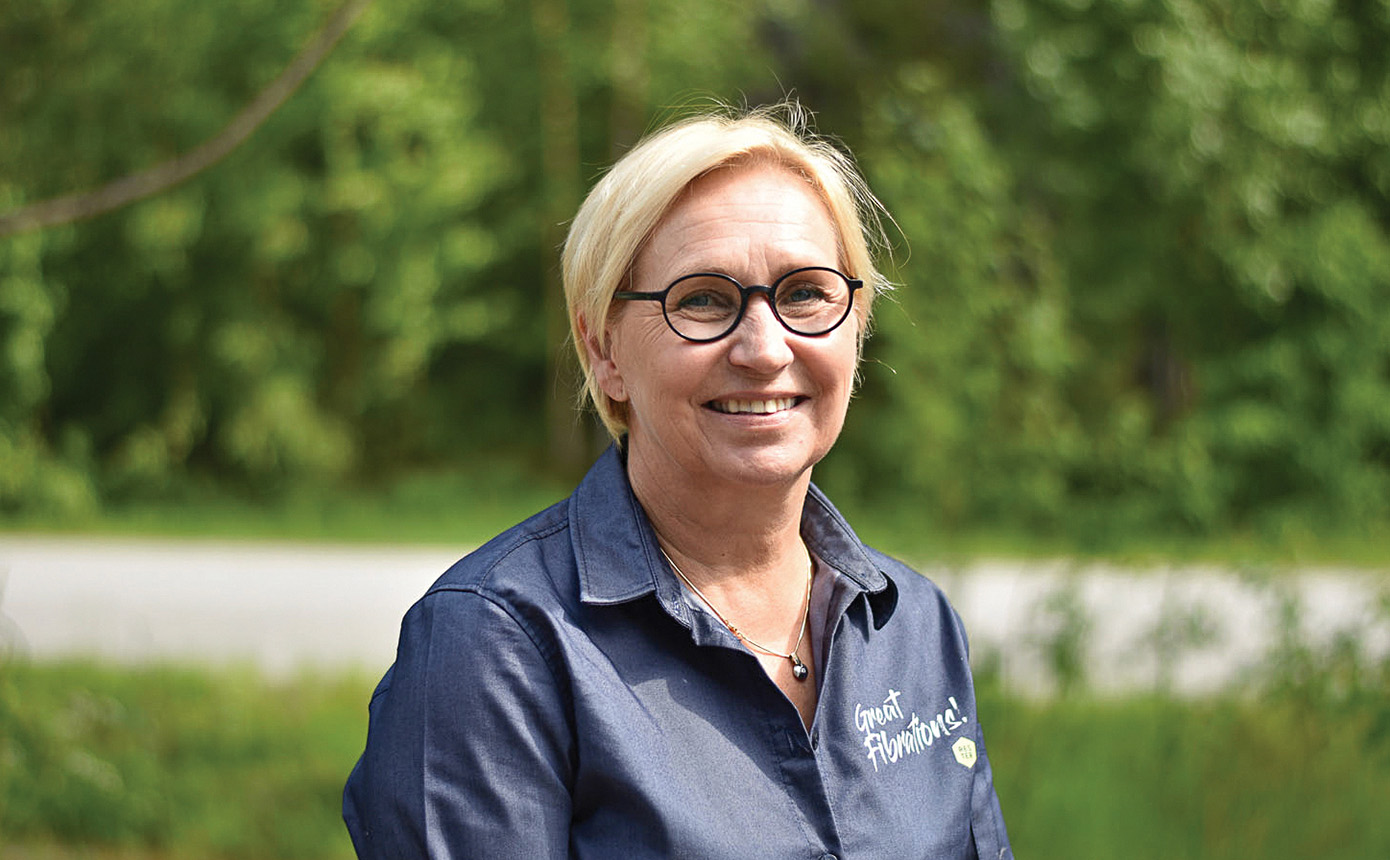
“It doesn’t make sense. [The fashion industry is] producing a large quantity of material that doesn’t even have the chance to get into stores [before] it’s incinerated. That woke me up.”
The increased textile production Luukko is referring to is putting unprecedented pressure on the planet. In the last sixteen years, the global consumption of clothes has increased by more than 60 percent. Today, over 100 billion garments are produced every year, and 30 percent of those are never sold. As much as 87 percent of all used textiles are either incinerated or end up in the landfill once they reach their so-called “end of life.” According to the United Nations Environment Programme, today’s fashion industry is responsible for up to 10 percent of global carbon dioxide emissions annually, which is more than all international flights and maritime shipping combined.
“A shirt doesn’t have to be the same shirt when it comes [back] from the circulation,” Luukko says of clothing’s second life, describing the potential of Rester’s mechanical recycling process. The recovered fibres can be used to manufacture anything from yarn and fabric, or in insulation, acoustic panels or filters. They collaborate and share the space with Lounais-Suomen Jätehuolto, a garbage collection company responsible for the management of residents’ waste from 18 municipalities in southwestern Finland. Together, they’re aiming to process 10 percent of the country’s textile waste annually – about 10 million kilograms.
In the Nordic region, where Rester is located, politicians are taking notice of the many problems with the fashion industry. “The Nordic Region – leading in green growth” is the official title of a textile strategy from 2015 created by the Nordic Council of Ministers, the official body for intergovernmental cooperation in the region. The same year, the group created another action plan called “Well Dressed in a Clean Environment,” which outlined specific initiatives focused on design, production, consumption and reuse, to lead the countries towards a circular economy.
The region’s fashion industry is also brainstorming. In 2009, the first Copenhagen Fashion Summit took place, held in connection with the UN Climate Change Conference. Since then, it’s become the leading event for industry players to convene on sustainability in fashion, evolving into the Global Fashion Summit and spawning international editions, with the 2022 event taking place in Singapore. More recently, Copenhagen Fashion Week introduced a set of 18 sustainability standards – created with the United Nations Sustainable Development Goals in mind – that brands must meet to participate in 2023. This includes mandating designers to offset the carbon footprint of their show, and ensure their hiring practices are diverse and equitable. Across the region, it’s clear the fashion industry is increasingly undergoing a transformation, with everyone from independent designers to international brands talking about sustainability. What that looks like – and how effective it is at truly creating positive impacts for the planet – varies.
An inherent appreciation for the natural environment is deeply ingrained in Nordic culture. Friluftsliv is a Nordic expression that translates to “open-air living” and popularized by Henrik Ibsen, the nineteenth-century Norwegian playwright known as the father of realism. The term is used to describe the act of being outdoors and appreciating how it nourishes the body and mind. The region’s long coastlines, dramatic glaciers and thick forests, combined with its relatively small population, means nature has become synonymous with identity. It’s no surprise, then, that this ethos extends to sustainable living, and, in turn, fashion.
In recent years the vocal push for increased sustainability – from both government and industry – has given the Nordic region a reputation of leading the transition to a sustainable fashion industry. But this green image is in sharp contrast with the reality of Nordic consumption habits: Nordic consumers purchase 365,000 tonnes of new clothing and home textiles each year – as much as the weight of 36 Eiffel Towers. While a third of that is collected for reuse and recycling, the rest is thrown out or incinerated. And each person buys between 13 and 16 kilograms of new clothing per year – equivalent to more than 60 new garments.
A pioneer of fast fashion also has its roots in the Nordic region: H&M founder Erling Persson opened his first store in Stockholm in 1947, preceding other major fast fashion names of today, such as Zara and Uniqlo, by several decades. Today, it’s one of the largest – and most financially successful – fashion companies in the world, producing about three billion garments annually. The H&M Group has announced plans to double their revenue by 2030 while also acknowledging the need for sustainable changes in fashion. On their website, the company writes it’s “committed to leading the change to a better fashion future” through initiatives such as “achieving toxic-free fashion” by 2030 and “become a fully circular business” where all clothes will be designed for circularity by 2025. But the company has a long way to go to meet these promises. It’s estimated it would take H&M as much as twelve years to recycle what the company produces in two days, which raises the question of whether the company can actually achieve these goals in the foreseeable future.
Bestseller, a Danish fashion retailer, is also scouting for solutions. The company sells more than 20 brands in 3,000 stores around the globe. With revenues growing by a third over in the last three years, the company has been designing and creating clothing with the circular economy in mind. Morten Norlyk, the company’s sustainability communication manager, said by email that a sustainable fashion industry will require “a focus on not growing business more than the impact reduction.” From Bestseller’s perspective, achieving this means focusing on the specific impact of materials and process, as well as introducing other business models such as resale and repair. In a move towards using more sustainable materials, the retailer’s sustainable fashion investment arm, Invest FWD A/S, was announced as one of the investors in Infinited Fiber Company’s latest financing round. The biotechnology company, sought after for their breakthrough recycling process that creates a completely circular material, has raised over 60 million CAD in funding since it was founded in 2016.
Kirsi Terho sits cross-legged on the couch in Infinited Fiber Company’s showroom in Espoo, about an hour drive east of Paimio. It’s headquartered in Technopolis Otaniemi, a smart office space near Aalto University, home to numerous startups and tech companies. Terho is the key account director of the Finnish company which, like Rester, seeks to be a part of a circular fashion industry. She travels around the world, negotiating deals with brands who want to use their technology. While Rester specializes in mechanical recycling, Infinited Fiber Company uses waste to create a completely new type of fabric through what they call “responsible chemistry.”
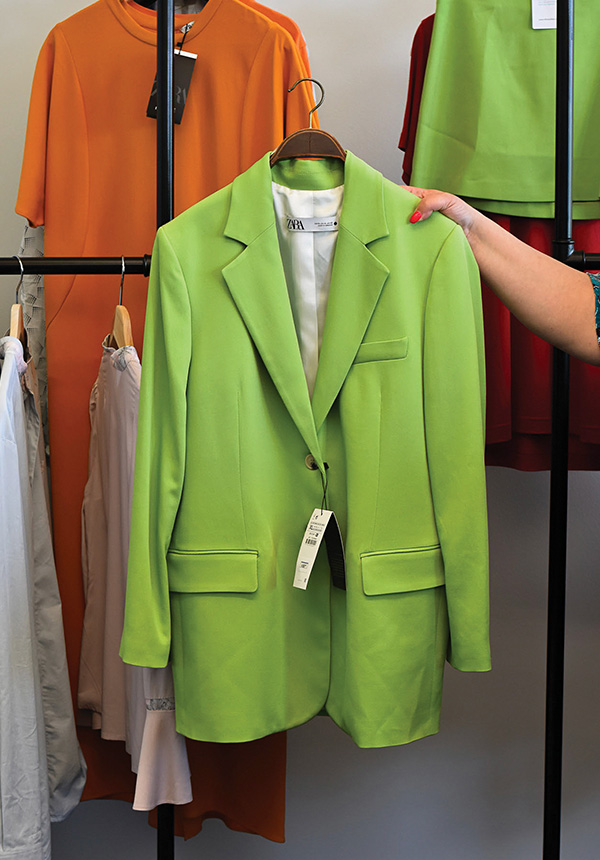
At their facilities, post-consumer waste made of cellulose-based materials – ranging from a pair of cotton jeans to the cardboard box they arrived in – can be reborn as Infinna, a fully degradable fibre which looks and feels like cotton. With a number of small, clear beakers on the table in front of her, Terho explains the different steps in the process. “It’s not so simple,” she says. But she breaks it down to the essentials: Infinited Fiber Company turns post-consumer textile waste into powder, which is transformed into a liquid and then respun to create new fibres. On the wall beside Terho are the results of this technology – a display of clothing samples from brands like H&M and Zara, which have used Infinna in their collections.
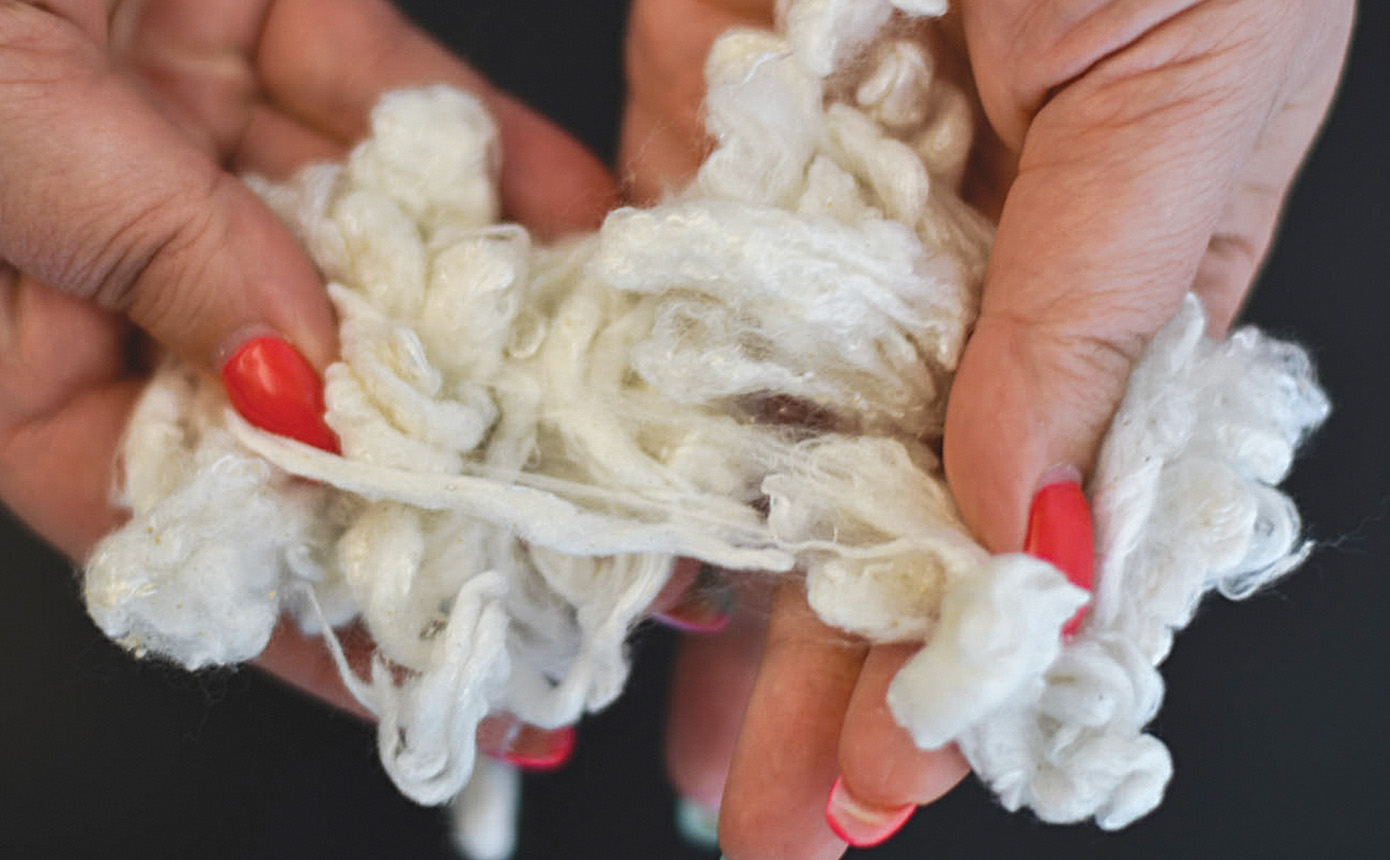
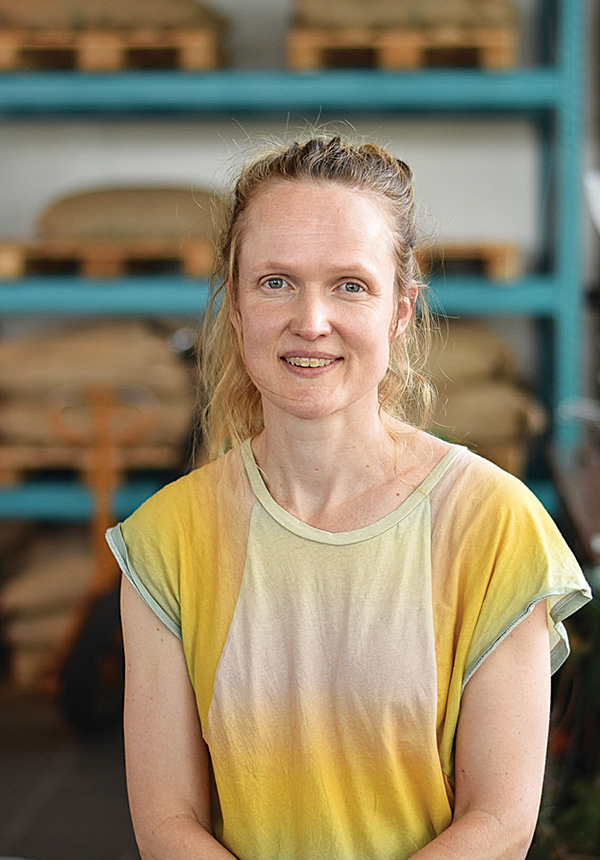
The company is in the process of building a new facility in Kemi, a Finnish town near Sweden’s border, to meet growing demand for their product. They’re aiming to produce 30,000 metric tons of fibres annually – enough to make about 100 million T-shirts. According to Terho, the factory’s capacity is almost fully sold out for the first year, with orders from big fashion brands like Tommy Hilfiger, Adidas and Ganni.
Companies like these are working on solutions to a few challenges, such as increasing awareness and finding ways to repurpose certain textiles. But currently, less than one percent of textile waste is recycled into fibres to make new clothing. Even if recycling technology advances rapidly, it’s still not a perfect solution; every time a textile is recycled, the fibres get shorter and decrease in quality, and therefore usefulness. Recycling also isn’t possible without the use of resources, making it a less sustainable option than prolonging the life of the garment.
At the same time as it grapples with its waste, the fashion industry has also seen an explosive increase in synthetic material use. Two out of three new garments are made of synthetic materials and it’s estimated as much as 35 percent of all microplastics in the ocean stem from synthetic clothes. Although clothing labels are frequently embellished with a “recycled polyester” tag, these fabrics tend to be made out of recycled PET bottles, such as standard plastic water bottles – the result of downcycling other plastics into fabric, and not of recycling clothes themselves. The current size and production methods of the fashion industry constitute challenges that are yet to be met with technological solutions, neither in the Nordics nor elsewhere. But for some experts, the solution isn’t in better technology, but in reimagining our relationship to our clothes.
Minna Halme, a professor of sustainability management at Aalto University, says the environmental footprint of textiles “is actually one of the easiest to change.” She holds up a hand to shield her eyes from the Helsinki sun on the terrace of a coffee shop in a busy shopping centre. She allows the sun to blind her for a moment and gestures to her dark blue cardigan. “This is actually a good example, because I bought this secondhand from London in 2016. I’ve been using this a lot and it’s lasting well,” she says. It’s simple: We just have to buy less and prolong our garment’s lifetimes, Halme explains. Compared to the challenges relating to transportation, food and energy, reducing the environmental pressure of the textile industry doesn’t require large infrastructure changes to not compromise people’s basic needs. In short, she says, there is no need for the amount of clothing being produced today.
Not surprisingly, the issue of overproduction is not the topic of choice for companies whose business models are built on quick and cheap manufacturing, enabling the sale of large quantities of clothing needed to generate a profit. Instead, mass-producing brands tend to focus on changing materials and increasing recycling. Also in the political sphere, there’s a tendency to avoid addressing mass production in the numerous action plans, strategies and political measures aimed at reducing the environmental pressures of fashion – to the frustration of the scientific community researching sustainability in the industry.
At a different coffee shop in a different Nordic capital, Kirsti Reitan Andersen, a postdoc at Copenhagen Business School, agrees with her Finnish colleague. She’s spent the past decade researching sustainable fashion, focusing on how to change current business models. “There’s a lot of talk in the industry about circular business models,” she says. “Elements of that are amazing, but I also think it’s quite problematic that parts of the industry seem to think we can just keep producing all the same shit and then it’s going to circulate somehow, magically – which is definitely not happening at the moment.” She takes a break from talking while a train passes, drowning her out – another buzzing noise of a fast-paced society making it difficult for a researcher to be heard. After a few seconds, she continues. “The material focus is a way to avoid looking into the real problem, which is the amount of clothing.”
Researchers agree: the spurring technological innovators like Rester and Infinited Fiber Company are important for the future of fashion. By making profits on resources that have already been extracted from nature, these companies are curbing the linear use of natural resources, making it look more like a circle. But Halme and Andersen both argue there’s a need for new approaches along the whole value chain of textile production aimed at making the industry thrive on a slower production pace. “It’s about making longevity fashionable,” Halme says, arguing fashion is in need of systemic change. While fast fashion may have found its legs in the Nordic countries, they are also home to countless designers and brands intent on bringing back a culture where clothes are meant to last.
In the Nordic countries, celebrating individuals driving change has cultural roots, which is mirrored in the concept of ildsjel in Norwegian, ildsjäl in Swedish and ildsjæl in Danish. The word directly translates to “fire soul” in English, and can be understood as an expansion of the word “agency.” The concept stretches further by embodying a burning passion for community empowerment through lighting fires in others and provoking a desire to generate transformations. The concept of Ildsjæl encompasses the belief that change is possible – when the fire spreads, a better future can rise from the ashes.
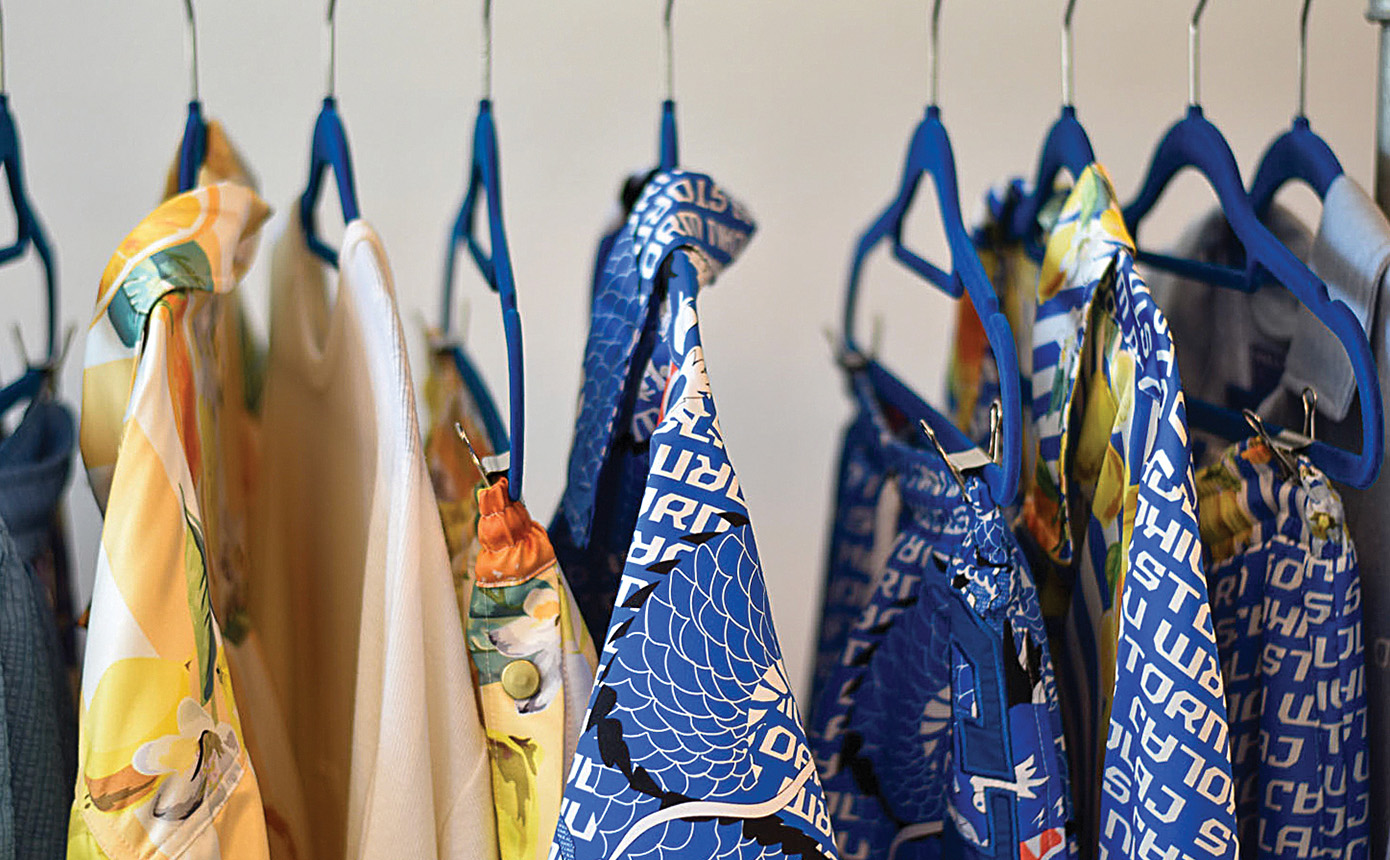
Ildsjæl is on display at local designer Nikolaj Storm’s cozy basement studio, just a short walk away from the Copenhagen botanical garden, where racks full of colourful garments hug the wall. Storm won the Zalando award at Copenhagen Fashion Week in 2021 with his eponymous brand, taking home 20,000 euros and a partnership with the popular retailer to create a limited-edition collection that explores sustainable solutions in design. But he’s been working on sustainable fashion long before it became a trend. In the back room, inspiration boards and piles of fabric take over the space as his assistant works on getting the samples ready for Copenhagen Fashion Week 2022. Storm is as known for his bold and vibrant takes on genderless streetwear as he is for making sustainable practices the cornerstone of his brand. Despite this, his website exclaims, “We are not a sustainable brand.” The word has become a point of annoyance for Storm, especially when used in the fashion industry, where its unregulated definition means that it can be used as a cover for greenwashing. “There’s no specific structure on how to define sustainability in fashion, and that’s the biggest issue – because then you can say everything is sustainable,” says Storm. “I actually like that everybody is trying to do something.” But he raises red flags when brands start to use the term without backing it up and consumers can’t tell the difference.
Despite concerns about greenwashing, shoppers are showing signs of becoming more eco-conscious. In 2021, searches for brands that offer repairs grew by 145 percent on Lyst, a global fashion search engine and shopping app. That same year recorded a 117 percent increase in demand for upcycled, recycled, repurposed and reworked items, and a 348 percent increase in views on the platform for biodegradable sneakers. Consumers can also rely on online directories to find sustainable and ethical brands, such as Good On You, which rates according to its impact on the planet, people and animals.
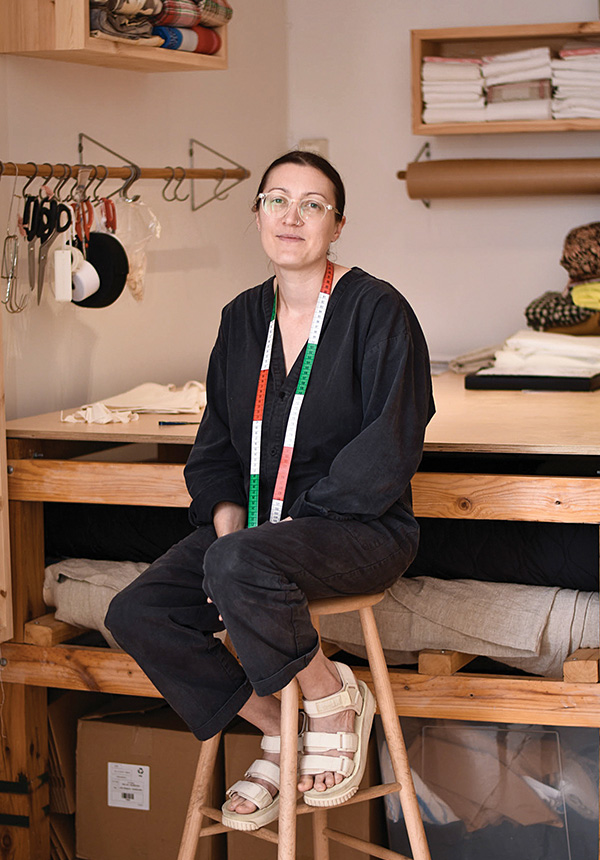
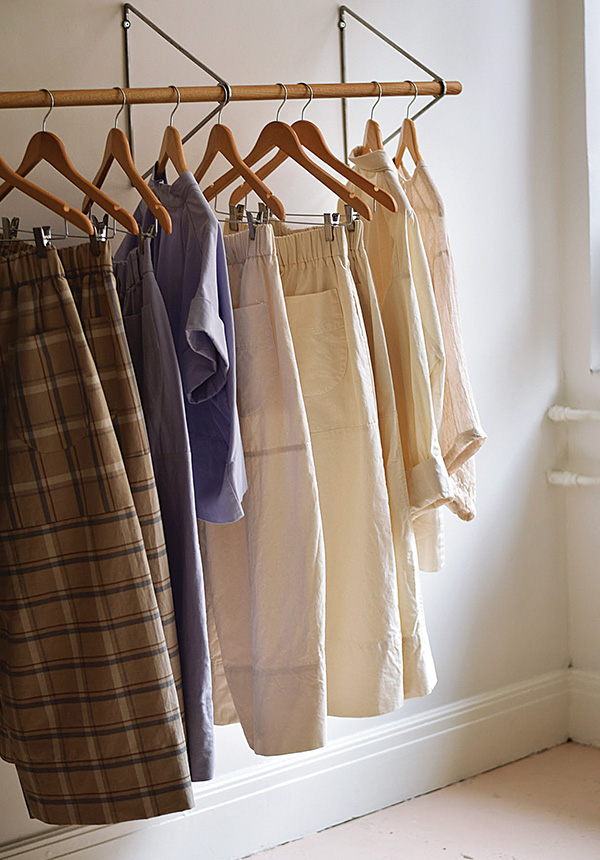
When customers first stumble across Birgitta Helmersson’s clothing, they’re drawn to her earthy palettes and flowy dresses. According to the Swedish-Australian designer, most don’t even realize that her clothes are zero-waste. Through the window of her studio-cum-shop in Malmö, one of Sweden’s fastest-growing urban centres and a burgeoning creative hub, you can see a seamstress’ work space alongside hanging garments. The laid-out fabrics, patterns and scissors are clear signs the workbench is not just a prop for decoration but in active use. Here, Helmersson makes her zero-waste, slow and locally produced brand. Having previously worked as a designer and pattern maker in Melbourne’s fashion industry, she saw the downside of industrial clothing production firsthand. “I was watching the sampling and the production,and seeing the actual waste,” she says. “That’s what really made me think.”
Now, she’s built a brand where waste is designed out of the business model. The absence of collections encourages consumers not to buy something new as soon as the season shifts, and the production process is as transparent as can be by letting the consumer literally see how clothes are made up close and in-person. A part of her business also consists of selling patterns to home sewers, allowing them to gain an even deeper understanding of the construction process behind Helmersson’s designs, and hopefully, inspiring people to give a second thought to how the other garments in their closet are made as well.
A few decades ago, textile production was common in the Nordic region. Today, most of it is outsourced, and garments hanging in clothing stores have often travelled far to reach their racks. But Andersen can see a countering trend emerging: An increasing interest in bringing some of the production back to the Nordic countries. In her opinion, that’s a good thing. “Having things closer gives bigger opportunities for exploring and finding more sustainable solutions,” she explains. Shorter and more local value chains might make it easier for brands to control all steps in the production process and perform better in terms of both social and environmental sustainability.
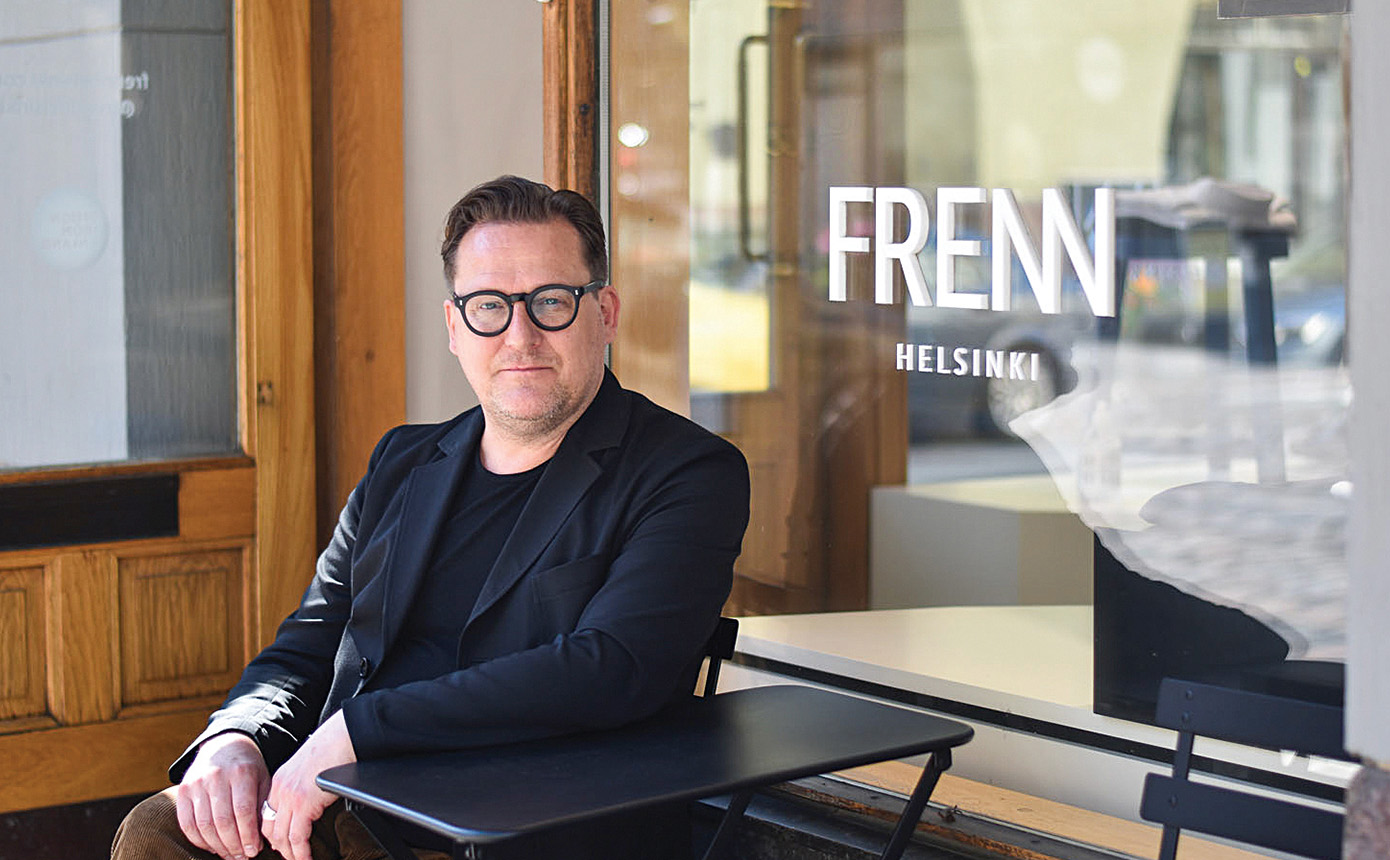
Jarkko Kallio sits on the edge of a table among his store’s elegant menswear garments. Kallio is the co-founder of Finnish brand FRENN, a word created by combining the words “fresh” and “Nordic.” Here, in the middle of Helsinki’s design district, he works on marketing, while his business partner and designer Antti Laitinen creates the collection, both working to “update menswear traditions with innovation and ease.” While doing so, they have earned the title of most sustainable brand in the country from Pro Ethical Trade Finland, a non-profit organization that advocates for fair trade and responsible production processes.
All of FRENN’s garments are hand-manufactured in the Baltic region with eco-certified European materials. The clothes are also meant to be easily repaired and modified. Keeping the material quality high and the value chain close necessarily results in higher prices per garment than those of global, mass-producing companies, as production costs are greater. The extra zero on the price tag might intimidate some of the consumers trying to build a
more sustainable wardrobe, but that’s not a concern to Kallio. “We don’t have to sell for everyone,” he says. In a high-income region like the Nordics, there are undoubtedly still consumers who can afford FRENN’s designs. “The main point is that the people who have the money, they have to think a little bit more,” he adds. The fact that not everybody can afford more expensive clothes due to responsible manufacturing shouldn’t stop those who can. What’s more, Kallio tries to encourage consumers to rethink the cost of a product – defining a garment as expensive should be based on its durability, not the price of acquisition. “How long can you actually wear it?” Kallio asks rhetorically. In his perspective, buying a new garment that will last long to replace a worn-out piece is not necessarily more expensive than buying low quality clothing again and again.
more sustainable wardrobe, but that’s not a concern to Kallio. “We don’t have to sell for everyone,” he says. In a high-income region like the Nordics, there are undoubtedly still consumers who can afford FRENN’s designs. “The main point is that the people who have the money, they have to think a little bit more,” he adds. The fact that not everybody can afford more expensive clothes due to responsible manufacturing shouldn’t stop those who can. What’s more, Kallio tries to encourage consumers to rethink the cost of a product – defining a garment as expensive should be based on its durability, not the price of acquisition. “How long can you actually wear it?” Kallio asks rhetorically. In his perspective, buying a new garment that will last long to replace a worn-out piece is not necessarily more expensive than buying low quality clothing again and again.
Clothes are not just textiles and the footprint they leave. Clothes express personal identity, reveal social belonging or even symbolize a political standpoint. Is slowing down and valuing longevity putting a stop to such expression? “It’s not like people should just be wearing the same T-shirt forever and ever,” says Andersen. In her view, being a sustainable consumer doesn’t have to come at the expense of personality and style either. Fashion should be fun, and people should be able to play with identity, she argues. But having fun with clothes does not have to equate to buying a new garment every time you pass a shop. “In many places in the world, [there’s] an understanding that the more we shop, the more happy we’ll be,” she says. “I don’t know if that’s true.”
Like Kallio, Andersen argues for valuing garments differently. Clothes should be taken care of and mended. For however long possible, clothes should circulate as clothes, not fibres. This isn’t a new idea – society has been doing it long before fast fashion existed. “If you look back in time, there’s a lot of knowledge about how to repair and recycle,” Andersen argues. “If you can come to that point where the mending is part of giving value to your clothing, and the clothing is made in a quality that is worth mending, then things can start circulating in a completely different way.”
Sisu is a Finnish concept used to describe the inner strength and courage one needs to overcome a challenge. It’s a term that dates back hundreds of years and is held by Finns as the truest expression of their national character. But perhaps it should also be a framework in which to tackle the environmental impacts of fashion – with unrelenting determination against the odds. “Nobody can do this alone,” says Luukko, surrounded by hundreds of raw fibre bales stacked in Rester’s plant, each half her size. To create impactful change in the industry, everyone must join the journey, she argues.
Considering the social meaning that clothes bear, the systemic change of fashion must in many ways be a change of culture. It’s a question of what knowledge and perspectives are valued, and how these are acted upon. As Luukko moves outside, the heavy metal door silences the industrial noise, allowing the forest surrounding Rester to silently demonstrate Nordic peoples’ proximity to nature. And like the forest, the Nordic fashion industry is a community working collectively to create a system. If guided by a combination of friluftsliv, ildsjæl and sisu, the industry might be able to create another destiny for itself, one where the spirit of collaboration, valuing nature and unwavering determination, can be the seams piecing together the future of fashion.