04:
REWILDING DESERTS IN ICELAND AND LOGGING RAINFORESTS ON VANCOUVER ISLAND
One island is trying to regrow it’s long lost forests, while the other is cutting them down.
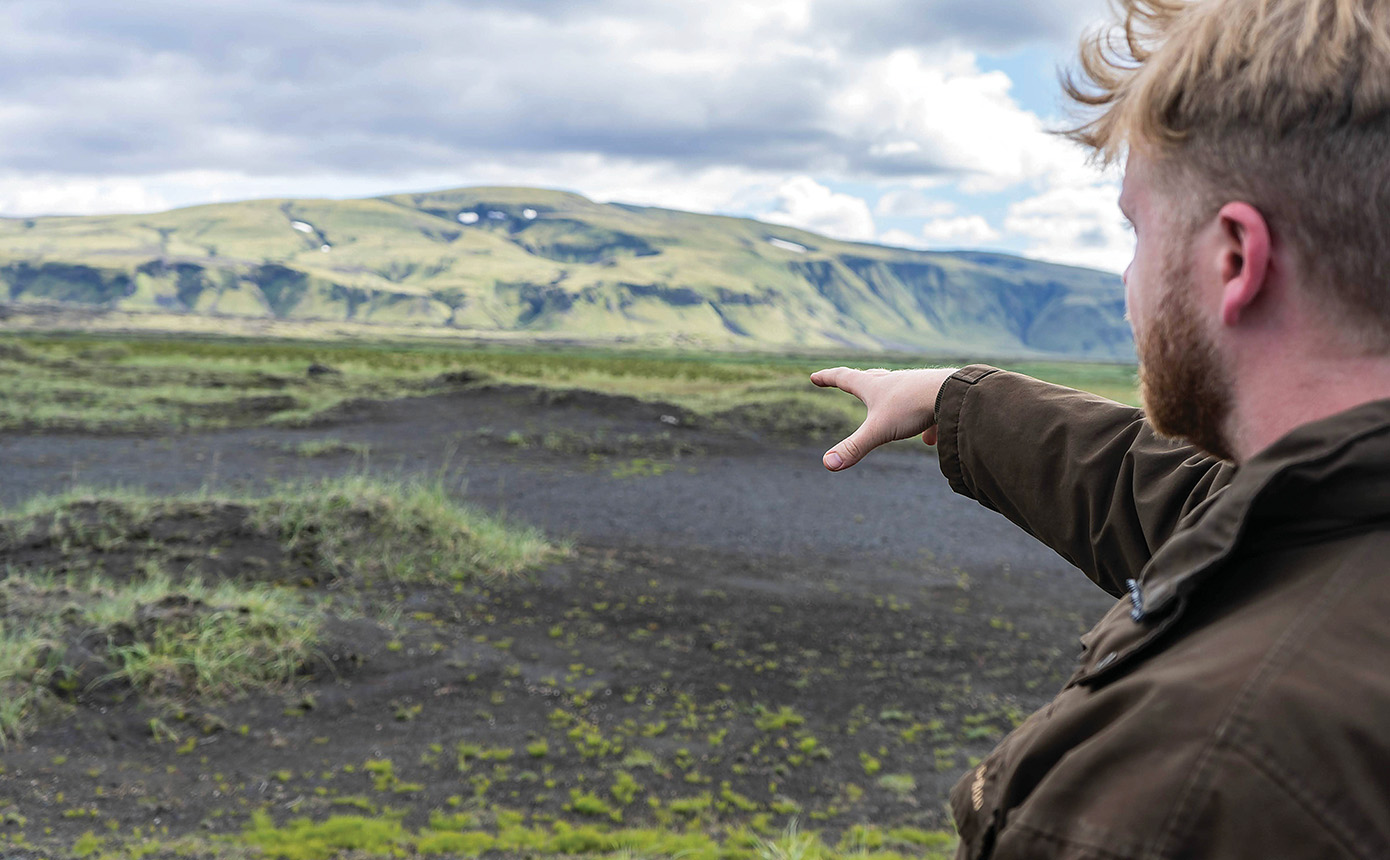
The wind whistles through desolate grasslands at the foot of one of Iceland’s most active volcanoes, Helka. Scattered throughout are small stubborn outcrops of young birch trees.
Ellert Arnar Marísson – a young Icelandic forester with a bristly blonde beard – seems at home walking through these windswept lands. Surprisingly, as a forester, Marísson rarely cuts down trees. His job is to plant as many new ones as possible.
Marísson doesn’t blame the generations before him for cutting down nearly all of the country’s native birch forest – they couldn’t have foreseen the consequences.
One island, known for wind, lava, and ice; and another, defined by rain, lush greenery, and breathtaking biodiversity. Separated by continents and oceans, both Iceland and Canada’s Vancouver Island have seen a drastic decline in their natural forests; one in the past and one ongoing. While activists handcuff themselves to massive 800-year-old redcedars by the Pacific Ocean, frail birch trees emerge from once green volcanic deserts by the Atlantic. Whether the ancient forests will remain standing, or the deserts will turn green once more, remains to be seen.
This is a story about trees – about what they give us, and what happens when we destroy them. It’s also a story about the how they can grow on lava fields, be made into sea crossing canoes, and sustain ecosystems. This is a story about trees, and the communities of people trying to understand, grow, log, and save these forests. In Iceland, people have been trying to regrow their native birch forests – lost due to past logging – in the hopes of stopping desertification. On Vancouver Island, trees grow quick and tall, desertification seems far off, yet concerns are arising that their ancient forests could disappear, and the island’s rich and delicate biodiversity with it.
These two drastically different islands, so little in common, and yet perhaps, they share an inevitable call to save and rewild their forests.
“I see it as working with a blank canvas” says Marísson, while walking along a seemingly endless black desert, black sand crunching underneath his hiking boots. If you look closely, you can see the recently planted birch saplings, hundreds of them in uniform lines, each one stretching only a few centimetres out of the sand. Marísson oversees the tree-planting, on behalf of the government-run Icelandic Forestry Association,and explains that this is a prime example of what has been going on in Iceland for decades – a rewilding.
Desertification has become an enormous issue in Iceland, and many experts believe it to be the biggest threat to the country’s ecosystems. Desertification, as the word suggests, describes the process when fertile land becomes a desert. The UN stated in 2017 that desertification ranked “among the greatest environmental challenges of our time”, affecting biodiversity, eco-safety, poverty eradication, socio-economic stability and sustainable development.
Once desertification has started it’s not only very difficult to reverse, but once it has spread as much as it has in Iceland –it has a kind of snowball effect – the bigger the desert, the faster it spreads, like a disease. In Iceland this process was escalated by the loss of almost all forest cover over a thousand years ago, which led to the current dire situation.
The finish line to stopping desertification is nowhere in sight, but Icelandic experts have found that continuously rewilding the deserts, or restoring the ecosystems, is the best chance they’ve got.
When settlers, most likely from Norway, came to Iceland for the first time around the 9th century, they were greeted with a familiar landscape. Birch forests stretched out across the lowlands, making this isolated, remote island seem like home.
In 2022, more than one thousand years after settlers first stepped foot on Iceland, those lush birch forests have almost entirely disappeared, leaving behind a landscape of vast deserts and tundras. Forests once covered over 25 per cent of Iceland, yet years of deforestation and logging have lowered that number to barely two per cent.
Iceland’s government has made it clear it wishes to recover the native birch trees. They are vital in the fight against desertification, provide shelter for fragile wildlife, and sequester carbon – meaning they capture, store and remove carbon dioxide from the Earth’s atmosphere. Birch forests have also proven to have a very positive effect on the cycle of nutrients, and fertility of soil.
But the process of tree planting, fertilising and sowing has been slow and very expensive. The rewilding started just over a century ago, but has gotten a boost in the last three decades. Today over 3,000 square kilometres of land has been restored, or are in the process of being restored. However, there are still over 40,000 square kilometres of barren, deserted land.
The turbulent weather doesn’t make rewilding Icelandic deserts any easier, and even with these efforts the Icelandic ecosystem is still classified as one of the most degraded in Europe.
“We just wanted to survive. It’s always the strongest element in us, humans and other animal species, to survive,” says Þórunn Wolfram, an Icelandic soil conservation expert. She feels empathy for her forefathers’ need for survival, but she has also seen first hand how hard it is to bring forests and other flora back from the brink.
Those forefathers had to fight for survival on this isolated island, in the harsh northern Atlantic climate. That meant using nearly every resource they could get their hands on, including one they could not live without: trees.
Wood was essential to survival in those early years, from the 9th century and way into the 19th. Trees provided life-sustaining materials like heat, housing and boats for fishing. The first generations cut down forests fast and taught future generations to view the forest in the same way, as resources used to survive. Yet this way of thinking has left Iceland scrambling to stop desertification, stabilise its fragile ecosystem, and maintain the already dwindling farm land.
Any talk of sustainable forestry practices in Iceland didn’t really begin until the mid 20th century, when the survival of the native birch forests was deemed so fragile that the authorities banned clearcuts completely.
Yet, the ban was rarely enforced, and clearcuts continued, to keep up with demand for coal for heating.
“When you have such a fragile system, it’s hard to build it up again,” says Wolfram, who explained to us that recent research shows that more than half of all of Iceland’s land is considered to be in a degraded or collapsed condition.
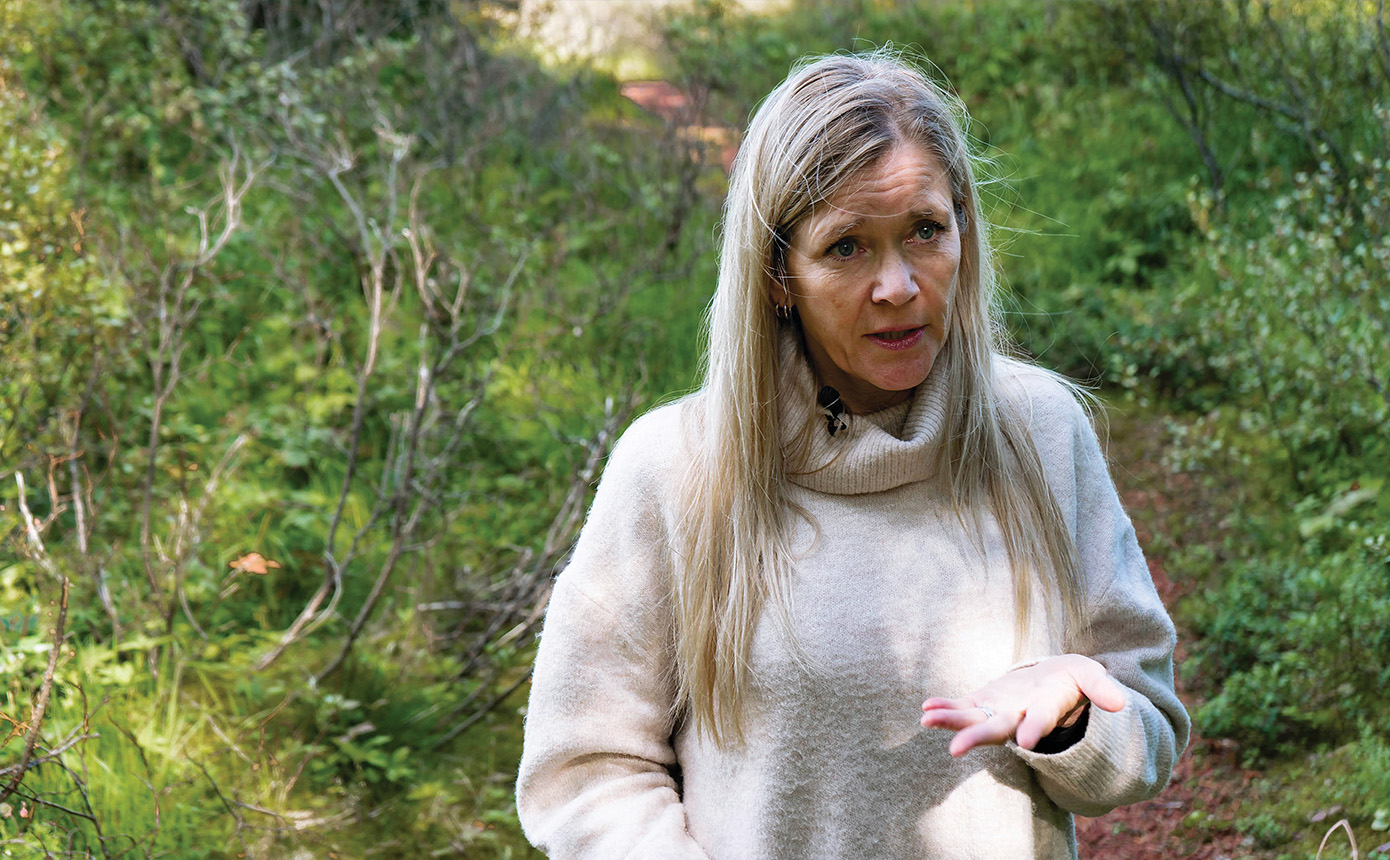
The speed of desertification across the island wasn’t something Icelandic scientists had predicted. The soil conservation expert Þórunn Wolfram says the matter is quite clear, too much was taken from the land too fast. “We were misled by the fertility of the land.”
The soil is unique: it’s black, volcanic, light and highly erodible. Mixed with Iceland’s arctic winds, the soil sweeps over large areas eerily fast and buries them in dunes of black sand. Where the sand hasn’t already smothered the greenery, over 400,000 of Iceland’s free roaming, grazing sheep, do their share of damage to delicate flora.
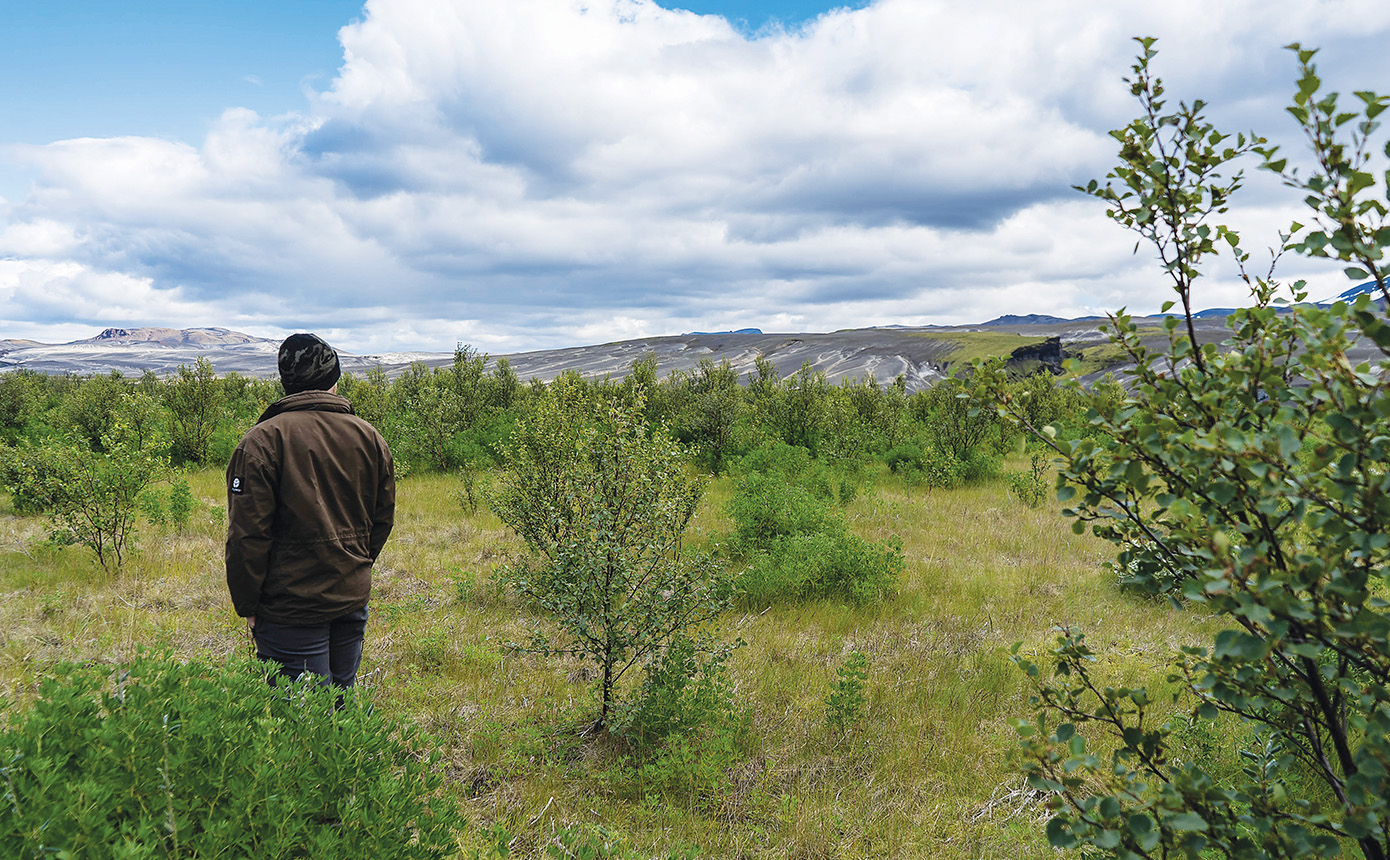
Marísson walks us through one of his planted birch forests, Hekluskógar, where the trees measure up to his shoulders. He jokes that these trees will never be as tall as the ones in North America, but seems proud of these birch trees and their stubborn survival.
Hekluskógar was planted in 2005, and while it is not a flourishing forest abundant with birds and animals, it’s a stark contrast to the desert across the road. The ground is covered in soft grass. Mushrooms poke out of moss and the fragrance of heather fills the air.
Like most tree planting projects in Iceland, Hekluskógar is a collaboration between state agencies, municipalities and landowners in the area. They see a common benefit in regrowing the forest. Although it’s unlikely they will see a large forest there in their lifetime, they plant knowing the future generations will benefit.
Marísson points out how much calmer the wind is near the trees, which act as a windblock, thwarting the wind from stealing the nutrient rich soil.
The location of Hekluskógar was not chosen at random; the area used to be one of the most fertile farmlands in the country, but has been a growing desert for decades.
Marísson sees the tree planting as a fundamental step in keeping the growing deserts at bay. They have found that healthy forests will spread naturally, if they are managed well in their first years. “We have to get to thresholds where these natural systems can take over and do the rest of the work for us. Because there’s no chance that we can physically plant every square inch by hand – it’s just too much work and too much money.” He says, however, he would like to see a lot more planting happening.
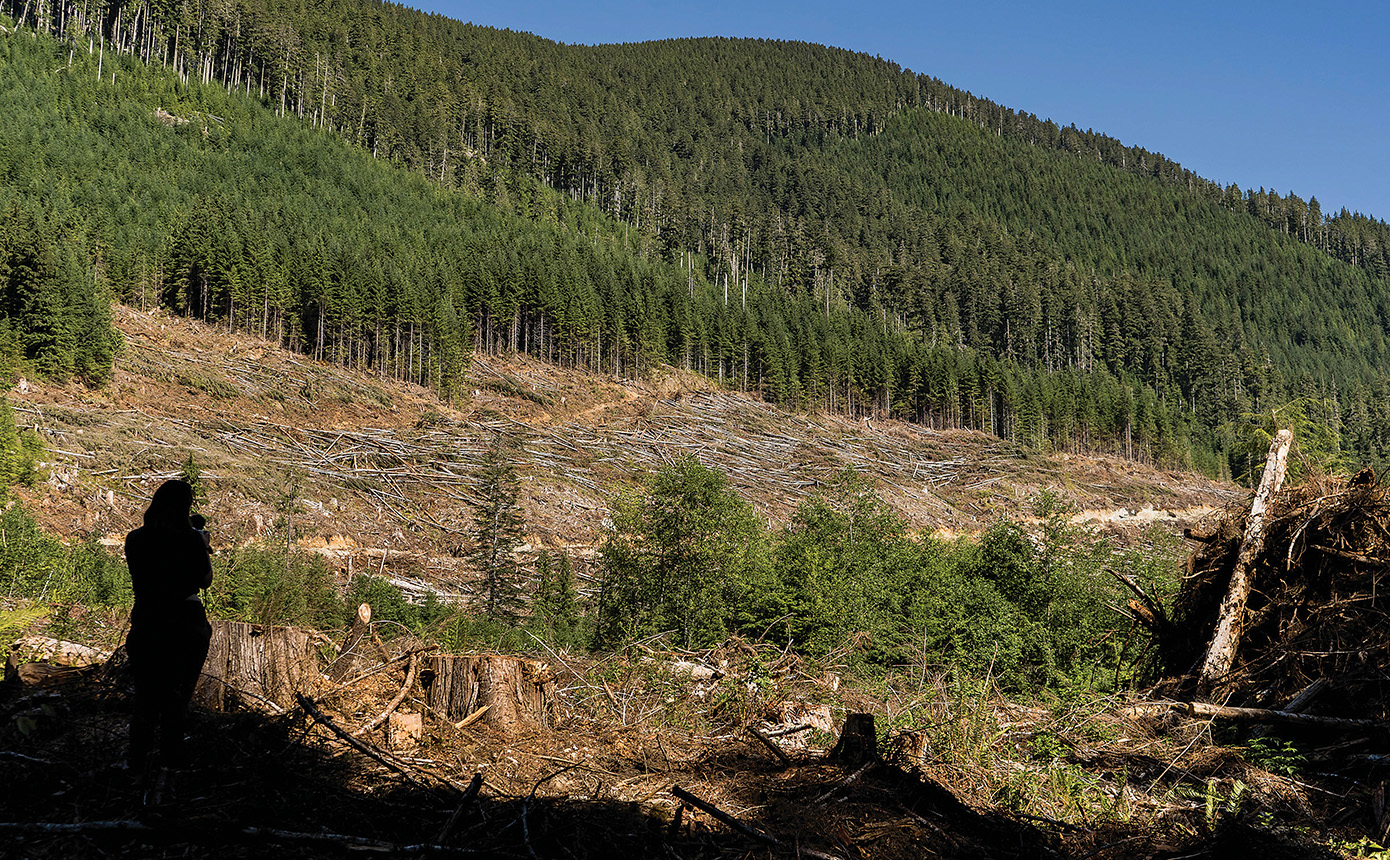
Five thousand kilometres west of Iceland, on one of the hottest days of the summer, Timo Scheiber, the Chief Executive Officer of Brinkman Reforestation, makes his way through a clearcut that his company had just recently replanted, the sun glinting off his sunglasses.
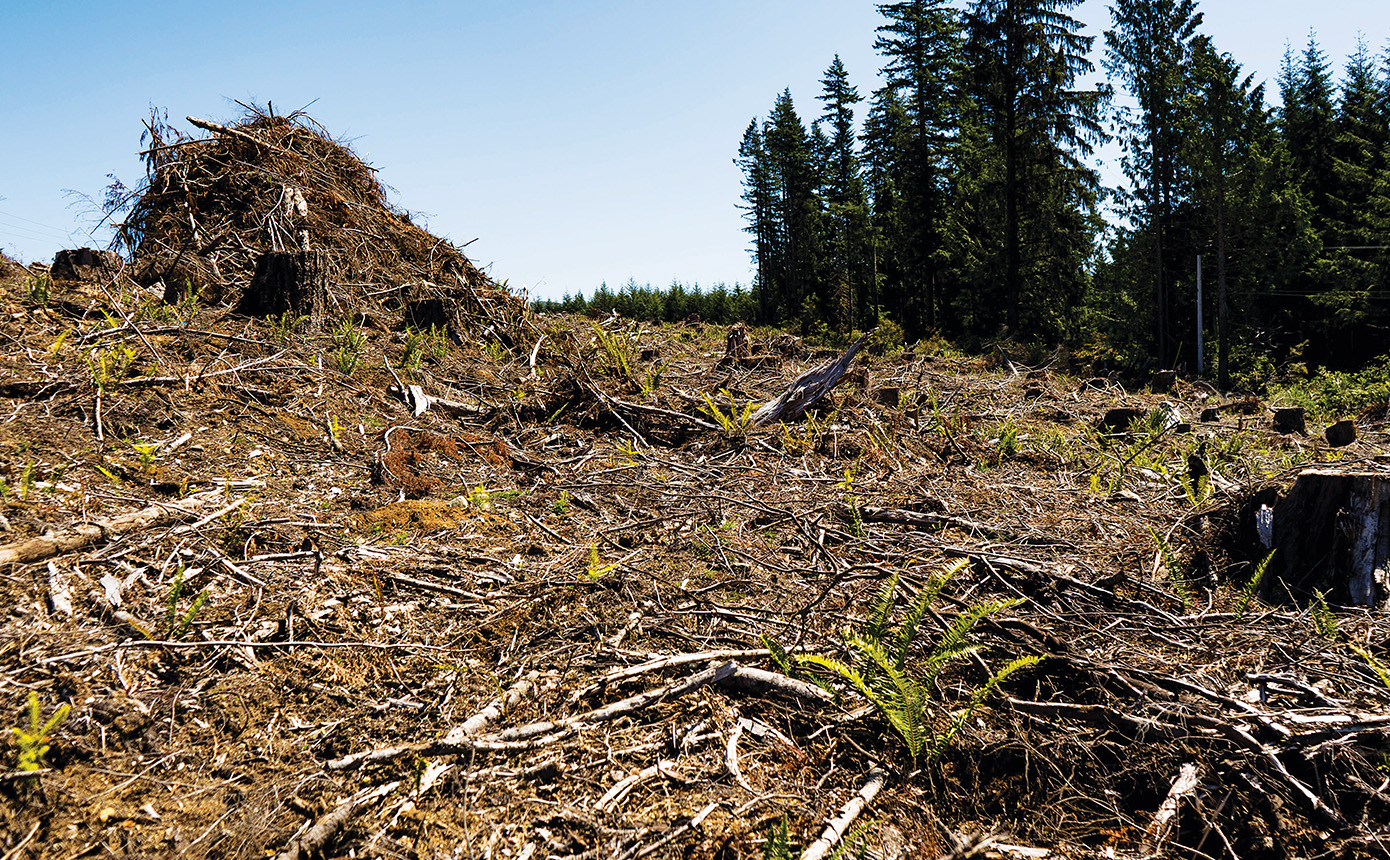
On Vancouver Island, in Canada’s British Columbia, the cool breeze of Iceland’s forests are a far away thought. Here, the sun is harsh and heavy in the clearcut. The smell of burnt wood escapes the earth with each step.
Vancouver Island lies in a temperate rainforest, one of only seven ecosystems in the world, and BC has roughly one-fifth of the world’s remaining temperate rainforests. The constant rain and rich soil have created the perfect environment for trees to grow into towering giants for thousands of years.
In the clearcut, with the lush temperate rainforest pushed to the horizon, the air itches with buzzing flies. The atmosphere seemingly aches with the loss of the forest. And yet, scattered around, newly planted tree saplings grow.
Scheiber, who has been in the business for 30 years, gestures with a shovel to the brand new pine seedlings that he has just planted. Similar to the Icelandic birch in the desert, these tiny trees reach just a few centimetres from the ground. Yet, growing conditions could hardly be more different – these trees are growing out of nutrient rich timber mulch and mud.
“You don’t get much better growing conditions. It’s fertile, it’s wet. And it’s warm all year round here. Like even in the winter the trees are putting on rings,” Scheiber points at a tree stump, and by counting the rings it’s clear that the tree had been around for over 30 years.
A common forestry practice in Canada is to mechanically log huge areas of trees, leaving a bare and desolate clear cut, then replant the area with tree seedlings. The cycle is repeated every 30 to 50 years.
Scheiber says, leaning against his Tacoma Toyota truck, that this environment is perfect to “farm trees.” The rain and nutrient soil allow for trees to grow fast and big, allowing for trees to quickly replace what was cut down.
Yet, a study done by Frontiers in Forests and Global Change has shown that mechanical logging has a lasting effect on soil, ecosystem function, and productivity. This repeated damage to the soil, paired with a high volume of rain washing the nutrients from the damaged soil, has the very likely potential of causing desertification.
Canada is the home of one of the worlds largest forestry industries, with BC at the forefront, with over 1,500 logging companies. In the province alone, over eight million hectares of tree cover has been lost in the last twenty years, and environmentalists have been growing increasingly concerned about the state of their ecosystems.
In recent years, logging companies on Vancouver Island have been met with powerful resistance from Indigenous communities, who have lived on the land for centuries. Never in Canadian history have more people been arrested for civil disobedience than at the blockade in Fairy Creek on Vancouver Island, where over 1,100 activists were jailed for protesting the planned logging of one of the last remaining old-growth rainforests in the area.
Torrence Coste has a closer view than most of why people lock themselves to logging equipment or block a logging road. He is the National Campaign director for the Wilderness Committee, an influential Canadian grassroots environmental organisation that was founded in Victoria on Vancouver Island over 40 years ago.
Coste says he understands why people find themselves taking such drastic measures to protect the forests from logging. The Wilderness Committee, however, is barred by law from encouraging or taking part in civil disobedience.
“There are individual trees that were here 1,000 years ago. That depth goes so far beyond our own lifespan,” says Coste, likening standing in these ancient old growth forests to seeing a great pyramid, or walking into an ancient church. Coste, who often takes groups on guided tours to the old forests on the island, says many have what they describe as spiritual experiences, standing beside trees that have lived there since long before their own country got its name.
“Our job is to encourage people to try and affect change, before it gets to that stage. And we have people daily or weekly, saying, I’m going to write to my MLA, I’m going to try to meet with my elected representative, but they’re not going to listen. We need to send this message more directly.”
One of the Wilderness Committee’s roles when it comes to blockades and protests has been to document what goes on. Recently, however, their access to logging areas in BC has been limited by injunctions from forestry companies. These injunctions have also blocked many journalists and Indigenous land protectors from the forest.
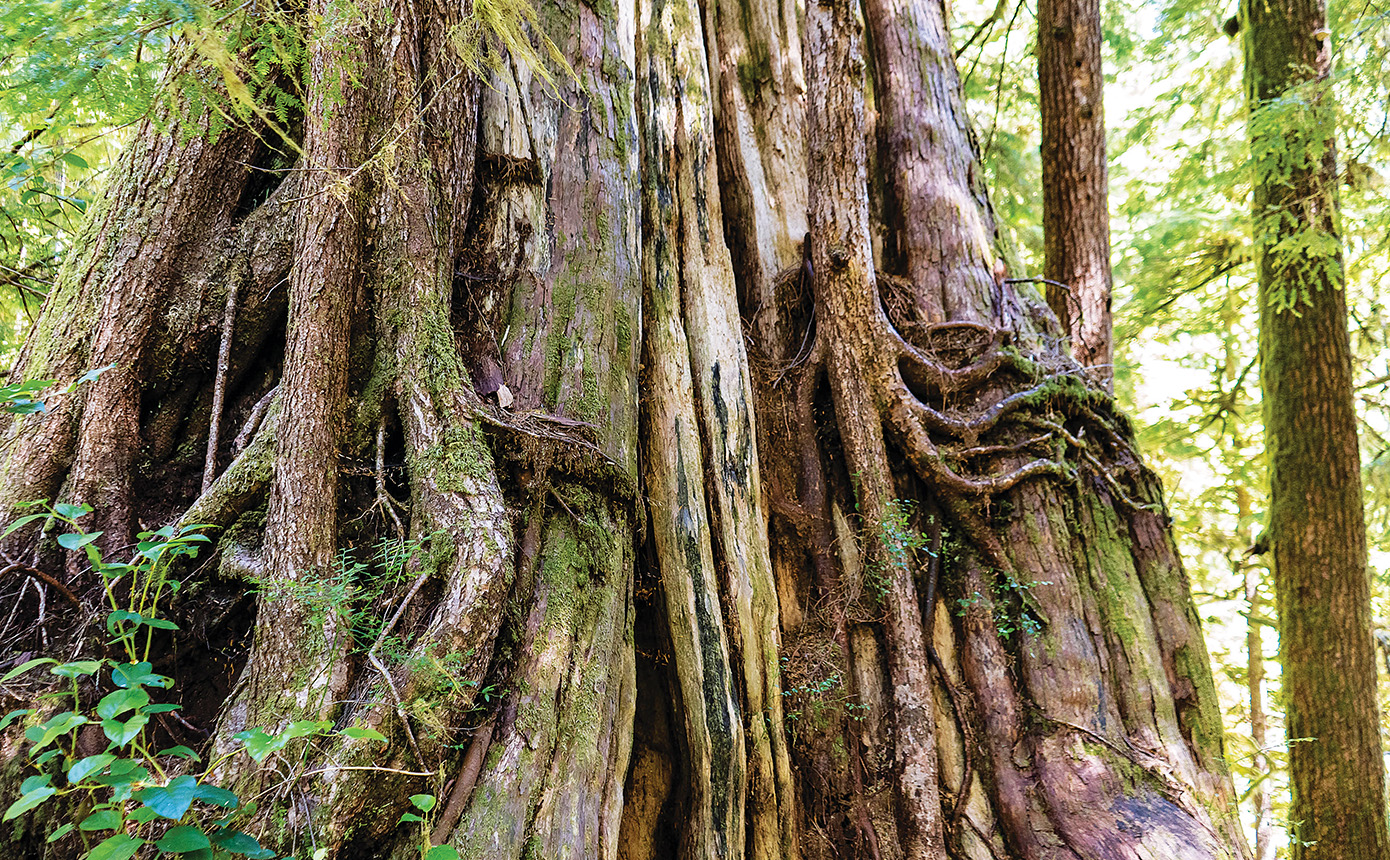
Along the west coast of North America grows an abundance of the western redcedar; nowhere else does this tree grow. Sometimes as tall as the Leaning Tower of Pisa and as wide as a shipping container, the tree gets its name from the red, clay coloured wood and is known by its pungent, soothing balsamic smell.
The western redcedar, which has earned the name The Tree of Life for its fruitfulness by coastal First Nations, is also an antiseptic against common bacteria.
An enormous western redcedar tree, with the very fitting name of Castle Giant, grows in a pocket of old-growth forest in the Walbran Valley, on the west coast of Vancouver Island. This valley, similar to the better known Fairy Creek, has seen people putting themselves in harm’s way, by blocking logging roads and disobeying the law, in an attempt to save the remaining old-growth trees like Castle Giant.
The Castle Giant tree hums with life. Countless smaller trees and plants grow from its bark, as if its sustaining its very own little ecosystem. Castle Giant has lived in that very spot since long before Europeans settled in North America. This tree is estimated to be over 600 years old, older than the Black Plague, and yet considered young compared to other western redcedars that often live for over 1,000 years.
The Walbran Valley, with a mild climate and high rainfall, is home to an incredible variety of wildlife, many of them considered to be at risk or endangered. In the trees of the valley’s dense, humid forest, marbled murrelets, screech owls, and Queen Charlotte goshawks play. Sheltered by the immense trees, on the wet forest floor, red-legged frogs, cougars, black bears, and elk can be spotted year-round.
What attracts the wildlife to the Walbran Valley, and other forests like it in BC, is what makes it a sought-after forest for logging companies to harvest massive amounts of high quality wood.
Just a short walk away from the towering Castle Giant is a fresh clearcut, where the western redcedars, along with almost everything else, have been cleared out. The Walbran Valley, as well as Fairy Creek, are unprotected by Canadian law and therefore, perpetually at risk of being logged.
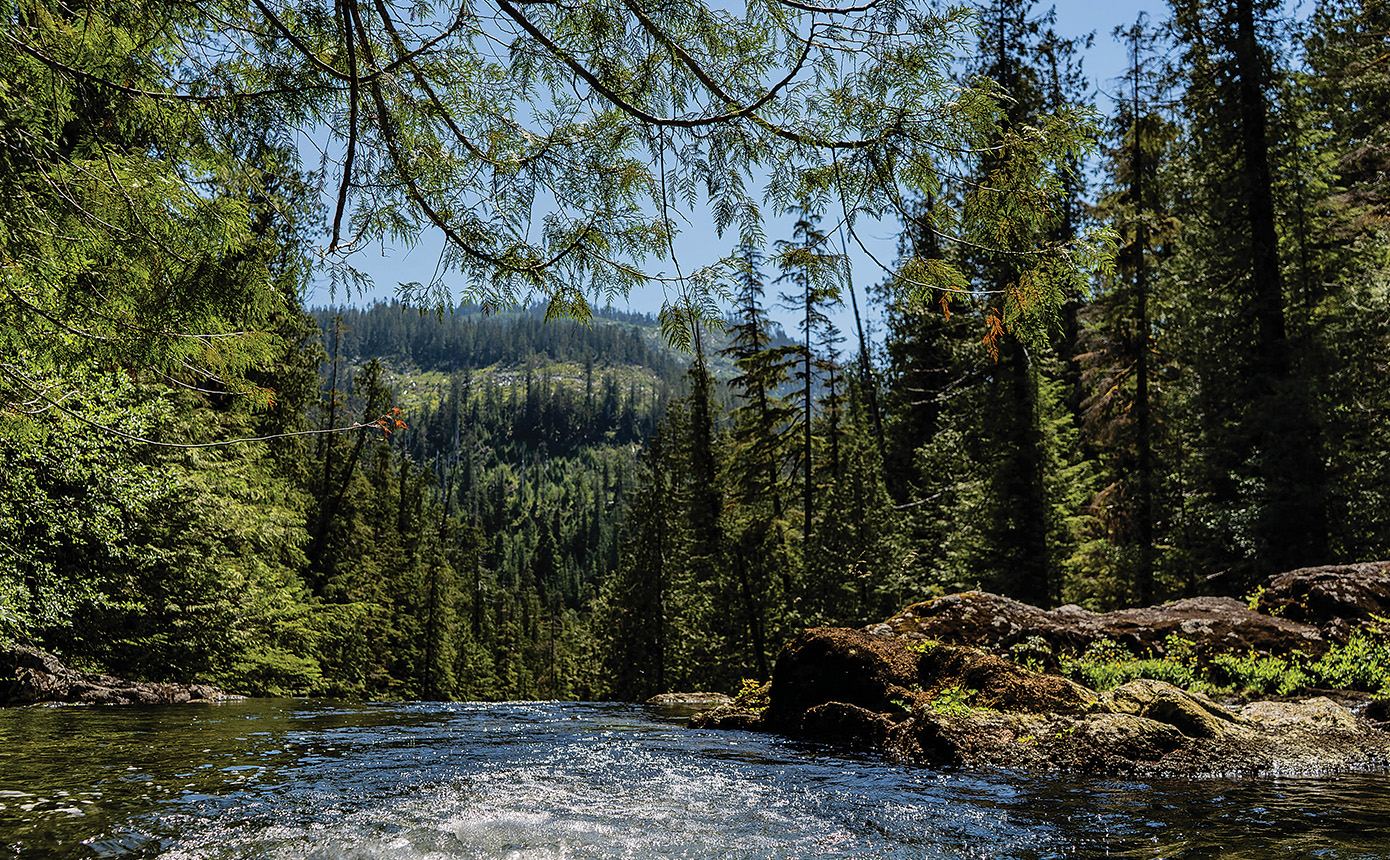
The western redcedar is a keystone species for First Nations, as its wood is soft and light, providing clothing, shelter, transportation, and a medium to express art.
Joe Martin, an Indigenous Nuu Chah Nulth man, also known by his traditional name, Tutakwisnapši comes from a long line of canoe carvers. Knowledge of wood and forests has been passed down through the generations, and with it, the respect for the delicate balance of the natural world.
“One of the things our ancestors would say about taking resources from the forest, is to take only what we need. Because Mother Nature will provide our needs but not our greed.”
He says Canadian forestry companies, however, have shown no interest in his people’s philosophy or their relationship with the forests.
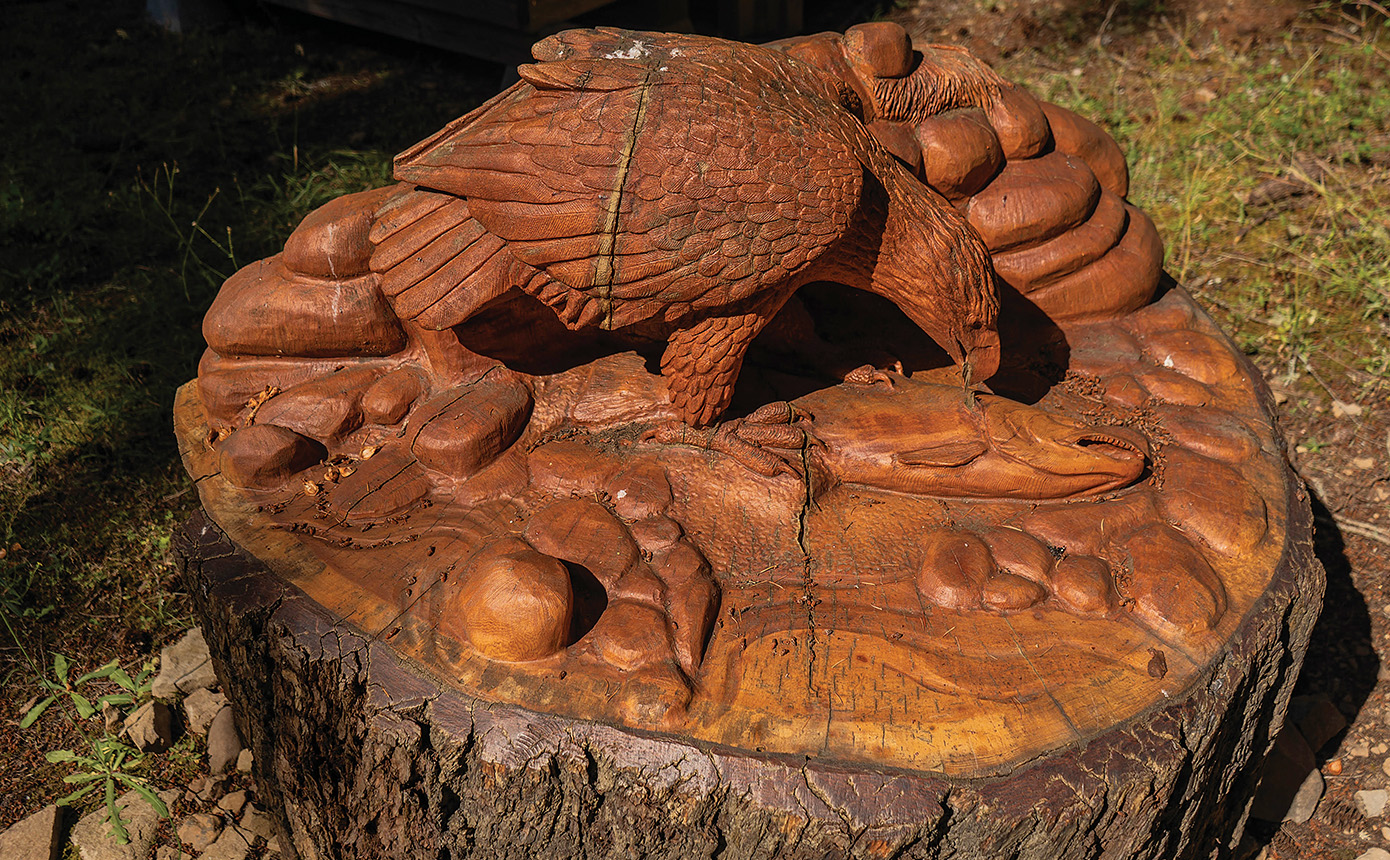
“We’re not allowed to cut a tree down within a hundred metres of an eagle nest, or beside a salmon bearing stream. We’re not allowed to, that was against our law. But forest companies don’t give a shit, they cut all year long. They don’t care.”
From the shoulder-high birch trees in Iceland, to the sky-high old growth red cedars on Vancouver Island, both places are battling with the consequences of logging and loss of forest cover, and trying to come to terms with how to move forward.
A small ecoforest on the east coast of Vancouver Island might have some answers.
Wildwood is a charming ecoforest in an unlikely place, tucked beside farmland, some residential areas and an airport. The 77-acres are filled with coastal Douglas firs, western redcedar, big leaf maple, flowering dogwood, and Arbutus trees. This small but lively forest is home to great horned owls, brown bats, eagles, ospreys, deer, and giant anthills.
Since 1945, Wildwood trees have been selectively logged in a way that maintains the ecosystem, without compromising the needs of the forest or species that reside in it. They have found it to be a sustainable way to harvest small amounts of wood while maintaining the health of the forest, stopping soil degradation, and staying far away from anything resembling desertification.
“You can have tree farms like how we grow carrots, but you are changing the soil, and you’re never going to have that healthy forest with healthy soil,” says Heather Pritchard, a registered professional forester, ecosystem-based planning specialist, who volunteers her time at Wildwood.
“In order to have healthy soils, you have to let things live a natural lifespan. Let a tree live, let it die, fall over and rot. That’s going to add nutrition, and give the soil the ability to hold water.”
Barry Gates, the co-chair at Wildwood, briskly walks through the ecoforest and points out places where trees have been harvested. The day is hot but the air is cool underneath the trees.
“Particularly with climate change, we’ve actually reduced our harvest, because we can’t predict what will happen climate-wise in the future,” explains Gates, who speaks in a soft voice as he lumbers through the ferns, and makes sounds like he has spoken about this countless times before.
Gates and his colleagues at Wildwood were surprised by a recent die-off in the forest. They found the reason to be a lack of nutrients and water to sustain saplings, and have since decided to stop harvesting trees until they are able to accurately predict the impact of it. Gates explains they don’t want to take any chances as the impact of climate change rages on. While he speaks, the warmth from the ongoing, unprecedented heat wave now feels suffocating, even in the shade of the forest.
The science on the climate crisis has been clear for decades – the earth is warming, fast. One of the biggest contributors is carbon, but thankfully, carbon is sequestered by all types of vegetation.
“I wouldn’t say that we should look at carbon sequestration as the one ultimate goal for forestry, but it’s definitely a bonus,” says Brynhildur Bjarnadóttir, an associate professor at the University of Akureyri in northern Iceland, and a doctor of forest ecology.
She has studied the regrowing of Iceland's forests – the work of Marísson’s tree planting – which in recent years has started to take carbon sequestration into account when it comes to tree planting.
Brynhildur says the forests do impact the climate in a significant way, and even though Iceland’s forestry could be described as “a drop in the ocean,” that shouldn’t be an excuse not to work towards more trees planted, and more carbon sequestered on the island.
“In my opinion, even though Iceland is small, and we have a very low cover of forest, I think that it all matters, of course. And we should always have the aim of increasing the vegetation cover of the island, to contribute to the fight against climate change.”
A study by Science found that by planting over half a trillion trees, roughly 205 gigatons of carbon would be sequestered by the trees. This would reduce atmospheric carbon by about 25 percent, which is potentially enough to negate 20 years of human-produced carbon emissions.
Thick-trunked birch trees sway far overhead, the wind whistles gently through the leaves. Deep forest surrounds, and although it’s still short of touching the clouds, it’s significantly above shoulder height. Moss squelches underfoot, and mushrooms slowly grow on dead trees littering the ground.
While a common sight on Vancouver Island, this lush forest is actually a precious treasure nestled in the east of Iceland.
It is a far cry from the wind battered birch trees seen earlier.
The forest is Hallormsstaðaskógur, Iceland’s first national forest. It has been legally protected since 1905 and hosts what comes closest to being Iceland’s version of old-growth trees. Hallormsstaðaskógur is a unique window into what could have been – tall birch trees cover over 250 hectares and sustain one of the healthiest ecosystems in Iceland.
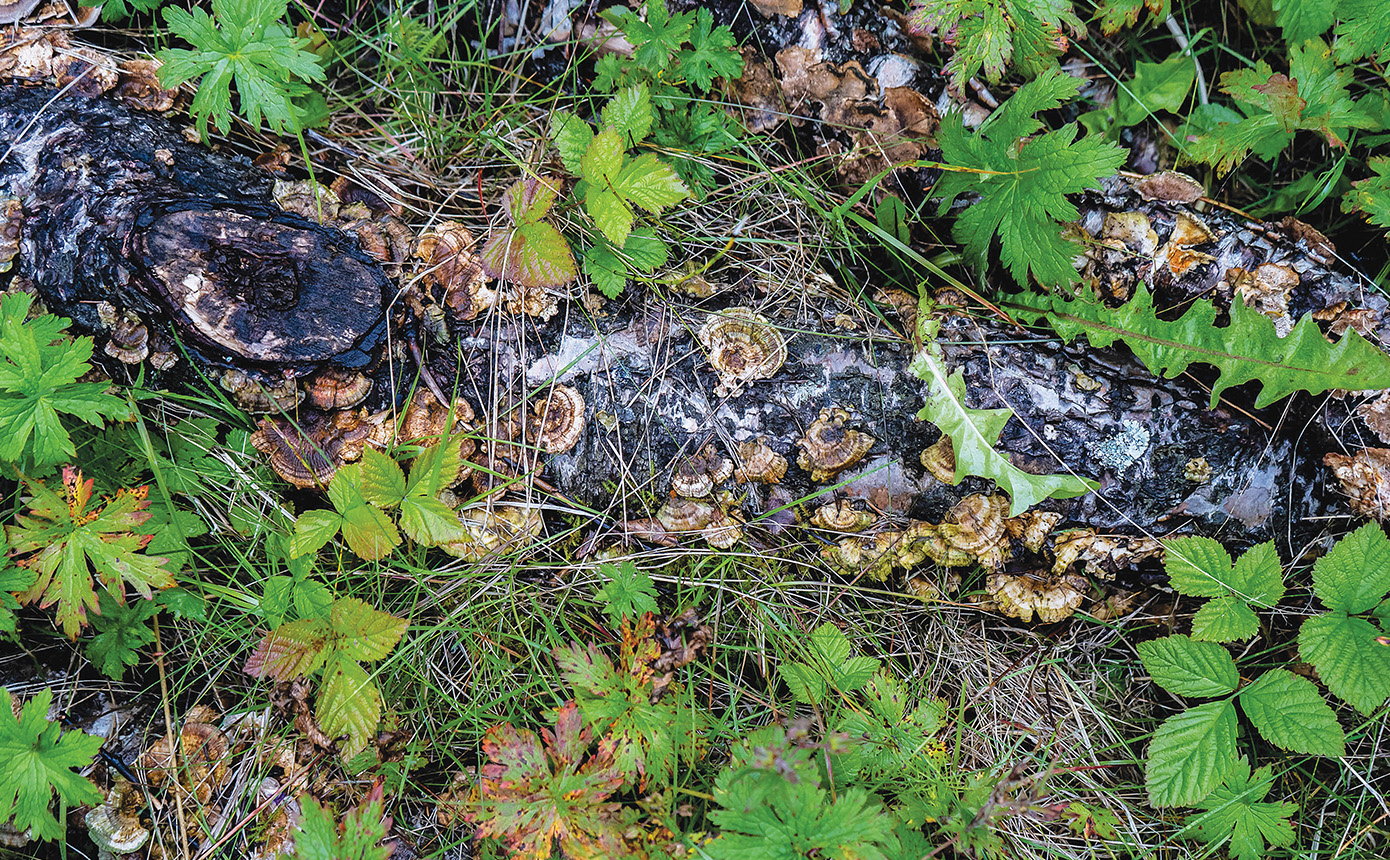
A joke known to most Icelanders is that if you are lost in an Icelandic forest, you just need to stand up. While that is definitely true for most of the country, Hallormsstaðaskógur is one of few exceptions. The air hums with a richness that only comes from an old, thriving forest. Hallormsstaðaskógur is managed by a team of foresters, who allow this forest to go through the natural cycle of decay and regrowth, and the trees vary in age and species. While a lot of it is planted, the forest is a cohesive, rich ecosystem that has stood the test of time.
Similar to Wildwoods, this forest is selectively logged, trees are cut down but the health and continuation of the forest is kept in mind.
Hallormsstaðaskógur shows the potential of Iceland’s damaged soil: how all it needs is nutrients, cover from wind, and a few generations, for it to turn into a thriving forest that echoes the giants on Vancouver Island.
With each seedling planted in the ground, Marísson reclaims more land from the desert – creating the possibility of more Hallormsstaðaskógurs – creating the possibility of Iceland reclaiming its forests.
“And so no one knows exactly where we’re gonna end up with all this,” says Marísson, standing in his field of shoulder-high birch trees, the volcano Hekla silhouetted behind him. The wind has gone quiet in this future forest.
Marísson refers to how the end goal of reforesting Iceland’s deserts is an unknown idea – it is unknown if these trees will become a park, or logged, or left to their own devices.
“Most of it is just pristine, barren land that we’re experimenting on, seeing what will be possible in the future. I think that it’s important not to close anything off prematurely, because I have no idea in 50 years what will be possible here.”
“That’s something the future generations will hopefully have better ideas on what to do with this land,” explains Marísson, who believes that while there is no clear use for these rewilded lands, the true goal is to give the future generations that decision.
It rings similar to the beliefs of Pritchard and Wildwoods, creating a future forest for the next generations. It rings similar to a Haudenosaunee philosophy, the Seven Generations Teaching, which believes that decisions made today should create a sustainable world for seven generations into the future.
These two drastically different islands, so little in common, and yet they share an inevitable call to save and rewild their forests for the future generations.