02:
HOW URBAN FARMERS GROW
GREEN MINDS
Across urban centres, urban farming is experiencing a surge in popularity. In this article, urban farmers from Toronto and Malmö draw their community to their farming practices through various means such as culturally relevant foods. Through their endeavours, farmers are facilitating an ecological mindset shift within the minds of city inhabitants.
Saba Nazarian’s apartment in Montreal, Canada was growing crowded and humid. His place was starting to look like a rainforest. While his partner had become a bit frustrated by his newfound arrangement, Saba was dedicated to growing his microgreens in his apartment. He would toss them on a fresh salad and enjoy them with a fresh drizzle of olive oil. He had also turned his passion for growing microgreens into a profitable business, supplying 10–15 homes with microgreens. Over a period of a few months, he had been able to pay half his rent this way. His passion became a new way to connect with people.
The community that has come with Saba’s small scale growing operation mimics that of the urban farms across Canada and Sweden. Across the various people we’ve interviewed for our story, this became a theme in their farming practices. People come together around food for this sense of belonging and community. Urban farming is a way for communities to reconnect with the food system.
As a musician and sound engineer, Saba had no prior knowledge of urban farming or how to grow his own food. He came to urban farming due to his frustration with the food system. He started by asking himself the question: Where does my food come from and where is it produced? Through the question, he got a deeper understanding about food production, which led him to the follow up question: What can I do as an individual? Saba found it difficult to find local goods in conventional grocery stores and, as a result, he felt disconnected from the food system. By purchasing the products available in these stores, he felt he was enabling a food system that does not value local produce. “We vote with our wallets,” Saba says. “With every single purchase that we, as consumers, make, whether that’s clothes or food that we buy, I think in one way or another we vote for how we want the future to be shaped.”
Processes of industrialization have caused city people to be far removed from the production of our food. According to a 2019 report from the Canadian Centre for Food Integrity, “a large proportion (91%) of Canadians claim they know little, very little or nothing about modern farming practices.” The average Canadian knows very little about how the food they consume has gotten from the farm to their plate. People don’t know where their food comes from.
Saba suddenly ran out of space in his apartment due to the microgreens he started growing while also supplying them to his friends and neighbours. He got inspired by the possibilities and started to teach others how to grow their own microgreens. “I wanted to pass on the knowledge and inspire others to have a bigger impact.” This passion burgeoned into a desire to immerse himself in urban farming at various farms in Canada. He says, “I had the privilege to be mentored by Jean-Martin Fortier and Curtis Stone, two of the most iconic organic growers in Canada who have inspired hundreds of young entrepreneurs to start their own farms and that experience has led me to where I am now.”
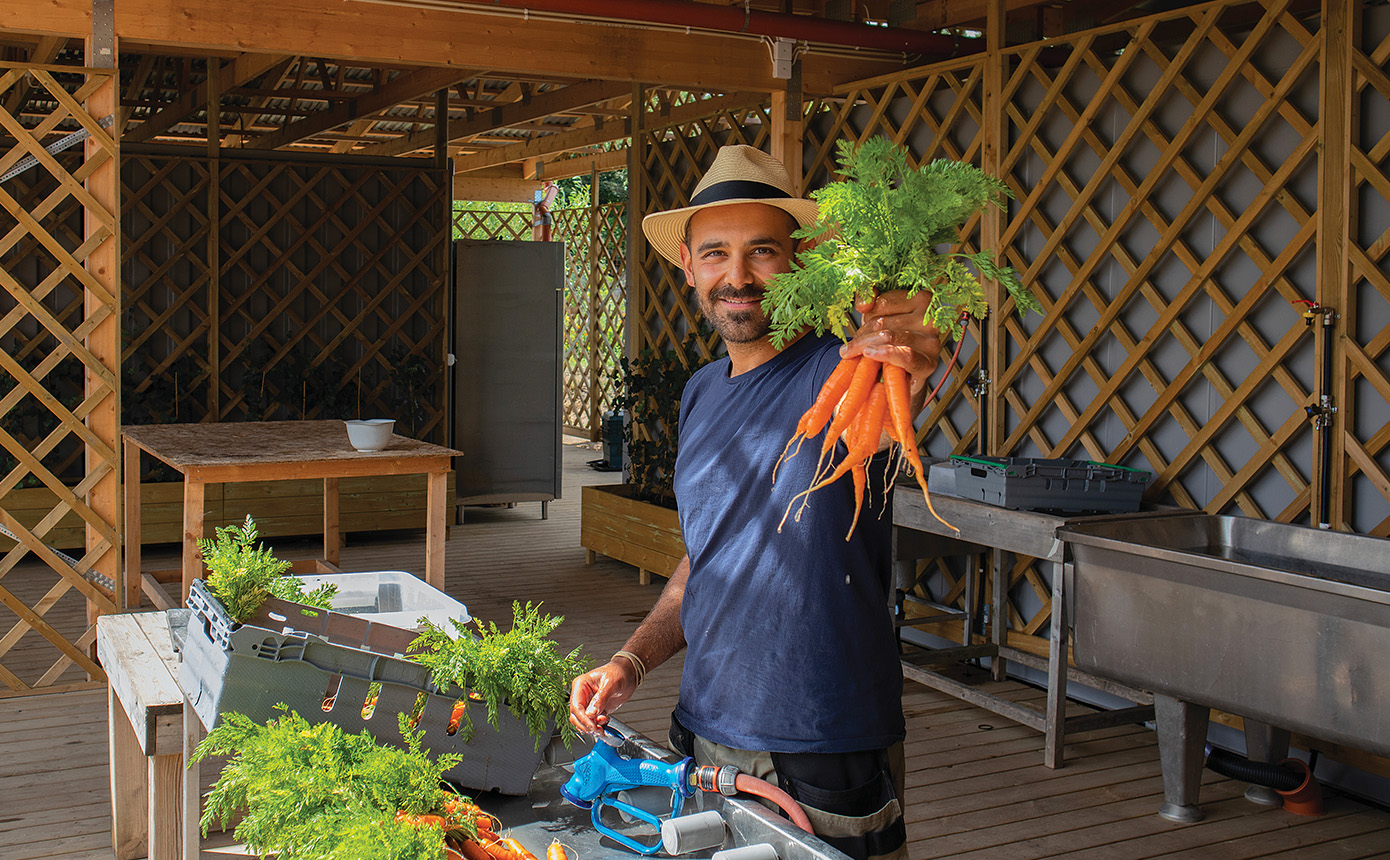
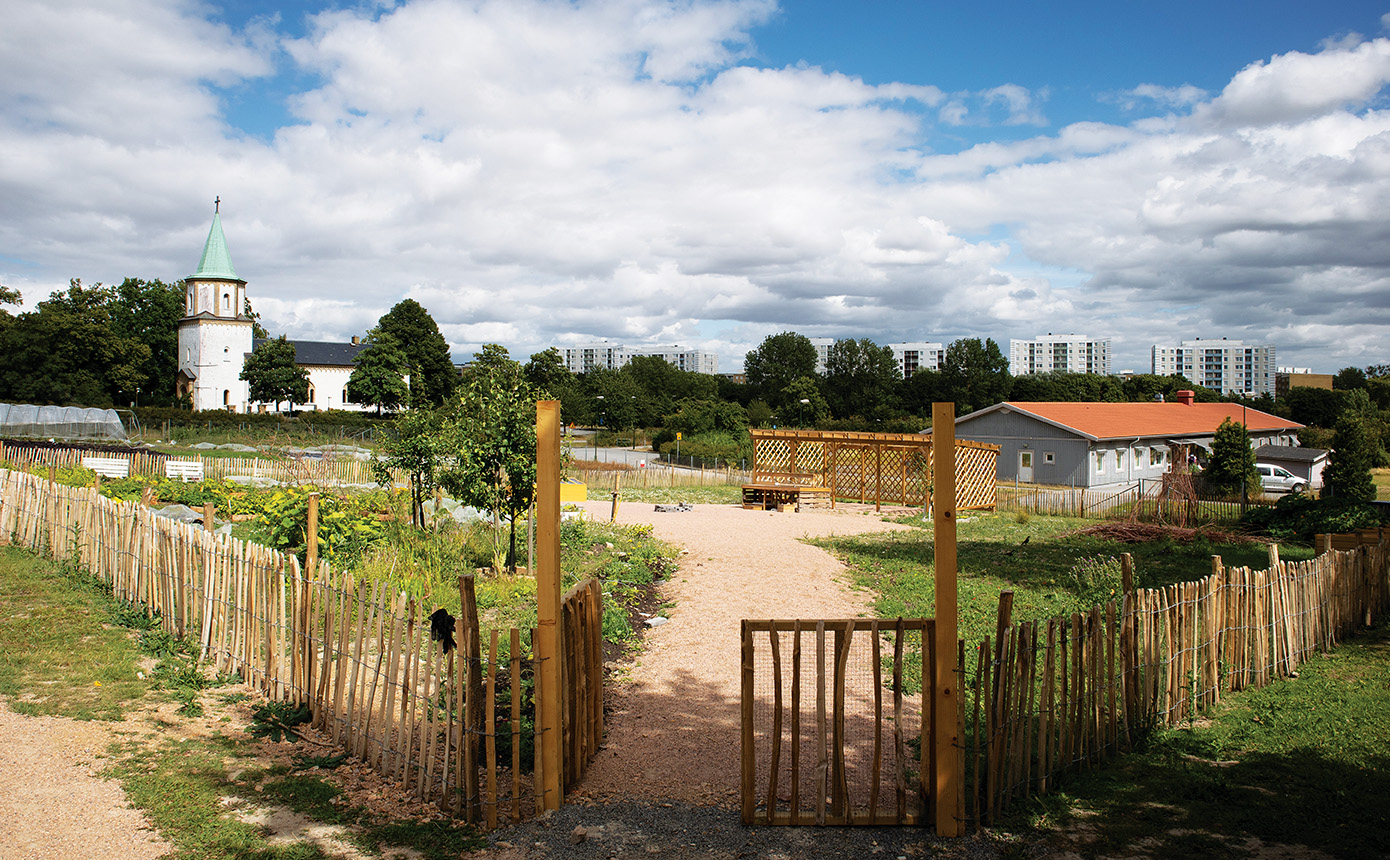
Eventually, Saba travelled to Scandinavia with the hope of finding food producers and entrepreneurs that were doing similar things as his mentors did in Canada. “Food culture doesn’t start in what we eat, it has to start where food is produced in the region,” he says. During his visit, he met the founder of the urban farm and meeting spot, Botildenborg, in Malmö, Sweden. This is where his dream of building up a farm and teaching new farmers began.
While Saba’s journey to urban farming may have been unique, it resonates with the experiences of today’s urban farmers, many of whom do not have a background in agriculture. Urban farming deals with the production of food in urban areas. It can take the form of allotment gardens, rooftop farms, or indoor production. Across Sweden and Canada, the farmers we have interviewed have expressed the newfound popularity urban farming is experiencing in their local areas. In Toronto, this popularity is demonstrated through the City of Toronto endorsing the movement through the “growTO: an urban agriculture action plan for Toronto.” In Sweden, there’s been a surge of interest in urban farming as a way of becoming more self-reliant when it comes to food imports.
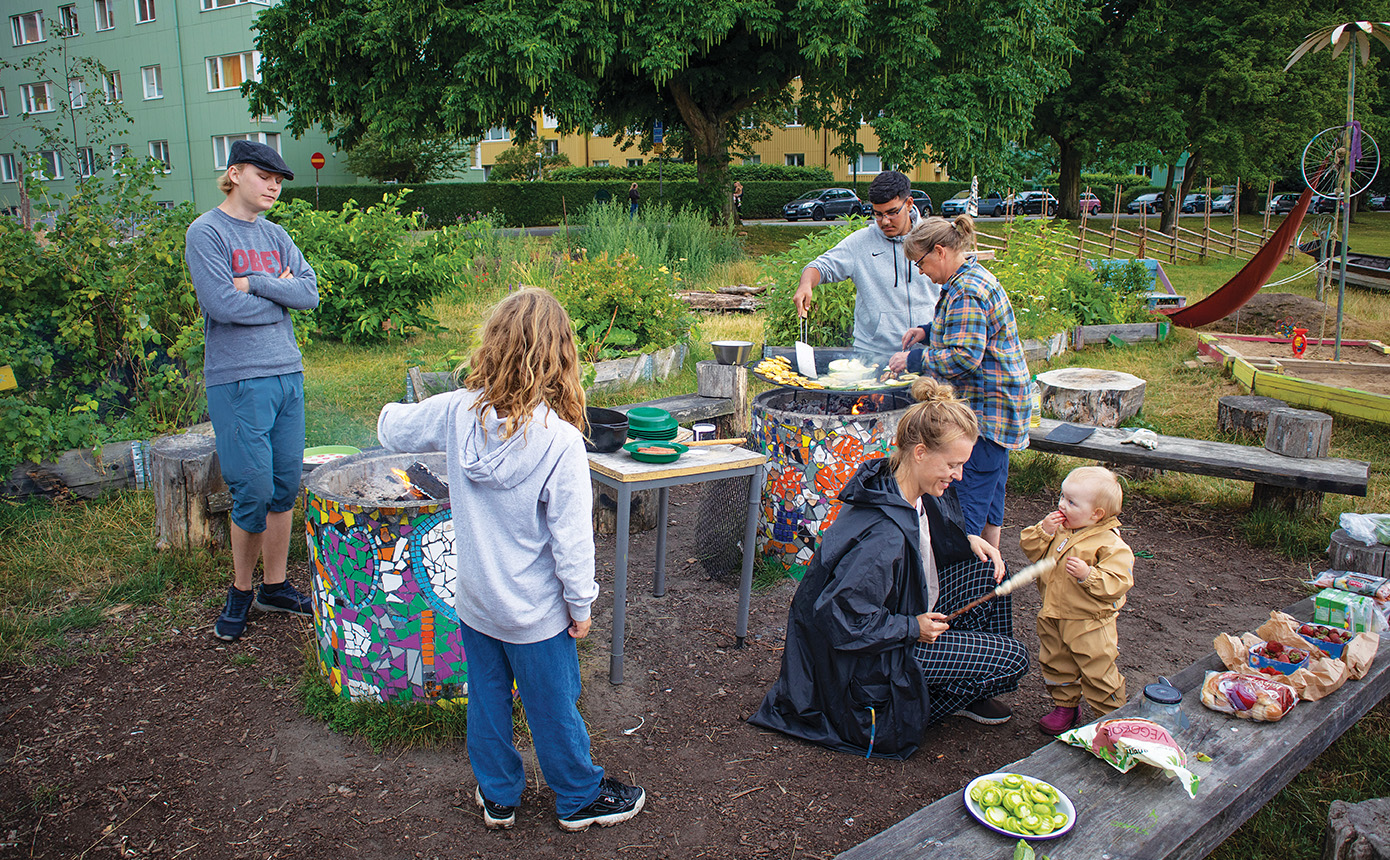
Saba moved to Sweden a couple of years ago thanks to Botildenborg’s Stadsbruk project. He is now the farm director for the commercial farm at Botildenborg, and an educator and mentor at Stadsbruk. The program combines entrepreneurship and small-scale agricultural practices with the mission of increasing the number of local farmers in the region. Botildenborg also has programs such as “Growing Buddies,” where people from different communities are brought together through urban gardening. This is one of the many ways Botildenborg builds community.
Community building is central to the work of urban farmers. Across the ocean, in Toronto’s Downsview Park, Jacqueline Dwyer and Noel Livingston at the Toronto Black Farmers Collective and Growers Collective overcome their own set of challenges to foster a greater community. On a warm August day, Jacqueline and Noel are opening their greenhouse. Due to the heat the previous day, their plants have burned. As Jacqueline walks through the rows of plants, she uncovers more damage. She is exasperated. What she’s experiencing is a warning for what is to come, she says. Jacqueline discusses how inefficient leadership regarding the climate has resulted in a wide range of weather patterns in Toronto summers.
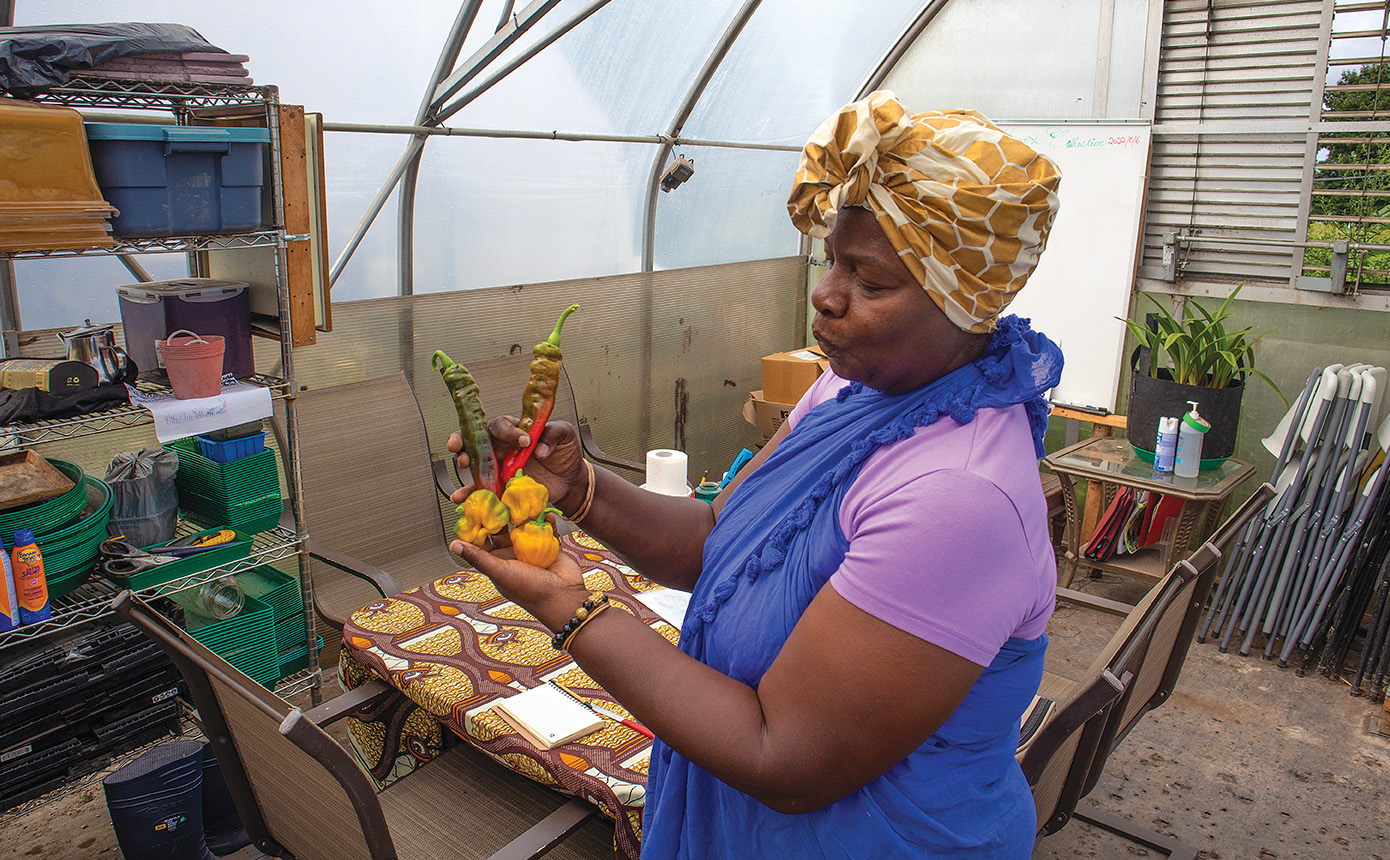
Although the atmosphere is grim, this doesn’t stop her from excitedly showing us how large her peppers grew. Foods that are culturally relevant to Black people, such as scotch bonnet peppers, are central to their farming practice. Apart from those peppers, they grow other culturally relevant foods such as okra and amaranth. Cultural relevance goes beyond creating comfort dishes.
Although the atmosphere is grim, this doesn’t stop her from excitedly showing us how large her peppers grew. Foods that are culturally relevant to Black people, such as scotch bonnet peppers, are central to their farming practice. Apart from those peppers, they grow other culturally relevant foods such as okra and amaranth. Cultural relevance goes beyond creating comfort dishes.
Jacqueline explains that racialized individuals are disproportionately more likely to be food insecure in the city of Toronto. “We see through an upfront lens that all people are food insecure and food poor,” says Jacqueline. Poverty, low-income, and lack of affordable housing are all issues that contribute to food insecurity.
Urban farming that centres culturally relevant foods makes food more accessible to the city’s marginalized groups. In her own experience, Jacqueline has realized that the Black community in her corner of Toronto is disenfranchised from Toronto’s food system. The statistics prove to her the realities she interacts with. According to the City of Toronto’s Black Food Sovereignty Plan, “28.4 percent of Black households are food insecure.” This is especially relevant within the context of Downsview Park, where 9–17 percent of the population is Black. Jacqueline and Noel’s focus on food insecurity is in line with the Black Sovereignty Food Plan as they help to create systems “centred on the decision-making power of people to define how to access their culturally appropriate foods.”
Jacqueline and Noel are attempting to be the solution to the problem of food insecurity by democratizing access by donating part of their produce while also selling it at the Afro-Caribbean Farmers’ Market. Jacqueline and Noel’s approach emphasizes encouraging people to see the value of fresh local foods. “When people come to our farm, we don’t ask them if they’re hungry. We give food. Whatever we have, we share.” To farmers such as Jacqueline and Noel, building community and building stronger food systems are done cooperatively.
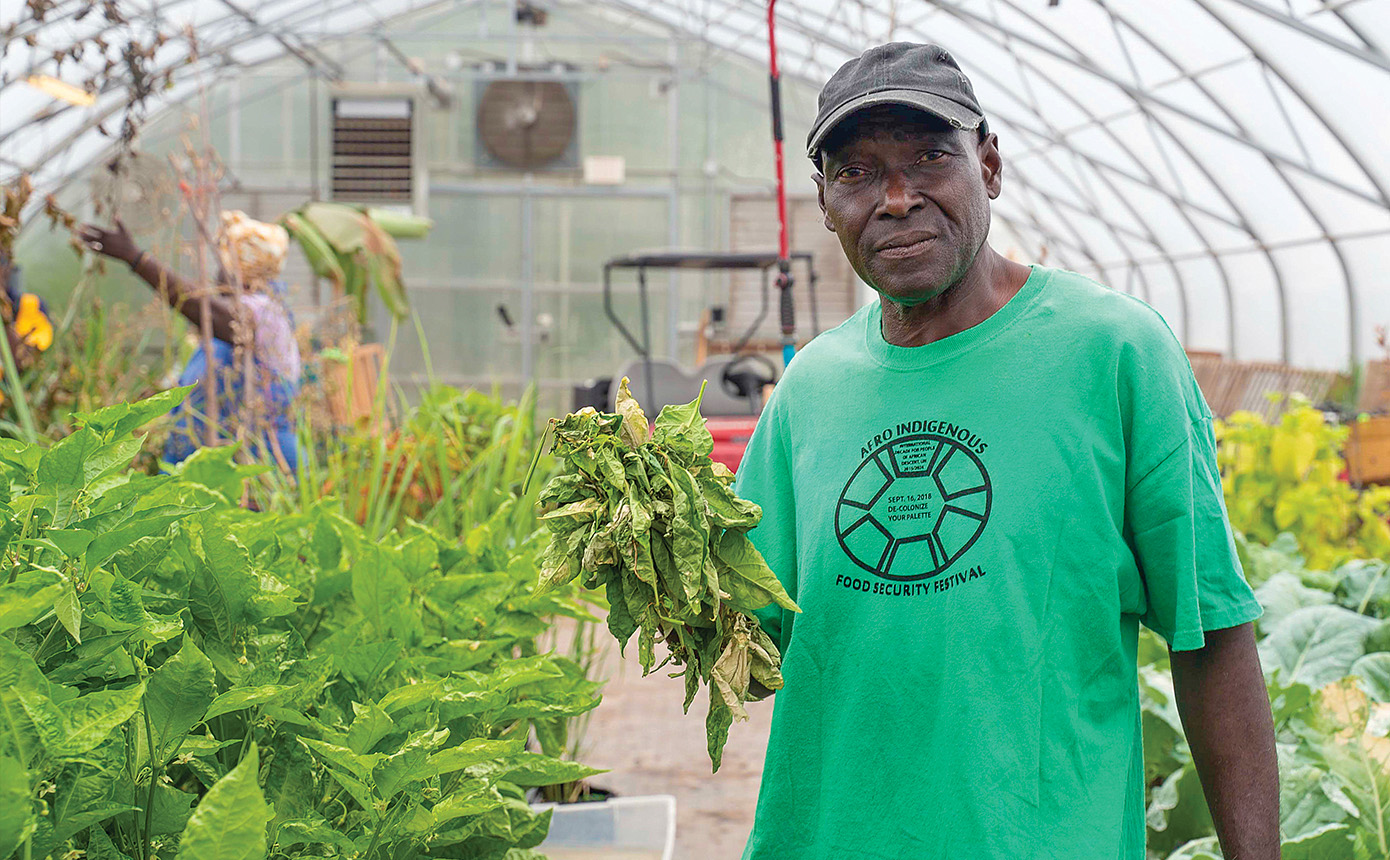
The future of solving food insecurity may heavily involve urban farming. This hope is embodied by Toronto City Councillor James Pasternak. He says groups like the Black Farmers Collective “can grow the fruits and vegetables relatively cheaply. They can get it to market very cheaply, and they take it where there’s a need. They have that flexibility that many agricultural corporations don’t have.”
Combating food insecurity is one way that urban farming builds community. Other organizations such as Växtvärket in Malmö, Sweden, focus on combining spaces of interaction with urban farming. Nicolas Keller is a project manager at Växtvärket. His association seeks to create green meeting spaces. He sees urban farming as a way of reconnecting with the nature around us. He says “gardening is an important element of this because it allows for physical creation. You can actually transform the space by gardening. In doing so, you influence the space that you’re inhabiting.” According to Nicolas, this physical intervention of space leads to a change in mindset. It’s about using one’s thoughts to create a “green space which they would like to interact with themselves. People will get used to them, and then start thinking in a way that becomes sustainable.”
By getting on the ground and farming, people are more likely to act in a climate conscious way because they have a point of reference. In this way, urban farming is an entry point for city inhabitants to develop a sharpened sensitivity to the Earth.
The social benefits of urban farms are often initiatives that get funded on a project basis and it could therefore be a risk that the operation will cease when the project period ends. For this reason, it could be difficult to sustain an urban farm economically or get people interested to invest in an urban farm. If urban farms are only utilized by beginners, a lack of experience can have consequences such as: a higher risk of nutrient leaks and ground pollution, the space could look untidy, or attract rodents to the area. Beyond this, Canada and Sweden both have short growing seasons. This inhibits the production of food all year round. Land and infrastructure are also factors preventing the spread of urban farms. While Malmö has potential farmland available, Toronto’s real estate is not in the same condition. For urban planners, it comes down to utilising the green spaces already available in the city. “We’re not going to buy a vacant lot at, you know, Yonge and Bloor at $10 million an acre to plant,” says Councillor Pasternak. “That’s not realistic. What is realistic is using our parks.”
In addition to using parks for additional space, rooftops are becoming an important source of space for the creation of urban farms. This is the case with the Toronto Metropolitan University that has established a rooftop farm in the middle of Downtown Toronto. Apart from building rooftop farms, Jessey Njau from Zawadi Farm in Toronto also emphasizes more rooftop farming in the future of building cities. Currently, we have a lot of what he calls “naked buildings.” He says “there’s no reason why we should have naked buildings, I call them naked because they are just buildings, dress them up. I’m part of a group that is trying to bring rooftop farming to literally all condos, on any factory we can create a farm.”
While Saba is cleaning the carrots he just harvested in Botildensborg’s commercial garden for the local restaurants, he is also thinking about the future of urban farming. He believes that more municipal and governmental support is needed to not only make more land accessible to young entrepreneurs but also help them financially kickstart their small-scale farming enterprises. In the future, Saba predicts that the next big thing is going to be agrihoods popping up in and around major cities. He defines them as “a neighbourhood that is fed and nurtured by a small scale farm.
Ultimately, imagining a different future and being an agent in that change comes down to engaging in your local community. Sometimes, there’s much discussion about sustainability but a lack of action to pair with that ambition. In fact, Saba says he’s “allergic to the word sustainability and its misuse.” He adds, “students who have joined the internship program on Botildenborg’s farm often say that they sit through university classes, and study what sustainability is without taking any actions. Unfortunately there is a lot of green-washing happening around companies that ‘speak’ of sustainability goals whereas in practice they take little to no action adopting any sustainable practices.”
He views sustainability as something more than a marketing ploy, a true call to action. With conviction, he adds, “If you want to do something that’s going to work towards sustainability, you really need to pick up something, roll up your sleeves, get on your knees and do it. Find a problem that you can be part of the solution and be the change.”