01:
THE CLIMATE CHANGE PARADOX GREENLAND’S FISHERS ARE FACING
An island of just over 56,000 is at the forefront of the impacts of climate change but how does it reconcile the harms to come with the prospect of economic growth?
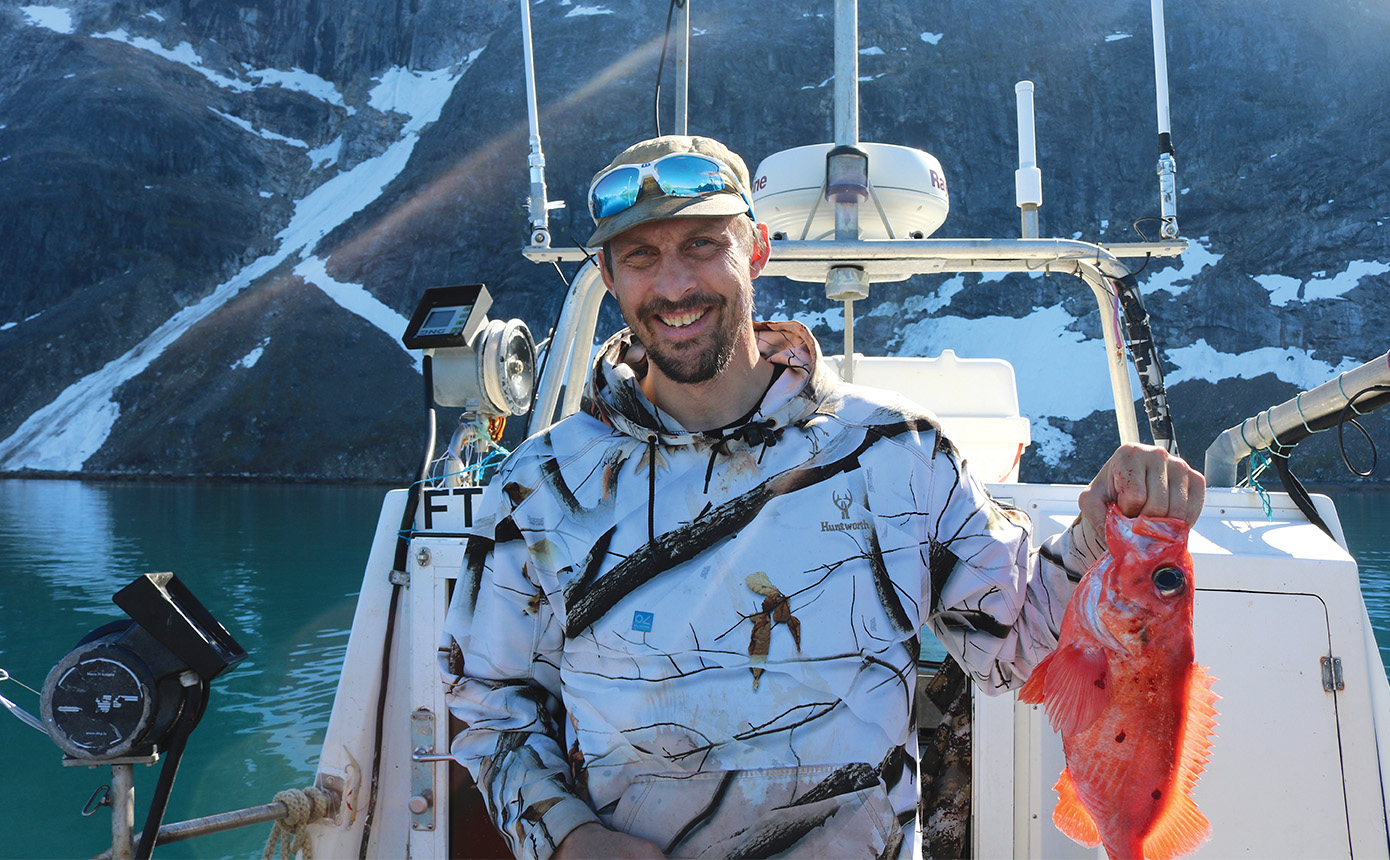
Aslak Wilhelm Jensen’s boat is messy from the successful reindeer hunting trip he has just returned from. He apologizes for the blood soaked into his camouflage hoodie and pooled at the bottom of his boat. Jensen quickly offers a taste of the raw reindeer fat he is saving to put in his coffee in lieu of cream.
Jensen has built an identity through his boat, something he has in common with many Greenlanders. He agreed to meet and sail into the Nuuk fjord to talk about the challenges the fishing industry in Greenland faces.
He talks about climate change’s impact on sailing routes, but also the cultural importance of small fishermen and how they are struggling. These small fishermen are facing inequity emphasized by climate change. Many are worried how this will affect Greenland’s culture and traditions.
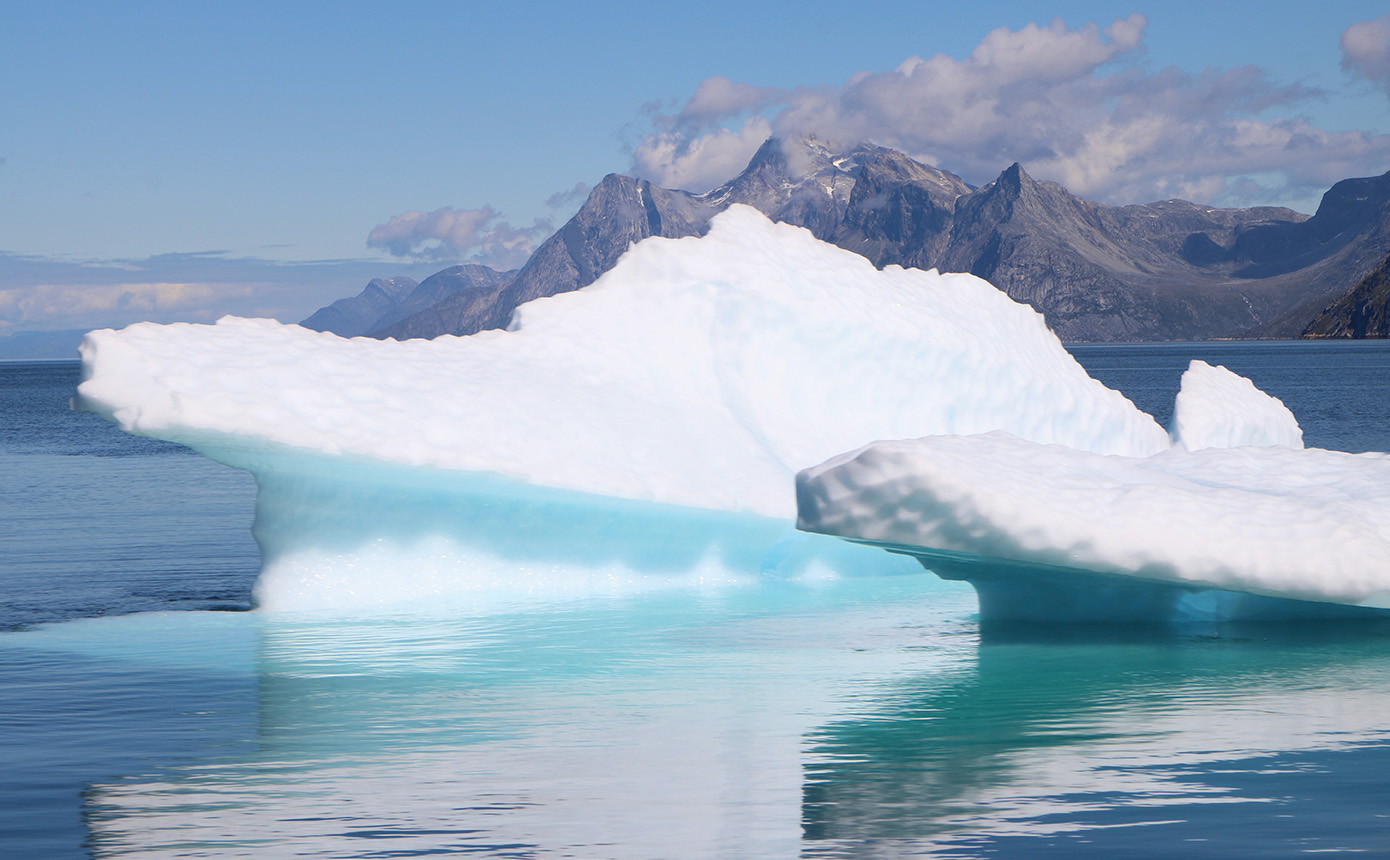
Exiting the harbour, there are few icebergs. This is partly because it is summer in Nuuk, but also reflects the impacts climate change is having on this area. Usually there are many more giant masses of ice floating around Nuuk, but higher temperatures and warming waters have changed this.
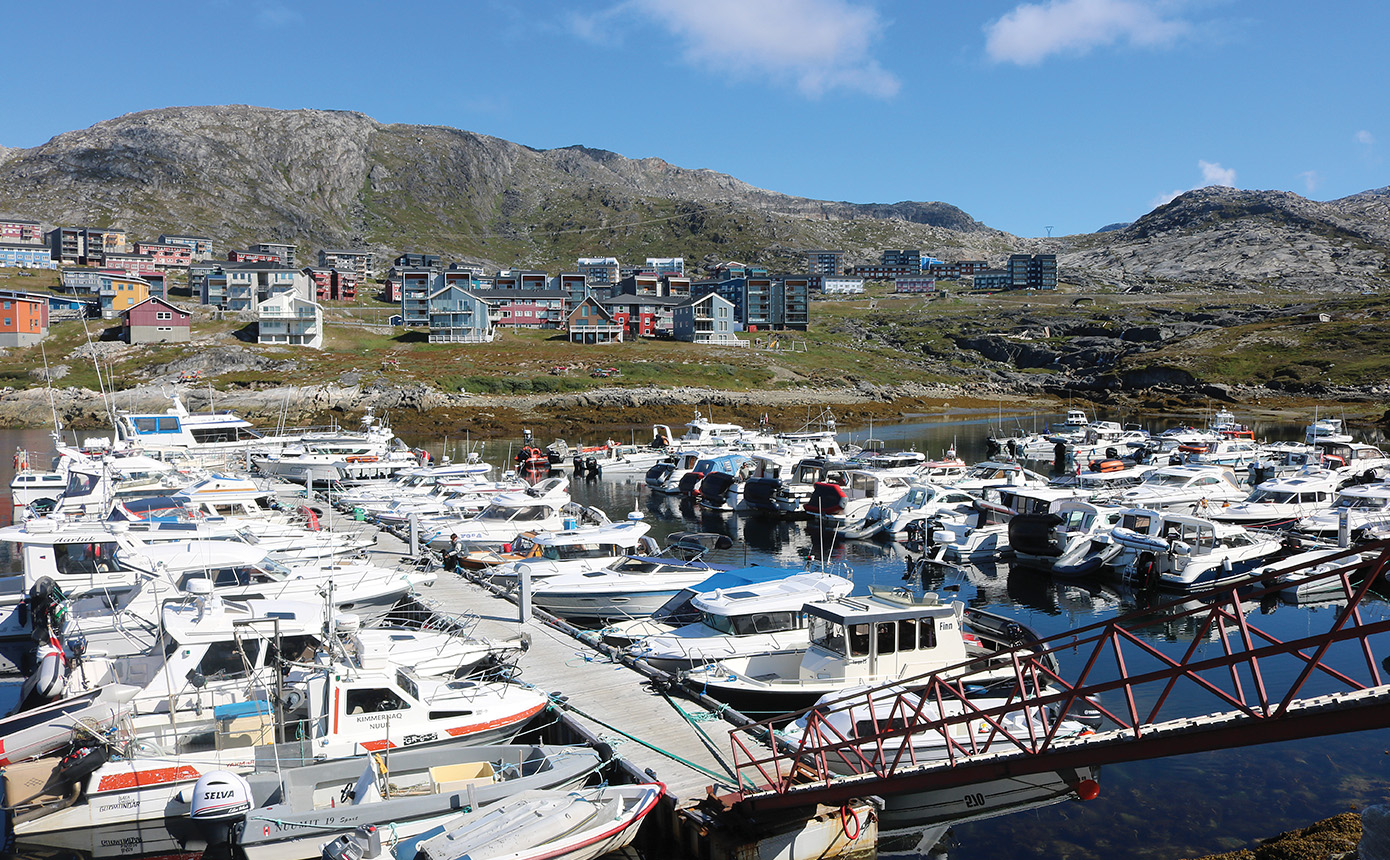
Greenland has a natural landscape not unlike that of the Canadian North. It is remote and ecologically diverse. The city of Nuuk is built around a central harbour filled with commercial fishing companies alongside independent fishermen and their boats.
Greenland has a natural landscape not unlike that of the Canadian North. It is remote and ecologically diverse. The city of Nuuk is built around a central harbour filled with commercial fishing companies alongside independent fishermen and their boats.

The locals explain that the symbol of Nuuk is the Ukkusissat mountain, a peak that can be seen from many points in Nuuk. They have a saying that you can only consider yourself a local if you have climbed Ukkusissat.
Greenland is financially supported by Denmark, but is still considered self-governing. The country maintains a level of independence by exporting fish to Denmark, where their catch is sold at a higher rate.
Nuuk is a resource and industry town filled with hard working people. Many make a living from hunting and fishing.
Jensen is one of these people. He is a figurehead in his community in Nuuk, the capital of Greenland. He is a self-employed hunter and fisher, known for catching the most lumpsucker eggs in all of Greenland.
Although Danish by blood, he moved to Qasigiannguit, a small town in Northern Greenland, when he was five and speaks the native language. He refers to the Greenlandic people as “us.”
He steers the small boat away from the city of Nuuk, deeper into the fjord and begins fishing. He easily catches several redfish and cod with his equipment. He smokes a cigarette as he guts fish and places them in bags at the bottom of the boat.
“I always wanted to hunt and fish to provide for myself,” Jensen explains in Danish.
Jensen, a member of Parliament for Greenland’s social democratic Siumut party, was encouraged to go into politics because of his knowledge about climate change.
Climate change is becoming a more pressing issue around the world, and many of the effects are impacting our oceans. Sea levels are rising, temperatures are getting warmer and ice is melting. These changes are affecting not only species, but also the economy.
Fishing is a major international industry and climate change will inevitably force changes and challenges to this sector. Greenland’s fishing community already sees these changes.
For Greenland, fishing is vital to their political stability, economy and traditional way of life. The fishing industry is truly at the heart of the island’s identity.
Jensen grew up learning about the strong hunting and fishing lifestyle in Greenland. He was drawn to the idea of providing for his family.
The boat slows down as it approaches an iceberg. The beauty of the crystal blue ocean, surrounded by mountains, makes it easy to understand Jensen’s connection to the water.
“It hasn’t always been easy, but I’ve been able to adjust and to go and fish something else, when different challenges arose.”
“Climate change creates a lot of opportunities here. New species such as herring, flatfish and mackerel are moving up to Greenland because of the warmer water temperatures,” Jensen says.
He explains that Greenland is in a unique position; climate change could create economic opportunity, while also threatening the culture of Greenlanders.
Many fishermen by the Nuuk harbour also confirm this, explaining that new species are coming to Greenland because of the change in water level and temperatures. However, some species, like salmon, are becoming more difficult to find.
Like Jensen, these fishermen must learn to adapt to a changing environment.
A Danish newspaper, Berlingske, reported in 2016 that new species are becoming a bigger factor in the Greenlandic fishing industry.
“When we see the great amounts of mackerel that have been fished by Green-land the last couple of years, it is clear that the fishing industry will become a new business miracle”, Teunis Janen, a scientist with the Greenland Institute of Natural Resources explained in Danish.
As the oceans get warmer, sea life changes, and certain species are at risk of extinction. Conversely, the warmer waters give some fish, like mackerel and tuna, an opportunity to travel further North to places like Greenland.
Although new species present an opportunity for growth in the industry, many fishers say that it is only the large companies who can take advantage of these changes. Jensen says “it’s easy for a big company with a big trawl to adjust, but if a small fisherman wants to go for mackerel, it will cost millions to get the necessary equipment and boat.”
He argues that while climate change is not a good thing for Greenland, there are certain opportunities worth taking advantage of in terms of making them accessible to small fishermen.
However, not all the effects of climate change will have a positive effect on the fishing economy.
“In the southern part of Greenland around Paamiut, glaciers blast out mud on a scale so large that you can’t sail there. You can already see it in some places, but it’s not everywhere yet. It is a great concern of mine that this mud will affect the sailing routes,” Jensen says.
“We need these routes. Our country is built on being able to sail by the coast,” he adds.
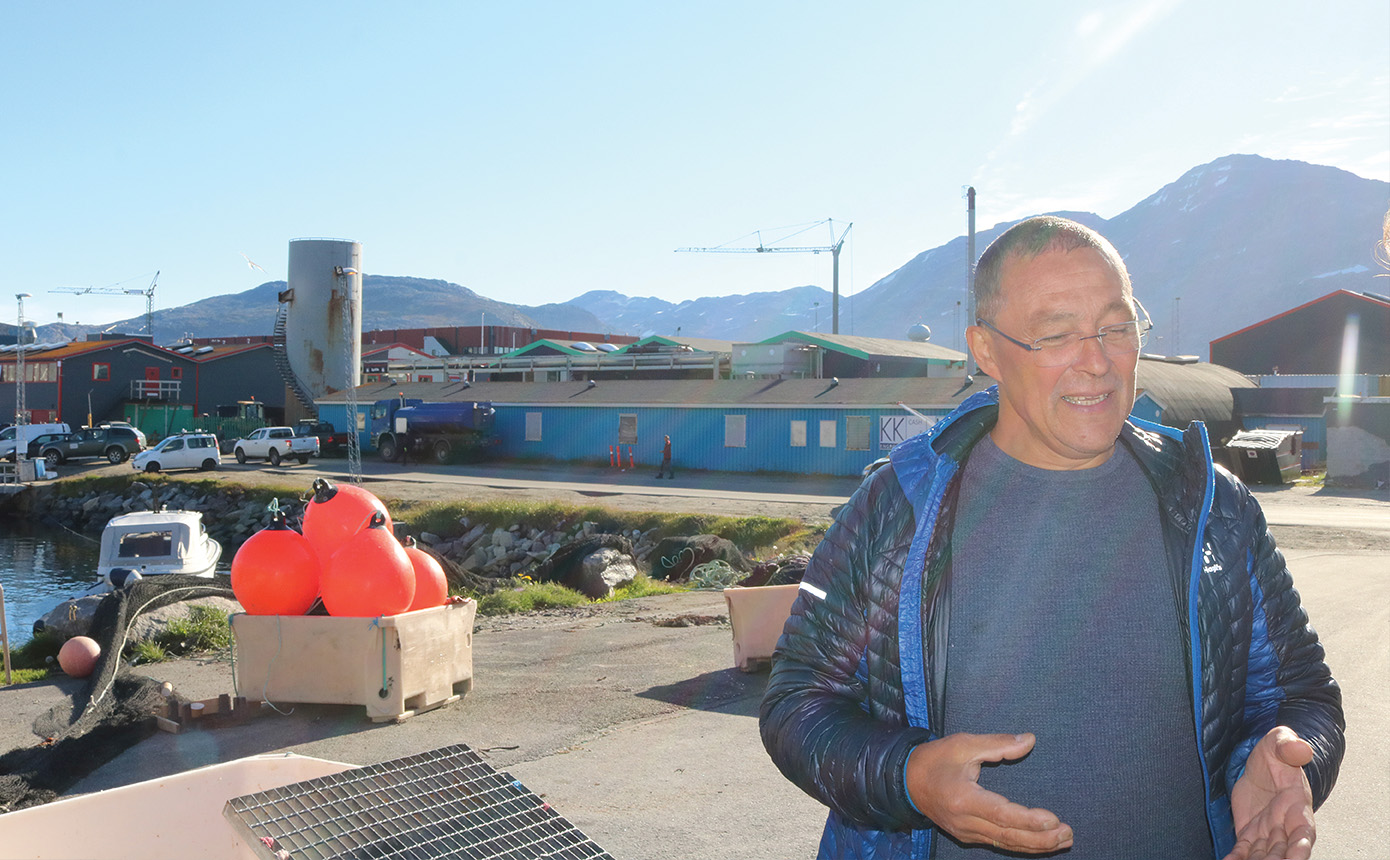
Another local, Peter Davidsen, is well known in the fishing community and with the independent fishermen by the Nuuk harbor. He echoes much of what Jensen says about climate change only benefiting the larger fishing companies.
As he walks along the dock, Davidsen says that the Nuuk harbor is not built to service small fishermen. Unlike bigger companies, small fishermen do not have access to the latest fishing technology, nor do they have the number of employees to keep up with maintenance requirements.
He walks towards a small warehouse that looks more like a garage. It is full of men preparing fish. They listen to music as they gut fish, prepare bait and repair fishing equipment. These are some of the independent fishermen that Davidsen is speaking about. “If a small fisherman has to spend three days cleaning his fishing net, he easily loses 90.000 Kroner (or $16,500 CAD),” Davidson says in Danish. Adding that these fishers “do not have the necessary tools by the harbour.”
“The wharf in Nuuk is built to service the bigger companies and to service the whole country, which the smaller fishermen suffer from,” he adds.
Davidsen says that many of these people are losing money by spending time trying to maintain old equipment. The fishers rely entirely on the fish they can sell, so when they are not out catching fish, they are losing money.
Similarly, Davidsen points to the inequity in mackerel quotas.
He explains that in 2022, only large companies have been given quotas on mackerel. This prevents independent fishermen from legally fishing and selling fish. While there may be certain benefits to climate change, Davidsen fears a changing climate may leave independent fishermen behind.
While this means that Greenland’s economy could benefit from climate change, their culture may suffer.
The fishing industry seems to be facing a paradox when it comes to climate change.
Davidsen points out that it is vital to consider the cultural importance of these independent fishers.
He explains that fishing has a “huge cultural impact”, and that many families have been doing this for a long time. For them, fishing and providing for their families fosters a sense of pride.
“There is a whole lot of identity for a small fisherman to be on the boat in nature. It is a very difficult thing to explain. It is just part of the Greenlandic culture. It would be a shame if we didn’t have a place for them anymore, and instead they would need to work in a big fishing factory,” Davidsen says.
Although smaller fishermen may feel like they are being left behind, this could be an unavoidable consequense of a changing world.
Kuupik Kleist, former Prime Minister of Greenland (2009-2013), explains that climate change is happening quickly, and Greenland must adapt.
“Climate change definitely has some consequences and is affecting everything in Greenland,” Kleist says adding that the “Arctic has become real hot,” and there is no prediction for what the future could bring.
He explains that the frustration small fishermen feel is nothing new.
“That’s the way it always has been…small fishermen fighting the big ones.”
“That’s the way it always has been…small fishermen fighting the big ones.”
He says that the government has been giving out licenses and quotas to small fishermen that exceed the amounts encouraged by Greenland’s Institute for Natural Resources.
This has created an environment of “overcrowding,” where the fishers are all “fighting for the same quotas,” he says.
“The licenses for small fishers is far too many.”
Kleist explains that while it is easy to view big companies like Royal Greenland as working against independent fishers, these companies do provide resources for the country.
“Of course big companies have responsibilities, but they provide services for small fishermen,” he says, adding that Royal Greenland has lent money to independent fishermen to help purchase equipment.
The bigger problem, Kleist explains, is that fishing is not sustainable.
“Talking about sustainable fisheries is almost impossible,” he says.
While it is essentially the only source of income for Greenland, Kleist says the country must diversify the economy, and quickly.
The amount of fishing is not sustainable. He explains that it is also not sufficient for an economy to only have one resource.
Kleist says that Greenlandic culture “must be protected,” but that they need to continue to modernize and look at diversifying into sustainable energy and resource extraction.
He explains that the only thing predictable about climate change, is that it is happening, and it will bring changes.
If climate change makes it more difficult to fish and to sell fish, Greenland will lose almost all of its revenue – forcing them to become more reliant on the Danish government.
“I hope that one fine day we will be able to provide for ourselves and be self-sufficient. If fishing becomes harder, it will be impossible to replace the Danish money,” Kleist adds.
However, Paninnguaq Heliman, an Indigenous influencer, actor, and director warns that diversification may be dangerous.
She speaks about how much of Greenland’s culture has been erased by the Danish government.
“Growing up, I was taught that being Greenlandic was shameful,” Heliman says. It is only recently that she’s begun to take back pride in her culture.
Heliman explains that so much of her country’s traditional culture has been lost through colonialism. She is worried that climate change may erase even more of Greenlanders’ ways of life.
“Diversification is dangerous,” she says, “we have always relied on fishermen.”
She explains that while she does want more independence from Denmark, that the small fishers are at the heart of Greenland’s culture.
Heliman says that she is scared that diversifying the economy could further threaten her community’s way of life.
The impacts of climate change are not unique to Greenland, but the island is more vulnerable to its consequences. Exploring the ways Greenland may be able to take advantage of global warming could present a new lens for other countries to try to adapt.
As Jensen puts it, “[Greenland does] have the opportunity of benefiting from climate change. And don’t get me wrong that’s not an ideal situation. But it’s not Greenland alone that is going to change the climate, so we might as well take these opportunities and try and make them accessible to small fishermen.”
Climate change is already impacting Greenland and, inevitably, will continue to; a changing climate will affect the island’s coastline, sailing routes and seasonal temperatures.
Climate change could enhance Greenland’s economy and enable them to phase out Danish funding. The question of preserving traditional culture, however, remains difficult. Greenland must find a way to protect its rich culture, while continuing to modernize the economy to take advantage of the opportunities climate change is creating.