07:
REFLECTIONS FROM ATTU:
FIVE DAYS WITH MR. AKATU JAKOBSEN ON THE WEST COAST OF GREENLAND
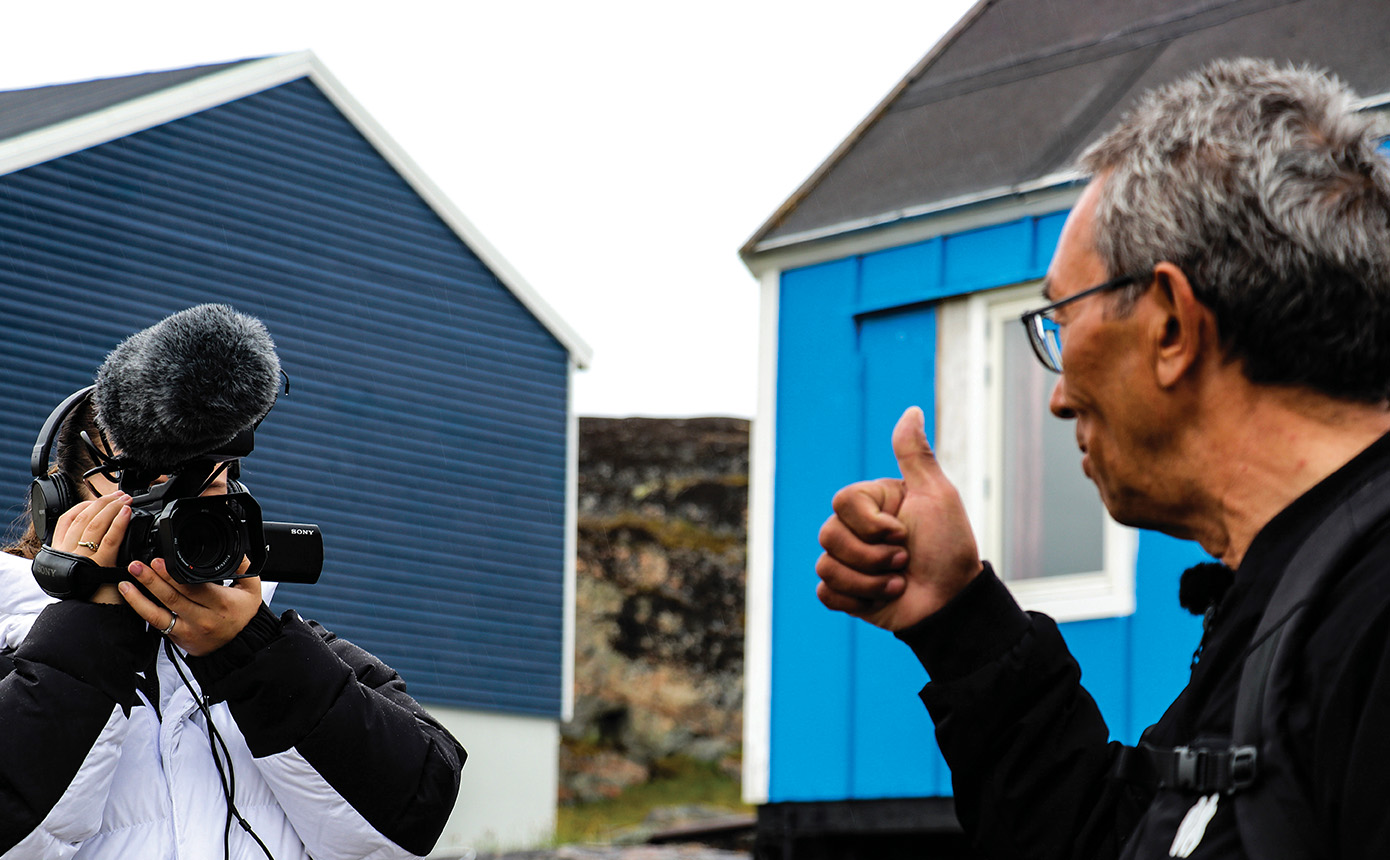
We reached out to Mr. Akatu Jakobsen very early on in our research for the Nordic-Canadian Fellowship in Environmental Journalism.
Almost a year before we actually met him in-person, he hopped on a Zoom call with us to explain what the PISUNA project really is and why it’s important to the livelihoods of those in Attu.
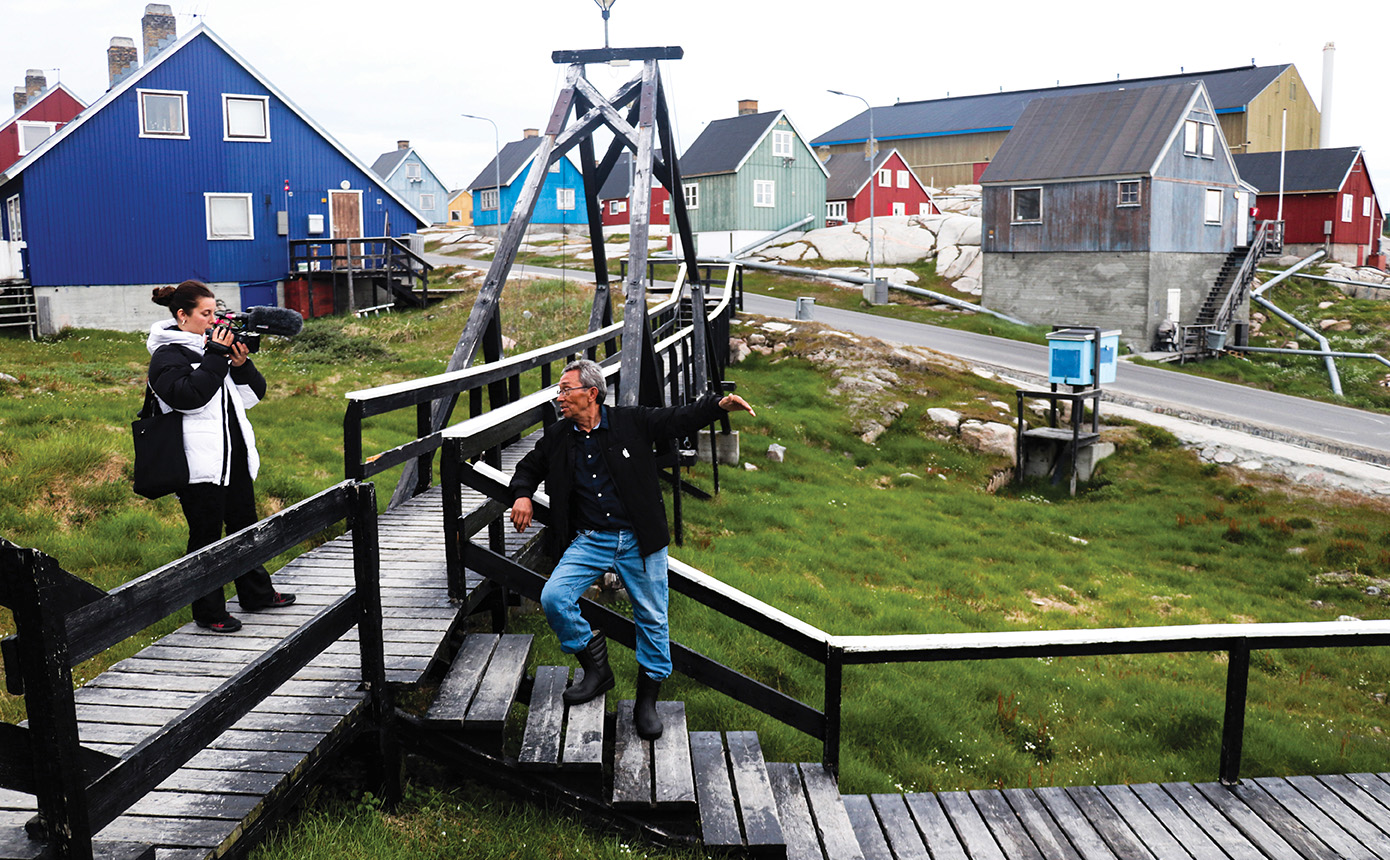
This photo is from our first day in the community. With a mic and camera following him around, Mr. Jakobsen showed us important landmarks like the fish factory and church, and introduced us to community members like the bishop.
Our experience throughout the project and especially on that first day showed us that journalists are always relying on the kindness and generosity of their sources, and that sometimes you get lucky when a person trusts you to share their life and their story.
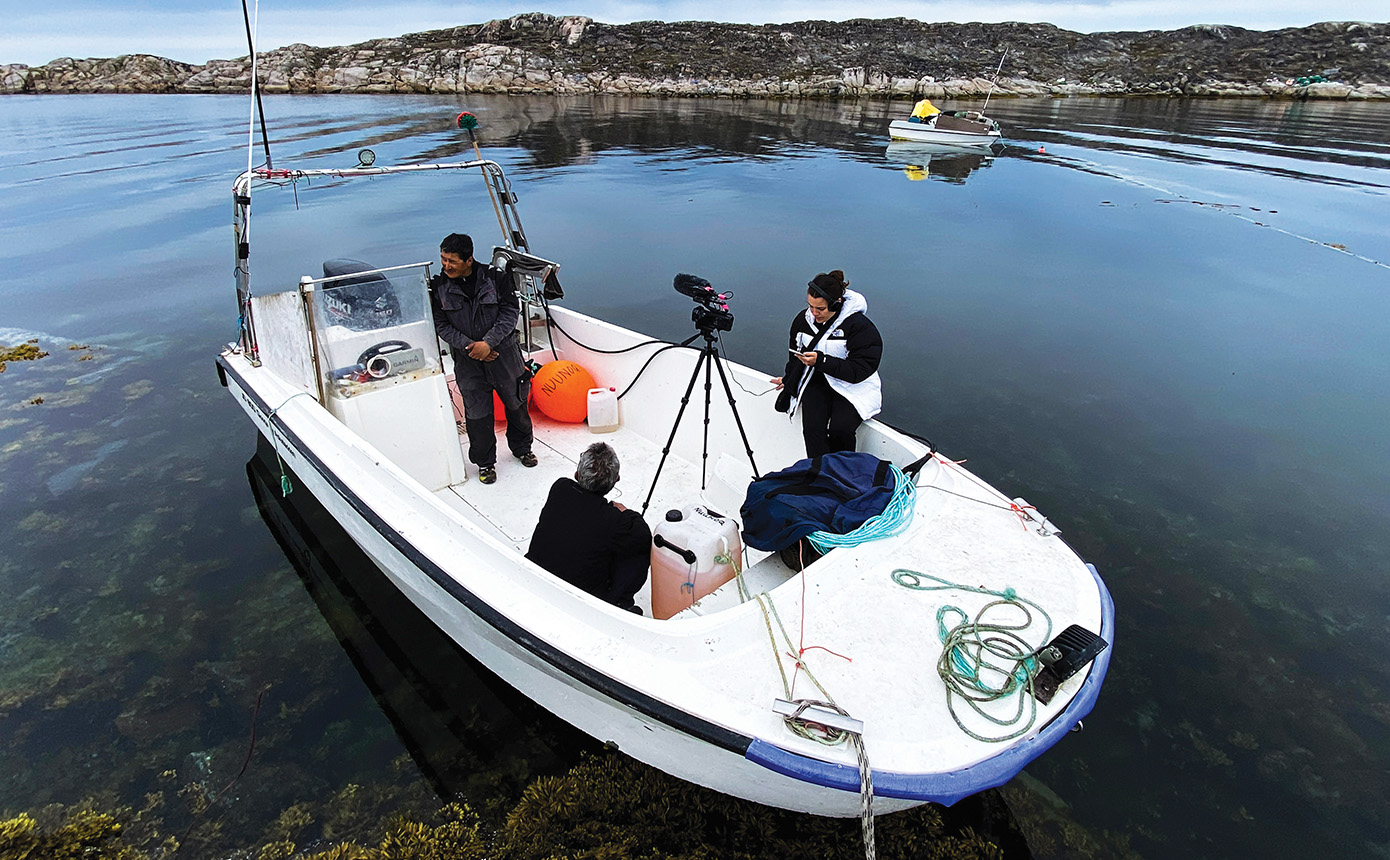
Mr. Jakobsen was our saviour in these moments, crouched beside us the way he is on the boat, translating everything from Greenlandic to Danish to sometimes English for us to understand.
We were so aware that we were the outsiders in this community, not speaking the language and not knowing enough about the culture. But Mr. Jakobsen was there with us every step of the way, guiding our work through translations and introducing us to the Greenlandic culture in a myriad of ways.
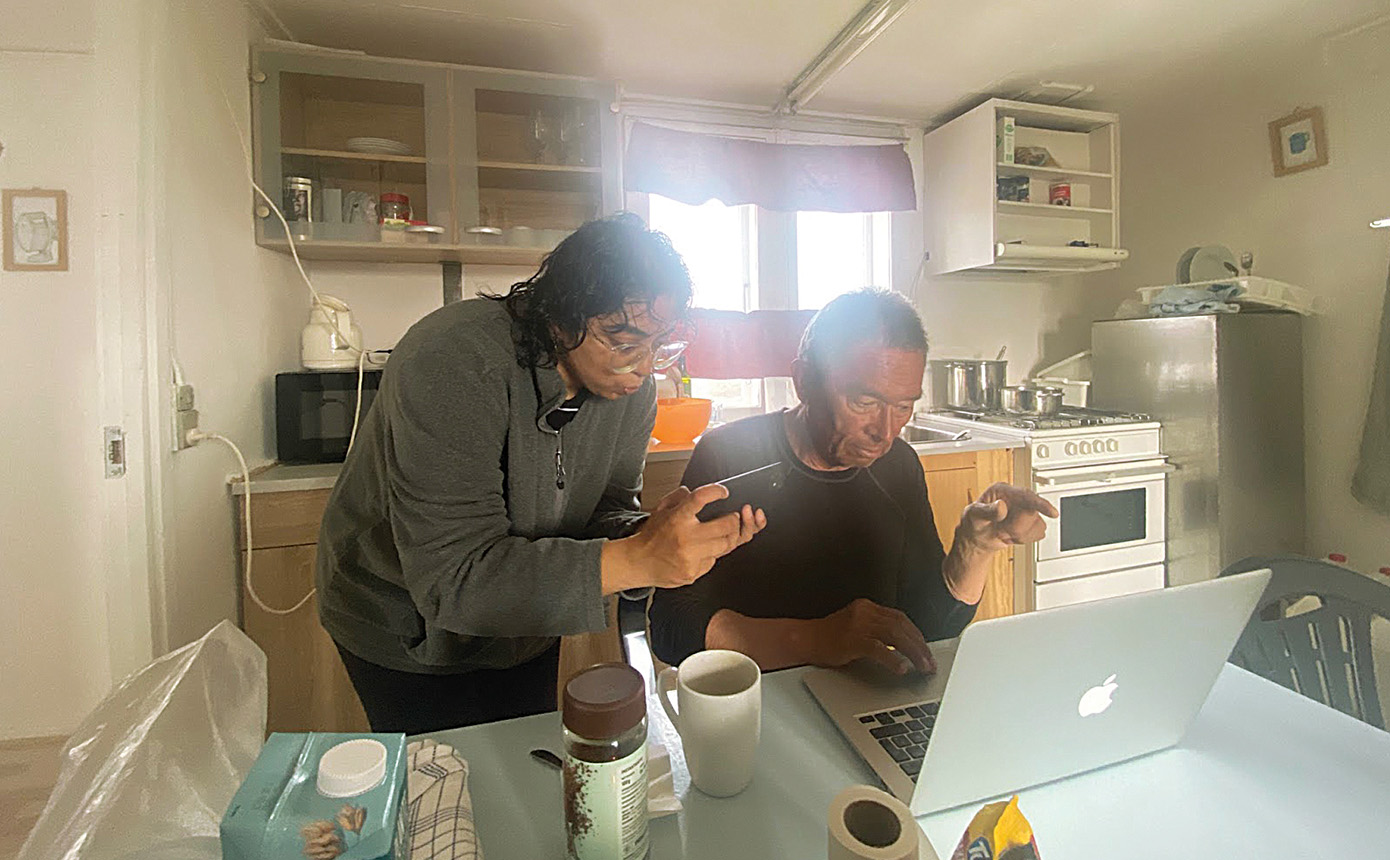
Initially, it was a little scary. As young journalists from completely different cultures and with more than a 40-year age difference between us and Mr. Jakobsen, we were a little awkward and often wondered how to even hold conversations.
But over time, we got comfortable. Living together provided us with so much access to Mr. Jakobsen. We were able to learn much about his personal life and who he is as a father and husband and Inuk.
We enjoyed dinner together every evening. We introduced Mr. Jakobsen to ramen and frozen pizza. We couldn’t carry much food and snacks for our trip because most of our luggage included camera equipment.
Mr. Jakobsen gave us far richer meals in return, cooking whale steak and whale soup for us – a first for both.
After most meals, we had a cup of coffee or tea. Sometimes we watched TV together.
We talked about everything. And even though some things got lost in translation,
thankfully laughter is universal.
thankfully laughter is universal.
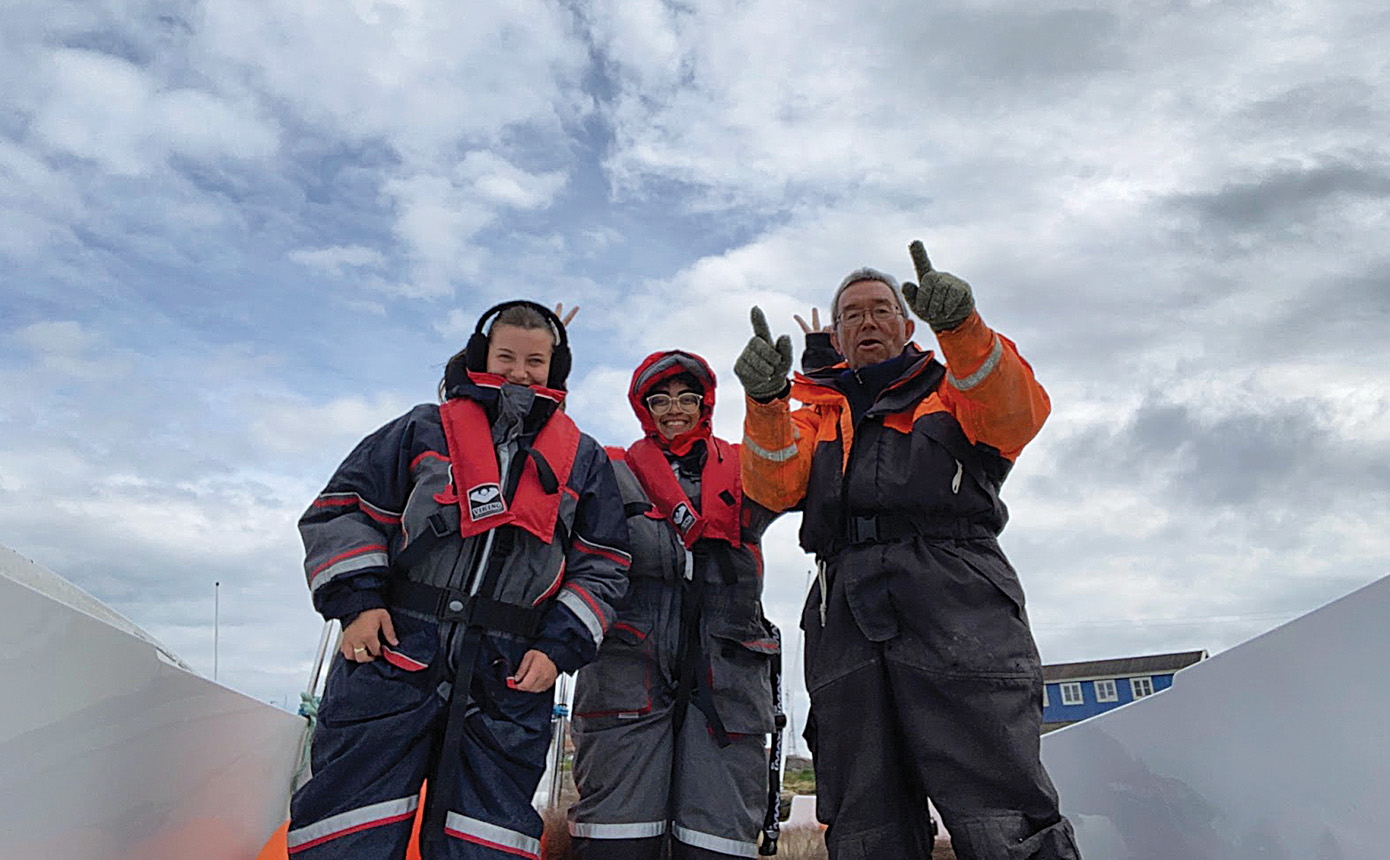
The journey ahead was long and it took us roughly four hours to get back to Mr. Jakobsen’s hometown.
In spite of this distance, it was the most surreal experience being out together on the water because we got to see firsthand what is at stake when it comes to nature and climate change.
We also learned so much about Mr. Jakobsen and his love for his home. This was different from when we sat down to talk and tape interviews because those were more planned, prepared and involved questions we had brainstormed before.
Out on the water, with the winds so loud, there was no talking. It was the silence and Mr. Jakobsen looking out into the distance that told us everything we needed to know.
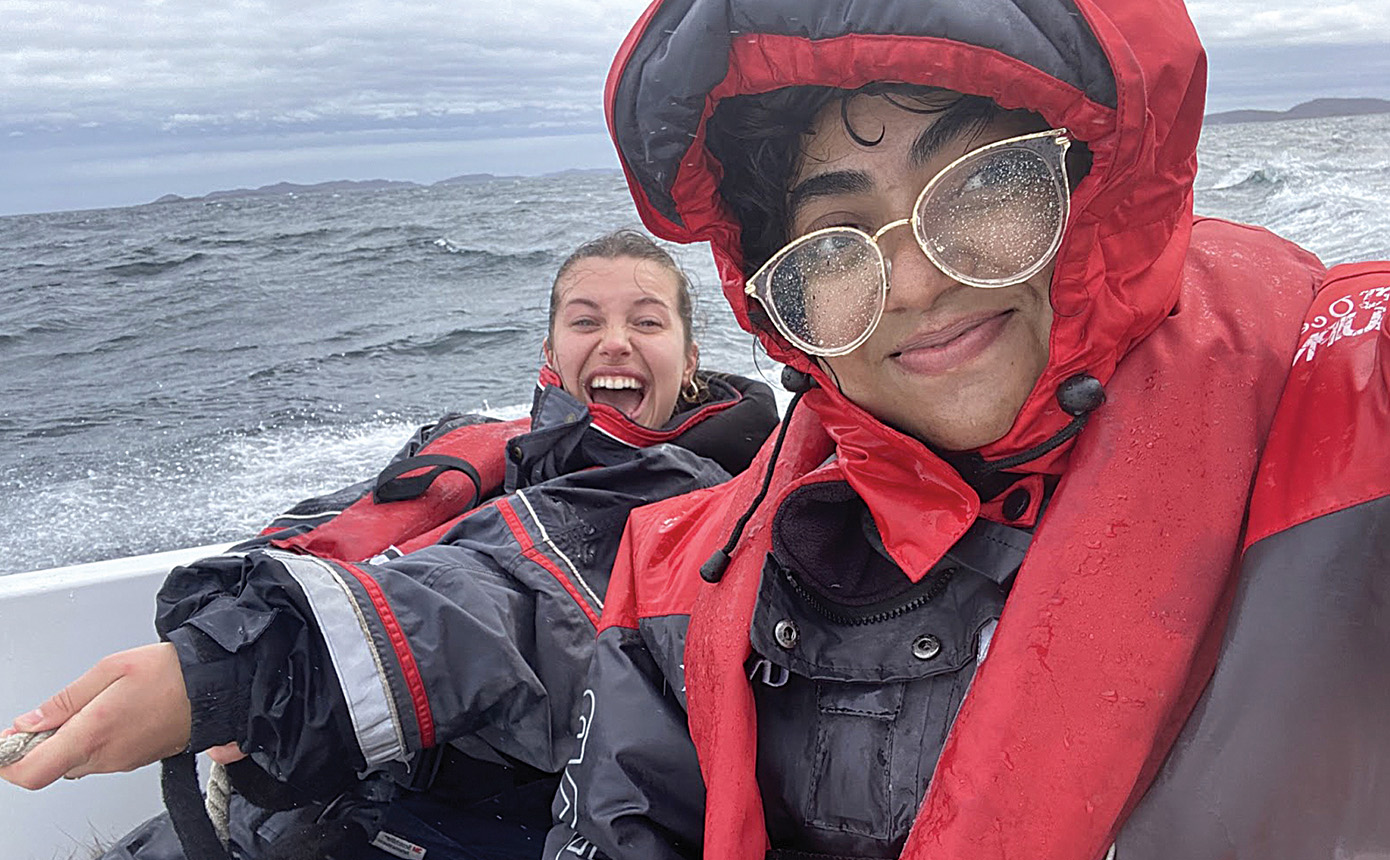
It was an example of letting go of the talking and just trying to experience the feeling of being there.
It’s something we’re not always told to seek as young journalists – what it all feels like.
Journalism relies on facts, on the physical, on things that are said and done.
But climate change is as much a feeling as it is a fact. And the knowledge that people like Mr. Jakobsen are seeing their lands change and not always having a say in how to preserve it – those moments on the boat provided some much-needed perspective on this lived reality for us.
Even after five days of talking and walking around, when we got to Aasiaat we knew we had only reached the tip of the iceberg with our story.
Mr. Jakobsen invited us to his home for one of our last conversations. His wife Karina had some coffee and snacks ready for us, one of his sons had just returned home with his friend.
After, we walked across this bridge that connects his home to the rest of Aasiaat. We weren’t ready for it all to end, so we asked Mr. Jakobsen to say goodbye to us on camera.
We didn’t know if we would use the footage in our final documentary then, but this process of bidding farewell seemed important as a memory. It’s not every day you get to go to Greenland.
Rarely do you get to spend time with such phenomenal people.
Mr. Jakobsen waved and walked away.