Thematic Session 4
Collaborative approaches to functional landscapes (II/II)
Case presentations
1. Platform for reindeer husbandry and wind power in Finland
Emma Luoma, Leading Specialist, Akordi
From the perspective of green transition, the northern sparsely populated areas such as the reindeer herding area (RHA) in Finland are seen potential for siting renewable energy production like wind power. While these areas may be sparsely populated, they are in no means “empty”: Wind power projects land within the cumulative continuum where reindeer herders have had to adjust to various forms of land uses and are in some cases faced with critical questions on ensuring their livelihood’s future. (e.g. Österlin & Raitio 2020; Hast 2021; Hortskotte et al. 2022.)
To deal with the emerging tensions, starting from 2019, the actors from wind power sector, reindeer husbandry, and public authorities have worked together to formulate good practices for the operation of wind power projects in the Finnish RHA including creative ways to assess, mitigate and compensate for the adverse effects of wind power (Anttonen et al. 2023). Through collaborative process the actors have established an on-going forum where they identify and address common issues beyond singular projects and can organize regional interventions. Throughout the process, collaboration had been supported by Akordi, who acts as a neutral third-party.
So far, the actors have reported that the collaborative forum has increased mutual understanding between the sectors resulting in decreased tensions. Reindeer herders and wind power developers have formulated shared guidelines for operating wind power in the reindeer herding area and collaborated on creating novel solutions e.g. for improving the quality of cumulative impact assessments and utilizing restoration measures to compensate for harmful impacts. The collaborative forum built on neutral ground offers a promising example of a collaborative approach to ensuring fairness in energy transition.
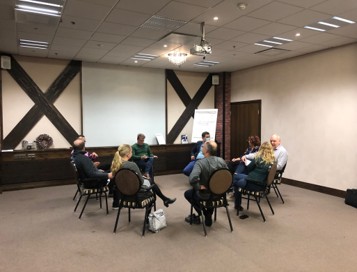
Small group discussion at the collaborative forum between reindeer husbandry and wind power industry in Rovaniemi 2021.
2. Stakeholder involvement for functional landscapes – Biosphere Reserve Kristianstads Vattenrike
Carina Wettemark, Head of the Unit for Biosphere and Naturum and Coordinator, UNESCO Biosphere Reserve Kristianstads Vattenrike & Anna Borgström, project leader
Kristianstads Vattenrike Biosphere Reserve, designated by UNESCO in 2005, promotes sustainable land use through a collaborative landscape approach built on dialogue and partnership. Situated in one of Sweden’s most water-rich areas, the Biosphere Reserve works across local, regional and international levels connecting farmers, landowners, municipalities, authorities, schools, researchers, and policymakers in long-term cooperation. Our mission is to demonstrate solutions where ecological sustainability, social benefits, and viable livelihoods coexist in resilient, multifunctional landscapes.
The pressure on land use is increasing due to climate change, shifting hydrology, agricultural demands and the need to protect biodiversity, requiring integrated approaches beyond single-sector solutions. We therefore work with cross-sector collaboration, iterative dialogue and shared learning to co-develop practical solutions that balance food production, water availability, nutrient reduction, habitat quality and recreation. Trust-building, local ownership, knowledge exchange, and evidence-based decisions are central. Acting as a neutral platform, the Biosphere reserve enables experimentation, conflict-sensitive dialogue and learning between sectors and knowledge systems.
Our wetland case illustrates this approach. A local farmer planned a deep groundwater well to secure irrigation for root crop production, but groundwater in the area is high-quality, vulnerable, and strategically important for long-term resilience. Through dialogue, analysis and landscape-level planning, an alternative emerged: Expanding and optimizing an existing wetland to deliver dual functions - irrigation and ecosystem services. Drainage water and small embankments now deliver water which can irrigate 100 hectares of farmland while the wetland improves nutrient retention and biodiversity. This avoided new groundwater extraction, reduced nutrient leakage, and strengthened ecological connectivity.
This solution was not the result of a single project but of sustained cooperation, trust-based dialogue, and a shared vision between landowners, authorities, and researchers. It demonstrates how multifunctional land use solutions can be co-developed when collaboration becomes the method – not just the goal – delivering benefits for both people and nature.
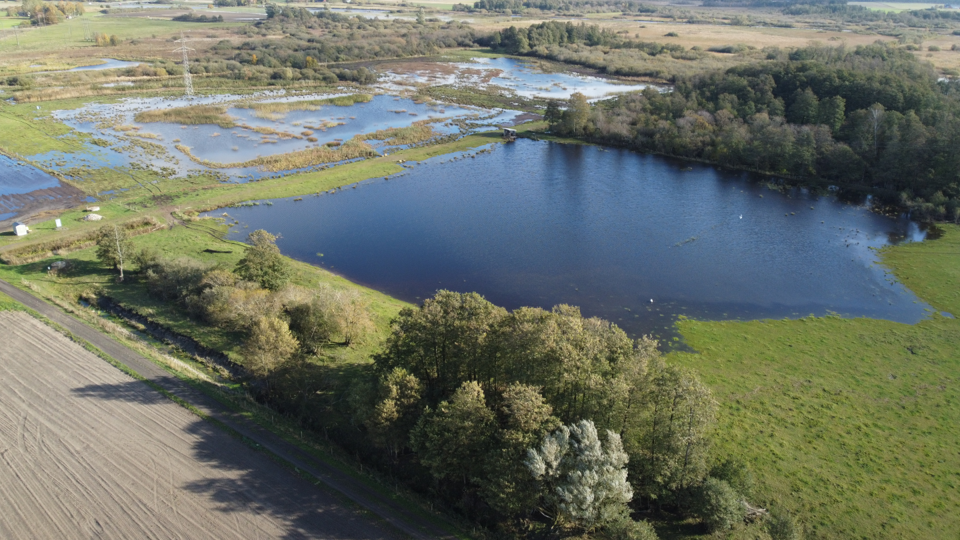
Photo from the multifunctional wetlands in Kristianstads Vattenrike Biosphere Reserve, designated by UNESCO in 2005.
Group discussion summary
The recommendations presented in this chapter are based on the group discussions held during Thematic Session 4: Collaborative Approaches to Functional Landscapes (II)
Core questions
How can collaboration processes be evaluated to better promote cross-border learning in the Nordic countries? What policy and governance measures are needed to support the implementation of research results and successful collaboration models?
Policy recommendations
Discussion summary
Adopt long-term evaluation horizons aligned with environmental change
The discussion highlighted that many environmental interventions – such as agroforestry, ecosystem restoration, and landscape-based solutions – require evaluation horizons of 15–30 years to generate meaningful insights. Policy and funding frameworks should therefore move beyond short project cycles and support long-term monitoring and learning, including sustained follow-up after pilot and implementation phases. Nordic cooperation can play an important role in promoting evaluation models that reflect the temporal realities of environmental change.Reorient policy selection and scaling criteria toward long-term outcomes
Participants emphasized the need to align policy selection and scaling decisions with long-term environmental outcomes rather than short-term considerations such as visibility or lobbying interests. Testing solutions through Living Labs and real-world settings before wider deployment was identified as a critical step. The discussion also underscored the importance of strengthening mechanisms that translate existing environmental data into policy-relevant decision-making.Safeguard the independence of evaluation and learning processes
For Nordic cross-border collaboration, maintaining a clear separation between evaluation, learning, and communication was seen as essential for credibility and trust. Policy frameworks should ensure that evaluation functions are independent from promotional or branding objectives, enabling honest assessment, shared learning, and mutual accountability across countries and institutions.Integrate social science and relational perspectives from the outset
The discussion highlighted that environmental collaboration is shaped by relationships, power dynamics, and institutional practices that are often overlooked in technically oriented evaluations. Policy and programme design should therefore integrate social science expertise early, ensuring that monitoring and evaluation capture how collaboration functions in practice, not only what outputs are delivered. Long-term relationship-building and face-to-face interaction were identified as key enablers of sustained collaboration.Design governance and financing frameworks that enable continuity
Overall, the session pointed to the need for governance and financing frameworks that prioritise continuity over short-term project cycles. Stable, long-term funding for monitoring, evaluation, and collaboration, combined with institutional arrangements that support durable partnerships, was identified as essential. Nordic cooperation was seen as well positioned to support alignment between evaluation systems, financing mechanisms, and governance structures to translate collaboration into lasting environmental outcomes.