Thematic Session 2
Collaborative approaches to functional landscapes (I/II)
Case presentations
1. Stakeholder inclusion and involvement in the Hekluskógar project
Hreinn Oskarsson, Head of Department, Land and Forest Iceland
The Hekluskógar (Hekla Forest) project in Iceland is a fine example of successful, large-scale ecosystem restoration driven by robust stakeholder collaboration. The primary goal is to reclaim native birch woodlands in the vicinity of the Mt. Hekla volcano, rehabilitating vegetation cover where it has been destroyed by past unsustainable land-use practices. This endeavour aims to increase the ecosystem's resilience against volcanic ash deposits and combat extensive wind erosion. The project area covers 100,000 hectares, making it a restoration effort of national significance.
Already in the planning phase (2005–2007), the Hekla Forest project used a highly integrated approach to involve key actors and establish shared responsibility. The core project group and subsequent Collaboration Committee were composed of diverse representatives, including key governmental agencies such as the Soil Conservation Service and the Icelandic Forest Service. Furthermore, the committees included representatives from local forestry NGOs and the local farmer forest agency, as well as local landowners.
Local ownership and widespread participation were considered important during the implementation phase. Locals participated in operations, including tree planting and fertilisation. Birch seedlings were granted to land owners for planting in their own land, there among over 200 summer cottage owners in the area, planted approximately one-third of all birch seedlings in the early years. Volunteers, from various NGO‘s, schools or corporate employee associations were involved. This widespread community participation generated goodwill and publicity for the project.
Today the project is managed by Land and Forest Iceland. The planted areas with birch now cover more than 5.000 ha, and natural regeneration is already widespread in the area. The comprehensive collaborative model of the Hekluskógar project demonstrates how integrating diverse stakeholders is vital for achieving sustainable and functional landscapes, making it a compelling case study for the Nordic region.
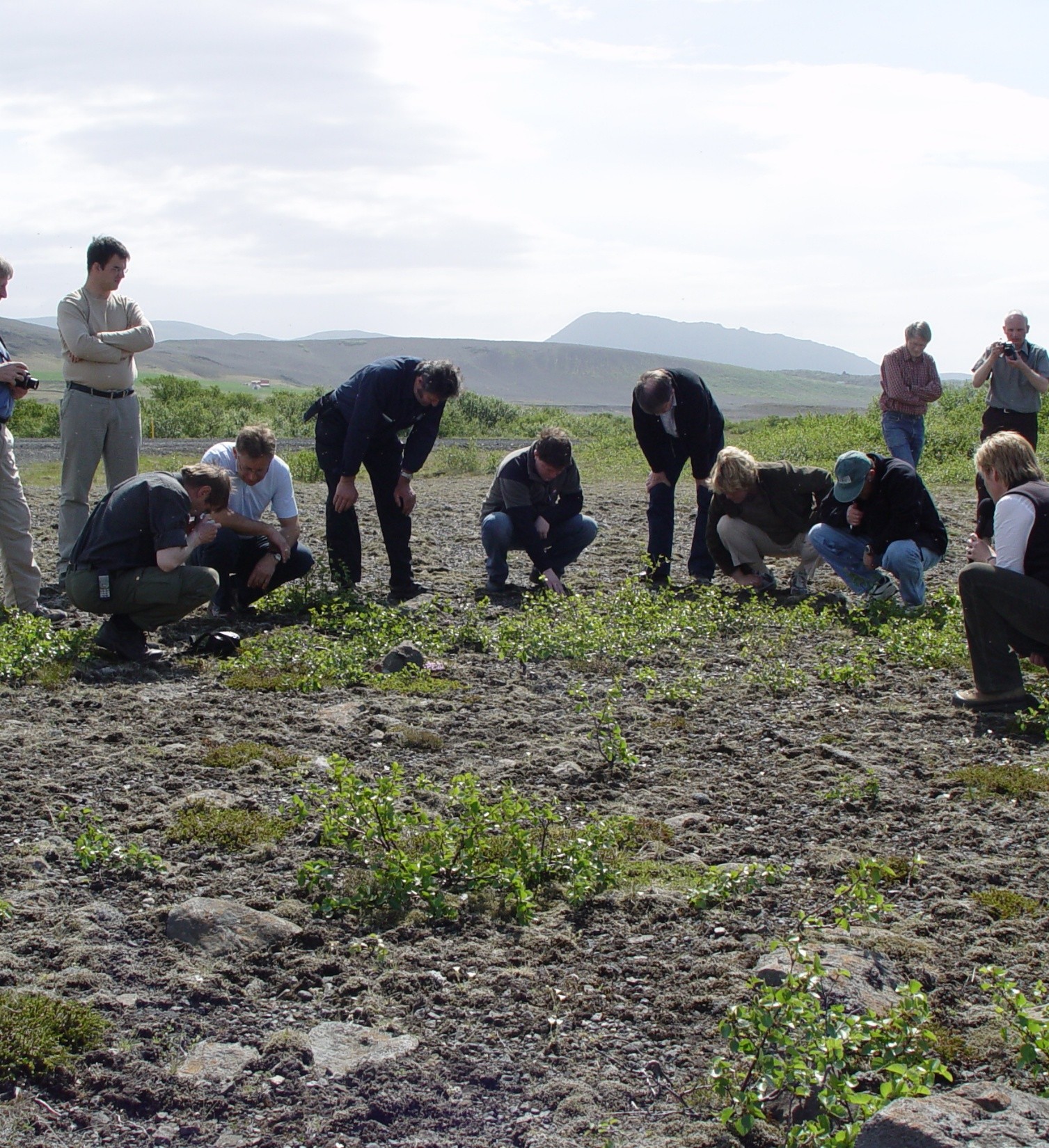
Photo from the Hekluskógar (Hekla Forest) restoration project in Iceland, one of the country’s largest ecosystem restoration initiatives.
2. Understanding human values in the implementation of multifunctional landscapes in Denmark
Sara Vangerschov Iversen, PhD, Landscape Ecologist and Tenure Track Assistant Professor, Center for Sustainable Landscapes under Global Change, Aarhus University
As Denmark advances its ambitious Green Tripartite Agreement, the establishment of new Nature-National parks marks a pivotal shift in national conservation policy. These parks are not only emblematic of Denmark’s commitment to biodiversity restoration but also serve as experimental grounds for increasingly using natural processes, particularly the use of year-round large grazers as ecosystem managers. This presentation explores how domestic cattle, ponies, and other herbivores are increasingly deployed across Danish landscapes to maintain habitat structure and support biodiversity conservation. While this approach has gained international traction for its ecological benefits, the integration of year-round large grazers into Denmark’s evolving nature policy has sparked tensions around competing landscape values, raising critical questions about whose visions of nature are prioritised, and how social acceptance is negotiated amid shifting environmental ideals. Drawing on recent fieldwork, we examine how local communities and nature-based recreational users respond to the changing character of these landscapes. Are large herbivores enhancing the experience of nature, or do they create barriers to access and emotional connection? Our findings suggest that acceptance is highly context-dependent, shaped by local engagement strategies, historical land use, and the visibility of policy goals. By situating this study within the broader framework of Denmark’s green transition, we highlight the need for inclusive conservation planning that balances ecological ambition with cultural and recreational values. As Nature-National parks become central to Denmark’s new direction in nature management, understanding the social dynamics of landscape change is crucial to their long-term success.
Group discussion summary
The recommendations presented in this chapter are based on the group discussions held during Thematic Session 2: Collaborative Approaches to Functional Landscapes.
Core questions
How can planning and decision-making systems be improved to better address environmental change? How can capacity for collaborative processes at local and regional levels be strengthened to support landscape transitions? How can national policy better support local collaboration that contributes to environmental objectives?
Policy recommendations
Discussion summary
Promote collaborative governance as a prerequisite for functional landscapes
The discussion underscored that functional and multifunctional landscapes cannot be delivered through sectoral or top-down governance alone. National policies should actively promote collaborative governance arrangements that enable coordination across environmental, agricultural, forestry, energy, and regional development policies. Nordic cooperation can support this by facilitating exchange of models and experiences where public authorities, private actors, and civil society are granted meaningful influence in decision-making processes.Institutionalise early dialogue and local anchoring in land-use planning and policy design
Participants emphasized the importance of early, structured, and inclusive dialogue with affected stakeholders as a foundation for legitimacy and effective implementation. Policy frameworks should require and support stakeholder involvement already at the stages of problem definition and goal setting. Nordic cooperation can contribute by developing guidance on participatory approaches that combine direct engagement with representative mechanisms, ensuring both inclusiveness and feasibility.Invest in local capacity-building and trust as strategic policy objectives
The discussion highlighted that landscape transitions often occur in contexts marked by socio-economic vulnerability and low institutional trust. Building local capacity and trust should therefore be treated as strategic investments rather than ancillary costs. National and Nordic policies should allocate resources for facilitation, coordination, knowledge exchange, and sustained public presence, recognising that without such capacity, ambitious environmental and land-use objectives risk remaining largely declaratory.Shift policy focus from short-term incentives to long-term capacity for action
While economic incentives can play an important role in initiating change, participants stressed that lasting outcomes depend on strengthening local ownership, competence, and responsibility over time. Policy frameworks should therefore complement financial incentives with measures that support long-term learning, collaboration, and stewardship. Experiences from biosphere reserves illustrate how linking environmental objectives to local identity and values can help make collaborative efforts durable and self-sustaining.Develop long-term and coordinated financing frameworks for functional landscapes
The group identified a need for financing solutions that are stable over time and less vulnerable to political cycles. Greater coordination of funding across sectors and governance levels – such as water management, land use, and ecosystem services – was seen as essential. Nordic cooperation was identified as particularly well suited to support the development of coordinated financing frameworks and to explore mechanisms that align resources across policy domains.