PARENTAL LEAVE IN NORWAY
Elin Kvande and Brita Bungum
Introduction
Influenced by the ideas of equal rights, the Norwegian government introduced a parental leave model based on both parents having the right to share most of the parental leave in 1978. This was a move away from the idea that leave was just for mothers. Thus, representing a shift from maternity leave to parental leave for both parents. The essence of this model prevailed although the period available for parents to share was extended in the years that followed but this increase did not, however, influence fathers’ uptake of parental leave. In 1993 a father’s quota was introduced to encourage fathers to take parental leave, making Norway the first country in the world to do so. From being four weeks in 1993, the length of the quota was gradually increased to 14 weeks in 2013. The paid parental leave now includes three parts; the mother’s quota, the father’s quota and the sharable part, which are equal in length. The total length of the paid parental leave is 49 or 59 weeks depending on payment level, plus a further three weeks before birth.
The main political idea behind the shift from maternity leave to parental leave was to support a dual earner -dual carer model which again would encourage gender equality in the labour market and in family life. By granting fathers the right to share the leave, the original legislation signalled a new political view on men’s responsibilities and duties concerning childcare. The same rationale was for the introduction of a father’s quota. The aim was not only to bolster equal rights, but also fatherhood more generally (Stortingsmelding no 4, 1988-1989).
An important actor in the process leading up to the introduction of the father’s quota in 1993 was “The committee on the role of men” which was set up in 1986 by a Social democratic government. In their White Paper to the government, they suggested the introduction of a father’s quota as part of the parental leave system. The explicit political motivation was to strengthen father-child relations. The father’s quota as an individual right given to fathers and not to the family as a caregiving entity, represented a break with the familistic character of the previous model (Brandth and Kvande 2020). The father’s quota was introduced by a Social democratic government headed by Gro Harlem Brundtland.
Year and total number of weeks | Before birth | Mother’s quota | Shared parental leave* | Father’s quota | “Daddy days” |
1990: 28/35 | 6 | 22/29 | 2 | ||
1991: 32/40 | 2 | 6 | 24/32 | 2 | |
1993:42/52 | 3 | 6 | 29/39 | 4 | 2 |
2005: 43/53 | 3 | 6 | 29/39 | 5 | 2 |
2006: 44/54 | 3 | 6 | 29/39 | 6 | 2 |
2009: 46/56 | 3 | 6 | 27/37 | 10 | 2 |
2011: 47/57 | 3 | 6 | 26/36 | 12 | 2 |
2013: 49/59 | 3 | 14 | 18/28 | 14 | 2 |
2014: 49/59 | 3 | 10 | 26/36 | 10 | 2 |
2018: 49/59 | 3 | 15 | 18/28 | 15 | 2 |
2024: 49/59 | 3 | 15/19* | 16/18 | 15/19* | 2 |
Notes: *80% (instead of 100%) wages compensation increases the length of leave.
The table is based on Brandth & Kvande, 2020.
The table is based on Brandth & Kvande, 2020.
Table 1: Development of parental benefits 1990-2024 (Number of weeks given)
Present policies
Length of leave
Paid Parental leave is now 49 or 59 weeks depending on payment level, plus a further three weeks before birth. The leave is divided into three equal parts. It is obligatory for women to take six weeks leave after delivery for health reasons. These weeks are taken as part of parental leave reserved for women before and after birth, and for which the term mother’s quota is used. Of the post-natal period, the mother’s and the father’s quotas are comprised of 15 or 19 weeks each, dependent on the percent of earnings, which are non-transferable rights. The remaining 16 or 18 weeks are share-able and may be taken by either parent. In addition, fathers are entitled to a two weeks’ leave just after birth, or so-called daddy days.
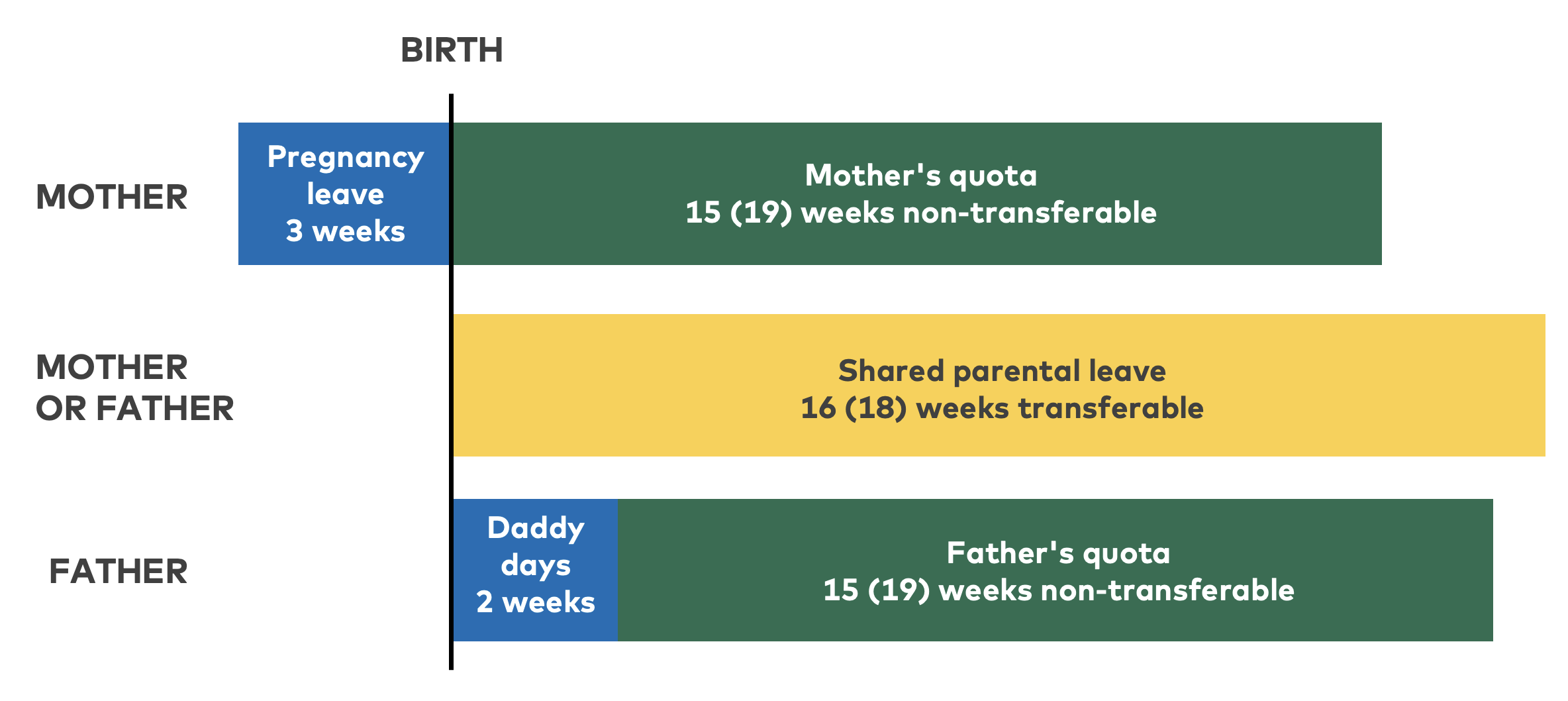
Figure 1: Structure of paid parental leave in Norway
Eligibility
Nine out of ten mothers have the right to parental leave money; the rest do not meet the eligibility criteria. Mothers not eligible for parental money receive a one-off payment. This is a heterogeneous group of mothers, but with an overrepresentation of immigrant mothers (NOU 2017:6). The main eligibility criteria are the same for fathers and mothers: They must have been employed for six of the last ten months prior to the birth of their child. In addition, they must have earned at least half the basic national insurance benefit payment over the previous year; in 2023 this was 55,739 NOKa year. They must also be members of the National Insurance system.
The eligibility rules for the family entitlement (the sharable period) and the father’s quota are somewhat different. The father can use the 16/18 weeks of paid leave (the family entitlement) even if the mother is not eligible for leave; but the mother is required to take up work or study (at least 75 per cent of full-time hours) for him to be able to do so. For the father’s quota, the mother must also have been eligible, but there is no requirement that eligible mothers (employed for six of the last ten months prior to the birth) go back to work.
Same-sex parents are eligible. When two women become mothers, the non-biological mother must have been officially recognized as a mother to have the rights to leave. Her rights are the same as a father’s rights to leave. If two men have a child together through surrogacy, the biological father normally gets the whole leave if he is officially approved as a father. The other father may get paid Parental leave if he adopts the child (as a stepfather) and if there are leave days left. The three-year period within which leave must be taken may present a challenge, as they cannot apply for leave before the child is born and the adoption processes may take a long time. The 15-week quota for the second father is transferable to the first father. If both fathers are adoptive parents, they may choose which of them starts the leave period at the time of the care order.
Single mothers who are eligible for parental leave will automatically receive the father’s quota. However, if there is a non-residential father and the parents agree, they may apply for the father to use the father’s quota. All employed fathers have the right to two weeks Daddy leave.
Benefits
Parents can choose between a total of 49 weeks at 100 per cent of earnings or for 59 weeks at 80 per cent of earnings, up to cap of six times the basic national insurance benefit payment of NOK118,620 (per month). This is financed by tax money. When employees are included in collective agreements, the employers pay the difference between the upper limit and the parent’ s earnings. Non-employed women receive a flat-rate payment of NOK 92,648 per child. Students also receive a flat rate payment. The Daddy days payment depends on individual or collective agreements, and most employed fathers are covered by such agreements.
Flexibility
For both the mother’s quota and the father’s quota it is possible to choose a longer period of leave paid at 80 per cent of earnings, or a shorter period of leave paid at 100 per cent of earnings.
After the first six weeks, it is possible for the mother to postpone parts of the parental leave period, but it must be taken during the first three years after the birth of the child, and the parent receiving the money is employed full-time during the postponement period. Hospitalization and vacation may also qualify for postponement.
After the first six weeks, it is also possible for one or both parents to combine all or part of the parental leave with part-time work. If parents take less than the full benefit payment, this will prolong the period of leave.
The Father’s quota and mother’s quota are not transferable to the other parent, except in certain circumstances, i.e., if the parent is ill or otherwise unable to care for the child, or if the mother and father do not live together. The Father’s quota may not be taken in the first six weeks of the parental money period, except for multiple births or adoption. Otherwise, fathers are free to choose at what time to use it during the first three years after the child’s birth. They can also choose whether to take the quota as part-time leave. The sharable period may be taken as one block of time or split into shorter blocks of time within the three-year period.
Both parents may take leave at the same time, except during the period of obligatory leave for the mother (i.e., three weeks before birth and six weeks after) and during the period of shared leave, when mothers are required to go back to work or studies for the father to use it. During the period of the father’s quota, there is no requirement for what mothers can do (i.e., both parents may be on leave together).
Daddy days can be used by someone else who will assist the mother (e.g., grandparents) if the parents do not live together. The law does not inform as to when the leave must be taken other than ‘in connection with the birth.’ This is normally interpreted as two weeks before or two weeks after birth. The leave may be split up. The father may, for instance, use a day or two to be present at birth, go back to work, and then take the rest when mother and child come home from the hospital. The leave can be used by foster or adoptive parents when taking over the care of the child.
Other work and family policies
Each parent has the right to one year of unpaid leave after the paid parental leave period. The maximum period of post-natal leave is thus just over three years. About two years of this is unpaid except for the recipients of ‘cash-for care,’ who cannot use publicly funded Early Childhood Education and Care (ECEC) services (or, if they do, only part-time). Leave paid at a high earnings-related rate runs for nearly 14 months. There is an entitlement to ECEC from one year of age, available on a full-time basis at kindergartens (though if the child is born later than September 1, there might not be a place ready until one year later). Potentially there is no gap between the end of leave and an ECEC entitlement, but it might happen.
Since 1998, parents with a child between one and two years of age are entitled to receive a cash benefit ‘cash-for-care’ scheme when staying at home looking after the child, on condition they do not use a publicly funded ECEC. The full benefit is NOK7,500 per month. A minority conservative, government introduced the cash-for-care system. The introduction of the cash for care has been called a hybrid in the Norwegian system (Ellingsæter, 2003, 2006). Heated public debate took place before and after the introduction of this reform.
Each parent of one or two children under 12 years of age has a right to: Ten working days’ leave per year when the children are ill (or the childminder or grandparent is ill and the children are not attending kindergarten), or 15 working days’ leave per year if they have more than two children. Single parents have the combined rights of couples, i.e. 20/30 days’ leave per year. For severely or chronically sick children there are extended rights to leave until the child is 18 years old. This leave is paid by the employer at the same rate as sickness benefit, i.e., at 100 per cent of earnings.
The Work Environment Act grants all mothers the right to breastfeeding breaks of up to one hour per day for children under one year old. This leave is paid by the employer.
Parents have a right to decrease their working time to care for their children up to the age of 10. Working hours can, for example, be reduced in the form of shorter working days, fewer working days per week or work-free periods during the year. Reduced working hours mean reduced pay, but also a right to return to the original level of employment after a period. This is an employee right that is stipulated in the Norwegian Work Environment Act which gives the employee the right to reduced working hours for a period if it does not cause significant inconvenience to the employer (paragraph 10-2-4). The scheme primarily aims at meeting parents' wishes for more time to spend with young children or to meet needs arising from problems in obtaining childcare during working hours.
Leave reforms
Reducing and increasing the father’s quota
Since its introduction in 1993, the father quota has been high on the family policy agenda in Norway (Ellingsæter 2024). The Conservative Party and the Progress Party did not support the introduction of the father quota maintaining that it represented too little choice for parents. In 2014 the father’s quota was reduced to 10 weeks by a Conservative government. This was meant to be the first step in doing away with the quota. The reduction of the quota’s length led to a decrease in fathers’ average uptake which created a national discussion. This led to the same government reversing their original plan and instead increasing the quota to 15 weeks in 2018. This has since been seen as a natural experiment illustrating the importance of having a non-transferable father’s quota.
Increased flexibility
The Norwegian Parliament has recently (2024) unanimously adopted amendments to the National Insurance Act to increase the flexibility of the parental benefit scheme by extending the parental benefit period at 80 per cent coverage. The reason for the change is that under the current scheme, parents who receive 80 percent parental allowance for 59 weeks receive less total payment than parents who receive 100 per cent for 49 weeks. This will put these two alternatives on an equal footing by making the total benefit payment almost the same, regardless of the degree of compensation, by increasing the leave scheme with 80 per cent parental allowance from 59 to 61 weeks. The government proposed that the legislative change will apply to those who become parents as of 1 July 2024. This change can be understood as an attempt to counteract mothers taking unpaid leave to a greater extent than fathers.
Reducing age limits for cash for care
After the introduction of the cash for care reform in 1998 there has been significant changes in the regulations. The age limits are reduced, from a scheme for children aged between 1 and 3 years to the regulations where the scheme only applies to children from 1 to 2 years. The most recent change came in August 2024, when the Red Green government abolished cash benefits for children aged between 20 and 23 months. This means that parents of young children are only entitled to cash support for seven months, compared to 11 months previously. The current government’s justification for reducing cash support is that it is a goal that as many children as possible should attend kindergarten, because it is best for the children and for the society. The cash subsidy is now being portrayed as a "waiting subsidy" for those who have not yet secured a place in a kindergarten. Instead of cash support, the government now wants to use the money to lower the price of kindergarten places.
Separate benefits for EEA citizens
Another change of great importance to the scheme occurred in 2004 which made it possible to export cash benefits to EEA countries, i.e. payments of cash benefits for children who did not live in Norway. Due to increasing labour immigration to Norway from EEA countries, the export of cash benefits became a hot political topic. Separate cash benefit rules were therefore introduced for EEA citizens in Norway. A requirement has also been introduced that the child must have lived in Norway for at least 12 months and that the parents must have been members of the Norwegian National Insurance Scheme for at least five years to receive support. A full benefit is NOK7,500 per month.
Leave use
Paid parental leave uptake
In the years following the introduction of the fathers’ quota the percentage of fathers using parental leave gradually increased from 4 percent in 1993 to 85 per cent by 2000 (Brandth and Kvande 2003a). The father’s quota is widely used by fathers in Norway today, with over 90 per cent of eligible fathers using all or part of it (Bakken 2023). Comparable figures over time are, however, hard to obtain because of changes in the way statistics are presented, and because the leave length changes frequently. The introduction of the fathers’ quota has been characterized as a success story because of the pronounced increase in fathers’ leave use shortly after its introduction and after the expansions in length (Brandth and Kvande 2020).
There is, however, a clear difference in the total length of the parental leave (paid and unpaid leave) used by mothers and fathers. In general mothers use the mothers’ quota plus the sharable leave. Fathers use the fathers’ quota and to a lesser degree some of the sharable leave (Bakken 2023).
Although the use of the father’s quota for Parental leave has become widespread among Norwegian fathers, there are some variations between different groups of fathers. While class differences are small, the father’s level of education has some influence, particularly on the length of the leave. The eligible fathers least likely to use the quota are fathers with long working hours, in managerial positions, or with a partner who works part-time. In a study of male managers’ experiences, Kvande and Moen (2019) found that there might be a process of change going on within this group. When fathers experience being ‘irreplaceable’ in caring for their child while taking leave, it also influences how they practice their work as managers; they make themselves less accessible to their job, and experience being replaceable at work without it influencing their career development. These findings can be understood in terms of most fathers now taking a relatively long period of leave, thus laying the foundation for a general change in practice that makes it easier for managers to take leave. However, this study has few participants, and future research will show whether the results apply to most male managers.
Moen, Kvande and Nordli (2019) explore how male managers in two male dominated sectors, the engineering industry and the finance industry, use the father’s quota. Their findings show that male managers in the engineering industry have become unavailable and replaceable in their organizations, thus making it possible for the fathers to use the father’s quota. In contrast to this, the institutional logic in the finance industry makes brokers available and irreplaceable in their organizations, thus making it difficult for them to use the father’s quota.
A survey based on registry data finds that low take-up of the fathers’ quota among non-Western immigrant fathers is linked to low economic activity among mothers in this group (Ellingsæter; et.al. 2019). In a comparative study of work and family adaptations in Norwegian and Polish families, Bjørnholt and Stefansen (2018) report that while the dual-earner/dual-carer model is strongly rooted among the Norwegian fathers, the Polish migrants use the Norwegian Parental leave schemes more eclectically, with the dual-earner aspect as the main factor. A second study, based on interviews with middle-class immigrant fathers from various European countries, shows that the father’s quota, being a statutory right and generously compensated for, is understood as accepted by employers and universally used by fathers (Kvande and Brandth 2017). The principle of earmarking and non-transferability is experienced by these fathers as a great possibility to care for their children and perceived as important since both male and female employees are constructed as potential parents. It is in comparison with the care regimes of their homelands that their understanding of these design elements becomes evident. These results can be seen as supporting the tendency to convergence in attitudes towards parental leave held by fathers from these countries.
Although the length of the father’s quota has varied over the last decade, most fathers (seven out of ten) have taken exactly the number of weeks represented by the father’s quota, regardless of its length (NAV, 2017). So, when the father’s quota was 60 days, 70 per cent took exactly this period. The same happened when the quota was extended to 70 days in 2013. Then, after the quota was reduced to 50 days in 2014, again 70 per cent of fathers took the reduced quota days. Figures based on public records in 2011 show that 18 per cent of the Parental leave days were taken by fathers: in 2013, fathers took 46 days on average, and in 2014, 49 days; then, with the reduction of the quota’s length to ten weeks/50 days in July 2014, fathers’ average uptake decreased to 47 days. The figures from this natural experiment show that if the aim of policy is greater equality in leave-taking between mothers and fathers, changing the length of the father’s quota is essential. In 2014, when the father’s quota was reduced, mothers’ leave use increased accordingly.
As we have seen, parental leave may either be taken for 49 weeks at 100 per cent of earnings or for 59 weeks at 80 per cent of earnings. During the last 10 years we can observe that an increasing number of parents are choosing the 100 percent alternative. In 2012 the number choosing 100 percent pay was 55 percent, whilst the number had increased to 78 percent in 2021 (Bakken 2022). When asked about the reason for choosing this alternative, most of both mothers and fathers pointed to economic reasons for this (Bakken.2023).
The share of fathers who use the daddy days to take time off work around the birth of the child is approximately the same as for the father’s quota: 89 per cent (Bakken 2022).A study of paid and unpaid parental leave in Norway (Bakken 2022) focused on the total time mothers and fathers are away from work when they have children by including parents’ use of unpaid leave. The findings show that 48 per cent of the mothers and 11 per cent of the fathers answered that they took unpaid leave after the paid parental benefit period. Of these, the mothers took an average of 16 weeks unpaid leave, while the fathers took 11 weeks (Bakken,2022)
Inequalities in uptake of cash for care
In June 2024 the number of recipients of cash for care was 16,558 persons. There has been a gradual decrease in the use of this benefit and for the past decade the amount of cash for care recipients has fallen by 40 percent
Many parents who received cash for care when it was first introduced, used a private nanny or made other private arrangements, for example using grandparents or other relatives (Bungum og Kvande, 2013). In 2003 ‘the day-care guarantee’ was introduced in Norway. This reform gave all children from the age of 1 the right to kindergarten places. There was cross-party agreement on this reform, the center-right wanted parents to have full freedom of choice, while the left parties emphasized that this would make it easier for mothers and fathers to combine childcare with work. The development over the next years showed that cash subsidies plummeted in popularity among parents of young children, who used their `freedom of choice` to choose a childcare centre for their child (Hirsch, 2010; Bungum & Kvande, 2013).
Discussion: Parental leave in country context
The importance of leave design
The importance of having a father’s quota is illustrated by Kvande and Brandth (2019) and Brandth and Kvande (2020) where they discuss the connection between leave design and its’ use. They show that in granting fathers an individual, earmarked and non-transferable right, the welfare state has contributed to turning leave taking into a norm for modern fathering. This has been labelled “Fathers’ sense of Entitlement to Earmarked Leave” (Brandth and Kvande, 2018) which differs from how they experience the Shared parental leave. The father- and mother specific quotas are inherently gendered (Brandth and Kvande 2020). These findings illustrate what Brighthouse and Wright (2008) emphasize in their analysis of what is needed to achieve “strong gender equality” in family and working life, where they distinguish between policies that promote equality and those that enable it. Shared parental leave given to the family enables families to adopt egalitarian strategies, but puts no pressure on fathers to use them, like the non-transferable leave granted to individual parents.
This is supported in a recently published article (Bakken 2023) which shows how the Norwegian parental leave as it is currently designed, provides guidelines on how parents should allocate time at home with children. This suggests that policymaking and quotas have a strong influence on the distribution of the parental benefit period. The concept of “The Father- friendly Welfare state” (Brandth and Kvande 2013) has been used for describing how the welfare state, by introducing policies like the fathers’ quota, can be an important agent in promoting more gender equality in this field. The generosity in terms of length and full wage compensation strengthens it as a right in working life. Fathers being paid their full wages for staying at home taking care of their child also emphasizes the dual-carer norm. Their analysis also shows that the collision between fatherhood and the ideal of the unencumbered employee has weakened in many types of work organizations.
Evensen, et.al. (2023) have examined perceptions among mothers and fathers in Norway with children under the age of 20, as well as how attitudes to the length of Parental leave correlate with demographic and socioeconomic characteristics as well as attitudes to gender equality. They find that there is strong support among both fathers and mothers that some parental leave should be reserved for fathers, but fathers more often than mothers want a fifty-fifty system. In terms of their views on Parental leave, fathers can thus be considered more gender equality-oriented than mothers.
From this we can conclude that the Norwegian parental leave system has had a positive impact on the gender equality in caring for the young babies. It is, however, important to also be aware of the gender inequality in uptake of unpaid leave. As we have seen, in a study of paid and unpaid parental leave in Norway (Bakken 2022) showed the total time mothers and fathers are away from work when they have children show that the imbalances between mothers and fathers are larger than expected. Mothers most often and for the longest period go on unpaid leave,48 per cent of the mothers and 11 per cent of the fathers answered that they took unpaid leave after the paid parental benefit period. Of these, the mothers took an average of 16 weeks unpaid leave, while the fathers took 11 weeks. Bakken (2022) points out that this might influence mother’s wages, pensions and career development in a negative way.
References
Bakken, F. (2022). Ulønnet og lønnet foreldrepermisjon – mødre og fedres bruk og vurderinger Arbeid og velferd nr.1-2022, NAV.
Bakken, F. (2023). Tatt av kvinnen- eller hvem bestemmer egentlig mest i fordelingen av foreldrepengeperioden? [Taken by women- or who really decides the most in the distribution of the parental allowance period]. Arbeid og velferd nr.1-2023,NAV.
Bjørnhholt, M, & Stefansen, K. (2018). Same but different: Polish and Norwegian parents’ work-family adaptions in Norway. Journal of European Social Policy, 29(2), 292-304.
DOI: 10.1177/0958928718758824
DOI: 10.1177/0958928718758824
Brandth, B., & Kvande, E. (2020). Designing parental leave policy. Bristol University Press.
Brandth, B., & Kvande, E. (2019). Fathers' sense of entitlement to shared and ear-marked parental leave. Sociological Review , 67(5), 1154-1169.
Brandth, B., & Kvande, E. (2013). Fedrekvoten og den farsvennlige velferdsstaten. Universitetsforlaget.
Brandth, B., & Kvande, E. (2003).
Fleksible fedre. Maskulinitet, arbeid, velferdsstat. Universitetsforlaget.
Fleksible fedre. Maskulinitet, arbeid, velferdsstat. Universitetsforlaget.
Brighthouse, H., & Wright, E. O. (2008). Strong gender egalitarianism. Politics & Society, 36(3), 360–372
Bungum, B., & Kvande, E. (2013). The Rise and Fall of the Cash for Care in Norway. The intersection of gender, class and ethnicity in the use of child-care policies. Nordic Journal of Social Research, 4, 31-54. https://doi.org/10.7577/njsr.2065
Egge-Hoveid, K. (2014). Kontantstøtte- lite endring tross høyere sats. Samfunnsspeilet, 4. https://www.ssb.no/sosiale-forhold-og-kriminalitet/artikler-og-publikasjoner/kontantstotte-lite-endring-tross-hoyere-sats
Ellingsætter, A. L., Kitterød, R. H., & Østbakken, K. M. (2019). Immigrants and the“ caring father”: Inequality in access to and utilization of parental leave in Norway. Ethnicities, 20(5), 959-982. DOI:10.1177/146819890109
Evensen, M., Kitterød, R., & Teigen, M. (2023). Mild tvang, bred oppslutning: En analyse av holdning til deling av foreldrepermisjonen blant fedre og mødre. [Mild coercion, broad support: An analysis of attitudes towards sharing parental leave among fathers and mothers.] Søkelys på arbeidslivet, 40(2), 1-18. https://doi.org/10.18261/spa.40.2.4
Grambo, A. C., & Myklebø, S. (2009). Moderne familier – tradisjonelle valg. En studie av mors og fars uttak av foreldrepermisjoner [Modern families – traditional choices. A study of mother's and father's Parental leave episodes]. NAV.
Hircsh, A. A. (2010). Brukere av kontantstøtte 1999-2009. Færre barn med kontantstøtte. [Users of cash for care 1999-2009: Fewer children with cash for care]. Samfunnsspeilet, 4. SSB. https://www.ssb.no/sosiale-forhold-og-kriminalitet/artikler-og-publikasjoner/faerre-barn-med-kontantstotte
Kitterød, R. H., Halrynjo, S., & Østbakken , K. M. (2017). Pappaperm? Fedre som Ikke tar fedrekvote- Hvor mange, hvem og hvorfor? Rapport 2017:2. Institute for Social Research (ISF).
Kvande, E., & Brandth, B. (2019). ‘Designing parental leave for fathers – promoting gender equality in working life’, International Journal of Sociology and Social Policy, 40(5/6), 465-477. DOI 10.1108/IJSSp-05-2019-0098
Kvande, E., & Brandth, B. (2017). ‘Individualized, non-transferable parental leave for European fathers: migrant perspectives’, Community, Work and Family, 20(1) 1-16.
Kvande, E., & Moen, L. V. (2019). ‘Å bli uerstattelig og omsorgen og erstattelig på jobb’ [‘Becoming irreplaceable in caregiving and replaceable at work: Male managers’ experience with the use of parental leave’], Norsk Sosiologisk Tidsskrift, 3(5), 340-352.
Moen, L. V., Kvande, E., & Nordli, K. (2019). Fathers’ use of Parental Leave in Organizations with Different Institutional Logics. Social Sciences, 8(1), 1-12.
Norwegian Work Environment Act.
NOU. (2024:8). Likestillingens neste steg. [Gender equality's next step.] Mannsutvalgets rapport. Public report from a committee appointed by the Norwegian government, Ministry of Culture and Equality.
NOU. (2017:6). Offentlig støtte til barnefamiliene. Utredning fra utvalg oppnevnt ved kongelig resolusjon 19. juni 2015. Avgitt til Barne- og likestillingsdepartementet 6. mars 2017. [Public support for families with children. Report from a committee appointed by royal decree on 19 June 2015. Submitted to the Ministry of Children and Equality on 6 March 2017.]
Parliamentary report based on Schou, L. (2017). Fedrekvoten – uttak og holdninger’ [Father’s quota: withdrawals and attitudes], Arbeid og velferd, 3, 81-95. See also Fedre som ikke tar fedrekvote – hvor mange, hvem og hvorfor?’ [Fathers who do not take paternity allowance - how many, who and why?]. Available at: https://samfunnsforskning.brage.unit.no/samfunnsforskning-xmlui/handle/11250/2446441?locale-attribute=en
Stortingsmelding no 4, 1988-1989. Langtidsprogrammet ( 1990-1993) [White Paper no. 4, 1988-1989].
St.prp. 53, 1977-98:8 Innføring av kontantstøtte til småbarnsforeldre. Tilråding fra Barne- og familiedepartementet av 17. april 1998. [Introduction of cash support for parents of young children. Recommendation from the Ministry of Children and Family Affairs of 17 April 1998.]