PARENTAL LEAVE IN ICELAND
Ásdís A. Arnalds, Guðný Björk Eydal and Ingólfur V. Gíslason
Introduction
The current legislation on paid parental leave in Iceland is based on a law that was enacted in the year 2000 which granted each parent three months of non-transferable leave and three months that they could share as they saw fit. The stated aim of the law is to ensure that children have access to both parents and enable the parents to coordinate family- and work life (Act on maternity/paternity and parental leave no. 95/2000). The law in 2000 extended the total leave period from six to nine months and economic compensation was raised from a low flat-rate benefit to 80% of salary for parents in the labour market, while those who had not accumulated such rights were entitled to flat-rate benefits. The law protected employment, making it illegal to fire an employee after he or she had announced the pregnancy and intended leave taking (Eydal & Gíslason, 2008). This was a radical law, as it involved a longer father’s quota than was seen in other countries at the time, and the economic compensation was high by international standards (Moss & O’Brien, 2006).
Despite the Icelandic law from 2000 being progressive in terms of the length of the quotas, for many years the total leave length was shorter than found in the other Nordic countries. However, an extension of the leave was not enacted until 2020, when the total leave was extended to 10 months, with four quota months for each parent and two months that they could decide upon. A year later a total revision of the law took effect and parents of children born January 1st 2021, or later, receive 12 months of leave. Six months are allotted to each parent but each parent can transfer 1.5 months to the other parent, thus providing each parent with a 4.5-month quota (Arnalds et al., 2022).
Initially, the act from 2000 used the words “mother” and “father” when referring to parents’ non-transferable rights (a so-called mother’s and father’s quota), but following changes to family legislation in 2006, gender-neutral language was introduced, and the terms "father" and "mother" were replaced by the term "parent." This shift was part of broader reforms across various laws aimed at ensuring that same-sex couples faced no discrimination. From the onset, parents have had the right to paid parental leave regardless of their marital status and whether they share residency with their child or hold custody or not. Thus, all birth, adoptive, and permanent foster care parents have the right to take paid parental leave. In the case of a non-custodial parent a signed approval from the custodial parent for visitation rights during the leave period is required (Eydal & Gíslason, 2008). The issue of non-transferability thus applies regardless of whether parents live together or not. However, if there is only one parent, for example if a parent is deceased or a woman has undergone artificial insemination or an individual adopts a child alone, that parent is entitled to the same amount of paid leave as two parent families (Arnalds et al., 2022).
Present policies
Length of leave
In Iceland, each parent has an independent right to parental leave for up to six months (26 weeks), due to the birth, adoption, or permanent foster care of a child. However, as pointed out above, parents are allowed to transfer six weeks of their independent right to the other parent (see Figure 1) and a lone parent (i.e. if there is no other parent) is entitled to all 12 months. A parent is permitted to start using their individual rights up to one month before the expected due date and until the child reaches the age of two years, except in the case of adoption or permanent foster care, when the entitlements can be used until the child is eight years old. In case of a multiple birth, the sharable leave period is extended by three months for each additional child. In addition to the 12 months paid leave, each parent is entitled to four months long unpaid leave, which they can use until the child reaches the age of eight years (Act on parental leave, 2020/144).
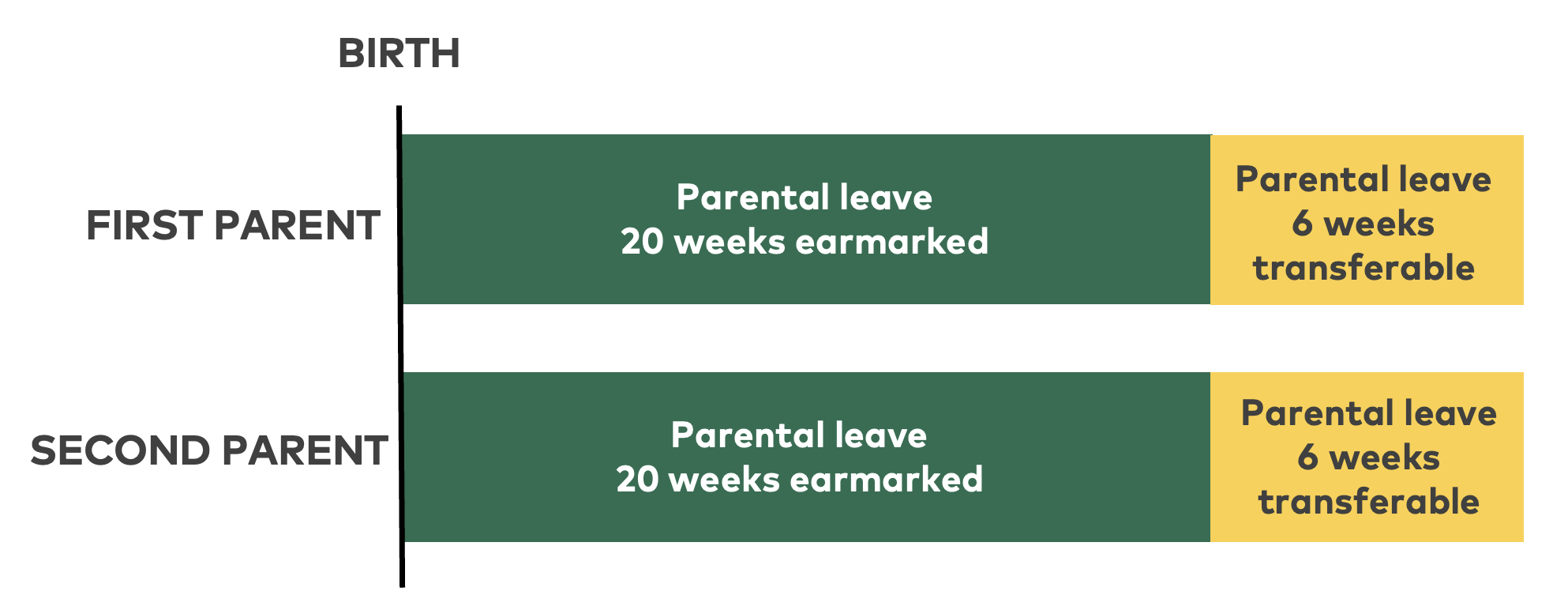
Figure 1. Paid parental leave, number of weeks available to parents in Iceland, 2024
If the birth parent is unable to work due to ill health during pregnancy or in relation to the birth, the paid parental leave can be extended by two months. Additionally, if an employer cannot ensure the safety of a pregnant employee such as by providing the expectant parent with other tasks, the employee is entitled to a leave from work and payments from the Maternity and Paternity Leave Fund It is also possible to extend the total leave period by a maximum of seven months due to serious illness or disability of the child. If the pregnant parent must stay away from home to receive health services related to the birth, they can receive a special per diem payment for 14 days for each child.
Eligibility
Parents receive payments from the Parental Leave Fund which is financed by an insurance levy paid by employers, while the benefit to those outside the labour market is financed by the state (Eydal & Gíslason, 2008). To be eligible for the earnings-related benefits, parents must have been active in the Icelandic labour market for at least six months prior to the birth of their child, and have worked at least nine hours per week, on average (25% work).
Students and those working less than 25% are entitled to flat rate benefits. To be eligible for the flat rate benefit, a parent should have legally resided in Iceland for at least 12 months prior to birth, adoption, or the start of permanent foster care. Full-time students (75-100% studies) are eligible for the flat rate benefit for students if they have been studying for at least six months in the 12 months prior to the birth of their child, adoption, or permanent foster care, and if they meet the requirements for academic progress during that time.
Benefits
Working parents receive 80% of their previous earnings while on leave up to a cap. The maximum monthly amount for parents who had a child April 1st, 2024, or later, was 700 thousand ISK (4,574 Euros). There is also a minimum, based on previous hours of work. The monthly amount to parents who have worked on average 25-49% should be at minimum 138 thousand ISK per month (902 Euros) and the payment to a parent who has worked a half- to a full-time job, an average, should be at least191 thousand ISK per month (1,248 Euros) (Act on maternity/paternity and parental leave, 144/2020).
The flat-rate benefits, paid to students and those working less than 25%, have been criticised for being very low. In 2024 the monthly amount for studying parents was 223 thousand ISK (1,457 Euros) while the monthly amount for those working less than 25% was 97 thousand ISK (634 Euros). In comparison, the monthly minimum wage in Iceland in 2024 was 431 thousand ISK (2,816 Euros).
Flexibility
The birth parent is obligated to take leave the first two weeks after giving birth, but otherwise, the leave can be used as the parents decide within the first 24 months after birth. Parents can choose to use their rights all at once or divide it into shorter intervals. Furthermore, parents can use their individual rights simultaneously if they wish. Parents can also choose whether they use the leave full-time or if they take part-time leave with or without working on the side. Such flexibility has been in place for a quarter of a decade, since the law of 2000 was enacted. Thus, the parents have the right to use the leave as they like as long as this decision is made in an agreement with their employer. However, if an agreement is not reached, the parent always has the right to take uninterrupted leave.
Other work and family policies
The twofold aim of the paid parental leave law is in line with laws in Respect of Children (Law in respect of children no.76/2003), that emphasise the child’s right to know and receive care from both parents, as well as the goals of the resolution on family policy from 1997 (Parliamentary resolution on Icelandic family policy and actions to strengthen the family, no. 121/1997), which emphasises both parents being able to reconcile work and care. Furthermore, the Act on equal status and equal rights of the sexes (no. 150/2020) also emphasises the importance of reconciliation of work and family and states that employers shall do necessary arrangements to make it possible for their employees to reconcile their work duties and family responsibility. Keeping in mind this clear emphasis of the Icelandic legislator on ensuring legal right to reconciliation it is noteworthy that after the paid parental leave ends, children do not have legal right to public ECEC, as it is up to each municipality to provide care services as they see fit (Arnalds & Duvander, 2022).
In 2022 the Icelandic government introduced a law on bereavement leave, intended for parents in the workforce who experience the loss of a child under the age of 18. A parent who has been in continuous employment has an independent right to bereavement leave for up to six months from the day the child dies up to three months in case of a stillbirth occurring after 22 weeks of pregnancy, and up to two months in case of miscarriage occurring after 18 weeks of pregnancy (Bereavement leave law, no. 77/2022). The payments are the same as for paid parental leave, that is 80% of previous earnings up to a ceiling. There are no laws on entitlements of parents to leave to take care of their children when ill, but rights to be absent from work with pay is negotiated in collective agreements. The employer pays the salaries of the employee in accordance with the collective agreement. The social insurance system only pays home care benefits for parents of long-term ill and disabled children (Eydal & Rostgaard, 2013).
Leave reforms
Although the law from 2000 extended the leave from six to nine months and was generous in terms of individual quota rights, the total leave length of nine months was soon criticized for being too short. Parents were left to bridge the gap that existed between paid leave and ECEC and research showed that this gap was usually in practice bridged by mothers. This meant that the gender equality ambitions of parents’ equal rights to paid parental leave were possibly endangered by the longer, and often unpaid, leaves taken by mothers to bridge the gap (Arnalds & Duvander, 2023; Arnalds et al. 2013; 2021; Ingólfsdóttir & Gíslason, 2016). Therefore. it was not politically contested that there was a need for longer paid parental leave. In fact, a gradual extension of the leave was in the White Paper of a coalition government in 2007 (Forsætisráðuneytið, 2007) but this government was forced to step down after a strong wave of protests from the Icelandic public after the financial crisis hit in 2008, so no reforms on the parental leave were made.
The Icelandic parliament Alþingi has three times decided to lengthen the leave, although an extension has only been carried out twice. A new coalition government left of the centre came into power in early 2009 after the protests. The new government was forced to lower the ceiling on benefits radically, as part of the austerity measures, but in December 2012 it enacted an extension of the leave to 12 months (with a 5+5+2 division), just before the end of its’ term. In 2013 a new coalition government, right of the centre, was formed and they announced that the lengthening of the leave would have to be postponed due to the recovery after the financial crisis (Arnalds et al., 2013).
A similar bill to the one presented in 2012 was proposed by a left-right coalition government in November 2019. However, politicians were not ready to decide how to divide the 12-month period between parents. Two models were discussed: A 4-4-4 division, with a four-month quota for each parent and four months they could decide how to divide between them, and a 5-5-2 division, a five-month quota for each parent and a two-month sharable leave. The result was a middle-range solution, and a bill was passed granting parents who had a child from January 1st, 2020, ten months of paid parental leave, with a four-month quota for each parent and two months that parents could choose how to divide (a 4+4+2 division) (Arnalds et al., 2021).
The Icelandic parliament declared that by October 2020 the leave would be extended to 12 months, and a committee would use the time until then to reach an agreement on the division (Law on changes in the Act on maternity/paternity and parental leave, no. 149/2019). The committee delivered a proposal of 5+5+2. When the draft of the bill was presented in the consultation portal, it garnered much feedback from individuals, stakeholders, and experts. The social partners, including both unions and the organization of employers, supported the proposed 5+5+2 division. Those in favour of the bill emphasized that the non-transferable rights of the 2000 legislation had ensured that children received care from both parents, increased gender equality, lowered divorce rates, and led to better relationships between children and their fathers. Opponents argued for the freedom of choice for parents and that a longer leave for mothers was important for breastfeeding. There were also concerns that children of non-cohabiting parents would receive less parental care due to lower take-up rates by non-residential fathers. After further debates in Alþingi about how the 12 months should be divided, the final decision was that each parent would be entitled to six individual months, with the option to transfer six weeks to the other parent. Thus, each parent’s quota became 4.5 months. All MPs voted in favour of this proposal, and Alþingi accepted 12 months of paid parental leave by the end of 2020, with the changes implemented in January 2021. Furthermore, both unions and employers’ organizations supported the extension of paid parental leave to 12 months, indicating strong general support for the law (Arnalds et al., 2022).
In addition to lengthening the leave, changes that have been made to the law from 2000 concern the ceiling on benefits and the issue of non-transferability. The original law from 2000 ensured that all employees would receive 80% of their previous income, with no ceiling on leave benefits. However, in 2004, a relatively high ceiling was placed on the amount working parents received while on leave, since more fathers utilized their right to take leave than was initially expected. At the time, only 3% of fathers and 1% of mothers had salaried earnings above this ceiling, which meant that the vast majority continued to receive 80% of their salary while on leave (Eydal & Gíslason, 2008). However, during the period from December 2008 to December 2009, the ceiling on benefits was lowered severely due to the financial crisis that hit Iceland in 2008, as mentioned earlier. The lowering of the ceiling was more likely to affect fathers than mothers due to the gender pay gap and in 2010 45% of fathers had wages above the ceiling compared to 18% of mothers (Arnalds et al., 2019).
The restoration of the ceiling began in 2013 but despite a significant raise in both 2016 and 2019 the ceiling was still below its pre-crisis level. In fact, the maximum amount stayed the same in absolute terms from 2019 to 2023, while inflation was high, so the share of parents with wages above the cap rose as time went by. By 2023, 43% of fathers and 23% of mothers had salaried earnings above the cap, a similar percentage to what was the case during the financial crisis (Vinnumálastofnun, 2023). The Icelandic unions had long demanded that the economic compensation would be raised to the pre-2008 level as indeed politicians had promised. And as part of their agreement with the employers’ organizations and the state in March 2024 it was decided to gradually raise the ceiling so that in 2026 it will be 900 thousand ISK (5,881 Euros) which is almost the pre-2008 level (Stjórnarráð Íslands, 2024).
As for changes in the rule of non-transferability, initially there was only one exception to the rule: Namely that if either parent died before having made full use of their right, the remaining period was transferred to the other parent. Over time, further exemptions from the non-transferability rule have been implemented but only in cases where one parent is unable to care for their child due to e.g. illness, an accident, or incarceration, can the total leave be utilized by the other parent. In 2021 the list of exemptions was extended and it is now possible to transfer leave to one parent if a parent is unable to comply with its obligation to identify the child’s other, or under a restraining order, if a parent is neither entitled to parental leave in Iceland nor elsewhere, and if authorities or the courts prohibit the other parent from accessing the child. Despite these exemptions, the fundamental principle that a child has the right to receive care from both parents remains unchanged (Arnalds et al., 2021, 2022). In addition, as mentioned before, one parent families, e.g. women who have undergone artificial insemination and individuals who adopt a child alone, are entitled to the same amount of paid leave as two parent families.
Thus, during the past 25 years the total leave period in Iceland has been lengthened from six to 12 months and the non-transferable part for each parent has been extended from 3 to 4.5 months. Although the ceiling on benefits has changed over the years and some exemptions from the rule of non-transferability have been made, the law has not changed in character since 2000. It still provides equal quota rights to both parents with the aim of ensuring that children have access to both parents and enabling both parents to coordinate work and family life.
Leave use
Although the current Icelandic legislation does not use the terms “mother” and “father” it is important to distinguish between mothers’ and fathers’ leave use. Figure 2 presents the average number of days on paid parental leave used by parents in Iceland during the past twenty years. The figure presents numbers for all leave users, regardless of whether they received the earnings-related benefits or the fixed amount, but it is worth mentioning that around 90% of fathers and 85% of mothers receive the earnings-related benefits. Figure 2 shows that the vast majority of new fathers in Iceland have taken paid parental leave during the past 20 years. Fathers’ uptake dropped somewhat in the period from 2011 to 2015, when the ceiling on benefits was as its lowest due to the austerity measures after the 2008-crisis. There is also a considerable drop after 2019 most likely associated with the effects of the Covid pandemic and the fact that the ceiling on benefits was not raised, despite inflation. The figure also shows that the fathers that took leave, used between 86 and 101 days, on average, in the period from 2003 to 2019, when the father’s quota was three months (93 days). This means that their length of leave corresponded with their non-transferable rights. With the extension of the father’s quota to four months in 2020, fathers’ average number of days increased accordingly. In 2021 when the non-transferable period for each parent increased to 4.5 months, fathers used 131 days, on average. Mothers have however, on average, used their quota rights and shared/transferable days, but the numbers for 2022-2023 are still preliminary as parents have up to two years to use their entitlements.
Figure 2. Leave use of fathers and mothers in Iceland 2001 to 2023
* Figures for 2022 and 2023 are preliminary
Source: Vinnumálastofnun, 2024
Source: Vinnumálastofnun, 2024
A lesson learned from the official statistics on leave use during the past two decades is that fathers’ leave use is more vulnerable than mothers. While the lowering of the ceiling on benefits during the financial crisis had an impact on fathers’ leave use, the average number of weeks used by mothers remained stable. Moreover, a study by Arnalds et al. (2019) showed that mothers of children born during the crisis were more likely than those who had a child before the crisis to lengthen their time at home with the child beyond the 6 parental leave months. This they did by using the leave part-time, use vacation days, or unpaid leave. The authors argued that the mothers took a longer time off work or studies to compensate for a fall in fathers’ leave use during the crisis.
Figure 3 shows the association between leave use and income. Data from the Maternity and Paternity Leave Fund provide information on the income of those who receive the income-related benefits but not the flat-rate benefits. The figure shows clearly that there was a significant drop in the leave use of the highest income group following the lowering of the ceiling on benefits in December 2008 to December 2009. While high-income fathers of children born in 2007 and 2008 used 105 days on average, high-income fathers of children born in 2012 to 2016 used around 80 days on average. In the fall of 2016, the income ceiling was raised quite substantially. As the figure shows, the number of days used by fathers in the highest income quartile increased after the restoration of the ceiling in 2016, and especially with the extension of the quota months in 2020 but continues to be lower than that of other income groups.
* *Figures for 2022 and 2023 are preliminary
Source: Vinnumálastofnun, 2024
Figure 3. Leave use of fathers 2007 to 2023, by income
Figure 4 shows the percentage of Icelandic and foreign citizens that used earnings-related leave and the flat-rate benefits. The figure refers to parents who had a child in 2019, the only year for which we have this information. The figure only shows those that used leave, as the Parental Leave Fund does not provide information on the citizenship of those that do not use paid parental leave. Minor differences were found in the type of leave used by fathers when broken down by their nationality. However, mothers with non-European citizenship were much more likely than European mothers to have received the flat-rate benefits intended for parents working less than 25%. This shows that the non-European mothers were less likely to have accumulated rights to the earnings-related benefits by participating in the Icelandic labour market.
Figure 4a. Benefit type of mothers of children born in 2019 by nationality.
Figure 4b. Benefit type of fathers of children born in 2019 by nationality.
Source: Authors’ own calculations on data from the Parental Leave Fund
Registered data does not provide information on parents’ education. However, survey data collected in 2018 among parents who had their first child in 2014 shows that mothers with a secondary education were more likely to take “long leaves”, for 6 months or more, compared to mothers with a tertiary education. Likewise, fathers with a secondary education were those most likely to take leave. Several factors could explain the differences in non-take-up rates between educational groups, such as labour market status and attitudes towards using leave. While the survey did not ask parents about their attitudes towards using leave, further analysis of the data indicates that fathers with primary education were more likely not to live with the child’s mother and not having been in paid work before childbirth. This may explain their 19% non-take-up rate. Furthermore, the data shows that the non-take-up of paid parental leave among fathers with tertiary education is associated with having an income above the cap on parental leave benefits.
Figure 5a. Leave use of mothers of children born in 2014 – by education
Figure 5b. Leave use of fathers of children born in 2014 – by education
Source: Authors’ analysis of survey-data
In sum, registered data from the Maternity and Paternity Leave Fund clearly shows that fathers in Iceland use their quota rights while mothers use both their quota rights and the period which parents can decide upon. Flat-rate benefits are hardly used by fathers, while mothers, and especially those with a non-European citizenship, are more likely to do so, which highlights how gender and nationality intersect regarding parents’ rights to the earnings-related benefits. In Iceland, the labour market participation of migrants is high but gender differences in their labour market participation is reflected in the high number of mothers with a non-European citizenship receiving the flat-rate benefits. The statistics also emphasise the importance of high-income replacement as an incentive for fathers to use leave, especially for high-income fathers.
Discussion: parental leave in country context
Research has been conducted on if the Icelandic parental leave scheme has had an impact on parents’ participation in work and care. The authors have conducted five extensive surveys among all parents who had their first child in 1997, 2003, 2009, 2014, and all parents who had a child in 2019 and 2021 in order to explore this issue. The surveys were conducted three to four years after the birth of the child and parents were asked to reflect on how they arranged care from month to month during the first three years as well as their labour market participation the year before the birth.
The main findings show that fathers have steadily increased their share in the care of their children since the non-transferable leave was introduced in the year 2000, and in the most recent surveys the vast majority of parents report that they share care equally by the time the child reaches the age of 13 months. The most profound increase in fathers’ care participation occurred between the first two surveys (the one that reached parents who had a child before and after the implementation of the equal quota rights). Interestingly, fathers’ share in care has continued to grow after the implementation of the law which indicates that the fathers’ quota encourages fathers to take leave and enhances societal expectations towards the importance of fathers’ care (Arnalds, et al., 2013; 2021; 2022). The results from our surveys show that this applies also to Polish fathers, which are the largest group of immigrants in Iceland. Despite dominant values in Poland that emphasise maternal care for young children, Polish fathers in Iceland have also increased their share in care (Arnalds, Eydal, & Skaptadóttir, 2022).
A report by the World Health Organization further suggests progress in terms of fathers’ care participation later on. According to the report, Icelandic boys and girls aged 11, 13, and 15, rated their interactions with their fathers more positively compared to their peers in 41 other countries. This study included the first groups to benefit from the increased parental leave rights for fathers following the introduction of the fathers’ quota in Iceland (Inchley et al., 2020). The authors suggest that this positive outcome is due to the enhanced opportunities for fathers to care for their children as a result of the non-transferable leave rights. This conclusion aligns with findings from a comparative study on parent-child interactions in the Nordic countries, which identified an association between the length of non-transferable leave available to fathers and the quality of their bonding with their children (Arnarsson et al., 2019).
Furthermore, the introduction of the equal quota rights at the start of the century has also been found to have led to increased marital stability as parents who had a child shortly after the introduction of the fathers’ quota were less likely to divorce than those who had a child shortly before the policy reform (Ólafsson & Steingrímsdóttir, 2020). These findings indicate that a more equal distribution of unpaid labour between the genders could lead to less conflict between parents, which benefits both children and parents.
The increased care participation also applies to fathers that have never lived with their child’s mother. Results from a recent study show that equal care participation of parents living apart has gradually increased since the enactment of equal parental leave rights in 2000. Furthermore, analysis of data collected among parents of children born in 2009 and 2014 shows that when parents have an equal division of care, the mother is likelier to find it easy to make ends meet in the child’s fourth year. These findings emphasise the importance of policies that promote care participation of fathers living apart from the mother (Lárusdóttir, et al., 2022).
However, despite significant progress since the non-transferable leave came into effect in 2000, there is still a considerable difference between the roles of mothers and fathers in Iceland, both at home and in the workforce. Mothers of young children still work shorter days than fathers and are also the primary caregivers in the first year after the birth of a child and, as pointed out above, the mothers usually use both their individual rights to paid parental leave and the period that parents can choose how to divide (Arnalds et al., 2021).
ECEC in Iceland operates in accordance with law and follows a national curriculum guide, presented by the Ministry of Education. ECEC is mainly operated by the municipalities and there are very few private institutions (Trætteberg et al., 2023). Iceland differs from other Nordic countries in that it has not enacted legislation on children’s guarantee for ECEC after paid parental leave. In Iceland, there has been a persistent shortage of spaces for the youngest children, particularly in the capital area, and the enrolment age can vary between the age of one and two years (Arnalds & Duvander, 2023). In 2017 the average age of children starting ECEC was 20 months but in 2022 it was down to 17.5 months (BSRB, 2022). Since the Icelandic municipalities operate ECEC (Act on Preschools no. 90/2008), the starting age for children varies by regions. This means that, at least in some areas, there is a considerable gap between the end of paid parental leave and ECEC. Cash-for-care is offered in some municipalities while waiting for a place in ECEC, but no official information exists on which municipalities provide cash-for-care.
There are, however, indications that Icelandic authorities are placing emphasis on closing the gap between paid parental leave and ECEC. In 2024 the Association of Icelandic Municipalities and the Icelandic government signed a declaration in relation to a collective agreement. One of the key points of the declaration is to find ways to bridge the gap between parental leave and ECEC (Samband íslenskra sveitarfélaga, 2024).
Many municipalities prioritize disabled children and those who are socially or economically disadvantaged when it comes to places in ECEC, but a recent OECD (2023) report shows that there is a gap in attendance between native and foreign-born children. The municipalities also set the relatively low fees. The fees are not income related, but many municipalities offer reduce fees for lone parents, students, and families with more than one pre-school-aged children. The fees vary considerably between municipalities (ASI, n.d.).
As pointed out above there has been shortage of placement for children after paid parental leave ends, partly because the municipalities experience difficulties in hiring staff, in particular trained pre-school teachers. One of the largest municipalities in Iceland recently reacted to this situation by a policy offering six-hour attendance for free while increasing fees for longer stays. This approach has now been adopted by a few other municipalities but has faced criticism, because after the fee changes, an eight-hour stay for a child costs more than before. There are concerns that the new fee structure will negatively impact low-income parents and that mothers more often than fathers will reduce their work hours to be able to use the free six-hour stay (see for example Aradóttir Pind, September 4th, 2024). The Icelandic labour market is highly segregated both in terms of gender and migrant status, with non-Icelandic citizens working in low-income jobs that often do not allow for flexible work hours. Therefore, there is a great need for research on how the municipalities react to the shortage of preschool places and on whether the new fee-system may perhaps increase already existing inequalities.
Before being offered a place in public ECEC-, families can opt for family day care provided by self-employed childminders. While municipalities regulate and subsidize this type of care, parents still face higher fees for family day care compared to public ECEC. In some regions, municipalities establish fee standards whereas in others childminders set their own rates. Additionally, many areas experience a shortage of available family day care options relative to demand. The lack of continuum between paid parental leave and the availability of ECEC in Iceland requires parents to come up with solutions. The solutions are gendered, as more mothers than fathers reduce their labour force participation to take care of their child (Arnalds et al., 2021; Arnalds & Duvander, 2023; Ingólfsdóttir & Gíslason, 2016).
Iceland is also facing the challenge of lowering fertility rates. Since 2010 there has been a steady decline in the total fertility rate, apart from the year 2021 when Iceland witnessed a short-lived rise in fertility during the height of the Covid-19 pandemic (Arnalds et al., 2025). Research shows that the fertility decline is concentrated around first births and the decline can principally be attributed to women under the age of thirty. The tendency to remain childless has seen a slight increase since 2013 while the desire to have a second or third child has not diminished. This suggests that the trend in Iceland is primarily characterized by a clear delay in parenthood rather than a change in the willingness to have additional children (Jónsson, 2024). Furthermore, qualitative interviews with people in Iceland who have decided to be childfree indicate that ideas on the gendered nature of parenting within the Icelandic context is one factor that shapes the decision to remain childless, as women describe the societal expectations and performances of parenting. The interviewees emphasized that in order to meet the demands of parenthood, the mother must be willing to give up her own needs, wants, and desires, whilst fathers can retain their freedom and autonomy (Símonardóttir, 2024). These findings suggest that despite the emphasis on parents’ equal rights to earn and care, which are specified in the objectives of the Icelandic Act on Paid Parental Leave, people in Iceland may still find that the parenting role places more demands on mothers than fathers.
References
Act in respect of children no.76/2003.
Act on equal status and equal rights of the sexes no. 150/2020.
Act on maternity/paternity and parental leave no. 95/2000.
Act on maternity/paternity and parental leave no. 144/2020.
Act on Preschools no. 90/2008.
Aradóttir Pind, D. (September 4th, 2024). Kópavogsmódelið er ógn við jafnrétti. [The Kopavogur model, a danger to equality]. Vísir. https://www.visir.is/g/20242616427d/kopavogsmodelid-er-ogn-vid-jafn-retti
Arnalds, Á. & Duvander, A-Z. (2023). Arranging care in two Nordic countries: A comparison of paid parental leave use and ECEC start in Iceland and Sweden. Journal of Family Research, 35, 471-488. https://doi.org/10.20377/jfr-896
Arnalds, Á., Duvander, A-Z, Eydal, G. B., & Gíslason, I. V. (2019). Constructing parenthood in times of crisis. Journal of Family Studies, 27(3), 420-435. https://doi.org/10.1080/13229400.2019.1634622
Arnalds, Á. A., Eydal, G. B., & Gíslason, I. V. (2013). Equal rights to paid parental leave and caring fathers- The case of Iceland. Stjórnmál og stjórnsýsla, 9(2), 323–344. doi:10.13177/irpa.a.2013.9.2.4
Arnalds, Á., Eydal, G. B., & Gíslason, I. V. (2021). Fæðingar- og foreldraorlof: Aðdragandi, breytingar og árangur laga sem er ætlað að stuðla að orlofstöku beggja foreldra. [Paid parental leave: Background, changes, and success of a law that aims at increase both parents’ leave use]. Stjórnmál & stjórnsýsla, 17(2), 235-259.
Arnalds, Á., Eydal, G. B. & Gíslason, I. V. (2022). Paid parental leave in Iceland: Increasing gender equality at home and on the labour market through paid earmarked parental leave. In C. de La Porte, G. B. Eydal, J. Kauko, D. Nohrstedt, P. ‘t Hart, and B. S. Tranøy (Eds.), Successful public policy in the Nordic countries: Cases, lessons, challenges (pp. 370-387). Oxford University Press.
Arnalds, Á., Eydal, G. B., & Skaftadóttir, U. D. (2021). Construction of childcare practices among Icelandic and Polish parents living in Iceland: Mixed-methods explorations. Journal of Comparative Family Studies, 52(4), 623-647. https://doi.org/10.3138/jcfs.52.4.05
Arnalds, Á., Jónsson, Al. K., & Símonardóttir, S. (2025). The 2021 baby boom in Iceland: Exploring the role of a parental leave reform and the COVID-19 pandemic. European Journal of Population, 41(1), https://doi.org/10.1007/s10680-024-09727-1
Arnarsson, A., Potrebny, T., Torsheim, T., & Eriksson, C. (2019). Time-trends in Nordic adolescents’ communication with their parents. Nordic Welfare Research, 4(2), 88-100. https://doi.org/10.18261/issn.2464-4161-2019-02-06
ASI (Alþýðusamband Íslands). (n.d.). Leikskólagjöld. [Preschool fees]. https://asi.is/leikskolagjold-samanburdur/
Bereavement leave law, no. 77/2022.
BSRB (Bandalag starfsmanna ríkis og bæja). (2022). Skýrsla BSRB um umönnunarbilið. [BSRB’s report on the care gap]. BSRB. https://www.bsrb.is/static/files/Utgefid_efni/skyrsla-bsrb-umonnun.pdf
Eydal, G. B., & Gíslason, I. V. (2008). Paid parental leave in Iceland – History and context. In G. B. Eydal & I. V. Gíslason (Eds.), Equal rights to earn and care - parental leave in Iceland (pp. 15-44). Félagsvísindastofnun Háskóla Íslands.
Eydal, G. B. & Rostgaard, T. (2011). Day-care schemes and cash-for-care at home. In I. V. Gíslason and G. B. Eydal (Eds.), Parental leave, childcare and gender equality in the Nordic countries (pp. 65–107). Nordic Council of Ministers.
Forsætisráðuneytið. (2007). Stefnuyfirlýsing ríkisstjórnar. [Government white paper]. https://www.stjornarradid.is/efst-a-baugi/frettir/stok-frett/2007/05/23/Stefnuyfirlysing-rikisstjornar-Sjalfstaedisflokks-og-Samfylkingar-2007/
Inchley, J., Currie, D., Budisavljevic, S., Torsheim, T., Jastad, A., Cosma, A., Kelly, C., & Arnarsson, A. M. (2020). Spotlight on adolescent health and well-being: Findings from the 2017/18 Health behaviour in school-aged children (HBSC) survey in Europe and Canada. Volume 1: Key findings. World Health Organization.
Ingólfsdóttir, E. S., & Gíslason, I. V. (2016). Gendered solutions to the care gap issue in Iceland. NORA - Nordic Journal of Feminist and Gender Research, (December), 1–14. doi:10.1080/08038740.2016.1241826
Jónsson, A. K. (2024). Fertility decline in Iceland, 2013-2022: Trends and structures. Comparative Population Studies, 49, 169-180. https://doi.org/10.12765/CPoS-2024-07
Law on changes in the Act on maternity/paternity and parental leave, no. 149/2019.
Lárusdóttir, Í. D., Eydal, G. B., & Arnalds, Á. (2022). The influence of shared parental leave and care on lone mothers’ financial resources. Community, Work & Family, 27(3), 374–391. https://doi.org/10.1080/13668803.2022.2120383
Moss, P. & O’Brien, M. (Eds.). (2006). International review of leave policies and related research. British Department of Trade and Industry.
OECD. (2023). Education at a glance 2023: OECD Indicators. OECD Publishing. https://www.oecd-ilibrary.org/education/education-at-a-glance-2023_e13bef63-en
Ólafsson, A. & Steingrímsdóttir, H. (2020). How does daddy at home affect marital stability? The Ecomic Journal, 130(629), 1471-1500 . doi: 10.1093/ej/ueaa009
Parliamentary resolution on Icelandic family policy and actions to strengthen the family, no. 121/1997.
Samband íslenskra sveitarfélaga. (2024). Áskorun til sveitarfélaga vegna yfirlýsingar ríkisstjórnarinnar og Sambands íslenskra sveitarfélaga vegna kjarasamninga 2024. [Challenge to municipalities in relation to collective agreements, 2024]. https://fundur.reykjavik.is/sites/default/files/agenda-items/19%20%C3%81skorun%20til%20sveitarf%C3%A9laga%20vegna%20yfirl%C3%BDsingar%202024.pdf
Símonardóttir, S. (2024). “Unless I could be like the typical dad”: Exploring parenthood through the perspective of the volunary childfree. Acta Sociologica, 67(4),463-477. https://doi.org/10.1177/00016993241260608
Stjórnarráð Íslands. (2024). Mælti fyrir frumvarpi sem felur í sér hækkun á hámarksgreiðslurm úr Fæðingarorlofssjóði og vegna sorgarorlofs. [Put forth a bill on raising the ceiling on payments from the Parental leave fund and for the bereavement leave]. https://www.stjornarradid.is/efst-a-baugi/frettir/stok-frett/2024/04/16/Maelti-fyrir-frumvarpi-sem-felur-i-ser-haekkun-a-hamarksgreidslum-ur-Faedingarorlofssjodi-og-vegna-sorgarorlofs/
Trætteberg, H., Sivesind, K. H., Paananen, M., & Hrafnsdóttir, S. (2023). Quasi-market regulation in early childhood education. Does a Nordic welfare dimension prevail? Nordic Studies in Education, 43(1), 60-77. https://doi.org/10.23865/nse.v43.4006
Vinnumálastofnun. (2024). Ársskýrsla Fæðingarorlofssjóðs. [Annual report of the Parental leave fund]. Vinnumálastofnun. https://vinnumalastofnun.is/media/4514/arsskyrsla-faedingarorlofssjods-2023.pdf