Chapter 3: Shared Recommendations for the Methodology on Municipal Waste
In this chapter, the project group will present shared recommendations for the methodology concerning MW. The chapter is divided into two primary focuses and objectives of these recommendations:
3.1 The first section delivers recommendations on the delineation of MW, targeting policy makers in the EU (Directorate-General for Environment) and Eurostat. It provides the participating countries' shared insights into the main challenges faced by the current methodology, along with concrete suggestions for improvement.
3.2 The second section offers recommendations on best practices for the collection and administration of data on generated and recycled MW. These recommendations are aimed at fellow EU member states reporting to the EU, including other countries interested in advancing their MW statistics.
3.1 Recommendations on the Delimitation of Municipal Waste
The project group has evaluated issues related to the delineation of MW, which pertain to both the Eurostat Guidance on the delimitation of MW and, more broadly, to the purpose of the current MW definition. Consequently, the focus of the recommendations varies. Some of the recommendations primarily target Eurostat and the Commission,
According to Article 38 in the WFD “The Commission shall develop guidelines on the definitions of municipal waste and backfilling.”
The recommendations are presented in the following three overall parts:
- Clarify the Purpose of Measuring of Municipal Waste and of including Waste from Other Sources
- Adopt a more Pragmatic Approach to Measuring Municipal Waste
- Consolidate Eurostat’s Municipal Waste Reporting Guidance into one Single Document
- Exclude Garden and Park Waste from the Scope of the Municipal Waste Reporting
- Modify Reporting Requirements for Generated and Separately Collected Municipal Waste
- Distinguish Between Food Waste and Garden & Park Waste in the Municipal Waste Reporting
- Clearer Guidance on Waste Streams Largely Dominated by Construction and Demolition Waste from the Municipal Waste Reporting
- Clearer Guidance on Definition and Reporting of Municipal Street-cleaning Residues
- Clarify Criteria for Packaging Waste in the Municipal Waste Reporting
- Use LoW Codes and NACE-Codes to Clarify Municipal Waste from Other Sources
As outlined in Chapter 1, the project group asserts that one significant cause of discrepancies in countries' MW reporting stems from the Eurostat Guidance on the delimitation of MW. The group's assessment suggests that clearer guidelines and more harmonized delimitation of MW could significantly improve the comparability of generated, treated and recycled MW. Consequently, the project group has concentrated its efforts on recommendations for the delimitation of MW.
3.1.1 General Recommendations Regarding the Need for Clarification of the EU Methodology on Municipal Waste
The following three recommendations address issues with the methodology on MW that the project group has identified as significant for accomplishing comparable and meaningful statistics on MW. The first two general recommendations should be read as more general in nature while the following recommendations encompass the project group’s more concrete suggestions for possible solutions to address these issues. The last recommendation in this section is more practical in nature, however, it applies to the methodology as a whole.
Clarify the Purpose of Measuring Municipal Waste and of including Waste from Other Sources
The project group is of the opinion that the challenges identified in the comparability of the participating countries’ reporting practice for MW surpass mere “statistical methodology” issues, as many stem from ambiguities and difficulties related to the definition of MW, i.e. the EU legal framework. Most of these issues cannot be resolved solely by applying methodological modifications. Thus, the project group suggests that a clear statement is needed regarding what the member states should aim to measure with the current MW definition. Stating a clear purpose of what MW should measure will contribute to resolving many issues related to ambiguous guidance and the interpretation of which waste should be included in the calculation of MW.
These challenges undermine the ability to compare the amount of generated waste and recycling rates of MW between member states, as well as their achievements of the recycling targets set in the WFD. The primary issue and cause of major differences in generated amounts is the delimitation of MW from other sources. It is the project group’s assessment, that LoW codes are not sufficient for the delimitation of MW from other sources. To streamline the definition of MW from other sources across all member states, a clear statement of the purpose of the MW measurement is needed. Furthermore, the project group recognizes that MW from other sources present consumption patterns, and thus recognizes the importance of its inclusion in the MW reporting. However, in order for it to be an effective element in the MW reporting, accuracy and consistency is paramount. Therefore, in order to create a more streamlined and comparable reporting amongst all member states, the project group also calls for a set of clear criteria and guidance on what MW from other sources should be included in the reporting. The project group assesses that certain modifications and adjustments to the current Eurostat Guidance on MW methodology are sufficient in order to achieve clarity within the existing EU legal framework. However, other changes necessitate legislative amendments some of which will be elaborated on further in the following subchapters.
Finally, the project group emphasizes that the current measurement and targets for MW overlap other reporting commitments, creating apparent redundancy without a clear purpose. With the emergence of new regulations and waste targets, it seems essential to coordinate with the existing measurements and reporting obligations. For instance, recycling of packaging waste is covered by both recycling targets for MW (the amount of municipal packaging waste) and specific targets for all packaging waste.
Adopt a more Pragmatic Approach to Measuring Municipal Waste
Aligned with the first recommendation, the project group suggests focusing on a simple, pragmatic definition and measurement approach to MW to enhance comparability across countries. The group believes that adding more details to the MW concept complicates data comparability. Therefore, it is recommended to simplify the interpretation of the MW definition, focusing only on relevant waste streams for measurement, consistent with the purpose of comparing MW across EU countries. Obtaining data related to exceptions is often challenging. Consequently, the project group suggests prioritizing comparable data based on content criteria, focusing solely on economic sector (NACE-codes) and LoW codes rather than adhering to the current approach, which is based on a broader, more detailed definition of MW, which includes individual exceptions on a case-by-case basis.
Given the current EU’s methodology for calculating MW and Eurostat guidelines, the project group assesses those differences in approaches and practical issues with obtaining data result in poor comparability across countries’ MW-statistics. An alternative focus could be the individual country’s progress over time, which in turn make comparability less essential. However, considering the common and legally binding targets, the statistical foundation for measuring one country's progress towards recycling should be similar and comparable.
The project group emphasizes that any changes altering the MW definition or scope require a reassessment of recycling rate targets. As illustrated in Chapter 2 in Section 2.2, changes to the MW definition and the calculation rules have an impact on the estimated recycling targets and have implications for the ability to meet these targets. In terms of potential future targets, such as waste reduction, it might be appropriate to decide on a different scope than the one used for the recycling targets to improve comparability among member states. For instance, this could involve measuring the reduction of waste only from households. It is also crucial to ensure that all targets incentivize environmentally sound waste management and promote better consumption patterns. The current paradox is that while reducing the total amount of waste generated can benefit the environment, it lowers the recycling rate (if the waste streams for which the generated waste is reduced are streams with a high collection and recycling rate, such as paper). Similarly, increasing compostable garden and park waste collection can improve the recycling rate, but may not always be environmentally beneficial compared to composting on site (at the source).
Consolidate Eurostat’s Municipal Waste Reporting Guidance into a Single Document
The project group recommends consolidating all relevant guidance documents and related materials (like the document for special cases) into one single document. Currently, the multitude of guidance documents, websites, and references to previous decisions and legal acts, creates a complex landscape that can be difficult to navigate.
If it proves unfeasible to consolidate all materials into one document, the project group suggests, at the very least, creating an appendix. The appendix should contain links to all pertinent documents, each accompanied by a brief description of its content.
3.1.2 Recommendations Requiring Amendments to EU Legislation
According to the WFD and Recital 10 of Directive (EU) 2018/851, certain waste streams are specified within the definition of MW. Any changes to the definition or scope would necessitate legislative alterations. A revised scope on generated waste could be particularly relevant for future waste reduction targets or revised recycling targets, to avoid any ambiguity regarding the definition's inclusion criteria.
The project group considers the following recommendations to necessitate amendments to existing EU legislation for feasibility. Implementing these recommendations will simplify the delineation of MW and enhance the comparability of MW statistics across member states, leading to a more meaningful measurement of MW.
Exclude Garden and Park Waste from the Scope of the Municipal Waste Reporting
In Chapter 1, comparing the participating countries’ delimitation of MW, the project group identified substantial differences in bio-waste amounts, largely due to variations in garden and park waste. As described earlier in this chapter, the project group has identified a lack of clarity in how MW is currently defined. The project group believes garden and park waste, which includes uncontrollable factors like leaves in parks, falls outside the purpose of MW measurement as is not tied to consumption patterns and thereby not essential to be included in the MW statistics for developing policy on reduction of environmental footprint. Therefore, it is recommended to exclude garden and park waste for reporting MW, and when setting future reduction and recycling targets. The project group attributes the differences in measured amount of garden and park waste to landscape and cultural habits of disposing waste as elaborated in Chapter 1, Section 1.3.
Modify Reporting Requirements for Generated and Separately Collected Municipal Waste
Currently, provision of generated amounts of the MW-fractions is required, while separately collected amounts of MW is optional to report in the Joint Questionnaire table 2 – Material breakdown. No EU member states possess directly measured data in material breakdown on generated amounts of each MW-fraction. These estimates need to be derived from waste compositional analysis of municipal residual waste. If a member state is unable to estimate generated amounts and does not regularly update compositional analysis of MW, the separately collected amounts of the MW-fractions can be reported as generated amounts.
Guidance for the compilation and reporting of data on municipal waste according to Commission Implementing Decisions 2019/1004/EC and 2019/1885/EC, and the Joint Questionnaire.
Furthermore, the project group assesses that there is a need for clarification regarding the interpretation of separate collections. It is recognized that separate collection is clearly defined in Article 3(11) of the WFD, but the guidance document
Guidance for the compilation and reporting of data on municipal waste according to Commission Implementing Decisions 2019/1004/EC and 2019/1885/EC, and the Joint Questionnaire.
“Separately collected wastes includes single materials collections [...], or multiple materials which are collected together for recycling”.
3.1.3 Recommendations Feasible within the Existing EU Legal Framework
The project group assesses that some recommendations can be implemented within the existing regulatory framework and in the scope of Eurostat Guidance. This is the case when the waste stream in question is not explicitly mentioned in neither the WFD nor Recital 10 of Directive (EU) 2018/851, or because they are closely related to other wastes that the applicable legislation excludes. The project group asserts that clear and, in some instances, pragmatic guidance from Eurostat is necessary in order to enable member states to align their interpretations of what should be reported as generated MW amounts. This also implies a consistent interpretation of which waste streams may contribute towards recycling targets.
Distinguish Between Food-Waste and Garden & Park Waste in the Municipal Waste Reporting
The project group acknowledges there are huge differences in the amount of garden and park waste primarily due to climatic, demographical, and cultural differences between the countries as identified in Chapter 1. Differences in the amounts of food-waste are more prone to reflect consumption patterns, thus underscoring the importance of reduction measures. The large amounts of garden and park waste affect the bio-waste statistics clouding the municipal food-waste statistics. Hence, the project group recommends that Eurostat encourages member states to report municipal bio-waste as two separate reports of respectively food-waste (including edible oils) and garden and park waste instead of the currently single joint reporting of bio-waste.

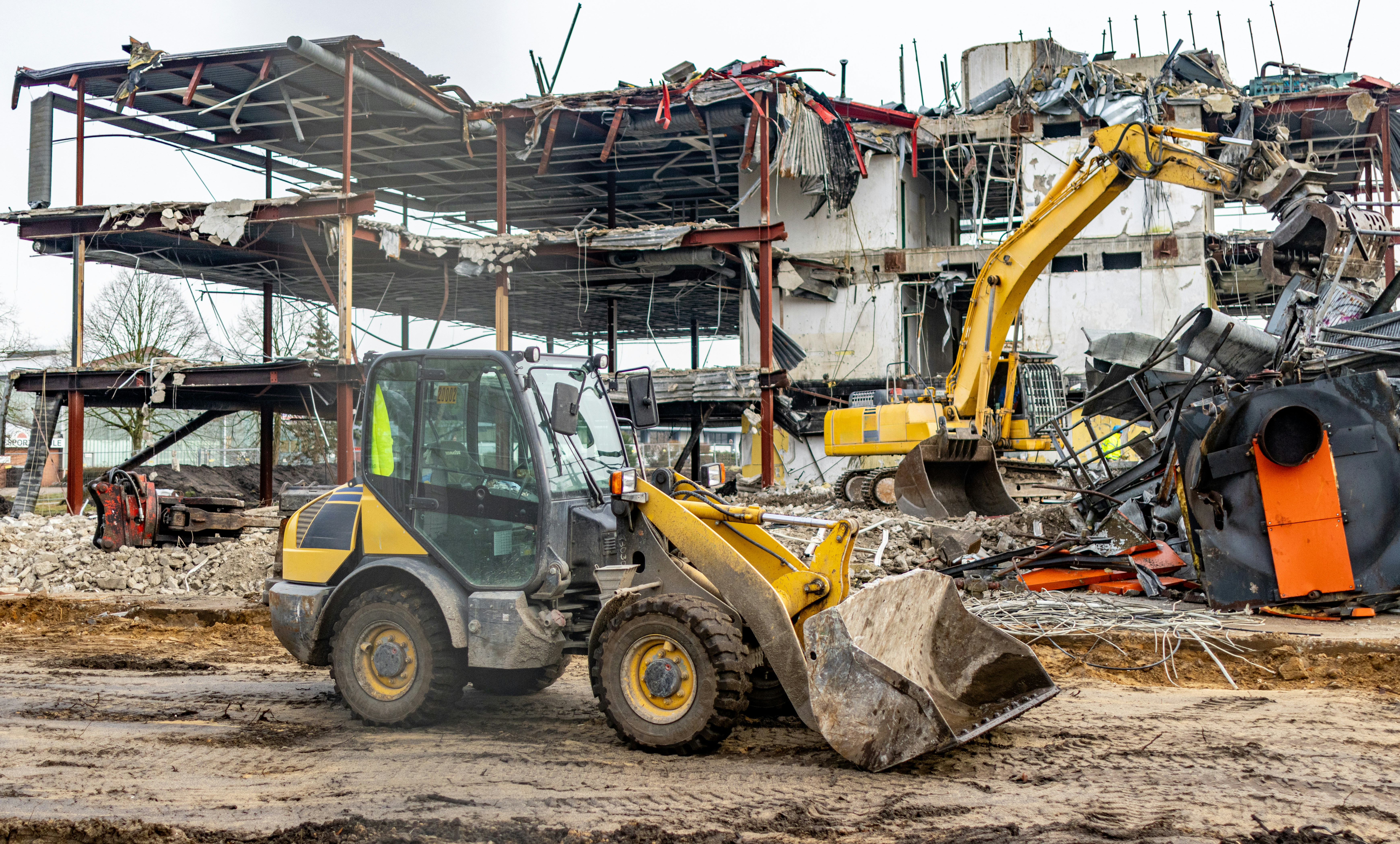
Clearer Guidance on Waste Streams Largely Dominated by Construction and Demolition Waste from the Municipal Waste Reporting
The project group proposes clearer guidance especially related to impregnated wood (LoW code 20 01 37*) and other hazardous waste categories primarily consisting of C&D-waste, which at least will apply to paint, inks, adhesives and resins containing hazardous substances (LoW code 20 01 27*). The project group’s assessment indicates, as previously mentioned, that the vast majority of these waste categories can be categorized as C&D-waste and therefore not MW by definition. Furthermore, the project group experiences that the countries in the current MW reporting either include or exclude all C&D-waste, which leads to significant variance and disturbance in the MW-statistics.
The project group recommends that countries determine whether to report these fractions based on assessments regarding the C&D-waste proportion. If the share of MW in a fraction is less than a predetermined percentage defined by Eurostat, the whole waste fraction can be excluded from the reporting; otherwise, necessary measures should be taken to provide data in the report. Preferably, this predetermined percentage should be included in Eurostat Guidance in order for the countries’ methodology to be streamlined.
Clearer Guidance on Definition and Reporting of Municipal Street-cleaning Residues
In accordance with Recital 10 of Directive (EU) 2018/851 only waste from litter bins should be reported as MW, not gravel and stones. This indicates that gravel and stones should not be reported under LoW code 20 03 03 and is not included in the MW definition. However, the project group has identified that some of the participating countries use the LoW code 20 03 03 for stone and gravel from street cleaning, and thus, since this is understood as a part of “street-cleaning”, the countries include this in their measurement of MW. Sand and gravel, indeed used for winter maintenance for avoiding icy roads, may result in larger amounts being collected, particularly when the streets are cleaned after the winter season. For this reason, the project group highlights the need for clearer guidance on the definition and reporting of the municipal street-cleaning residues. Additionally, the project group suggests that the Eurostat Guidance is amended, so the content of the litterbins is reported as the material contained in the bin (mixed, paper, food-waste, metal, plastic etc.) with the corresponding LoW codes for the respective streams. If this is applied, the LoW code 20 03 03 is not relevant for MW reporting.
Clarify Criteria for Packaging Waste in the Municipal Waste Reporting
In Chapter 1, the project group has identified a significant difference in the countries’ approaches to distinguishing packaging waste from other sources that should be included in the MW reporting. Consequently, the project group recognizes a need for clear criteria defining which types of packaging waste should be included as MW.
Packaging waste statistics reported to EU according to Directive 94/62/EC on packaging and packaging waste includes all packaging waste, but according to Eurostat Guidance on MW, an exclusion of at least transport packaging waste from the monitoring systems of packaging should be made. Specific transport packaging, such as drums, crates, pallets, hooks, etc. is also highlighted as non-MW. To avoid different interpretations and to achieve comparable data, the criteria for excluding packaging waste from the MW statistics need to be clarified.
It needs to be made clear in the Eurostat Guidance if similarity to packaging waste from households or, alternatively, the sector where it was generated should be prioritized when using data from the monitoring systems of packaging in the MW reporting. In the current Eurostat Guidance, primary content criteria and similarity are highlighted. However, this may lead to ambiguity when the guidance requires an estimation for distinguishing packaging waste not used by households, even when the content is similar.
The project group therefore recommends Eurostat to instruct member states to include all packaging waste without any specific categorization if it meets “content criteria”, which means similar in nature and composition to waste from households.
Article 3(2b)(b) of the WFD.
An alternative to further refine the statistics is a system of categorization based on a combination of NACE- and LoW codes (see the next recommendation). However, the project group believes that the simplification described above would be more feasible to implement in the MW reporting in the short term for all member states. This approach would also improve comparability among the member states. Waiting for a potential future delimitation based on NACE-codes, the issue of lack of comparability will likely persist over time. Also, this would require a detailed review to ascertain whether countries include packaging waste as MW to the same extent.
To sum up, clearer guidance is needed on whether the priority should be the similarity to household waste or the origin of the waste, especially when (packaging) waste from production and other excluded industries is identical or similar to packaging waste from households.
Use LoW Codes and NACE-Codes to Clarify Municipal Waste from Other Sources
In comparison of the participating Nordic countries, the project group has identified a significant difference in the countries’ approach to defining and calculating MW from other sources. The countries both differ in their understanding of the “content criteria”, which means where such waste is similar in nature and composition to waste from households,
Article 3(2b)(b) of the WFD.
According to Recital 10 of Directive (EU) 2018/851 MW is to be understood as corresponding to the types of waste included in LoW Chapter 15 01 and Chapter 20, with the exception of LoW codes 20 02 02, 20 03 04 and 20 03 06.
The LoW codes established by Commission Decision 2014/955/EU in the version in force on 4 July 2018.
It is also stated in Recital 10 of Directive (EU) 2018/851 that member states should exclude waste from large commerce and industry, which is not similar to waste from households in the scope of MW. Specific waste flows that should be excluded as from large commerce are not defined either in legislation or guidance.
In the Eurostat Guidance document for special cases, Eurostat also elaborates potential exceptions to be made from LoW Chapter 20 due to waste being seen as production factors or entrepreneurial risk and therefore not to be defined as MW. This type of demarcation from case to case is very unclear, and almost impossible to reproduce in practice when compiling waste statistics.
In some cases, there is a suitable code within another chapter of LoW codes, whereas in some cases there is not. In these cases, clarification needs to be made in the Eurostat Guidance. Thus, the project group assumes that there might be waste flows from other sources, correctly classified within LoW Chapters 20 or 15, which, through other criteria for exception, should not be reported as MW. In other words, one cannot exclude mismatches between the delineation of the MW chapter in the Commission Decision 2000/532/EC (LoW codes) and the definition of MW in the WFD, as the latter does not steer the interpretation of the Commission Decision 2000/532/EC.
Therefore, the project group has identified a need for clearer guidance of the definition of what should be understood as “similar in nature and composition to waste from households”
The Commission’s initial proposal for a Directive COM/2015/0595 was formulated as follow: ”comparable to household waste in nature, composition and quantity”, but the “quantity”-criteria was not retained in the final version of the directive ((EU) 2018/851), after European Parliament’s opinion on the first reading (Report A8-0034/2017).
The approach of using a combination of LoW codes and NACE-codes in order to define MW from other sources offers a systematic approach to correctly exclude non-MW from LoW codes, cf. Chapters 20 and 15. Such an approach has the potential to make the statistics robust to cases where waste from large commerce, production, agriculture or C&D activities is classified with a 20- code, or to the fact that 15-codes are used by all economic sectors for packaging waste. The reliance on a combination of LoW codes and NACE-codes could potentially eliminate the subjective judgement related to the classification of waste from “other sources”, their “nature and composition”, or if waste is generated “by natural persons in their own interest”.
LoW codes are already used to identify waste categories that are “similar in nature and composition to waste from households” (Directive (EU) 2018/851, Recital 10). NACE-codes can be used as a complement to reliably identify economic activities expected to primarily generate such waste. Even in countries where there is no traceability of the waste origin (NACE-code), the use of NACE-codes could potentially make it possible, in the long run, to clearly identify what type of activities or businesses generate MW.
3.2 Recommendations for Best Practices for Municipal Waste Statistics
The forthcoming section highlights the project group's well-considered recommendations for best practices in collecting and administering MW data from a reporting and statistical perspective. The term “best practice” is employed here to denote optimal methodologies and approaches worth striving for to achieve robust, accurate and efficient reporting on MW.
It is important to note that while these recommendations are agreed upon as being the most effective, none of the participating countries have yet fully implemented them. However, it is confirmed that several countries have adopted and are fulfilling one or more of these recommendations to some degree.
The project group strongly advocates these practices as they may significantly enhance the quality and relevance of MW reporting. For this purpose, they should be considered pivotal when planning and structuring a reporting system. Additionally, these best practices could offer practical solutions for countries struggling with reporting on MW, thus promoting more efficient and accurate reporting systems. Still, the consequences of the implementation in terms of costs and added reporting burden for respondents need to be thoroughly investigated in each country.
The project group has the following recommendations for best practices concerning the data collection and administration of MW statistics:
3.2.1 One Reporting System – the Importance of a System with Traceability
As previously highlighted, achieving high-quality data is challenging, especially given some of the existing data collection systems. The project group recognizes that from a reporting and statistical perspective consolidating waste reporting into a singular data system would be advantageous for both the waste collectors submitting the data and the authorities receiving it. High-quality data necessitate consistent and precise reporting, which is more effectively achieved through a unified system than multiple ones. A centralized national system, managed by a single entity responsible for its structure, maintenance, and data collection, offers a more comprehensive overview of which data to report and how. This is in contrast to multiple reporting systems where overlapping data, or gaps between reports, and varying reporting frameworks are likely.
Further, digitalizing the reporting process may significantly enhance the efficiency. Adapting the data collection system for automatic data uploads from the waste collectors’ waste databases could streamline the reporting, improving the waste collector’s ability to focus on high-quality weighting procedures and enhanced registration systems. By aligning waste collectors’ data bases – which store information such as waste origin (by customer names and codes), time of weighing, weight, waste types (by codes), and treatment methods (by codes) – with the reporting system, a high-traceability framework could also be established. This would simplify the extraction of relevant data, not only for MW reporting but also for tasks like developing national waste strategies and measuring their outcomes. Additionally, establishing a more detailed coding system, as outlined below, could improve traceability.
All stakeholders could benefit from access to this data. Waste producers like municipalities, businesses and public institutions would gain insight into their own waste generation and its treatment; also, municipalities could access data relevant to their responsibilities. Despite all the advantages associated with one reporting system, substantial investments are needed for the development of these types of digital systems and may affect the reporting burden for waste reporters. This is a crucial reason for member states to continue using the existing and available data sources for tracking and reporting on MW. The consequences of a transition to a new waste data system in terms of costs and reporting burden therefore need to be thoroughly investigated in each country.
3.2.2 Effective Communication and Guidance for Waste Reporters
Effective communication and guidance to waste reporters is crucial. The quality of the waste data system depends on the reporters' abilities, regardless of how good the system is. Thus, to get the best possible waste data, it is important to keep good communication and collaboration between the people collecting the waste data and the waste reporters. This applies to both how the waste data should be reported and what information is reported.
3.2.3 Compositional Analysis on Residual Waste for Material Breakdown of Generated Municipal Waste
In order to track the waste flow per material type, it is preferable to have the material breakdown of generated amounts, including the breakdown of mixed waste. This breakdown can be done based on knowledge from compositional analysis of the residual waste. The compositional analysis of residual waste is critical in measuring the “sorting efficiency” of recyclable waste. The “sorting efficiency” denotes how well the separate sorting process is functioning. In conjunction with “recycling efficiency”
Recycling efficiency is a measurement of the share of recycled amount out of the separately collected amounts.
3.2.4 Establish Additional Data Collection Codes beyond those Specified by the EU
The project group recommends member states to incorporate additional waste codes to the existing LoW codes and R/D-codes for MW reporting.
The LoW codes are tied to both the origin of the waste and the material itself in the same code,
Except for special cases such as Chapter 15, which focuses solely on the material, for example, packaging glass. The issues regarding packaging waste are described further in the recommendation for packaging waste.
The project group recommends the member states to complement the R/D-codes. The R/D-codes are not sufficient to specify all the treatment forms that must be reported to Eurostat. For instance, none of the R/D-codes are suited for reporting preparing for reuse.
Section 2.3 “Waste treatment: data set 2” in Eurostat (2024) "Manual for the Implementation of Regulation (EC) No 2150/2002 on Waste Statistic" provides a detailed description of how R/D-codes can be translated into WStatR treatment-categories. For example, it addresses the issues with preparation for reuse by stating that it should be reported as a pre-treatment R12. However, this still does not solve the issue of how to identify preparing for reuse without applying an additional set of treatment codes.
The project group has discovered that all the participating countries utilize their unique set of national waste codes (in varied degrees) in addition to the LoW codes and R/D-codes for the MW reporting. The project group thus agrees that the waste and treatment codes need to be complemented by the EU and/or the member states. It would be advantageous if the EU could clarify how the existing codes could be complemented in order to make the data more comparable across member states.