6. Sweden
6.1. Governance structure
National adaptation policy-landscape
The first important milestone for climate adaptation in Sweden was in 2004 when the Swedish Environment Agency organized a seminar on climate risks and adaptation, which brought together representatives from national and subnational authorities (Interviews, Sweden). The seminar resulted in a strong call for a national strategy on climate adaptation. However, it was not until Sweden was severely hit by cyclone Gudrun a year later, causing significant environmental and economic damage, that the country’s vulnerability to extreme weather events and climate change received proper attention in the political and public discourse.
That same year, the Swedish Government appointed a National Commission on Climate and Vulnerability to produce Sweden’s first report to assess the regional and local impacts of climate change on Swedish society and their economic implications (Swedish Commission on Climate and Vulnerability, 2007). The report that was published in 2007, highlighted the need for a greater engagement from subnational authorities on climate adaptation and called for municipalities to have a central role in adapting Swedish society and economy to climate change. Subsequently, the Swedish Parliament published what was referred to as the country’s first coherent climate and energy policy, which set out to lay the foundations for future actions to address climate change, including directions on climate adaptation (Government Offices of Sweden, 2009).
However, it was not until in 2018 when the Swedish Government finally published Sweden’s first National Adaptation Strategy (NAS) (Swedish Ministry of Climate and Enterprise, 2018a), rendering the country a latecomer among EU countries to put in place a policy framework to guide the government’s work on climate adaptation. The strategy complemented the Swedish Climate Act, the country’s first legislative framework for climate policy, which was published a year earlier and was centred on mitigation (Klimat- och näringslivsdepartementet, 2017). The strategy outlined the government’s vision to develop Sweden into a long-term sustainable and robust society that can confront the challenges of climate change by reducing vulnerability and take advantage of the opportunities associated, in alignment with the Paris Agreement, Agenda 2023 and the Sustainable Development Goals. The strategy set out roles and responsibilities for climate adaptation across different stakeholders and highlighted priority areas for action and investments for adaptation. The strategy also listed a set of principles that should guide climate adaptation work in Sweden, which includes sustainable development, mutuality, scientific basis, precautionary principles, transparency, among others.
The strategy put in place a five-year policy cycle for the national climate change adaptation work in Sweden to ensure continuity and effectiveness and launched the establishment of the Swedish Expert Council on Climate Adaptation. The purpose of the Expert Council is to evaluate the national work on climate adaptation and provide evidence-based advice for the government on how to prepare for a changing climate and advance the work on climate adaptation going forward. The government is currently working on the development of a new national adaptation strategy which will be published in 2023 (Interviews, Sweden). The strategy will to a large degree be modelled on the latest EU adaptation strategy, with respect to structure and thematic division (where relevant), according to one of the interviewees.
The strategy assigns the National Board for Housing, Building and Planning with a more prominent role in coordinating climate adaptation for the built environment regarding new and existing buildings in the view of available data on climate hazards and risks, and in conjunction with legislative changes to Sweden’s Planning and Building Act (2010:900) (Boverket – the Swedish National Board of Housing, Building and Planning, 2018). The role of municipalities was also strengthened through two legislative amendments in the Planning and Building Act and the Land Act (Gram-Hanssen, et al., 2023), which established the first legislative backbone to underpin climate risk assessments. The amendments clarified the responsibilities of municipalities in their spatial planning to assess the risk of damage from climate-related natural events related to landslide, erosion, and flooding and how these can be prevented, as well as enabled municipalities to set stricter requirements to address climate risks in their regulatory plans.
Shortly after the publication of the National Adaptation Strategy, the Swedish Government also passed the ordinance on Swedish authorities’ work on climate adaptation, which entered into force at the beginning of 2019 (Swedish Ministry of the Environment and Energy, 2018). The ordinance assigned responsibility across 32 national governmental agencies and all of Sweden’s 21 County Administrative Boards (CABs) to initiate, support and evaluate climate adaptation work within the remit of their mandate. The ordinance also tasks the authorities to conduct a climate and vulnerability assessment; develop goals and an action plan for their work on climate adaptation. The ordinance on climate adaptation and the National Planning and Building Act together form the legislative backbone for climate adaptation in Sweden. According to Sweden’s latest Adaptation Communication to the UNFCCC from November 2022 (Swedish Ministry of the Environment, 2022), there are presently 45 adaptation action plans at national and regional level, covering different sectors and business areas, collectively contributing to the implementation of the national strategy.
Various other national legislations, strategies, and action plans in different sectors in Sweden have significant bearing, directly and indirectly, on climate adaptation implementation in Sweden. The Swedish Environmental Code is a legislative package that covers a number of areas related to climate adaptation, including the protection of human and environmental health against different threats and the preservation of biodiversity (Swedish Ministry of Climate and Enterprise, 2020). The Swedish National Strategy for Forestry considers the need for adaptation in the anticipation of increasing risks from climate change (Swedish Ministry of Climate and Enterprise, 2018b), while the Public Health Agency published an action plan in 2021 on how it plans to adapt the healthcare system to a changing climate (Folkhälsomyndigheten, 2021). Climate adaptation is also expected to be featured in Sweden’s upcoming food strategy (Interviews, Sweden).
Commissioned by the National Knowledge Centre for Climate Change Adaptation (NKCCCA) at the Swedish Meteorological and Hydrological Institute (SMHI), the Swedish legal consultancy Delphi recently carried out a mapping exercise to provide a comprehensive overview of the national laws and legislations that could be leveraged or operationalized to support climate adaptation work on national and subnational level (Lundh, Ibold, & Bjurström, 2022).
Table 6.1: Timeline for adaptation policy in Sweden
Year | Item | Description |
2004 | Swedish Environment Protection Agency’s seminar on climate adaptation. | The Swedish Environment Protection Agency organizes the first gathering of key authorities to raise awareness of climate adaptation. |
2007 | A government commissioned report on climate hazards and vulnerabilities for Sweden is published. | A national commission appointed by the Swedish government publishes the country’s first report on climate hazards facing Sweden and vulnerabilities. |
2009 | Sweden inaugurates its first climate and energy policy. | The Swedish parliament adopts the country’s first climate and energy policy framework, which includes directions on climate adaptation. |
2018 | Sweden’s first national adaptation strategy (NAS) published. | Sweden’s first national adaptation strategy is published by the Swedish Government, to supplement the mitigation-oriented Climate Act published a year earlier. |
2018 | Amendments to the Planning and Building Act. | Legislative amendments to the existing Planning and Building Act, provided a clearer guidance and mandate for municipalities to ensure that climate risks related to landslide, erosion and flooding are considered in spatial planning. |
2019 | Government issues an ordinance on climate adaptation for national authorities and county administrative boards (CABs). | The ordinance on climate adaptation issued by the government strengthens the roles and legal responsibilities for national agencies and subnational authorities to work on adaptation. |
2023 | Sweden’s second national adaptation strategy (NAS) to be published. | The forthcoming national adaptation strategy to be published this year is expected to clarify roles and responsibilities on adaptation and strengthen cross sectoral integration. |
Division of responsibility
The Swedish administrative model of governance is divided across the national, regional and local levels (Government Offices of Sweden, 2014). The Swedish parliament (Riksdagen) has the main legislative authority at the national level with the Government responsible for executing the decisions and legislations passed by the parliament. Regional governance is divided across Sweden’s 21 counties where regional councils are elected regularly, with healthcare provision being one of the main duties, among others. Each county also has a regional central government authority, known as County Administrative Boards (CAB). On a local level, Sweden consists of 290 municipalities which are responsible for special planning and most public services (e.g., school system and elderly care), through the municipal councils/city councils, which are regularly elected and govern in accordance with the country’s Local Government Act.
National
The Swedish Government and the Parliament are responsible for legislative aspects around climate change adaptation on a national level, in collaboration with national agencies, whereas the Swedish Government is responsible for policy development and implementation.
The Ministry of Climate and Enterprise is currently at the helm with a supervisory and coordination role for government’s work on climate adaptation policy and work, although each ministry is responsible for managing adaptation issues within their policy portfolio and remits (Interviews, Sweden). As part of this role, the climate unit of the Ministry of Climate and Enterprise oversees a recently established cross-governmental working group that brings together 10–12 civil servants representing different ministries with the purpose of developing a new national adaptation strategy. The ministries that were initially associated with the working group included the Ministry of the Environment, the Ministry of Enterprise and Innovation, the Ministry of Health and Social Affairs, the Ministry of Justice, the Ministry of Infrastructure, and the Ministry of Finance. However, there has however been considerable changes to the governance structures within the government since a new government coalition assumed office, and at the time of writing it remains unclear which of the existing and newly formed ministries will be involved in the working group.
Through the government’s ordinance on climate adaptation, the Swedish Government has assigned national agencies (e.g., the Swedish National Food Agency, the National Board of Housing, the Swedish Geological Survey, to name a few) and the CABs, to initiate, support and evaluate work on climate change adaptation, within their own areas of responsibilities and within the framework of their assignments (i.e. sectors or regions) (Swedish Ministry of the Environment and Energy, 2018). As part of this assignment, these authorities have also been tasked to develop an action plan for their respective organization/county’s work on climate change adaptation. The national agencies and CABs are required to report their work on climate adaptation to SMHI on an annual basis, which has been given the responsibility to analyse these reports and submit a summary of their evaluation to the government. SMHI has also been tasked to support these authorities in their work.
Since climate adaptation in Sweden has been strongly underpinned by legislations regarding spatial planning, the Swedish National Board of Housing, Building and Planning plays a key role in awareness-raising around climate adaptation in context of spatial planning and the built environment. The national agency is also responsible for ensuring compliance to the legal requirements set out by the Planning and Building Act to consider climate risks in spatial planning and decisions on new buildings and other constructions.
Sub-national
The CABs are Sweden’s 21 government authorities that operate at the interphase between national and municipal authorities, where they are responsible for ensuring that decisions from the Swedish Government and Parliament are implemented in the counties and oversee government activities at regional and municipal levels. The county boards are also tasked with various regional responsibilities, such as informing the government of regional needs and supporting regional development, as well as the supervision of inter-municipal and other regional interests. The government’s ordinance on climate adaptation provided a much-needed long-term framework on responsibilities and roles, to guide the work of the CABs on climate adaptation. Prior to the ordinance, the CABs were assigned temporary responsibilities and goals around climate adaptation on an annual basis. However, the CABs were significantly hampered in their efforts in this area as the county boards did not receive any substantial support from national agencies, as the latter had no legal obligation to develop adaptation strategies or to implement measures within their sectoral remits (Interviews, Sweden).
The ordinance also tasked the CABs with the assignment to:
- Initiate, support, and follow up the climate adaptation work of the municipalities.
- Analyse how the country and, where necessary, neighbouring countries are affected by climate change.
- Support and follow up the climate adaptation work of regional sectoral agencies.
- Contribute to and produce documentation to improve knowledge and planning, and
- Support the work of river coordination groups.
The ordinance assigns responsibilities for the CABs to both monitor and coordinate climate adaptation work across the county’s municipalities in line with the government’s ordinance on adaptation, as well as to ensure the harmonization of climate adaptation measures with neighbouring counties and to avoid potential maladaptation (e.g. transfer of climate risks across counties) (Swedish Ministry of the Environment and Energy, 2018). The CABs often support municipalities in their climate adaptation work, such as via seminars and workshops. The CABs sometimes also provide their municipalities with guidance and recommendations around spatial planning matters, and compile data on regional risk from climatic (and non-climatic) disasters, such as flooding and heat.
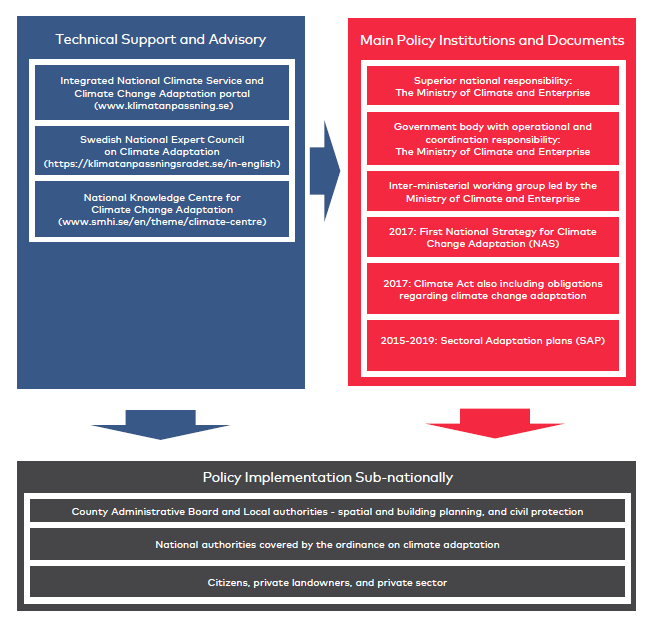
Figure 6.1. Organization of adaptation in Sweden
The Regional Councils which are elected every four years in conjunction with the national elections and governed by regional assemblies, however, do not have a statutory role on climate adaptation, according to the government’s ordinance on climate adaptation. Still, the regional councils are responsible for a range of critical services and functions that will be affected by climate change, such as healthcare, public transportation, civil response (e.g., carry out regional hazard and vulnerability analyses) and regional development. Therefore, the regions can play an important role in strengthening the climate resilience of these key services and infrastructures and prepare for the impacts of climate change as part of their broader mandates, such as conducting various hazard and vulnerability analyses and healthcare preparedness for heatwaves as part of their role in healthcare provision.
The municipalities in Sweden have a central role to play in climate adaptation at a more local level, as considerations of climate risks cut across their existing responsibilities and mandates, such as regarding spatial planning, water management and natural disaster prevention (including various hazard and vulnerability analyses). The legislative amendments introduced by the Swedish Government to the Planning and Building Act and the Land Act in 2018 (Gram-Hanssen, et al., 2023), granted municipalities with a stronger mandate to ensure that risks from climate change and other natural disasters are factored into permitting-decisions regarding the constructions of new buildings and infrastructures, and spatial planning. Yet, the ordinance on climate adaptation fell short to place any direct legal obligation onto the municipalities to work on climate adaptation, and therefore some municipalities do not have designated individuals or teams work on climate adaptation per se (Interviews, Sweden). The ordinance on climate adaptation regulates the CABs to initiate, support and follow up the work on climate adaptation within their municipalities, but the municipalities are not obliged to report their climate adaptation work to the CABs.
At present, there has not been any clear delegation of responsibility for private sector actors on climate adaptation (Interviews, Sweden). While businesses and private property owners have a legal obligation to take actions to manage and protect their assets according to Swedish laws, general awareness among private property owners of this responsibility is limited and its implication with respect to responsibilities of adaptation is unclear.
Policy themes
The current national adaptation strategy highlights seven key priority areas for actions based on forecasted consequences of climate change, including (Swedish Ministry of Climate and Enterprise, 2018a):
- Landslides and erosion that threaten communities, infrastructure, and businesses.
- Flooding that threatens communities, infrastructure, and businesses.
- High temperatures that involve risks for the health and wellbeing of people and animals.
- Water supply shortages for individuals, agriculture, and industry.
- Biological and ecological effects that affect sustainable development.
- The impact on domestic and international food production and commerce, and
- Increased incidence of pests, diseases and invasive non-native species that affect people, animals, and plants.
However, the Swedish Expert Council on Climate Adaptation in its first report to the Government in 2022, recommended that the Swedish Government considered the key priority-areas outlined in the strategy within three overarching risk areas to better account for climate risks that are particularly and contextually relevant for Sweden in the forthcoming adaptation strategy, which include 1) physical security and land-use, 2) water security, and 3) food security (Nationella expertrådet för klimatanpassning, 2022a). Since it had only been a few months since the current Swedish Government assumed office – at the time of writing, the priority policy areas for climate adaptation for the upcoming strategy remain to be seen (Interviews, Sweden).
Still, according to consultations with public officials and policy advisors, much of the focus of climate adaptation in Sweden to date has been on safeguarding the built environment and other infrastructure against flooding (both coastal and in-land), landslides, and coastal erosion, while a CABs and municipalities have been actively working on developing and putting in place cloud-burst strategies on subnational level. In contrast, the use of nature-based solutions (NbS) and broader efforts on safeguarding Swedish ecosystems have been lagging on a national level. However, the county administrative board for Stockholm is currently considering strengthening its work on NbS, for instance on the restoration of wetlands (Interviews, Sweden). According to several of our informants, there is also a strong consensus among government officials and policy experts that transboundary climate risks are a significant threat to Swedish economy and wider society, which has largely remained neglected to date (Interviews, Sweden). Some of the concerns over Sweden’s exposure to transboundary climate risks have been raised following a recent publication that highlighted the country’s exposure to risks related to climate-induced disruptions to agricultural supply chains (Lager & Benzie, 2022).
The climate risks and thus priorities for climate adaptation in Sweden also differ to a varying degree across the regions in Sweden. For instance, while flooding risks from rising sea-levels are a particular concern for counties and municipalities in the southern parts of Sweden, such as Skåne, Gothenburg and Stockholm (particularly regarding fresh-water contamination), this is not a risk for counties and municipalities in the northern parts of Sweden which are experiencing land-rise (Interviews, Sweden). The counties and municipalities in the most northern regions of Sweden have also begun to examine the impact of climate change on the indigenous Sami population in Sweden and their livelihood, including reindeer herding.
Risk assessments
The first national climate and vulnerability assessment of climate change impacts in Sweden was initiated in 2005 and submitted to the government in 2007 (Swedish Commission on Climate and Vulnerability, 2007). The assessment distilled the methodological approach for the assessment, provided an overview of different climatic drivers and areas/sectors affected, as well as listed several measures to enhance Sweden’s climate resilience. In an updated assessment published in 2015 (Andersson, et al., 2015), SMHI compiled evidence about current and future risks and consequences for Swedish society from climate change, and – in partnership with various public and private sector actors - mapped all the key climate adaptation work that had been conducted across Sweden since the publication of the first report. The updated risk assessment also identified existing knowledge gaps and called for clearer and more robust governance structures to provide more knowledge and decision-making support, as well as enable greater access to risk information.
The Expert Council published its first evaluation of the current state of play of climate adaptation in Sweden, as assigned by the government, which also provided recommendations on future actions (Nationella expertrådet för klimatanpassning, 2022a). The report provides an analytical overview of how climate change has begun to effect Swedish environment, economy, and society; presents the most up to date analysis on how different sectors have been and will be affected by climate change; assesses the effectiveness of existing adaptation efforts across different levels of governance; and provides guidance to the government on prioritization of future measures to progress the work on climate adaptation. As assigned by the government, the council will publish updated versions of these integrated progress assessments every five years. The report also compiled together some of the available data and information to bridge some of the knowledge gaps identified in the SMHI report.
To date, no climate risk and vulnerability assessment at the national level has been carried out, which accounts for the major climate related risks for different sectors and geographical areas in Sweden under different climate scenarios, highlighting the expected economic impact under the different scenarios, and based on these assessments gives advice on how to prioritize between them. Although the Expert Council has also been assigned with a role to analyse costs for climate risks and adaptation measures on a national level, it concluded that it was not feasible to incorporate such a fully integrated and detailed analysis into its first report due to the lack of available data. At the same time there remains a lack of clarity on the responsibility regarding the conduct of the analysis itself. The Expert Council will in their work up to their next evaluation report examine the council’s role in the conduct of an updated national climate and vulnerability assessment, including what it might need other actors to do within the frame of such an undertaking. In general, the risk assessments that are underpinned by legislation or reflected in the adaptation strategy are better developed than others. However, the government’s ordinance on adaptation is unclear on the scope and granularity of these sector-specific assessments, as opposed to the strict guidelines for some of the non-climate related vulnerability assessments that already exist (e.g., on disaster risk reductions).
However, the Expert Council recently commissioned a consultancy to conduct a study to assess how cost-benefit analyses have been conducted thus far in climate change adaptation projects in Sweden and to propose a methodology for cost-benefit analysis for climate change adaptation measures, including the monetization of the climate risks and consequences in context of those adaptation measures. The ultimate purpose of this work is to help equip and encourage the use of cost-benefit analysis in decision-making processes on national, regional, and municipal level. One of the main conclusions of this study was that cost-benefit analyses demonstrated economic benefits in implementing adaptation measures in most cases, and especially in context of nature-based solutions. Yet, the findings also showed that cost-benefit analyses are rarely undertaken in general (18 analyses between 2006 and 2022), and mostly in context of risk assessments around flooding. The report further showed that cost-benefit analyses typically focus on consequences that are easy to quantify and that few include discussions about responsibility and funding issues. Still, the report concluded that in most cases investments in climate change adaptation are profitable (Nationella expertrådet för klimatanpassning, 2023).
Alongside the more high-level integrated assessments of climate hazards and vulnerabilities, the national agencies and CABs that are subject to the government’s ordinance on climate adaptation, are required to develop regional and sector-specific climate and vulnerability assessments, and report to the SMHI and the ministry responsible for the climate-related policy portfolio (see box 6.1).
Box 6.1. Sector-specific risk assessments in Sweden
- The Swedish Forest Agency published a national action plan in 2019 on climate adaptation for Swedish forests and forestry (Skogstyrelsen, 2019). The report included a vulnerability assessment of the impacts of climate change on Swedish forests and forestry and outlined proposals of short- and long-term adaptation objectives, and recommendations of adaptations actions.
- The Swedish Geotechnical Institute and MSB has similarly carried out a risk assessment to specifically examine the effects on climate change on regional risks of landslides, mudslides, erosion, and flooding, as well as their implication for human health, ecosystem, and infrastructure (Statens Geotekniska Institut and Myndigheten för samhällsskydd och beredskap, 2021). The assessment also outlined preventative and mitigation measures to adapt to these risks. MSB has also conducted important work around climate-related natural hazards and preventions in the context of civil response and emergency preparedness, and thus carries out some assessments on climate-related hazards, albeit more in the context of existing risks.
- The Swedish Agency for Marine and Water Management and the Swedish Energy Agency are also among other national agencies that carry out risk assessments within their own remits and sectors (Interviews, Sweden 1). However, the government’s ordinance on adaptation failed to provide any steer on the scope and granularity of these sector-specific assessments, as opposed to the strict guidelines for some of the non-climate related vulnerability assessments that already exist (e.g., on disaster risk reductions).
Much of the climate adaptation work that takes place on a municipal level is carried out in context of civil response and emergency preparedness. At the same time, there are ongoing discussions on the scope of hazards and vulnerability assessments carried out by the CABs; whether these should cover regional risks or simply risks related to the remits and operations of the CABs. The SMHI is currently working with the CABS, to develop a methodological framework to help with the coordination of the risk analyses across the 21 county boards (Interviews, Sweden).
Systems for monitoring, reporting, and evaluation
There is not currently a comprehensive system for monitoring, reporting and evaluation (MRE) in place in Sweden. The government tasked SMHI to develop a proposal for a system for monitoring and evaluation of the national climate change adaptation work, in accordance with the adaptation strategy (Sjöström, 2021). While SMHI submitted its proposal to the government in 2020, no decisions have been made based on the proposals and thus a formal national system for monitoring, reporting and evaluation remains absent.
However, the national authorities covered by the ordinance on climate adaptation and the CABs annually submit their statutory climate related hazard and vulnerability assessments and reports on their adaptation work to SMHI, which is responsible for their collection, analysis and synthesis. Subsequently, the SMHI submits a summary report of their evaluation of this work to the government. SMHI operates a system for the monitoring and evaluation of climate adaptation work in accordance with the ordinance, which includes a web-based reporting portal through which relevant authorities submit their reporting (Kownacki, Englund, Krunegård, & Wallin, 2021). The analysis conducted by the SMHI sets out to produce insights on the following questions:
- How have the respective authorities carried out their assignment on climate adaptation?
- Which risks and opportunities have been identified and prioritized?
- Which adaptation needs have been identified that are currently being addressed?
- What obstacles and wider needs have been identified?
The SMHI has also established a methodological framework for the monitoring and evaluation of climate risks and adaptation for given authorities within its remit and responsibility and is currently developing a proposal for the government for a system to evaluate compliance, effectiveness, and follow-up.
Aside from the SMHI, several national institutional bodies play a critical role in monitoring and evaluating the implementations and effectiveness of climate adaptation measures. The Expert Council has been central in assessing the effectiveness of government policies and adaptation measures across national and subnational levels. The National Audit Office has a statutory role in monitoring the compliance of the Swedish government and national agencies to legislations passed by parliament. In this context, the audit office has recently published a report evaluating the effectiveness of national authorities support to municipalities in implementing climate adaption in the built environment (Riksrevisionen, 2022). The National Audit Office concluded that Sweden lacka a national system for monitoring and evaluation which is needed to judge whether governmental or municipal actions contribute to lowering the risks of landslides, erosion and flooding in the municipalities.
6.2. Policy instruments
To date, climate adaptation policies and actions in Sweden have largely focused on developing capacity building and strengthening ownership and mandates across national agencies to support adaptations in their own respective sectors, as well as providing subnational authorities with the technical support to guide adaptation work on both regional and municipal level. Although the Swedish government has in recent years made efforts to provide a clearer direction on roles and mandates for adaptation, these have largely been confined to spatial planning. Therefore, serious disparity between mandates and legal obligations remains. Also, financial resources and institutional capacity are still insufficient to realize the required adoption of adaptation measures, against a backdrop of limited economic incentives.
Capacity building
An important milestone for climate adaptation in Sweden was the establishment of the Swedish Expert Council on Climate Adaptation, which is appointed by the government and consists of experts from a wide range of disciplines (e.g., climatology, spatial planning, health, and social science). The council is assigned with the task of mapping out the overall vulnerabilities of Swedish society to climate change and to provide guidance on how work on climate adaptation should be developed in Sweden (Nationella expertrådet för klimatanpassning, 2022b). The council is tasked with publishing a report every five years to provide advice to the government for its regular revision of the national climate adaptation strategy, including recommendations on adaptation priorities and cross-sectorial assessment of the societal impacts of climate change. The Expert Council also plays a pivotal role in following-up and evaluating past and ongoing work on climate adaptation.
The SMHI operates the National Knowledge Centre for Climate Change Adaptation (NKCCCA) established in 2012, which serves as an interdisciplinary knowledge hub on climate adaptation and a platform for collaboration for different actors working in the space of adaptation, including public authorities, businesses, research institutions and civil society (Swedish Meteorological and Hydrological Institute, n.d.). The knowledge centre compiles relevant research and information and makes it understandable and accessible for people and organizations wanting to learn more about climate adaptation. The centre also regularly organizes knowledge-sharing initiatives and training courses, as well as operates the online portal on climate adaptation, Klimatanpassning.se, as a tool to further support the dissemination of information on climate adaptation in Sweden, with the view of supporting different societal actors to prepare for the consequences of climate change. The Swedish municipalities have also relied considerably on the knowledge centre to guide their work on climate adaptation, as the centre has developed a wide range of useful tools and guidelines to support adaptation on a local level (Interviews, Sweden).
Myndighetsnätverket för Klimatanpassning is a strategic cross-institutional network that brings together national agencies, the CABs and the Swedish Association of Local and Regions (SKR) twice a year to support knowledge-sharing and partnership-building around climate adaptation (Nationellt kunskapscentrum för klimatanpassning, 2022). Through this network, the national agencies and the CABs can establish partnerships (or consortiums) for climate adaptation projects and are eligible to receive funding for this work through the network. The entire network comes together twice a year in-person and hosts two virtual meetings for information dissemination, as well as organizing smaller working group meetings around specific themes (Interviews, Sweden).
On subnational level, many municipalities in Sweden have made considerable progress in strengthening the resilience of the local healthcare system in the anticipation of greater frequency and severity of heatwaves (Interviews, Sweden). In this context, the municipalities have been actively raising awareness of the health risks from heat-stress and developed guidelines to support adaptation to protect human health - especially among the elderly and other risk groups.
In context of the private sector, the agriculture and forestry industries have led progressive efforts to raise awareness among businesses in this sector of climate risks in the wake of recent forest fires and water shortages in agriculture, and stressing the importance of implementing adaptation solutions, (Interviews, Sweden). Management programs on climate adaptation have been organized within the forestry sector, and thus awareness of climate risks and adaptation solutions is quite high among Swedish businesses operating in weather-dependent value chains.
Incentive mechanisms
SMHI gets governmental funding to administer both the National Knowledge Centre for Climate Adaptation and the Swedish Expert Council on Climate Adaptation. Conversely, national agencies and country administrative boards that are subject to the government’s ordinance on climate adaptation, are not automatically granted specific budgetary appropriations to support their climate adaptation work. However, the authorities can apply for funding of joint climate adaptation studies or actions through the climate adaptation network as mentioned earlier. In 2023, SMHI administer funding of around SEK 4 million across ten different projects. The CABs do get additional budgetary funds for their climate adaptation work and use this funding to both conduct climate adaptation work on a regional level and in some cases administer support to municipalities to aid the climate adaptation work on a more local level.
In addition, several national authorities administer funds that can be used for work related to climate adaptation, even if they were not designed as bespoke financial instruments for climate adaptations (Gram-Hanssen, et al., 2023). In absence of a dedicated fund for adaptation, MSB has been a valuable source of funding to support prevention of natural disasters, which has been used for implementing adaptation measures in relations to flooding and landslides, although its narrow scope excludes other areas (e.g., nature-based solutions). While the MSB funds have seen a significant increase in only the last few years, from 25 million SEK to about 500 million SEK today, lack of institutional capacity to match the increased funding has created administrative bottlenecks regarding the processing of applications, which has hampered the financing of adaptation projects (Interviews, Sweden). The Government has also dedicated a specific fund directed at projects to reduce the risks of landslides and erosion along the river Göta Älv. The fund is administered by the Swedish Geological Institute (SGI) and amounts to 115 million SEK in 2023.
The NKCCCA centre has provided a comprehensive list of various funding instruments that are available from different national agencies that could be used to finance projects that relate to climate adaptation. Some of these financial instruments are enumerated below in box 6.2 (National Knowledge Centre for Climate Change Adaptation, 2023).
Box 6.2. Examples of instruments for financing climate change adaptation
Swedish Environmental Protection Agency: The agency operates a funding programme (LONA) that provides partial funding to support various projects aimed at environmental conservation and protection, including the restoration of wetlands.
Swedish Agency for Marine and Water Management: The CBAs can apply for funding through the agency’s LOVA grant scheme, to support municipalities and non-profit organisations in local efforts to improve marine and water environment.
Swedish National Board of Housing, Building and Planning (Boverket): Boverket provides funding for certain measures that enable energy efficiency and other environmental improvements (e.g., heating systems and waste management), in social and cultural venues that are not run by the government, such as museums, theatres, concert halls and art galleries.
Swedish Forest Agency: The agency runs the Nokås funding programme that provides finance to support measures to improve Swedish forestry by promoting biodiversity, restoration of wetlands, among other measures.
Swedish Transport Administration: The transport administration occasionally provided funding for municipalities to climate-proof existing urban infrastructure (Johansson, 2015).
Swedish Innovation Agency (VINNOVA): VINNOVA runs several challenge-driven funding programmes, including one on “Civil society solutions for a resilient society” which provides finance for cross-sectoral innovation partnerships and solutions for climate adaptation and social resilience.
Swedish Research Council for Sustainable Development (FORMAS): FORMAS has established a funding instrument to support collaborative platform, known as Policy Lab, for public and private sector actors to engage in policy exchange, development, and experimentations, in support of climate adaptation.
Swedish Agency for Economic and Regional Growth (Tilväxtverket): Tilväxtverket provides financial support to facilitate sustainable development in businesses, through so their so-called “Checks for a Green Transition” initiative. The financial support is accessible for companies to develop solutions to enhance biodiversity and ecosystem services and climate adaptation measures.
Aside from these financial instruments, the economic incentives to drive greater work on climate adaptation have been quite weak in Sweden. In fact, the Expert Council has stressed the need for greater, long-term, and more integrated financial instruments and other economic incentives to advance climate adaptation across Sweden (Nationella expertrådet för klimatanpassning, 2022a). In fact, the council called on the government to provide greater funding for municipalities to support local adaptation measures, as well as to put in place innovative financial mechanisms that allow municipalities to capitalize on linkages between adaptation, biodiversity, and nature-based solutions. According to the council, there is also a strong need for some type of co-funding mechanism, like public-private partnerships, that can create incentives for private property owners to implement adaptations. According to policy experts consulted, the insurance industry in Sweden is currently considering possibilities to implement some kind of premiums to incentivize adaptation measures, although companies have not yet taken any actions in this matter.
6.3. Best practices and main challenges
Despite calls for a national adaptation strategy for Sweden as early as in 2007, and especially in the wake of the catastrophic impacts of cyclone Gudrun the following year, subsequent governments dragged their legs on this issue and the country’s first national adaptation strategy only saw the light of day, eleven years later in 2018. Even after its long-awaited publication, the strategy was widely perceived as being in many cases vague and not sufficiently detailed (Interviews, Sweden). In its 2022 report on the state of climate adaptation in Sweden, the Expert Council stressed that the forthcoming national adaptation strategy needs to be clearer and more concise to avoid the ambiguity; a frequent criticism levelled against the existing strategy. For example, the council called for a clearer signal on expectations, risk ownership and responsibilities for adaptation (including financing), in the new adaptation strategy (Nationella expertrådet för klimatanpassning, 2022a).
A greater clarity on responsibilities and risk ownership will be essential to address the disparity on the subnational level between statutory obligations of the CABs on climate adaptations on one hand, and the responsibilities and remits of the municipalities in the absence of such legal mandate. While the CABs have been legally assigned with the responsibilities to report on adaptation work that is carried out on a regional and municipal level, the municipalities do not have any legal requirements to report on their adaptation work to the CABs – let alone implement adaptation measures beyond those measures that are covered by the amendments of the Planning and Building Act and the Land Act, or within other existing remits of municipalities (e.g. in context of rescue services and security). Although much of the legislative underpinning for adaptation is anchored on spatial planning, the requirements for factoring climate hazards into decisions are confined to permits based on new building plans and thus do not apply to existing plans (Interviews, Sweden). Furthermore, despite the legal mandate of the CABs to ensure that adaptation measures are implemented on a municipal level in line with the national adaptation strategy, they do not have any control-mechanisms to ensure compliance or enforce actions on the part of the municipalities.
Greater clarity on legal and financial obligations between public authorities and private sector actors (e.g., businesses and property owners) is needed, since existing construction and land-use legislations are too vague with respect to the responsibilities for climate adaptation (Interviews, Sweden). This is particularly pertinent given the lack of legal and financial incentives and actions on climate adaptation, with respect to private property and infrastructure. Whereas the national adaptation strategy from 2018 stipulated that private property owners are themselves responsible for adaptation for their own assets, this has not been clearly communicated to the property owners and thus many assume that the municipalities are responsible for safeguarding private property within the limits of the municipalities (Interviews, Sweden). In fact, a strict interpretation of the Act on Local Government (Swedish Ministry of Finance, 2014) would mean that municipalities are not authorized to use tax-payers money for measures that would substantially benefit private property owners and increase the value of said property. As such, municipalities would not be able to fund and implement adaptation measures to address a particular climate hazard (e.g., cloud burst) even though these measures would benefit both the property owner and the wider municipality (e.g., by safeguarding critical services).
Another related concern relates to the fact that a given adaptation measure taken by the property owner may not necessarily contribute to wider municipal resilience, and in fact, could simply transfer or exacerbate the risk for the neighbouring property owners or the broader municipality. Against this backdrop, the Expert Council stressed that there is a strong need for innovative policy frameworks or other arrangements to strengthen public-private partnerships to bridge the current gap on risk ownership, such as by developing and enabling co-financing models and cooperative business models.
One of the main objectives of the new national climate adaptation strategy, that will be published in 2023, will be to ensure greater integration of climate adaptation across different sectoral strategies. For this reason, the Swedish government established a cross-governmental working group in preparation of the strategy, to ensure that the strategy incorporates both the recognized climate risks and adaptation needs across different sectors, and to enable a greater harmonization between climate adaptation policies and other relevant policy portfolios. In addition, the assignment of responsibilities for climate adaptation across different government departments within their own remits and mandates, is also aimed at ensuring a “whole-of-government” approach and stronger cross-sectoral integration (Interviews, Sweden).
Yet, the policy framework and institutional arrangement as set out by the government’s ordinance around the assignment of risk-ownership and obligations on adaptation, can at times make an integrated approach to climate adaptation somewhat difficult on an operational level, since each national agency is responsible for these assignments within their own respective mandate and remits. As such, the cross-institutional network for climate adaptation which the national agencies and the Swedish Association of Local Authorities and Regions participate in, plays an important role in strengthening coordination on adaptation between institutions and sectors (Interviews, Sweden). On the municipal level, an integrated approach to climate adaptation is even more challenging in the absence of a legal mandate. Because of this, municipal work related to adaptation is often carried out by different departmental units in context of their own sectoral remits and in silos, without any proper coordination around climate adaptation, except on the regional level by the CABs.
To bolster Sweden’s resilience to the consequences of climate change, a significant increase in financial investment is needed to advance the conduct of climate risk analyses and provide the much-needed market pull (Interviews, Sweden). In terms of the former, greater resources are needed to enable more detailed climate risk assessments on a national level that account for different climate change scenarios, coupled with an economic analysis that is largely missing today, while also enabling municipalities greater access to locally developed scenario analyses and other relevant risk information. Dedicated financial instruments and stronger economic incentives are also needed to facilitate the implementation of adaptation solutions against the wide array of climate hazards facing Sweden, whereas innovative co-financing solutions between public and private sector actors can play an important role in addressing some of the problems mentioned above with respect to issues around shared liability (Interviews, Sweden).
The Expert Council argued that transboundary consequences of climate change could be at least as great for Sweden as the domestic climate risks, with implications for trade, food security, infrastructure, aid, international disaster preparedness and security policy (Nationella expertrådet för klimatanpassning, 2022a). This point has been echoed in consultations with government officials and policy advisors. For instance, a recent report from the Stockholm Environment Institute showed that Sweden is more vulnerable than previously thought to the cross-border impacts of climate change through its import reliance of food and agricultural products (Benzie & Lager, 2022).
Sweden has made some early strides on so-called just transition, which alludes to the importance of embedding justice and fairness considerations into adaptation decisions, similarly as it has been more commonly discussed in context of mitigation (i.e., just transitions). In 2021, the government issued a decree on financial support for projects to enhance sustainability and resilience (e.g., via nature-based solutions) in socially and economically disadvantaged neighbourhoods (Swedish Ministry of Rural Affairs and Infrastructure, 2021). NKCCCA has also carried out an internal needs-assessment on just adaptation with focus on gender, which has resulted in several actionable proposals around awareness-raising, knowledge exchange, method development and collaborations. Following this work, NKCCCA is working with partners on developing a methodological framework to work on just adaptation in Sweden.
Taken together, the Swedish government has made important progress on developing some of the governance structures and policy frameworks needed to accelerate climate adaptation in Sweden, and the upcoming national adaptation strategy presents an opportunity to address some of the outstanding challenges to adaptation, regarding both horizontal and veridical integration, risk ownership, finance, and transboundary climate threats. However, as stressed by the Expert Council, the development of a national adaptation plan (NAP) is much needed to signpost action plans across national agencies and subnational authorities against overall national aims and objectives on adaptation.